Blog

  • Apple 20th Anniversary iPhone Reportedly Testing Nearly 7-Inch Display, Major Redesign Expected in 2027

    Apple 20th Anniversary iPhone Reportedly Testing Nearly 7-Inch Display, Major Redesign Expected in 2027

    Apple is reportedly laying the groundwork for one of the most significant iPhone overhauls in history to celebrate the smartphone’s 20th anniversary in 2027. Fresh leaks suggest the company is internally testing a nearly 7-inch display, which would make it the largest screen ever fitted to an iPhone. While Apple has not officially confirmed these plans, the latest reports point to a comprehensive design and hardware refresh for the anniversary model.

    Nearly 7-Inch Display Under Testing

    According to tipster Digital Chat Station, Apple is testing a 6.96-inch display for its 20th anniversary iPhone. The panel is said to retain a similar aspect ratio to current Pro Max models while offering a noticeably larger viewing area. If it reaches production, this model could be considered a 7-inch iPhone, marking the largest screen size available across any iPhone lineup. However, specifications may shift depending on Apple’s testing of multiple hardware builds.

    A Major Design Overhaul

    The new display is just one element of what is expected to be a major design overhaul. Rumors indicate Apple is experimenting with a near-bezel-less, quad-curved glass display that delivers a fully immersive experience in a thin form factor. The device would feature an edge-to-edge display with no visible borders, representing one of the most prominent aesthetic updates since the iPhone X launched.

    More Than Just a Bigger Screen

    Beyond the display, the anniversary iPhone is rumored to include several premium hardware improvements: under-display Face ID, an under-screen front-facing camera, the upcoming 2nm A21 chipset, solid-state haptic buttons, upgraded Ceramic Shield, and a larger battery capacity that could reach 6,000mAh. There are also whispers that Apple wants to simplify its premium lineup by introducing two new flagship versions to replace the Pro and Pro Max. The company has not confirmed any of these speculations.

    Launch Date Still Over a Year Away

    According to reports, the anniversary iPhone is scheduled for release in 2027, marking 20 years since the original iPhone disrupted the smartphone market. Since development is still underway, Apple may alter or drop some of the features mentioned before the device reaches mass production. Currently, the 7-inch display rumor stands as the strongest evidence of Apple preparing a groundbreaking release for its flagship smartphone’s anniversary.

  • France’s Proposed Crypto Bill Overhauls Tax Rules for Airdrops, Losses, and Executive Security

    France’s Proposed Crypto Bill Overhauls Tax Rules for Airdrops, Losses, and Executive Security

    French National Assembly member Paul Midy has introduced Bill 3090, co-signed by 91 lawmakers, aiming to reform cryptocurrency taxation, enhance executive safety, and expand blockchain testing. The proposal addresses airdrops, governance tokens, capital losses, small crypto payments, company records, and security expenses. Supporters argue that current rules create tax and safety challenges for French users and digital asset firms.

    Tax Changes Target Unrealized Crypto Assets

    The bill would tax airdropped tokens and governance tokens only when recipients sell them. Under current rules, a tax charge can arise upon receipt of tokens, before any sale generates income. Proponents say this aligns crypto assets with traditional securities in France, focusing taxation on the transaction that produces income rather than the receipt of an unrealized asset.

    The measure also permits crypto holders to carry capital losses forward for 10 years, matching existing stock market rules and allowing future gains to offset previous losses.

    Small Payments and Existing Tax Rates

    Another provision exempts annual crypto payments up to €1,000 (approximately $1,139) from taxation, reducing reporting duties for small purchases and routine digital asset payments. However, the bill does not change France’s flat tax rate on crypto gains, which rose to 31.4% at the beginning of 2026.

    Instead, the proposal modifies assessment and declaration procedures. It reportedly emerged from a legislative hackathon organized with ADAN, France’s digital asset industry association.

    Executive Safety and Competing Tax Direction

    Beyond taxation, the bill would conceal executives’ home addresses from public company registries and require companies to cover security costs when executives face credible threats. Midy introduced a related proposal in June 2025 after kidnapping attempts targeted figures in France’s Web3 industry. The new bill also seeks to open the European Union’s DLT pilot regime to SAS entities, allowing more French companies to test blockchain-based market infrastructure.

    Meanwhile, lawmakers are weighing these reforms against a separate levy on large digital asset holdings. In October 2025, the National Assembly narrowly approved an unrelated amendment targeting digital asset holdings above €2 million, imposing a 1% annual tax under an ‘unproductive wealth’ category. That amendment still requires Senate approval. Midy’s proposal remains pending as lawmakers prepare for further Senate review and National Assembly debate.

    Conclusion

    France’s proposed crypto bill would delay taxes on airdrops until sale, extend capital-loss carryforwards to 10 years, exempt small annual payments, and strengthen Web3 executive protection. As lawmakers debate competing tax approaches, users and companies should monitor the bill’s progress through the National Assembly and Senate.

  • Cardano Holds $0.163 Support as ADA Aims for Key $0.20 Breakout

    Cardano Holds $0.163 Support as ADA Aims for Key $0.20 Breakout

    Cardano’s ADA is trading near $0.163, holding a critical support level even as broader market weakness weighs on sentiment. The token slipped 2% in the latest session, mirroring a downturn across the crypto market as Bitcoin hovered around $64,000. Despite the price pressure, Cardano’s development roadmap—including a planned speed upgrade—continues to draw attention from analysts and investors.

    Governance and Speed Upgrade Draw Attention

    Charles Hoskinson, Cardano’s founder, highlighted the network’s governance model as a key differentiator from Bitcoin. He argued that Bitcoin’s ‘frozen in time’ governance creates a vulnerability greater than quantum computing, contrasting it with Cardano’s on-chain voting system, which could enable a coordinated shift to quantum-resistant cryptography. Meanwhile, Hoskinson reiterated that a planned network upgrade could deliver a 60-fold speed increase, strengthening Cardano’s long-term development narrative. However, these fundamentals have not yet translated into price action, as short-term momentum remains constrained by macro headwinds.

    ADA Holds the First Major Downside Target

    According to crypto analyst More Crypto Online, ADA has stabilized near $0.163, which coincides with the 78.6% Fibonacci retracement and marks the first major downside target on the chart. Holding this level offers short-term support, though a confirmed reversal is still pending. The wave structure suggests a completed A-B-C correction and a potential wave two bounce, but the larger corrective phase could still produce further losses. The key question is whether ADA can reclaim $0.20 before sellers push the token toward $0.092. A move above $0.20 would strengthen the case for a wave four bounce, potentially targeting $0.23 and $0.314.

    Key Levels Define ADA’s Next Move

    ADA faces its first major resistance at $0.20. A clear break above that level would provide the first technical sign that the recent low may hold. The next resistance points sit at $0.23 and $0.314, though reaching them would likely require broader market recovery and supportive Cardano developments. If volume remains low, ADA could continue moving between $0.16 and $0.18, maintaining a neutral short-term structure. The bearish scenario begins with a loss of $0.163, which could expose the $0.092 Fibonacci extension—nearly 40% below the current area.

    ADA remains within a multi-year downtrend that began after its 2021 peak above $3.00. The present move still forms part of that wider correction. As long as ADA stays below $0.20, the third wave may continue extending. Traders are therefore closely watching $0.163 for support and $0.20 for confirmation of a trend reversal.

    Conclusion

    ADA is holding near $0.163 as wider market weakness limits momentum despite Cardano’s governance claims and planned speed upgrade. A move above $0.20 could support targets at $0.23 and $0.314, while losing current support may expose $0.092. Market participants should closely monitor these levels before assessing ADA’s next direction.

  • ChatGPT Suffers Global Outage: OpenAI Investigates Widespread Service Disruption

    ChatGPT Suffers Global Outage: OpenAI Investigates Widespread Service Disruption

    ChatGPT is experiencing a widespread outage, with users across the US, Europe, India, Japan, Australia, and other regions reporting access problems for over an hour. OpenAI has acknowledged the disruption and is actively investigating the issue.

    OpenAI Acknowledges the Disruption

    According to the company’s status page, OpenAI says it is looking into problems affecting listed services. Users have reported being unable to open chats, send prompts, or load responses, while some have also described login failures and slow performance. Outage trackers are showing elevated complaint volumes across multiple countries, suggesting the problem is not limited to a single region.

    Based on the reported impact, the outage appears to have affected an extensive user base worldwide, including users from North America, Europe, and the Asia Pacific region. This suggests the cause is more likely on the provider’s end, not users’ local internet connections.

    Outage Hits Multiple Regions Simultaneously

    Some users impacted by the outage reported that ChatGPT failed to load, while others experienced generation time-outs and error messages. A few users even observed that the app or web page loaded intermittently, which happens during a partial outage.

    This is not the first time OpenAI has faced such issues. In May, services beyond ChatGPT were affected by an outage, leaving thousands of users unable to access their saved chats.

    For now, the company has confirmed it is investigating the issue, while outage-monitoring services continue to log user reports from several regions. The status may change quickly as OpenAI rolls out a fix. However, the incident highlights users’ increasing dependency on ChatGPT for work, study, and everyday tasks.

  • 6 Best Gaming Controllers Under ₹10,000 in India (2026 Buyer’s Guide)

    6 Best Gaming Controllers Under ₹10,000 in India (2026 Buyer’s Guide)

    A quality gaming controller can transform your gameplay. Faster inputs, better grip, and precise analog sticks make a noticeable difference—whether you’re racing, shooting, or exploring open worlds. The good news is you don’t have to spend a fortune. From official console controllers to feature-packed third-party options, these six models deliver excellent performance for under ₹10,000.

    Best Gaming Controllers Under ₹10,000 in India

    GameSir Cyclone 2

    If you want one controller for almost every platform, the GameSir Cyclone 2 is hard to ignore. Its Hall Effect joysticks are designed to reduce stick drift, and tri-mode connectivity lets you toggle between wired, Bluetooth, and 2.4 GHz wireless modes without fuss. Responsive triggers and an ergonomic design make it suitable for both casual and competitive gaming.

    Microsoft Xbox Wireless Controller

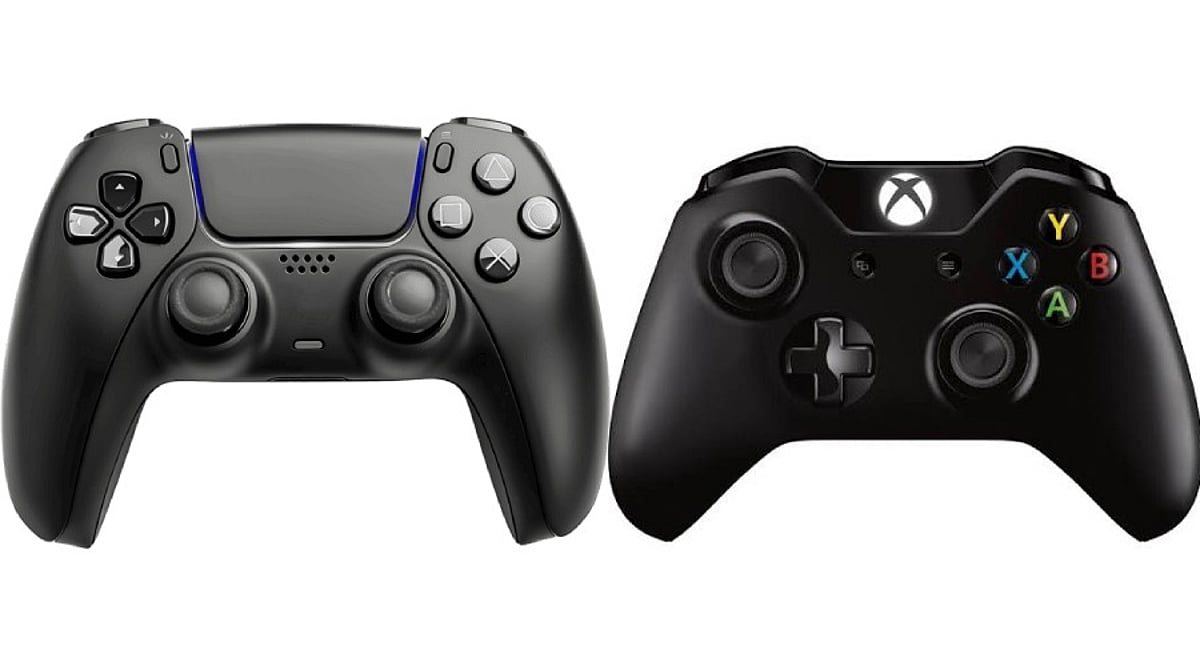
    Microsoft has refined its Xbox controller design over multiple generations, and the current model is no exception. Familiar controls, textured grips, and responsive triggers keep it comfortable during long sessions. It offers native connectivity to Xbox consoles and Windows PCs, plus Bluetooth for smartphones and tablets—making cloud gaming easier in many situations.

    Sony DualSense Wireless Controller

    The DualSense is widely considered one of the most immersive controllers available. Its adaptive triggers change resistance based on in-game events, and haptic feedback delivers a richer vibration than traditional rumble motors. While designed for the PlayStation 5, it works perfectly on PCs as well.

    GameSir G7 Pro

    For gamers who need accuracy, the GameSir G7 Pro prioritizes speed and customizability. Hall Effect sticks enhance long-term durability, while programmable rear buttons enable faster command execution during intense competition. Software support lets you adjust sensitivity and configure buttons for specific game genres.

    8BitDo Ultimate 2C

    The 8BitDo Ultimate 2C proves that a controller can be affordable without sacrificing quality. It offers Hall Effect joysticks, dependable performance, and a lightweight design that keeps you comfortable even during extended sessions. For Nintendo Switch and PC owners seeking a budget-friendly daily gamepad, this is a solid choice.

    EasySMX X20

    The EasySMX X20 delivers features typically found in premium gamepads. Mechanical face buttons provide instant feedback, trigger locks speed up FPS actions, and four programmable rear buttons make it versatile for PC, handheld, and mobile gaming.

    Which One Should You Buy?

    Your selection depends on your primary platform and gaming style.

    • Best Overall: GameSir Cyclone 2
    • Best for Xbox & Windows PC Gamers: Microsoft Xbox Wireless Controller
    • Best for PlayStation 5 Gamers: Sony DualSense
    • Best for Esports Gamers: GameSir G7 Pro
    • Best Value for Money: 8BitDo Ultimate 2C
    • Best Multi-Platform Controller: EasySMX X20

    If you’re looking for a high-quality controller that serves its purpose well without exceeding the ₹10,000 price range, the GameSir Cyclone 2 stands out as the best overall option.

    FAQs

    Which gaming controller is best under ₹10,000 in India?

    The GameSir Cyclone 2 offers the best balance of performance, features, Hall Effect sticks, and multi-platform compatibility under ₹10,000.

    Are Hall Effect joysticks better than regular analog sticks?

    Yes. Hall Effect joysticks reduce stick drift, improve durability, and provide more accurate inputs for long-term gaming performance.

    Can these gaming controllers work with PCs?

    Most controllers support Windows PCs via USB or Bluetooth, including Xbox, DualSense, GameSir, 8BitDo, and EasySMX models.

    Which controller is best for PlayStation 5 users?

    Sony’s DualSense Wireless Controller remains the best choice, offering adaptive triggers, advanced haptic feedback, and seamless PS5 compatibility.

    What should I consider before buying a gaming controller?

    Check platform compatibility, connectivity options, joystick technology, battery life, comfort, programmable buttons, and overall build quality before purchasing.

  • 5 Essential Apple Intelligence Features to Master in 2026

    5 Essential Apple Intelligence Features to Master in 2026

    Apple Intelligence has evolved significantly in 2026, bringing smarter writing tools, live translation, AI-powered shortcuts, advanced photo editing, and an upgraded Siri that makes everyday tasks on iPhone, iPad, and Mac faster and easier. Here are the top five features you should start using today.

    1. Writing Tools Help You Finish Faster

    Built into apps like Mail, Notes, and Messages, Apple’s Writing Tools now offer spelling checks, sentence restructuring, tone adjustments, and email summarization. Whether you’re a student or a professional, these tools eliminate the need for third-party editing apps.

    2. Live Translation Works Across Calls and Messages

    Live Translation simplifies communication in multiple languages. It works in text messages, FaceTime calls, and even regular phone calls, translating conversations in real time. This is invaluable for travel, client meetings, or keeping in touch with international friends and family—all while maintaining Apple’s privacy standards.

    3. Shortcuts Get an AI Upgrade

    The Shortcuts app now integrates Apple Intelligence, allowing you to create automations that summarize articles, organize notes, draft messages, and perform multiple actions with a single tap. For example, you can set a shortcut to collect all meeting notes, summarize them, and email them automatically.

    4. Edit Photos Without Third-Party Apps

    The Photos app now includes AI-powered editing features such as removing background distractions, recomposing images, and erasing unwanted objects. These tools are designed for everyday use—perfect for travel photos, family portraits, and social media posts.

    5. Siri Understands Context Better

    Siri’s improved context awareness allows it to answer follow-up questions, understand what’s on your screen, and take actions across multiple apps. You no longer need to repeat yourself; Siri maintains a natural conversation flow.

    Apple Intelligence Features at a Glance

    All these features are designed to enhance everyday tasks without changing how you use your iPhone, iPad, or Mac. They integrate seamlessly into Apple’s existing apps, saving you time and reducing repetitive manual work.

    As Apple continues to expand its AI capabilities in 2026, these five features are the most practical to explore first. Whether you’re writing, translating, editing, or automating, Apple Intelligence makes your devices smarter without demanding a new learning curve.

  • Bluetooth vs Smart Speakers in 2026: Choosing the Right Audio Companion for Portability or Smart Home Integration

    Bluetooth vs Smart Speakers in 2026: Choosing the Right Audio Companion for Portability or Smart Home Integration

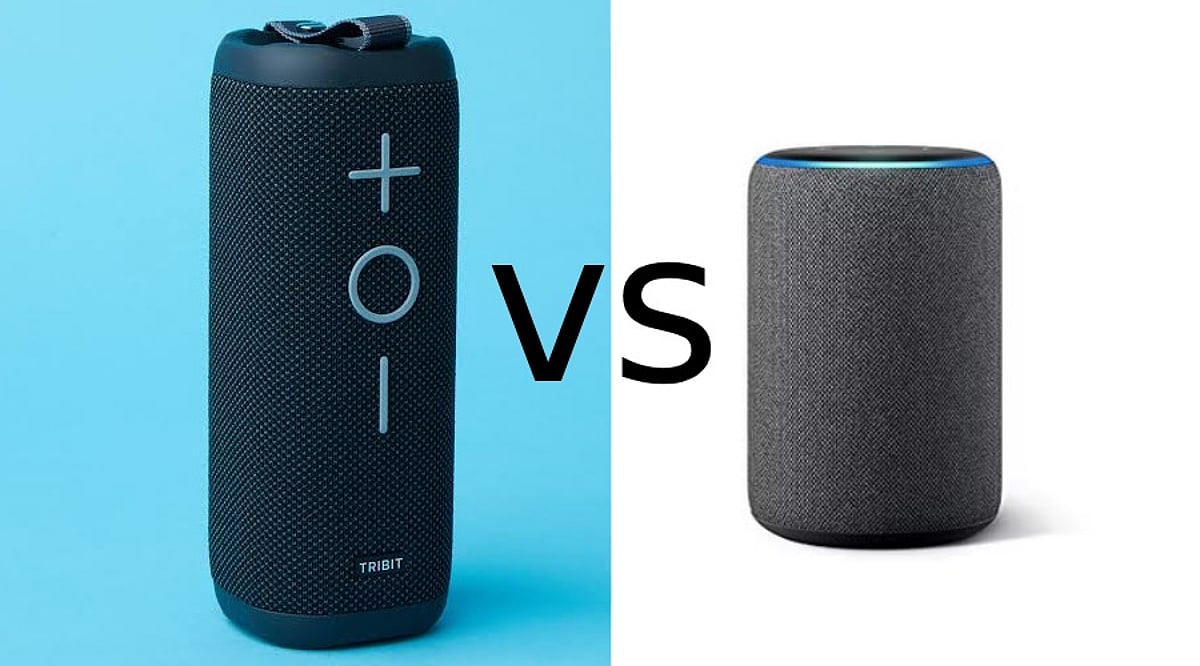
    Bluetooth speakers and smart speakers have evolved well beyond their original roles. A Bluetooth speaker is no longer just a portable music device, while a smart speaker has become much more than a voice assistant. Both now offer impressive sound quality, wireless connectivity, and smart features, but they cater to different needs. If portability tops your list, a Bluetooth speaker is the obvious choice. If you’re building a connected home, a smart speaker offers much more than music. Here’s how the two compare in real-world use.

    Sound, Features, Everyday Experience Compared

    Bluetooth Speakers

    Bluetooth speakers come with portability in mind. Connect them to your phone or computer, and you’re good to go almost anywhere without relying on Wi-Fi. They’ve become quite powerful in terms of sound quality, with high-end models producing more bass and better stereo than previous generations. Portable speakers are generally designed for outdoor use with water and dust resistance. Several newer models include fast charging, multi-speaker pairing, and app-based sound customization, making them far more versatile than simple wireless speakers.

    • Wireless Bluetooth 5.3/5.4 connectivity
    • Up to 24–30 hours of battery life
    • IP67/IP68 water and dust resistance
    • Portable and travel-friendly design
    • Multi-speaker pairing support
    • USB-C fast charging

    Smart Speakers

    Smart speakers are designed for homes where convenience matters as much as entertainment. Besides streaming music, they respond to voice commands, answer questions, set reminders, and control compatible smart home devices. Most models support Wi-Fi and Bluetooth, giving users flexibility while keeping cloud-based features available. Modern smart speakers offer significantly improved indoor sound thanks to room calibration and multi-room audio. Speech recognition has become more conversational.

    • Built-in Alexa or Google Assistant
    • Wi-Fi and Bluetooth connectivity
    • Smart home automation support
    • Multi-room audio playback
    • Voice-controlled reminders and routines
    • Music streaming integration

    Bluetooth Speaker vs Smart Speaker: Quick Comparison

    A side-by-side comparison shows that Bluetooth speakers excel in portability, battery life, and outdoor durability, while smart speakers win on voice control, smart home integration, and room-filling sound for indoor use.

    Top Bluetooth and Smart Speakers to Consider

    JBL Charge 6

    The JBL Charge 6 is one of the most powerful portable Bluetooth speakers of 2026. It features Bluetooth 5.4 connectivity, AI Sound Boost technology, a durable IP68 housing, and up to 28 hours of battery life.

    Sony ULT Field 3

    This Sony speaker focuses on deep bass with a dedicated ULT button that increases low frequencies instantly. It offers a durable IP67 housing and long battery life, making it perfect for both indoor and outdoor use.

    Amazon Echo (4th Generation)

    The Amazon Echo (4th Gen) is a versatile smart speaker for households. With Alexa inside, it controls Matter-compatible smart home devices and plays multi-room music via Wi-Fi and Bluetooth. A 3-inch woofer and dual tweeters deliver balanced sound.

    Google Nest Audio

    Google Nest Audio is designed for users invested in Google’s ecosystem. It delivers clear vocals, balanced bass, and seamless Google Assistant integration. Voice Match support, Chromecast built-in, and stereo pairing make it an excellent everyday smart speaker.

    Final Analysis

    A Bluetooth speaker remains the better choice for users who value portability, battery life, and offline listening. Whether you are traveling, hosting an outdoor event, or just listening to music without needing the internet, it is convenient in all respects. However, a smart speaker not only provides sound but also becomes part of your smart home, helping you control appliances and giving you information using simple voice commands. Both products work efficiently in different settings. If your speaker is going wherever you go, choose Bluetooth. If it’s staying in your living room and becoming part of your daily routine, a smart speaker is the more capable investment.

    Frequently Asked Questions

    Which is better for outdoor use: Bluetooth speaker or smart speaker?

    Bluetooth speakers are better suited for outdoor use because they offer rechargeable batteries, portable designs, water-resistant builds, and do not require a Wi-Fi connection to stream music from your devices.

    Do smart speakers work without an internet connection?

    Most smart speakers can play audio through Bluetooth without Wi-Fi, but features like voice assistants, music streaming, smart home controls, and online information require an active internet connection.

    Are Bluetooth speakers louder than smart speakers?

    Bluetooth speakers are often designed for higher outdoor volume and stronger bass, while smart speakers focus on delivering balanced, room-filling sound and clearer vocals for indoor listening experiences.

    Can Bluetooth speakers connect to multiple devices?

    Many modern Bluetooth speakers support multi-device pairing, allowing users to switch between connected devices easily. Some models also support stereo pairing or multi-speaker connectivity for enhanced audio performance.

    Which speaker should I buy in 2026?

    Choose a Bluetooth speaker if portability and battery life matter most. Pick a smart speaker if you want voice control, smart home integration, and a connected audio experience at home.

  • India’s Longest-Range Electric Cars: Top 9 Models for 2025

    India’s Longest-Range Electric Cars: Top 9 Models for 2025

    India’s electric vehicle (EV) market is rapidly evolving, with automakers offering increasingly impressive driving ranges. As battery technology improves and charging infrastructure expands, the choice of long-range EVs has never been broader. Whether you’re a luxury buyer, an urban commuter, or a highway traveler, there’s an electric car in India to match your needs. Below, we detail the nine electric cars boasting the longest certified ranges in the country, from premium sedans to family-friendly SUVs.

    1. Mercedes-Benz EQS 580 4MATIC – 857 km

    This flagship electric sedan tops the list with an ARAI-certified range of up to 857 kilometers. It combines cutting-edge technology with opulent luxury, making it ideal for those who demand the best in performance and comfort.

    2. Mercedes-Benz EQS SUV – 809 km

    Offering a claimed driving range of up to 809 kilometers, this luxury SUV provides spacious seating and advanced safety systems while retaining the refined electric performance expected from the three-pointed star.

    3. Mahindra BE 6 – 683 km

    Mahindra’s newest electric SUV delivers up to 683 kilometers of claimed range, blending futuristic design with strong performance and a host of advanced features tailored for long-distance driving.

    4. Mahindra XEV 9e – 656 km

    The XEV 9e combines coupe-SUV styling with a claimed range of up to 656 kilometers. It offers spacious interiors, premium technology, and everyday usability, making it a compelling choice in the segment.

    5. BYD Seal – 650 km

    BYD’s sleek sedan provides up to 650 kilometers of claimed range, featuring sporty performance, rapid charging capabilities, and a feature-rich cabin that competes with established luxury brands.

    6. Tata Harrier.ev – 627 km

    Tata’s flagship electric SUV boasts an MIDC range of up to 627 kilometers. Equipped with a dual-motor all-wheel drive system, it offers robust capability and high ground clearance for Indian road conditions.

    7. Tata Curvv.ev – 585 km

    The Curvv.ev offers up to 585 kilometers of claimed range in a coupe-inspired SUV body. It targets families with its blend of modern technology, practical electric mobility, and standout exterior design.

    8. Hyundai Creta Electric – 473 km

    Hyundai’s recently launched electric version of the popular Creta SUV provides a certified range of up to 473 kilometers. It is well-suited for daily commuting and occasional highway trips, supported by Hyundai’s extensive service network.

    9. MG Windsor EV Pro – 449 km

    The Windsor EV Pro rounds out the list with a claimed range of up to 449 kilometers. It emphasizes comfort, connected features, and a value-focused ownership experience, making it an attractive entry-level long-range EV.

    These nine electric cars represent the forefront of India’s shift toward sustainable transportation. With ranges exceeding many petrol vehicles, they prove that electric mobility is no longer a compromise but a smart choice for modern drivers.

  • 7 Must-Read Retail Newsletters and News Sites for Executives

    7 Must-Read Retail Newsletters and News Sites for Executives

    Retail leaders benefit from trusted, curated industry sources over broad business news. The right newsletters provide strategic insights across retail operations and technology. A focused reading stack supports faster, better-informed decisions.

    What Makes a Retail Source Worth an Executive’s Time

    Not every retail publication earns a spot in a leader’s inbox. The strongest sources share a few traits: editorial reputation built over years, a readership drawn mostly from senior retail roles, consistent publishing schedules, and analysis that moves past headlines into operational implications. Coverage should span physical retail, e-commerce, payments, logistics, and policy. The seven sources below meet that standard.

    Seven Retail Sources Built for Leadership Reading

    Retail Dive: Best for Daily Retail News

    Retail Dive moves fast, but speed alone isn’t why executives keep it in their inbox. The reporting ties each story back to something practical—what it means for store operations, e-commerce, merchandising decisions, and technology budgets. It works well as a daily habit.

    Retail Week: Best for Retail Strategy

    Retail Week earns its subscription price with proprietary research and deep market data. For leaders watching the UK and European retail scene, this is one of the few sources built specifically for that view.

    NRF SmartBrief: Best for Retail Policy News

    Backed by the National Retail Federation, NRF SmartBrief focuses on upcoming legislation, trade policy, and regulatory shifts. Reading it regularly means fewer surprises when policy changes hit a P&L statement.

    Retail TouchPoints: Best for Retail Technology

    This source lives at the intersection of customer experience and retail technology. It covers omnichannel strategy, digital transformation, and how brands rethink the path from browsing to purchase. Leaders responsible for customer engagement find more useful detail here than in general retail coverage.

    Modern Retail: Best for DTC and E-commerce

    Direct-to-consumer brands often lack serious attention from legacy retail media. Modern Retail fills that gap, following DTC players alongside older retailers adapting to change. The result is a clearer picture of where new retail models are heading.

    RetailWire: Best for Retail Expert Insights

    News is only half of what RetailWire offers. The other half is industry debate. Professionals weigh in on the same stories from different angles, revealing more than a straight news report would. It’s about seeing how retail leaders actually think.

    Retail Brew: Best Weekly Retail Newsletter

    Not every executive has time for long-form analysis daily. Retail Brew delivers the week’s key retail news in a format built to be read quickly, staying conversational without turning shallow.

    Retail News vs General Business News

    General outlets like Reuters or Fortune cover retail, but it’s one story among many. Retail-specific publications go deeper into merchandising, supply chains, store operations, and consumer behavior. Reuters is useful for the bigger economic picture; Retail Dive or Retail TouchPoints are better for figuring out what that picture means for a retail business next week. Read both for a fuller view.

    Final Thought

    Retail media is getting shorter, more curated, and tied closer to real-time data. Leaders who start reading with intent now will be ahead when that shift plays out fully. A tighter mix does more: one daily briefing for speed, one deep-analysis source for strategic thinking, and one specialist publication that matches the leader’s market. The difference isn’t how much gets read, but how deliberately it’s chosen.

  • How to Launch a Data Science Career Without a College Degree

    How to Launch a Data Science Career Without a College Degree

    Data science no longer requires a traditional degree to launch a successful career. Employers now prioritize practical skills, GitHub portfolios, certifications, and real-world projects. With 34% job growth projected through 2034 and salaries of Rs. 6–14 LPA in India, opportunities remain strong for those who take the right approach.

    Why Employers Are Reconsidering Requirements

    Hiring managers today look past pedigree and straight toward proof of ability. One survey found that 67% of practicing data scientists did not major in computer science. Portfolios and GitHub repositories now get reviewed before transcripts ever come up. The US Bureau of Labor Statistics projects data science jobs will grow 34% between 2024 and 2034, leaving companies short on qualified applicants and loosening entry requirements.

    The Financial Case Remains Strong

    Pay in this field stays competitive no matter which route a candidate took to enter it. Fresher salaries in India typically range between six and fourteen lakh rupees annually, based on Glassdoor figures. Professionals a few years in, with sharper technical depth, often clear that range comfortably.

    How To Become A Data Scientist Without A Degree

    Getting there without a formal degree takes more patience than most guides admit upfront. Below is a sequence that has worked for many self-taught professionals already in the field.

    • Start with mathematics, statistics, and probability, using structured platforms rather than scattered videos.
    • Pick up Python and SQL first, then move into specialized machine learning libraries.
    • Earn one recognized certification so employers have something concrete to check against.
    • Build projects on real datasets and post the finished work publicly on GitHub.
    • Target entry-level analyst roles before aiming straight for a data scientist title.
    • Update your resume after every interview, based on what the feedback actually revealed.

    Certifications Still Carry Weight

    Free tutorials teach the material well, but a certificate gives a hiring manager something to verify quickly. One solid credential from a known platform can separate an application from a stack of similar ones. Analyst roles often work as a practical bridge toward a full data scientist position later.

    Portfolios Do The Talking

    A portfolio with three or four solved problems says more than a transcript ever could. Projects tied to real business questions show judgment that coursework alone rarely reveals. Interviewers tend to favor candidates who can walk through why they made each modeling choice.

    What Skills Do I Need?

    A handful of core skills stay fixed no matter which path a candidate takes to learn them. Programming proficiency in Python and R, alongside data visualization and advanced statistics, forms the essential skill set.

    Technical And Analytical Skills

    Coding alone will not carry a candidate through interviews or the job itself later. Cleaning messy data, choosing the right algorithm, and evaluating model output all matter just as much. These are the tasks that fill most working weeks in an entry-level role.

    Communication And Business Understanding

    A finding buried in code means little until someone can explain it to a business team. Employers value analysts who tie a model’s output back to a decision worth making. Domain knowledge in one industry, paired with clear explanation, often separates strong hires from average ones.

    Final Words

    A missing degree no longer closes the door on a data science career the way it once did. Structured learning, a verified certificate, and a portfolio of real projects can carry a candidate through hiring rounds. What employers reward now is proof of output, not a line on a certificate. Anyone willing to put in steady hours over months, not weeks, can realistically get there. Data science still rewards curiosity and applied thinking well above where a person studied. Those building portfolios today are setting themselves up for solid, well-paid careers ahead.

    Frequently Asked Questions

    Can someone realistically become a data scientist without any formal degree? Yes, many professionals have built successful careers through self-study, certifications, and strong portfolios, since employers increasingly prioritize demonstrated skills over academic credentials during hiring decisions.

    How long does this alternative path typically take to complete? The timeline varies based on prior background and daily commitment, though most learners need between six months and a few years to reach genuine job readiness.

    Are certifications actually necessary for someone without a degree? Certifications are not mandatory, but they give employers a verifiable marker of competency, which carries more weight than informal, purely self-taught learning claims alone.

    What matters more to recruiters, degrees or project portfolios? Recruiters increasingly favor well-documented portfolios showing applied problem-solving, since practical project work demonstrates readiness better than transcripts or classroom coursework alone ever could.