Blog

  • Ethereum Supply Tightens as Exchange Reserves Drop and Staking Locks More ETH

    Ethereum Supply Tightens as Exchange Reserves Drop and Staking Locks More ETH

    Ethereum’s available market supply continues to shrink as exchange reserves fall and staking participation rises. According to CryptoQuant data, exchanges now hold approximately 15.1 million ETH, while staking covers roughly 33.6% of total supply. ETH remains near $1,900, though weak spot demand has delayed a clear price breakout.

    Ethereum Staking Locks More Supply

    Ethereum’s staking rate has climbed to about 33.6%, up from approximately 28% at the start of 2025. This steady increase reflects a consistent transfer of ETH into staking contracts. Recent staking inflows reached about 62,200 ETH. Although that figure remains below earlier peaks, it shows that holders continue moving tokens away from immediately tradable markets.

    As a result, more ETH remains committed to the network rather than available for sale. This trend reduces the amount of liquid supply that can reach exchange order books.

    Exchange Reserves Drop to 15.1 Million ETH

    Centralized exchanges now hold about 15.1 million ETH, down from over 21 million ETH previously, according to CryptoQuant data. Recent exchange net flows stood near negative 46,300 ETH, meaning withdrawals continued to exceed deposits. This further reduces the number of tokens available for immediate trading.

    The decline has persisted during both market rallies and price corrections. CryptoQuant analysts view this consistency as a structural supply reduction rather than a temporary withdrawal cycle. More ETH now enters staking contracts as fewer tokens remain on exchanges. This combined movement restricts the supply that holders can quickly sell through secondary markets.

    However, lower supply does not automatically create higher prices. Ethereum still requires sustained spot purchases, stronger network activity, or institutional inflows to convert reduced liquidity into a price squeeze.

    Spot Demand Remains the Deciding Factor

    ETH has rebounded toward $1,900, but the market has not recorded enough buying activity to support a decisive bullish breakout. Token scarcity alone cannot produce sustained upward movement. Network activity and institutional flows also show moderate buyer interest. Therefore, reduced exchange liquidity may increase volatility without determining whether ETH moves higher or lower.

    Fresh spot capital or renewed decentralized application activity could strengthen demand. In that case, thinner exchange order books could cause faster price movements as buyers compete for fewer available tokens.

    CryptoQuant analysts identified $2,000 as an important confirmation level. A sustained move above that price would support the supply-squeeze scenario and show that demand has started absorbing limited liquidity.

    By contrast, renewed deposits to exchanges would weaken the setup. Rising exchange balances would increase the available selling supply and reduce pressure created by staking and persistent withdrawals.

    Institutional demand or stronger application activity could still activate the restricted supply conditions. Without those catalysts, lower reserves may remain a passive market factor rather than a direct price driver.

  • Microsoft Brings Xbox Backward Compatibility to Windows PC: First Four Classic Games Announced

    Microsoft Brings Xbox Backward Compatibility to Windows PC: First Four Classic Games Announced

    Microsoft has officially launched Xbox backward compatibility on Windows PCs, enabling players to enjoy a selection of classic Xbox games without needing a console. The feature, announced via the Xbox official blog on July 22, 2026, is built directly into the Xbox PC app, eliminating the need for third-party emulators or old software.

    The first four games available are BLiNX: The Time Sweeper, Conker: Live and Reloaded, Crimson Skies: High Road to Revenge, and Fuzion Frenzy. Microsoft has confirmed that additional titles will be added over time, expanding the library for PC gamers.

    To access the feature, PCs must run Windows 11 with at least 8GB of RAM and 4GB of video memory. Minimum graphics requirements include an Nvidia GeForce GTX 950, AMD Radeon RX 550, or Intel Arc A310. Processors should have at least four cores and eight threads, with recommended options including Intel Core i3-10300, AMD Ryzen 3 3100, or AMD Ryzen Z2 A.

    This move aligns with Microsoft’s broader strategy to make Xbox games accessible across multiple devices—consoles, PCs, cloud gaming, and handhelds—rather than tying players to a single platform. Backward compatibility was first introduced on Xbox consoles to preserve older titles, and now the same principle extends to PC, allowing gamers to keep their library as they upgrade hardware.

  • Elon Musk Fuels Tesla-SpaceX Merger Speculation in Q2 Earnings Call – What Investors Should Know

    Elon Musk Fuels Tesla-SpaceX Merger Speculation in Q2 Earnings Call – What Investors Should Know

    Elon Musk reignited speculation about a potential merger between Tesla and SpaceX during Tesla’s second-quarter earnings call, declining to rule out a future deal. The comments came as the two companies already share projects across batteries, artificial intelligence, and advanced manufacturing.

    “We can’t talk about combining companies on an earnings call,” Musk said, adding that any merger discussion would require a formal corporate process. Tesla General Counsel Brandon Ehrhart described SpaceX as an important business partner, noting several mutually beneficial transactions, but did not confirm any active review of a merger.

    Musk’s Comments Renew Merger Debate

    Musk acknowledged growing operational overlap between Tesla and SpaceX during the call. Investors have long debated the merits of combining the two companies. Gene Munster of Deepwater Asset Management said the remarks increased his confidence in a future combination, possibly within several years.

    JPMorgan analysts pointed to shared talent, AI infrastructure, and manufacturing knowledge, suggesting those links could reduce some operational barriers. SpaceX President Gwynne Shotwell said in June that combining Musk’s companies could simplify management.

    Existing Collaborations and Synergies

    Tesla and SpaceX already cooperate on batteries, engineering, AI, and advanced manufacturing. They are jointly developing Terafab, a semiconductor facility aimed at producing chips for AI systems. Both companies rely on large computing networks and specialized engineering teams, with Musk leading strategy across both entities.

    Some Tesla investors envision a broader technology group encompassing vehicles, robotics, energy, satellites, and AI. However, no timeline, valuation, or transaction structure has been announced.

    Tesla Q2 Earnings Mixed; Focus Shifts to Spending

    The merger discussion followed Tesla’s mixed second-quarter results. Revenue reached $28.24 billion, beating the $26.32 billion estimate. Adjusted earnings of $0.33 per share missed analyst expectations of $0.50. Tesla shares fell about 6% in premarket trading.

    Vehicle deliveries rose 25% year-over-year to 480,126 units. Energy storage deployments hit 13.5 GWh, up from 8.8 GWh in the prior quarter. Capital spending is expected to exceed $25 billion this year, funding Robotaxi, Optimus, Cybercab, and AI data centers. Free cash flow was negative $1.09 billion, better than the expected negative $3.64 billion.

    Regulatory and Governance Hurdles Remain

    Any Tesla-SpaceX merger would face intense regulatory scrutiny in the U.S. and other major markets, especially China. SpaceX’s close ties with the U.S. government and defense agencies could raise national security concerns during foreign reviews. Governance is also a key issue: Musk controls a larger voting stake in private SpaceX than in public Tesla, potentially raising questions about valuation and minority shareholder treatment. Independent directors and shareholder approval would be critical.

    For now, neither company has announced a merger process. Musk’s comments only left the possibility open while cooperation continues.

  • Samsung Reportedly Plans €1 Billion Investment in AI Startup Mistral at €20 Billion Valuation

    Samsung Reportedly Plans €1 Billion Investment in AI Startup Mistral at €20 Billion Valuation

    Samsung Electronics is reportedly in discussions to invest approximately €1 billion in French artificial intelligence company Mistral, a deal that could value the startup at around €20 billion. The potential investment signals deepening ties between the world’s leading memory chip maker and one of Europe’s most prominent AI developers, with implications for AI chip supply, model development, and the continent’s push for greater technological independence.

    Talks Underway, No Confirmed Agreement Yet

    According to the Financial Times, which first reported the talks, Samsung’s possible investment could be part of a larger funding round that also includes Sweden’s EQT Scaleup Europe Fund. Reuters later confirmed the discussions, noting that the commitment could reach hundreds of millions of euros. Some reports place the figure near €1 billion, though neither Samsung nor Mistral has publicly confirmed a deal.

    A €20 billion valuation would place Mistral among Europe’s most valuable private technology companies, up from its previous reported valuation of about €11.7 billion. The companies already have an existing relationship: Samsung’s venture capital unit previously invested in the Paris-based AI startup. Mistral CEO Arthur Mensch visited Samsung’s semiconductor campus in Hwaseong, South Korea, in April, where he met senior executives and discussed AI chip supply chains.

    Chip Access and Strategic Benefits

    Samsung produces high-bandwidth memory (HBM) chips essential for training large AI models, as well as advanced logic chips through its foundry business. Demand for such hardware is soaring as AI companies scale up their models, while supply remains constrained. A closer partnership could give Samsung a major customer for its AI hardware, while Mistral would gain more reliable access to the chips needed to train and run its systems.

    Reports suggest Samsung may also seek a seat on Mistral’s board, and the two companies could explore integrating Mistral’s models into Samsung devices or AI services. These terms have not been confirmed and would depend on negotiations, regulatory approvals, and corporate sign-offs.

    Europe’s Push for AI Sovereignty

    Mistral, founded in Paris in 2023, develops large language models that can be downloaded and operated independently. It has positioned itself as a European counterweight to major American AI providers and even supplies technology to the French military. European governments and companies are increasingly seeking more control over AI infrastructure, especially after recent restrictions on access to advanced American AI models.

    Mistral has already expanded its commercial partnerships. Microsoft recently agreed to spend billions on European computing infrastructure linked to the company. Meanwhile, competition from Chinese AI developers, such as Moonshot AI, is intensifying. Mensch has stated that Mistral expects annual recurring revenue to exceed $1 billion by the end of 2026, reflecting growing enterprise demand.

    Any Samsung investment would likely face European regulatory review. For now, the reported talks continue without a confirmed agreement or public funding timeline.

  • AMD Challenges NVIDIA with New Helios AI Platform, MI450 GPUs, and Anthropic Partnership

    AMD Challenges NVIDIA with New Helios AI Platform, MI450 GPUs, and Anthropic Partnership

    AMD is preparing to launch a comprehensive new AI infrastructure lineup, including the Helios server rack, Instinct MI450 GPUs, and EPYC Venice processors, directly challenging NVIDIA’s dominance in data center AI. The company also announced a major partnership with Anthropic, the developer of the Claude AI model, to deploy up to two gigawatts of AMD chips starting in 2027.

    Helios is AMD’s first full server rack designed for AI workloads, combining MI455X graphics processors, EPYC Venice CPUs, and Pensando networking technology. It targets both AI training and inference, competing with NVIDIA’s integrated systems like the upcoming Rubin-Vera platform. AMD has already demonstrated Helios at the Moscone West convention center, with cloud providers Vultr and TensorWave showing systems using AMD hardware.

    Under the Anthropic agreement, the first gigawatt of AMD chips is scheduled to begin operating in the first half of 2027, using Helios systems with MI455X processors. The companies will also collaborate on software development, with Claude optimizing workloads on AMD graphics processors and aiding development of the ROCm software platform. AMD has committed to an equity investment of up to $5 billion in Anthropic.

    AMD is expanding its position in the AI chip market as demand for AI computing grows. While NVIDIA still controls a large share of the data center accelerator market, AI developers are seeking more supplier options. AMD previously signed a multiyear agreement with OpenAI that could generate tens of billions of dollars in yearly revenue, and OpenAI received an option to acquire a roughly 10% stake in AMD. The Anthropic partnership follows a similar strategy, combining hardware supply with closer access to a major AI model developer.

    Thursday’s launch will provide more details on Helios and the Venice processor, showcasing AMD’s full-system approach to compete with NVIDIA across processors, accelerators, networking, and software.

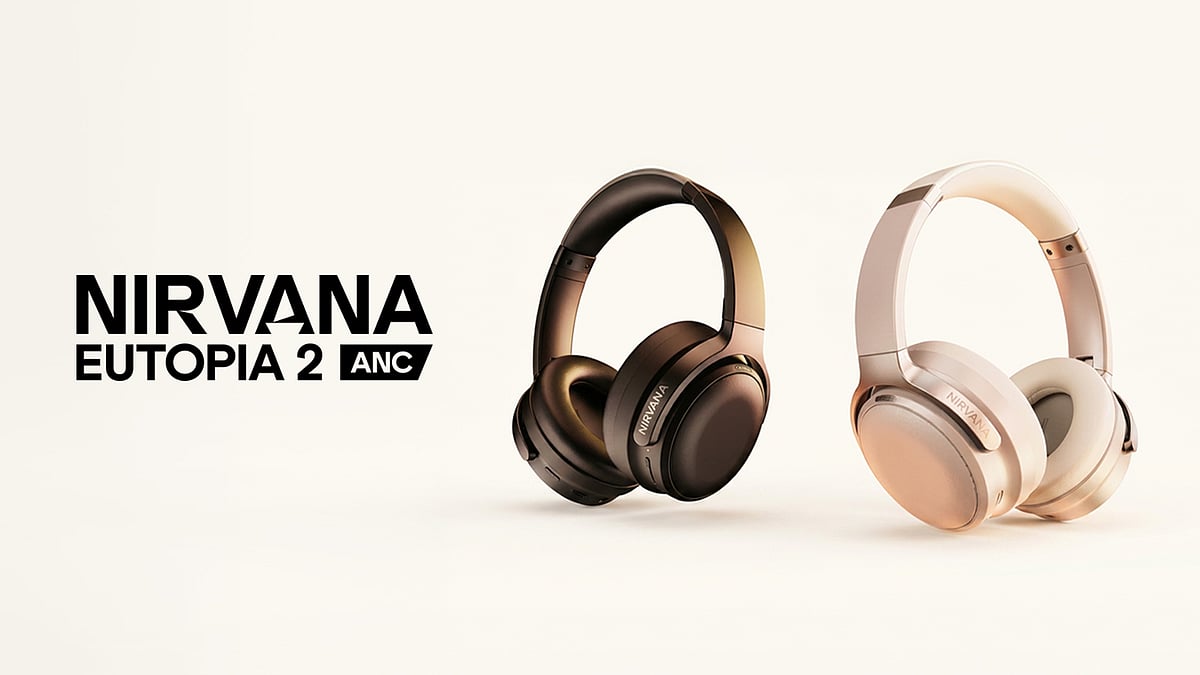
  • boAt Unveils Nirvana Eutopia 2 ANC: Dual Drivers, 45dB Adaptive Hybrid ANC, and 80-Hour Battery at ₹4,999

    boAt Unveils Nirvana Eutopia 2 ANC: Dual Drivers, 45dB Adaptive Hybrid ANC, and 80-Hour Battery at ₹4,999

    boAt, India’s leading audio and wearables brand, has announced the launch of the Nirvana Eutopia 2 ANC, the latest addition to its premium over-ear headphone lineup. Priced at a special launch price of ₹4,999, the new model brings dual drivers, 45dB Adaptive Hybrid Active Noise Cancellation (ANC), Hi-Res Audio support, 3D Spatial Audio, and an impressive 80-hour playback time.

    The headphones are designed to meet the demands of modern users who switch between music, calls, gaming, travel, and work throughout the day. A 10-minute fast charge delivers up to 12 hours of playback, making the Nirvana Eutopia 2 ANC a practical choice for heavy users.

    Key Features

    • Dual Drivers – Delivers powerful bass, clear vocals, and detailed sound separation.
    • 45dB Adaptive Hybrid ANC – Automatically adjusts noise cancellation to suit environments like commutes, cafés, flights, and shared workspaces.
    • Hi-Res Audio & 3D Spatial Audio – Enhances depth and width for music, movies, and gaming.
    • Up to 80 Hours Playback – Long-lasting battery with quick 10-minute charge for 12 hours of use.
    • Bluetooth 5.4 & Google Fast Pair – Fast, stable connections across compatible devices.
    • AI ENx Calling – Reduces ambient noise during calls for crystal-clear conversations.
    • Adaptive Fit & Memory Foam Cushions – Premium comfort for extended wear.
    • boAt Hearables App Support – Customize EQ, controls, and listening preferences.
    • Foldable & Swivel Design – Portable with a premium hard carrying case.

    Pricing & Availability

    The boAt Nirvana Eutopia 2 ANC is available in Cosmic Black and Utopian White at a special launch price of ₹4,999. It can be purchased from the official boAt website and leading e-commerce platforms.

    About boAt

    boAt, owned by Imagine Marketing Limited, is one of India’s most recognized consumer technology brands. Founded in 2015, it has expanded from personal audio into wearables, charging solutions, and lifestyle technology. The company is committed to the Make in India initiative, with 71% of total units produced locally in FY2025. boAt Labs, its in-house R&D center with over 100 engineers, drives innovation across categories.

  • Infosys Q1 Earnings: AI Revenue Reaches 8.2% as Net Profit Hits $820 Million

    Infosys Q1 Earnings: AI Revenue Reaches 8.2% as Net Profit Hits $820 Million

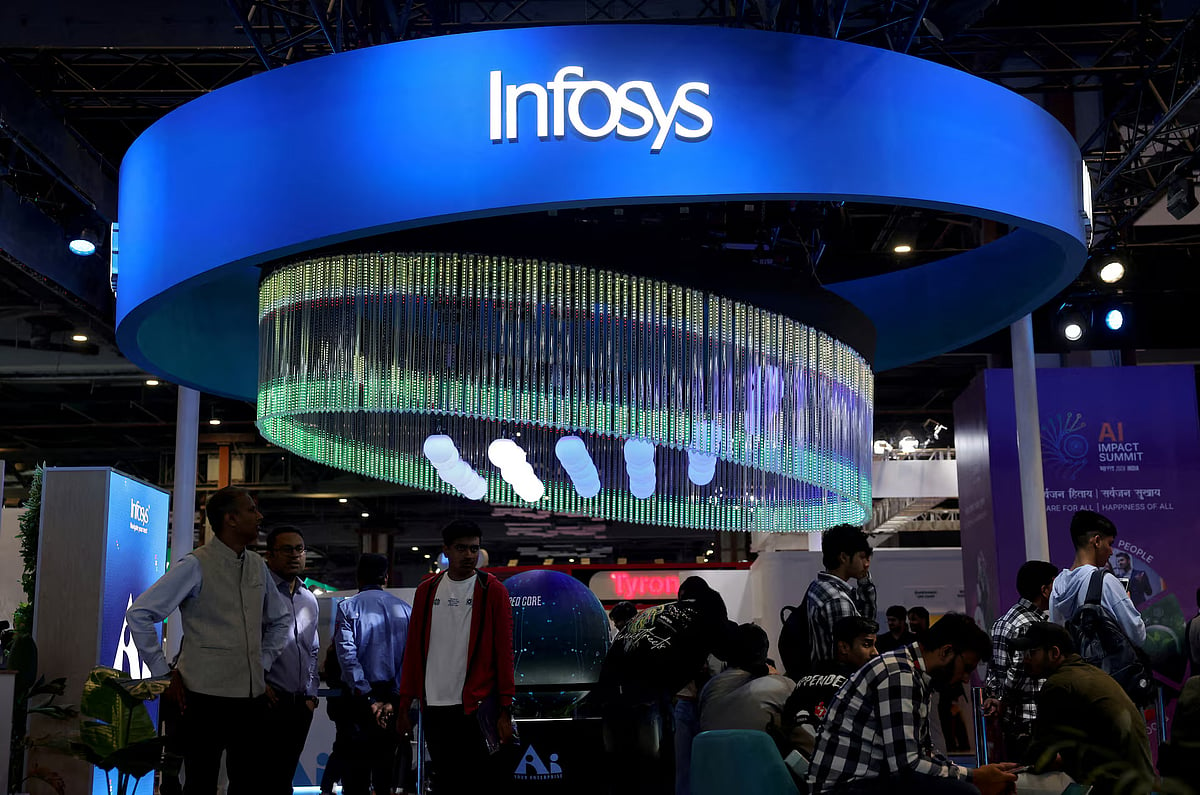
    Infosys (NSE, BSE, NYSE: INFY), a global leader in AI-first business consulting and technology services, reported its Q1 results for the period ending June 30, 2026. The company posted revenues of $5,082 million, representing year-over-year growth of 2.4% and sequential growth of 1.0% in constant currency. Operating margin stood at 21.1%, a sequential increase of 0.2%, while earnings per share grew 14.9% year-on-year in rupee terms. Net profit climbed to $820 million, and free cash flow reached $955 million, with a conversion rate of 116.5% of net profit.

    AI revenues accounted for 8.2% of total revenue in Q1, highlighting the rapid conversion of AI momentum into tangible financial results. The company secured large deal wins totaling $3.6 billion in total contract value, with 61% coming from net new business.

    “AI momentum is now rapidly converting into revenue, which demonstrates how Infosys’ differentiated enterprise AI value proposition is translating into consistent market share gains. Strong large deal wins, powered by Infosys Topaz, reinforce client confidence in our ability to be the strategic partner of choice for AI transformation driving tangible business value,” said Salil Parekh, CEO and MD.

    Infosys revised its FY27 revenue growth guidance to 1.5%-3.0% in constant currency and retained its operating margin guidance at 20%-22%.

    Key Financial Highlights (Q1 FY27)

    • Revenues in constant currency: +2.4% YoY, +1.0% QoQ
    • Reported revenues: $5,082 million (+2.8% YoY, +0.8% QoQ)
    • Operating margin: 21.1% (+0.3% YoY, +0.2% QoQ)
    • Basic EPS: $0.20 (+3.7% YoY)
    • Free cash flow: $955 million (FCF conversion: 116.5%)

    “Our resilient margins of 21.1% and consistent strong cash generation reflect the strength of our business model, disciplined execution and continued focus on operational excellence in a challenging business environment,” said Jayesh Sanghrajka, CFO.

    Major Client Wins and Partnerships

    Infosys announced several strategic collaborations and renewals during the quarter:

    • Mercedes-Benz Group AG: Renewed a long-standing partnership to move one of the automotive sector’s largest hybrid cloud and data center operations to an AI-led operating model, leveraging Infosys Topaz and Infosys Cobalt.
    • Nokia: Collaboration to strengthen product engineering capabilities across core networks, accelerating innovation and execution efficiency.
    • Bendigo Bank: A seven-year collaboration to build a future-ready bank, enhancing digital experiences for 2.9 million customers.
    • DNB Bank ASA: Expanded collaboration to modernize financial crime operations using NICE Actimize’s X Sight Enterprise platform.
    • Sentara: Collaboration to scale enterprise AI adoption in healthcare services.
    • GlobalFoundries: Expanded collaboration to accelerate AI-driven IT operations transformation.
    • Spark New Zealand: Accelerating AI-led transformation across technology delivery and digital operations with Infosys Topaz.
    • Cox Communications: Modernization of technology operations to enhance digital customer experiences.
    • Ventura Foods: Enterprise transformation using Oracle Fusion Cloud and Infosys Topaz for an AI-first value chain strategy.
    • OpenAI: Collaboration to accelerate enterprise AI transformation, focusing on deploying Codex for large-scale software modernization and automation.
    • Harness: Partnership to unlock AI value for enterprise transformation, addressing the “AI Velocity Paradox.”
    • Finacle Deals: Sterling Bank of Asia (enhancing employee and customer experience), Bank of Sydney (successful go-live of Finacle Digital Banking Suite on AWS).

    Industry Recognitions and Awards

    Infosys received multiple accolades in Q1, including ranking #1 on LinkedIn Top Companies in India for 2026, being recognized as a Leader in Gartner Magic Quadrant for Cloud ERP Services, and winning the Bronze Stevie Award for Innovation in Investor Relations. Infosys Finacle was rated a Leader in The Forrester Wave for Digital Banking Engagement Platforms and ranked #1 in 22 categories by IBS Intelligence.

    For a full list of awards and recognitions, visit the official Infosys newsroom.

  • NYT Strands July 23, 2026: Hints, Spangram, and Full Answer Guide

    NYT Strands July 23, 2026: Hints, Spangram, and Full Answer Guide

    Welcome back to our daily NYT Strands guide. Today’s puzzle centers on giving a shoutout, with the theme ‘Hail to the Chief Petty Officer.’ If you’re stuck, here’s a clue: Anchors aweigh! The Spangram begins near the left side of the grid. Below, we provide hints and clues, or you can jump straight to the answer key.

    What Is NYT Strands and How to Play

    If you’re new to NYT Strands, here’s a quick overview. The game combines elements of the NYT Crossword, Connections, and Spelling Bee. Players are given letters on a 6×8 board along with a daily theme as a hint. It’s an engaging word puzzle that challenges vocabulary and pattern-recognition skills.

    NYT Strands Hints for Today

    Use these words as hints to find the answers: Race, Lair, Real, Mock, Mare, Nude, Rude, Lane, Tire.

    Spangram Reveal and Explanation

    Today’s Spangram is NAVYRANKS. To find it, start with the N that is three letters to the right on the top row, then wind down. Navy ranks are the structured hierarchy of titles and positions establishing authority, responsibilities, and pay grades within the naval branch of a country’s armed forces. This chain of command is divided into Commissioned Officers (management/leaders) and Enlisted Sailors (crew/specialists), each wearing distinct uniform insignias like stripes or stars.

    NYT Strands Answers for Today

    Here are all the non-Spangram answers for July 23: Ensign, Admiral, Recruit, Commander, Lieutenant.

    Understanding the Theme for Today

    Today’s theme, ‘Hail to the Chief Petty Officer,’ blends two separate military and cultural terms: ‘Hail to the Chief’ (the official musical anthem for the U.S. President) and ‘Chief Petty Officer’ (a senior non-commissioned officer in the Navy and Coast Guard).

    Tips for Solving NYT Strands

    • Identify the theme: Start by thinking about words related to today’s theme.
    • Look for long words: Words stretching across the edges often form the Spangram.
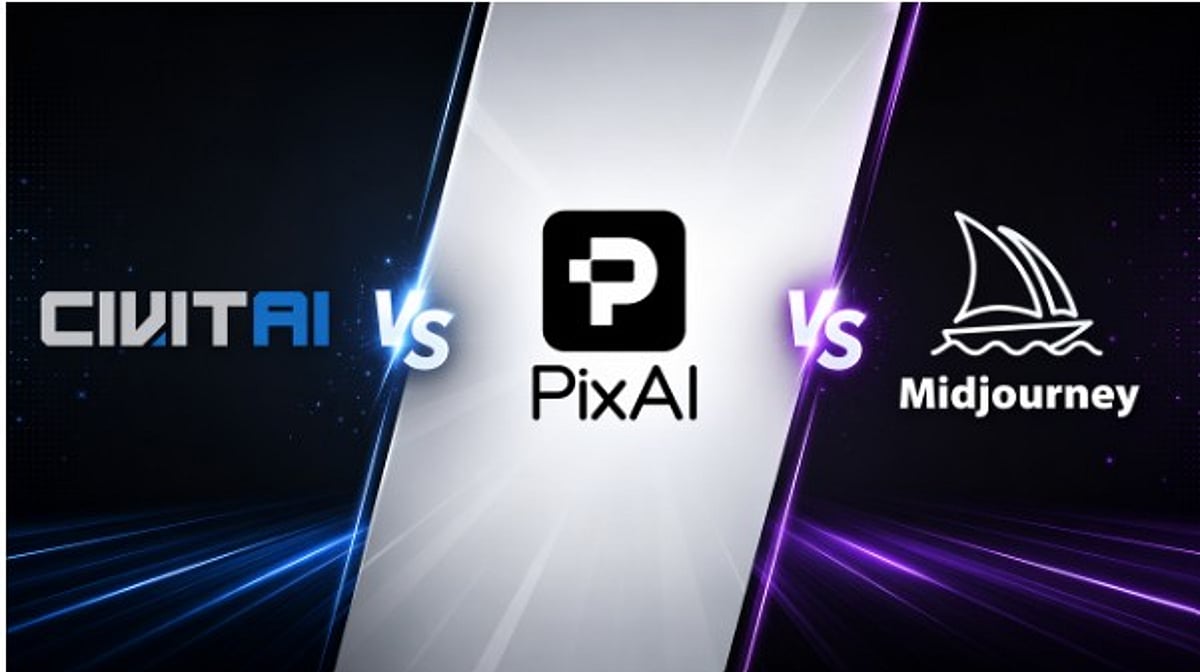
  • PixAI vs Civitai vs Midjourney: Choosing the Right AI Art Platform for Your Creative Workflow

    PixAI vs Civitai vs Midjourney: Choosing the Right AI Art Platform for Your Creative Workflow

    Choosing an AI art platform used to be straightforward: Midjourney for polished output, Stable Diffusion for granular control. But the landscape has evolved into specialized tools, and three names consistently surface in creator discussions: PixAI, Civitai, and Midjourney. Each serves a distinct purpose, making the choice heavily dependent on your specific creative needs and technical comfort.

    Quick Comparison at a Glance

    Pricing reflects publicly listed rates at the time of writing and is subject to change. Always confirm current pricing on each platform’s official website before subscribing.

    What Are PixAI, Civitai, and Midjourney?

    PixAI is an anime-focused AI art platform built for a browser-first workflow. Prompting, LoRA training, editing, and community sharing happen inside the same interface, with no local installation. It excels at character consistency and anime-specific model tuning, making it ideal for original character (OC) creators and anime enthusiasts who want quality without learning Stable Diffusion architecture.

    Civitai functions as a community-driven repository for Stable Diffusion and Flux models. Think of it as an app store for AI models, hosting checkpoints, LoRAs, and embeddings, plus an on-site generator. Users can download models for local use or generate through Civitai’s cloud service. Its strength lies in customization and community contributions.

    Midjourney is a closed, general-purpose image generation platform known for its distinctive painterly aesthetic. Initially Discord-based, it now offers a standalone web interface. It doesn’t expose its underlying model or support external LoRAs; instead, it offers a curated set of style parameters that consistently produce high-quality, artistic results.

    Ease of Use: Which Is Best for Beginners?

    PixAI offers the simplest onboarding. Create an account, browse visual models, and generate anime-style images within minutes — no downloads, no GPU, no complex syntax. Civitai’s learning curve varies: its browser generator is approachable, but deep usage requires understanding Stable Diffusion concepts. Midjourney falls between the two, with a Discord or web interface that uses parameter syntax (aspect ratios, stylization values) that takes some practice but becomes efficient.

    Anime Quality and Model Selection

    PixAI is built specifically for anime and character art, delivering consistent linework, expressive faces, and stable proportions out of the box. Civitai’s massive library includes many high-quality anime models, but consistency varies and finding the right model takes research. Midjourney can approximate anime aesthetics with careful prompting but lacks the dedicated anime tuning of PixAI.

    Model Customization and LoRA Support

    PixAI offers built-in LoRA support with adjustable weights, and creators can train custom LoRAs without external tools. Civitai has the deepest LoRA ecosystem, allowing composition of multiple LoRAs for granular control, but requires more technical setup. Midjourney has no LoRA workflow — customization is limited to style parameters and reference images.

    Pricing and Free Tier Comparison

    PixAI provides a free tier with at least 10,000 daily credits and paid plans starting at $7.99/month (annual billing). Civitai offers a free tier with limited daily generation credits and paid memberships starting around $10/month. Midjourney has no free tier; subscriptions start at $10/month for Basic, with higher tiers up to $120/month. Both PixAI and Civitai allow testing before spending; Midjourney requires commitment upfront.

    Community and Social Features

    PixAI’s community is anime-centric, with galleries, following, comments, and model sharing designed for that audience. Civitai’s community operates like an open marketplace and forum, with model pages featuring ratings, sample images, and prompt metadata for research. Midjourney’s community primarily lives on Discord and its public web feed, providing real-time inspiration but less structured creator profiles.

    Monetization Opportunities

    PixAI supports portfolio building and commission visibility through public galleries and LoRA publishing. Civitai has a formalized creator economy, including a Buzz currency system and a Creator Program for monetizing models and LoRAs. Midjourney offers commercial usage rights on all paid subscriptions, beneficial for selling finished art, but lacks built-in creator-economy features like tipping or model sales.

    Character Consistency and Creative Control

    PixAI’s reference image and LoRA tools keep characters stable across generations — ideal for OC creators and commission artists. Civitai supports character consistency through custom-trained LoRAs but requires manual setup. Midjourney can approximate consistency via reference images but lacks LoRA-level exact repeatability.

    Technical Setup

    PixAI is fully web-based, no installation needed. Civitai offers flexibility: cloud generation or local use with tools like AUTOMATIC1111 or ComfyUI (requires capable hardware). Midjourney is cloud-only, accessed via Discord or web app, with no local installation.

    Learning Curve and Documentation

    PixAI provides in-app guidance and tutorials aimed at quick onboarding. Civitai’s learning resources are distributed across model pages, which serve as documentation but lack a structured beginner path. Midjourney has an official documentation hub and active community for troubleshooting, assuming some baseline comfort with prompt-based tools.

    Which Platform Fits Your Workflow?

    • Beginner anime fan: PixAI — no technical background needed.
    • Advanced Stable Diffusion user: Civitai — deep library and local flexibility.
    • Designer needing quick concept art: Midjourney — fast, polished output.
    • OC creator focused on consistency: PixAI — built-in reference and LoRA tools.
    • Technical LoRA creator: Civitai — ecosystem and Creator Program.

    Platform Stability and Long-Term Outlook

    All three platforms show sustained investment. PixAI expands its anime-specific toolset, Civitai grows its open-model community, and Midjourney remains a recognized name with a stable subscriber base. Evaluate based on current features and community health rather than assuming permanence.

    Should You Use Multiple Platforms?

    Many creators use a combination: Civitai for model discovery and testing, PixAI for anime generation and character consistency, and Midjourney for rapid concept work. Choosing tools per project often yields better results than committing to a single ecosystem.

    Final Thoughts

    PixAI, Civitai, and Midjourney solve different problems. Choose PixAI for anime-focused, accessible creation with built-in community and character consistency. Choose Civitai for maximum customization and the largest model library. Choose Midjourney for a streamlined, cloud-first experience for general artistic generation. The best approach is to pick the platform that matches your skill level and project — no single tool is universally superior.

  • Today’s Tech Roundup: Tata Chip Plant, Google AI Coding, Nubia Smartphone, JPMorgan India Hiring, Samsung Foldable Price Increase

    Today’s Tech Roundup: Tata Chip Plant, Google AI Coding, Nubia Smartphone, JPMorgan India Hiring, Samsung Foldable Price Increase

    In today’s top tech news, Tata’s new chip factory is set to boost India’s semiconductor ambitions, Google is strengthening its AI coding capabilities, Nubia has leaked details of an upcoming AI smartphone, JPMorgan is expanding hiring in India, and Samsung foldable phones may become more expensive.

    Stay tuned for more updates and in-depth analysis on these stories.