Blog

  • Step-by-Step Guide to Hiding Your Phone Number on Telegram

    Step-by-Step Guide to Hiding Your Phone Number on Telegram

    Telegram offers robust privacy settings that let you control who can see your phone number. Follow this straightforward guide to keep your number private and communicate securely.

    Open Telegram Settings

    Launch the Telegram app and tap the menu icon (three lines) or the Settings gear icon to access your account preferences.

    Navigate to Privacy and Security

    In Settings, select Privacy and Security. This section contains all controls for your personal information, including your phone number.

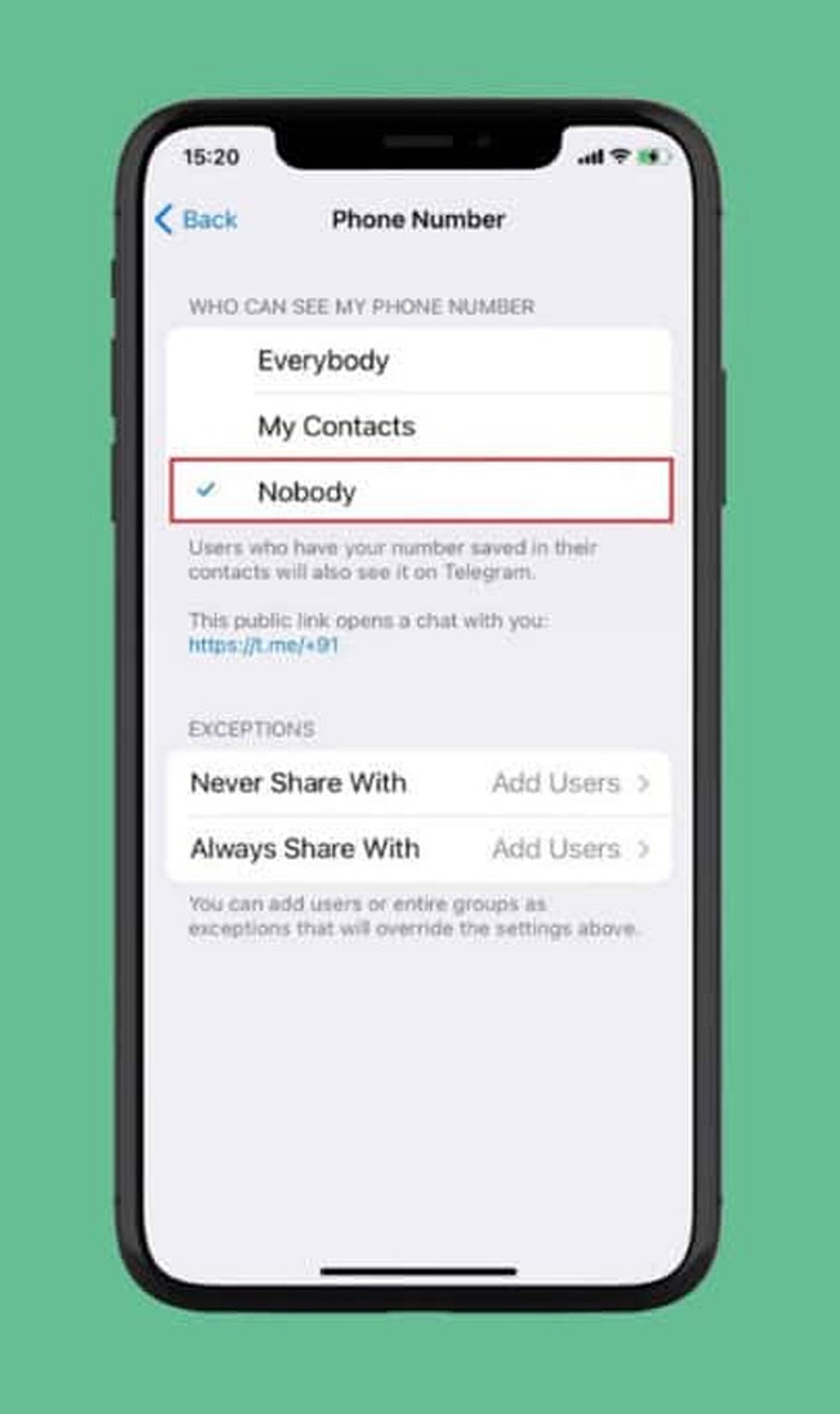
    Select Phone Number

    Under the Privacy section, tap Phone Number. Here you can manage who can view your registered mobile number and who can find you by it.

    Choose Visibility: Nobody

    Set Who can see my phone number to Nobody. This prevents most Telegram users from viewing your number.

    Restrict Number Discovery

    Under Who can find me by my number, select My Contacts. This limits discoverability to people already in your address book, reducing unwanted contact.

    Create a Telegram Username

    Set up a unique username (e.g., @YourName) so others can reach you without needing your phone number. Go to Settings > Username to create one.

    Review Contact-Based Visibility

    People who already have your number saved may still see your account via contact synchronization. Review your contact sync settings and consider deleting synced contacts for tighter control.

    Check Privacy Settings Regularly

    Telegram updates may introduce new privacy options or change existing ones. Periodically revisit your Privacy and Security settings to ensure your preferences remain intact.

    By following these steps, you can significantly enhance your privacy on Telegram and communicate with confidence.

  • How to Refresh Your Instagram Explore Page: Step-by-Step Guide

    How to Refresh Your Instagram Explore Page: Step-by-Step Guide

    Open Instagram Settings

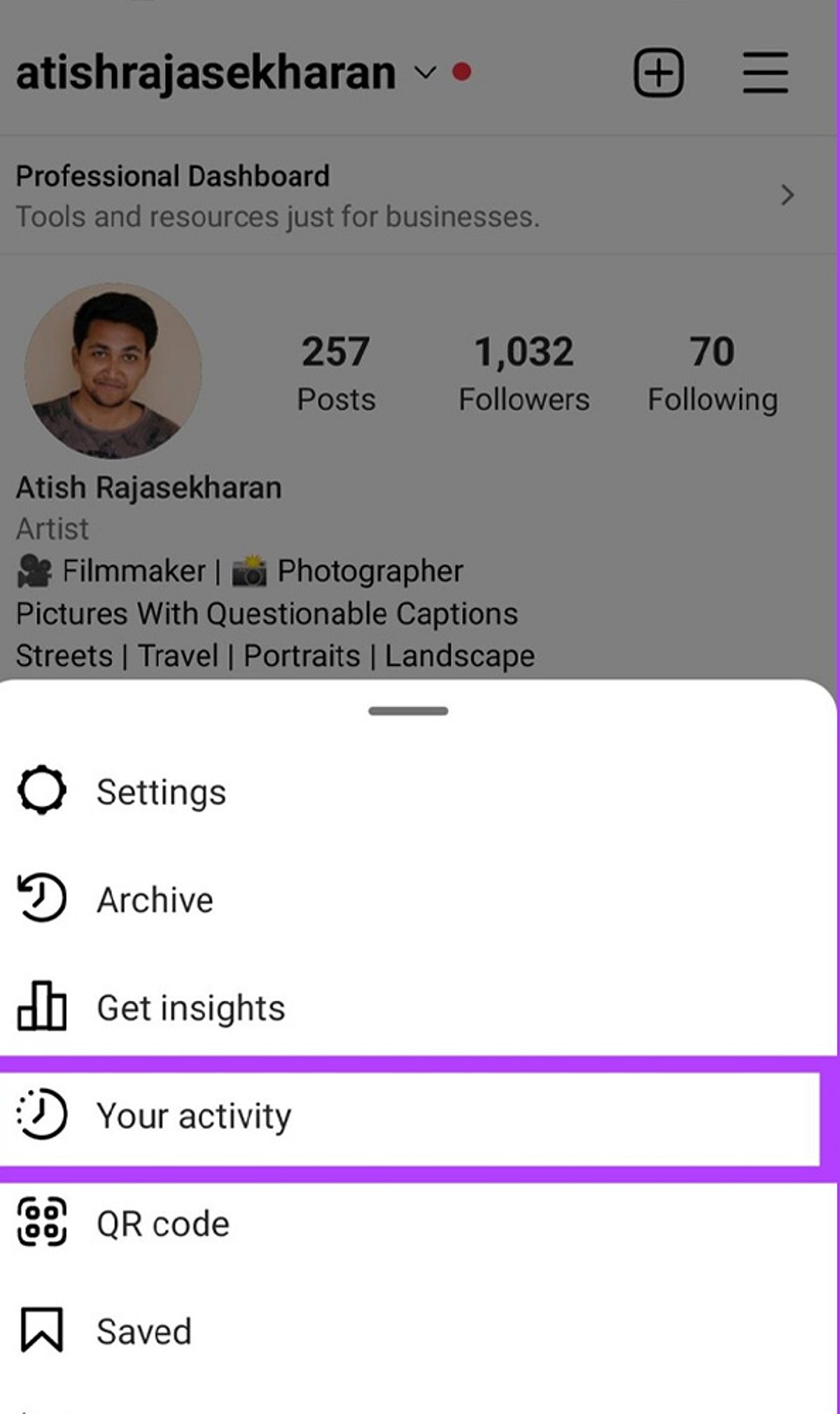
    Launch the Instagram app and tap your profile icon in the bottom right. Then tap the three-line menu (hamburger icon) in the top right and select Settings to begin resetting the content recommendations shown on your Explore page.

    Find Content Preferences

    Within Settings, scroll down and tap Content Preferences. This section houses Instagram’s controls for managing suggested posts and recommendation settings.

    Select Reset Suggested Content

    Tap Reset Suggested Content to refresh recommendations across Explore, Reels, and Feed with a cleaner content profile. Instagram will remove the signals it currently uses to suggest posts.

    Confirm the Reset

    Review the reset information and confirm your choice. This action clears Instagram’s current recommendation signals, giving you a fresh start.

    Refresh Your Explore Page

    After resetting, Instagram gradually rebuilds recommendations based on the content you view and interact with. Be patient—it takes time for the algorithm to learn your new preferences.

    Avoid Unwanted Content

    Use the Not Interested option on posts you dislike to actively tell Instagram what content you want to see less often. This helps refine your Explore page faster.

    Engage With Preferred Content

    Like, save, and share posts matching your interests to help Instagram personalise your Explore recommendations. The more you interact with relevant content, the better the suggestions become.

    Unfollow Irrelevant Accounts

    Unfollow accounts that no longer match your interests to reduce unwanted content influencing your Explore page. A cleaner follow list leads to better recommendations.

    Clear Your Search History

    Clear recent searches to remove old search signals that may continue influencing Instagram’s content recommendations. Go to Settings > Privacy > Search History and tap Clear All.

  • Trump Slaps Fresh Tariffs on India, China, and 60 Nations Over Forced Labor Concerns

    Trump Slaps Fresh Tariffs on India, China, and 60 Nations Over Forced Labor Concerns

    US President Donald Trump has imposed a new round of tariffs on imports from at least 60 trading partners, including India, China, Japan, and the United Kingdom, citing inadequate enforcement of bans on goods produced through forced labor. The duties, ranging from 10% to 12.5%, take effect at 12:01 AM Friday, replacing temporary import taxes that expire the same day.

    The move follows a February Supreme Court ruling that struck down Trump’s earlier ‘Liberation Day’ tariffs imposed in April 2025. The administration frames this action as part of its broader effort to curb forced labor and encourage trading partners to adopt stricter import regulations.

    How the New Tariff Structure Works

    Countries such as China, the United Kingdom, and Japan—which the White House says lack laws prohibiting imports made with forced labor—will face 12.5% tariffs. Meanwhile, economies including India, Sri Lanka, and the European Union will continue to face 10% tariffs after introducing or committing to forced labor import restrictions.

    Some imports, including products covered under the US-Mexico-Canada Agreement (USMCA) and oil and gas shipments, have been exempted from the latest tariff measures.

    US Defends Move as Human Rights Measure

    “The United States has had a forced labor import ban for nearly a century, and rigorously enforces it. It’s well past time for our trading partners to do the same,” said US Trade Representative Jamieson Greer. “Today’s action will begin to correct what is both a human rights abuse and a distortive trade practice to improve the welfare of workers everywhere.”

    India Avoids Higher Tariff

    For India, the latest announcement means exports to the US will continue to attract a 10% tariff, avoiding the additional 12.5% penalty previously threatened. The White House noted that India, along with Cambodia, Guatemala, Honduras, Sri Lanka, and Trinidad and Tobago, had introduced forced labor import prohibitions or made commitments under reciprocal trade agreements, leading to the lower tariff rate.

    More Trade Measures Expected

    According to a Washington Post report, the Trump administration is preparing another round of tariffs targeting countries accused of subsidizing excess manufacturing capacity. The proposed measures are expected to focus on low-cost imports that US officials argue disadvantage American manufacturers, signaling that more trade actions could be announced in the coming weeks.

  • Instagram Bans Harassing Videos Recorded with Meta Smart Glasses to Protect Privacy

    Instagram Bans Harassing Videos Recorded with Meta Smart Glasses to Protect Privacy

    Instagram is tightening its enforcement against secretly recorded videos captured using Meta’s smart glasses. The platform will now remove content that uses wearable cameras to harass individuals, particularly prank and pickup-style videos, following growing criticism over privacy violations.

    The policy change comes after a surge of clips showing creators approaching strangers, service workers, and women in public without their knowledge, then posting the footage as humorous content. This sparked widespread debate about consent and digital privacy.

    Instagram chief Adam Mosseri announced the update during a Q&A session on his Instagram Stories. “If you’re posting content that is taking advantage of people and harassing them, like a lot of these pickup line kind of videos, then we’re going to take the content down,” Mosseri said. He added, “We don’t want people to be surreptitiously taking videos of other people and harassing them and then posting them on our platform. So we’re trying to fight that every way we can.”

    According to a Business Insider report, Instagram has already deleted two popular accounts that frequently posted pickup videos recorded with Meta smart glasses. A Meta spokesperson confirmed that both accounts violated Instagram’s harassment policies.

    Meta has also introduced additional privacy safeguards in its smart glasses software. The company acknowledged that the recording indicator light on older models could be covered or altered, making it difficult for people to know if they were being recorded. A recent software update now automatically turns off the camera when it detects that the recording indicator light is blocked or tampered with.

    Despite these measures, concerns persist about the effectiveness of the recording indicator. The LED light is small and can be easily missed in bright outdoor conditions or large public spaces, leaving people unaware they are being filmed.

    Meta has not yet disclosed how it will determine whether uploaded videos violate the new policy, nor has it revealed how many videos have been removed since the policy took effect. The company has also not detailed how the rules will be applied in practice.

  • OpenAI Launches ChatGPT Health in the US — Here’s Why Global Users Are Still Waiting

    OpenAI Launches ChatGPT Health in the US — Here’s Why Global Users Are Still Waiting

    OpenAI has begun rolling out its dedicated Health experience within ChatGPT to eligible users in the United States. However, the end of the waitlist does not mean the feature is available worldwide. Users in India and many other regions still cannot access the health-focused tool, regardless of their subscription plan.

    Who Can Access ChatGPT Health?

    The feature is currently limited to users who are 18 years or older and based in the US. It is accessible across ChatGPT Free, Go, Plus, and Pro plans on both the web and iOS platforms. Android support has not yet been introduced. This regional restriction means that even users who previously joined the waitlist outside the US will not see the Health option in their ChatGPT sidebar.

    Why the Delay for Other Regions?

    OpenAI has not announced a timeline for expanding ChatGPT Health to other countries. The phased rollout is a deliberate strategy, and the company has not indicated when users in India, Europe, or other regions can expect access. According to OpenAI’s Help Center, “Health is available on a phased basis, while Android support is yet to come.”

    What Does ChatGPT Health Do?

    ChatGPT Health is designed to integrate health-related information into a single platform. Users can link supported medical records and Apple Health data, then access lab results, medication details, sleep patterns, activity data, and ask questions based on their personal health information. The tool can help users understand medical information, prepare questions for appointments, track wellness trends, and identify changes over time.

    Privacy and Safety

    OpenAI has emphasized that ChatGPT Health is meant to support medical care, not replace doctors or professional treatment. The company also stated that health data and conversations using the feature are not used to train the underlying foundational model or for targeted advertising.

    As the rollout continues, users outside the US will have to wait for further announcements from OpenAI. The company has not provided a specific date for global availability.

  • Delhi High Court Rules No Copyright Breach in OpenAI’s AI Training Practices

    Delhi High Court Rules No Copyright Breach in OpenAI’s AI Training Practices

    The Delhi High Court has delivered a landmark ruling in favor of OpenAI, stating that the company’s use of copyrighted material to train its artificial intelligence models does not violate copyright law. The decision, announced on Friday, rejected an interim injunction sought by the news agency ANI in its ongoing copyright lawsuit against the AI developer.

    Justice Amit Bansal held that OpenAI’s act of storing ANI’s works for training its Large Language Models (LLMs) does not, by itself, constitute copyright infringement. The court further found that ANI failed to establish a prima facie case that ChatGPT had memorized or reproduced its copyrighted content in its responses.

    “OpenAI’s act of storing ANI’s works does not amount to copyright infringement,” Justice Bansal observed, adding that “ANI had failed to show that any memorization or regurgitation of ANI’s work has happened from responses generated by ChatGPT.”

    ‘Irreparable Injury’ to Public if AI Training is Stopped

    The court emphasized that granting an interim injunction would have wider consequences beyond the parties involved. Justice Bansal highlighted that irreparable injury would be caused not only to OpenAI but also to the public at large if such an injunction were granted. The ruling noted that restricting AI companies from training their models using copyrighted material could adversely affect technological innovation and scientific progress.

    ANI Sought Rs. 2 Crore in Damages

    ANI filed the lawsuit in November 2024, alleging that OpenAI had used its copyrighted news reports without permission to train ChatGPT. The agency sought Rs. 2 crore in damages and asked the court to permanently restrain the company from storing, publishing, reproducing, or using its content. ANI argued that ChatGPT generated responses that were “verbatim or substantially similar” to its reports, and also alleged that the chatbot produced “hallucinated” responses falsely attributed to the agency.

    OpenAI Cited Publicly Available Data

    OpenAI rejected the claims, stating that its AI models are trained based on publicly available data. According to the court, OpenAI informed the court that it had blacklisted the domain name of ANI in October 2024, following which no new content from the website can be used for training any AI model. Senior counsel Amit Sibal, representing OpenAI, argued that “copyright protects the expression of ideas; there is no monopoly on facts” and noted that OpenAI’s servers are located outside India.

    This case represents one of the first landmark decisions in India concerning the use of copyrighted works for training generative AI, setting a significant precedent for the technology sector.

  • EU Imposes Record €890 Million Fine on Google for Violating Digital Markets Act

    EU Imposes Record €890 Million Fine on Google for Violating Digital Markets Act

    The European Union has fined Google’s parent company, Alphabet, €890 million (approximately Rs. 9,796 crore) for breaching the Digital Markets Act through its Search and Play Store practices. The European Commission announced the decision on Thursday, concluding a two-year investigation that found Google gave its own services an unfair advantage in search results and restricted app developers’ ability to offer alternative payment options.

    The fine is split into €460 million for Google Search and €430 million for Play Store violations. Regulators determined that Google prominently displayed its own Shopping, Hotels, Flights, and other services over rival platforms, and prevented Android developers from directing users to cheaper payment methods outside the Play Store.

    In response, the European Commission has ordered Google to treat competing services fairly in search results and allow developers to freely promote alternative payment systems. While Google implemented some changes during discussions with regulators, the Commission concluded these adjustments did not fully comply with the Digital Markets Act.

    Google has announced its intention to appeal the decision, arguing that the Digital Markets Act makes its products less useful and could increase Android users’ vulnerability to scams and harmful links. This penalty marks Google’s first major fine under the Digital Markets Act and signals the EU’s continued strict enforcement of digital competition rules against large technology companies.

  • Bitcoin Surges Past $66K: Can the Rally Overcome Seasonal Headwinds?

    Bitcoin Surges Past $66K: Can the Rally Overcome Seasonal Headwinds?

    Bitcoin has reclaimed the $66,000 level, fueled by strong institutional demand and healthy market activity. However, seasonal slowdown risks and key resistance levels could determine whether the rally continues.

    Key Takeaways

    • Bitcoin has recovered above $66,000 with support from strong institutional demand.
    • The $68,500 to $70,000 range remains the next major hurdle for buyers.
    • Seasonal market weakness could slow momentum despite positive long-term signals.

    Bitcoin has crossed the $66,000 mark once again after a brief period of weak price action. This move has brought fresh confidence to the crypto market, as many traders view this level as an important psychological and technical point.

    At the time of writing, Bitcoin trades between $65,600 and $66,000. The digital currency now holds a market value of more than $1.31 trillion, while its circulating supply stands near 20.06 million BTC. Daily trading volume remains between $27 billion and $30 billion, indicating active participation from both buyers and sellers.

    Strong Demand Supports the Recovery

    Bitcoin has surpassed $66,000 for multiple reasons. One of the main drivers is continued strong institutional demand. This constant interest from the financial industry has helped stabilize the market despite various price fluctuations.

    Bitcoin remains the world’s largest cryptocurrency, representing over 55% of the entire crypto market. This dominance shows that investors continue to place more confidence in Bitcoin than in smaller altcoins, especially during uncertain times.

    Technical Charts Show Improved Strength

    The latest price move has improved Bitcoin’s technical picture. After the recovery, the price now sits above several short-term moving averages that traders use to gauge market trends. This shift has encouraged many investors who were waiting for confirmation before entering the market.

    The next important resistance lies between $67,500 and $68,500. If Bitcoin moves above this range, many traders may shift their focus to $70,000, a major psychological price level. On the downside, Bitcoin has support between $64,000 and $65,000. If the price falls below that area, the next major support appears near $62,000.

    Blockchain Data Paints a Positive Picture

    On-chain data confirms a long-term bullish outlook. Many holders are choosing to keep their Bitcoin rather than sell after the recent recovery. This tendency reduces the supply of coins available on exchanges, lowering the risk of a sharp price decline.

    Quantities of Bitcoin stored on exchanges remain lower than in previous market cycles, indicating fewer sellers. Additionally, the Bitcoin network continues to show stability as miners remain active.

    Seasonal Slowdown May Slow the Rally

    Despite the positive signs, history shows that Bitcoin often moves more slowly during this part of the year. Trading activity typically falls during the middle months as many large investors reduce market participation. Lower activity can lead to smaller price moves and higher day-to-day volatility.

    This seasonal trend does not always lead to a price drop, but it can delay the next major rally. Many analysts believe Bitcoin could trade between $64,000 and $68,000 until a strong new catalyst emerges. Fresh investment, positive economic news, or supportive crypto regulations could provide the necessary push.

    Global Economic Factors Still Matter

    Bitcoin no longer moves solely on crypto-specific news. The global economy now plays a major role in its price. Investors continue to watch inflation reports, central bank decisions, employment numbers, and interest rate expectations. These events affect confidence across all financial markets.

    If inflation continues to cool and central banks begin to lower interest rates, investors may allocate more capital to assets like Bitcoin. However, strong economic data could delay rate cuts, strengthening the US dollar and creating short-term pressure on cryptocurrencies.

    Market Confidence Continues to Improve

    Investor confidence has improved after Bitcoin climbed back above $66,000. Many traders now believe buyers have defended an important support zone. This view has encouraged more participants to return after waiting through the recent pullback.

    The futures market also looks healthier than before, with traders not building excessive leverage. This balance reduces the risk of sudden liquidations that often cause sharp price drops. Even with better sentiment, experienced investors continue to manage risk carefully, as Bitcoin can still move sharply within a single day.

    Why This Matters

    Bitcoin is widely regarded as the bellwether of the cryptocurrency market. When BTC breaks through a significant barrier like $66,000, it boosts investor perception of digital assets. However, seasonal influences can make market sentiment fickle, making this period crucial for traders, investors, and the broader crypto ecosystem.

    Outlook

    Bitcoin has gained traction after returning to the $66,000 level. With a market capitalization over $1.31 trillion, daily trading volume between $27 billion and $30 billion, and strong backing from long-term holders, the market shows resilience despite high volatility.

    In the coming weeks, Bitcoin’s price direction will become clearer. Breaking above the $68,500 resistance could pave the way toward $70,000. Conversely, losing current support may lead to a consolidation phase.

    FAQs

    1. Why did Bitcoin move above $66,000? Strong institutional demand, steady market confidence, and positive technical signals helped Bitcoin recover above this key level.
    2. What is the next major resistance for Bitcoin? Analysts view the $68,500 to $70,000 range as the next important resistance area.
    3. Why do experts mention a seasonal slowdown? Bitcoin often sees lower trading activity during certain months, which can reduce momentum and delay major price moves.
    4. Does institutional interest still support Bitcoin? Yes. Large investors continue to hold Bitcoin, which has helped maintain market stability during recent volatility.
    5. Can Bitcoin reach new highs this year? If Bitcoin breaks above major resistance with strong buying volume and favorable economic conditions, many analysts believe further gains remain possible.

  • AWS AI & ML Certifications: A Guide to Choosing the Right Path in 2026

    AWS AI & ML Certifications: A Guide to Choosing the Right Path in 2026

    AWS offers a growing range of AI and machine learning certifications for beginners, developers, data engineers, and experienced AI professionals. Each credential is designed for different skills and career goals. Understanding the certification path makes it easier to choose the right option. This guide compares the key certifications to help you decide which one best fits your career.

    Overview

    AWS offers a role-based AI and machine learning certification portfolio that supports beginners, machine learning engineers, data engineers, and developers building AI-powered applications. The certifications cover AI fundamentals, machine learning model development, MLOps, data engineering, foundation models, retrieval-augmented generation (RAG), and Amazon Bedrock.

    AWS has modernized its certification ecosystem by replacing the legacy Machine Learning – Specialty path with role-specific credentials aligned with today’s AI and generative AI workloads. AWS certifications used to funnel almost everyone toward one exam. This has changed, and the lineup now spans across four credentials, each built for a distinct kind of work. It includes a foundational exam for newcomers, an associate-level path for engineers who build and deploy models, a data-focused associate track, and a professional certification for developers shipping generative AI features.

    The Machine Learning Specialty exam was retired for new candidates on March 31, 2026. Existing holders will keep the certification until its original expiry. More than an administrative change, this shift signals AWS’s move toward role-based certifications that better match candidates’ actual job responsibilities.

    What the Current Lineup Covers

    The active AWS AI and ML certifications include:

    • AWS Certified AI Practitioner (Foundational): Covers core AI and machine learning concepts, responsible AI practices, and how AWS services support common use cases. No coding background is required.
    • AWS Certified Machine Learning Engineer – Associate: Focuses on building, tuning, deploying, and monitoring machine learning models using services such as Amazon SageMaker, Amazon S3, and Amazon CloudWatch. Built for professionals who already have hands-on ML experience.
    • AWS Certified Generative AI Developer – Professional: Validates the ability to integrate large language models into applications, build retrieval-augmented generation (RAG) architectures, and work with vector databases and Amazon Bedrock for production-ready AI solutions.
    • AWS Certified Data Engineer – Associate: Centers on designing and managing data pipelines, storage, and reliable data infrastructure that supports machine learning and generative AI workloads.

    Matching the Exam to the Job

    A newcomer pivoting into AI from another field or a business analyst who needs to speak the same language as an engineering team gets the most value from AI Practitioner. It builds a baseline in AI and ML concepts without demanding coding depth.

    Someone already training and deploying models is better served by ML Engineer – Associate, which centers on data preparation, model tuning, and running workloads in production rather than staying inside a notebook.

    Developers already working with large language models, RAG pipelines, and Bedrock fit the Generative AI Developer – Professional role. This credential expects prior implementation experience rather than theory alone, and choosing it over AI Practitioner or ML Engineer comes down to one question: is the work built around foundation models or traditional ML pipelines?

    Data engineers who feed pipelines into ML systems should look at Data Engineer – Associate, a track that rarely gets the same attention as the AI-branded exams but supports all of them underneath.

    Product managers and stakeholders overseeing AI projects without building them get more practical value from AI Practitioner than from an engineering-level exam, since the goal is informed oversight rather than hands-on implementation.

    Deciding Where to Start

    The simplest approach starts with hands-on experience, not ambition. Someone new to AWS and AI belongs in AI Practitioner first. Someone already building or deploying models can skip straight to ML Engineer – Associate. A developer working with foundation models in production is the right candidate for Generative AI Developer – Professional.

    A common progression looks like AI Practitioner, then ML Engineer – Associate or Data Engineer – Associate depending on the role, then Generative AI Developer – Professional once foundation model work becomes part of the job.

    For those already deep into machine learning specialty prep, finishing it still holds some value, given less than a year remains before it closes to new candidates. For everyone else, moving straight to ML Engineer Associate offers more current coverage and a clearer path forward.

    The strongest certification choice rarely lines up with the most advanced option available. It lines up with what the job actually requires now and with where that job is headed next.

    Final Thoughts

    AWS restructuring its AI credentials around roles rather than a single tiered ladder points to where cloud certification is heading in general. It clarifies that the exam is less about climbing a fixed hierarchy and more about proving specific, current skills tied to specific work. Candidates who treat certification as a career-mapping exercise, rather than a checklist, will likely find their credentials relevant as AWS splits its portfolio.

  • PS5 System Software Update: Step-by-Step Installation Guide (Internet, USB, Safe Mode)

    PS5 System Software Update: Step-by-Step Installation Guide (Internet, USB, Safe Mode)

    Key Takeaways

    • PS5 system software updates improve performance, security, and compatibility with newly released games.
    • The console can update through the internet, a USB storage device, or Safe Mode when errors occur.
    • Automatic updates allow the system to download new software versions in the background.

    Updating your PlayStation 5 (PS5) system software is essential for smooth performance, stronger security, and access to the latest features from Sony. Updates typically include bug fixes, stability improvements, and compatibility support for new games. The PS5 can update automatically online or install updates manually using a USB device when internet access is unavailable. Below are the easiest ways to update your PS5 system software.

    Method 1: Update via the Internet

    Updating over the internet is the most popular method. When your console is connected to the internet, it can download the latest update directly from Sony’s servers.

    1. Turn on your PS5 and go to the home screen.
    2. Select Settings (the gear icon in the top-right corner).
    3. Scroll down and choose System.
    4. Select System Software.
    5. Open System Software Update and Settings.
    6. Select Update System Software.
    7. Choose Update Using Internet.

    After this, the system checks for the latest software version. If a new update is available, the PS5 begins downloading and installing it. During installation, the console may restart automatically—this is normal.

    Method 2: Update via a USB Drive

    A USB update is useful when your console cannot connect to the internet or when you need a manual installation. The update file is downloaded on a computer and then transferred to the console using a USB drive.

    1. Format a USB drive as FAT32 or exFAT on your computer.
    2. Create a folder named PS5 on the USB drive.
    3. Inside that folder, create another folder named UPDATE.
    4. Download the latest PS5 system software file from the official PlayStation website.
    5. Save the file inside the UPDATE folder with the name PS5UPDATE.PUP.
    6. Insert the USB drive into your PS5.
    7. Go to Settings > System > System Software > System Software Update and Settings.
    8. Select Update from USB Storage Device and confirm the installation.

    Once confirmed, the console installs the update and restarts automatically.

    Method 3: Update in Safe Mode

    Safe Mode is used when the console has difficulty starting or when a normal update fails. This mode provides troubleshooting options that allow you to update the system software.

    1. Turn off your PS5 completely.
    2. Press and hold the Power button until you hear a second beep (after a few seconds).
    3. Connect your controller with a USB cable and press the PS button.
    4. Select Update System Software from the Safe Mode menu.
    5. Choose Update Using Internet or Update from USB Storage Device.

    Enabling Automatic Updates

    Automatic updates let your PS5 download system software in the background without manual intervention.

    1. Open Settings.
    2. Select System.
    3. Choose System Software Update and Settings.
    4. Turn on Download Update Files Automatically and Install Update Files Automatically.

    Conclusion

    Regularly updating your PS5 system software keeps your console running properly and ensures support for new games and features. You can update via the internet, a USB device, or Safe Mode. Staying up to date helps maintain stability and enhances overall performance.

    Frequently Asked Questions

    How often should I update my PS5 system software?

    You should update whenever a new version is released to maintain stability and security.

    Can I update my PS5 without internet access?

    Yes, you can download the update on a computer and install it via a USB drive.

    What happens if my PS5 turns off during an update?

    An unexpected shutdown may interrupt the installation. In that case, try reinstalling the update in Safe Mode.

    Why are system software updates important for new games?

    Many modern games require the latest system software to run properly and support new features.

    Can Safe Mode help fix update errors?

    Yes, Safe Mode provides repair tools and allows you to update the system software if a normal installation fails.