Blog

  • Why Online Loans Are Becoming the Go-To Solution for Emergency Expenses

    Why Online Loans Are Becoming the Go-To Solution for Emergency Expenses

    Unexpected expenses rarely arrive at a convenient moment. A vehicle can break down, a heating system can fail, or an unexpected medical bill may appear before the next paycheck, requiring urgent financial decisions.

    Growing numbers of borrowers are responding by turning to online loans. Digital lending has become increasingly popular because it combines speed, convenience, and accessibility when unexpected expenses demand timely financial support.

    Understanding what’s driving this shift helps borrowers make more informed decisions. Looking beyond fast funding to compare loan features and repayment terms can lead to choices that better fit individual financial needs.

    The Shift Toward Online Loans for Emergency Expenses

    Online lending has evolved rapidly over the past decade, becoming a mainstream financial option for many households facing urgent and unexpected expenses.

    Digital applications, automated technology, and improved customer experiences have driven much of this growth. Borrowers increasingly value faster processes that reduce paperwork and simplify access to funding during unexpected financial emergencies.

    Changing consumer expectations have reinforced the shift. Many people now expect financial services to offer the same convenience and accessibility as online shopping or mobile banking, particularly when time is limited or when emergencies require prompt action.

    Economic pressures have also increased demand. Inflation, rising repair costs, and higher household expenses have reduced emergency savings, making personal loans a practical way to bridge unexpected financial gaps when essential costs can’t wait.

    Speed and Convenience Are Reshaping Emergency Borrowing

    When unexpected costs become a reality, every hour matters. Online lending platforms have streamlined applications and ease of funding, making them especially appealing during financial emergencies.

    Emergency Expenses Leave Little Time to Wait

    Many financial emergencies share one characteristic: delaying action often makes the problem worse. A broken vehicle can disrupt work, while a leaking pipe may cause more extensive and expensive property damage if left unrepaired.

    Overdue utility bills can lead to additional fees or service interruptions, while unexpected medical expenses often require prompt payment. In situations like these, many borrowers prioritize funding that avoids lengthy approval processes.

    Faster Applications Reduce Delays

    Modern online lenders have streamlined the borrowing experience. Digital applications can often be completed on a computer or smartphone, while identity and income verification increasingly rely on secure electronic systems instead of paper documents.

    Automated review processes also reduce waiting times compared with many traditional lenders. Rather than visiting a physical branch, borrowers can often submit applications whenever convenient, including evenings and weekends.

    Quick Funding Helps Resolve Urgent Costs

    Approval is only part of the equation during a financial emergency. Access to funds is equally important when essential expenses cannot be delayed or ignored.

    Many online lenders provide funding within one or two business days, with some offering even faster disbursement depending on eligibility and banking arrangements. That shorter timeline can help borrowers cover urgent expenses before costs escalate.

    Greater Accessibility Is Expanding Borrowing Options

    Digital lending has also broadened access to emergency financing by giving borrowers more ways to explore available options. Technology has made comparing lenders easier while encouraging lenders to prioritize more flexible approaches to evaluating applications.

    Many online lenders today consider factors beyond traditional credit scores, including employment, income, and overall financial circumstances. Some also offer soft-credit prequalification, making it easier to compare loan offers without affecting a borrower’s credit profile.

    Comparing CreditNinja online loans alongside other lenders helps borrowers evaluate loan amounts, eligibility, funding timelines, and repayment terms. Looking beyond a single feature often provides a clearer picture of the overall borrowing experience.

    Greater accessibility doesn’t mean every applicant will qualify or receive the same terms. It does give borrowers more opportunities to compare lenders offering products designed for different financial situations and borrowing needs.

    Predictable Repayment Structures Offer Greater Financial Clarity

    Speed may attract borrowers initially, yet repayment often determines whether a loan fits comfortably within an overall budget. Predictability has therefore become another reason many people prefer online installment loans for emergency expenses.

    Fixed monthly payments help borrowers understand exactly how much is due each billing cycle. Knowing the repayment schedule from the date the loan is taken can reduce uncertainty around household expenses and make budgeting easier during a stressful financial period.

    Installment loans also differ from revolving forms of credit because they generally include a defined repayment timeline. Borrowers know when the loan is expected to be fully repaid rather than carrying an open-ended balance (such as credit card debt) that can continue growing over time.

    A clearer loan structure can make it easier to plan for future expenses while balancing other financial priorities. Understanding how repayments fit within a household budget remains just as important as obtaining funds quickly when managing long-term financial stability.

    Choosing an Online Loan That Fits Your Financial Needs

    Funding speed is important, but it shouldn’t be the only factor when evaluating an online loan. Taking a few extra minutes to compare loan features can lead to a borrowing decision that better supports both immediate needs and long-term financial stability.

    When comparing online loans, borrowers should consider: Annual Percentage Rate (APR) – the yearly cost of borrowing, expressed as a percentage, repayment terms, funding timelines, origination or administrative fees, prepayment policies, and overall lender transparency.

    Comparing these factors helps borrowers understand the total cost of borrowing rather than focusing only on monthly payments or approval speed. Looking at the full picture often leads to more informed financial decisions.

    Borrowing only what is necessary and choosing repayment terms that fit comfortably within a household budget can make emergency financing more manageable over time. Careful planning also reduces the likelihood of future financial strain.

    Making More Informed Borrowing Decisions

    Online loans have become a popular option for emergency expenses because they align with consumer expectations for immediate, digital-first financial services. The application process tends to be faster, access can be wider, and the digital setup makes things easier, supporting timely financial decisions.

    Clear repayment details and consistent installment schedules make these loans more appealing in sudden situations. However, getting the money quickly isn’t the only factor that matters—understanding how repayment works can be just as important when something unexpected arises.

    Even if emergencies can’t be predicted, borrowing decisions can still be guided step by step. Comparing different lenders, reviewing loan conditions carefully, and choosing an option that matches both immediate needs and longer-term financial objectives helps build stronger financial confidence.


  • Today’s Top Stories: Tata Semiconductor Plant, US Crypto Regulation, Revolut’s $115B Valuation, and AI Psychosis Concerns

    Today’s Top Stories: Tata Semiconductor Plant, US Crypto Regulation, Revolut’s $115B Valuation, and AI Psychosis Concerns

    From India’s semiconductor push to new US crypto laws, this morning’s headlines cover technology, finance, education, and artificial intelligence. Here’s what you need to know.

    India’s First Chip Fab Nears Launch

    Tata Electronics’ Dholera semiconductor plant is gearing up to begin production, marking a turning point for India’s semiconductor journey. The facility will initially manufacture mature-node chips used in automobiles, industrial equipment, and power electronics, helping reduce import dependence while strengthening domestic manufacturing.

    B.Com Graduates Push for Teaching Opportunities

    Hundreds of B.Com graduates in Karnataka are questioning why they have been left out of eligibility for teaching posts in government first-grade colleges. They argue that commerce graduates are fully qualified to teach commerce subjects and are urging the government to revisit the recruitment rules.

    US Senate Tightens Rules on Crypto and Public Office

    A new bill in the US Senate proposes banning presidents and other federal officials from issuing or promoting digital assets while they hold office. The move aims to avoid conflicts of interest as lawmakers continue work on a broader framework for regulating cryptocurrencies.

    Revolut’s Meteoric Rise Continues

    British fintech giant Revolut has reached a staggering $115 billion valuation after a secondary share sale, making it Europe’s most valuable startup. The jump reflects rapid global expansion, strong financial performance, and growing investor confidence, while boosting CEO Nik Storonsky’s personal fortune.

    Beyond AI Hallucinations: Experts Warn of ‘AI Psychosis’

    Researchers are drawing attention to a new concern known as “AI psychosis”—the possibility that prolonged interactions with AI chatbots could reinforce delusional beliefs in some vulnerable users. While not a recognized medical diagnosis, experts say the issue deserves closer study as AI becomes a bigger part of everyday life.

  • Why Bank Fraud Models Need Validation, Not Just Accuracy: A Deep Dive into the Blind Spot

    Why Bank Fraud Models Need Validation, Not Just Accuracy: A Deep Dive into the Blind Spot

    Every large bank now runs anti-money-laundering (AML) and fraud-detection models that score millions of transactions daily. The marketing tells one story—detection rates climbing, false positives falling, model architectures getting smarter. But inside the engineering organizations that ship and operate these systems, a different story is told: the models work on the day they were built. What happens on day 200 is a harder question most banks answer poorly.

    Few have answered that harder question as convincingly as Manu Subhashchandrabose, Director of Digital and AI Quality Engineering. His fraud- and AML-validation programs have set new benchmarks across the U.S. regional-banking sector, leading quality engineering behind a $200M+ multi-year core-banking transformation spanning six affiliate banks. The program went live with zero critical fraud-related defects and achieved 100% reconciliation accuracy on the data fraud models depend on.

    The Blind Spot: Accuracy vs. Validation

    Manu puts it bluntly: “Accuracy is not the real problem. Validation is.” A bank that confuses the two will fund a model team, ship a model, watch dashboards report 98% accuracy, and discover only after a regulatory examination that the 2% it missed was the 2% that mattered. The blind spot at the center of modern fraud detection is not in the model—it is in everything around it.

    The Drift Banks Do Not Want to See

    Fraud models are trained on yesterday’s behavior. Customers, criminals, upstream data feeds, rule libraries, and integration layers all shift continuously. The model does not. In the time it takes a quarterly compliance committee to meet, a behavioral fraud model can lose meaningful detection signal without producing any visible alert that something is wrong.

    “Fraud models inherit the weaknesses of the systems around them,” Manu explains. “If data pipelines, ETL jobs, or integration layers are flawed, even the most accurate model becomes blind.”

    His team built a data-lineage validation framework that traced every fraud-critical field from origin to model input, with reconciliation at each hop and threshold tests on the values. The result: 100% reconciliation accuracy on fraud-critical data, and model behavior stopped diverging across affiliate banks.

    Why False Positives Are a Validation Problem, Not a Tuning Problem

    Most banks treat AML false-positive rates as a tuning problem. Manu argues this approach is backwards. “Rules are outdated, undocumented, and inconsistent across systems. You can tune a threshold all day and never fix the fact that the underlying scenario library is missing cross-channel patterns, structured transactions, and country-specific triggers.”

    His teams designed scenario-based testing for structured transactions, currency-transaction-report triggers, sanctions screening, and behavioral anomalies. One AML modernization program produced a 40% increase in scenario coverage and a 15–20% reduction in false positives—because the scenario library got correct, not because someone moved a threshold.

    The Cloud Migration That Almost Broke a Fraud Stack

    The riskiest moment in a fraud model’s life is when its inputs move. Cloud migration of core banking systems means shifting customer profiles, transaction histories, AML flags, and behavioral features into cloud-native pipelines. A single mis-mapped field can corrupt a feature and degrade a model in ways that look like normal variation in alert volume.

    Manu led data-migration validation for one such cloud transformation. His teams built SQL-driven reconciliation across source and target, automated validation scripts on every batch, and data-quality dashboards that surfaced anomalies before the model team did. The program achieved 100% reconciliation accuracy on fraud-critical data and prevented post-migration degradation an accuracy-only regime would have missed.

    Continuous Validation as a Discipline, Not a Project

    The technical scaffolding is only half the story. The other half is governance. On the multi-year core banking transformation, Manu’s QA organization grew to 55 engineers across 10 teams. Quality gates were embedded in the build pipeline, and CI/CD integration accelerated AML rule deployment by 30–40% because rule changes were validated against a living scenario library on the way in rather than against a quarterly batch run.

    “Models degrade over time,” Manu says. “Validation must evolve with customer behavior, transaction patterns, and emerging fraud vectors. Treat the model as a living system, not a static algorithm.”

    What Regulators Are Now Asking For

    The supervisory environment has moved in his direction. Examiners increasingly probe for model-validation evidence rather than accuracy summaries. The Anti-Money Laundering Act amendments and OCC guidance have raised the bar on explainability, traceability, and ongoing validation.

    “Regulators are raising the bar,” Manu warns. “They are asking for explainability, traceability, and validation, not just accuracy metrics. The teams that can produce that evidence on demand are the ones that built it into the system.”

    His programs reported a 35–50% reduction in fraud-related production defects and 85–90% automation coverage across AML, CTR, sanctions screening, and high-risk transaction monitoring. The number that matters most to him is the absence of a category: no fraud-related production defect required executive escalation at go-live. That is a validation outcome, not a tuning outcome.

    The Misconception That Costs Banks the Most

    The mistake Manu wants banking-technology leaders to stop making is treating a high accuracy score as a license to relax. “A model with 98% accuracy can still miss the 2% of transactions that cause millions in fraud losses. Accuracy is a snapshot. Validation is a discipline.”

    Hire validation engineers alongside data scientists. Treat the ETL jobs that feed a model as part of the model’s surface area. Write scenario tests against regulatory expectations, not only against labeled datasets. Move validation left, into requirements and design, rather than treating it as a release-readiness checkbox.

    For an industry that has spent a decade pouring money into model sophistication, the shift is not glamorous. It is plumbing, governance, and discipline. The banks that build it—the way Manu has built it, program after program—are the ones whose fraud stacks still work the day after the data shifts, the rule library changes, or the next examiner walks in. The banks that do not will keep reporting impressive accuracy on models that have quietly stopped catching the fraud that matters.

  • FTSE 100 Opens Lower After Rally as Brent Crude Surges Above $97; Mixed Corporate Earnings in Focus

    FTSE 100 Opens Lower After Rally as Brent Crude Surges Above $97; Mixed Corporate Earnings in Focus

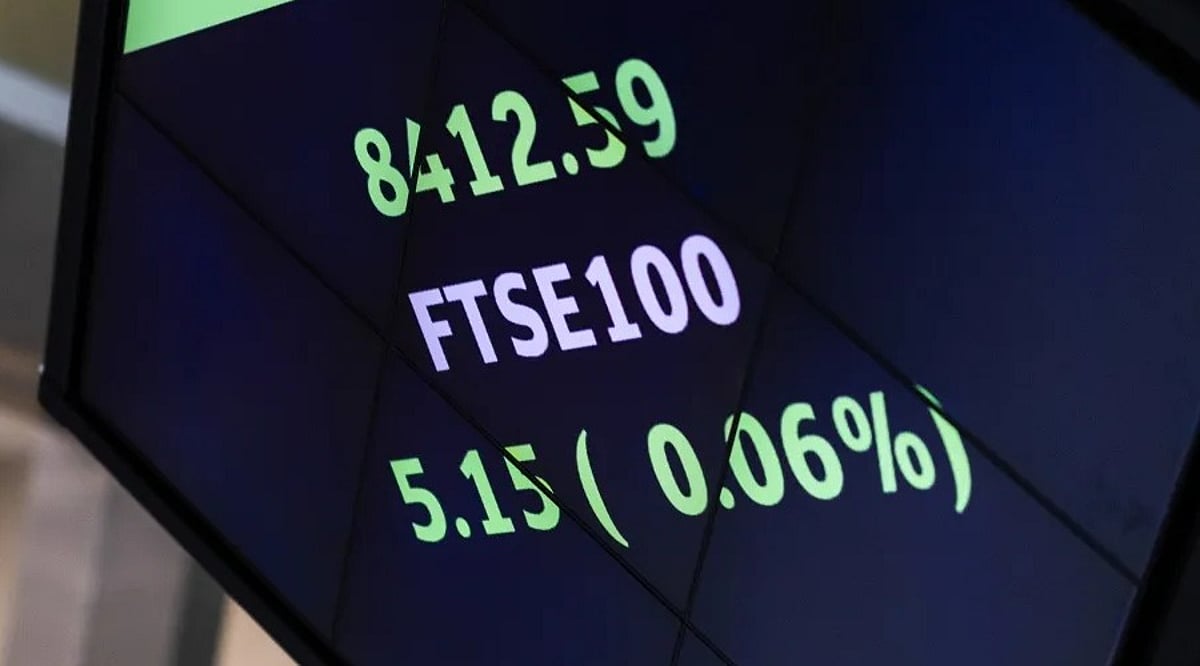
    The FTSE 100 opened 16.72 points lower at 10,700.25 on Wednesday, pulling back after a sharp rally that pushed the index to a 20-week high of 10,716.97. The decline came as oil prices continued to climb, with Brent crude futures jumping 3.36% to $97.23 per barrel and US West Texas Intermediate (WTI) gaining 2.75% to $89.22.

    Gainers & Losers

    On the upside, Segro led the gainers with a 7.06% rise to 958.20p. Anglo American advanced 4.93% to 3,703p, while 3i Group rose 2.98% to 2,628p. RELX gained 2.61% to 2,518.00p, BP climbed 2.32% to 551.80p, and Tritax Big Box REIT added 1.84% to 171.90p.

    On the downside, Whitbread fell 3.14% to 2,379p. Endeavour Mining declined 2.49% to 3,650p, while London Stock Exchange Group slipped 1.34% to 8,566p. AstraZeneca dropped 1.26% to 12,542.00p, Games Workshop Group eased 0.90% to 19,920p, and Lion Finance Group edged 0.69% lower to 11,520p.

    Mixed Numbers from Centrica

    Centrica hiked its interim dividend by 9% despite lower first-half profits, as energy-market volatility slowed progress in parts of the British Gas owner’s business. Underlying earnings (EBITDA) of £737 million were reported for the six months to June, down 18% year-on-year. Statutory profit before tax swung to £672 million from a £43 million loss.

    Burnham to Cut Pub Business Rates

    Andy Burnham announced a 20% cut to business rates for pubs, clubs, and music venues, funded by cracking down on businesses like vape shops and tax-avoidant online sellers. The £100 million commitment follows a campaign by hospitality venues after tax bills soared due to Rachel Reeves’ Autumn Budget last year.

    EasyJet Profits Decline

    EasyJet reported a 70% fall in third-quarter profit, with headline profit before tax of £85 million for the three months to June, down from £286 million a year earlier. The Middle East conflict kept fuel costs elevated and affected bookings. Group revenue advanced 2% to £2.98 billion, but fuel costs jumped 17% to £732 million.

    Jupiter’s Net Inflows Continue

    Jupiter’s net inflows and profit jumped despite the loss of two mandates. Net inflows reached £700 million in the first half of the year, driven by momentum in retail, wholesale, and investments. Assets under management (AUM) rose 36% to £73.7 billion, supported by the acquisition of CCLA. Revenue grew 39% to £213.3 million.

    Global Market View

    In the US, the Nasdaq and S&P 500 fell 0.6% and 0.1%, respectively, while the Dow Jones finished little changed. In Asia, Tokyo’s Nikkei 225 rose 0.46% to 66,422.6, and China’s Shanghai Composite gained 0.25%. Hong Kong’s Hang Seng advanced 1.09%, and South Korea’s Kospi rose 4.4%. In India, the Nifty 50 and the Sensex fell 0.49% and 0.56%, respectively.

  • Samsung Galaxy Unpacked 2026: Fold 8, Flip 8, Watch 9, and AI Glasses Revealed in London

    Samsung Galaxy Unpacked 2026: Fold 8, Flip 8, Watch 9, and AI Glasses Revealed in London

    Samsung held its Galaxy Unpacked event in London on July 23, 2026, unveiling a comprehensive lineup of new devices including the Galaxy Z Fold 8, Galaxy Z Fold 8 Ultra, Galaxy Z Flip 8, Galaxy Watch Ultra 2, Galaxy Watch 9, and AI-powered smart glasses. The event underscored Samsung’s commitment to expanding its foldable ecosystem and integrating artificial intelligence across its hardware.

    New Foldable Phones with Wider Displays and Durable Hinges

    The Galaxy Z Fold 8 introduces a redesigned form factor featuring a near 4:3 inner display that reduces black bars and enhances video streaming, gaming, multitasking, and social media experiences. Samsung has incorporated a titanium hinge to minimize the display crease and improve overall durability.

    The Galaxy Z Fold 8 Ultra is positioned as Samsung’s most premium foldable, equipped with an upgraded titanium hinge, a 5,000mAh battery, and a 200MP primary camera. Meanwhile, the Galaxy Z Flip 8 retains its classic clamshell design while receiving updated hardware and new Galaxy AI capabilities.

    Galaxy AI Expands Across Devices

    All three foldable devices run One UI 9, which is based on Android 17. The software includes AI-powered tools such as the AI Assistant Activity Dashboard and My FanCam, which automatically tracks subjects and adjusts video framing.

    Samsung also refreshed its smartwatch lineup with the Galaxy Watch Ultra 2 and Galaxy Watch 9. The Watch Ultra 2 features a brighter display, a Snapdragon Wear Elite processor, advanced fitness tracking, and improved battery life. The Watch 9 focuses on everyday wellness through AI-driven health monitoring.

    AI Smart Glasses Preview

    Samsung previewed intelligent smart glasses developed in collaboration with Google, Warby Parker, and Gentle Monster. The upcoming wearable supports notifications, voice features, and Gemini-powered AI, signaling Samsung’s expansion beyond smartphones into an AI-connected ecosystem.

    The event highlighted Samsung’s strategy to strengthen its premium device lineup ahead of increased competition in the foldable market later this year.

  • Bitcoin Drops to $65,390 Amid Intense Selling Pressure; $65,000 Becomes Crucial Support

    Bitcoin Drops to $65,390 Amid Intense Selling Pressure; $65,000 Becomes Crucial Support

    Bitcoin Breaks Below $65,500 Support

    Bitcoin experienced a sharp sell-off on July 23, falling below the critical $65,500 support level. The price currently sits at $65,390, signaling a bearish shift in short-term momentum. Sellers regained control after buyers failed to sustain an earlier recovery, pushing the cryptocurrency lower on heavy volume.

    Technical Breakdown Confirms Bearish Momentum

    The daily chart shows Bitcoin trading in a narrow range between $65,600 and $65,750 before a long red candle broke below support. This breakdown occurred on above-average volume, confirming the move’s strength. The price now sits below all major short-term moving averages, a classic sign that sellers hold the upper hand.

    RSI Signals Oversold Conditions

    The Relative Strength Index (RSI) has dropped to 28.6, placing Bitcoin in oversold territory. While this suggests selling pressure may be exhausted, it does not guarantee an immediate rebound. In strong downtrends, the RSI can remain below 30 for extended periods. Buyers must demonstrate the ability to reclaim key resistance levels before any recovery gains traction.

    Key Price Levels to Watch

    • Resistance: $65,620 (short-term moving average), $65,760 (consolidation zone), $65,860 (long-term moving average convergence).
    • Support: $65,300 (immediate), $65,000 (psychological level), $64,800 (next downside target).

    If Bitcoin fails to hold above $65,300, the market may quickly test $65,000. A break below that could open the door to $64,800. Conversely, reclaiming $65,620 would improve sentiment, and a move above $65,860 could signal a return to the $66,000–$66,300 range.

    Market Sentiment and Institutional Flows

    Today’s decline has made traders cautious. Despite Bitcoin’s relative strength compared to altcoins in recent weeks, this sell-off raises fresh concerns. Investors continue to monitor US economic data, inflation numbers, and Federal Reserve policy, which remain key drivers for both crypto and traditional markets.

    On the positive side, US spot Bitcoin ETFs have recorded consecutive net inflows after a period of heavy withdrawals. However, these inflows are still modest compared to outflows earlier this year, indicating that institutional investors are returning cautiously.

    Volume Confirms Selling Conviction

    Trading volume spiked during the decline, confirming that the sell-off was driven by genuine selling pressure rather than noise. Volume will be a critical signal going forward: strong buying volume near $65,300 or $65,000 could support a recovery, while another wave of heavy selling may extend the decline.

    Short-Term Outlook

    Bitcoin’s short-term trend favors sellers. A recovery is possible, but buyers must first reclaim $65,620. Until then, the market remains vulnerable to further downside. Key events such as ETF flow data, regulatory news, or macroeconomic surprises could trigger the next major move.

  • Indian Stock Market Ends Lower: Sensex, Nifty Fall as Banking and IT Stocks Weigh

    Indian Stock Market Ends Lower: Sensex, Nifty Fall as Banking and IT Stocks Weigh

    Indian benchmark indices Sensex and Nifty closed lower on Thursday, July 23, 2026, extending their losing streak to a fourth consecutive day. Rising crude oil prices, geopolitical tensions in West Asia, and sustained selling pressure in banking, pharmaceutical, and IT stocks dampened investor sentiment, offsetting gains in select auto and consumer sectors.

    The BSE Sensex fell below the 76,600 mark during the session, while the NSE Nifty 50 remained weak under the psychologically important 24,000 level. At 14:55 IST, the Sensex was down 517.34 points or 0.67% at 76,237.71, and the Nifty was down 167.35 points or 0.70% at 23,828.90. About 1,440 shares advanced, 2,361 declined, and 148 remained unchanged.

    Market Drivers

    Rising crude oil prices, fueled by tensions between the US, Iran, and the Red Sea region, remained the primary factor influencing investor mood. Concerns over inflation, higher import costs, and compressed corporate profitability weighed on sentiment.

    Top Gainers

    Investor interest was largely confined to automobile and industrial stocks, where companies with strong income prospects and robust domestic demand outperformed. Auto shares led the market despite the overall negative tone.

    Top Losers

    Pharmaceutical shares came under pressure after Dr. Reddy’s Laboratories reported weak quarterly results. Banks and financial services firms also faced selling. Defensive stocks like Nestlé India were among the major laggards.

    Market Trends

    Thursday’s session reinforced the cautious mood across Dalal Street. Brent crude oil prices near $96–$97 per barrel raised concerns about rising energy costs potentially fueling inflation, widening India’s current account deficit, and squeezing corporate margins. Despite the negative macro backdrop, market participants continued to focus on the earnings season, with some blue-chip results disappointing.

    What Investors Can Take Away

    The market remains influenced by macroeconomic events rather than company-specific news. Heightened geopolitical tensions and rising oil prices have prompted a risk-off stance, leading to selective buying rather than broad participation. The resilience of automobile and industrial stocks, however, indicates that investors are still willing to back sectors with strong domestic fundamentals. In the coming days, corporate results, oil price movements, and global geopolitical developments will drive market direction.

    Note: Percentage gains for some stocks were not officially disclosed in end-of-day summaries, but they featured among the session’s strongest performers.

    Disclaimer: This article is provided for informational purposes only and does not constitute investment advice. You are responsible for conducting your own research (DYOR) before making any investment decisions. Financial markets involve risk, and past performance is not indicative of future results.

  • Poco X8 Spotted on NBTC and IMDA Certifications, 5G Connectivity Confirmed

    Poco X8 Spotted on NBTC and IMDA Certifications, 5G Connectivity Confirmed

    The Poco X8 has been spotted on the NBTC website in Thailand and the IMDA database in Singapore, signaling that the mid-range smartphone is gearing up for a global launch. The NBTC listing reveals the model number 2607DPC18G and certification number B38497-26, along with support for GSM, WCDMA, LTE, and NR networks — confirming 5G connectivity.

    Separately, the same model number appeared on the IMDA certification platform, which adds Bluetooth, Wi-Fi, and NFC connectivity to the list of confirmed features. These certifications are typically obtained only when a device is in the final stages of preparation for market release, making them strong indicators of an imminent launch.

    Expected Specifications and Market Plans

    While the listings do not reveal full specifications, rumors suggest the Poco X8 will feature a 50-megapixel primary rear camera paired with a 2-megapixel depth sensor. India is expected to be among the first markets to receive the device, with a potential launch within the current quarter.

    There are also reports that the Poco X8 could be based on the Redmi Note 17 Pro, which launched in China earlier this month. Poco has followed a similar rebadging strategy with several previous models, though the company has not officially confirmed any connection.

    India as a Key Market

    India has historically been a crucial market for Poco’s X-series lineup, and industry experts believe the Poco X8 will arrive in the country shortly after its global debut. For now, the company is keeping the processor, display, battery, and pricing details under wraps, with more information expected closer to the official announcement.

    The successive certifications make one thing clear: the Poco X8 is ready to enter the market, and the wait may not be much longer.

  • CLARITY Act Ethics Rules Could Prevent Trump from Issuing New Digital Assets While in Office

    CLARITY Act Ethics Rules Could Prevent Trump from Issuing New Digital Assets While in Office

    The latest draft of the Senate’s CLARITY Act has introduced ethics provisions that could restrict President Trump and other senior officials from issuing or sponsoring digital assets during their tenure. The bill, which aims to establish comprehensive cryptocurrency market regulations, now includes language targeting conflicts of interest among top government leaders.

    Key Takeaways

    • The Senate draft may ban top public officials from issuing new digital assets until 2029.
    • Trump’s crypto ventures, which have earned over $1 billion, have fueled the push for stronger ethics rules.
    • The bill still requires bipartisan support to become law.

    What Does the New Language Say?

    The proposed ethics section restricts the president, vice president, members of Congress, federal judges, and their spouses from issuing, sponsoring, or promoting digital assets while in office. The restriction would remain in effect until January 2029, covering the remainder of Trump’s current term. Additionally, officials must divest personal crypto holdings or place them in qualified blind trusts to reduce potential conflicts of interest.

    This marks a significant shift from earlier crypto bills, which focused primarily on market rules and investor protection. The new version adds ethics rules for public officials, addressing concerns about the intersection of governance and personal financial gain.

    Why Trump Matters in the Debate

    Recent financial disclosures revealed that Trump’s crypto ventures generated over $1 billion after his return to the White House, including roughly $500 million from World Liberty Financial’s crypto offerings and $600 million from Trump-themed meme coins. Bipartisan lawmakers and ethics experts argue that a sitting president should not profit from digital assets while federal agencies shape crypto regulations. Supporters of the bill emphasize that the rules apply to all future presidents and senior officials, not just Trump.

    Would the Bill Stop Trump from Launching New Digital Assets?

    Under the current language, covered officials cannot issue or sponsor new digital assets during their term. This would prevent President Trump from launching a new cryptocurrency, meme coin, or similar blockchain project while in office. However, legal experts note that the final outcome depends on precise definitions of terms like ‘issue,’ ‘sponsor,’ and ‘digital asset’ in the approved legislation. The draft also leaves questions about how existing crypto businesses would be affected, with further guidance expected after the bill becomes law.

    Senate Talks Continue

    The bill has garnered support from many Republicans seeking clear rules for digital assets, and from Democrats pushing for stronger ethics safeguards. Senate leaders, White House officials, and lawmakers from both parties are working on compromise language. President Trump has reportedly accepted some ethics changes to improve the chances of bipartisan support before the August recess. Disagreements remain on anti-money laundering rules, Know Your Customer requirements, and which federal agencies should oversee different parts of the crypto market.

    Why the Crypto Industry Supports the Bill

    The CLARITY Act is seen as a critical step toward providing regulatory clarity for the crypto industry. Companies like Coinbase, Circle, Bullish, Hut 8, and Riot Platforms have welcomed the potential for clear federal rules. The bill aims to resolve jurisdictional disputes between the SEC and CFTC while adding consumer protections. Financial markets responded positively, with Bitcoin rising to around $66,400 and crypto-related stocks climbing.

    Challenges Remain

    Passing the bill requires 60 votes in the Senate, meaning supporters must secure bipartisan backing. Some progressive groups argue the ethics rules should be tougher, while others raise concerns about conflicts of interest in the negotiation process. Prediction markets and analysts place modest odds on the bill becoming law this year due to the complex mix of crypto regulation, ethics reforms, and political differences.

    Why This Matters

    The CLARITY Act could reshape both crypto regulation and ethics standards in the United States. Its final version may determine whether top public officials can launch or profit from digital assets while in office, influencing investor confidence and future legislation. The debate has already shifted the national conversation from solely regulatory questions to broader ethical considerations about elected leaders’ involvement in the crypto business.

    Final Thoughts

    If the current language passes, President Trump and future presidents would be barred from issuing or sponsoring new digital assets during their terms, with stricter rules for personal crypto holdings and financial transparency. The outcome now depends on ongoing Senate negotiations. Regardless of the final bill, the debate has fundamentally changed how Washington approaches the intersection of digital assets and public office.

  • Bitget Expands to New Zealand With Financial Services Provider Registration

    Bitget Expands to New Zealand With Financial Services Provider Registration

    Bitget, the world’s largest Universal Exchange (UEX), has officially entered the New Zealand market by registering as a Financial Services Provider on the country’s Financial Service Providers Register (FSPR).

    The registration strengthens Bitget’s financial services framework, covering key service categories such as foreign currency exchange, domestic and cross-border money transfers, client asset custody, portfolio and money management, and the execution of financial product or foreign exchange transactions on behalf of clients.

    In addition to the FSPR registration, Bitget has joined the New Zealand Insurance and Financial Services Ombudsman (IFSO) Dispute Resolution Scheme. This independent scheme provides eligible customers with an external channel to raise and resolve disputes related to participating financial service providers.

    This move is part of Bitget’s broader strategy to build the operational and compliance infrastructure required for its expanding range of financial products, including traditional market instruments, foreign exchange services, and tokenized real-world assets.

    “Financial platforms need compliance structures that can support a wider mix of assets and services,” said Gracy Chen, CEO of Bitget. “The registration adds another layer to our international financial services framework as the platform continues connecting digital assets with established markets.”

    The Universal Exchange model brings crypto assets, tokenized stocks, commodities, foreign exchange, and other financial products into a single trading platform. Bitget continues to develop its services through registered entities and qualified partners across different jurisdictions.

    Disclaimer: Product availability remains subject to applicable laws, local requirements, and regional eligibility. Registration on the FSPR does not constitute an endorsement, approval, or guarantee by the New Zealand Government, the Financial Markets Authority (FMA), or the Registrar of Financial Service Providers.