Blog

  • Solana Gains Traction as E*Trade Listing and Network Expansion Fuel Price Optimism

    Solana Gains Traction as E*Trade Listing and Network Expansion Fuel Price Optimism

    Solana has returned to the spotlight after two major developments: Morgan Stanley’s E*Trade platform now offers spot trading for SOL, and the network continues to show strong growth across key metrics. These events have sparked fresh discussion about the cryptocurrency’s price outlook, with market experts pointing to improved accessibility and healthy ecosystem activity as potential long-term catalysts.

    E*Trade Opens a New Door for Solana

    E*Trade, a brokerage owned by Morgan Stanley, has completed its rollout of crypto spot trading and included Solana alongside Bitcoin and Ethereum. Eligible customers can now buy, sell, and hold SOL through their familiar brokerage accounts. This move is significant because E*Trade serves a large base of traditional investors who may prefer not to open separate crypto exchange accounts. Broader access often leads to increased market activity and liquidity.

    Strong Network Growth Supports Confidence

    The Solana blockchain continues to show healthy expansion. Stablecoin activity remains strong, decentralized exchange (DEX) trading volume is high, and tokenized real-world assets are growing. Developer interest stays active, with new projects and improvements regularly added to the ecosystem. These fundamentals help build confidence, as a growing network often creates long-term value for a blockchain.

    Institutional Interest Continues to Rise

    Large financial firms have shown increasing interest in digital assets over the past year, and the E*Trade rollout adds another example. Institutional participation brings credibility and can improve market liquidity. While institutional support does not guarantee higher prices, it often becomes a key factor during sustained market growth.

    What Could Support the SOL Price?

    Several factors may support Solana in the months ahead: easier access through a major brokerage, continued network expansion, low transaction costs, and fast processing speeds. These features attract developers and projects. If stablecoin use, DeFi, and tokenized assets continue to grow, the ecosystem could become even stronger.

    Risks Still Remain

    Despite positive news, risks remain. Cryptocurrency is volatile, and prices can decline sharply. Competition from Ethereum and other smart contract platforms is intense, and regulatory changes or network issues could affect sentiment. Strong fundamentals alone do not always lead to immediate price gains.

    Price Outlook

    At the latest update, Solana traded at around $77.97. The E*Trade listing represents an important milestone, exposing SOL to millions of mainstream retail investors. Combined with robust network activity and rising institutional adoption, the long-term fundamentals appear solid. However, future price movement will still depend on broader crypto market conditions, particularly Bitcoin’s influence and overall investor sentiment.

  • Mixed Momentum for SHIB, SOL, XRP, and Hyperliquid: Crypto Market Technical Analysis

    Mixed Momentum for SHIB, SOL, XRP, and Hyperliquid: Crypto Market Technical Analysis

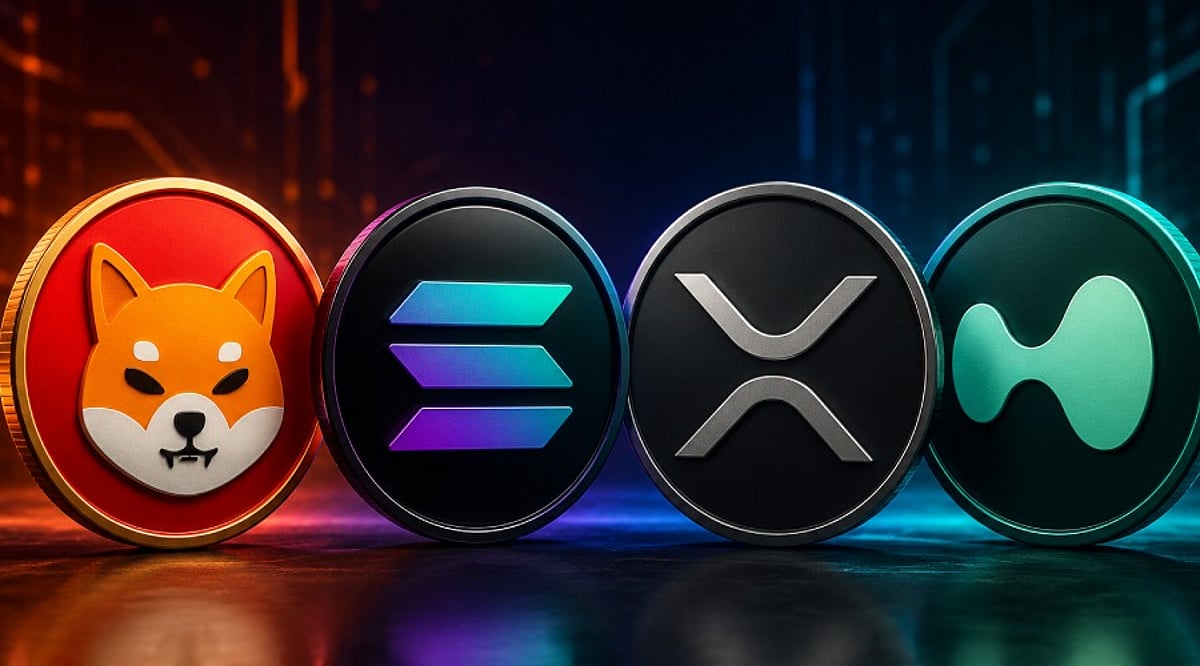
    The cryptocurrency market is experiencing mixed price action as traders remain cautious ahead of the next major move. Bitcoin has stayed within a narrow range, limiting strong breakout opportunities for many altcoins. However, a select few cryptocurrencies have demonstrated notable strength. Hyperliquid (HYPE), Solana (SOL), XRP, and Shiba Inu (SHIB) have all moved higher, but each asset presents a distinct technical picture. Market sentiment has improved, yet global economic concerns and cautious investor behavior continue to restrict broader buying pressure.

    Hyperliquid Shows Strong Strength

    Hyperliquid has performed reasonably well during the recent market recovery. On the hourly chart, HYPE is currently priced at approximately $63.11, steadily moving away from last week’s bottom. The price has formed a clear sequence of higher highs, indicating buyers’ dominance. It remains above the middle Bollinger Band at $62.17, with the lower band near $60.89 providing major support. The Relative Strength Index (RSI) is close to 68, reflecting high buying pressure but also approaching overbought territory. If buyers push above the $63.50–$64.00 area, further upside is expected. Conversely, a break below the middle Bollinger Band could lead to a drop toward $62. Recent ecosystem growth, including increased interest in decentralized derivatives and prediction markets, has supported long-term confidence, though short-term volatility remains high.

    Shiba Inu Tries to Build More Momentum

    Shiba Inu has started to recover after several weeks of quiet trading. The token now trades near $0.00000430 and has moved above several short-term moving averages, placing SHIB near an important resistance zone. The RSI has climbed above 70, indicating very strong buying activity but also suggesting the rally may slow. Trading volume has increased, supporting the latest price rise. First resistance is near $0.00000435, while support is around $0.00000424, with stronger support near $0.00000418. Despite the positive move, SHIB still faces multiple resistance levels above current price. Market sentiment remains mixed after hopes for inclusion in a U.S. crypto ETF did not materialize.

    Solana Keeps Buyers in Control

    Solana has steadily outperformed many other major cryptocurrencies. The coin is valued at just under $78.43 on one-hour charts, maintaining upward momentum. It stays above the middle Bollinger Band at $77.59, while the upper band approaching $78.82 serves as a crucial resistance line. Buyers have consistently stepped in on minor dips, demonstrating strong market position. The price is heading toward the next milestone of $80. If sellers take over, key support lines lie at $77.60 and $76.35. Strong developer activity and ecosystem growth continue to maintain positive sentiment around Solana.

    XRP Extends Its Recovery

    XRP has continued its recent recovery and now trades near $1.1355. The latest move has pushed the price above several moving averages, improving the technical outlook. Buying volume has increased, and the price has moved above the important $1.11 resistance level. Bollinger Bands have widened, indicating rising volatility. The next resistance stands near $1.14, with first support around $1.113 and additional support near $1.10. As long as XRP stays above these levels, the current trend remains positive. Market confidence is supported by growing interest in blockchain payment solutions and improved sentiment across the broader crypto market.

    Why This Matters

    As Bitcoin consolidates, selective altcoin momentum signals a shift in trader focus toward high-conviction assets. Technical strength in Hyperliquid, Solana, XRP, and Shiba Inu reflects growing risk appetite and highlights key support levels that could launch broader market rallies.

    Market Outlook

    The overall crypto market presents a mixed picture. Hyperliquid has one of the strongest technical setups after its recent recovery. Solana continues in a healthy uptrend and remains a strong large-cap coin. XRP has built fresh momentum after breaking above key resistance. Shiba Inu shows fresh strength but faces several resistance levels before a larger recovery. The next major move will likely depend on Bitcoin’s stability. If Bitcoin holds near current levels, capital may flow into strong altcoins like HYPE, SOL, and XRP. SHIB could also move higher, but its price remains sensitive to changes in sentiment and volume.

    FAQs

    1. Which cryptocurrency has the strongest technical setup? Hyperliquid and Solana currently show the strongest bullish price structures, backed by steady momentum, key moving average support, and growing ecosystem activity.
    2. Is XRP still in an uptrend? Yes. XRP remains above key support levels and moving averages, maintaining positive short-term momentum with expanding volume.
    3. Why is SHIB’s RSI above 70 important? An RSI above 70 indicates intense short-term buying pressure, confirming bullish momentum but also warning of overbought conditions.
    4. What is Solana’s next major resistance level? Solana’s immediate resistance is near $78.80, with the $80 psychological barrier as the next target.
    5. What could decide the next move for these altcoins? Bitcoin’s price stability is key. If Bitcoin holds its range, capital flow into strong altcoins, overall market sentiment, and trading volume will determine subsequent breakouts.

    Disclaimer: This article is for informational purposes only and does not constitute financial or investment advice. Cryptocurrency investments are risky. Always conduct your own research (DYOR) before making any investment decisions.

  • Best Generative AI Certifications to Advance Your Career in 2026

    Best Generative AI Certifications to Advance Your Career in 2026

    Demand for professionals with generative AI expertise continues to grow as organizations integrate AI into everyday operations. Earning a recognized certification helps validate your knowledge and practical abilities. The best programs combine real-world learning with credentials that employers value.

    Overview

    Generative AI certifications now span every experience level, from beginner-friendly introductions to advanced programs focused on model development, cloud AI, and enterprise strategy. Each certification serves a different purpose, with some emphasizing workplace productivity and AI governance, while others focus on hands-on engineering, large language models, or cloud deployment.

    Industry-recognized credentials paired with practical projects provide stronger career value than collecting multiple introductory certificates, making role alignment more important than certification count.

    Generative AI is now one of the most in-demand workplace skills. However, a certificate alone rarely decides a hiring call these days. Employers usually check if a person can actually use AI to fix a business problem, speed up a workflow, or show real output. With many certification options showing up every month, choosing the right one matters more than collecting several.

    The credentials that hold up combine real industry backing with hands-on experience that turns into an actual skill on the job. This comparison covers eight leading generative AI certifications on cost, depth, career fit, and long-term value, so professionals can pick a path that fits what they actually want.

    What Makes a Certification Worth the Effort

    Four factors decide whether a program earns its price tag.

    • Career relevance – Does the content map to an actual job function rather than offering broad AI trivia?
    • Hands-on depth – Programs built around real projects and labs are more valuable than those built around lecture videos.
    • Provider recognition – Some brands carry more weight in screening rooms.
    • Cost and time investment – Should match the payoff a learner expects, since a three-hour course and a six-month program solve different problems.

    Which GenAI Certificate Fits Your Path

    How the Leading GenAI Certifications Stack Up

    • Generative AI for Everyone (Coursera): Walks through core AI concepts with no coding involved. Works well as a starting point for someone with zero background.
    • Google AI Essentials: Built around real workplace tasks, shows how AI tools fit into daily work. Professionals who want quick, practical gains lean toward this one.
    • Google Generative AI Leader: For managers. Builds fluency in AI strategy and governance, skipping technical training.
    • IBM AI Engineering Professional Certificate: The most comprehensive technical program on the list, covering machine learning fundamentals through actual project work. Ideal for hands-on engineering roles.
    • NVIDIA GenAI and LLM Credentials: Training goes straight into infrastructure — GPUs, deployment, and systems running large language models. Engineers working close to that layer benefit most.
    • Microsoft Azure AI Fundamentals: Teaches AI concepts within Microsoft’s cloud ecosystem. Highest value for professionals in organizations using Microsoft’s cloud.
    • MIT xPRO Executive Programs: For senior leaders seeking strategic grounding, not technical skill. Focuses on business transformation and decision-making.
    • DataCamp AI Fundamentals: A gentler, self-paced entry point. Builds foundational understanding before moving toward something more technical.

    Matching a Certification to a Career Stage

    A learner with no AI background and limited budget starts with Generative AI For Everyone. Someone already using AI tools daily benefits more from Google AI Essentials. A manager shaping AI policy without writing code fits better with Google Generative AI Leader or an executive program.

    Anyone building or deploying models should go straight to IBM AI Engineering. A role touching infrastructure calls for NVIDIA credentials, while a Microsoft-based workplace favors Azure AI Fundamentals. DataCamp AI Fundamentals is a good first step before any of these.

    Employer recognition matters, but it rarely settles a hiring decision alone. Names like IBM, Microsoft, and Google carry weight, yet none of these certifications substitutes for a visible project or work sample. Pairing any single credential with demonstrable output remains the strongest move available to a career changer.

    Final Thoughts

    Certification programs will increase in number as generative AI tools further integrate into daily workflows. However, the real differentiator will stay the same: a certification proves potential, while applied work shows capability. Professionals who combine recognized credentials with proven experience can outpace others who only collect certificates.

    FAQs

    1. Are generative AI certifications worth it for career growth?

    Yes. A recognized certification can validate your AI knowledge and demonstrate a commitment to upskilling. However, employers typically value practical projects and real-world experience alongside certifications.

    2. Which generative AI certification is best for beginners?

    Beginner-friendly options such as AI For Everyone, Generative AI for Everyone, Google AI Essentials, and DataCamp AI Fundamentals provide a solid introduction without requiring prior coding experience.

    3. Do I need coding skills to earn a generative AI certification?

    Not always. Many entry-level and business-focused certifications concentrate on AI concepts, prompting, and workplace applications. Technical certifications, such as IBM AI Engineering, generally require programming knowledge.

    4. Which certification is best for technical professionals?

    Professionals pursuing AI engineering, machine learning, or cloud AI roles should consider IBM AI Engineering Professional Certificate, Microsoft Azure AI Fundamentals, or NVIDIA GenAI and LLM credentials, depending on their career goals and technology stack.

    5. Is one certification enough to get an AI job?

    A certification alone is rarely enough. Pairing a respected credential with hands-on projects, a portfolio, and practical experience demonstrates real capability and significantly strengthens your job prospects.

  • 10 Game-Changing Smartphone Innovations Expected Before 2030

    10 Game-Changing Smartphone Innovations Expected Before 2030

    The smartphone industry has entered a new phase. Earlier, most improvements focused on faster processors, better cameras, and brighter displays. That trend has started to change. Artificial intelligence, satellite communication, and advanced hardware now lead the next wave of innovation. Many companies have already introduced early versions of these technologies, while others have shared plans that point toward even bigger changes before 2030. The next few years could bring smartphones that understand daily routines, complete tasks without constant instructions, and stay connected in places where mobile networks do not exist. These improvements could change the way millions of people use smartphones every day.

    1. AI as a Personal Assistant

    Artificial intelligence has already become a major part of modern smartphones. At present, AI helps with writing, photo editing, and quick searches. Before 2030, its role could become much larger. Instead of waiting for commands, AI could complete full tasks from start to finish. For example, a smartphone could search for flights, compare hotel prices, reserve a room, and arrange local transport after a simple request. Email replies could match the user’s writing style, while grocery orders could appear based on regular shopping habits. Calendar events, reminders, and travel plans could stay organized without manual effort. Several smartphone makers have already started work on advanced AI systems that connect across phones, tablets, and computers, which shows that this future has already begun.

    2. Smartphones Could Understand Daily Life

    Future smartphones may become much smarter since they could understand everyday situations instead of reacting to simple commands. They may combine information from location services, calendars, health records, and previous habits to predict what happens next. Imagine someone who leaves work much later than usual. A future smartphone could automatically send a message to family members, arrange transport, update navigation, and adjust evening plans without extra steps.

    3. Satellite Communication Could Reach Everyone

    The whole world is not covered by mobile networks. There are various areas such as mountains, jungles, deserts, and seas that have little or no signal at all. Satellite communication could be the solution to this problem before the decade is over. Some high-end smartphones can send emergency satellite text messages already. Future versions will likely support voice calls, standard text messaging, and normal communication via satellites, regardless of the presence of mobile towers.

    4. Foldable Phones Could Finally Feel Normal

    Foldable smartphones have improved every year, but many people still worry about thick designs, visible display creases, and long-term durability. Manufacturers have spent years solving these problems. Before 2030, foldable phones could become thinner, lighter, and much stronger. Better hinge systems, titanium support structures, and stronger display materials may reduce the crease that appears in the middle of the screen. New designs could also improve comfort during daily use. As durability continues to improve, foldable smartphones may become as common as traditional phones.

    5. Cameras Could Capture Better Photos Automatically

    Instead of waiting until after a photo appears, AI could improve the entire process before the shutter button receives a tap. Automatic framing, smarter lighting adjustments, object removal, and advanced video stabilization could happen instantly. Continuous image buffering may even save moments that happen just before the photo. These improvements could help every picture look more natural without extra editing.

    6. Bigger Batteries Could End Daily Charging

    With the help of silicon battery technology and advancements in battery development, batteries could last two to three days before needing to be connected to a power source. Furthermore, as fast charging technology develops, a minimal time of charging will be needed to ensure sufficient battery power for the day ahead.

    7. Privacy Could Become Much Stronger

    Artificial intelligence could process more information directly inside the phone instead of sending data to cloud servers. Hardware privacy switches may disable cameras and microphones whenever necessary. Intelligent permission controls could also detect suspicious app behavior before personal information becomes exposed. These improvements could offer stronger protection without reducing convenience.

    8. 6G Could Unlock a New Level of Speed

    Although 5G still continues to expand across many countries, research on 6G has already started. International technology groups have begun work on standards that could shape the next generation of wireless communication. Before 2030, some smartphones may become ready for 6G networks. This technology could deliver much lower delays, faster connections, and better support for artificial intelligence. Advanced augmented reality, virtual reality, and even holographic communication may become possible given these faster networks. While full deployment may take time, smartphone companies have already started preparation for this future.

    9. Smartphones Could Connect Every Device

    A phone may remember ongoing work across every connected device without interruption. Files, notes, copied text, and even AI conversations could move instantly from one screen to another. Artificial intelligence could also remember previous interactions across multiple devices and continue tasks without requiring users to repeat information. Several manufacturers have already introduced early versions of this connected ecosystem, and more advanced features could arrive during the next few years.

    10. Displays Could Become Smarter and More Comfortable

    Display technology continues to improve every year, and the next generation could focus on comfort as much as picture quality. Future smartphone displays may adjust brightness and refresh rates more intelligently based on surrounding conditions. Outdoor visibility could become much better, while eye strain during long hours of use may decrease. Foldable display technology could also become stronger and more reliable. Privacy display modes may reduce the chance of people nearby viewing sensitive information. These improvements could make smartphones more comfortable for work, entertainment, and everyday communication.

    The Future Has Already Started

    Although many of the aspects mentioned above may seem futuristic, some have already taken form in a rudimentary way. The development of AI has made it more intelligent. Smartphones are becoming lighter and more durable, satellite communication is improving, and battery technology is advancing every year with the aid of research on 6G networks. By the year 2030, smartphones might evolve to give people a helping hand not only as means of communication but as intelligent companions that can recognize their owner’s routine as well as help them in their everyday life.

  • 7 Major Manufacturers Deploying Humanoid Robots on Factory Floors in 2026

    7 Major Manufacturers Deploying Humanoid Robots on Factory Floors in 2026

    Humanoid robots are no longer confined to research labs—they are now working alongside human employees in real manufacturing environments. Seven leading global manufacturers have already deployed or are actively testing humanoid robots for factory operations, material transport, and production support. Rapid investment and expanding robot production signal a major shift in industrial automation.

    Humanoid Robots in Manufacturing: A New Era

    Factories have relied on machines for decades, but humanoid robots mark a significant evolution. Unlike traditional robotic arms fixed in place, humanoid robots can walk, carry objects, pick up parts, and operate in spaces designed for human workers. Their human-like shape allows them to integrate into existing production lines without requiring major factory redesigns.

    Many global manufacturers have already moved from trials to commercial deployments. These robots handle repetitive, physically demanding, and time-consuming tasks, complementing human workers rather than replacing them. As artificial intelligence improves, humanoid robots are expected to become a regular part of factory operations.

    BMW Uses Figure Humanoid Robots on Production Floor

    BMW Group became one of the first major car manufacturers to place humanoid robots inside an active factory. Partnering with Figure AI, BMW tested Figure robots at its Spartanburg manufacturing plant in South Carolina. The initial deployment focused on repetitive tasks such as moving components between workstations and handling parts before assembly. After successful trials, BMW expanded the partnership with the latest Figure 03 humanoid robot. The deployment supported the production of more than 30,000 BMW X3 vehicles, proving that humanoid robots can operate safely alongside factory employees.

    Mercedes-Benz Expands Factory Automation with Apollo

    Mercedes-Benz has partnered with Apptronik, the company behind the Apollo humanoid robot, to enhance factory logistics. Apollo robots transport components, move materials across production areas, and complete repetitive internal tasks. Mercedes-Benz also invested in Apptronik to accelerate commercial development. The company now uses Apollo robots at its Berlin Digital Factory Campus, where engineers continue testing new manufacturing applications before wider deployment across additional factories.

    Tesla Develops Optimus for Its Own Factories

    Tesla follows a unique strategy by designing and building its own humanoid robot, Optimus. Instead of purchasing robots from another company, Tesla develops both the hardware and the artificial intelligence system. Optimus handles material transport and repetitive manufacturing jobs inside Tesla facilities. The company continues to expand robot production as development progresses. Tesla views its factories as the first large-scale workplace for Optimus before the robot enters other industries.

    Hyundai Prepares Atlas for Future Vehicle Production

    Hyundai Motor Group plans to introduce Boston Dynamics’ Atlas humanoid robot into manufacturing over the next few years. The first major deployment is expected at Hyundai’s Georgia Metaplant by 2028. Atlas will support tasks requiring movement across factory floors, component transport, and production assistance. Industry estimates place the cost of each Atlas robot at around $130,000, with an expected return on investment of roughly two years through improved productivity and lower operating costs.

    Jabil Tests Apollo Inside Electronics Manufacturing

    Electronics manufacturer Jabil is working with Apptronik to evaluate Apollo humanoid robots inside production facilities. Unlike automotive factories, electronics manufacturing often requires frequent movement of materials between different production stations. Apollo helps with repetitive logistics tasks that normally consume valuable employee time. These real-world tests allow both companies to collect operational data before larger commercial deployment. Jabil’s role as one of Apptronik’s primary manufacturing partners provides valuable feedback to improve robot performance for future customers.

    Magna International Evaluates Phoenix for Industrial Work

    Automotive supplier Magna International has partnered with Sanctuary AI to explore the use of the Phoenix humanoid robot in manufacturing. The partnership focuses on industrial production support across automotive operations. Phoenix performs repetitive factory duties, including moving materials and assisting with production activities. Magna’s evaluation reflects a growing trend among global suppliers seeking practical automation solutions without major factory redesign.

    Schaeffler Adopts Digit for Factory Logistics

    Industrial manufacturer Schaeffler has introduced Agility Robotics’ Digit humanoid robot to support factory logistics. Digit transports materials between work areas and completes repetitive movement tasks inside industrial facilities. Agility Robotics reports more than 65,000 operational hours for Digit across manufacturing and logistics environments. The company has also secured over $300 million in conditional multi-year orders for the next-generation Digit V5 robot, demonstrating strong commercial demand. To support future growth, Agility Robotics opened a 60,000-square-foot research and training center in California.

    Humanoid Robots Gain Momentum in Factories

    The rapid increase in humanoid robot utilization means manufacturing has emerged as the largest market for this innovative technology. Factory environments are highly structured, allowing robots to perform tasks accurately and efficiently. Companies like BMW Group, Mercedes-Benz, Tesla, Hyundai Motor Group, Jabil, Magna International, and Schaeffler have already started factory trials, commercial deployments, and long-term production programs.

    The market is developing rapidly. Apptronik recently opened a 90,000-square-foot Robot Park to prepare Apollo for large-scale manufacturing deployment. At the same time, XPeng, a Chinese car manufacturer, plans to produce over 1,000 humanoid robots per month by 2026, indicating that production capabilities are increasing.

    Humanoid robots have not yet reached full maturity, but effective factory applications already exist. If artificial intelligence progresses further and production costs decrease, the role of humanoid robots will significantly rise in the years to come.

    Frequently Asked Questions

    1. Which company first deployed Figure humanoid robots in manufacturing? BMW Group deployed Figure humanoid robots at its Spartanburg plant to support material handling and production tasks.
    2. What factory tasks do humanoid robots usually perform? Most humanoid robots transport materials, move components, handle repetitive jobs, and assist with production logistics.
    3. Why do manufacturers prefer humanoid robots? Their human-like design allows them to work inside existing factories without major changes to production layouts.
    4. Which industries currently use humanoid robots the most? The automotive and electronics manufacturing industries lead commercial adoption due to their structured factory environments.
    5. Are humanoid robots replacing factory workers? Current deployments mainly support repetitive and physically demanding tasks, while human workers continue to manage skilled, complex, and decision-based operations.
  • Ethereum Rallies After Whale Opens $22.4M Leveraged Long Position

    Ethereum Rallies After Whale Opens $22.4M Leveraged Long Position

    Ethereum has surged after a major crypto whale opened a $22.4 million leveraged long position on the asset, boosting market sentiment and fueling a fresh rally. The move, which involved selling Bitcoin to fund the trade, has drawn widespread attention and reinforced bullish expectations for Ethereum’s near-term performance.

    Whale Trade Boosts Confidence

    The whale sold 72 BTC (worth roughly $4.66 million) and used the proceeds to open a 20x leveraged long position on 12,000 ETH. Within hours, the position showed an unrealized gain of nearly $275,000 as Ethereum prices climbed. Such large-scale trades are closely watched because they often reflect the conviction of well-capitalized investors.

    Ethereum Price Action

    Ethereum traded near $1,920–$1,925 after the rally, recording a 24-hour gain of 2.5%–2.9% and a seven-day gain of nearly 8%. The asset’s market capitalization stood at approximately $232 billion, supported by a 24-hour trading volume of $11–$12 billion. Strong demand from both retail and institutional participants has kept Ethereum among the best-performing major cryptocurrencies.

    Futures Market and Technicals Support Bullish View

    Derivatives data showed an increase in long positions, with the Long/Short Ratio remaining above 1 — a sign that bullish bets outnumber bearish ones. Technically, Ethereum recovered from levels near $1,800 and broke above the key resistance zone of $1,875–$1,900, creating a positive chart structure. Analysts now watch whether ETH can hold above support between $1,840 and $1,870. A stable position above that area could open the door to $1,950–$2,000 and possibly $2,160.

    Institutional Demand Strengthens

    Spot Ethereum ETFs attracted over $100 million in net inflows during a single session, outpacing Bitcoin ETFs in the same period. This influx of institutional capital underscores growing confidence among professional investors and long-term holders.

    On-Chain Data Shows Whale Activity and Staking Growth

    Whale transactions above $100,000 reached their highest level since May 2021, suggesting large investors remain active. Meanwhile, approximately 34% of the total ETH supply is now locked in staking, reducing available supply and providing additional price support when demand rises.

    Market Outlook

    The combination of a $22.4 million leveraged whale trade, rising futures activity, strong ETF inflows, and high staking levels has placed Ethereum in a stronger position. While leveraged positions amplify risk in both directions, the data currently favors bulls as long as key support levels hold. Whether ETH can challenge $2,000 will depend on price action in the coming sessions.

  • Bitcoin Holds Above $65K as Cooling US Inflation Boosts Sentiment, but Fed Caution Caps Rally

    Bitcoin Holds Above $65K as Cooling US Inflation Boosts Sentiment, but Fed Caution Caps Rally

    Bitcoin (BTC) reclaimed the $65,000 mark, rising 1.78% in the last 24 hours and 4.38% over the past seven days, as softer US inflation data lifted sentiment across risk assets. According to the US Bureau of Labor Statistics, inflation fell 0.4% in June to a seasonally adjusted annual rate of 3.5%, driven by rapidly declining energy costs. This marks the largest one-month shift in prices since April 2020, following a 0.5% increase in May. The overall May inflation rate was 4.2%, indicating a notable cooling in June.

    Slower inflation typically benefits Bitcoin and other risk assets, as it may reduce pressure on the US Federal Reserve to hike interest rates. However, investors remain focused on the “higher for longer” interest rate outlook. High borrowing costs can restrict capital flow in the financial system, potentially dampening demand for speculative assets like cryptocurrencies.

    Traders on Polymarket assign a 94% probability that the Fed will keep rates unchanged at its July meeting, curbing fears of an imminent policy shock but signaling that markets are not convinced of a near-term easing cycle.

    Oil prices also eased inflation concerns, with Brent crude falling 0.80% to $88.51 per barrel and US West Texas Intermediate (WTI) declining 0.46% to $82.10 per barrel, amid diplomatic efforts in the Middle East.

    ETF Inflows Show Cautious Demand

    According to SoSoValue, US spot Bitcoin ETFs recorded $226.92 million in net inflows on July 20, marking a fifth consecutive session of inflows. BlackRock’s IBIT led with $116.48 million, followed by Ark Invest’s ARKB at $72.74 million, and Grayscale Bitcoin Mini Trust (BTC) at $41.45 million. Other funds, including Fidelity’s FBTC, Bitwise’s BITB, Morgan Stanley’s MSBT, and VanEck’s HODL, also saw inflows, while Grayscale’s GBTC experienced $45.4 million in net outflows.

    CoinMarketCap’s Crypto Fear and Greed Index stands at 37, still in “fear” territory, but significantly improved from the month’s start when it was at 18 in “extreme fear.”

    Technical Structure

    BTC edged above $65,000 on Tuesday, following a breakout above the 50-day Exponential Moving Average (EMA) at $65,051. Despite this move, BTC remains well below the 200-day EMA at $74,693, which continues to cap the broader trend. Momentum is positive, with the Relative Strength Index (RSI) near 57 and the Moving Average Convergence Divergence (MACD) above the zero line, indicating buyers retain an advantage but face a higher-timeframe barrier.

    On the upside, immediate resistance is at $70,000, with a subsequent hurdle near the 200-day EMA at $74,693. On the downside, support is seen at the 50-day EMA at $65,051, and a deeper pullback would expose the horizontal floor at $60,000.

    Frequently Asked Questions

    1. Why did Bitcoin reclaim the $65,000 level?

    Bitcoin moved above $65,000 after softer US inflation data improved sentiment across risk assets. BTC also gained support from positive ETF inflows and a breakout above the 50-day EMA.

    2. How much inflow did US spot Bitcoin ETFs record?

    According to SoSoValue, US spot Bitcoin ETFs recorded $226.92 million in net inflows on July 20. BlackRock’s IBIT led with $116.48 million, followed by ARKB with $72.74 million.

    3. Why is the Fed outlook still limiting Bitcoin gains?

    Markets still expect interest rates to remain elevated for longer, which can reduce liquidity for risky assets. Polymarket traders assign a 94% chance that the Fed will keep rates unchanged in July.

    4. What does the Crypto Fear and Greed Index show?

    CoinMarketCap’s Crypto Fear and Greed Index stands at 37, still in the “fear” zone. However, sentiment has improved from the month’s start, when the index was at 18 in “extreme fear.”

    5. What are the key Bitcoin support and resistance levels?

    Bitcoin faces immediate resistance near $70,000, followed by the 200-day EMA at $74,693. On the downside, support sits near the 50-day EMA at $65,051, with deeper support around $60,000.

  • HDFC Bank Dips to Rs 766.35: Why Analysts Stay Bullish on Long-Term Growth

    HDFC Bank Dips to Rs 766.35: Why Analysts Stay Bullish on Long-Term Growth

    HDFC Bank shares slipped to Rs. 766.35 for a second consecutive session, as earnings concerns weighed on market sentiment. Despite the correction, analysts remain optimistic, citing the bank’s strong fundamentals, healthy asset quality, and long-term growth prospects.

    Stock Under Pressure Despite Positive Street View

    HDFC Bank continued to drag the Nifty amid further profit-taking after the bank announced its latest quarterly results. Despite the current underperformance, various domestic and international brokerage firms have reaffirmed their confidence in the bank’s long-term potential. The stock opened at Rs. 769.15, reached a high of Rs. 772.50, and fell to a low of Rs. 765.20. High trade volumes indicate involvement from both institutions and individual investors.

    Market observers believe the current weakness is more due to profit-taking from earnings fears than any fundamental deterioration in the bank’s business.

    Chart Signals Weakness, But Key Support Holds

    Technical indicators suggest HDFC Bank continues to trade under selling pressure after failing to sustain its recovery above the Rs. 820 mark earlier this month. The stock has been making lower highs on the daily chart, indicating that bears remain in control in the short term.

    However, the Rs. 760 zone is emerging as an important support level. A decisive breach below this could trigger fresh selling, while a move back above Rs. 800–820 may improve sentiment and pave the way for a stronger recovery.

    Why Brokerages Remain Positive

    Despite the ongoing correction, analysts continue to favor HDFC Bank owing to its strong franchise, healthy balance sheet, and leadership in retail banking. The bank is expected to benefit from steady credit demand, improving deposit mobilization, and its ability to maintain stable asset quality.

    Brokerages also believe that integration-related challenges following the HDFC Ltd merger are gradually easing, allowing the lender to focus on improving profitability and business growth over the coming quarters. While earnings growth may remain moderate in the near term, most analysts see meaningful upside over the longer horizon.

    Opportunities and Risks

    While the recent correction has weighed on investor sentiment, analysts continue to highlight HDFC Bank’s structural strengths that support its long-term growth story. Key factors include strong franchise value, robust capital position, and a diversified loan portfolio.

    What Investors Should Watch Next

    The next few trading sessions are likely to determine whether HDFC Bank can stabilize near current levels or witness another leg of correction. Investors will closely monitor management commentary, loan growth, deposit mobilization, and margin trends for fresh direction.

    From a trading perspective, sustained buying above Rs. 800 could improve momentum, while a break below Rs. 760 may invite additional selling pressure. Long-term investors, however, continue to focus on the bank’s earnings potential rather than short-term market fluctuations.

    Conclusion

    The decline in HDFC Bank to Rs. 766.35 appears to reflect a more cautious mood among investors after the recent earnings season, rather than a significant change in the bank’s business outlook. Even with near-term pressures like margin compression and profit booking, many analysts believe the lender’s long-term growth narrative remains intact.

    Meanwhile, the broader banking sector shows a mixed picture. Some lenders like ICICI Bank have moved up after stronger-than-expected earnings, while stocks including HDFC Bank, Axis Bank, and Kotak Mahindra Bank face selling pressure. This has happened as traders reassess valuation levels and growth expectations. Still, the Indian banking segment continues to draw support from steady credit demand, improving asset quality, and solid capital buffers. Market experts generally view this correction as stock-specific and earnings-driven, not a sign of fragility across the entire banking space. Banks with strong fundamentals are expected to continue benefiting as India’s long-term economic growth continues.

    FAQs

    1. Why did HDFC Bank shares fall for the second consecutive session? HDFC Bank shares declined due to profit booking, earnings concerns, margin pressures, and cautious investor sentiment despite positive long-term brokerage outlooks.
    2. What is HDFC Bank’s current share price? HDFC Bank shares traded around Rs. 766.35 during Tuesday’s session, making it one of the biggest losers on the Nifty index.
    3. Are analysts still bullish on HDFC Bank stock? Yes. Most brokerages remain optimistic, citing strong fundamentals, healthy asset quality, robust capital position, and long-term earnings growth potential.
    4. What levels should investors watch in HDFC Bank shares? Analysts see support around Rs. 760, while sustained buying above Rs. 800–820 could improve near-term market sentiment and momentum.
    5. How are banking stocks performing overall? Banking stocks remain mixed, with earnings driving stock-specific moves, though strong fundamentals continue supporting the sector’s long-term growth outlook.
  • Glomo Achieves Visa Principal Membership, Becoming India’s First Non-Bank Acquirer on the Network

    Glomo Achieves Visa Principal Membership, Becoming India’s First Non-Bank Acquirer on the Network

    Glomo, a regulated payment service provider based at GIFT IFSC in Gujarat, has announced that it is now a Visa Principal Member. This milestone makes Glomo the first non-bank acquirer in India and the first GIFT IFSC-licensed payment service provider to join the Visa network directly.

    With this membership, Glomo can process Visa-powered card payments for merchants on its platform without relying on intermediary acquirers. This direct access gives the company greater control over transaction approvals, fraud monitoring, risk management, and dispute handling through Visa’s infrastructure. The move is expected to accelerate merchant onboarding and payment processing, particularly for businesses with cross-border needs such as exporters, AI platforms, SaaS companies, financial services firms, and educational platforms.

    Benefits for Merchants and the Payments Ecosystem

    The direct acquiring arrangement reduces the number of intermediaries in cross-border card payments, which often create friction in settlement, approvals, and risk management. For merchants, this translates into more predictable settlement times, improved payment performance, and a smoother experience as they expand internationally. Glomo also plans to use its membership to enhance card infrastructure capabilities, including the development of issuing products.

    Akash Arun, Founder and CEO of Glomo, commented: “Cross-border card payments often pass through multiple intermediaries, which can create friction across settlement, transaction approvals, risk management and dispute handling. Becoming Visa’s Principal Member gives us direct control over these critical parts of the payment chain. For merchants, this can translate into more predictable settlement, improved control over payment performance and a more consistent experience as they expand across markets. It is also an important validation of the financial infrastructure being built at GIFT IFSC.”

    Rishi Chhabra, Country Manager for India at Visa, added: “We are pleased to welcome Glomo as a Principal Member of the Visa network. As Indian businesses expand across borders, trusted and secure payment infrastructure becomes critical to enabling commerce that is seamless, reliable and resilient. Visa’s global payments network, built on decades of trust, security and scale, will play a crucial role in supporting this evolution.”

    Strategic Implications for India’s Cross-Border Payments

    By managing acquiring directly, Glomo can optimize merchant onboarding, payment processing, settlement, and risk policies. It also helps reduce unnecessary foreign exchange conversion costs and limitations associated with intermediary-led processing. The announcement comes at a time when more Indian businesses are seeking robust payment infrastructure that can handle multiple currencies, banking systems, and regulatory requirements.

    About Glomo

    Glomo (Glomo Payments IFSC Private Limited) is the first regulated payment service provider at GIFT City, building financial infrastructure for global businesses. It offers a unified platform for collecting, holding, disbursing, and managing funds across multiple currencies. The platform integrates global payments, payouts, treasury management, identity verification, AML screening, and outward remittance through a single compliance-first stack. Glomo partners with over 18 large banks and non-banks to provide superior payment capabilities to enterprise customers. Authorized by IFSCA and PCI-DSS certified, Glomo is designed for businesses that need compliant, programmable cross-border money movement.

    For more information, visit www.glomopay.com.

  • How Ceramic Heating Technology Is Transforming Vape Hardware Through Application-Specific Engineering

    How Ceramic Heating Technology Is Transforming Vape Hardware Through Application-Specific Engineering

    Key Takeaways

    • A ceramic vape coil is a system of porous material, electrical heating, liquid delivery and airflow—not a single interchangeable part.
    • Pore structure influences how quickly oil reaches the heating area, while thermal properties affect how evenly heat spreads.
    • Different oil profiles can require different inlet, ceramic, power and airflow parameters.
    • Postless designs change the internal architecture but still require complete-device testing.
    • B2B buyers should validate hardware with the exact formulation, filling process and storage conditions intended for launch.

    What Is Ceramic Heating Technology?

    A ceramic heating system usually combines a porous ceramic body with an embedded, wrapped or surface-mounted conductive element. When electrical power reaches the element, heat moves through the ceramic and into the oil held near its surface. The pores also support capillary movement, helping replenish oil at the heating area.

    This dual role—liquid transport and heat distribution—is why ceramic has become important in compact vaporizer hardware. Metal coils and cotton-based structures can also vaporize oil, but engineered ceramic creates additional options for controlling pore size, shape, heating area and material contact.

    The word “ceramic” still covers a broad range of constructions. Two cores may look similar while using different formulations, densities, coil materials or heating geometries. Buyers should therefore examine how a core is designed for its application rather than treating the material name as proof of a specific outcome.

    Why One-Size-Fits-All Heating Systems Have Limits

    Oil formulations differ in viscosity, composition and temperature sensitivity. A system that supplies a relatively fluid distillate at an appropriate rate may not feed a thicker rosin in the same way. Increasing power to compensate can create new problems if the oil cannot reach the heating area quickly enough.

    Capacity also matters. Hardware designed for a smaller reservoir may experience a different operating pattern from a high-capacity device used for longer sessions. Heat can accumulate, the oil level changes over time and the distance between the remaining material and the inlet may become more important.

    A universal core must compromise across these conditions. Application-specific hardware can instead tune several variables together:

    • pore size and distribution;
    • oil-inlet geometry;
    • coil material and shape;
    • active heating area;
    • voltage, resistance and power;
    • airflow and activation behavior; and
    • reservoir structure and capacity.

    The objective is not to maximize any one specification. It is to keep liquid delivery, heat generation and airflow in balance across the intended operating range.

    The Materials Science Behind Porous Ceramic

    The ceramic body performs more than one task, and three material characteristics are especially important.

    Pore Structure

    Interconnected pores allow oil to move through the ceramic toward the heated surface. If the structure supplies oil too slowly for the power and usage pattern, the heating area can become under-supplied. If liquid movement is too aggressive for the device architecture, the system may become more difficult to control during storage or between activations.

    Pore size is therefore not simply “larger is better.” Engineers consider the distribution and connectivity of pores as well as the target formulation. The ideal structure is application dependent.

    Thermal Behavior

    Thermal conductivity and heat capacity influence how quickly the core warms and how heat spreads. Localized hot spots can expose a small area to disproportionate thermal load, while a more controlled distribution can use the available surface more effectively.

    The surrounding hardware also affects thermal behavior. The center structure, tank, seals and enclosure can absorb or retain heat. A core cannot be evaluated independently from the complete device.

    Mechanical Strength

    Porosity creates liquid pathways, but it can also influence material strength. A core must tolerate manufacturing, assembly, shipping and normal operation without cracking. Ceramic formulation, firing conditions, geometry and handling procedures all contribute to mechanical reliability.

    This creates a classic materials-engineering tradeoff: the pore network must support the formulation while the structure remains suitable for repeatable production.

    How Coil Geometry Changes Heat Distribution

    The conductive element determines where electrical energy becomes heat. Traditional spiral patterns, mesh structures and multi-zone layouts produce different heat maps. The choice affects warm-up behavior, active surface area and the concentration of thermal energy.

    A larger heating area can spread energy, but it also changes power requirements. A fast-heating structure may improve response, yet it must remain synchronized with liquid supply. Multi-zone concepts can create areas that operate at different thermal intensities, helping engineers manage both vapor generation and temperature-sensitive components of a formulation.

    For buyers, the relevant question is not which geometry sounds most advanced. It is whether the supplier can explain why a particular geometry, resistance and power profile were selected for the intended oil and device capacity.

    The Future of Ceramic Heating Technology

    The next phase is likely to bring greater specialization rather than one dominant core. Engineers can tune pore structures for defined viscosity ranges, use more deliberate heating maps and connect the core more closely with airflow and power control. Digital simulation and manufacturing data may help narrow prototypes and identify production drift, but physical formulation testing will remain essential.

    Material efficiency will also matter. Designers will face pressure to reduce unnecessary parts, improve assembly consistency and communicate disposal responsibilities for devices that combine batteries, electronics and mixed materials.

    Ceramic heating is therefore becoming a platform discipline. Competitive advantage will come from understanding the relationship between material science and the complete product—not from placing the word “ceramic” on a specification sheet. CILICON continues to develop ceramic heating technology around formulation-specific requirements, device architecture and complete-system performance.

    Frequently Asked Questions

    What is a ceramic vape coil?

    It is a heating component that uses engineered ceramic—often porous—to support oil transport and distribute heat from an electrical element. Its behavior depends on the ceramic, coil, power, airflow and formulation.

    Are all ceramic heating systems the same?

    No. Ceramic composition, pore structure, coil geometry, resistance, active area and surrounding hardware can differ substantially.

    Why does oil viscosity matter?

    Viscosity affects how quickly oil moves through inlets and porous material. The supply rate must remain coordinated with the amount of heat and the device’s operating pattern.

    What is postless vape hardware?

    It is an architecture that removes the conventional center post from the reservoir area and redistributes its airflow, electrical or structural functions elsewhere in the device.

    Does higher wattage always improve performance?

    No. Additional power can create more heat, but the formulation, liquid supply, heating area, airflow and materials must support it. Balanced engineering is more important than a single maximum value.

    How should brands compare ceramic hardware samples?

    They should use the same formulation, filling procedure, conditioning period, storage conditions and documented evaluation criteria across multiple units.