Blog

  • Bitcoin ETFs Attract $227M, XRP Funding Rate Crashes 240%, Cardano Surges 8%: Crypto Market Update

    Bitcoin ETFs Attract $227M, XRP Funding Rate Crashes 240%, Cardano Surges 8%: Crypto Market Update

    Several major developments unfolded in the crypto market today, with Bitcoin spot ETFs recording $226.92 million in net inflows, Cardano climbing 8%, and Worldcoin rallying after an ETF filing. Meanwhile, XRP traders adjusted leveraged positions, and a Wanchain bridge exploit sent Midnight’s NIGHT token plummeting.

    Bitcoin ETFs See $226.92M Net Inflows

    According to SoSoValue, U.S. spot Bitcoin ETFs attracted $226.92 million in net inflows on July 21. BlackRock’s IBIT led with $116 million, pushing its cumulative inflows to $60.606 billion. Ark Invest and 21Shares’ ARKB followed with $72.74 million, raising its cumulative total to $1.322 billion. On the outflow side, Grayscale’s GBTC lost $45.4 million, bringing its cumulative outflows to $27.377 billion. The total net asset value of Bitcoin spot ETFs now stands at $79.163 billion, with a net asset ratio of 6.04% and historical cumulative inflows of $51.579 billion.

    XRP Funding Rates Drop 240%

    XRP funding rates have plunged 240% in a single day, even as the token rallied past the $1.13 resistance level, gaining 4% with a 64% surge in 24-hour trading volume. The drop suggests traders are reducing leveraged long positions, shifting momentum in favor of bulls. The next key resistance zone is seen at $1.24–$1.28.

    Cardano Jumps 8% on Whale Accumulation

    Cardano (ADA) rebounded nearly 8% over the past 24 hours, trading around $0.1747 after hitting an intraday high of $0.1774. The recovery is supported by strong whale accumulation, a major network upgrade, and $435 million in 24-hour trading volume. Traders are watching whether ADA can challenge the $0.20 mark in the coming sessions.

    Worldcoin Rallies on Grayscale ETF Filing

    Worldcoin’s WLD token climbed about 8% to an intraday high of $0.387 after Grayscale filed an S-1 registration statement for a proposed Worldcoin ETF. The passive vehicle would track WLD via the CoinDesk Worldcoin Benchmark Rate and list on Nasdaq under ticker GWLD if approved, with BNY Mellon serving as transfer agent and administrator.

    Wanchain Bridge Exploit Drains 515 Million NIGHT

    Blockchain security firm BlockSec reported an exploit on Wanchain’s Cardano-to-BNB Chain bridge that drained approximately 515 million NIGHT tokens. The security firm believes the vulnerability lies in how the TreasuryCheck validator creates messages, combining 14 fields without clear separators, allowing different data sets to produce the same byte string. The incident triggered heavy selling, sending NIGHT down more than 30% in 24 hours.

    FAQs

    • How much money entered Bitcoin spot ETFs? Bitcoin spot ETFs recorded total net inflows of $226.92 million, led by BlackRock’s IBIT with $116 million.
    • Why did XRP funding rates fall by 240%? The decline indicates traders reduced leveraged long positions even as XRP prices rose, suggesting spot demand supported the rally.
    • What caused Cardano to rise by nearly 8%? Cardano’s recovery was driven by whale accumulation, higher trading volume, and optimism over a network upgrade.
    • Why did Worldcoin rally? Worldcoin gained after Grayscale filed for a Worldcoin ETF, which could list on Nasdaq if approved.
    • What happened to the NIGHT token? A Wanchain bridge exploit drained 515 million NIGHT tokens, causing a 30% price drop.
  • Top Free Quantum Computing Courses for Beginners to Explore in 2026

    Top Free Quantum Computing Courses for Beginners to Explore in 2026

    Quantum computing is rapidly emerging as a transformative field, and 2026 offers an abundance of free resources for beginners eager to dive in. From industry giants like IBM, Microsoft, and Google to academic platforms such as edX and Coursera, learners can access high-quality courses without spending a dime. Below is a curated list of the best free quantum computing courses and learning platforms available this year.

    IBM Quantum Learning

    IBM’s free learning platform remains a premier starting point for newcomers. It covers the fundamentals of quantum mechanics, quantum circuits, and Qiskit programming. Learners gain hands-on experience by accessing real quantum computers through the cloud. Interactive labs and guided learning paths help bridge theory and practical skills.

    Microsoft Azure Quantum Learning

    Microsoft offers free modules that introduce quantum computing concepts, quantum algorithms, and the Azure Quantum ecosystem. The content includes quantum-inspired computing and programming fundamentals via structured tutorials. The self-paced format is ideal for students, developers, and tech enthusiasts entering the field.

    Google Quantum AI Resources

    Google provides free educational materials explaining quantum computing principles, qubits, error correction, and quantum algorithms. Resources include research articles, tutorials, videos, and open-source tools, helping learners understand how quantum differs from classical computing while staying current with cutting-edge developments.

    Qiskit YouTube Channel and Documentation

    IBM’s Qiskit documentation and YouTube tutorials offer an accessible path into quantum programming. Learners explore quantum gates, circuits, simulations, and algorithms through detailed examples. The active developer community contributes additional tutorials, projects, and troubleshooting guides for self-paced study.

    edX Quantum Computing Courses

    edX hosts several free audit courses from leading universities covering quantum mechanics, computing principles, and introductory programming. While certificates require payment, all course materials are freely accessible. These structured academic programs combine lectures, quizzes, and assignments, making them ideal for university-level instruction.

    Coursera Free Audit Courses

    Coursera allows learners to audit many introductory quantum computing courses from top universities at no cost. Topics include foundational theories, quantum algorithms, and applications in computing and cryptography. Auditing provides access to video lectures and reading materials, offering an affordable way to start learning.

    Class Central Course Directory

    Class Central aggregates free quantum computing courses from universities, educational platforms, and tech companies worldwide. Rather than offering a single course, it helps learners compare ratings, duration, difficulty, and providers. This makes it easy for beginners to find the most suitable learning path in 2026.

    Whether you’re a student, developer, or hobbyist, these free resources provide a solid foundation in quantum computing without financial barriers. Start exploring today and build skills for the next computing revolution.

  • Big Tech’s Revenue Per Second: How Amazon, Apple, and Others Generate $68,000 Every Moment

    Big Tech’s Revenue Per Second: How Amazon, Apple, and Others Generate $68,000 Every Moment

    Every second, the world’s largest technology companies collectively generate nearly $68,000 in revenue, a staggering figure that puts their financial scale into perspective. Amazon, Apple, Alphabet, Microsoft, and Meta—the five US tech giants ranked by trailing twelve-month revenue through March 2026—drive this rapid cash flow through distinct business models: cloud infrastructure, digital advertising, enterprise software, hardware ecosystems, and online retail.

    Why Revenue Per Second Matters

    Market cap and headline revenue are common benchmarks, but revenue per second reveals how quickly money moves through a business. Calculated by dividing trailing twelve-month (TTM) revenue by 31,536,000 seconds in a year, this metric stays current—unlike stale annual reports. Critically, revenue is not profit; it’s income before costs, R&D, marketing, and taxes. A company can have high revenue per second yet thin margins, a distinction often overlooked in coverage.

    Company-by-Company Breakdown

    Amazon

    Amazon leads by a wide margin, thanks to its three-tiered model: retail (thin margins), AWS cloud (roughly 30% operating margin), and advertising (near-pure margin). Together, they outpace rivals even in categories where Amazon isn’t the largest player.

    Apple

    Apple’s speed comes from maximizing existing customers. Services like the App Store, Apple Music, iCloud, and Apple TV+ now boast gross margins above 70%. Each device sold becomes a platform for recurring services revenue.

    Alphabet

    Alphabet’s revenue flows from a live auction. Every search query triggers real-time bidding among advertisers, with Alphabet taking a cut. Billions of daily queries translate into constant per-second revenue tied to auction volume.

    Microsoft

    Microsoft benefits from structural stickiness. Enterprise customers reliant on Azure or Microsoft 365 face high switching costs, turning contracts into recurring compounding revenue. AI tools like Copilot further deepen that dependency.

    Meta

    Meta doesn’t sell products to its 3.56 billion daily active users; it sells access to their attention via ad inventory. Average ad prices rose 12% year-over-year while impressions climbed 19%, meaning Meta earns more per unit of attention and more units overall.

    What the Numbers Really Reveal

    Revenue per second says nothing about margin. Amazon’s TTM net income is about $90.8 billion on $743 billion revenue, a far lower conversion than Apple’s $451.4 billion revenue yielding over $100 billion profit. Two companies can move money at similar speeds but land in very different profit positions. The underlying business mechanism—ad auction, subscription, or cloud contract—matters far more than the per-second figure itself.

    Final Thoughts

    Two companies can match revenue speed yet have almost nothing in common underneath. One lives off subscriptions, another off cloud contracts, another off ad auctions in an ecosystem users rarely leave. The number grabs attention, but the differences underneath explain everything.

  • How Tera AI Agent Workspace Streamlines Search, Creation, Learning, and Productivity

    How Tera AI Agent Workspace Streamlines Search, Creation, Learning, and Productivity

    It is late afternoon, and a single task has spiraled into a dozen open tabs. You are checking facts in a search engine, drafting marketing copy from scattered notes, and digging through cloud storage for a specific asset. This fragmented workflow is a daily reality for freelancers, students, and small teams. Constantly switching between separate platforms drains time and mental energy. This is why AI Agent Workspaces are becoming essential. Tera AI, built directly into TeraBox, is a prime example of this approach, reducing the need to move between separate platforms at every stage.

    The Hidden Cost of Working Across Too Many Tools

    Most people don’t notice how much time tool-switching drains until they look closely at their daily output. Minimizing one app to check another breaks your focus, resulting in heavy cumulative losses over a workday:

    • The Fragmented Mindset: A sharp phrase or creative angle gets forgotten in the two seconds it takes to switch windows.
    • The File Version Chaos: Research notes sit in one app, early drafts in another, and the “final” version is usually scattered wherever you happened to stop typing.
    • The Manual Copy-Paste Burden: When tools cannot communicate with one another, you have to spend extra time copying, pasting, downloading, and uploading files just to move a task forward.

    For freelancers managing multiple clients or students juggling complex assignments, this digital clutter easily turns a two-hour task into a four-hour drag. The issue isn’t the individual tools; it’s that they were never built to work as a unified system.

    Beyond Chatbots: What Is an AI Agent Workspace?

    An AI agent is more than an advanced chatbot. A chatbot typically answers what is typed into it, but the response remains in an isolated chat window, disconnected from the user’s files and ongoing tasks. An AI Agent Workspace operates differently. Instead of just talking, it acts. It works directly inside your existing files and carries context from one step to the next. By remembering what you worked on a moment earlier and building upon it, it transforms from a tool that talks back into a workspace that works alongside you.

    How Tera AI Turns an Agent Workspace into a Dynamic Workflow

    TeraBox has evolved from a cloud storage platform into an AI productivity ecosystem. By layering Tera AI directly on top of your storage, it connects search, creation, learning, and productivity into a single, continuous workflow.

    Search

    Rather than requiring a search engine, a separate tab, and several rounds of narrowing down results, Tera AI can return what is being asked for directly. A simple request, such as locating a specific movie, brings back a direct link rather than a list of options to sort through manually. This extends to files already sitting inside TeraBox as well. Users can search for a video, document, or other file based on its content, even when they cannot remember the exact file name or folder.

    Creation

    Staring at a blank screen is often one of the hardest parts of starting a project. Tera AI helps reduce that friction by creating a first draft you can review, edit, and build on. For example, a request for a marketing email can produce more than a basic outline. The same approach can be used for articles, social media plans, resumes, and presentation decks. It also works in reverse, refining your existing material. You can rewrite rough drafts or edit images saved in TeraBox without leaving the platform. Users with access can even generate entirely new AI images directly within the same workspace.

    Learning

    For research, Tera AI goes beyond short summaries to deliver detailed, organized reports on a given topic. The same capability applies to files that already exist. A PDF, a Word document, or a spreadsheet can be uploaded and summarized directly, with the key points pulled out. Students can use this to explain complex concepts, rewrite essay sections, or generate practice exam questions.

    Productivity

    True productivity happens when these features stop working as individual tools and start working as a chain reaction. Because search, creation, and learning sit inside the same conversation, you can execute complex multi-step workflows in one continuous session. For example, user can upload a raw dataset, ask the agent to extract a summary report, turn that report into a presentation outline, and draft a follow-up client email about the results all within a single, unbroken session. Reducing these small, repetitive steps is what ends up saving a noticeable amount of time over a busy work week.

    It is worth being clear that an AI Agent Workspace is not a replacement for specialized, heavy-duty software. For the everyday middle ground of search, writing, and research, however, agentic AI tools like Tera AI clearly hold their own.

    Conclusion

    The value of an AI Agent Workspace is rarely found in one standout feature. It is in how little distance there is between asking for something and actually getting it, without leaving the workspace to go find it elsewhere. For anyone whose day involves research in one place, drafting in another, and searching somewhere else entirely, it may be worth spending a few minutes inside Tera AI on TeraBox to see how much of that back-and-forth it can genuinely remove.

  • BASF Q2 Earnings Surpass Forecasts as Coatings Sale Boosts Profit; Abishai Financial Asia Analyzes Revised Outlook

    BASF Q2 Earnings Surpass Forecasts as Coatings Sale Boosts Profit; Abishai Financial Asia Analyzes Revised Outlook

    BASF delivered a strong second-quarter performance, clearing consensus estimates by a wide margin and raising its full-year guidance even as the company adopts a more cautious economic outlook. Adjusted EBITDA reached $2.7 billion, above the $2.4 billion consensus and the $1.8 billion reported a year earlier. Net profit surged to $4.7 billion from $90 million, driven by a $4.4 billion pre-tax gain from the sale of its coatings business to Carlyle.

    Quarterly sales came in at $19.6 billion, a 16% year-over-year increase and ahead of the $18.8 billion analysts had expected. Pricing contributed 11 points of the growth, volume added 7 points, while currency and portfolio effects each reduced a point. Strong automotive and construction demand supported cost pass-through.

    Adjusted EBITDA exceeded consensus across all segments except Surface Technologies. Reported EBITDA was approximately $2.3 billion after special charges. The coatings divestiture, now completed, is expected to incur a mid triple-digit million-dollar tax charge. According to Daniel Coventry, Director of Private Equity at Abishai Financial Asia, “the profit line flatters a quarter that was already improving on its own merits.”

    Segment performance was mixed: Materials, Industrial Solutions, and Agricultural Solutions exceeded forecasts; Nutrition and Care slightly surpassed estimates; while Chemicals and Surface Technologies fell short. Surface Technologies struggled due to the absence of prior catalyst gains, weaker Battery Materials earnings from lapsed subsidies, and the exit from Brazilian decorative paints.

    Cash generation was more cautious, with free cash flow turning negative to $0.2 billion from positive $0.6 billion a year earlier, as raw material costs absorbed working capital. Operating cash flow fell to $0.6 billion from $1.8 billion, and capital expenditure held at $0.8 billion.

    Management raised full-year adjusted EBITDA guidance to $7.9 billion to $8.8 billion, up from $7.1 billion to $8.0 billion, and nearly 17% above the previous year’s $7.5 billion. The consensus stood at $8.3 billion. Free cash flow guidance remained at $1.7 billion to $2.6 billion, and capital expenditure at $3.9 billion. Coventry described the upgrade as “delivered without loosening a single discipline on the balance sheet.”

    However, macroeconomic assumptions were trimmed: GDP growth forecast lowered to 2.5% from 2.7%, industrial production to 2.0% from 2.3%, and chemical production to 1.8% from 2.4%. The oil price assumption was raised to $87 per barrel from $70.7.

    The second-half outlook remains unusually uncertain, with the key risk being negotiations between the United States and Iran over access to the Strait of Hormuz. A prolonged closure could disrupt feedstock supply and demand, while a timely settlement could boost chemical demand. BASF maintains that neither individual risks nor their combined weight threaten its continued existence.

    Liquidity remains strong, with cash and equivalents of $3.6 billion at the end of the quarter, a $13.6 billion commercial paper program, and a $6.8 billion standby facility maturing in several years. Credit ratings from S&P, Moody’s, and Fitch are stable at A-/A-2, A3/P-2, and A/F1, respectively. Capital returns continue alongside portfolio pruning, with a buyback of up to $1.7 billion and approximately $912 million in Wintershall Dea receipts collected earlier in the year. Coventry noted that the balance sheet is “built to absorb a rougher second half rather than to chase it.”

    In summary, the quarter reflects a selective recovery, with strength in Materials, Agricultural Solutions, and Industrial Solutions offsetting weakness in Surface Technologies and Chemicals. The coatings gain dominated reported profit, capital discipline remains intact, and softer growth assumptions inject uncertainty. The Strait of Hormuz remains the key swing variable for feedstock costs and demand. Abishai Financial Asia continues to monitor segment trends, cash generation, and macroeconomic revisions.

    About Abishai Financial Asia

    Abishai Financial Asia Pte. Ltd. (UEN: 201016239E) is a Singapore-based asset manager focused on a research-first approach to capital allocation. Its strategy emphasizes risk-aware compounding in public markets, combining active equity selection, bottom-up analysis, and disciplined rebalancing with overlay tools such as systematic tilts, opportunistic hedging, and drawdown-aware controls. Governance relies on macro-aware risk budgeting with explicit limits, exposure and concentration guardrails, liquidity filters, stress testing, and transparent attribution. ESG considerations are incorporated where financially material. The firm is also exploring compliant product wrappers and distribution routes that may, subject to suitability criteria, extend selected solutions to retail-qualified investors over time. For more information, visit abishai.com. Media inquiries can be directed to Peng Joon at p.joon@abishai.com.

  • Best Web3 Browsers for Seamless dApp Access in 2026

    Best Web3 Browsers for Seamless dApp Access in 2026

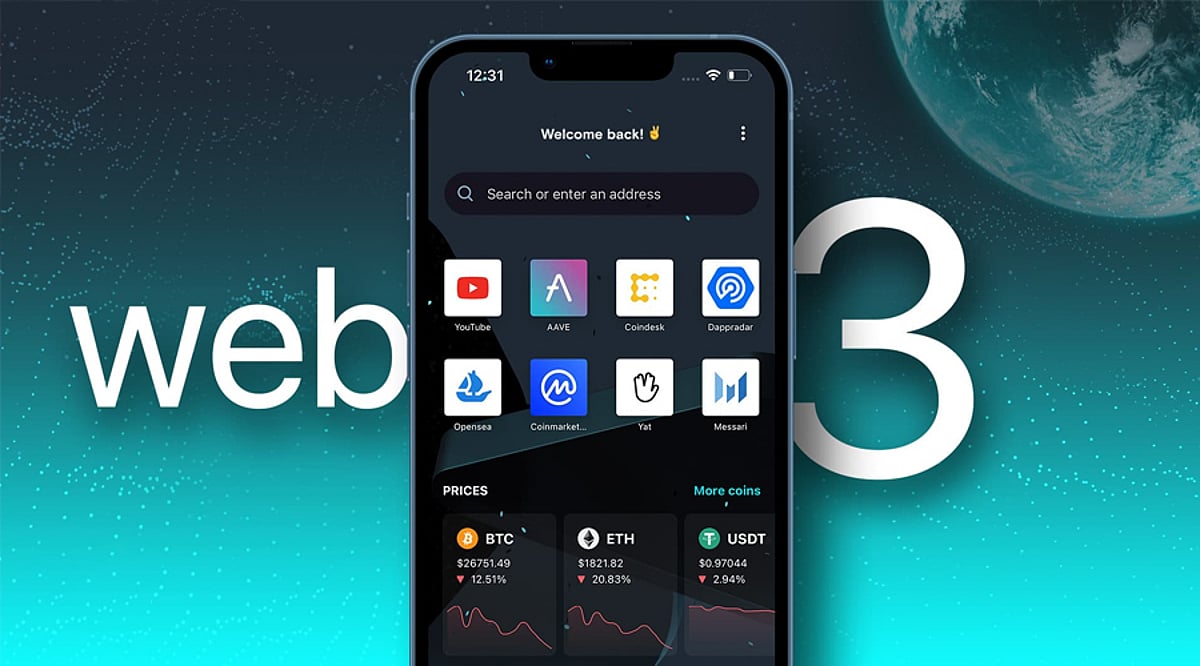
    Web3 browsers are revolutionizing the way users interact with decentralized applications (dApps) by integrating crypto wallets directly into the browsing experience. Instead of juggling multiple extensions, users can connect to DeFi platforms, NFT marketplaces, and DAOs from a single interface, making the process faster and more secure.

    Top Web3 Browsers Leading the Charge

    Brave Browser

    Brave remains a top choice for everyday users. It includes a built-in Brave Wallet, blocks ads and trackers by default, supports multiple blockchains, and allows direct access to dApps without external wallet extensions.

    Opera Crypto Browser

    Opera’s Crypto Browser is tailored for beginners. It features an integrated wallet, support for several blockchain networks, and quick access to NFTs, dApps, and blockchain tools through an intuitive interface.

    MetaMask

    MetaMask is the go-to option for Ethereum and EVM-compatible blockchains. Its built-in dApp browser and self-custodial wallet enable secure transaction signing, DeFi exploration, NFT management, and DAO participation while giving users full control over their assets.

    Mobile-First Options

    For mobile users, Trust Wallet, Phantom, and Puma Browser offer simple wallet integration, dApp support, NFT management, and strong privacy features with multi-chain compatibility.

    Key Advantages of Modern Web3 Browsers

    Built-in wallets eliminate the need for extra plugins, while phishing protection, transaction verification, ad blocking, and multi-chain support create a safer and more efficient environment for blockchain interactions.

    Which Browser Should You Choose?

    Brave is ideal for privacy-conscious users, Opera Crypto Browser is perfect for beginners, MetaMask offers advanced flexibility for Ethereum enthusiasts, and Phantom or Trust Wallet are excellent for mobile-first crypto explorers.

    As the Web3 ecosystem evolves in 2026, these browsers continue to lower the barrier to entry for decentralized applications, making crypto interactions more accessible than ever.

  • How Businesses Monitor Brand Conversations Across Multiple Digital Channels

    How Businesses Monitor Brand Conversations Across Multiple Digital Channels

    Social media, reviews, forums, blogs, news – there’s no lack of platforms where users mention your brand. Failing to monitor those mentions means missing out on crucial business opportunities or even putting your brand at risk. That’s where brand monitoring comes into play, helping brands make sense of all the online chatter and get a full view of customer perception and opinions.

    What Is Brand Monitoring?

    Brand monitoring is the process of analyzing mentions of a brand across various digital platforms. By monitoring brands, businesses gain insight into what customers, competitors, and everyone else thinks and discusses about their brand. In other words, brand monitoring helps turn random conversations into business insight and use it to improve marketing efforts, reputation management, customer experience, and even product development.

    For example, assume your company has just launched a new product and wants to measure its performance in the market. With brand monitoring, you’ll be able to tell the number of people who discussed it, what they think about it, what its main selling points are, and more. Essentially, brand monitoring allows getting a precise view of brand performance without making any assumptions.

    Where Brands Track Their Online Presence

    Customers don’t discuss brands only on social media. In fact, there are dozens of places where people mention brands every day, including:

    Social Media Platforms

    Social media platforms are among the most popular monitoring targets. Most of the time, social media will account for the largest number of mentions. Brands monitor platforms such as Instagram, TikTok, LinkedIn, Twitter, Facebook, and YouTube. Strong social media monitoring practices help businesses track engagement, customer sentiment, and campaign performance across these channels.

    Forums and Online Communities

    Many of the most honest and detailed discussions happen on forums and online communities such as Reddit and Quora. Brands use them to find potential problems and engage in conversations that would never happen anywhere else.

    Blogs and News Sites

    Newspapers, magazines, and other publications have a huge impact on brand perception and awareness. Monitoring news websites is critical when it comes to product launches, partnerships, collaborations, and more.

    Customer Support Platforms

    Customer discussions aren’t limited to third-party platforms. Most businesses track interactions in their own customer support chatbots, live chat software, emails, call transcripts, SMS, and other customer support channels.

    Steps for Creating Effective Brand Monitoring Strategies

    Brand monitoring strategies look different in each individual case. Depending on the brand and its business goals, monitoring can either take a lot of effort or require only several steps. Here’s a generic framework for brand monitoring strategies that should work well for most businesses.

    Step 1: Define Your Objectives

    Before implementing any marketing solution, make sure you know what you want to achieve. In the case of brand monitoring, possible objectives may include:

    • Analyzing customer sentiments and opinions
    • Increasing or maintaining brand reputation
    • Detecting reputation crises early and preventing them
    • Competitor monitoring
    • Analyzing the customer experience
    • Identifying brand influencers
    • Evaluating campaign performance

    Step 2: Set SMART Goals

    Now that you know what you’re trying to achieve, formulate your objectives as SMART goals: Specific, Measurable, Achievable, Relevant, and Time-bound. For example: “Increase the number of positive mentions on social media by 20% within six months using influencer partnerships and improving the customer experience.”

    Step 3: Track All Relevant Channels

    Monitoring is only effective if done on all relevant platforms. In addition to social media, forums, and reviews, make sure you monitor:

    • Product discussions on blogs and news sites
    • Competitors and industry thought leaders
    • News around your company
    • Backlinks on relevant sites
    • Customer support discussions

    Step 4: Use Automation and Artificial Intelligence

    Manual brand monitoring doesn’t scale. Luckily, there are plenty of tools that automate the process significantly. For example:

    • Use automation to categorize mentions
    • Detect sentiments automatically
    • Get alerted about critical mentions
    • Prioritize mentions that require immediate attention
    • Automatically generate reports
    • Analyze trends much faster
    • Use machine learning algorithms to reduce effort and improve accuracy

    Moreover, some businesses monitor mentions of AI assistants and other language models as they increasingly affect customer opinion and experience.

    Step 5: Proactively Engage in Discussions

    Monitoring isn’t enough if there’s no action involved. Here’s what to do next:

    • Respond to criticism promptly
    • Thank people for positive mentions
    • Correct any misinformation
    • Alert relevant parties about any problems detected
    • Share insights across departments
    • Follow up after any incidents or problems are addressed

    Step 6: Measure Performance Metrics and Optimize Your Strategy

    Monitoring has to evolve along with the business. That’s why it’s important to measure metrics such as:

    • Sentiments trends
    • Customer satisfaction
    • Share of voice
    • Engagement rates
    • Resolution time
    • Growth in brand awareness

    Then optimize monitoring according to results. Is our monitoring too narrow? Are we responding quickly enough? Do the insights we gather help us make improvements? Do customers feel more satisfied than before?

    Final Thoughts

    Online conversations shape brand reputation whether companies participate or not. Customers discuss products, share experiences, post reviews, recommend alternatives, and influence buying decisions across countless digital platforms every day. Brand monitoring helps businesses stay informed, respond faster, improve customer experience, identify opportunities, and prevent reputation crises before they escalate. More importantly, it transforms scattered online conversations into strategic business intelligence. Companies that actively listen to their audiences gain deeper customer understanding, stronger loyalty, better products, and a clearer competitive edge in an increasingly connected digital world.

  • Ethereum Nears $2,500 as Remittix Emerges as a Promising ETH-Connected Project

    Ethereum Nears $2,500 as Remittix Emerges as a Promising ETH-Connected Project

    Ethereum is back in the spotlight as traders watch whether ETH can close July above the $2,500 mark. Recent developments point to improving ETF flows, renewed institutional demand, and stronger layer-2 activity, all of which have helped restore bullish sentiment around the leading altcoin.

    According to reports, U.S. spot ether ETFs added $96 million in the first three days of a recent week, while Robinhood Chain—a layer-2 network that settles to Ethereum—has been processing over $800 million in daily decentralized exchange volume. This uptick has made Ethereum a key market signal for altcoin traders.

    Ethereum Price Momentum Builds

    After a difficult stretch, Ethereum has shown signs of recovery. ETF inflows have helped restore confidence, and technical breakouts have pushed ETH above the $1,829–$1,848 resistance zone. While some forecasts remain cautious—CoinGecko’s July 2026 prediction suggests a month-end level closer to $2,250—the overall narrative is that Ethereum price strength is returning, potentially triggering a wider altcoin rotation.

    Why Remittix Is Being Positioned As a Top ETH Play

    Remittix is gaining attention for addressing one of crypto’s clearest adoption gaps: moving digital assets into real-world bank payments. Its PayFi platform allows users to send crypto to any bank account globally, with recipients receiving fiat directly. This solves a major problem for freelancers, businesses, and cross-border senders who want crypto speed without requiring recipients to manage wallets or withdrawals.

    Targeting a global payments industry often estimated at $19 trillion, Remittix offers a much bigger narrative than a typical presale token. The crypto-to-fiat platform is fully developed and has been tested by the community. For Ethereum investors, this makes Remittix interesting because it provides a smaller, earlier-stage ecosystem play tied to real utility.

    Remittix Markets Adds Perps Demand

    Remittix has also unveiled Remittix Markets, a new perpetual futures trading platform. This adds a second major catalyst to the RTX ecosystem: PayFi provides a real-world payments foundation, while Remittix Markets connects the project to trading activity and perps growth.

    As Ethereum price momentum returns and traders rotate into altcoins and utility projects, Remittix now has several angles working simultaneously: crypto-to-fiat payments, perps trading, future ecosystem products, and a presale that has passed $31 million. The next milestone is $32 million, at which point the team is expected to reveal the official launch date.

    Frequently Asked Questions

    Could Ethereum close July above $2,500?

    Ethereum could attempt a move higher if ETF inflows, network activity, and wider market sentiment continue improving, although some forecasts remain more cautious.

    Why is Remittix being called a top ETH play?

    Remittix is positioned as a top ETH play because it combines crypto-to-fiat PayFi utility, Remittix Markets, and presale momentum during a period when Ethereum is driving altcoin attention.

    How much has Remittix raised so far?

    Remittix has now passed $31 million in its presale, with the official launch date expected to be revealed once it reaches $32 million.

    Explore the future of PayFi with Remittix by visiting their project website.

  • BlockDAG Aftersale Offers BDAG at $0.0000077 with 22% Discount Amid Bittensor and Litecoin Consolidation

    BlockDAG Aftersale Offers BDAG at $0.0000077 with 22% Discount Amid Bittensor and Litecoin Consolidation

    Monitoring shifting market setups often requires analyzing a mix of technical indicators and fundamental developments across the crypto market. Traders closely track the Bittensor price for signs of a technical breakout, while long-term investors weigh institutional developments behind the Litecoin price prediction. Beyond chart consolidations, participants searching for the best crypto to buy now frequently evaluate active direct allocation opportunities. BlockDAG (BDAG) is currently taking center stage with its live Aftersale event, offering BDAG at $0.0000077 alongside Instant Full Allocation and an immediate 22% discount for Live Swap purchases.

    This analysis reviews current technical patterns for Bittensor, examines institutional backing for Litecoin, and breaks down how BlockDAG’s operational deliverables position it in today’s market.

    Is the Bittensor Price Prepping for a Major Breakout?

    After months of persistent selling, the Bittensor price is finally showing signs of life as buyer momentum returns to the decentralized AI sector. Trading around $198, TAO has been squeezing into an increasingly tight consolidation range. While recovery attempts since June have continually stalled below major resistance, downside pressure has simultaneously dried up.

    A firm support floor near $170.5 continues to hold strong, bolstered by stabilizing momentum metrics like a steady RSI and a neutral MACD. Behind this consolidation lies a powerful fundamental tailwind: December’s halving slashed daily emissions in half to 3,600 TAO, dramatically easing supply pressure. Meanwhile, structural enhancements like the v431 protocol upgrade are expanding real utility across decentralized subnets.

    If bulls can decisively clear the critical $202–$220 resistance barrier, a sharp rally toward $260 could quickly materialize. Until then, patience remains essential as this coiled market prepares its next big move.

    Could Institutional Backing Trigger a Bullish Litecoin Price Prediction?

    Litecoin (LTC) is quietly turning heads as it coils inside a four-year consolidation phase, trading around $47.52 amidst strengthening market sentiment. A major driver powering this optimism is global investment giant T. Rowe Price including Litecoin among 15 selected digital assets in its actively managed TKNZ ETF. This high-profile inclusion from a $1.8 trillion asset manager firmly validates Litecoin’s standing as an institutionally credible network.

    Prominent analysts point out that LTC’s multi-year accumulation between $30 and $40 has built a remarkably strong foundation for the next major leg up. While reaching ambitious targets like $100, $300, or $500 remains speculative, the combination of institutional adoption and structural support adds serious credibility to an optimistic Litecoin price prediction. If broader market momentum turns, this extended consolidation period could be the springboard for LTC’s long-awaited breakout.

    BlockDAG Aftersale Drops BDAG to $0.0000077 with 22% Swap Discount

    Following the completion of its buyback program, BlockDAG has launched its Aftersale event, offering participants direct access to BDAG tokens at $0.0000077. Investors entering during this active window secure Instant Full Allocation on their purchase, while those utilizing the Live Swap option receive an immediate 22% discount compared to current rates on CoinMarketCap.

    This promotional phase arrives during a period of rapid development across the entire project. BlockDAG continues to advance key infrastructure milestones, leading up to Vision Keynote 6 on July 30 and the upcoming deployment of the proprietary BlockDAG Exchange. Physical operations are also expanding as the initial shipment of mining hardware reaches early buyers this week. Meanwhile, the gaming ecosystem is demonstrating substantial utility, with its integrated Casino and Sportsbook passing $200 million in cumulative wagering volume.

    By combining direct pricing incentives with measurable operational execution, BDAG presents a clear case for investors looking for the best crypto to buy now. Rather than asking buyers to wait on future promises, the project is delivering physical equipment, building exchange infrastructure, and offering full allocation discounts simultaneously. For participants seeking to expand their portfolio holdings before the next major expansion phase, this live Aftersale window provides an immediate entry point.

    Wrapping Up!

    The Bittensor price shows signs of technical compression that could lead to a swift rally if key resistance levels break. Simultaneously, institutional backing adds weight to an optimistic Litecoin price prediction for investors targeting established networks. However, BlockDAG sets itself apart by providing immediate, tangible value during its active Aftersale event. With BDAG available at $0.0000077, Instant Full Allocation, a 22% Live Swap discount, and ongoing distribution of physical mining units, the project combines strong incentives with clear operational milestones. For investors weighing top market opportunities, BlockDAG stands out as a top candidate for the best crypto to buy now.

    AFTERSALE: https://purchase.blockdag.network
    Website: https://blockdag.network
    Telegram: https://t.me/blockDAGnetworkOfficial
    Discord: https://discord.gg/Q7BxghMVyu

    Join our WhatsApp Channel to get the latest news, exclusives and videos on WhatsApp

    Disclaimer: Analytics Insight does not provide financial advice or guidance on cryptocurrencies and stocks. Also note that the cryptocurrencies mentioned/listed on the website could potentially be risky, i.e. designed to induce you to invest financial resources that may be lost forever and not be recoverable once investments are made. This article is provided for informational purposes and does not constitute investment advice. You are responsible for conducting your own research (DYOR) before making any investments. Read more about the financial risks involved here.

  • How AI Is Revolutionizing Financial Fraud Detection in Banking

    How AI Is Revolutionizing Financial Fraud Detection in Banking

    Online fraud is growing as more people use digital banking and online payments. AI helps banks find suspicious transactions before criminals can steal money. Human experts are still needed because AI cannot stop every type of fraud on its own.

    Banking has become much easier over the last few years. With the invention of new systems like UPIs and internet banking, people can now transfer money, pay bills, shop online, and even apply for loans without visiting a bank. Everything happens in just a few clicks.

    Unfortunately, criminal activities also have evolved over the years. These fraudsters don’t rely on stolen cards or fake signatures; now they have other ways to scam people, including fake websites, scam messages, copied identities, and even AI-made voices. The increasing number of financial scams has put banks under pressure to maintain transparency. Every day millions of transactions happen, and finding one or two fake among them is next to impossible, at least manually. Older security systems mostly worked on fixed rules. Once criminals learned those rules, they found new ways to avoid them.

    This is where AI is making a difference. Instead of checking only one or two details, AI studies many things at the same time. It looks at spending habits, login locations, devices, and transaction history. If something looks unusual, it reacts within seconds.

    The Evolution of Financial Frauds Over the Years

    Before looking at how AI works, it is important to understand how financial fraud has changed in recent years. Online fraud has become more common because digital banking is now part of everyday life. One of the biggest threats is phishing. Criminals send fake emails, text messages, or links that look real. Once people enter their passwords or banking details, the criminals gain access to their accounts.

    Identity theft is another major problem. Personal information is stolen and then used to open bank accounts, take loans, or make purchases in someone else’s name. Payment fraud has also increased. Criminals use stolen banking details to make online payments without the account owner’s knowledge. Credit card fraud continues to affect millions of people every year. A stolen card number can be enough for someone to shop online before the owner notices anything.

    Banks also deal with account takeovers, fake loan requests, business email scams, and money laundering. Criminals keep changing their methods, making it harder for old security systems to keep up.

    How AI Is Helping Banks Stop Fraud Faster

    The use of AI is changing how banks protect customers. New technologies allow banks to prevent fraud even before it hits customers and causes unauthorized transactions. The biggest strength of using AI is its speed. AI can study thousands of transactions in a few seconds. It checks where the payment came from, which device was used, how much money was spent, and whether the activity matches the customer’s normal behavior.

    For example, if a customer generally uses their debit or credit card in Delhi and suddenly makes a large payment from another country shortly after, AI will quickly notice the unusual pattern and may stop the payment instantly. It may even ask the customer to confirm the transaction before allowing it.

    The next advantage of AI is that these systems keep learning. Every fraud case helps the systems understand new tricks used by criminals. This makes the systems better over time. Another undeniable advantage is fewer false warnings. Older systems often block genuine payments, marking them as scams. AI studies customer habits more carefully, so it is less likely to stop a normal transaction.

    Additionally, AI is used in banks for customer verification. Face recognition, fingerprint scans, and voice checks generally help confirm that the right person is handling the account. Some banks even use AI to detect fake identity documents when opening new accounts. Customer support has improved too. AI-powered chatbots can answer questions, report suspicious activity, and help customers at any time of the day. Even with all these improvements, people remain an important part of the process. Security experts still investigate difficult cases and make important decisions that AI cannot handle alone.

    Why It Matters

    As criminals use AI to create smarter scams, fake voices, and realistic messages, banks also need stronger AI systems to protect customers. Better technology and careful users will both be needed to reduce financial fraud in the future.

    Smarter Security Will Shape the Future of Banking

    Financial fraud is not going away. Criminals will continue finding new ways to target people as technology becomes more advanced. Banks know they can’t rely on old security systems anymore. AI helps them detect fraud faster, reduce losses, and improve their customers’ safety. Each new fraud case helps improve AI’s ability to detect future attacks. The future of banking will be shaped by powerful technology and clever users working together. AI is proving to be a powerful defense against financial fraud, and its role will continue to increase in the coming years.

    Frequently Asked Questions

    1. What is AI fraud detection? AI fraud detection uses artificial intelligence to find suspicious banking activity before money is stolen.
    2. How does AI detect financial fraud? AI studies customer behavior, transaction history, devices, and locations to identify unusual activity.
    3. Can AI stop phishing scams? AI can detect many phishing attempts, but people should still avoid clicking unknown links or sharing personal information.
    4. Does AI replace bank security teams? No. AI helps detect fraud quickly, while security experts investigate difficult cases and improve protection.
    5. Why is AI becoming important in banking? AI helps banks detect fraud faster, reduce false alerts, improve customer safety, and respond to new scam methods.