Blog

  • 10 Innovative Technologies Transforming Modern Classrooms

    10 Innovative Technologies Transforming Modern Classrooms

    Technology is reshaping classrooms, making learning more interactive, personalized, and flexible. From AI-driven lessons to smartboards and e-books, these tools empower teachers to teach more effectively while offering students engaging and accessible ways to learn.

    Overview

    Modern technology is making classrooms more interactive, engaging, and easier to manage for both teachers and students. Smart tools like AI, digital learning platforms, and smartboards support different learning styles and boost classroom participation. These innovations help students learn at their own pace while equipping them with future-ready skills.

    Classrooms have evolved significantly. Not long ago, students relied on blackboards and printed books. Today, digital tools make lessons more interesting and accessible. Students can watch videos, attend online classes, and learn in ways that suit them best.

    Teachers remain central to every classroom. Technology provides them with additional tools to explain concepts and keep students engaged. Here are ten technologies that help schools create better learning experiences every day.

    AI-Driven Personalized Learning

    Students learn differently. Some grasp topics quickly, while others need more practice. AI-powered learning platforms tailor lessons to each student’s progress. They recommend additional practice when needed and allow students to move on when ready. This approach helps students learn without feeling rushed or left behind.

    Gamification of Education

    Many students find learning more enjoyable when lessons include fun activities. Schools now use quizzes, points, rewards, and badges to maintain interest. Small, achievable goals make learning exciting and less stressful. These activities also engage students in class and encourage them to do their best every day.

    Digital Pads

    Digital pads are now common in many classrooms. Students can write notes, complete homework, and draw diagrams on a single device. Everything stays organized, making it easy to find old notes. Teachers can also send worksheets and study materials in seconds.

    Smartboards

    Smartboards have made classroom teaching more dynamic. Teachers can display photos, videos, maps, and presentations with a single tap. Students can answer questions on-screen and participate in interactive activities. Everyone gets a clear view, making lessons easier to understand.

    Microlearning Platforms

    Studying for long hours can be exhausting. Microlearning platforms break lessons into short, manageable segments. Students learn one concept at a time, which simplifies learning and improves retention, especially during exam periods.

    Social-Emotional Learning Tools

    School is about more than grades. Students also need to develop collaboration, emotional management, and problem-solving skills. Social-emotional learning tools include simple activities and classroom discussions that support personal growth alongside academic achievement.

    Lifelong Learning Platforms

    Learning shouldn’t stop after school. Lifelong learning platforms allow students to acquire new skills at their own pace. Whether it’s coding, communication, or a new language, these platforms make continuous education accessible at any stage of life.

    E-Books

    E-books have become a practical choice for many schools. Students can carry numerous books on a single device instead of heavy backpacks. Features like search, highlighting, and note-taking enhance the reading experience. Some e-books also include videos and practice questions.

    Remote Learning

    Remote learning has made education more flexible. Students can attend classes from home when they can’t be at school. Live sessions, recorded lessons, and online discussions keep them connected with teachers and classmates. This flexibility means learning can happen almost anywhere.

    Document Camera

    Document cameras simplify classroom demonstrations. Teachers can place a book, worksheet, or science experiment under the camera, and it displays on a large screen. Every student gets a clear view without leaving their seat—especially useful for practical lessons.

    Personal Recommendation: Three Technologies Every Student Should Try

    If I had to choose three, they would be AI-Driven Personalized Learning, Smartboards, and Microlearning Platforms. AI-powered learning provides the extra support students need without pressure. Everyone learns at their own pace. Smartboards bring lessons to life with pictures, videos, and live examples, making tough topics easier to grasp. Microlearning platforms are perfect for busy students—bite-sized lessons fit into daily routines and make exam revision less stressful. Together, these tools make learning more fun, improve understanding, and build student confidence.

    Learning Is Becoming Better Every Day

    Technology has opened new doors for both students and teachers. Classrooms are more interactive, lessons more interesting, and learning more flexible. Information is more accessible than ever. However, teachers remain the most important part of education. Technology works best when it supports teaching, not replaces it. With more tools in schools, students can learn more, explore new ideas, and prepare for the future with confidence.

    FAQs

    1. How is technology improving today’s classrooms?
    Technology makes lessons more interactive through videos, quizzes, and digital activities. It helps teachers explain topics clearly while offering students different ways to learn based on their needs.

    2. Which classroom technology is most useful for students?
    AI-driven personalized learning is one of the most useful tools because it adjusts lessons to each student’s progress. Smartboards and microlearning platforms are also great for making learning easier and more engaging.

    3. Can technology replace teachers in the future?
    No. Technology supports teachers but cannot replace them. Teachers guide students, answer questions, and create meaningful learning experiences that digital tools alone cannot provide.

    4. Why are schools moving from printed books to e-books?
    E-books are easier to carry, simple to update, and offer features like search, bookmarks, notes, and interactive content. They provide quick access to learning materials anytime.

    5. What should schools consider before using new classroom technology?
    Schools should choose tools that are easy to use, support learning goals, and are accessible to both teachers and students. Proper training and reliable internet access are also essential for best results.


  • 5 Top AI Engineer Certifications to Land a Job in 2026

    5 Top AI Engineer Certifications to Land a Job in 2026

    Artificial intelligence is no longer confined to research labs—it now powers products, services, and operations across every industry. As companies invest heavily in generative AI, automation, and machine learning, the demand for skilled AI engineers continues to surge. Recruiters, however, are looking for more than theoretical knowledge; they want candidates who can apply AI to solve real-world problems.

    A recognized certification can strengthen your resume, validate your skills, and help you stand out during the hiring process. While it is not a substitute for practical experience, it complements a strong portfolio and improves your chances of landing interviews. Below are five industry-recognized AI certifications that can help you get hired in 2026.

    1. Google Cloud Professional Machine Learning Engineer

    The Google Professional Machine Learning Engineer certification is highly valued by employers for enterprise-scale AI roles. It covers the development, deployment, and management of machine learning models using Vertex AI and Google Cloud. Topics include model optimization, MLOps, monitoring, and responsible AI. This certification is ideal for professionals with some experience in machine learning and cloud computing.

    2. Microsoft Azure AI Engineer Associate (AI-102)

    This certification is designed for developers and cloud professionals who want to build AI-powered applications on Microsoft’s Azure platform. Learners gain hands-on skills with Azure AI services, Azure OpenAI, computer vision, speech services, and natural language processing. The course also emphasizes building secure and responsible AI applications.

    3. AWS Certified AI Practitioner

    AWS Certified AI Practitioner is an entry-level certification for those building a foundation in artificial intelligence. It introduces AI concepts, generative AI, prompt engineering, responsible AI, and AWS AI services. This is a practical starting point for IT professionals, software developers, and cloud engineers transitioning into AI roles.

    4. Databricks Certified Generative AI Engineer Associate

    As organizations deploy AI assistants and enterprise chatbots, generative AI skills have become highly sought after. This certification focuses on Retrieval-Augmented Generation (RAG), large language models, vector databases, prompt engineering, and AI agent development. It is aimed at engineers working on modern LLM-powered applications.

    5. IBM AI Engineering Professional Certificate

    IBM’s certification emphasizes project-based learning over theory. Participants learn Python, machine learning, deep learning, TensorFlow, and PyTorch through practical projects. This program is an excellent way for beginners to combine technical skills with a portfolio of AI projects.

    Final Takeaway

    Candidates are now evaluated on their ability to create rather than just their credentials. While a certification can make your profile stand out, practical experience is what gets you through the door. Recruiters prefer candidates who have built AI products, contributed to GitHub repositories, deployed models using cloud technology, and understand vector databases, prompt engineering, and MLOps. A relevant certification can give you the edge over other applicants, but remember: earning a certification is only the first step in your AI career journey.

    Frequently Asked Questions

    What is the best AI certification for beginners in 2026?

    AWS Certified AI Practitioner and IBM AI Engineering Professional Certificate are top choices for beginners. They cover AI fundamentals, generative AI, Python, and practical skills without requiring extensive machine learning experience.

    Which AI certification is most valued by employers?

    Google Cloud Professional Machine Learning Engineer and Microsoft Azure AI Engineer Associate are highly regarded, especially for enterprise AI, cloud computing, and production-scale machine learning roles.

    Do AI certifications guarantee a job?

    No. Certifications improve your resume and validate your knowledge, but employers also expect practical experience through AI projects, GitHub portfolios, cloud deployments, and problem-solving skills during technical interviews.

    Which certification is best for generative AI careers?

    The Databricks Certified Generative AI Engineer Associate is a strong choice for those interested in large language models, RAG, prompt engineering, vector databases, and enterprise AI applications.

    How should I prepare for an AI engineering role in 2026?

    Build a strong foundation in Python, machine learning, and cloud platforms. Earn a recognized AI certification, create real-world projects, and maintain an active portfolio to showcase your technical abilities.

  • 7 Executive Strategies for Dominating the AI Economy

    7 Executive Strategies for Dominating the AI Economy

    The AI economy is reshaping competitive dynamics, cost structures, and customer expectations simultaneously. According to McKinsey’s 2026 State of AI report, 78% of organizations now use AI in at least one business function, up from 55% the year before — a pace of adoption that means the gap between leaders and laggards is widening faster than most boards anticipated. For CXOs, the question is no longer whether to adopt AI but how to adopt it in ways that create durable advantage rather than temporary efficiency gains.

    Treat AI as a Strategic Priority, Not an IT Project

    The most frequent pitfall in executive oversight is to delegate AI adoption to the technology department and measure success by operational outcomes only. Leading organizations are those where the CEO has set clear AI goals linked to revenue and holds the entire C-Suite accountable. According to Gartner’s 2026 CIO research, companies whose CEO sponsors AI programs are 2.5 times more likely to have business impact from them. In this era, AI literacy is not negotiable for non-tech executives: an incompetent CFO unable to critically assess an AI investment case or a CMO who cannot judge the attribution model of an AI marketing campaign is at a considerable disadvantage.

    Build AI into the Core, Not the Edge

    Many organizations in 2025 ran AI pilots at the edges of the business: isolated proofs-of-concept in one department, a chatbot on customer service, a forecasting tool in one market. These generated learnings but rarely competitive advantage, because they were never connected to the core operating model. Winning in the AI economy requires integrating AI into the processes that directly determine how value is created: the customer experience, the supply chain, the product development cycle, and the sales motion. Companies that have integrated AI into their core operations report 40% higher productivity gains compared to those running isolated experiments, according to BCG’s 2026 AI adoption analysis.

    Rethink the Workforce, Don’t Just Retrain It

    AI will displace some jobs, radically alter many others, and bring into being job categories that do not currently exist. Managers who view this as a training issue invariably underestimate the magnitude of the change needed. The better way to think about this challenge is through workforce redesign — figuring out how to map activities into areas managed by AI, those requiring AI-human interaction, and those requiring uniquely human input, and then redesigning job categories, teams, and incentives accordingly. Companies that redesign their workforces with AI rather than augmenting pre-existing designs with AI realize far greater benefits.

    Govern AI Before It Governs You

    AI adoption without governance is a weakness rather than a strength. Failures show that the costs incurred in terms of reputation and regulation can often outweigh the efficiency benefits which motivated the adoption of AI technology in the first place. Leading organizations have established AI governance frameworks with clear accountability, mandatory human oversight for high-stakes outputs, regular bias auditing, and documented correction processes. This is not a compliance exercise. It is risk management and increasingly, a customer trust signal.

    Win on Data, Not Just on Models

    The commoditization of foundation models means model access alone is no longer a competitive differentiator. The durable advantage in the AI economy sits in proprietary data. Organizations that have invested in data quality, infrastructure, and governance for years can fine-tune models on their own customer behavior and operational history in ways competitors without that data asset cannot easily replicate. For executives building AI strategy, data strategy and AI strategy are the same document, and the executives who understand that distinction earliest will be the ones best positioned to lead in the AI economy over the decade ahead.

    Why This Matters

    Organizations that strategically integrate AI into their business models are more likely to improve productivity, accelerate innovation, and respond quickly to changing market conditions. Executive leadership, not technology alone, will determine which companies gain lasting competitive advantage.

    FAQs

    What is the AI economy?

    The AI economy refers to the growing business environment where artificial intelligence drives productivity, innovation, customer experiences, and competitive advantage across industries. Organizations increasingly use AI to automate workflows, improve decision-making, and create new products and services.

    Why should CEOs treat AI as a business strategy instead of an IT project?

    AI influences every business function, including finance, marketing, operations, and customer service. When executive leadership aligns AI initiatives with revenue growth and strategic objectives, organizations are more likely to achieve measurable business outcomes than when AI remains solely a technology initiative.

    How can organizations successfully integrate AI into core business operations?

    Companies should embed AI into value-generating processes such as customer service, supply chain management, sales forecasting, product development, and decision support. Integrating AI into daily operations delivers greater long-term benefits than isolated pilot projects.

    What is AI governance, and why is it important?

    AI governance establishes policies, oversight mechanisms, and accountability for AI systems. It includes bias testing, human review, regulatory compliance, data privacy protection, and continuous monitoring to reduce legal, ethical, and reputational risks.

    Why is data strategy essential for AI success?

    High-quality proprietary data enables organizations to train and fine-tune AI systems for better business outcomes. Since AI models are becoming more widely accessible, unique data assets increasingly provide the strongest competitive advantage.

  • Tesla (TSLA) Technical Analysis: Bearish Pressure Mounts as Stock Tests Critical $368 Support

    Tesla (TSLA) Technical Analysis: Bearish Pressure Mounts as Stock Tests Critical $368 Support

    Tesla (TSLA) continues to face significant selling pressure, with the stock trading near $369.56 and exhibiting a clear bearish trend on its 30-minute chart. A combination of weak moving averages, low Relative Strength Index (RSI), strong selling volume, and repeated lower highs suggests that downside momentum remains intact. The $368–370 zone now serves as a critical support area that bulls must defend to prevent further declines.

    Key Technical Takeaways

    • Tesla is forming consistent lower highs and lower lows, confirming a bearish trend.
    • The RSI is near 24.67, indicating weak momentum and an oversold condition.
    • Immediate support lies at $368–370, while resistance levels are at $376 and $386.

    Price Action Remains Weak

    On the 30-minute chart, Tesla’s price action shows a steady series of lower highs and lower lows. Every attempted recovery fails to surpass the previous high, allowing sellers to regain control quickly. This pattern keeps the stock under persistent downward pressure as the latest trading session concludes.

    Moving Averages Signal Continued Weakness

    The moving averages reinforce the bearish outlook. The stock consistently trades below both the short-term and long-term moving averages, with the shorter average positioned below the longer one—a classic bearish signal. Each minor rally stalls at these moving averages, which now act as resistance rather than support. Until TSLA closes decisively above these levels, the trend remains negative.

    Bollinger Bands Highlight Downside Volatility

    Bollinger Bands reveal heightened volatility during sharp price moves. Earlier sessions featured wide bands after large declines, followed by a period of contraction before another selling wave. The latest candles are hugging the lower Bollinger Band, confirming that sellers retain control. While price near the lower band can occasionally trigger a short-term bounce, strong bearish trends often keep the stock pinned near this zone for extended periods.

    Volume Confirms Bearish Dominance

    Volume analysis supports the bearish narrative. Large red candles appear with elevated trading volume during sharp declines, indicating strong seller participation. Although green candles appear intermittently, their associated volume is significantly lower than selling volume. As a result, each recovery attempt loses momentum quickly, and the stock fails to build any lasting rebound.

    RSI Signals Oversold but Not Reversal

    The RSI stands near 24.67, well below the neutral 50 level and close to the oversold threshold of 30. While an oversold reading can sometimes precede a short-term bounce, it does not confirm a trend reversal. A sustained recovery would require stronger price action, higher buying volume, and a move above key resistance levels.

    Price Structure Favors Sellers

    The chart shows multiple failed recovery attempts. After an initial drop, Tesla attempted to climb back toward $415–420 before sellers returned. Another rally near the middle of the chart also stalled below the prior high. This series of lower peaks confirms that bullish momentum continues to fade, with sellers defending each resistance zone effectively.

    Key Support and Resistance Levels

    • Support: $368–370 – The stock has found temporary stability here, but repeated tests weaken this level. A breakdown below this zone could trigger further downside.
    • Resistance 1: $376 – Near the short-term moving average.
    • Resistance 2: $386 – Where the longer-term moving average and previous price congestion converge.

    A strong close above both resistance levels would improve the technical outlook and could signal that buyers are regaining control.

    Overall Outlook

    The overall technical picture remains bearish. Lower highs, lower lows, weak moving averages, strong selling volume, and a low RSI all point to continued downside pressure. Tesla remains one of the most volatile large-cap technology stocks, and factors such as earnings reports, EV demand, market sentiment, economic data, and regulatory updates can rapidly shift price direction.

    For now, the chart continues to favor sellers. A more constructive outlook would require a sustained move above the key resistance levels, supported by higher buying volume and improving momentum. Until then, downside risk remains the dominant theme.

    Frequently Asked Questions

    1. What is the current trend for Tesla stock? Tesla remains in a bearish trend with consistent lower highs and lower lows.
    2. What does the RSI indicate? The RSI near 24.67 reflects weak momentum and an oversold condition.
    3. What is the nearest support level? The closest support zone is around $368–370.
    4. Which resistance levels are important? Immediate resistance is near $376, followed by stronger resistance around $386.
    5. What could improve Tesla’s technical outlook? A sustained move above key resistance levels with stronger buying volume could signal a positive trend change.
  • Top Web3 Browsers for Fast Crypto and dApp Access in 2026

    Top Web3 Browsers for Fast Crypto and dApp Access in 2026

    Web3 browsers are transforming how users access decentralized applications, crypto wallets, and blockchain services, offering greater control over digital identities and a more seamless online experience.

    Leading Web3 Browsers for 2026

    Brave Browser remains a top choice thanks to its built-in crypto wallet, strong privacy protections, and native support for Ethereum and Solana ecosystems.

    Opera Crypto Browser provides an integrated non-custodial wallet, a dedicated dApp explorer, and multi-chain support for a smooth Web3 journey.

    Microsoft Edge continues to expand its Web3 capabilities with wallet integrations and improved compatibility with decentralized applications and extensions.

    Mises Browser has gained popularity among mobile users for its optimized dApp performance, extension support, and smooth blockchain interactions.

    Key Features and Security

    Many Web3 browsers now support popular blockchains including Ethereum, BNB Chain, Polygon, Solana, Base, and Avalanche without requiring complex setup.

    Security features such as phishing detection, wallet isolation, biometric authentication, and private browsing are becoming standard across leading Web3 browsers.

    Best Practices for Safe Usage

    Before connecting any wallet, verify dApps carefully and never approve unknown smart contract permissions to reduce the risk of scams.

    As decentralized finance, NFTs, gaming, and tokenized assets continue growing in 2026, choosing a secure and fast Web3 browser is becoming increasingly important.

  • Top AI-Powered Innovations Transforming Smartphone Photography

    Top AI-Powered Innovations Transforming Smartphone Photography

    Artificial intelligence is rapidly reshaping the way we capture and edit photos on smartphones. From automatic scene adjustments to advanced generative editing, the latest AI features make it easier than ever to take professional-quality images without manual effort. Here are the key AI capabilities that are making smartphone cameras smarter.

    AI Scene Recognition

    Modern smartphones automatically identify landscapes, food, pets, documents, and portraits. The AI then adjusts exposure, colors, contrast, and white balance in real time, ensuring every shot looks its best with zero user input.

    Computational Photography

    By combining multiple frames into a single image, computational photography dramatically improves sharpness, dynamic range, and low-light performance. This technique eliminates the need for manual camera adjustments and consistently delivers detailed, balanced photos.

    Night Mode AI

    Intelligent image stacking and noise reduction allow smartphones to brighten dark scenes while preserving natural colors and fine details. Night mode AI makes low-light photography accessible and impressive, even for casual users.

    AI Portrait Mode

    Using advanced subject separation, portrait mode creates realistic depth effects with adjustable blur. The result is studio-quality portraiture that highlights the subject while smoothly blurring the background.

    Object Eraser

    Generative AI powers object eraser tools that remove unwanted people, reflections, wires, or other distractions. The surrounding background is naturally reconstructed, making the edit nearly invisible.

    AI Image Upscaling

    When enlarging photos, AI upscaling intelligently enhances resolution and restores details without introducing artificial sharpness or artifacts. This feature breathes new life into older or lower-resolution images.

    Smart HDR Processing

    Smart HDR uses AI to balance bright highlights and dark shadows, ensuring every part of the image retains realistic detail and vibrant colors. It works seamlessly in high-contrast scenes.

    Real-Time Video Enhancement

    During video recording, AI improves stabilization, lighting, autofocus, and exposure. The result is smoother, sharper, and more professional-looking footage, even in challenging conditions.

    Generative AI Editing

    Advanced editing tools now expand image backgrounds, fill missing areas, and perform complex edits using AI-generated content. These features maintain visual consistency and realism, offering creative possibilities previously reserved for desktop software.

    These AI-driven innovations are making smartphone cameras more capable than ever, putting powerful photography tools in everyone’s pocket. As AI continues to evolve, we can expect even smarter and more intuitive camera experiences.

  • 10 Cutting-Edge Technologies Revolutionizing Professional Sports

    10 Cutting-Edge Technologies Revolutionizing Professional Sports

    From wearable trackers to AI-driven analytics, professional sports are being transformed by a wave of innovative technologies. Here are ten key advancements reshaping how athletes train, compete, and engage with fans.

    Wearable Performance Trackers

    These devices monitor heart rate, speed, workload, recovery, and movement patterns, helping athletes optimize performance while reducing injury risks during training.

    Artificial Intelligence Analytics

    AI processes massive performance datasets, identifying tactical improvements, player strengths, opponent weaknesses, and strategic opportunities for coaches and analysts.

    Video Assistant Referee (VAR)

    VAR assists match officials by reviewing controversial decisions using multiple camera angles, improving fairness and reducing officiating errors in competitive sports.

    Hawk-Eye Tracking System

    Using high-speed cameras, Hawk-Eye accurately determines ball trajectories, assisting line calls, goal decisions, and player movement analysis across multiple sports.

    Smart Equipment Sensors

    Embedded sensors in balls, bats, rackets, and helmets collect real-time performance data for coaches, broadcasters, and athletes during competitions.

    Virtual Reality Training

    VR creates immersive practice environments where athletes safely improve reaction times, tactical awareness, and decision-making without physical game conditions or travel.

    Biomechanics Motion Capture

    This technology records body movements precisely, helping identify inefficient techniques, improve athletic performance, and minimize injury risks through scientific movement analysis.

    GPS Athlete Monitoring

    GPS tracks player positioning, running distances, sprint intensity, and workload, enabling personalized fitness programs and better match preparation strategies.

    Recovery Technology Systems

    Cryotherapy, compression devices, and AI-powered recovery monitoring accelerate muscle healing, reduce fatigue, and improve long-term athletic performance.

    Fan Engagement Platforms

    Augmented reality, interactive apps, and real-time statistics provide immersive experiences, strengthening fan participation both inside stadiums and through digital broadcasts.

  • India’s Semiconductor Chip Supply Chain: Key Sources and Domestic Ambitions

    India’s Semiconductor Chip Supply Chain: Key Sources and Domestic Ambitions

    India relies heavily on imported semiconductor chips to power its booming electronics, automotive, and telecommunications sectors. Understanding the primary sources of these critical components reveals the global dependencies and strategic initiatives shaping the nation’s tech landscape.

    Taiwan: The Dominant Supplier

    Taiwan stands as India’s largest semiconductor supplier, led by industry giants like TSMC. These manufacturers produce advanced chips for smartphones, computers, automotive systems, and industrial electronics, making Taiwan an indispensable partner in India’s technology ecosystem.

    China: Mature Components Despite Geopolitical Tensions

    China supplies a wide range of mature semiconductor components used across consumer electronics, appliances, telecommunications equipment, and industrial manufacturing. Despite geopolitical challenges, China remains a key source for India’s semiconductor needs.

    South Korea: Memory and Storage Leadership

    South Korean companies Samsung and SK Hynix export memory chips, storage components, and semiconductor technologies that support India’s electronics manufacturing and smartphone production industries.

    United States: Advanced Processors and AI Semiconductors

    American companies design advanced processors, networking chips, and AI semiconductors widely integrated into India’s technology, cloud computing, and enterprise hardware markets.

    Japan: Specialty Materials and Equipment

    Japan provides specialty semiconductor materials, sensors, manufacturing equipment, and electronic components essential for India’s growing electronics and automotive industries across multiple sectors.

    Singapore: Regional Trading and Distribution Hub

    Singapore functions as a regional semiconductor trading and distribution hub, exporting integrated circuits and electronic components from multiple global manufacturers efficiently to India.

    Malaysia: Assembly, Testing, and Packaging

    Malaysia is a major assembly, testing, and packaging center, exporting semiconductor products and electronic components to India’s consumer electronics and automotive manufacturing sectors consistently.

    Vietnam: Emerging Electronics Manufacturing Hub

    Vietnam is an emerging electronics manufacturing hub supplying semiconductor-based components used in smartphones, computers, networking equipment, and other consumer electronic devices worldwide today.

    India’s Domestic Chip Mission

    Government initiatives encourage semiconductor fabrication, packaging, and design through incentives, aiming to reduce import dependence and strengthen domestic manufacturing. This strategic push seeks to build a self-reliant semiconductor ecosystem within India.

  • Best Decentralized Crypto Lending Platforms to Watch in 2026

    Best Decentralized Crypto Lending Platforms to Watch in 2026

    The decentralized finance (DeFi) ecosystem continues to evolve, and crypto lending platforms are at the forefront of this revolution. In 2026, several protocols stand out for their innovative approaches to borrowing, lending, and earning rewards. Here are the top decentralized crypto lending platforms reshaping the landscape.

    Aave

    As the largest DeFi lending protocol, Aave offers deep liquidity across multiple assets and flexible borrowing options, including flash loans and variable interest rates.

    Morpho

    Morpho improves lending efficiency by directly matching borrowers and lenders, reducing reliance on liquidity pools and optimizing interest rates for both parties.

    Spark Protocol

    Backed by MakerDAO, Spark Protocol focuses on stablecoin lending and low-risk yields, making it a go-to platform for conservative DeFi participants.

    Compound

    A pioneer in the space, Compound allows users to earn passive interest on their crypto assets by supplying liquidity to algorithmic money markets.

    Venus Protocol

    Popular on BNB Chain, Venus offers lending, borrowing, and synthetic stablecoin minting, providing a comprehensive DeFi experience within the Binance ecosystem.

    Radiant Capital

    Radiant Capital enables cross-chain lending, connecting multiple blockchain ecosystems and allowing users to borrow and lend assets seamlessly across networks.

    Euler Finance

    Euler Finance introduces advanced lending markets with customizable risk management, giving users more control over their exposure and collateral requirements.

    Liquity

    Liquity offers zero-interest borrowing backed by Ethereum collateral, providing a unique value proposition for users seeking capital efficiency without ongoing interest costs.

    These platforms exemplify the innovation driving DeFi lending in 2026, offering users diverse options for earning yield, accessing liquidity, and managing risk in a decentralized manner.

  • Apple Might Turn to Chinese Supplier CXMT for iPhone Memory Chips

    Apple Might Turn to Chinese Supplier CXMT for iPhone Memory Chips

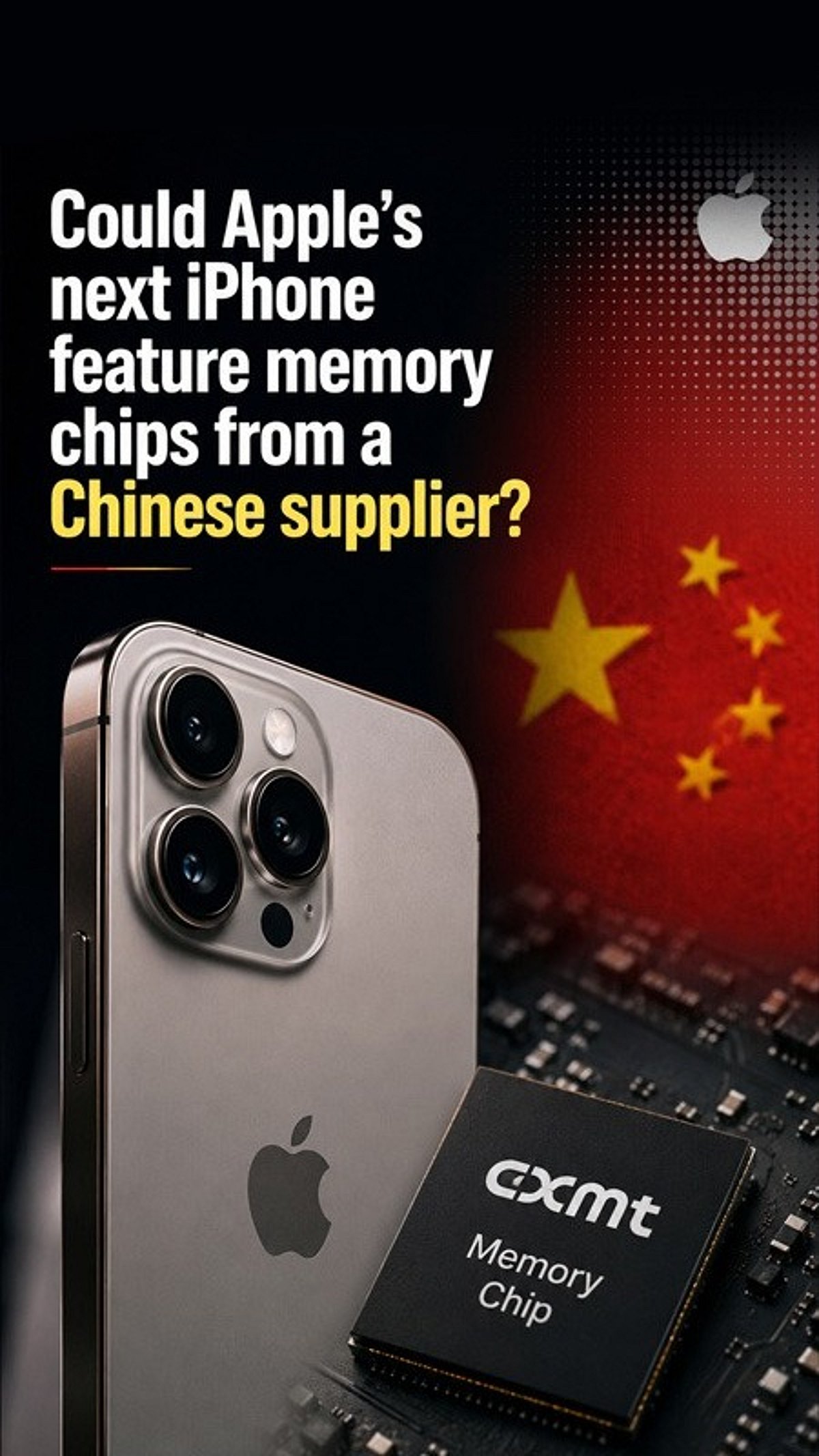
    Apple is reportedly considering a major shift in its supply chain by exploring an agreement with Chinese memory chip manufacturer CXMT (ChangXin Memory Technologies). If finalized, this move could see future iPhones equipped with memory chips sourced from a Chinese supplier for the first time, potentially reducing costs and altering the dynamics of global semiconductor politics.

    Industry insiders suggest that Apple is evaluating CXMT as a partner for DRAM or NAND flash memory, categories historically dominated by South Korean giants like Samsung and SK Hynix, as well as U.S.-based Micron. The motivation appears to be twofold: first, to diversify the supply chain and reduce dependency on a few key players; second, to lower component costs, which could enhance profit margins or allow for competitive pricing.

    However, the prospective partnership is not without controversy. CXMT, despite being a relatively young player in the memory market, has faced scrutiny over intellectual property disputes and allegations of technology theft. Additionally, geopolitical tensions between the U.S. and China have made any technology collaboration between American and Chinese firms a sensitive subject. Apple would need to navigate potential security concerns, quality assurance issues, and the risk of supply chain disruptions due to trade restrictions.

    For consumers, the biggest question is whether CXMT’s memory chips can match the performance and reliability of established suppliers. Early reports indicate that CXMT’s products have improved significantly, but they are still perceived as trailing behind industry leaders. If Apple can integrate these chips without compromising iPhone performance, it could signal a new era of cost-efficient manufacturing.

    This bold strategy, if implemented, would redefine Apple’s sourcing relationships and could have ripple effects across the entire electronics industry. Competitors may follow suit, further reshaping the global memory market. Whether this move will ultimately benefit or backfire on Apple remains to be seen, but it is a development worth watching closely.