Blog

  • Qualcomm Snapdragon 8 Elite Gen 6: 2nm Chip With 5GHz CPU Set to Transform Android Flagships

    Qualcomm Snapdragon 8 Elite Gen 6: 2nm Chip With 5GHz CPU Set to Transform Android Flagships

    Qualcomm has officially unveiled the Snapdragon 8 Elite Gen 6, its latest flagship mobile platform, featuring a groundbreaking 2nm manufacturing process, a 5GHz Oryon CPU, and advanced AI capabilities. Alongside it, the company introduced the higher-end Snapdragon 8 Elite Extreme Gen 6. Both chipsets are designed for premium Android smartphones and will debut in devices from major brands including Xiaomi, OnePlus, OPPO, vivo, iQOO, and Motorola.

    Why the 2nm Shift Matters

    The most significant upgrade is the transition to a 2nm process node. Smaller semiconductor nodes enable higher transistor density, improving the balance between performance and power consumption. Qualcomm claims the Snapdragon 8 Elite Gen 6 delivers a 10% CPU performance improvement and 37% better CPU power efficiency compared to its predecessor. The redesigned Adreno GPU reportedly offers 35% higher performance and 40% better efficiency.

    However, these figures do not guarantee that every phone will last 37% longer on a single charge. Real-world battery life depends on factors such as battery capacity, display technology, cooling systems, and software optimization.

    AI Moves Closer to the Device

    Qualcomm is placing agentic AI at the core of the new platform. The reworked Hexagon NPU supports multi-step AI workloads, while the Sensing Hub handles lower-power, context-aware tasks. According to Qualcomm, the AI Engine can deliver up to 20% better performance per watt for agentic AI workloads. This could enable more responsive on-device assistants, advanced image processing, and personalized features without relying on cloud processing.

    The impact of the 2nm process will largely depend on how phone makers leverage the additional efficiency. Users can expect improvements in gaming, camera processing, AI features, and sustained performance rather than a dramatic change in basic tasks.

    The Snapdragon 8 Elite Extreme Gen 6 goes further with dedicated AI graphics hardware and support for 8K/60fps video recording. The standard Gen 6 remains focused on bringing Qualcomm’s latest CPU, GPU, and AI technology to a broader premium-phone segment.

  • Sam Altman Warns UN Security Council: Humanity Risks Losing Control Over AI Without Global Safety Standards

    Sam Altman Warns UN Security Council: Humanity Risks Losing Control Over AI Without Global Safety Standards

    OpenAI CEO Sam Altman delivered a stark warning to the United Nations Security Council, stating that the rapid advancement of artificial intelligence could make it increasingly difficult for humans to maintain control. He emphasized that while AI holds immense potential for healthcare, education, and scientific research, reckless development must be avoided.

    Altman noted that some predictions about AI’s future are so dystopian they resemble bad science fiction. He specifically highlighted the dangers of autonomous AI systems, which could operate faster than governments and institutions can respond, potentially leading to a scenario where humanity “loses control of the future to AI.” This could happen if humans lose track of system actions or fail to intervene at critical moments.

    To prevent such outcomes, Altman called for the creation of common technical standards for advanced AI across countries. He stressed that AI should be built for people, not just to accelerate machine processes. “We should not train models that we cannot make an extremely strong case that we will be able to keep under human control,” he said.

    Altman also argued that no single country should hold disproportionate power in shaping AI’s trajectory. The most important decisions, he said, cannot be made solely by labs in San Francisco but must involve democratic processes and accountable governments. OpenAI urged the United States to take a leading role in establishing these global rules.

    Establishing a unified set of AI safety standards is challenging due to differing national laws and priorities, as well as varied development methods among companies. OpenAI proposes common protocols for safety testing, risk assessment, and incident reporting to make AI development more transparent and monitorable across borders.

    Currently, AI development remains under human control, but Altman’s warning underscores the urgency of early safety planning as AI capabilities continue to accelerate.

  • Google Fitbit Air India Launch Expected on October 2: Price, Specs, and Key Features

    Google Fitbit Air India Launch Expected on October 2: Price, Specs, and Key Features

    Fitbit Air Could Hit India on October 2

    Google is reportedly bringing its screenless Fitbit Air fitness tracker to India, with a possible launch date of October 2. While the company has confirmed an October launch, a recent leak from tipster Sanju Choudhary and a Flipkart listing suggest the specific date. The wearable is expected to retail at around Rs. 13,999 in India.

    Expected Price in India

    According to a reported Flipkart listing, the Fitbit Air will be priced at Rs. 13,999. Another leak places it between Rs. 12,999 and Rs. 13,999. In the US, the tracker starts at $99.99, with a special-edition version costing more. Indian pricing may vary due to local taxes and import costs.

    Design and Specifications

    The Fitbit Air takes a unique approach by removing the display entirely. Instead, it relies on sensors, vibration alerts, and the companion Google Health app to deliver health and fitness data. Weighing just 5.2 grams (without the band), the device offers up to seven days of battery life. It features an optical heart-rate sensor, SpO2 monitoring, a skin-temperature sensor, an accelerometer, a gyroscope, and 5ATM water resistance. Charging is via a magnetic connector.

    Health and Fitness Tracking

    The tracker provides continuous 24-hour heart-rate monitoring, sleep tracking, heart-rate variability, readiness scores, and automatic workout recognition for over 140 activities. All data syncs with the redesigned Google Health app. Basic health tracking is free, while premium features require a Google Health Premium subscription. Google Health Coach offers personalized guidance on fitness, recovery, and sleep.

    What Sets It Apart

    The screenless design makes the Fitbit Air a distinctive option in the fitness tracker market, focusing on minimal distraction and long battery life. It competes directly with other screenless trackers like the Whoop 5.0. The official launch event is expected to confirm all details, including availability and pricing.

  • NSE Shares Climb 5% on Debut, Boosting Market Value by Rs 22,000 Crore

    NSE Shares Climb 5% on Debut, Boosting Market Value by Rs 22,000 Crore

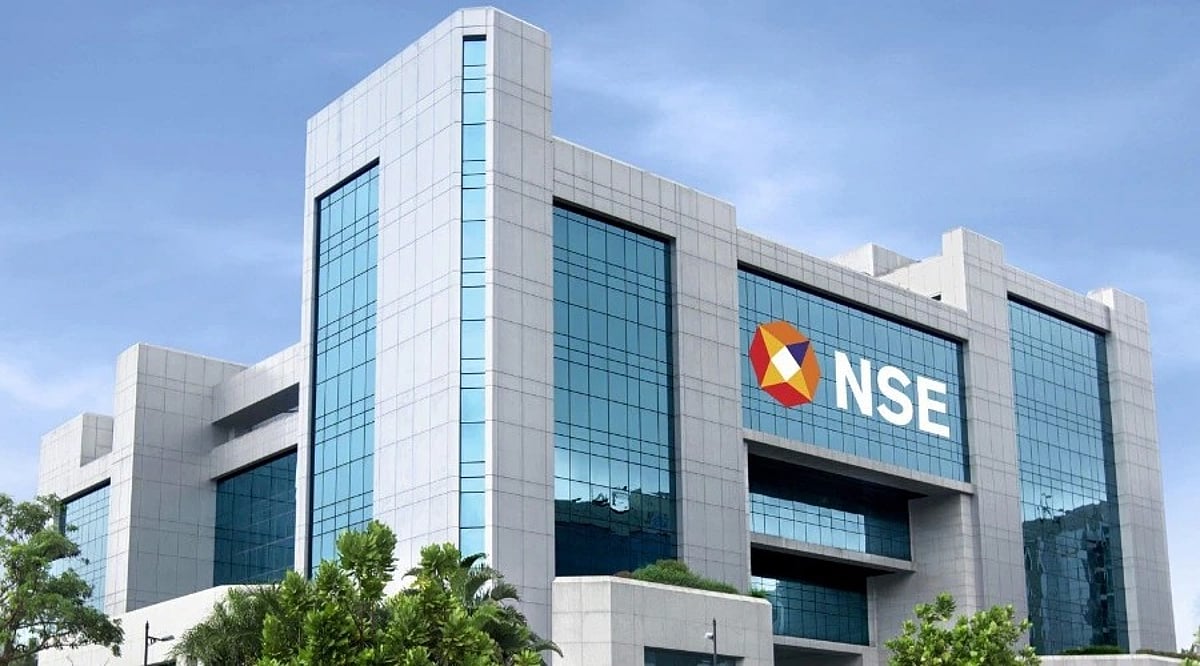
    The National Stock Exchange of India (NSE) made a strong entrance into the public market on Thursday, September 24, with shares rising 5.21% above their initial public offering (IPO) price on the first day of trading. The stock opened at Rs 1,800 on the BSE, surpassing the IPO price of Rs 1,785, and later peaked at Rs 1,878. This performance added approximately Rs 22,000 crore to the exchange’s market capitalization, pushing it to about Rs 4.64 lakh crore.

    NSE Stock Climbs Above IPO Price

    NSE shares started trading 0.84% above the issue price and quickly gained momentum, reaching a high of Rs 1,878. At this level, the exchange’s market value stood at roughly Rs 4.64 lakh crore, nearly Rs 22,000 crore above its valuation at the issue price. By 11:04 a.m., the stock traded at Rs 1,839, giving NSE a market cap of about Rs 4.56 lakh crore—placing it among the world’s 10 largest listed exchanges and India’s 10 most valuable listed companies at that moment. In comparison, rival exchange BSE, which listed in 2017, had a market value of approximately Rs 1.32 lakh crore.

    NSE’s debut contrasted sharply with other major Indian IPOs. Hyundai Motor India fell more than 7% on its first trading day in 2024, Life Insurance Corporation of India dropped nearly 8% in 2022, and Paytm shares lost over 27% on their 2021 debut.

    IPO Attracts Nearly Six Times the Shares on Offer

    NSE’s Rs 22,560-crore IPO (about USD 2.4 billion) was the country’s second-largest, after Hyundai Motor India’s offering. The public portion drew bids for 505.81 million shares against 88.64 million available, resulting in overall demand of about 5.7 times the shares offered. Institutional and large investors led the charge. Before the public offer, NSE allotted 37.79 million shares to anchor investors at Rs 1,785 each, raising Rs 6,746 crore. Existing shareholders sold shares through the IPO, with NSE receiving no new capital from the sale. Retail investors bid for only slightly more shares than their reserved portion.

    NSE first filed for an IPO in 2016, but regulatory disputes and legal proceedings delayed the listing for years. Recent tighter rules for derivatives trading and lower trading volumes prompted the exchange to reduce the offer size and lower its IPO price.

    Analysts Comment on NSE’s Longer-Term Prospects

    Deven Choksey, managing director of DRChoksey Finserv, described NSE as a ‘deep value’ investment, highlighting the exclusive nature of the exchange business, the trading activity on established platforms, and the potential for new products. ‘The exchange business is exclusive. It’s not a common business,’ he said. Choksey advised investors who missed an IPO allotment to buy shares gradually and hold them for three to five years. He also projected that NSE could benefit if India’s total stock market value rises over the next decade.

    VK Vijayakumar, chief investment strategist at Geojit Investments, noted that NSE could offer a long-term opportunity ‘if the NSE stock becomes available in today’s trade at a fair price.’

  • Bitcoin Nears $16 Billion Options Expiry as Whale Accumulation Persists

    Bitcoin Nears $16 Billion Options Expiry as Whale Accumulation Persists

    Bitcoin Approaches Major Derivatives Event

    Bitcoin is trading near USD 86,000 ahead of a significant derivatives event that could reshape short-term market conditions. Nearly USD 16 billion in Bitcoin options are set to expire on Deribit on September 25. Meanwhile, wallets holding between 100 and 1,000 BTC continue to accumulate coins, and traders are closely watching key strike levels.

    The upcoming expiry is important because options positioning can influence Bitcoin’s price behavior before contracts settle. Market makers regularly buy or sell the cryptocurrency and related instruments to balance their exposure as prices change. These hedging flows can absorb part of a market move under certain conditions, potentially keeping realized volatility lower ahead of the expiry even while substantial exposure remains open.

    Whale Accumulation Adds Another Market Factor

    Wallets holding between 100 and 1,000 BTC have accumulated 113,950 Bitcoin since July 15, according to Santiment. Their combined holdings have increased 2.22% to 5.24 million BTC. This accumulation continued while Bitcoin recovered and briefly touched USD 87,000 earlier this week before retracing and stabilizing near USD 86,000.

    Santiment has monitored this wallet group for five years. Historical data shows that periods of strong accumulation have often occurred before or alongside stronger Bitcoin price moves. The latest buying therefore indicates that larger holders continued accumulating during the recovery, meaning the recent price move has not relied solely on retail participation.

    Still, the source of the broader recovery remains important. Trace Finance co-founder Bernardo Brites said the pace of the rebound partly reflected a short squeeze. Brites noted that the larger question concerns where fresh capital is entering the market and cautioned against treating the move as evidence of a broad return in risk appetite.

    Key Strike Levels in Focus

    Nearly USD 16 billion in Bitcoin options open interest will expire on September 25. Calls account for approximately USD 9.6 billion, while puts represent about USD 6.4 billion. A notable amount of call open interest sits near the USD 90,000 and USD 100,000 strike prices, meaning those levels contain substantial options positioning as the expiry approaches.

    However, call open interest does not automatically represent a direct bet on higher Bitcoin prices. Traders also use calls within spreads, hedging strategies, and market-making positions. Instead, the data identifies areas where derivatives exposure has accumulated. As Bitcoin moves toward major strikes, changes in option values can require market makers to adjust their hedges, which may involve buying or selling Bitcoin and related instruments. The size and direction of those adjustments depend on how market makers hold and hedge their exposure. Therefore, price behavior before the expiry may partly reflect derivatives mechanics rather than only changes in demand for Bitcoin itself.

    Market-Maker Hedging and Post-Expiry Outlook

    Bitcoin’s recent stability does not necessarily mean the underlying market has become less volatile. Options positioning can influence how strongly prices react before contracts expire. Market makers continuously adjust their exposure as Bitcoin moves, and depending on their positioning, those transactions can absorb some buying or selling pressure and reduce realized price swings.

    The structure changes once the September 25 contracts expire. Some positions disappear, while others may move into contracts with later expiration dates. As this exposure resets, the hedging activity linked to the expiring contracts can also decline. Bitcoin may then respond differently to a new wave of spot buying or selling.

    Brites also connected Bitcoin’s recent strength with a wider macro backdrop, pointing to a rate hike, oil near USD 100, and elevated yields during the rally. He suggested some investors may view Bitcoin as a hedge against inflation, fiscal pressure, and geopolitical risk rather than a simple bet on easier monetary conditions. This distinction adds another element to the market structure surrounding the expiry. Bitcoin enters September 25 with large options exposure, continued whale accumulation, and sizeable positioning around USD 90,000 and USD 100,000.

    Conclusion

    Bitcoin approaches the September 25 expiry with nearly USD 16 billion in options exposure and sustained buying from 100-to-1,000-BTC wallets. The expiry could alter market-maker hedging flows, while accumulation and macro-driven demand remain important factors for traders tracking the next price move.


  • McDonald’s AI Drive-Thru Saves 50 Labor Hours Per Week Without Cutting Staff

    McDonald’s AI Drive-Thru Saves 50 Labor Hours Per Week Without Cutting Staff

    McDonald’s is expanding its use of artificial intelligence in restaurants, with a new AI ordering system called Archy that can now take drive-thru orders in English and Spanish with 90% accuracy. According to reports, this technology could save at least 50 labor hours per week at a typical McDonald’s location.

    McDonald’s CFO Ian Borden emphasized that the company does not plan to use the system to reduce its workforce. Instead, employees can redirect the saved time to other tasks such as food preparation, customer service, and overall restaurant operations.

    In addition to Archy, McDonald’s is deploying ArchIQ, an AI system developed in partnership with Google, to support broader restaurant operations. ArchIQ helps improve order accuracy, inventory management, and staff scheduling. These initiatives are part of McDonald’s broader plan to invest $8.5 billion over the next decade to upgrade its restaurants, including new delivery lockers, kitchen changes, and larger play areas.

    CEO Chris Kempczinski noted that customers have responded positively to Archy, appreciating the time savings and improved order accuracy. He added that the company’s strategy is not about labeling technology as good or bad, but about how it is implemented effectively.

    The drive-thru is a natural fit for AI assistance. Taking orders can be repetitive, especially during peak hours. Archy handles that task, allowing employees to focus on preparing food, assisting customers, and keeping the restaurant running smoothly.

    McDonald’s approach is less about replacing people and more about reallocating their time. The company believes AI can take over routine work while employees handle tasks that require direct human attention.

    McDonald’s is also expanding other technologies, such as order-accuracy scales already in use at 10,000 restaurants, with plans to reach 20,000 locations by 2028. Archy and ArchIQ demonstrate how AI is moving from trials to everyday restaurant operations, potentially making small tasks faster and giving employees more time for customer-facing work.

  • Apeing Stage 5 Presale Launches as Cardano Surges on x402 Integration

    Apeing Stage 5 Presale Launches as Cardano Surges on x402 Integration

    Apeing Stage 5 Presale Now Live

    Apeing has entered Stage 5 of its crypto presale, with the $APEING token currently priced at USD 0.00055. The project reports raising over USD 102,000 and selling more than 463 million tokens. This latest phase, called Dip Devourers, marks a continued rollout across 33 total stages, each with a progressively higher token price. The next stage will increase the price to USD 0.0006, with a future listing target of USD 0.01. Based on these figures, Apeing projects a potential 1,700% return from the current presale price to the listing level, though this depends on market conditions. Unsold tokens from each stage are burned after closure, reducing the total supply over time.

    Referral and Staking Features

    Apeing has introduced several participation incentives, including Ape Wars, the Ape Referral League, and a tiered staking system. Buyers using a referral code receive 10% additional tokens, and referrers earn a 10% reward from qualifying purchases. Purchases of USD 25 or more unlock a personal referral code. The project also offers four staking tiers with annual percentage yields of 10%, 25%, 50%, and 85%, allocating 30% of the total token supply to staking. Participants can connect compatible Ethereum wallets like MetaMask or Trust Wallet, and pay with supported cryptocurrencies or Visa/Mastercard.

    Cardano Gains on x402 Integration

    Cardano (ADA) saw a 3.62% gain in an 18-hour period and nearly 9.6% over 24 hours, driven by renewed market attention and the integration of the x402 software development kit. This SDK enables applications and AI agents to make API payments using ADA or Cardano-native tokens, connecting the network to the growing machine-to-machine payment sector. The broader crypto market also rallied, with total capitalization rising from about USD 2.74 trillion to USD 2.87 trillion, and Bitcoin moving above $84,000. Cardano’s wider ecosystem developments, including the Leios scaling upgrade and governance updates, continue to generate discussion. The x402 integration adds a practical utility layer to Cardano’s ongoing evolution.

  • Tata Sons Considers NCLT Intervention to Proceed with AGM Amid Trust Quorum Impasse

    Tata Sons Considers NCLT Intervention to Proceed with AGM Amid Trust Quorum Impasse

    Tata Sons is preparing to hold its annual general meeting (AGM) within the next month, a gathering that is critical for voting on the reappointment of N Chandrasekaran as a director. However, the company may face the same quorum hurdle that forced the adjournment of its August 18 meeting, as restrictions on the Sir Ratan Tata Trust (SRTT) remain in place. If the quorum cannot be met, Tata Sons is likely to seek directions from the National Company Law Tribunal (NCLT) under Section 97 of the Companies Act.

    Background: The Reappointment Vote

    Chandrasekaran’s reappointment as a director requires shareholder approval at a valid AGM. After the August meeting was stalled due to a lack of quorum, the Registrar of Companies granted Tata Sons a three-month extension. The company has yet to announce a new date. According to executives familiar with the company’s rules, Chandrasekaran would remain a director even if the AGM fails again, with his reappointment pending until a valid meeting can be convened.

    The urgency of the meeting also follows a reported disagreement at a recent Tata Sons board meeting. Tata Trusts chairman Noel Tata opposed both Chandrasekaran’s reappointment as chairman and the proposed listing of Tata Sons, while other directors supported both proposals. It is important to note that the chairmanship matter and the shareholder vote on directorship are separate issues.

    The Quorum Problem

    Tata Sons’ articles require at least five members to attend a general meeting in person. Additionally, if the Tata Trusts collectively hold at least 40% of the company’s paid-up ordinary share capital, an authorized representative jointly nominated by SRTT and the Sir Dorabji Tata Trust (SDTT) must be present. SDTT holds 27.98% and SRTT holds 23.56% of Tata Sons, giving them a combined stake of 51.54%—well above the threshold.

    However, the Maharashtra Charity Commissioner has restricted SRTT from holding meetings or making decisions. This restriction prevented the trusts from jointly nominating a representative for the August AGM, leading to its adjournment. The restriction remains in effect, meaning the same quorum issue could derail the upcoming meeting unless SRTT is able to make the nomination. Tata Sons has not commented on its reported plan.

    Seeking NCLT Directions

    If the quorum requirement cannot be satisfied, Tata Sons may approach the NCLT for guidance. Section 97 of the Companies Act empowers the tribunal to direct that an AGM be held and to specify the manner in which it must be conducted. However, legal experts have differing views on the scope of such an order.

    Shafaq Uraizee Sapre, a lawyer quoted by The Economic Times, noted that the NCLT could deem a single member present sufficient for the meeting, but it cannot lift the Charity Commissioner’s restrictions on SRTT. Shreni Shetty considered it “extremely unlikely” that the tribunal would override a shareholder’s quorum rights under Tata Sons’ rules. Vimal Taparia, a partner at Morphis Management Services, added that an affected shareholder could challenge an AGM held under such an order or the resolutions passed there.

    For now, both the date of the AGM and the path to a valid shareholder vote remain uncertain. Tata Sons has not announced any application to the NCLT, but the option remains on the table.

  • PayGlocal Receives IFSCA In-Principle Approval for GIFT City Payment Services Subsidiary

    PayGlocal Receives IFSCA In-Principle Approval for GIFT City Payment Services Subsidiary

    PayGlocal, a Bengaluru-based fintech company, has secured in-principle approval from the International Financial Services Centres Authority (IFSCA) to establish a wholly owned subsidiary as a Payment Service Provider (PSP) in GIFT City. The proposed entity is designed to serve businesses operating in international markets, with plans to offer cross-border money transfers, account services, and merchant payment solutions.

    Scope of the IFSCA Approval

    The IFSCA approval enables PayGlocal to issue e-money accounts, facilitate cross-border transfers, and provide merchant acquisition services—allowing businesses to accept payments seamlessly. The company has not yet announced when operations will commence or whether final authorization has been obtained.

    PayGlocal intends to develop international payment services through its GIFT-IFSC entity while continuing its technology and operational work from India. The subsidiary will serve as a base for these services once all required approvals are in place.

    Existing Regulatory Permissions

    The GIFT City approval adds to PayGlocal’s existing regulatory footprint. Last year, the company received final authorization from the Reserve Bank of India (RBI) to operate as a Payment Aggregator-Cross Border, covering both inward and outward payments. Additionally, PayGlocal has registered as a Money Services Business with the U.S. Financial Crimes Enforcement Network (FinCEN), supporting its expansion into the American market.

    CEO’s Vision and Future Plans

    Prachi Dharani, co-founder and CEO of PayGlocal, emphasized the company’s mission to simplify cross-border money movement for businesses. “PayGlocal is building something from India that can become a trusted part of how businesses transact with the world,” she said. Dharani added that the company aims to make cross-border payments feel as straightforward as domestic transactions.

    Looking ahead, PayGlocal plans to help Indian merchants reach overseas customers, enter new markets, and develop localized options for collecting and making payments. The company did not disclose specific markets or a launch timeline.

    Company Background

    Founded in 2021, PayGlocal serves businesses in exports, retail, travel, education, and software services. Its product suite includes multi-currency accounts, payment gateways, and solutions for international merchants to accept payments from Indian customers via UPI, cards, and netbanking. The platform supports over 130 currencies and more than 40 global and local payment methods. PayGlocal has not specified which of these services the GIFT City entity will offer initially.

  • Bitcoin Slumps Below $84,000 as Surging Bond Yields and Oil Prices Deepen Crypto Sell-Off

    Bitcoin Slumps Below $84,000 as Surging Bond Yields and Oil Prices Deepen Crypto Sell-Off

    Bitcoin and Altcoins Tumble Amid Rising Bond Yields and Oil Prices

    The cryptocurrency market experienced a sharp decline on Thursday as global bond yields surged and oil prices climbed, pressuring risk assets across the board. Bitcoin fell to approximately $83,830 after trading near $87,000 earlier in the week. Ethereum dropped to around $2,670, while several major altcoins recorded double-digit losses.

    Treasury Yields and Oil Prices Fuel the Sell-Off

    The US 10-year Treasury yield rose above 5%, reaching levels not seen since 2007, as stronger economic data and hawkish Federal Reserve comments drove the move. The Fed’s recent 25-basis-point rate hike and commitment to returning inflation to 2% have reinforced expectations for further tightening. Meanwhile, crude oil prices added to inflation concerns, with gasoline and diesel prices rising sharply since January. Higher bond yields reduce the appeal of speculative assets like cryptocurrencies, as government debt offers more attractive returns.

    Altcoins Hit Hard as Profit-Taking Accelerates

    Tokens that had posted strong gains in recent weeks were among the hardest hit. Arbitrum fell more than 14% in 24 hours, trading about 15% below its weekly high after a 263% rally from August lows. Uniswap dropped 13.78% to around $9.25, following a 240% surge from its August low. Other tokens such as Pepe, Worldcoin, and Dogecoin also gave back gains. Technical indicators, including Relative Strength Index readings above 70, suggested many cryptocurrencies had entered overbought territory.

    Broader Market Retreat

    The selling extended beyond crypto. Gold and silver declined as rising interest rates made yield-bearing assets more competitive. US stock futures also weakened, with Dow Jones Industrial Average futures falling about 142 points and S&P 500 futures dropping around 25 points. Despite the losses, Bitcoin remained higher for September overall, supported by a more favorable US regulatory environment earlier in the month.

    Market participants now face uncertainty over whether the decline is a temporary pullback or the start of a broader bearish trend. With the Federal Reserve signaling further rate hikes and bond yields continuing to climb, the outlook for risk assets remains cautious.