Blog

  • KuCoin App to Livestream Tomorrowland Belgium 2026 Across Both Festival Weekends

    KuCoin App to Livestream Tomorrowland Belgium 2026 Across Both Festival Weekends

    Fans unable to attend Tomorrowland in Boom, Belgium this summer can still experience the festival in real time. KuCoin has announced that the official livestream of Tomorrowland Belgium 2026 will be available directly through the KuCoin App, granting a global audience access to the Mainstage and Freedom Stage across all six festival days.

    As Tomorrowland’s official exclusive crypto exchange and crypto payments partner, KuCoin will carry the stream on July 17–19 and again on July 24–26. The lineup for those two stages includes some of electronic music’s biggest names: David Guetta, Martin Garrix, Calvin Harris, Hardwell, Armin van Buuren, Alok, Sebastian Ingrosso, and The Chainsmokers, among others.

    Access is available through a dedicated Tomorrowland page inside the app. Each day’s stream runs for approximately eleven hours. Broadcast windows, listed in UTC, span from 14:00 to as late as 01:00 depending on the day, covering both opening and closing sets across the two weekends.

    The livestream is part of a larger rollout this year. KuCoin’s partnership with the festival also includes the debut of a new stage called Celestia, the return of a costumed presence known as the KuCoin Guardians, and a set of activations tied to the exchange’s ninth anniversary, which falls on July 24—right in the middle of the festival’s second weekend.

    KuCoin CEO BC Wong framed the livestream as an extension of Tomorrowland’s mission to bring people together through music and shared experience. Wong said the exchange wanted to extend that sense of connection to its global user base, regardless of their location. While the technical addition of a stream inside an existing app is modest, it signals a broader trend: crypto platforms positioning themselves less as trading venues and more as connective layers between global users and the cultural moments they care about.

    For KuCoin, the timing aligns with the exchange’s efforts to extend beyond core financial products, following the same trajectory as its Robinhood Chain wallet support and earlier real-world asset integrations. Tomorrowland, meanwhile, gains a distribution channel that reaches far beyond the roughly 400,000 attendees over the two weekends. Whether this translates into deeper engagement or simply broader reach will be determined by this year’s viewership numbers.

  • Rockstar Confirms GTA 6 Plays Best on PS5, Giving Sony a Major Marketing Win

    Rockstar Confirms GTA 6 Plays Best on PS5, Giving Sony a Major Marketing Win

    Rockstar Games has confirmed that Grand Theft Auto 6 will deliver its best performance on the PlayStation 5, handing Sony a significant advantage ahead of the game’s November 19 launch. The announcement, which came as part of Rockstar’s marketing partnership with Sony, emphasizes the PS5’s unique features and positions the console as the premier platform for one of the most anticipated releases in gaming history.

    In a blog post, Rockstar highlighted how the PS5’s DualSense controller will enhance gameplay: “PS5 puts you in the center of the game world with the DualSense wireless controller reacting to your actions and bringing the sights, sounds, and sensations of Jason and Lucia’s story into the palm of your hands.” The game will fully utilize the controller’s adaptive triggers and haptic feedback, alongside 3D Audio and fast loading via the PS5’s SSD.

    While GTA 6 will also launch on Xbox Series X and Series S, Rockstar’s statement did not suggest any exclusive content or gameplay differences between platforms. Both versions are expected to offer a similar experience, but Sony’s marketing push ensures that the PlayStation version remains the most visible to consumers.

    The announcement has significant implications for the console war. With pre-orders already surpassing 50 million copies and generating an estimated $4 billion in revenue, GTA 6 is poised to be a massive driver of hardware sales. Sony is likely to leverage this momentum to promote the PS5 Pro as the ultimate platform for the game, potentially encouraging upgrades among fans.

    For Microsoft, the news underscores a missed opportunity. Despite owning Activision Blizzard and major franchises like Call of Duty, Xbox failed to secure the primary marketing rights for GTA 6. This highlights the enduring strength of Sony’s relationship with Rockstar, which continues to pay dividends.

    As the gaming community awaits further details, including potential gameplay reveals, the confirmation that GTA 6 “plays best on PS5” solidifies Sony’s position in the lead-up to the holiday season.

  • Blinkit Surpasses 55 Million Weekly Active Users, Extending Lead Over Zepto in Quick Commerce

    Blinkit Surpasses 55 Million Weekly Active Users, Extending Lead Over Zepto in Quick Commerce

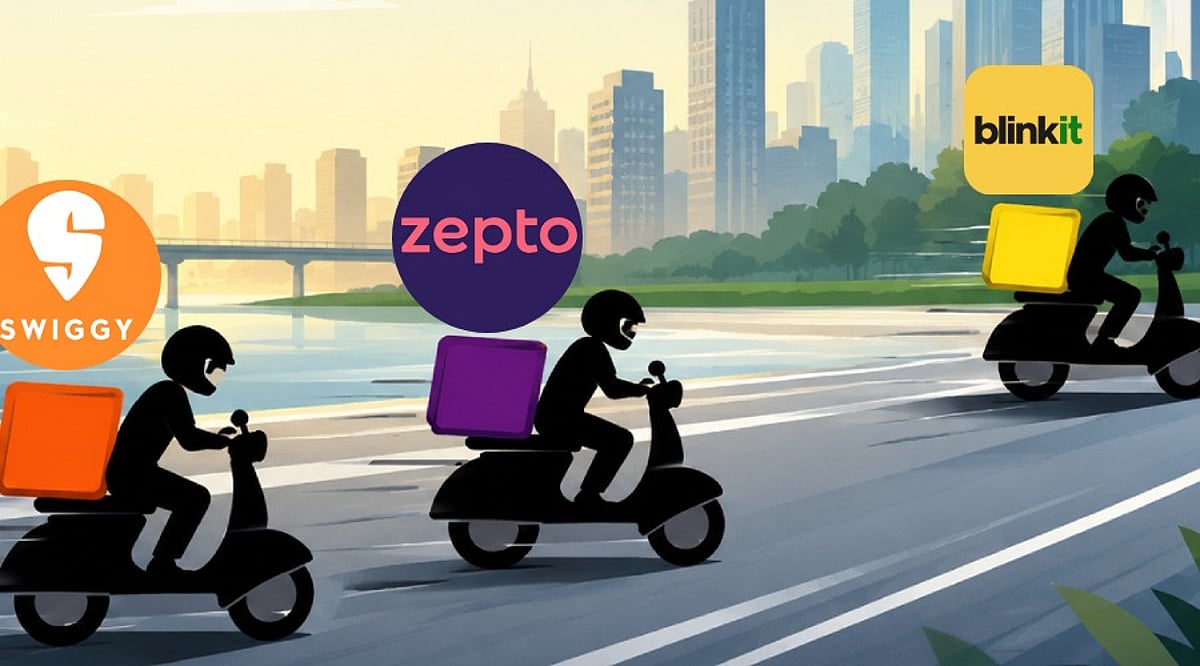
    Blinkit has strengthened its grip on India’s quick commerce market after adding 2.7 million weekly active users, pushing its total user base to a record 55.2 million, according to new data from CLSA. The Eterntal-owned platform now holds a commanding lead over competitors Zepto and Swiggy Instamart, signaling a shift from rapid expansion to sustainable growth and customer retention.

    The latest figures indicate that Blinkit’s user growth momentum remains robust. Over the past four weeks, the platform posted an average weekly active user growth rate of 13%, compared to 9% for Swiggy Instamart. BigBasket, DMart Ready, and JioMart also saw gains but from a smaller base, with JioMart showing faster percentage growth.

    Blinkit’s delivery network is also expanding. CLSA noted a rise in delivery partner downloads alongside customer growth, reflecting infrastructure ramp-up. The company now operates 2,243 dark stores — the largest network in India — and processed over 916 million orders during fiscal year 2026. For perspective, Zepto handled roughly 640 million orders, while Swiggy Instamart managed about 412 million orders in the same period.

    Financially, Blinkit parent Eterntal remains the only major quick commerce player reporting positive earnings per share. Smaller operating losses compared to rivals have strengthened Blinkit’s position as the industry increasingly emphasizes profitability alongside expansion.

    Competitors are not standing still. Zepto continues to attract premium urban customers with faster deliveries and higher average order values, while Swiggy Instamart maintains a strong presence in South India by leveraging Swiggy’s large food delivery customer base and competitive commission structures.

    Overall, the quick commerce race has entered a new phase where user base and sustainable growth matter more than sheer expansion. Blinkit’s steady gains highlight its ability to retain customers and scale efficiently, setting a benchmark for the sector.

  • Uber to Acquire Delivery Hero in $14.8 Billion Deal to Expand Global Food Delivery Network

    Uber to Acquire Delivery Hero in $14.8 Billion Deal to Expand Global Food Delivery Network

    Uber is making a major play in the food delivery market. The company announced it will acquire Delivery Hero’s food delivery business in a deal valued at $14.8 billion. Under the terms, Uber will pay Delivery Hero shareholders €41.50 per share in cash.

    Dara Khosrowshahi, CEO of Uber, said, “By bringing our platforms together, Uber will extend affordable, reliable delivery to many millions more people in some of the world’s most dynamic economies, while creating more opportunities for merchants and couriers.”

    The acquisition will be financed through a mix of cash and shares. Once completed, Uber will gain a stronger foothold in markets where Delivery Hero already has a large customer base. This is one of the largest deals in the food delivery industry in recent years.

    Additionally, Uber has committed to investing €2 billion in Germany through 2031, focusing on developing its local corporate workforce and expanding its nationwide business. Niklas Östberg, Co-Founder and CEO of Delivery Hero, commented, “This acquisition and Uber’s planned investment in Germany demonstrate the attractiveness of the European tech ecosystem, and we intend to keep contributing to its growth.”

    For consumers, the deal could mean faster deliveries and more choices. A larger delivery network typically leads to more delivery partners and better coverage, potentially reducing wait times, especially in busy urban areas.

  • Solana Price Eyes $92 Breakout as Network Activity and Institutional Partnerships Fuel Bullish Sentiment

    Solana Price Eyes $92 Breakout as Network Activity and Institutional Partnerships Fuel Bullish Sentiment

    Solana has recovered above two important technical levels, strengthening its latest rebound while the broader trend remains undecided. The token now trades above its 50-day exponential moving average near $76.82 and the 50% Fibonacci retracement around $76.92. However, analysts caution that the recovery still requires confirmation through a decisive breakout above overhead resistance. Meanwhile, growing network activity, institutional developments, and steady derivatives positioning continue to support market attention as traders monitor whether SOL can sustain its upward momentum.

    Technical Indicators Point to a Critical Breakout Test

    SOL now faces immediate resistance at a descending trendline near $81.50. A daily close above that level could open the path toward $83.81. After that, the 78.6% Fibonacci retracement near $88.56 becomes the next technical target, sitting just below a supply zone that has rejected several rallies since March. Together, these indicators suggest buying strength has improved, but analysts continue to watch for a confirmed breakout before identifying a broader trend reversal.

    Crypto market analyst BitGuru also identified the $74–$75 range as an important short-term support zone. If buyers fail to defend that area, SOL could decline toward $68.88 before testing the June cycle low near $60.13.

    Network Growth and Institutional Support Add Momentum

    Beyond technical signals, Solana continues to record strong on-chain activity. Its decentralized exchanges processed roughly $4.15 billion in trading volume during the past 24 hours, placing the network ahead of competing blockchains. At the same time, Solana expanded its institutional reach through a partnership with SBI Holdings. The companies plan to develop on-chain financial infrastructure across Japan, covering stablecoins, tokenized real-world assets, cross-border settlement, institutional services, and payment systems designed for AI agents. Although the agreement does not guarantee higher prices, it broadens Solana’s practical use cases and connects the network with Japan’s financial sector and potential sources of global liquidity.

    Meanwhile, derivatives data continue showing stable speculative interest. Open interest has remained above $5 billion, while futures trading volume increased during the latest market recovery. CoinGlass data also indicate that leverage has not reached extreme levels.

    Analysts Watch the $89–$92 Resistance Zone

    The strongest resistance remains between $89 and $92. SOL has repeatedly struggled to break through that range, making it an important hurdle before any move toward $100. Above that area, the 200-day exponential moving average between $94 and $95 creates another technical obstacle. Traders continue watching both resistance levels closely.

    Crypto market analyst Ali Martinez reported that the SuperTrend indicator generated its first buy signal since October 2025. His analysis projects possible targets near $96 and $121 if buying pressure continues. Still, Martinez noted that the bullish structure would fail if SOL falls below the key support area near $60.

    Market Outlook

    Can buyers maintain enough momentum to push SOL above $81.50 and eventually clear the major resistance between $89 and $92? For now, analysts continue watching the price closely. A failure at $81.50 could keep SOL inside its current recovery range. A decline below $76.40 would weaken the short-term structure, while a break under $74.11 could send the token toward $68.88, where the previous rising trendline may attract renewed demand.

    Solana price has recovered above key technical support while approaching the important $81.50 resistance. Strong network activity, steady interest in derivatives, and the SBI Holdings partnership continue to support market attention as traders watch whether SOL can clear $92 or revisit lower support levels.

  • Sophos Fusion: How AI-Native Cybersecurity Unifies Threat Detection and Response

    Sophos Fusion: How AI-Native Cybersecurity Unifies Threat Detection and Response

    Sophos has launched Sophos Fusion, an AI-native cybersecurity platform designed to unify threat detection, prevention, and response across enterprise environments. The system aims to help organizations defend against increasingly sophisticated AI-powered cyberattacks through coordinated, real-time security operations.

    As cybercriminals increasingly use artificial intelligence to automate phishing, malware creation, and ransomware attacks, cybersecurity companies are rethinking how digital defenses should work.

    A Unified Platform Instead of Isolated Security Tools

    Typically, enterprise cybersecurity utilizes separate tools for endpoint security, firewalls, email, cloud, and identity solutions. Sophos claims that such a dispersed model creates gaps that are increasingly attractive to hackers.

    Fusion unites all security components in a single platform using artificial intelligence to share threats detected throughout all the systems. The company states that this platform incorporates adaptive controls, machine learning, automation, and real-time intelligence from Sophos X-Ops – Sophos’s threat intelligence team. It means that suspicious activity detected at one level of the infrastructure will instantly increase protection across other parts of the network.

    Moreover, the company stressed that the platform is compatible not only with the products from Sophos but with third-party security software as well.

    AI is Becoming a Security Teammate, Not a Replacement

    Sophos Fusion’s distinctive feature is its focus on the combination of AI and human intelligence. Even though automation takes care of simple tasks, including anomaly detection, alert prioritization, and response initiation, security analysts still deal with complicated investigations and decision-making processes.

    According to the latest operations data from Sophos, the use of AI in MDR cases allows dealing with a considerable percentage of MDR cases, whereas human experts manage high-risk situations. The combination is intended to help minimize alert fatigue – one of the main problems for SOCs in today’s world.

    This becomes even more relevant in times of automated and fast-paced cyber attacks. AI-driven phishing, credential theft, and ransomware become increasingly challenging for enterprises to monitor.

    The Bigger Shift: Cybersecurity in AI-Native Era

    Sophos’ news shows how things are evolving in the field of cybersecurity overall. It is not enough now for security vendors just to include AI into their solutions; they need to build completely new platforms based on AI-assisted decisions.

    While older solutions could only respond once some activity raised suspicion, the AI native platforms constantly monitor behavior, connect different sources, and make recommendations and decisions on defending from any threat instantly. It allows minimizing the time available to an attacker for further movement within the corporate network.

    Experts think that this evolution is caused by the same technological race that changes other industries. With the help of generative AI, attackers can create believable emails to deceive users, develop malware, and identify vulnerabilities faster than ever before.

    “As AI increases the speed, scale and complexity of attacks, organizations need a modern, connected, intelligent and adaptive defense,” said Chief Executive Joe Levy. “Sophos Fusion is built as a defense system optimized for human-AI workflows. We bring the most complete solution to a new category, a timely advancement demanded by the AI era.”

    Security Platforms are Becoming Smart Decision Systems

    The release of Sophos Fusion is another indication of a significant shift in cybersecurity approaches within the corporate world. Instead of relying solely on separate pieces of software such as anti-virus or firewall protection, companies are moving towards adopting a platform that can make well-informed, integrated decisions about their security.

    Within enterprises, this translates into a transition of cybersecurity from a set of isolated solutions to an ecosystem of integrated defenses where artificial intelligence learns to adapt to new challenges, and at the same time, expert analysts maintain control over crucial situations.

    With further development of artificial intelligence both in terms of offense and defense in the cyber realm, Sophos Fusion demonstrates how cybersecurity might look in the future.

  • SpaceX Stock Dips Below IPO Price as Lockup Expirations Loom

    SpaceX Stock Dips Below IPO Price as Lockup Expirations Loom

    SpaceX (SPCX) closed at $135.27 on Wednesday, barely above its $135 initial public offering price after touching an intraday low of $132.28. This marks the first time the stock has closed below its IPO price since its Nasdaq debut on June 12.

    Investors are now bracing for a series of scheduled share unlocks and the company’s inaugural quarterly earnings report, both of which are expected to significantly influence trading activity in the weeks ahead. Currently, only about 5% of SpaceX shares are available for public trading, with the vast majority of insider holdings still under lockup restrictions.

    Limited Share Supply Faces Major Change

    SpaceX entered public markets with nearly 95% of its shares locked, leaving a thin float that supported an early rally and pushed the company’s valuation beyond $2.6 trillion shortly after its debut.

    That structure is about to shift. SpaceX plans to release additional 7% tranches during August and September, followed by a larger release after the third-quarter earnings report later this year.

    Elon Musk’s holdings, however, are subject to separate restrictions. His 6.4 billion shares remain locked until June 2027, exempting his stake from the early-release schedule.

    Earnings Report Will Trigger the First Unlock

    Analysts expect SpaceX to publish its first quarterly earnings during the first week of August. That reporting period will activate the first major lockup expiration, allowing insiders to sell roughly 20% of previously restricted shares. An additional 10% becomes eligible if the stock meets a performance requirement: closing at least 30% above the $135 IPO price, or $175.50, during five of the ten trading days before the earnings release. Currently, SPCX trades well below that threshold, so the extra early release has not yet qualified.

    More Shares Will Enter the Market Through December

    SpaceX’s IPO filings outline additional unlock dates after the first earnings release. The company will release another 7% of locked shares after 70, 90, 105, 120, and 135 days following the IPO. After third-quarter earnings, another 28% of pre-IPO shares will become eligible for sale.

    The standard 180-day lockup expires on December 8. Some investors follow extended schedules that continue into 2027. Elon Musk controls about 40% of the company’s equity and roughly 85% of its voting power, and his holdings remain locked until mid-June 2027.

    The stock has failed to regain momentum after joining the Nasdaq-100, and shares remain well below earlier highs. Even so, some technical analysts continue to watch for a possible move toward $158.

    What’s Next?

    SpaceX stock closed below its IPO price for the first time since listing, as upcoming earnings and scheduled share unlocks move into focus. Several lockup expirations will increase the available share float, while Elon Musk’s holdings remain locked until 2027. Investors will closely monitor the next earnings report for further market direction.

  • Google Reveals Pixel Glow for Pixel 11: Pre-Orders Set for August 12

    Google Reveals Pixel Glow for Pixel 11: Pre-Orders Set for August 12

    Google has officially confirmed Pixel Glow, a new feature coming to its next-generation Pixel smartphones. The company revealed it through a teaser on the Google Store homepage, alongside announcing that pre-orders for the Pixel 11 series will begin on August 12, coinciding with the Made by Google event.

    Pixel Glow Teaser Unveils a New Camera Bar Element

    Early leaks suggested Pixel Glow would appear as a glowing ring around the camera module, but the teaser tells a different story. The video shows a small circular light built into the camera bar, displaying a sequence of changing colors. Google has not explained its purpose, but the design has led to speculation that it could support notifications or display app-specific icons. The company has not confirmed these reports.

    The teaser also appears to show the Pixel 11 Pro without the temperature sensor seen on earlier Pro models. If accurate, Pixel Glow could be limited to the Pro lineup rather than the standard Pixel 11.

    Expected Pixel 11 Lineup

    Google has confirmed that pre-orders will open on August 12, when it is expected to unveil the Pixel 11 lineup at its Made by Google event. Based on previous reports, the lineup is expected to include the Pixel 11, Pixel 11 Pro, Pixel 11 Pro XL, and Pixel 11 Pro Fold. Google is also likely to announce other hardware products during the event.

    More Details on August 12

    For now, Google has revealed only the existence of Pixel Glow. Further details regarding its functionality, as well as Pixel 11 series specifications, price, and availability, are likely to be announced ahead of the launch event. The latest teaser provides the first glimpse at the upcoming flagships but does not disclose anything else. In less than a month before the release, Google may share more information about whether Pixel Glow adds any functionality or works only as a design feature.

  • Bitcoin ETFs See $107M Inflows, XRP Whales Accumulate 70M Tokens, and Flex Raises $70M: Crypto News Roundup

    Bitcoin ETFs See $107M Inflows, XRP Whales Accumulate 70M Tokens, and Flex Raises $70M: Crypto News Roundup

    The crypto market saw several key developments today, with Bitcoin spot ETFs recording significant inflows, XRP whales making a major purchase, and stablecoin banking platform Flex closing a substantial funding round. Here’s a detailed look at the latest crypto news.

    Bitcoin Spot ETFs See $107.80 Million in Net Inflows

    According to data from SoSoValue, Bitcoin spot exchange-traded funds (ETFs) recorded a total net inflow of $107.80 million yesterday. BlackRock’s IBIT led the pack with a daily net inflow of $80.82 million, bringing its historical total to $60.32 billion. Fidelity’s FBTC followed with a net inflow of $16.94 million, accumulating a historical net inflow of $9.94 billion.

    The total net asset value of Bitcoin spot ETFs now stands at $78.47 billion, with an ETF net asset ratio of 6.02%. The historical cumulative net inflow has reached $51.14 billion.

    XRP Whales Scoop Up 70 Million Tokens

    XRP whale wallets holding at least 1 million tokens have been actively accumulating over the past seven days, despite a sell-off from U.S. spot ETF issuers. Between July 9 and July 15, these whales purchased 70 million XRP tokens, according to data from Santiment shared by analyst Ali Martinez on July 16.

    At press time, the purchased XRP was valued at over $77 million. XRP whales now hold approximately 3.8 billion tokens, worth about $4.18 billion. This accumulation comes amid rising bullish sentiment, with technical analysis suggesting XRP could be forming an inverse head and shoulders pattern, a potential reversal indicator.

    Volvo Group Tests Proprietary Cryptocurrency

    Volvo Group has tested a proprietary cryptocurrency as part of an internal blockchain project aimed at simplifying transactions with its suppliers. Ivan Branco, Head of Information Management, AI and Analytics at Volvo Group, discussed the project in a recent interview with the Cardano Foundation.

    The experiment focused on a closed blockchain environment connecting Volvo with material and transport suppliers, rather than creating a publicly traded cryptocurrency. Branco explained that Volvo explored whether blockchain could create a shared transaction system for its supply chain partners.

    Flex Raises $70 Million for Stablecoin Banking Expansion

    California-based fintech company Flex raised $70 million in a Series B1 funding round led by Halo Fund, according to Forbes. The company plans to use the funds to expand its stablecoin-based cross-border banking platform, Flex Global, which offers multi-currency accounts supporting 32 currencies across 170 countries and regions.

    Flex’s core customers have annual revenues ranging from $3 million to $200 million and are primarily concentrated in the construction, wholesale, and import/export industries.

    CoinGecko Q2 2026 Report: Market Cap Declines

    CoinGecko’s Q2 2026 Crypto Market Report revealed that the total cryptocurrency market capitalization declined by 12.6% in the quarter, reaching $2.1 trillion by the end of June. The stablecoin market capitalization fell by 1.6% to $30.51 billion, marking the first quarterly decline since Q3 2023.

    Nominal trading volume is projected to rise 48.7% quarter-on-quarter to $113.8 billion. However, centralized exchange (CEX) spot trading volume dropped 27.9% to $1.95 trillion, hitting a monthly low of $620 billion in May. CEX perpetual contract trading volume also declined 10.0% quarter-on-quarter to $12.7 trillion.

  • Bitcoin Nears $69K Resistance as $107K Buyers Show Early Bear-Market Bottom Signals

    Bitcoin Nears $69K Resistance as $107K Buyers Show Early Bear-Market Bottom Signals

    Bitcoin buyers who entered near $107,000 are showing lower realized losses, a pattern that on-chain analytics firm Glassnode links to early bear-market bottom signals. Bitcoin is now eyeing $69,000 as a key resistance level while trading near $64,000 amid weak liquidity and macroeconomic pressure.

    Realized Losses Begin to Cool

    Glassnode analyst Cryptovizart focused on Bitcoin held for one to two years. Many in this group bought between July 2024 and July 2025, when Bitcoin rose from about $62,800 to $107,000. The later decline left the cohort holding losses.

    As prices stayed below entry levels, these holders sold coins at a loss. Cryptovizart said bear markets have struggled to form stable bottoms until this group reduces selling. The cohort’s 30-day average realized loss passed $75 million before turning lower.

    Cryptovizart described the reversal as an early signal, not confirmation. “When the 30D-SMA of their realized loss cools and rolls over,” the analyst wrote, the heaviest distribution phase has often passed. The setup was ‘worth watching closely.’

    Bitcoin Faces a $69,000 Cost Basis Test

    Glassnode placed the short-term holder cost basis near $69,000. This level sits close to Bitcoin’s 2021 record high and may act as a resistance area. Buyers who entered near that price could sell at break-even.

    Glassnode said the first test would ‘likely draw a strong reaction.’ A move above $69,000 could allow the recovery to extend. A rejection could keep Bitcoin inside its range. This reflects uncertainty, as the market has not tested the level during this rebound.

    Two-month stochastic RSI readings show conditions linked to earlier reversals. However, that indicator does not confirm a bottom alone. Bitcoin trades below $69,000 and near the lower end of its recent range.

    Macro Pressure Keeps Bitcoin Near $64,000

    Bitcoin fell 1.05% over 24 hours to $64,102.24, while the crypto market value dropped 0.87%. The decline followed risk-off trading linked to US-Iran tensions, higher oil prices, and inflation concerns. Bitcoin showed a 57% correlation with gold.

    Spot volume fell about 6.29% to $27.16 billion, showing limited conviction. Bitcoin also slipped below the 61.8% Fibonacci level near $64,480. Its 14-day RSI stood at 37.19, indicating weak momentum without a confirmed bullish divergence.

    Traders are watching $63,800 as support. A daily close below that level could expose $63,000. Meanwhile, a volume-backed return above $64,480 could support stabilization. Upcoming US PCE data may shape Federal Reserve expectations and demand.

    Dormant Whale Moves 5,908 BTC

    A wallet inactive for eight years transferred 5,908 BTC worth about $383 million to a new address. The holder received the coins near the 2017 market peak, when Bitcoin traded around $16,000. The position cost about $100 million and now carries an estimated gain of 284%.

    The transfer did not go to a known exchange wallet, so available data does not show a direct sale. The coins moved from an older address format to a newer bc1q address. Such transfers can involve custody changes, key rotation, estate planning or preparations for an over-the-counter deal.

    Unlike recent long-term holders selling at losses, this wallet holds a large profit and has not sold through an exchange. The move adds another large on-chain transaction as Bitcoin buyers, older holders, and short-term traders react to prices near $64,000.