Blog

  • 5 Key Reasons Python Remains the Top Language for AI and Machine Learning

    5 Key Reasons Python Remains the Top Language for AI and Machine Learning

    Python has become the go-to programming language for artificial intelligence and machine learning due to its simplicity, readability, and rich ecosystem of libraries. Developers can build smart applications faster, test ideas quickly, and deploy models with minimal friction.

    Why Python Leads in AI Development

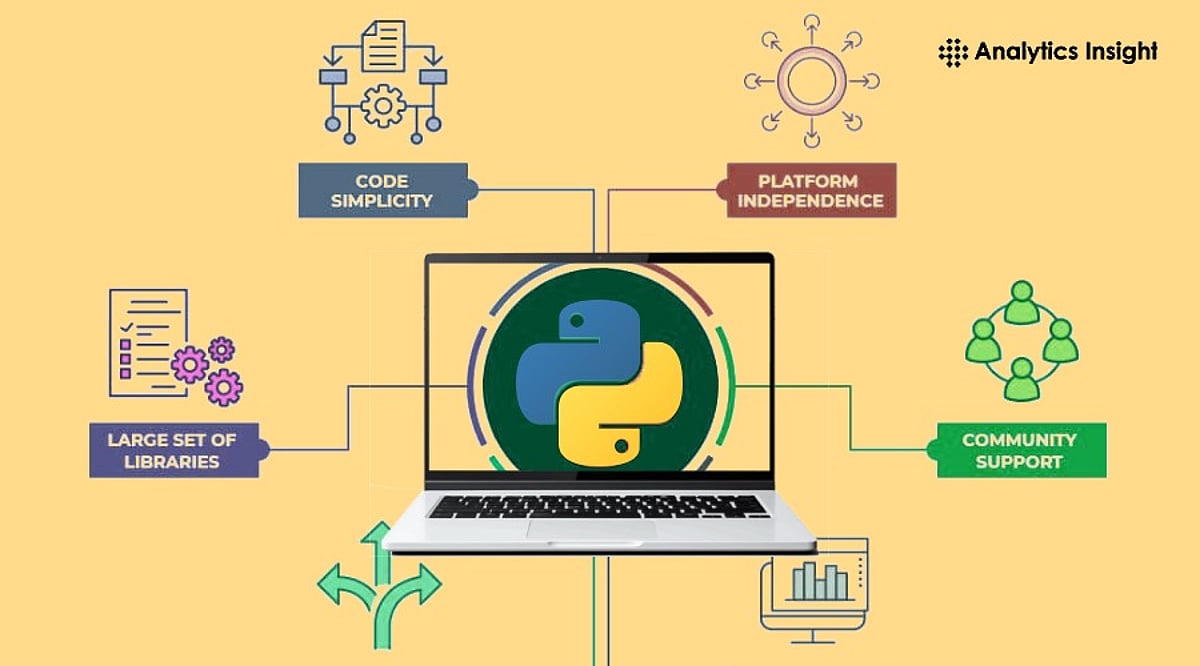
    Python’s clean syntax and minimal learning curve allow developers to focus on solving problems rather than wrestling with complex code. Its extensive library collection, strong community support, and flexibility across industries make it the trusted choice for AI projects, from startups to global enterprises.

    1. Simple, Readable Code Speeds Development

    Python’s syntax is intuitive and clean. Even when reading someone else’s project, the logic is easy to follow. This simplicity reduces the time spent debugging and improves collaboration—critical when AI models frequently need updates and iteration.

    2. Powerful Libraries Save Hours of Work

    Developers don’t have to build AI features from scratch. Python offers mature libraries for every task:

    • TensorFlow and PyTorch for deep learning
    • Scikit-learn for classical machine learning
    • Pandas and NumPy for data manipulation
    • OpenCV for computer vision

    These pre-built tools let developers focus on refining models instead of rewriting boilerplate code.

    3. A Thriving Community Offers Endless Support

    Python’s huge global community means help is always just a search away. Forums, tutorials, guides, and open-source projects ensure that even complex problems have documented solutions. This collective knowledge keeps Python evolving with regular updates and new features.

    4. Versatility Across Industries and Projects

    AI is no longer confined to tech companies. Python powers applications in healthcare, finance, retail, manufacturing, agriculture, and more. The same language can drive a chatbot, a fraud detection system, a recommendation engine, or an image recognition pipeline—eliminating the need to learn a new language for each domain.

    5. Seamless Integration with Modern Infrastructure

    Building an AI model is only half the battle; deploying it matters too. Python integrates smoothly with cloud platforms, databases, APIs, and web frameworks. Many cloud services run Python natively, so moving from training to production requires minimal changes.

    Why This Matters

    Python isn’t just another language—it’s the backbone of many AI tools used daily. As companies embed AI into their products, knowing Python gives developers a durable advantage. While Python may not be the fastest language, its clarity and rapid prototyping capabilities often matter more in AI. With continuous improvements and a growing ecosystem, Python is well-positioned to remain at the center of AI innovation.

    Frequently Asked Questions

    1. Why do most AI developers choose Python?
    Python’s readability, ease of learning, and vast library ecosystem enable faster development with fewer errors.

    2. Which Python libraries are popular for AI?
    TensorFlow, PyTorch, Scikit-learn, Pandas, NumPy, Keras, and OpenCV are widely used for machine learning, deep learning, and data analysis.

    3. Is Python good for AI beginners?
    Yes, its simple syntax and abundant free resources make it one of the best starting points.

    4. Do large companies use Python for AI?
    Yes, many tech giants rely on Python for AI, data science, and automation due to its reliability and strong ecosystem.

    5. Will Python remain important for AI?
    Almost certainly. Its community continues to grow, and new AI tools consistently support Python.

  • The Enterprise Leader’s Guide to Digital Transformation Roadmaps

    The Enterprise Leader’s Guide to Digital Transformation Roadmaps

    Digital transformation succeeds or fails long before any system goes live. Nearly 90% of organizations run some form of transformation program, yet only 30% meet their goals. Sequencing and governance now matter more than the tools themselves. Enterprise leaders no longer question whether digital transformation deserves a place on the boardroom agenda; attention has shifted toward execution, sequencing, and accountability across every business unit.

    Why Most Programs Fail

    Consultants tracking enterprise technology describe the gap between ambition and actual results as structural, not temporary. Most programs struggle to close the gap between what leadership promised and what teams delivered. The root cause is rarely the technology — it is almost always the sequence in which decisions get made. Roadmaps built purely on technology upgrades rarely survive contact with actual budgets.

    Data Foundations Are Critical

    Transformation programs tend to stumble at the data layer, often before execution even begins. Data quality remains the single largest barrier: 64% of leaders name it their top challenge, and 77% describe their own data as average or worse. Investing heavily in AI without fixing data quality first backfires within months. Enterprises that treat data governance as groundwork, not an afterthought, move faster once AI work actually starts. Skipping this step simply moves the cost further down the timeline, where it costs more to fix.

    Key Priorities for Enterprise Roadmaps

    Digital leaders now build transformation into core strategy rather than treating it as a side initiative. TEKsystems research shows digital leaders are 2.5 times more likely to embed transformation deeply than laggards. Governance has become its own workstream, with steering committees that have direct executive sponsorship over sequencing and budget calls. The following priorities consistently surface across enterprise roadmaps that deliver measurable returns:

    • Data governance and quality repair ahead of AI scaling
    • Cloud-native infrastructure supporting hybrid, distributed workloads
    • Change management run as its own workstream with metrics
    • Initiatives ranked by value, feasibility, and delivery risk
    • Agentic AI rollout paired with architectural oversight

    Governance and Execution Gaps

    Successful programs pour nearly half their total effort into change management, not technology deployment. SupraITS research puts that figure near 50% for leading organizations. Yet only 27% of operations leaders report broad organizational impact from recent digital investments, per PwC’s 2026 survey. Integration complexity and inconsistent user adoption top the list of obstacles. Executive sponsorship alone rarely closes this gap; a dedicated program office tracking progress is essential. Middle management often decides whether a roadmap survives past its first year.

    What This Means for Enterprise Strategy

    A widening gap between transformation spending and actual results shows that budget size guarantees nothing. Leadership alignment, sequencing discipline, and honest data readiness now separate enterprises earning real returns from those still experimenting without direction. Organizations with strong integration achieve 10.3x ROI versus 3.7x, proving that disciplined roadmaps, cloud readiness, and structured change management deliver stronger business outcomes.

    Final Words

    Enterprise leaders entering the next phase of digital transformation are relearning an old lesson: spending the most no longer guarantees the strongest results. Structured sequencing, disciplined governance, and honest data assessments now separate lasting transformation from repeated, costly experimentation. The roadmap itself has become the real differentiator, not any single technology purchase. Enterprises aligning data foundations, cloud architecture, and workforce readiness before scaling AI will capture compounding returns and enter the next decade ready to lead.

  • 7 Best Anti-Ransomware Solutions for Businesses and Home Users in 2026

    7 Best Anti-Ransomware Solutions for Businesses and Home Users in 2026

    Ransomware has evolved into one of the biggest cybersecurity threats facing businesses and everyday computer users. Cybercriminals don’t just lock files, but they often steal sensitive data first and then demand payment to prevent it from being leaked. With attacks becoming more sophisticated, relying on basic antivirus software is no longer enough.

    7 Essential Defenses for Today’s Digital Threats

    Investing in a reliable anti-ransomware solution can help detect suspicious activity, stop encryption before it spreads, and recover affected files. Here are seven of the best anti-ransomware solutions worth considering:

    Bitdefender GravityZone and Total Security

    Bitdefender is known to be efficient at preventing ransomware attacks before they do any harm. This antivirus uses technology that analyzes any file activity and prevents all malicious encryption. There is the GravityZone platform available for companies to use, providing centralized management for many devices. For home use, there is Total Security that provides protection for Windows, macOS, Android, and iOS operating systems. Bitdefender does not affect computer performance much.

    Microsoft Defender for Endpoint

    Microsoft has evolved its native security system into an efficient enterprise tool. Defender for Endpoint uses endpoint detection, threat intelligence, and automatic investigations to detect any ransomware attack even before it spreads throughout the network. The technology is well integrated into Microsoft 365, making it a feasible option for companies using Microsoft solutions. Home users, on their part, benefit from the constant evolution of Windows Security without installing any additional software.

    Sophos Intercept X

    Sophos Intercept X focuses on ransomware prevention rather than on removing malware after infection. The software uses the CryptoGuard feature to detect suspicious file-encryption activity and block it. If any files have been encrypted, they can be easily restored to their previous state. That is why Sophos is an especially good choice for small and medium-sized companies.

    CrowdStrike Falcon

    CrowdStrike Falcon is widely adopted by large companies for its cloud-based architecture and AI-driven threat detection capabilities. The tool does not rely on existing malware signatures; it constantly analyzes device behavior to detect malicious activity. Furthermore, security departments can obtain threat intelligence to enable prompt responses before ransomware infects the company’s infrastructure.

    Norton 360

    Norton is still a reliable choice for consumers and small businesses. In addition to ransomware protection, it offers firewall security, a virtual private network, a password manager, identity protection, and cloud backup services. Among these features, the cloud backup service is especially significant, as it ensures that the user can retrieve their data without paying a ransom.

    Malwarebytes Premium

    Malwarebytes has always been known to be reliable when it comes to removing malware, but the Premium version also offers reliable ransomware protection. This software is very simple to install, runs in the background without any hassles, and is great for users who need basic protection for their software.

    McAfee Total Protection

    McAfee provides an all-encompassing security service that caters to the needs of both family and business customers who have several devices to protect. Ransomware detection, firewall, identity protection, safe browsing, and VPN services make this service complete. Several subscription plans support multiple devices, making them affordable.

    Final Takeaway

    Even the best security software cannot stop every cyberattack. Good cybersecurity habits remain essential. Keep your operating system and applications updated, enable multi-factor authentication wherever possible, maintain regular offline or cloud backups, and educate employees about phishing scams. These simple practices can prevent many ransomware attacks before they begin.

    Choosing an anti-ransomware solution depends on your needs and budget. Businesses often require advanced endpoint monitoring and centralized management, while personal users may prioritize ease of use and reliable protection. Bitdefender, Microsoft Defender, Sophos, CrowdStrike, Norton, Malwarebytes, and McAfee all offer strong defenses against today’s ransomware threats. Paired with regular backups and safe online habits, they provide a solid layer of protection in an increasingly hostile digital environment.

  • Building a People-First Digital Transformation Roadmap: Key Phases and Strategies for Enterprise Success

    Building a People-First Digital Transformation Roadmap: Key Phases and Strategies for Enterprise Success

    Digital transformation in 2026 has reached a critical juncture: expectations are higher than ever, yet execution consistently falls short. According to Gartner’s 2026 CIO survey, 94% of CIOs anticipate major changes to their plans within 24 months, but only 48% of digital initiatives meet or exceed business targets. The gap is not ambition or investment—it’s the lack of a disciplined roadmap that turns strategy into sequenced, accountable execution.

    Why Most Transformation Roadmaps Fail

    The most common failure occurs when digital transformation is treated as a mere IT upgrade. Assigned solely to the CIO or IT department, it becomes a technology implementation rather than a holistic business change. Another error is rolling out new platforms without redesigning the processes around them—new tools on old workflows rarely deliver efficiency gains. Many companies also fail to measure ROI at intermediate stages, leaving them blind to course corrections needed mid-implementation.

    The Five Phases of an Effective Roadmap

    A strong roadmap breaks the journey into sequenced phases:

    1. Maturity Assessment: Evaluate people, process, technology, and data. Most enterprises still run 400+ fragmented applications and legacy ERP systems from the early 2000s—this baseline is essential.
    2. Strategy Definition: Align technology investments with business goals and define clear metrics.
    3. Early Execution (90-Day Quick Wins): Build momentum with small, visible successes.
    4. Infrastructure Modernization: Move to cloud-native architecture and zero-trust security.
    5. AI and Automation Integration: Embed AI into core workflows across finance, operations, and customer service.

    Governance and Ownership Determine Success

    The clearest differentiator between successful and stalled transformations is ownership. Effective roadmaps are collectively owned by the CEO, CIO/CTO, COO, CFO, and CHRO—shared accountability, not one executive’s burden. Gartner research shows CIOs who tie technology initiatives to measurable financial outcomes are 25% more likely to outperform peers, though only a third consistently do so.

    The 2026 Shift: From AI Pilots to Operational Integration

    The biggest change in roadmaps this year is the move away from isolated AI experiments that never leave pilot phases. Enterprise AI adoption has doubled year-over-year, reaching 24% in 2026 (up from 12%). Digital leaders are nearly four times more likely to achieve this maturity. Experts note that 2026 marks the year AI adoption shifts from a technical problem to a people and management challenge—roadmaps now explicitly address these human factors.

    Building a Roadmap That Survives Reality

    Winning companies in 2026 share three traits: a senior executive responsible for results (not just delivery), a dedicated budget for change management and training separate from technology, and quarterly review cadences from day one. The lesson: success comes not from bigger goals but from the discipline to execute them.

    Why This Matters

    As organizations accelerate AI adoption and cloud modernization, successful digital transformation depends on leadership, governance, and employee adoption—not technology alone. A structured roadmap reduces risk, improves ROI, and ensures transformation initiatives deliver lasting business value.

  • 5 Best College Degrees to Launch a Successful Entrepreneurial Career

    5 Best College Degrees to Launch a Successful Entrepreneurial Career

    Many people dream of starting their own business and turning an idea into a thriving company. While some entrepreneurs succeed without a college degree, a formal education can provide valuable knowledge and skills. The right degree program covers essential subjects like business, finance, technology, communication, and problem-solving—all of which help aspiring founders make informed decisions and avoid common pitfalls.

    However, education alone isn’t enough. Hard work, practical experience, creativity, and resilience are equally critical for entrepreneurial success. Below are the five best degrees that can help you build a strong foundation for launching and growing a company.

    1. Business Administration

    Business Administration offers the most comprehensive preparation for entrepreneurs, covering management, finance, leadership, marketing, and strategy. It’s a versatile degree that applies to nearly any industry.

    Top Programs:

    • Harvard University (USA) – Bachelor of Arts in Economics and MBA
    • Stanford University (USA) – Bachelor of Science in Management Science and Engineering and MBA
    • University of Pennsylvania – Wharton School (USA) – Bachelor of Science in Economics and MBA
    • Massachusetts Institute of Technology (MIT) – Sloan School of Management (USA) – MBA
    • London Business School (UK) – MBA and Master’s in Management

    2. Computer Science

    Computer Science provides the technical skills needed to build software, AI products, apps, SaaS platforms, and digital businesses. For tech-driven startups, this degree is a major advantage.

    Top Programs:

    • Massachusetts Institute of Technology (MIT) (USA) – Bachelor of Science in Computer Science and Engineering
    • Stanford University (USA) – Bachelor of Science in Computer Science and Master of Science in Computer Science
    • Carnegie Mellon University (USA) – Bachelor of Science in Computer Science
    • University of California, Berkeley (USA) – Bachelor of Arts and Bachelor of Science in Computer Science
    • University of Oxford (UK) – Bachelor of Computer Science

    3. Finance and Accounting

    Finance and Accounting teach budgeting, fundraising, taxation, investments, cash flow management, and business valuation. These skills are crucial for any entrepreneur who needs to manage money effectively.

    Top Programs:

    • University of Pennsylvania – Wharton School (USA) – Bachelor of Science in Finance
    • New York University – Stern School of Business (USA) – Bachelor of Science in Business with Finance concentration
    • London School of Economics and Political Science (UK) – BSc Finance
    • University of Chicago – Booth School of Business (USA) – MBA with Finance specialization
    • National University of Singapore (Singapore) – Bachelor of Business Administration with Finance specialization

    4. Marketing

    Marketing covers branding, digital marketing, customer behavior, advertising, sales strategy, and market research. Entrepreneurs who master these skills can attract and retain customers more effectively.

    Top Programs:

    • Northwestern University – Kellogg School of Management (USA) – MBA with Marketing major
    • University of Pennsylvania – Wharton School (USA) – Marketing major
    • University of Michigan – Ross School of Business (USA) – Bachelor of Business Administration with Marketing focus
    • HEC Paris (France) – Master in Marketing
    • ESADE Business School (Spain) – MSc in Marketing Management

    5. Engineering

    Engineering fosters innovation, product design, technical knowledge, and strong problem-solving skills. It’s ideal for entrepreneurs who want to create practical products and businesses.

    Top Programs:

    • Massachusetts Institute of Technology (MIT) (USA) – Bachelor of Science in Engineering
    • Stanford University (USA) – Bachelor of Science in Engineering
    • University of Cambridge (UK) – MEng Engineering
    • ETH Zurich (Switzerland) – Bachelor and Master of Science in Engineering
    • National University of Singapore (Singapore) – Bachelor of Engineering

    Choosing the Right Degree

    The best degree depends on the type of business you want to start. Business Administration offers a well-rounded foundation for any sector. Computer Science is perfect for high-tech startups. Finance suits businesses that require strong financial management. Marketing is valuable for customer-focused ventures, and Engineering drives innovation and product development.

    Many successful entrepreneurs combine knowledge from multiple disciplines. For today’s startups, blending technical skills with business and marketing expertise is often the winning formula. While education is important, pairing it with determination, practical experience, and a willingness to learn can significantly increase your chances of success.

    Frequently Asked Questions

    Which degree is best for becoming an entrepreneur?

    Business Administration is widely considered the best all-round degree since it covers management, finance, marketing, and leadership.

    Is a degree necessary to become a successful entrepreneur?

    No. Many successful entrepreneurs do not have a degree, but higher education can provide valuable knowledge and strong business skills.

    Which degree is best for technology startups?

    Computer Science is the top choice for entrepreneurs who want to build software, AI, SaaS, or digital businesses.

    Which universities are known for entrepreneurship education?

    Harvard University, Stanford University, MIT, the University of Pennsylvania (Wharton), and the University of Cambridge are among the world’s leading institutions.

    What skills matter most besides a degree?

    Leadership, problem-solving, financial management, communication, adaptability, creativity, persistence, and practical experience all play an important role in entrepreneurial success.

  • Solana at a Crossroads: FUD and Key Resistance Challenge SOL’s Next Move

    Solana at a Crossroads: FUD and Key Resistance Challenge SOL’s Next Move

    Solana (SOL) is trading at $77.97 as the broader cryptocurrency market grapples with rising fear, uncertainty, and doubt (FUD). This cautious sentiment has kept buyers on the sidelines, making it difficult for SOL to build upward momentum. The next significant price move hinges on whether bulls can overcome a critical resistance level or if bears will drive prices lower.

    Fear Dampens Buyer Confidence

    Recent market-wide FUD has weighed heavily on buyer confidence. When uncertainty prevails—often fueled by regulatory concerns, macroeconomic factors, or fear of further declines—many traders choose to wait rather than open new positions. This reduced buying activity gives sellers more control, making it challenging for even fundamentally strong projects like Solana to rally in the short term.

    Key Resistance Remains a Major Hurdle

    SOL faces a significant resistance zone near its current price. Resistance is a price level where selling pressure typically intensifies as traders expect the asset to struggle. For SOL to break higher, buyers must demonstrate enough strength to push through this barrier. A successful breakout, especially on high trading volume, could restore confidence and attract fresh demand, signaling a potential shift toward bullish momentum.

    Support Levels Provide a Safety Net

    While resistance gets much attention, support levels are equally critical. Support refers to a price area where buying interest typically emerges to prevent further declines. If SOL holds above these support zones, it may build a stronger foundation for a recovery attempt. However, a break below support could accelerate selling pressure and push the price toward lower levels.

    Volume and Momentum Indicators Offer Clues

    Price action alone is not enough to confirm a trend. Trading volume provides insight into the strength behind a move. A breakout above resistance accompanied by high volume is more likely to be sustainable. Conversely, a price rise on low volume may lack conviction. Traders also monitor momentum indicators like the Relative Strength Index (RSI) and Moving Average Convergence Divergence (MACD) to gauge whether buyers or sellers have the upper hand.

    Long-Term Fundamentals Remain Strong

    Despite short-term uncertainty, Solana’s underlying ecosystem continues to thrive. Known for its high transaction speeds and low fees, Solana remains a preferred platform for decentralized finance (DeFi) applications, NFT projects, and developer activity. Institutional interest has also grown compared to previous market cycles, reinforcing confidence in the network’s long-term potential.

    What Could Happen Next

    Solana has reached a critical juncture. If it breaks above resistance on strong volume, buyer confidence could return, potentially leading to a bullish phase. On the other hand, repeated failure to clear resistance may invite more selling pressure, pushing SOL lower to test deeper support levels before the next recovery.

    Frequently Asked Questions

    1. What is the current price of Solana (SOL)?
    Solana is trading at $77.97, reflecting cautious market sentiment.

    2. Why is Solana’s price struggling to gain upward momentum?
    Market-wide FUD has reduced buyer confidence, allowing sellers to dictate short-term price action.

    3. What happens if Solana breaks past its current resistance level?
    A breakout above resistance, supported by strong volume, could signal that buyers have taken control and spark a new bullish phase.

    4. Why are trading volume and momentum indicators important?
    High volume confirms the strength of a price move, while tools like RSI and MACD help identify whether buyers or sellers are dominant.

    5. Does the current FUD affect Solana’s long-term outlook?
    No. While short-term sentiment is weak, Solana’s fast, low-cost network and active developer community continue to support its long-term value.

  • Bitcoin, Ethereum, and XRP Hold Key Levels – Can BTC Break Above $65K?

    Bitcoin, Ethereum, and XRP Hold Key Levels – Can BTC Break Above $65K?

    Key Takeaways

    • Bitcoin must clear the $65,000–$66,000 resistance to confirm bullish momentum.
    • Ethereum holds firm above the critical $1,700 support level.
    • XRP stays above the $1.00 psychological floor; $1.20 is the next major resistance.

    The cryptocurrency market has entered a decisive phase. Bitcoin, Ethereum, and XRP have all stabilized after recent price swings, and traders are closely watching these three assets for clues about the next market direction.

    Bitcoin continues to lead the crypto market, with altcoins often following its lead. Ethereum remains a cornerstone for decentralized applications and blockchain projects, while XRP attracts renewed interest from institutional investors and positive regulatory developments.

    Bitcoin Holds Above Key Support

    Bitcoin is currently trading near $64,100. After a period of volatility, the cryptocurrency has maintained its position above a critical support zone in the $62,000–$63,000 range.

    This support has proven resilient, with buyers stepping in each time prices approach the lower boundary. As long as Bitcoin stays above this area, market confidence remains intact.

    The next major hurdle is the $65,000–$66,000 resistance zone, which has repeatedly rejected upward moves in recent weeks. A breakout above this level on strong volume could propel Bitcoin into the upper $60,000s.

    However, if Bitcoin fails to hold above $62,000, it would signal increased selling pressure and delay any potential rally.

    Ethereum Defends the $1,700 Support

    Ethereum is trading around $1,740, having successfully defended the $1,700 support level during recent market weakness. This level has become a key battleground, with buyers consistently absorbing selling pressure.

    On the upside, Ethereum faces resistance between $1,850 and $1,900. A decisive move above this range would indicate renewed strength and could attract more buyers.

    XRP Remains Above $1.00

    XRP is currently trading near $1.14, holding above the psychologically important $1.00 mark. The support zone between $1.00 and $1.06 is crucial for maintaining a positive outlook.

    The first major resistance lies between $1.18 and $1.20. A breakout above this area could spark increased buying interest and support a stronger recovery.

    Positive news surrounding potential ETFs and continued institutional interest have helped sustain confidence in XRP, though a clear breakout has yet to materialize.

    Market Updates and Risks

    Bitcoin has remained stable despite recent ETF outflows, which typically exert downward pressure. This resilience suggests that underlying demand remains robust.

    Geopolitical uncertainties have created ripples across financial markets, including cryptocurrencies. Traders are exercising caution while awaiting clearer signals.

    Analysts also warn about the high number of leveraged long positions. If key support levels fail, forced liquidations could amplify volatility and trigger a broader sell-off.

    What to Watch Next

    In the coming days, traders should monitor these key levels:

    • Bitcoin must break above $65,000–$66,000 to ignite a rally. A drop below $62,000 would be bearish.
    • Ethereum needs to push past $1,850–$1,900 to confirm buyer dominance.
    • XRP must clear $1.20 to signal a sustainable uptrend.

    FAQs

    What is Bitcoin’s immediate hurdle for a bullish breakout?

    Bitcoin faces strong overhead resistance between $65,000 and $66,000. It must cleanly break past this zone with high buying volume to shift market sentiment and target the upper $60,000 range.

    Why is Ethereum’s performance near $1,700 so heavily watched?

    The $1,700 mark serves as Ethereum’s primary line of defense. Buyers have repeatedly stepped in here to absorb selling pressure, making it crucial for keeping the near-term uptrend intact.

    What key psychological floor determines XRP’s market outlook?

    XRP’s critical floor is the $1.00–$1.06 area. Holding above the $1.00 psychological baseline sustains positive market structure, while a push past $1.20 would signal a fresh rally.

    How are ETF outflows affecting market stability?

    While spot ETF outflows typically drive prices down, Bitcoin’s ability to hold steady near $64,100 reveals unexpected spot market resilience and active absorption by baseline buyers.

    What risk do leveraged positions pose to these support levels?

    A significant number of traders are currently holding leveraged long positions. If key support floors fail, it could trigger automated stop-losses and forced liquidations, accelerating a market-wide sell-off.

  • 10 Smart Factories Driving Manufacturing Innovation in 2026

    10 Smart Factories Driving Manufacturing Innovation in 2026

    Manufacturers are embracing smart factories to increase productivity, improve quality, and respond faster to changing market demands. In 2026, connected technologies are transforming factory operations across multiple industries. The World Economic Forum’s January 2026 Global Lighthouse Network highlights ten audited sites where AI-driven manufacturing has moved past pilot projects and into results that show up on a balance sheet. These factories demonstrate how digital innovation is reshaping manufacturing on a global scale.

    1. ACG Packaging Materials, Shirwal, India

    Pharmaceutical packaging leaves almost no room for error, and this plant used that constraint as its starting point. Engineers combined IIoT sensors, generative AI, and digital twins across more than 30 use cases. Lead times fell 40 percent and defects dropped 71 percent, gains that came without adding a single new production line to the site.

    2. Bristol Myers Squibb, Devens, USA

    Cell therapy manufacturing works with living material, which behaves less predictably than any machine part. Devens merged biopharma science with AI-driven process control across more than 30 new use cases. New product introduction time fell 42 percent while output volume rose more than 40 percent, proof that precision and scale improved together rather than trading off.

    3. Ford Otosan, Yeniköy, Turkey

    Rising demand for customized commercial vehicles forced this plant to run far more product variations without slowing its line. Engineers responded with a unified data architecture linking IoT, AI, and digital twins for real-time visibility across the value chain. Production volume doubled, and complexity grew twelvefold, all on the same physical footprint the plant started with.

    4. EVE Energy, Jingmen, China

    Battery manufacturing punishes inconsistency, and EVE Jingmen built its transformation around eliminating it. The site deployed AIoT, large language models, and predictive maintenance across more than 40 digital solutions for real-time quality diagnosis. Overall equipment effectiveness reached 88 percent, and the plant now catches quality drift hours before a batch would have failed inspection.

    5. Faurecia Automotive Systems, Yancheng, China

    Automotive interior defects, especially noise-related ones, are notoriously hard to trace to a single cause. Faurecia built a multimodal AI system that reads across sensory inputs simultaneously rather than inspecting components in isolation. Customer complaints fell 94 percent, turning what had been a persistent quality liability into one of the plant’s strongest performance metrics.

    6. HiTHIUM Energy Storage, Chongqing, China

    Battery storage prices fell more than 60 percent industry-wide, squeezing every manufacturer’s margins. HiTHIUM answered with generative AI and AIoT across more than 40 use cases, targeting near-zero defects and intelligent operations. The plant lifted its premium product ratio to 97.6 percent even as the market around it kept getting harder to compete in.

    7. Siemens Numerical Control, Nanjing, China

    This plant runs high-mix, low-volume orders under delivery windows compressed from 45 days to 10. Engineers layered a digital twin with more than 50 AI-driven use cases spanning design, production, and logistics. Lead time fell 78 percent, allowing the site to absorb monthly product changeovers that would have overwhelmed its previous workflow.

    8. Unilever, Pondicherry, India

    Rising demand and faster innovation cycles strained this South India site’s ability to stay flexible. ML-driven process control, changeover optimization, and AI-powered autonomous troubleshooting reshaped daily operations. The plant tripled its product variants within existing capacity, stretching output without a single square meter of expansion.

    9. Unilever, Gandhidham, India

    Located in water-scarce Kutch, this site built its transformation around two constraints most factories ignore: climate and water availability. AI, digital twins, and IIoT supported traceable palm oil sourcing and digitally enabled aquifer recharge. The site saved 6.12 billion liters of community water, a number that matters as much to the surrounding region as it does to the plant’s own balance sheet.

    10. Contemporary Amperex Technology (CATL), Yibin, China

    As the world’s largest battery production site scaled output, its carbon footprint and energy costs scaled with it. CATL paired an AI-driven energy transformation with micro-grid solar storage and low-carbon product R&D. The result was a 56 percent cut to its carbon footprint, plus carbon neutrality certification for 13 of its suppliers.

    Although these ten factories operate across pharmaceuticals, automotive, batteries, and consumer goods, their gains stem from the same underlying principle: data-driven decisions executed in real time, not after a shift ends or a report gets filed. Manufacturing’s biggest breakthrough in 2026 is not another machine or production technology. It is the ability of AI, connected data, and digital systems to make operational decisions in real time. That shift is redefining how factories compete on quality, speed, sustainability, and resilience.

  • Essential Tips to Protect Your Crypto Exchange Account from Hackers

    Essential Tips to Protect Your Crypto Exchange Account from Hackers

    Cryptocurrency exchange accounts remain a prime target for cybercriminals. Every year, hackers steal millions of dollars from both platforms and individual users. While exchanges improve their security, your own account hygiene is just as critical. This guide covers practical steps to keep your digital assets safe.

    Enable Two-Factor Authentication (2FA)

    A strong password alone is not enough. Activate two-factor authentication (2FA) to add a second layer of protection. The most secure option is an app-based authenticator like Google Authenticator or Authy, which generates a new code every few seconds. Avoid SMS-based 2FA when possible, as hackers can use SIM swap attacks to intercept your codes.

    Use a Strong, Unique Password

    Many people reuse passwords across multiple sites—a dangerous habit. Create a long, complex password with a mix of letters, numbers, and symbols. Never reuse the same password on any other website. If a different service is breached, attackers often try the same credentials on crypto exchanges.

    Secure Your Email Account

    Your email is the gateway to your exchange account. If compromised, hackers can reset your exchange password and take control. Protect your email with a strong password and 2FA. Regularly review account activity and remove old recovery methods like unused phone numbers or backup email addresses.

    Beware of Fake Websites

    Scammers create convincing replica exchange sites to steal login credentials. Always verify the URL before signing in. Bookmark the official exchange website and use that bookmark every time. Never click login links from unsolicited emails, social media messages, or ads.

    Enable Withdrawal Whitelisting

    Many exchanges offer a withdrawal whitelist feature. This restricts withdrawals to only those wallet addresses you approve. Even if a hacker gains access to your account, they cannot send funds to an unapproved address. This gives you time to detect and stop the attack.

    Avoid Keeping All Crypto on an Exchange

    Remember the crypto mantra: “Not your keys, not your coins.” Exchanges are convenient for trading but not ideal for long-term storage. Keep only the amount you need for active trading on the exchange. Move the rest to a hardware wallet or another secure offline cold wallet.

    Keep Your Devices Clean and Updated

    Malware on your phone or computer can compromise your exchange account. Install security updates as soon as they are available. Use trusted antivirus software. Avoid downloading cracked software or unknown apps. Lock your devices with a password, fingerprint, or face unlock.

    Monitor Your Account Activity

    Most exchanges let you view login history, active devices, IP addresses, and API keys. Check these details every few weeks. If you spot an unrecognized device or login, change your password immediately and revoke access.

    Never Share Your Private Information

    Scammers often impersonate exchange support staff via email, Telegram, Discord, or social media. They may ask for your password, verification code, recovery phrase, or private key. Legitimate exchanges will never request these details. Never share them with anyone.

    Recent Major Crypto Exchange Hacks

    Recent events underscore the importance of personal security:

    • Bybit (February 2025): The largest crypto exchange hack in history. Approximately 400,000 ETH (worth $1.4–$1.5 billion) was stolen from a third-party wallet system. U.S. authorities linked the attack to North Korea’s Lazarus Group.
    • CoinDCX (July 2025): An Indian platform lost $44 million due to a security incident affecting an operational account. Customer assets were reportedly not impacted, but the breach highlighted risks to internal privileged accounts.
    • WazirX (July 2024): Hackers exploited vulnerabilities in a third-party multi-signature wallet, stealing about $235 million. Investigators also tied this to the Lazarus Group.
    • Nobitex (2025): Iran’s largest crypto exchange lost $90 million in an attack linked to the Predatory Sparrow hacking group, showing that exchanges can be targeted for political motives.

    Final Thoughts

    Cryptocurrency gives you full control over your funds, but with that comes responsibility. Strong passwords, app-based 2FA, secure email, withdrawal whitelisting, and self-custody significantly reduce risk. Regularly review your account activity, and stay informed about the latest threats. The recent Bybit, CoinDCX, WazirX, and Nobitex attacks serve as stark reminders that cybercriminals are relentless—your vigilance is your best defense.

  • 2030 Robotics Forecast: Top Trends Driving the Industry’s Next Decade

    2030 Robotics Forecast: Top Trends Driving the Industry’s Next Decade

    The robotics industry is undergoing a profound transformation. No longer confined to rigid, pre-programmed tasks, modern machines are learning, adapting, and collaborating with humans at an unprecedented pace. Driven by advances in artificial intelligence, sensor technology, and declining hardware costs, the sector is poised for explosive growth. By 2030, experts predict the global robotics market will surpass $110 billion, with some estimates reaching beyond $200 billion. Here are the top ten predictions shaping the future of robotics.

    1. Humanoid Robots Become Mainstream

    Humanoid robots, designed to navigate environments built for people, are moving from research labs into commercial settings. By 2030, these machines will be common in factories, warehouses, hotels, and healthcare facilities. Industry forecasts suggest that at least one million humanoid robots could be deployed between 2026 and 2030, though specialized robots will still outperform them in many specific tasks.

    2. AI Becomes the Brain of Every Robot

    Artificial intelligence is transforming robots from simple tools into intelligent agents. Future robots will understand voice commands, recognize objects, and make real-time decisions. The intelligent robotics market is projected to grow from $13.99 billion in 2025 to $50.33 billion by 2030, a compound annual growth rate (CAGR) of 29.2 percent.

    3. Collaborative Robots Work Alongside Humans

    Collaborative robots, or cobots, are designed to operate safely with people without extensive safety barriers. Their ease of use and lower cost make them accessible to small and mid-sized businesses. With the global stock of industrial robots reaching 4.664 million units in 2024—a 9 percent increase from the prior year—automation continues to drive productivity and address labor shortages.

    4. Smart Factories Achieve Greater Autonomy

    Factories are integrating robots, sensors, cameras, and software into unified systems that can adapt to changing demand, equipment issues, or supply chain disruptions. Digital twins and machine vision enhance quality control. Asia leads this trend, accounting for 66.6 percent of the global industrial robotics market in 2024, fueled by strong manufacturing growth and automation investments.

    5. Healthcare Robots Expand Their Role

    Robots are increasingly assisting in surgery, transporting supplies, disinfecting rooms, and supporting rehabilitation. An aging population and healthcare worker shortages are driving demand. The service robotics market is expected to grow from $26.35 billion in 2025 to $131.9 billion by 2034, at a CAGR of 19.8 percent.

    6. Warehouse Automation Accelerates

    E-commerce growth is pushing warehouses to process orders faster. Autonomous mobile robots, robotic picking systems, and smart inventory tools are becoming essential. The warehouse robotics market is forecast to rise from $6.51 billion in 2025 to $25.41 billion by 2034, a CAGR of 16.8 percent.

    7. Robot Teams Tackle Complex Tasks

    Future workspaces will rely on teams of robots that share information and coordinate tasks. This approach improves resilience—if one robot fails, others can step in. Annual industrial robot installations now exceed 500,000 units, roughly double the rate from a decade ago.

    8. Edge AI Boosts Robot Performance

    Edge AI enables robots to process data locally, reducing latency and enhancing privacy. This is critical for applications in factories, hospitals, and remote locations. The industrial robotics market could reach $60.6 billion by 2030, with edge computing and AI as key drivers.

    9. Digital Twins Speed Up Development

    Digital twin technology creates virtual replicas of machines and production lines, allowing engineers to test and refine robotic systems before deployment. This reduces costs and risks. As AI advances, digital testing will become a standard part of robot development.

    10. Robotics Becomes a Massive Global Industry

    The convergence of smarter AI, cheaper hardware, and labor shortages is fueling demand across manufacturing, healthcare, logistics, agriculture, retail, and construction. The global robotics market is expected to exceed $110 billion by 2030, and with software and service robots included, could top $200 billion. Robotics is set to become one of the most lucrative and influential technology sectors of the decade.