Blog

  • OpenAI Launches ChatGPT Work: Autonomous AI Agent Powered by GPT-5.6 and Codex

    OpenAI Launches ChatGPT Work: Autonomous AI Agent Powered by GPT-5.6 and Codex

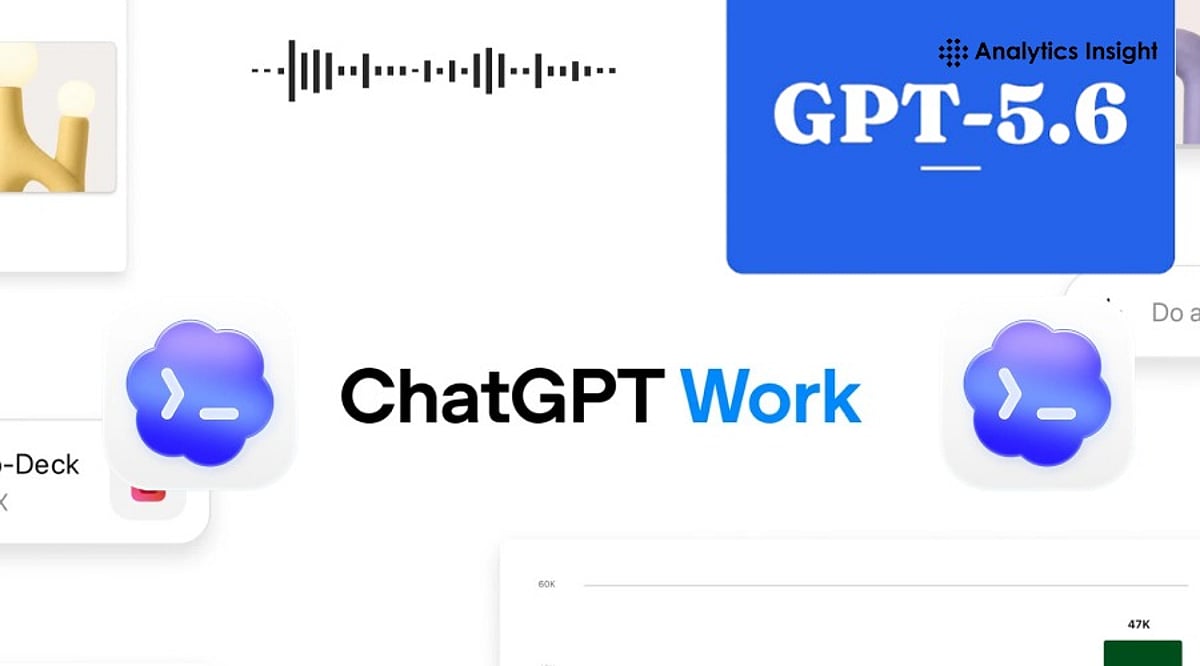
    OpenAI has introduced ChatGPT Work, a new AI agent designed to go beyond simple question-answering. Powered by the newly released GPT-5.6 model family and integrated with Codex, ChatGPT Work can autonomously research, analyze data, write code, create presentations, generate reports, and automate workflows across connected applications. This marks a significant shift from conversational AI to autonomous workplace productivity.

    What ChatGPT Work Can Do

    ChatGPT Work is built for extended, multi-step assignments rather than one-off prompts. It can pull information from connected apps, generate spreadsheets, presentations, documents, and web apps, and continue working for hours by breaking larger projects into smaller steps. A new Unified Plugins Directory bundles third-party integrations including Google Drive, SharePoint, Slack, Microsoft Teams, Gmail, Outlook, Salesforce, Adobe, Zoom, LinkedIn, GitHub, and Dropbox. Users can invoke a specific plugin using an “@” mention or let ChatGPT decide which data source is relevant. A Scheduled Tasks feature allows the agent to keep projects moving even when a user is away, such as converting new Slack or Microsoft Teams messages into updated documents and flagging important changes automatically.

    GPT-5.6 and the Sol, Terra, Luna Naming System

    Powering the new agent is GPT-5.6, introduced under a naming scheme where the number marks the model generation while Sol, Terra, and Luna represent separate capability tiers. Sol is OpenAI’s new flagship model, achieving state-of-the-art results in coding, knowledge work, cybersecurity, and science while using fewer tokens than prior frontier models. Terra matches GPT-5.5’s performance at roughly half the cost, and Luna is the fastest, most affordable tier. API pricing runs $5/$30 per million input/output tokens for Sol, $2.50/$15 for Terra, and $1/$6 for Luna.

    Codex Merges into the ChatGPT Desktop App

    OpenAI is also merging its standalone Codex coding app into a single updated ChatGPT desktop app for Mac and Windows, with the previous app renamed ChatGPT Classic. Existing Codex users keep their projects and settings after updating. OpenAI reports that more than 5 million people already use Codex weekly, with over 1 million using it for tasks outside software development, a trend the company is leaning into as it pushes AI agents into sales, finance, and marketing workflows.

    Rollout, Security, and Enterprise Controls

    ChatGPT Work started rolling out on July 9 for Pro, Enterprise, and Edu users on web and mobile, with Plus and Business access arriving in the next few days. The updated desktop app is available globally across all plans, including Free. On security, OpenAI has built in an auto-review system that checks sensitive actions before they run, which it says blocked all attempts to extract protected data during internal adversarial testing, though this hasn’t been independently verified. Enterprise and Edu admins get centralized controls over connected tools and sensitive actions, plus a Compliance API for visibility into ChatGPT Work’s activity.

    ChatGPT Work reflects the next stage of enterprise AI, shifting from answering questions to completing real tasks. Its long-term success will depend not only on advanced capabilities but also on trust, accuracy, and how effectively organizations integrate AI agents into everyday workflows.

  • GTA Online Summer Update 2026: Kortz Center Heist Launches July 14

    GTA Online Summer Update 2026: Kortz Center Heist Launches July 14

    Rockstar Games has officially announced the release date for the next major GTA Online update. The summer update arrives on July 14, introducing the highly anticipated Kortz Center Heist. Players can expect a fresh target, new missions, and another opportunity to execute a large-scale robbery with friends.

    What to Expect from the Kortz Center Heist

    The Kortz Center Heist centers on a heavily guarded museum-like location. To begin the heist, mansion owners must contact Mr. Faber and Raf De Angelis. Once initiated, the mission involves reconnaissance, building an array of tools, and finally executing the plan. The main objective is to forge the artwork inside the museum and swap the originals during the heist.

    Rockstar has confirmed that the heist can be completed with a team. Good coordination among teammates is essential for success. Players will need to handle security, navigate the target area, and escape with the loot. The update is also expected to include new vehicles and additional gameplay improvements.

    Could This Be the Last Traditional GTA Online Heist?

    With Grand Theft Auto VI approaching, some fans speculate that Rockstar may be winding down classic GTA Online heists. For years, heists have been the core of the game, creating memorable moments in Los Santos. The Kortz Center Heist may serve as a celebration of this beloved feature, though Rockstar has not confirmed any end to heists. Many believe the company will eventually shift focus to a new online experience built around GTA 6.

    A Great Time to Return to Los Santos

    This update is ideal for players who have taken a break. A new heist provides a simple reason to come back, call a few friends, and jump back into the action. The Kortz Center Heist recaptures the straightforward fun that made GTA Online popular. As the next era of Grand Theft Auto approaches, another big score in Los Santos offers a perfect summer activity.

  • Accenture Acknowledges Security Incident After Hacker Alleges Theft of 35GB of Internal Data

    Accenture Acknowledges Security Incident After Hacker Alleges Theft of 35GB of Internal Data

    Accenture has confirmed that it recently experienced a cybersecurity incident after a hacker claimed to have stolen 35GB of company data. The attacker allegedly offered the data for sale on a cybercrime forum. While the company admitted a breach occurred, it stated the issue was limited and already resolved, with no disruption to its services or business operations.

    The incident came to light following a report from BleepingComputer, which was subsequently picked up by multiple technology news outlets. According to those reports, a hacker using the alias “888” claimed to have accessed a large volume of internal Accenture data in July 2026.

    Hacker Claims Stolen Data Includes Sensitive Credentials

    The hacker alleged that the stolen files include source code, RSA keys, SSH keys, Azure Personal Access Tokens, Azure Storage access keys, and configuration files. These components are critical to a company’s software and cloud infrastructure. If active keys or tokens are compromised, attackers could potentially gain unauthorized access to internal systems. Security experts caution that the claim has not yet been independently verified.

    To support the claim, the hacker shared a screenshot appearing to show an Azure DevOps project associated with an Accenture domain, including a repository named “121123_AtriasTalentAcademy.” While the screenshot makes the claim more credible, no independent verification of the full 35GB dataset has been conducted.

    Accenture’s Response

    Accenture confirmed the security incident and stated that it quickly remediated the source of the breach. The company emphasized that there has been no impact on its operations or service delivery. It did not disclose how the attacker gained entry, nor did it confirm the exact volume of data stolen or whether any customer information was affected.

    This breach underscores that even a rapid response cannot eliminate all risks. If source code or cloud access credentials fall into the wrong hands, attackers may use them to study systems and identify vulnerabilities. Companies typically rotate passwords, keys, and tokens after such incidents to mitigate future threats.

    Accenture has faced cyberattacks before. In 2021, it was hit by a LockBit ransomware attack that drew global attention. In 2024, the same hacker known as “888” claimed to have accessed Accenture employee data following a separate third-party breach. These incidents highlight that large technology and consulting firms remain prime targets for cybercriminals.

    Unanswered Questions

    Several details remain unclear. No independent investigation has confirmed the hacker’s claim regarding the 35GB dataset. Accenture has not disclosed the specific files involved or the attack vector. At this stage, the company has only confirmed that a breach occurred, the issue has been fixed, and services continue without disruption. The rest of the claims rely on the hacker’s assertions.

  • Temasek Maintains Freeze on Crypto Investments, Accelerates AI and Blockchain Push

    Temasek Maintains Freeze on Crypto Investments, Accelerates AI and Blockchain Push

    Temasek, Singapore’s state-owned investment firm managing approximately $400 billion in assets, has confirmed it will not resume direct cryptocurrency investments in the near term. Instead, the fund is doubling down on artificial intelligence (AI) and blockchain infrastructure, while maintaining a cautious stance on digital assets due to persistent regulatory uncertainty.

    Nagi Hamiyeh, Temasek’s President of Global Investments, told CNBC that the firm still lacks confidence in crypto’s long-term role within the broader financial system. This cautious approach follows the complete write-down of Temasek’s $275 million investment in FTX in 2022, which represented about 0.09% of its total portfolio.

    FTX Loss Continues to Shape Investment Strategy

    The collapse of FTX remains a defining event for Temasek’s digital asset strategy. The fund’s exposure included $210 million in FTX International and $65 million in FTX US. Although Temasek had clarified that the investment did not represent a direct bet on cryptocurrencies, the loss prompted a thorough review of its approach.

    Hamiyeh explained that Temasek currently holds no direct crypto assets and cannot yet determine how cryptocurrencies will integrate into the wider economy. Regulatory uncertainty, liquidity concerns, and reputational risks continue to guide investment decisions. The fund has indicated that direct crypto exposure could return only after clearer regulatory frameworks emerge across major markets. Until then, digital tokens remain outside its investment mandate.

    Blockchain Remains Part of the Long-term Strategy

    While Temasek avoids direct cryptocurrency holdings, it continues to monitor blockchain technology closely. The firm sees greater value in infrastructure that supports practical business applications rather than speculative digital assets. Areas of interest include blockchain solutions for settlement systems, supply chain management, digital identity, and enterprise data operations.

    This approach allows Temasek to track technological progress without exposing itself to daily market volatility. Broader institutional interest has also shifted toward tokenization and blockchain-based payment systems. Banks and asset managers are testing blockchain platforms to improve settlement speed and reduce operational costs. Temasek views digital finance infrastructure, compliance technology, and related systems as broader investment opportunities than direct token holdings.

    AI Receives Greater Capital Allocation

    Artificial intelligence has become a top priority for Temasek. The firm plans to increase its AI exposure from 6% to 15% of its portfolio by 2031. Hamiyeh noted that the greater opportunity may come from companies that successfully apply AI across their businesses rather than those developing the most advanced models. However, the fund remains selective as some AI valuations have risen faster than underlying fundamentals.

    Temasek keeps about 25% of its portfolio in liquid assets, providing flexibility to respond to market changes and pursue new opportunities. Beyond AI, Europe has attracted increasing investment. The firm invested approximately €12 billion across the region over the past two years, targeting luxury goods, consumer brands, energy transition projects, and family-owned industrial companies.

    On defense investments, Temasek takes a selective approach, focusing on dual-use technologies and reviewing governance links case by case. Its direct exposure remains limited, primarily through ST Engineering.

    As of the latest data from CoinGecko, Bitcoin traded near $62,824 and Ethereum around $1,750, keeping institutional activity in focus.

    What’s Next?

    Temasek continues to avoid direct crypto investments as regulatory uncertainty persists following its FTX loss. Instead, the fund is increasing investment in artificial intelligence and blockchain infrastructure while maintaining liquidity and selectively pursuing opportunities across Europe and other long-term growth sectors.

  • Apex Legends Reveals Cyberpunk: Edgerunners Crossover Event: Dates, Skins, and Details

    Apex Legends Reveals Cyberpunk: Edgerunners Crossover Event: Dates, Skins, and Details

    Apex Legends has officially teamed up with Cyberpunk: Edgerunners for a limited-time in-game event that merges the neon-drenched world of the anime with Respawn Entertainment’s battle royale. The collaboration, announced July 9, 2026, runs from July 14 to August 4, 2026, with select cosmetic items available in the store until August 18.

    What’s Coming in the Crossover

    Eight Legends and eight weapons will receive themed skins inspired by the cyberpunk aesthetic. Players can collect event-specific items and participate in special activities during the active period. The official trailer highlights the bright neon visuals and fast-paced action that made Cyberpunk: Edgerunners a global hit.

    A Strategic Crossover Trend

    Crossovers between games and other media have become common since Fortnite proved their staying power. However, Apex Legends takes a more selective approach, choosing partnerships that fit its own sci-fi setting. The Cyberpunk: Edgerunners event feels like a natural extension of the game’s futuristic universe, rather than a random promotion.

    Why This Event Matters

    For Respawn Entertainment, the event helps keep Apex Legends relevant in a crowded live-service market. For players, it offers a fresh set of cosmetics and a reason to dive back into the battle royale. As the gaming industry continues to embrace crossovers, this collaboration stands out as one of the most anticipated in Apex’s history.

  • Google Selects 20 AI-First Startups for India Accelerator 2026 Cohort

    Google Selects 20 AI-First Startups for India Accelerator 2026 Cohort

    Google has chosen 20 homegrown AI-first startups for the 2026 cohort of its Google for Startups Accelerator: India program. The tech giant selected these companies from more than 2,500 applications, highlighting the growing depth of India’s AI startup ecosystem.

    The selected startups recently completed an in-person bootcamp at Google’s Bengaluru campus. Over the next three months, Google will provide mentorship, AI tools, cloud resources, and technical guidance to help founders refine their products, strengthen infrastructure, and scale globally.

    A Cohort Built Around Applied AI Infrastructure

    This year’s selections lean heavily toward startups building AI infrastructure and vertical-specific tools rather than consumer apps. Several are tackling embedded and industrial AI: CraftifAI and H2Loop AI automate embedded software and firmware development for robotics, automotive, and semiconductor hardware, while Jidoka applies computer vision to manufacturing quality inspection.

    Others focus on enterprise workflows: Binocs automates financial due diligence, OnFinanceAI builds compliance and risk tools for banks and insurers, and TartanHQ handles identity verification and onboarding through AI-powered APIs. Healthtech and climate tech also feature prominently, with Aikenist building AI-accelerated radiology tools, FlexifyMe offering AI-guided chronic pain therapy, and Aurassure and Fitsol tackling environmental monitoring and carbon emissions tracking respectively.

    Notable Names and Their Backers

    A few startups in the cohort have already built visible track records. Adalat AI, incubated at MIT, applies speech transcription and workflow automation to reduce courtroom case backlogs. Dodo Payments, backed by Antler and 100Unicorns, is building global payment infrastructure for SaaS and AI companies across more than 150 countries. Pipeshift, which came out of Y Combinator’s Summer 2024 batch, focuses on low-latency inference infrastructure for open-source AI models, while Soundverse AI, featured on Shark Tank India, offers a generative AI music platform for prompt-based composition. Several others, including CraftifAI, H2Loop AI, and Binocs, have already raised institutional funding from investors such as Accel, Ankur Capital, and IvyCap Ventures.

    What the Accelerator Offers Founders

    Google India vice president and country manager Preeti Lobana said the program is designed to equip founders with Google’s full AI stack and deep technical mentorship. She framed it as a way to accelerate their path to enterprise scale while strengthening the technical capabilities that support the broader India AI Mission. Google first launched the accelerator in April 2024, and its 2025 cohort included companies such as Apptile, Knit, MyWonder, Phot.AI, and SparkyAI.

    What Comes Next for the Cohort

    Beyond mentorship, Google’s accelerator model typically emphasizes technical depth over generic startup coaching. Founders will stress-test their architecture and prepare for scaled, enterprise-grade deployment rather than simply polishing a pitch deck. With this cohort skewing heavily toward infrastructure-level AI tools serving manufacturing, financial services, and healthcare, the selections suggest Google is positioning the program as a pipeline for startups building the underlying technical layers of India’s AI economy, rather than consumer-facing AI products alone.

  • OpenAI Shuts Down Atlas, Integrates AI Browsing into ChatGPT with New Chrome Extension and Desktop Upgrade

    OpenAI Shuts Down Atlas, Integrates AI Browsing into ChatGPT with New Chrome Extension and Desktop Upgrade

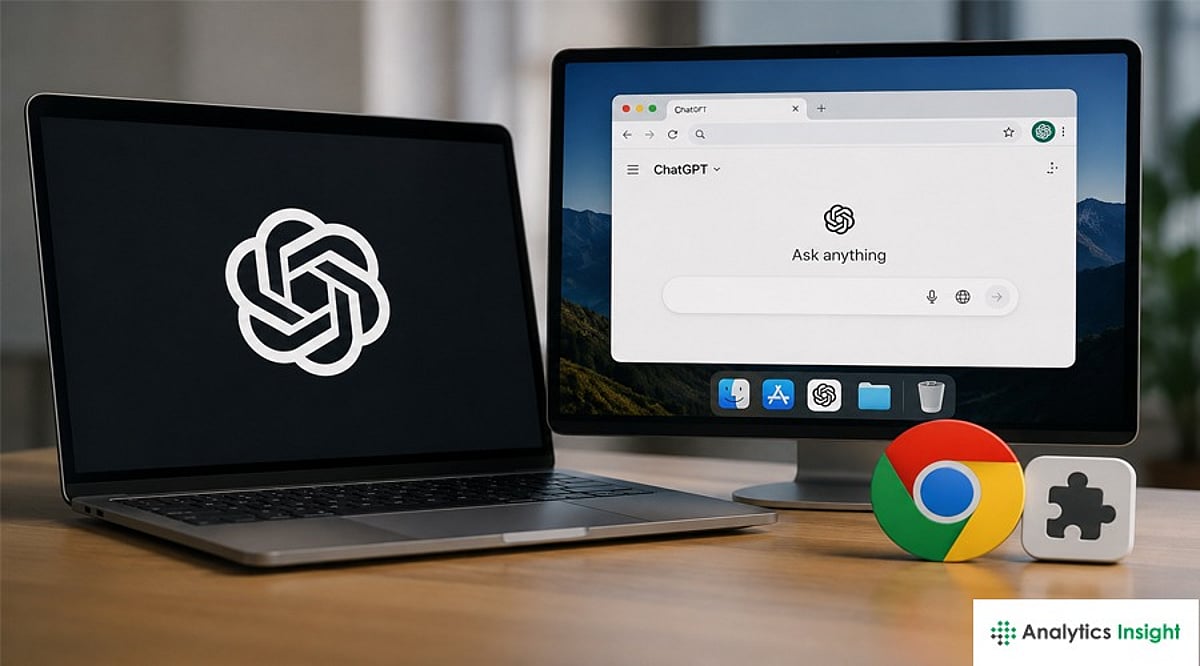
    OpenAI is retiring its standalone browser product, Atlas, and folding its core browsing, summarization, and automation features directly into ChatGPT. The company is also launching a new Chrome extension and upgrading the ChatGPT desktop app to provide a unified AI-powered browsing experience.

    According to OpenAI, the decision to discontinue Atlas—introduced last year as a separate browser—stems from a strategic shift to make browsing a first-class feature within ChatGPT. Users will now be able to research, summarize, and complete online tasks without switching between apps.

    Chrome Extension Brings Context-Aware AI Browsing Assistance

    To support this transition, OpenAI is releasing a ChatGPT extension for Google Chrome that grants the assistant contextual access to the active webpage. When enabled, the extension allows users to:

    • Ask questions about page content
    • Generate concise or custom-format summaries
    • Extract table data and contact details
    • Run contextual tasks such as rewriting text
    • Compare product specifications
    • Draft replies based on what’s on-screen

    The goal is to provide seamless, page-aware assistance within users’ existing browser workflows and to compete with other browser assistants already available in Chrome and Edge.

    ChatGPT Desktop Gains Powerful Integrated Browsing and Automation

    OpenAI is enhancing the ChatGPT desktop app with full browsing features, parallel to the extension. The updated desktop experience will allow users to open websites, sign into online accounts, download files, and interact with webpages directly within ChatGPT. A notable addition is a cloud-based remote browser hosted on OpenAI’s servers.

    This environment enables ChatGPT agents to perform web actions on behalf of users—filling forms, navigating multi-step workflows, fetching files, and returning results or downloaded files without the user leaving the ChatGPT interface. OpenAI positions this as a way to enable powerful automation while isolating credentialed sessions from local devices.

    The move follows months of internal consolidation at OpenAI, where several experimental projects were scaled back. Industry observers see the decision as a pragmatic pivot: rather than take on established browsers with a separate product, OpenAI is embedding browsing into ChatGPT to create a unified AI workspace compatible with existing browsing ecosystems.

    What Changes Should ChatGPT Users Expect Next?

    For users and organizations, the change brings practical questions. Atlas customers will need migration guidance for bookmarks and settings. Security-conscious users will look for clarity on how page data, session credentials, and automated actions are handled in the cloud-based browser, along with enterprise controls such as admin settings and audit logs.

    What to watch next are the rollout timelines for the Chrome extension and desktop updates, how closely the new integrations match or exceed Atlas’s original capabilities, and how competitors respond as AI-assisted browsing becomes a standard feature rather than a standalone product.

  • Bitcoin Derivatives Activity Outpaces Spot Demand as Market Risks Persist

    Bitcoin Derivatives Activity Outpaces Spot Demand as Market Risks Persist

    Bitcoin continues to display a widening gap between derivatives activity and spot demand as macro uncertainty shapes investor behavior. Recent geopolitical tension involving the United States and Iran pushed markets into a risk-off phase, while spot Bitcoin exchange-traded funds recorded more than $85 million in net outflows after three consecutive days of inflows.

    At the same time, Bitcoin’s Coinbase Premium Index turned negative, signaling softer U.S. spot demand. Although the Crypto Fear & Greed Index remained above extreme fear levels, historical bear-market data suggest the current cycle may still have room to continue.

    Spot Demand Weakens as Derivatives Drive Market Activity

    Bitcoin’s latest market structure shows derivatives activity recovering faster than demand in the spot market. Data indicate that Bitcoin’s 30-day cumulative demand improved from nearly -500,000 BTC to around -75,000 BTC. Even so, futures markets accounted for nearly the entire recovery. Futures demand climbed from about negative 295,000 BTC to slightly above zero, while spot demand remained near negative 78,000 BTC.

    Meanwhile, Tether minted another $1 billion worth of USDT despite the broader stablecoin market continuing to contract. Instead of flowing directly into Bitcoin purchases, much of that liquidity appears to remain on the sidelines as investors hold capital in reserve. Consequently, the additional liquidity could increase derivatives activity rather than strengthen spot buying. That trend leaves speculative positioning ahead of genuine market demand.

    Macro Conditions Continue to Shape Bitcoin Sentiment

    Market conditions shifted after renewed geopolitical uncertainty affected investor sentiment. As a result, institutions reduced exposure, leading spot Bitcoin ETFs to post net outflows exceeding $85 million. Likewise, Bitcoin’s Coinbase Premium Index moved below zero, indicating weaker buying interest from U.S. investors. The change points to greater caution among institutional participants as broader market risks increased.

    Although the Crypto Fear & Greed Index stayed above extreme fear territory, historical comparisons present a different picture. Bitcoin’s current bear market has lasted 248 days, while the 2022 and 2018 bear markets extended for 381 and 385 days, respectively. Therefore, previous market cycles suggest the current downturn remains shorter than earlier bear markets despite recent improvements in derivatives demand.

    Bitcoin Miners Expand into AI as Costs Increase

    Bitcoin mining companies have also adjusted their strategies following pressure on profitability since the April 2024 halving. Many firms redirected energy infrastructure toward artificial intelligence operations to improve revenue. According to a July 9, 2026, report from Blocksbridge Consulting, executives and board members at several mining companies sold large amounts of company stock during this transition.

    By the end of 2025, the Bitcoin network’s hash rate had reached a record 1,160 EH/s, increasing competition across the industry. CoinShares reported that publicly listed mining companies faced an average production cost of about $80,000 per Bitcoin during the fourth quarter of 2025. As costs increased, between 15% and 20% of older ASIC mining machines reportedly operated at a loss. In response, several companies converted energy resources to power AI-focused supercomputers.

    One major example involved TeraWulf, which signed a 20-year lease agreement with Anthropic valued at nearly $19 billion. Besides expanding into AI, some mining companies also sold Bitcoin holdings to finance new investments. Marathon Digital Holdings sold more than 15,000 BTC from its institutional treasury, with its latest reported Bitcoin sale occurring in April 2026. The reported transactions reflect the capital demands associated with expanding AI infrastructure while mining economics remain under pressure.

    What’s Next?

    Bitcoin’s recovery remains driven mainly by derivatives activity while spot demand stays weak. ETF outflows, a negative Coinbase Premium Index, and ongoing macro uncertainty suggest the broader Bitcoin bear market may still be active. Investors may need to monitor leverage, institutional demand, and miner liquidity closely before expecting a sustained recovery.

  • Weekend Watchlist: 9 Must-Stream Movies and Series on Netflix, Prime Video, JioHotstar, ZEE5, and SonyLIV (July 10-12)

    Weekend Watchlist: 9 Must-Stream Movies and Series on Netflix, Prime Video, JioHotstar, ZEE5, and SonyLIV (July 10-12)

    Planning your weekend watchlist? Streaming platforms have released a wide range of new movies and series, and all are perfect for your weekend binge-watch. Netflix, Prime Video, JioHotstar, ZEE5, and SonyLIV have everything in store, including courtroom dramas, sports thrillers, and even family entertainers. The lineup offers plenty of fresh options to add to your watchlist.

    New Movies and Series Streaming This Weekend: Top 9

    Between July 10 and July 12, platforms are dropping high-profile films and series that promise tense legal showdowns, crime sagas, and offbeat friendships. Here’s what to add to your watchlist:

    Ikka

    Platform: Netflix
    Release date: July 10, 2026
    A courtroom thriller starring Sunny Deol, Akshaye Khanna, Tillotama Shome, and Dia Mirza. The story follows a celebrated lawyer who must defend a man whose conviction he once helped secure, setting up a tense legal and emotional conflict.

    Parimala & Co

    Platform: ZEE5
    Release date: July 10, 2026
    This Tamil dark comedy features Jayaram and Urvashi. It follows an ordinary family whose lives take an unexpected turn after the mysterious death of a troublesome neighbor.

    Balti

    Platform: SonyLIV
    Release date: July 10, 2026
    Directed by Unni Sivalingam, this Tamil sports thriller centers on four champion kabaddi players whose friendship is shaken when gang rivalries and violent crime enter their world.

    The Paradise Murders

    Platform: Netflix
    Release date: July 10, 2026
    A murder mystery set against a luxurious honeymoon gone wrong. When a guest dies under suspicious circumstances, hidden secrets begin to surface.

    Pati Patni Aur Woh Do

    Platform: JioHotstar
    Release date: July 11, 2026
    This family comedy follows a married couple whose peaceful life is upended by misunderstandings and chaos.

    The Apartment Job

    Platform: Netflix
    Release date: July 11, 2026
    Starring Ji Sung, this Korean mystery centers on a former gang leader and a young lawyer who try to pull off an audacious robbery but accidentally uncover a major corruption scandal.

    ONE PIECE HEROINES

    Platform: Netflix
    Release date: July 11, 2026
    An anime adventure starring Nami, a favorite character from the manga series One Piece. This manga adventure is sure to offer a unique and stylish experience following an unfortunate buying experience that leads to a new adventure.

    The Westies

    Platform: Prime Video
    Release date: July 12, 2026
    Gangster movie with J.K. Simmons and Titus Welliver in leading roles. The story revolves around power struggles, rivalry between mafia factions, and internal issues within an Irish-American crime family in New York during the 1980s.

    Susana and Elvira: No Plan B

    Platform: Netflix
    Release date: July 12, 2026
    In this comedy-drama film, two estranged best friends meet up in order to plan a celebrity wedding while trying to mend their friendship.

    Final Takeaway

    There is something for every mood on this list, from tense legal dramas and thrillers to family dramas with a dose of laughter and anime adventures. Netflix tops the list for having more than one release, while JioHotstar, ZEE5, SonyLIV, and Prime Video offer their own genres in the mix. It’s a great weekend for binge-watchers who want to enjoy a variety of genres.

  • Bitcoin ETFs See $95M Outflows, Bitmine Adds 20,500 ETH, TRON Hits 392M Accounts — Crypto Roundup

    Bitcoin ETFs See $95M Outflows, Bitmine Adds 20,500 ETH, TRON Hits 392M Accounts — Crypto Roundup

    Market Overview

    Major developments unfolded in the crypto space as Bitcoin spot ETFs recorded $95.30 million in net outflows, Bitmine expanded its Ethereum treasury with a major acquisition, and TRON surpassed 392 million wallet addresses. Additionally, Zcash confirmed its Ironwood upgrade for late July, while New Hampshire rejected a Bitcoin-backed bond proposal.

    Bitcoin Spot ETFs See $95 Million in Net Outflows

    According to SoSoValue, Bitcoin spot ETFs experienced a total net outflow of $95.30 million on the reporting day. Fidelity’s FBTC led outflows with a daily net draw of $63.25 million, bringing its total historical net inflow to $10.15 billion. On the inflow side, VanEck’s HODL ETF recorded the highest daily net inflow at $5.36 million (cumulative $1.13 billion), followed by Morgan Stanley’s MSBT with $2.17 million ($377.14 million total). The combined net asset value of all Bitcoin spot ETFs now stands at $76.51 billion, with an ETF net asset ratio of 6.03% and historical cumulative net inflows of $51.19 billion.

    Bitmine Acquires 20,500 ETH for $36 Million

    Bitmine Immersion Technologies purchased 20,500 ETH for approximately $35.92 million via an over-the-counter transaction with Galaxy Digital, executed around July 10, 2026. The purchase price was roughly $1,752 per ETH. This acquisition pushes Bitmine’s total Ethereum treasury to about 5.7 million tokens — worth nearly $10 billion — representing an estimated 4.7%–4.8% of the entire circulating ETH supply of ~120.7 million tokens. The move signals a quiet accumulation strategy by the company.

    TRON Surpasses 392 Million Accounts

    TRON’s blockchain explorer confirmed the network has surpassed 392 million wallet addresses since inception. According to DeFiLlama, TRON remains the dominant platform for Tether (USDT) transfers due to fast settlement times and extremely low fees — processing up to 2,000 transactions per second at roughly 0.0003 TRX per transaction. Lookonchain reported that TRON’s Total Value Locked (TVL) has risen by approximately $1.95 billion since July 1, a gain of 7.8%.

    New Hampshire Rejects Bitcoin-Backed Bond Proposal

    The New Hampshire Executive Council voted down a regulatory proposal to authorize $100 million in Bitcoin-backed bonds. The initiative, pushed by the state’s Business Finance Authority (BFA) and Governor Kelly Ayotte, had passed risk assessments from Moody’s. Opposition was led by Democrat Karen Liot Hill, joined by councilors Janet Stevens and David Wheeler; officials Joseph Kenney and John Stephen voted in favor. The rejection halts the state’s attempt to introduce this financial instrument.

    Zcash Confirms Ironwood Activation on July 28

    Zcash core developer Sean Bowe announced that the Ironwood upgrade will activate at block height 3,428,143, expected around 8 am EST on July 28 — a one-week delay from the original July 21 target. The postponement came after Shielded Labs raised concerns that exchanges, mining pools, and wallet providers might need more time to prepare, particularly as many are transitioning from the legacy zcashd software to the Z3 stack (Zebra, Zaino, Zallet). Ironwood addresses an ‘infinity’ bug discovered in Zcash’s Orchard shielded pool, the network’s primary privacy-focused transaction system.

    FAQs

    • How much outflow did Bitcoin spot ETFs record? Bitcoin spot ETFs recorded total net outflows of $95.30 million. Fidelity’s FBTC saw the largest outflow at $63.25 million, while VanEck’s HODL led inflows with $5.36 million.
    • How much Ethereum did Bitmine buy? Bitmine Immersion Technologies acquired 20,500 ETH for around $35.92 million through an OTC transaction with Galaxy Digital at approximately $1,752 per ETH.
    • Why is TRON’s 392 million account milestone important? TRON crossing 392 million accounts highlights its growing user base and network activity, especially for fast, low-cost Tether transfers.
    • What happened to New Hampshire’s Bitcoin bond proposal? The New Hampshire Executive Council rejected a proposal to authorize $100 million in Bitcoin-backed bonds, halting the initiative.
    • When will Zcash activate Ironwood? Zcash plans to activate Ironwood at block height 3,428,143 on July 28, delayed one week to allow more preparation time for ecosystem participants.