Blog

  • Fed Chairman Kevin Warsh Establishes Task Forces to Examine AI and Monetary Policy

    Fed Chairman Kevin Warsh Establishes Task Forces to Examine AI and Monetary Policy

    Federal Reserve Chairman Kevin Warsh has announced the formation of five task forces to review critical areas of U.S. monetary policy and central bank operations. The panels will focus on Fed communications, the inflation framework, the balance sheet, economic data, and new technologies—including artificial intelligence.

    The initiative places AI at the center of Warsh’s early agenda. Several members of the technology panel have publicly argued that AI could boost productivity and alter the trajectory of U.S. growth.

    Warsh stated that the task forces will operate independently with support from Fed staff, providing evidence-based feedback and recommendations to the Federal Open Market Committee by the end of 2026. “The goal is straightforward: to ensure the Fed is best positioned to achieve our objectives in this consequential time,” he said.

    Former Bank of England Governor Mervyn King will co-lead the communications review. Raghuram Rajan, former head of India’s central bank, and Harvard professor Jeremy Stein will lead the balance-sheet panel. The AI task force will be led by Marc Andreessen, Stanford economist Charles I. Jones, and Microsoft executive Asha Sharma—all vocal proponents of AI’s economic potential.

    The AI panel arrives amid debate among Fed officials about how quickly the technology can raise productivity. While some FOMC participants see room for faster growth, others caution over timing and scale. New York Fed President John Williams warned that AI-driven demand has pushed up prices for electricity and semiconductors, describing the price path as a “hockey stick.” He emphasized that supply must expand to keep inflation under control.

    Former Walmart CEO Doug McMillon will help lead the data-quality review, which comes as job-market data faces increased scrutiny due to revisions and lower survey response rates. The task forces are expected to complete their work by the end of 2026.

  • How Metamaterials Are Revolutionizing 6G and Next-Generation Wireless Communications

    How Metamaterials Are Revolutionizing 6G and Next-Generation Wireless Communications

    Metamaterials are reshaping wireless communication by enabling precise control over radio waves. These engineered materials improve coverage, reduce energy consumption, support terahertz communication, increase network capacity, strengthen security, and unlock advanced services that will define future 6G networks.

    What Are Metamaterials?

    Metamaterials are artificial materials composed of tiny structures arranged in specific patterns. Their unique design gives them properties not found in natural materials. Instead of simply letting radio waves pass through, metamaterials can bend, focus, reflect, or redirect waves in a controlled manner. This ability comes from the shape and layout of their building blocks, offering a completely new way to manage electromagnetic signals in wireless networks.

    Why Metamaterials Matter for 6G

    The success of 6G depends on millimeter-wave and terahertz frequencies, which provide much larger bandwidth than current systems. However, these high-frequency signals lose power quickly, struggle to penetrate obstacles, and weaken in dense urban areas or indoors. Traditional solutions require more base stations and higher power, increasing cost and energy use. Metamaterials offer an alternative by steering signals intelligently, improving communication without massive infrastructure expansion.

    Reconfigurable Intelligent Surfaces (RIS)

    One of the most promising applications of metamaterials is the reconfigurable intelligent surface (RIS). These surfaces consist of thousands of programmable elements placed on walls, ceilings, windows, or billboards. Each element can electronically adjust the direction of incoming radio waves, directing them precisely where needed. This turns random reflections into focused transmissions, eliminating dead zones and improving coverage in challenging environments. Since many RIS designs are passive, they consume very little power.

    Better Coverage and Higher Capacity

    Metamaterials dramatically improve wireless coverage in difficult locations such as offices, underground stations, factories, and crowded city streets. Intelligent surfaces redirect signals around obstacles, reducing dead zones without additional towers. By precisely controlling radio waves, multiple users can share the same spectrum more efficiently, lowering interference and boosting network capacity — even in densely populated areas.

    Energy Savings and Faster Communication

    Energy efficiency is a key goal for future networks. Instead of relying on powerful transmitters and extra base stations, passive metamaterial surfaces redirect signals with minimal power. This reduces electricity usage and operating costs. Metamaterials also enable reliable terahertz communication, which offers enormous bandwidth for ultra-high data rates. Intelligent surfaces guide terahertz signals along optimal paths, overcoming rapid signal loss and making high-speed links more dependable.

    AI Support, Sensing, and Security

    Artificial intelligence plays a crucial role in optimizing intelligent metamaterial surfaces. AI algorithms analyze network conditions in real time, selecting the best signal direction, reflection angle, and phase adjustment. This allows the network to adapt instantly to user movement and traffic changes, creating a smart wireless environment.

    Metamaterials also support Integrated Sensing and Communication (ISAC), a key 6G feature. The same infrastructure can provide both communication and object detection, motion tracking, localization, and environmental mapping. This benefits autonomous vehicles, industrial automation, healthcare, robotics, and smart cities.

    In terms of security, intelligent surfaces direct signals precisely to intended receivers, minimizing leakage. This controlled propagation makes interception much harder, strengthening physical-layer security before encryption.

    Challenges and Future Outlook

    Despite impressive progress, large-scale commercial deployment faces challenges. Accurate channel estimation requires complex calculations for surfaces with thousands of elements. Fast-moving users demand near-instantaneous signal updates. Hardware design, costs, and international standardization still need further development.

    Nevertheless, research is accelerating. New technologies such as active RIS, hybrid RIS, STAR-RIS, and dynamic metasurface antennas aim to overcome current limitations. As these innovations mature, metamaterials will become a cornerstone of 6G wireless networks, enabling faster, smarter, and more reliable communication systems for the future.

    Frequently Asked Questions

    1. What are metamaterials in wireless communication?
    Metamaterials are specially designed materials that control radio waves by bending, reflecting, or focusing them to improve wireless communication.

    2. Why are metamaterials important for 6G networks?
    They solve key challenges like signal blockage, weak coverage, and high energy use while enabling much faster data transmission.

    3. What is a Reconfigurable Intelligent Surface (RIS)?
    RIS is a programmable surface with many small elements that redirect radio signals toward the desired location for better communication.

    4. How do metamaterials improve network security?
    They direct signals toward intended receivers and reduce unwanted leakage, making interception more difficult.

    5. Which industries will benefit from metamaterial-based 6G technology?
    Smart cities, healthcare, autonomous vehicles, manufacturing, robotics, agriculture, and extended reality applications.

  • Metal Additive Manufacturing: Transforming Production in 2026 and Beyond

    Metal Additive Manufacturing: Transforming Production in 2026 and Beyond

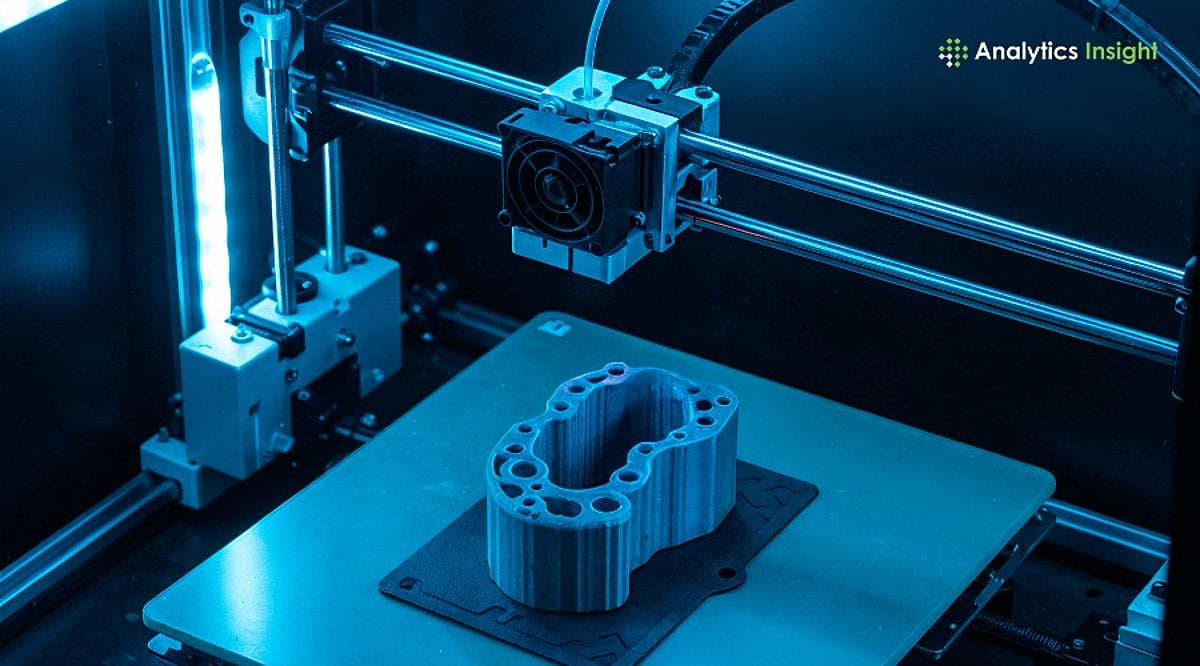
    Metal 3D printing has evolved from a prototyping novelty into a mainstream production technology. In 2026, industries worldwide are leveraging it to create stronger, lighter, and more complex metal parts while drastically reducing waste and lead times. With AI-driven quality control, faster printers, and advanced materials, metal additive manufacturing is reshaping aerospace, automotive, healthcare, and defense sectors.

    Less Waste, Stronger Parts

    Traditional machining cuts away material from a solid block, generating significant scrap. Metal 3D printing builds parts layer by layer, using only the metal needed for the final component. This reduces material costs and enables intricate geometries that are impossible with conventional methods. The resulting parts are often lighter yet equally strong, improving energy efficiency in vehicles and machinery.

    Aerospace Leads Adoption

    Aircraft manufacturers are among the biggest adopters. By printing lightweight components, they cut fuel consumption and carbon emissions. Consolidating multiple smaller parts into a single printed piece enhances structural integrity and reduces failure points. Defense contractors also rely on metal 3D printing for mission-critical parts, and large-scale printing facilities are now common.

    Automotive Gains Speed and Flexibility

    Car makers use metal 3D printing for engine components, cooling systems, tools, and custom parts. This accelerates time-to-market and allows digital inventory management—companies store digital files instead of physical spare parts, printing replacements on demand and saving storage and logistics costs.

    Healthcare Personalization

    Medical applications benefit from custom implants tailored to individual patients. Titanium, favored for its strength, lightness, and biocompatibility, is widely used for dental crowns, hip and knee implants, spinal and skull implants, and surgical tools. Better-fitting implants improve patient recovery outcomes.

    Market Growth Projection

    The global metal 3D printing market is expected to grow from $15 billion in 2026 to $102 billion by 2035, a compound annual growth rate of about 24%. Factories are investing heavily in smart machinery, automation, and digital technologies.

    AI Enhances Quality and Efficiency

    Artificial intelligence checks designs before printing, optimizes build parameters, and monitors each layer in real time to detect flaws. Digital twins—virtual replicas of physical products—allow engineers to test and refine designs without material waste, saving time and money.

    New Materials Expand Possibilities

    Researchers continue developing advanced alloys, including stronger aluminum, titanium, stainless steel, nickel alloys, and cobalt-chrome. A recent breakthrough enables a single printer to combine multiple metal alloys in one print by adjusting laser parameters via software, opening the door to novel, high-performance products.

    Faster Machines and Greater Throughput

    Modern metal printers use multiple lasers, larger build volumes, and robotic post-processing. Some jobs that once took weeks or months now finish in days, making metal 3D printing viable for medium-to-large production runs.

    Environmental Benefits

    By using only necessary material and enabling localized production, metal 3D printing reduces waste and transportation emissions. Digital inventories replace vast warehouses, and longer-lasting parts mean fewer replacements—contributing to a more sustainable manufacturing ecosystem.

    Challenges Remain

    High machine and material costs persist. Many printed parts require post-processing such as polishing, heat treatment, or inspection. There is also a shortage of skilled operators. However, as technology matures and adoption scales, these barriers are gradually being overcome.

    Frequently Asked Questions

    What is metal 3D printing?

    It is an additive manufacturing process that builds metal objects layer by layer from a digital 3D model.

    Which industries use it most?

    Aerospace, automotive, healthcare, defense, energy, and industrial manufacturing are the primary adopters.

    Why is it becoming popular?

    It reduces waste, shortens production times, enables complex geometries, and supports rapid prototyping and low-volume production.

    How does AI help?

    AI optimizes designs, monitors print quality in real time, detects anomalies, and improves overall process reliability.

    What is the future outlook?

    Experts predict sustained rapid growth as costs fall, materials improve, and more manufacturers integrate metal 3D printing into mainstream production.

  • Crypto Wallet Security Guide: Essential Tips to Protect Your Digital Assets

    Crypto Wallet Security Guide: Essential Tips to Protect Your Digital Assets

    Digital money has become a popular choice for millions of people across the world. More users are stepping into the crypto market every day, and this growth has also attracted cybercriminals. Most crypto theft does not happen because hackers break the blockchain. Instead, criminals often trick wallet owners into sharing private information or approving fake transactions. A single mistake can lead to a complete loss of funds because crypto payments usually cannot be reversed. Strong wallet security has become one of the most important parts of every crypto journey.

    Select the Right Wallet for Every Purpose

    A crypto wallet comes in two main forms. A hot wallet stays connected to the internet and works well for quick payments, trading, or regular use. A cold wallet, also known as a hardware wallet, keeps private keys offline. This extra layer of protection makes it much harder for online attackers to reach stored assets.

    Many security experts recommend a simple approach. A hot wallet can hold a small amount for daily activity, while a hardware wallet can protect larger investments. This balance offers both convenience and stronger protection.

    Protect the Recovery Phrase at All Costs

    Every crypto wallet creates a recovery phrase, also called a seed phrase. This group of words acts as the master key to the wallet. Anyone with access to this phrase can open the wallet and transfer every asset without permission.

    Cloud storage, email accounts, note applications, and screenshots create unnecessary risk because hackers often target these places. A written copy stored in a secure location remains one of the safest options. Some people also choose metal backup plates because they offer better protection against fire, water, and physical damage. Safe storage of the recovery phrase remains the strongest defense against wallet theft.

    Strong Passwords and Extra Security Add More Protection

    A weak password creates an easy path for attackers. A long and unique password makes unauthorized access much more difficult. Password reuse across different accounts also increases security risk as a data leak from one website can expose other accounts.

    Two-factor authentication adds another level of protection for crypto exchanges and wallet-related accounts. Security specialists generally recommend authentication applications instead of SMS verification because phone numbers may become targets of SIM swap attacks. This simple security step can stop many common attacks before they succeed.

    Fake Websites and Scams Continue to Grow

    Phishing remains one of the biggest dangers in the crypto world. Criminals often create fake websites that look almost identical to official wallet providers, exchanges, or NFT marketplaces. Some even pretend to offer customer support and ask for confidential details.

    The recovery phrase should never appear on any website unless a wallet recovery process takes place through trusted official software. Honest support teams never request this information. Careful attention to website addresses and unexpected messages can prevent major financial losses.

    Every Transaction Needs Careful Review

    Crypto transactions move very quickly. Once a transfer receives confirmation on the blockchain, there is usually no way to cancel it. That makes careful review extremely important before every payment.

    The wallet address, transfer amount, and blockchain network deserve close attention before approval. Extra care also becomes necessary during interaction with decentralized applications. Many recent attacks rely on fake smart contract approvals instead of password theft. A few extra seconds of review can prevent expensive mistakes.

    Regular Updates Close Security Gaps

    Wallet software, hardware wallet firmware, browsers, and operating systems receive updates throughout the year. Many of these updates contain security fixes that protect against newly discovered threats.

    Old software may contain weaknesses that attackers already understand. Regular updates reduce this risk and help maintain a safer environment for digital assets. Security experts continue to stress the importance of current software across every device connected to crypto accounts.

    Official Sources Reduce Risk

    Fake wallet applications and counterfeit browser extensions continue to appear across the internet. Some fake versions look almost identical to legitimate products and aim to steal recovery phrases or private keys.

    Official websites and trusted app stores remain the safest places for wallet downloads. Search advertisements and unknown links deserve extra caution because criminals sometimes use these methods to attract victims. Careful selection of software sources greatly reduces the chance of malware installation.

    Separate Wallets Create Better Protection

    Many experienced crypto users avoid keeping every asset inside a single wallet. Separate wallets provide an extra layer of safety. One wallet may support long-term savings, another may handle trading activity, while a third may connect with decentralized finance platforms, blockchain games, or NFT marketplaces.

    This approach limits damage if one wallet becomes compromised. Large investments remain protected even if a wallet used for daily activity faces a security problem.

    Device Security Also Plays an Important Role

    A secure wallet cannot fully protect digital assets if the connected device becomes infected with malware. Strong device security remains an essential part of crypto protection.

    Reliable antivirus software, secure screen locks, biometric protection, and trusted applications all help reduce risk. Rooted or modified devices may remove important security features and create additional weaknesses. Research published in 2026 also highlights privacy concerns related to browser wallet extensions, which may expose user information if unnecessary permissions remain active. Careful management of installed extensions and regular software updates improve both privacy and wallet security.

    Final Thoughts

    Security in cryptocurrency relies more on the right habits than on technical expertise. Good storage of recovery phrases, strong passwords, the use of hardware wallets, trusting software sources, and careful review of the transaction steps form a solid base of security. Most successful crypto frauds are caused by user mistakes rather than vulnerabilities of blockchain technology. By paying attention to the practices outlined above, it is possible to ensure relatively safe use of cryptocurrency.

    Frequently Asked Questions

    1. What is the safest type of crypto wallet? A hardware wallet offers the highest level of protection because private keys remain offline.
    2. Why is the recovery phrase so important? The recovery phrase gives complete access to a crypto wallet. Anyone with this phrase can control the stored assets.
    3. Is two-factor authentication necessary? Yes. Two-factor authentication adds an extra layer of security and helps block unauthorized access.
    4. Why should wallet software stay updated? Software updates fix security weaknesses and improve protection against newly discovered threats.
    5. Can a fake website steal crypto? Yes. Fake websites often trick users into revealing recovery phrases or approving fraudulent transactions, which can result in permanent asset loss.
  • Nifty 50 Targets 24,200, Sensex Aims for 77,000 as Middle East Tensions Ease

    Nifty 50 Targets 24,200, Sensex Aims for 77,000 as Middle East Tensions Ease

    Indian equity markets are poised for a positive open on Friday, buoyed by easing geopolitical tensions in the Middle East and strong global cues. GIFT Nifty is trading at 24,110, up 111 points from the previous Nifty futures close, signaling a gap-up start for the session.

    On Thursday, the Sensex advanced 238.22 points (0.31%) to settle at 76,741.82, while the Nifty 50 gained 80.75 points (0.34%) to close at 23,962.80. The Indian rupee also strengthened, opening 13 paise higher at 95.26 against the US dollar.

    Foreign institutional investors (FIIs) were net sellers in Indian equities on July 9, offloading shares worth Rs. 334.72 crore. In contrast, domestic institutional investors (DIIs) remained buyers, investing Rs. 1,285.25 crore during the same period.

    Sensex Outlook

    Technically, the Sensex formed a small-bodied candle with a longer upper shadow on the daily chart, indicating selling pressure at higher levels. Hitesh Tailor, Technical Research Analyst at Choice Equity Broking, noted, “Going ahead, 76,000-76,200 is expected to act as an immediate support zone, while 77,000-77,300 remains the key resistance range for Sensex. The broader trend remains cautiously positive as long as Sensex sustains above the 76,000-76,200 support zone. A decisive move above 77,000-77,300 could strengthen bullish momentum and pave the way for further upside, while failure to cross this hurdle may keep Sensex range-bound with intermittent profit booking.”

    Nifty 50 Outlook

    The Nifty 50 formed an inverted hammer candle on the daily chart, suggesting the market is pausing after recent volatility rather than entering a fresh downtrend. According to Bajaj Broking Research, “Going ahead, we believe the index holding above the support area of 23,800—being the almost identical lows of the last three weeks—will lead to consolidation in the range of 23,800-24,350. Within the consolidation range, Thursday’s low of 23,925 is crucial; holding above the same will lead to a pullback towards 24,200 levels in the coming session.”

    For Friday, 23,925 remains a key level to watch. If the Nifty stays above it, the index could attempt to move towards 24,200. However, if geopolitical tensions intensify and the Nifty falls below 23,800, selling pressure could increase and drag the index towards the 23,500-23,600 zone.

    Bank Nifty Outlook

    On Thursday, Bank Nifty rose 509.85 points (0.90%) to close at 57,252.45, forming a small bullish candle that remained inside the previous session range, signaling consolidation. Bajaj Broking noted, “A weakness below Wednesday’s low of 56,550 will open downside towards the key short-term support of 55,500-55,000 levels. On the higher side, only a move above 58,000 will signal resumption of the up-move; failure to do so will lead to some consolidation in the range of 55,500-58,000 levels. The daily stochastic remains in a downtrend signal, indicating immediate corrective bias.”

    Disclaimer: This article is for informational purposes only and does not constitute investment advice. Readers are encouraged to conduct their own research before making any investment decisions.

  • MCX Gold Slips 0.27% to Rs 1,44,901 as Brent Crude Rises; US-Iran Uncertainty Weighs

    MCX Gold Slips 0.27% to Rs 1,44,901 as Brent Crude Rises; US-Iran Uncertainty Weighs

    Gold prices on the Multi Commodity Exchange (MCX) declined on July 10, tracking weak global cues and ongoing uncertainty surrounding the US-Iran conflict. August gold futures slipped 0.27% to Rs 1,44,901 per 10 grams. September silver futures also edged lower, falling 0.08% to Rs 2,26,200.

    Meanwhile, international crude oil prices gained. Brent crude futures rose 0.50% to $76.66 a barrel, while US West Texas Intermediate (WTI) advanced 0.46% to $72.41 a barrel.

    According to the CME FedWatch Tool, traders now see a 64% probability of a September rate hike by the Federal Reserve, up from 54% a week earlier.

    Domestic Gold Prices

    In the domestic spot market, 24K gold rose by Rs 38 to Rs 1,44,820 per 10 grams, while 22K gold gained Rs 35 to Rs 1,32,750. City-wise, Mumbai and Kolkata quoted identical rates at Rs 1,44,820, Delhi was at Rs 1,44,950, and Chennai at Rs 1,45,640.

    US Gold Prices

    In the US, gold prices edged higher on Friday as the dollar softened and concerns over escalating US-Iran tensions fueled inflation worries, keeping the Federal Reserve on a hawkish path. Spot gold was up 0.2% at $4,128.92 per ounce. US gold futures for August delivery held steady at $4,139.50.

    Spot silver rose 0.8% to $60.46 per ounce, platinum gained 1.6% to $1,636.68, and palladium added 1.6% to $1,267.

    Key Levels to Watch

    “Gold is in consolidation mode today following yesterday’s gains, with traders hesitant to commit to further upside amid the prevailing uncertainty over US-Iran relations,” said Tim Waterer, chief market analyst at KCM Trade.

    “I expect gold will continue to attract buyers on dips as long as oil stays around current levels. However, any sharp spike in oil could reignite inflation and interest rate fears, which would be to gold’s detriment,” Waterer added.

    Internationally, gold has support at $4,110 and $4,074, while resistance is at $4,165 and $4,200 per troy ounce. Silver has support at $59.80 and $58.50, with resistance at $61.40 and $63 per troy ounce.

    On MCX, gold has support at Rs 1,44,400 and Rs 1,43,650, and resistance at Rs 1,46,150 and Rs 1,47,000. Silver has support at Rs 2,24,000 and Rs 2,21,000, with resistance at Rs 2,29,100 and Rs 2,32,000.

  • July 10, 2026 Free Fire MAX Redeem Codes: Get Diamonds, Emotes, and More Rewards

    July 10, 2026 Free Fire MAX Redeem Codes: Get Diamonds, Emotes, and More Rewards

    Garena Free Fire MAX has released a new set of redeem codes for July 10, 2026, giving players a chance to claim free in-game items such as diamonds, emotes, skins, bundles, and other exclusive rewards. These codes are a popular giveaway strategy used by the developer to keep the player base engaged, but they are time-sensitive and can expire quickly or reach their redemption limits. If you’re an active player, now is the time to act.

    Why Redeem Codes Matter in Free Fire MAX

    Newcomers often face tough competition in Free Fire MAX, and redeem codes offer a way to upgrade your character’s appearance without spending real money. While these codes don’t provide any gameplay boost, they unlock cosmetic skins, emotes, bundles, and weapon cosmetics. The game stands out from other battle royale titles with its challenging maps, stunning visuals, and intense battles, and these freebies help maintain a loyal fanbase worldwide.

    Free Fire MAX Redeem Codes for July 10, 2026

    Here is the list of active codes for today. Remember, codes are often region-specific and time-sensitive. Codes intended for Indian servers may not work on other servers.

    • FFSGT7KNFQ2X
    • FPSTQ7MXNPY5
    • 4ST1ZTBZBRP9
    • BR43FMAPYEZZ
    • UPQ7X5NMJ64V
    • 4N8M2XL9R1G3
    • H8YC4TN6VKQ9
    • FF6YH3BFD7VT
    • B1RK7C5ZL8YT
    • S9QK2L6VP3MR

    How to Redeem Free Fire MAX Codes

    Follow these steps to redeem your codes quickly:

    1. Visit the official Free Fire Rewards Redemption website.
    2. Log in using your Gmail, Facebook, Twitter (X), or VK ID.
    3. Copy and paste the code into the designated box.
    4. Click the Confirm button and then press ‘OK’.
    5. If successful, the rewards will be credited to your in-game mailbox within 24 hours. For diamonds and currencies, the balance updates instantly.

    How to Get Extra Diamonds in Free Fire MAX

    Diamonds are the premium in-game currency and are essential for unlocking powerful weapons. Here are a few ways to obtain them:

    • Purchase diamonds directly from the in-game store or through third-party websites.
    • Participate in in-game events that reward diamonds for completing tasks.
    • Trade diamonds with other players or squadmates.

    Final Thoughts

    While redeem codes may seem like simple giveaways, they are a clever marketing tool that helps Garena expand its player base. Despite the restrictions, codes remain a convenient way for newcomers to acquire gear and extend their survival in the game. Save money and level up your appearance by redeeming these codes before they expire.

  • Indian Stock Market Surges: Sensex Gains 805 Points, Nifty50 Crosses 24,200 Led by IT Rally

    Indian Stock Market Surges: Sensex Gains 805 Points, Nifty50 Crosses 24,200 Led by IT Rally

    The Indian stock market traded higher on July 10, 2026, as global market strength lifted investor confidence. IT stocks led gains, while pharma declined. Several IPOs also remained open for subscription.

    Key Takeaways

    • Nifty50 gained 250 points to 24,212.40, while Sensex rose 804.59 points to 77,546.41.
    • IT stocks led the rally, with Tech Mahindra, HCLTech, and Tata Consultancy Services as the top gainers.
    • Laser Power & Infra, Devson Catalyst, Happy Steels, and Kusumgar IPOs remained in focus.

    The Indian stock market traded higher on Friday, July 10, 2026, as positive signals from global markets helped investor confidence. A strong rally in chip stocks across international markets created a better mood among investors. This support helped both benchmark indices move higher during the trading session.

    At the time of writing, the Nifty50 traded at 24,212.40. The index gained 250 points, which means a rise of 1.04 percent. The Sensex also moved up sharply. It added 804.59 points, or 1.05 percent, and reached 77,546.41. The strong rise in both indices showed healthy buying across several sectors.

    Global Market Support Helps Indian Shares

    Global equity markets gave strong support to Indian stocks on Friday. A rally in chip stocks across major international markets improved investor confidence. This positive trend spread across different markets and helped Indian equities trade with strength.

    Investors also showed interest in sectors that usually perform well when global technology stocks move higher. As a result, buying remained strong in technology shares throughout the session. The positive trend in overseas markets also reduced concerns about short-term market pressure.

    IT Stocks Lead the Market Rally

    Information technology stocks became the biggest drivers of the day’s market gains. The Nifty IT index rose 3 percent and emerged as the best-performing sector during the session. Strong buying in leading IT companies pushed the sector much higher than the rest of the market.

    Tech Mahindra became one of the top gainers in the Nifty50 index. HCLTech also traded with solid gains, while Tata Consultancy Services joined the list of top performers. The rise in these large technology companies gave strong support to the benchmark indices and helped the market stay in positive territory.

    Mid and Small-Cap Stocks Stay Positive

    The positive mood was not limited to large-cap stocks. The broader market also remained in the green during the session. This showed that buying interest spread across different company sizes.

    The Nifty MidCap index rose 0.7 percent, while the Nifty SmallCap index gained 0.6 percent. These gains suggested that investors also looked at companies beyond the benchmark indices. A healthy rise in the broader market often reflects wider participation and better overall market sentiment.

    Metal and Consumer Durable Shares Perform Well

    Apart from information technology, a few other sectors also posted healthy gains. The Nifty Metal index traded higher as investors showed interest in metal companies. Better global sentiment supported buying in this space.

    The Nifty Consumer Durables index also performed well during the trading session. Demand for stocks from this sector remained healthy and helped the index move higher. Strong performance across several sectors added strength to the overall market and supported the gains in the benchmark indices.

    Pharma and Healthcare Stocks Face Pressure

    While many sectors traded with gains, not every part of the market performed well. The Nifty Pharma index remained under pressure and became one of the weakest sectoral indices during the session.

    The Nifty Healthcare index also traded lower. Selling in these sectors limited gains in some parts of the market. Even with this weakness, the strong performance in IT, metal, and consumer durable stocks kept the overall market firmly in positive territory.

    IPO Market Remains Active

    The primary market also stayed busy on Friday, with several public issues open for subscription.

    The Laser Power & Infra initial public offer (IPO) entered its second day of subscription. The company aims to raise Rs. 742 crore from the primary market. Investors continued to watch the issue closely as the subscription process moved ahead.

    Devson Catalyst IPO also entered its second day of subscription. This is a book-built issue worth Rs. 42.32 crore. Happy Steels IPO reached its second day as well. It is another book-built issue with a total size of Rs. 25 crore.

    Meanwhile, Kusumgar IPO entered the final day of subscription. The company seeks to raise Rs. 650 crore from the primary market. The public issue consists only of an offer for sale (OFS), which means existing shareholders plan to sell their shares through the IPO instead of the company issuing new shares.

    Market Outlook

    Friday’s trading session reflected strong optimism across the Indian stock market. Positive global cues, especially the rally in chip stocks, lifted investor confidence and supported buying in key sectors. The Nifty50 and the Sensex both posted gains of more than 1 percent, with technology stocks leading the advance.

    At the same time, gains in the Nifty MidCap and the Nifty SmallCap indices showed that buying spread across the broader market. Although pharma and healthcare stocks traded lower, strong performance in IT, metal, and consumer durable shares kept the overall market on a positive path. Investors also kept a close watch on the active IPO market, where several public issues remained open for subscription.

  • Today’s Tech Roundup: Meta AI Chip Production, ONGC Recruitment, European M&A Surge, Claude AI Insights, and Ethereum Rally

    Today’s Tech Roundup: Meta AI Chip Production, ONGC Recruitment, European M&A Surge, Claude AI Insights, and Ethereum Rally

    Good morning!

    Here’s your rapid rundown of some of the most important news from today on artificial intelligence, recruitment, business M&A, productivity tools, and the cryptocurrency market.

    Meta to Start Producing Next-Generation AI Chip in September

    Meta plans to roll out its next-gen AI chip in September to keep up with the organization’s increasing requirements, as AI workloads grow heavier. The company aims to increase its computational capacity and reduce reliance on other chip providers. In parallel, Meta wants to sharpen its AI capabilities while industry competition is getting increasingly intense. Read More…

    Graduate Trainee Positions Opened by ONGC for 2026

    Oil and Natural Gas Corporation (ONGC) has begun accepting online applications for Graduate Trainee positions across various engineering and geoscience streams. The recruitment process will give freshers a chance to join one of India’s largest public sector companies. Read More…

    European B2B M&A Activity at an All-Time High of $129 Billion

    Europe saw a record $129 billion in business-to-business mergers and acquisitions in the second quarter of 2026, driven by private equity transactions and strong demand for enterprise technology and industrial firms amid global economic uncertainty. Read More…

    Claude AI Review: Features, Prompts, Tips for Increased Productivity

    The Claude AI language model by Anthropic has become popular for writing, coding, research, and other professional activities. Learn about its features, prompt-writing tips, how to save tokens, and how to use the language model effectively. Read More…

    Ethereum Gains 1.58% on Improved Crypto Sentiment

    Ethereum edged up by about 1.58%, trading around $1,779, while crypto market sentiment looked a bit better. In the Ethereum price analysis, you can see hopeful investor sentiment as traders keep an eye on macroeconomic shifts, stronger institutional participation, and evolving blockchain activity for possible hints about what comes next. Read More…

  • Nearly 40% of Altcoins Hit All-Time Lows: Could a Selective Recovery Be Next?

    Nearly 40% of Altcoins Hit All-Time Lows: Could a Selective Recovery Be Next?

    The cryptocurrency market has entered another challenging phase, especially for altcoins. Recent data from CryptoQuant shows that nearly 40% of altcoins now trade close to their all-time lows. During the latest market decline, this figure even reached 45% after Bitcoin dropped below $60,000 for a short period. These numbers show how much pressure the broader crypto market has faced over the past few months.

    Even though Bitcoin has managed to stay stronger than many other digital assets, thousands of altcoins have continued to lose value. Many projects now trade at only a small part of the prices they reached during previous market highs. This situation has raised an important question across the crypto community. Could such low prices lead to the next market rebound, or does more weakness still lie ahead?

    Why Many Altcoins Have Lost Value

    Several reasons have pushed altcoin prices lower. One of the biggest reasons is the huge rise in the number of new crypto projects. Reports suggest that nearly 60,000 new tokens enter the market every day. Such a massive supply spreads investor money across countless projects instead of allowing capital to flow into a smaller group of coins.

    This rapid growth has made competition much harder. Many projects fail to attract enough buyers after launch. Without fresh demand, prices continue to fall. Some projects also struggle to build useful products or active communities, which makes recovery even more difficult.

    At the same time, the total amount of new money entering the crypto market has not grown at the same speed as the number of new tokens. As a result, many altcoins receive very little attention, while only a limited number continue to attract strong interest.

    Bitcoin Continues to Lead the Market

    Another important reason behind weak altcoin performance is Bitcoin’s strong position. Investors have shown greater confidence in Bitcoin than in smaller cryptocurrencies. During uncertain market conditions, many traders prefer to keep funds in Bitcoin since it has a longer history and higher liquidity.

    Market data also shows that the Altcoin Season Index remains below the level that usually signals a broad altcoin rally. This means Bitcoin still controls most of the market’s attention. Until that balance changes, many altcoins may continue to struggle despite occasional short-term price gains.

    Global Conditions Affect Crypto Prices

    The crypto market does not move on its own. Economic conditions around the world also influence investor decisions. Inflation concerns, geopolitical tensions, changes in exchange-traded fund flows, and cautious market sentiment have reduced demand for risky assets.

    Even after Bitcoin recovered from recent lows, investors did not quickly shift money into altcoins. Instead, many preferred to wait for stronger signs of stability before taking additional risk. This cautious approach has kept pressure on smaller cryptocurrencies.

    Can Such Low Prices Lead to a Recovery?

    Market history offers both hope and caution. In previous crypto cycles, periods of extreme weakness sometimes came before strong recoveries. Very low prices often attracted long-term investors who believed that quality projects still had room to grow.

    Since almost 40% of altcoins now trade near their historical lows, some market experts believe attractive opportunities may appear for patient investors. If Bitcoin remains stable and fresh money enters the crypto market, some capital could move into selected altcoins. Such a shift has happened during earlier market cycles after Bitcoin completed the first stage of a recovery.

    However, history does not guarantee that the same pattern will repeat. Every market cycle develops under different conditions.

    Why This Cycle May Be Different

    CryptoQuant analysts believe this cycle has several unique features. The biggest difference is the enormous number of available tokens. Millions of investors now have thousands of projects to choose from, which makes it much harder for every altcoin to receive enough demand.

    Many projects also lack strong products, real users, or sustainable business models. Without clear value, some tokens may never return to their previous record prices. Instead of a market-wide rally, only projects with solid fundamentals may benefit from future growth.

    CryptoQuant founder Ki Young Ju has also suggested that future altcoin seasons could become much more selective. Rather than lifting almost every token, new investment may flow mainly into projects with strong use cases and healthy financial activity.

    Where Market Attention Could Move

    Recent analysis shows that investors have started to focus more on projects that deliver practical value instead of pure speculation. Areas such as decentralized finance, real-world asset tokenization, artificial intelligence, perpetual decentralized exchanges, and major blockchain infrastructure have received greater attention.

    One example often mentioned by analysts is Hyperliquid. The project has attracted interest for its revenue generation and token buyback model. Such features help separate stronger projects from many speculative tokens that depend only on market excitement.

    Why This Matters

    This trend signals a structural shift where historical, market-wide altcoin rallies are replaced by extreme dilution. With 60,000 new tokens daily, capital is fragmented, meaning future recoveries will selectively reward projects with genuine utility and revenue over pure speculation.

    The Road Ahead

    Several signals could show whether the altcoin market is ready for a broader recovery. Bitcoin must continue to hold key support levels, while Bitcoin dominance may need to decline before money spreads into smaller cryptocurrencies. The Altcoin Season Index would also need to rise toward levels that usually support a wider rally. Stronger trading activity and fresh investment across the crypto market could further improve market confidence.

    The latest data clearly shows that almost 40% of altcoins remain close to their all-time lows. This reflects one of the weakest periods for the sector in recent years. Although such conditions have sometimes appeared before market recoveries, no guarantee exists that history will repeat itself. The next recovery, if it arrives, may reward only projects with strong technology, real adoption, and lasting value instead of the entire altcoin market.

    Frequently Asked Questions

    1. Why are so many altcoins trading near their all-time lows? An overwhelming oversupply of roughly 60,000 new token launches daily has diluted available capital, while limited fresh market liquidity has failed to keep pace with the massive expansion.
    2. Does this extreme market drop guarantee a major altcoin rally? No. Historical cycles often showed broad recoveries from these lows, but current market saturation means many weak or purely speculative projects may never recover their previous valuation highs.
    3. Why is Bitcoin performing so much better than smaller cryptocurrencies? During periods of market uncertainty, investors treat Bitcoin as a safe haven due to its long history, deeper institutional liquidity, and the security of spot exchange-traded fund inflows.
    4. Which cryptocurrency sectors are currently attracting the most investor attention? Capital is increasingly shifting toward practical, revenue-generating sectors including decentralized finance, real-world asset tokenization, artificial intelligence, perpetual decentralized exchanges, and essential blockchain network infrastructure.
    5. What key signals could trigger a broader altcoin market recovery? A sustained recovery requires Bitcoin to maintain solid price floors, a visible decline in overall Bitcoin dominance, and a sharp rise in the official Altcoin Season Index.