Blog

  • NYT Connections Puzzle #1123: Hints and Full Answers for July 8, 2026

    NYT Connections Puzzle #1123: Hints and Full Answers for July 8, 2026

    The New York Times Connections puzzle for July 8, 2026 (Puzzle #1123) offers a clever mix of everyday actions, storytelling terms, guitar techniques, and familiar “House of ___” phrases. While the first few groups are relatively straightforward, the final category adds a satisfying wordplay twist.

    How NYT Connections Works

    Connections is a daily word game where players sort 16 words into four groups of four, each linked by a hidden theme. Groups range from simple categories like foods or places to tricky wordplay or niche references. Players have only four incorrect guesses before the game ends. Color-coded difficulty: yellow (easiest), green or blue (medium), and purple (hardest).

    Today’s 16 Words – July 8, 2026

    GRATE, LORDS, WAX, PLANE, PLOT, THEME, THREAD, PICK, PLUCK, SLIVER, DRIFT, STRUM, TAP, CARDS, WORSHIP, SHAVE

    Hints by Color Group

    Yellow Group: Think of words used when slicing vegetables for garnishing or salads.

    Green Group: Words that share a similar purpose — all related to the structure of a story.

    Blue Group: These terms are associated with playing a string instrument often seen at rock concerts.

    Purple Group: Each word fits a common phrase starting with “House of ___” — referring to places or institutions.

    Full NYT Connections Answers for July 8, 2026

    Yellow Group (CUT INTO THIN PIECES): GRATE, PLANE, SHAVE, SLIVER

    Blue Group (MOTIF or recurring idea): DRIFT, PLOT, THEME, THREAD

    Green Group (GUITAR-PLAYING TECHNIQUES): PICK, PLUCK, STRUM, TAP

    Purple Group (HOUSE OF ___): CARDS, LORDS, WAX, WORSHIP

    The puzzle is rated 2.5 out of 5 in difficulty, making it accessible but with enough misdirection to keep solvers engaged. Players should find the yellow group easiest, while the purple group demands a bit more thought.

    Stay tuned for more NYT Connections guides, and check out our recent coverage of previous puzzles and related word games.

  • How Ola Kolade’s AI Is Transforming Commercial Insurance Underwriting

    How Ola Kolade’s AI Is Transforming Commercial Insurance Underwriting

    A former investment banker has built an AI system that completes in hours what traditionally takes underwriters days — and the commercial insurance industry is taking notice.

    The email arrives at 8:14 on a Tuesday morning. A broker in Dallas sends four attachments to a managing general agent in Chicago: an ACORD application, a loss run, a schedule of values, and a supplemental questionnaire. In a typical operation, an underwriter will get to it sometime today, maybe tomorrow. She opens each attachment, manually extracts the data, types it into her system, realizes the loss run is two years short of what her carrier requires, drafts a follow-up, and waits. The file might be quote-ready by the end of the week.

    In an operation running Aurora — the AI system built by Ola Kolade through his company Underflow Inc. — the same file is read, structured, gap-checked, and followed up on within minutes. By late morning, the submission is complete, enriched with external data, and sitting in the underwriter’s queue with a preliminary risk assessment attached. No human touched it.

    Kolade, 28, did not come up through insurance. He is a Canadian citizen who studied economics at McGill University, spent two years in investment banking at National Bank Financial in Toronto working on more than ten transactions across the technology sector, and then moved to San Francisco to lead strategic finance for a $400 million division of Faire, one of North America’s largest wholesale marketplaces. It was at Faire, observing the risk management processes of thousands of independent businesses, that commercial insurance first caught his attention.

    “I came from an environment where machine learning was optimizing supply chains in real time,” Kolade said. “And then I looked at how an insurance submission moves through the system, and it was email attachments and manual re-keying. The technology gap was enormous.”

    The gap is well documented. According to Capgemini’s 2024 World Property and Casualty Insurance Report, over 40 percent of commercial underwriters’ time goes to administrative tasks. Accenture’s research puts it higher, finding the average underwriter spends 70 percent of their time on non-underwriting activities. The U.S. property and casualty insurance industry generates more than $930 billion in net premiums written annually, with commercial lines representing the entry point that begins with a submission.

    Previous technology solutions — from document management platforms to OCR tools to rules-based automation — have not moved the needle. Kolade’s argument, which he laid out in a December 2025 article in Rough Notes, one of the oldest insurance trade publications in the country, is that these solutions addressed the wrong problem. They helped manage documents. They did not comprehend them.

    “OCR can read the words on a page,” Kolade said. “It cannot tell you that the loss run is two years short, or that the construction type on the application contradicts the schedule of values. That is not a reading problem. It is a comprehension problem. And that is what Aurora solves.”

    Aurora connects to a firm’s existing email. When a submission arrives, it reads every document, structures the data, performs a granular gap analysis, and follows up with the broker automatically. It also goes further than intake: writing preliminary risk assessments, flagging inconsistencies, identifying coverage opportunities, and enriching submissions with research from public databases. The underwriter receives not just a complete file but a contextualized one.

    Kolade’s instinct for building predates his finance career. At McGill, he was part of a team that created a device to prevent head trauma in football players by regulating helmet pressure. A former player who had experienced concussions as a teenager, he understood the problem firsthand. The device was recognized through the NFL’s HeadHealthTECH network, and the team placed in the top 10 percent of McGill’s entrepreneurship competition out of roughly 400 entrants.

    “The pattern is the same,” Kolade said. “Find a problem everyone has accepted as a fact of life, understand why previous attempts failed, and build something that addresses the actual root cause.”

    The timing is sharpened by demographics. Roughly one quarter of the commercial insurance workforce is aged 55 or older and heading toward retirement, taking decades of institutional knowledge with them. Kolade sees Aurora as the answer to a math problem the industry cannot solve through hiring alone.

    “You cannot train someone to have 20 years of experience,” he said. “But you can build a system that captures the repeatable parts of that expertise and makes it available from day one.”

    Underflow raised $3 million in seed funding led by Maple VC and remains in stealth. Whether Aurora can handle the full complexity of real-world insurance submissions at the reliability level working underwriters demand is the question the company now faces. Kolade says he built the product with the industry’s skepticism in mind: Aurora works inside email, requires no new systems, and does not ask brokers to change how they send submissions.

    Back in Chicago, it is 11:30 on that Tuesday. The file from Dallas is complete and sitting in the underwriter’s queue. She opens it, reads the assessment, and begins doing the work she was trained to do: evaluating risk, making a judgment call. The part of the job that actually requires a human.

    That is the argument Ola Kolade is making. Not in a pitch deck. In the product itself.

  • Super Clone Watches Market in 2026: How Craftsmanship and Transparency Are Driving Global Demand

    Super Clone Watches Market in 2026: How Craftsmanship and Transparency Are Driving Global Demand

    The super clone watch market has undergone a remarkable transformation. Today’s buyers are far more discerning—they no longer judge a timepiece solely by its appearance. Instead, they scrutinize materials, movement quality, bracelet feel, case sizing, finishing, and even QC documentation before making a purchase. According to LuxuryCloneWatch.com, the market has shifted toward quality-first purchasing, with collectors increasingly focused on craftsmanship, factory standards, and long-term value.

    From Replicas to Refined Timepieces

    In the past, replica watches were easy to spot: poor dial printing, flimsy bracelets, inaccurate bezels, and unreliable movements. By 2026, that has changed dramatically. The best super clone watches now demand attention to detail—case shape, bezel alignment, sapphire crystal clarity, bracelet taper, clasp feel, weight, automatic movement performance, and finishing quality. As a result, a new market segment has emerged. Buyers no longer see super clone watches as mere copies; they view them as highly detailed, luxury-inspired timepieces that offer premium craftsmanship at a more accessible price point.

    Craftsmanship: The Key Driver in 2026

    One of the biggest forces behind market growth is craftsmanship. Flashy product photos no longer impress customers; they want superior finishing and a watch that feels refined on the wrist. Modern collectors compare case dimensions, dial alignment, bezel finishing, bracelet comfort, clasp strength, crystal clarity, movement smoothness, and even QC images. These details matter because two watches can look identical online yet feel completely different in hand. An improved bracelet, a cleaner dial, and a stronger movement can transform the entire ownership experience.

    Better-Informed Buyers Fuel Global Demand

    Global demand for super clone watches continues to rise as buyers become more knowledgeable. Forums, review sites, buyer guides, comparison videos, and social media discussions have made the market more transparent. People now ask detailed questions before purchasing—about the factory, the movement, the materials, and the QC process. That’s why LuxuryCloneWatch.com emphasizes buyer education. The market is no longer about low prices alone; buyers expect clear information, quality control, and transparency before placing an order.

    Materials That Matter

    Materials have become a central part of the purchasing decision. Customers look for 904L stainless steel, sapphire crystal, ceramic bezels, solid bracelets, and automatic movements. These elements affect the watch’s appearance, feel, and performance. A higher-quality watch looks more sophisticated on the wrist and gives the buyer more confidence for daily wear. But materials alone aren’t enough—finishing, assembly, movement reliability, and QC checks are equally important.

    Factory Competition Raises the Bar

    Competition among factories is one of the biggest drivers of quality improvement. Factories now compete on accuracy, finishing, and movement quality. For Rolex-style super clones, buyers compare bracelet taper, rehaut engraving, cyclops magnification, ceramic bezel quality, and automatic movement behavior. For Patek Philippe-style models, thinness, dial texture, bracelet finishing, and overall elegance are the benchmarks. This competition has pushed the entire market toward better finishes and greater accuracy. Collectors now seek model-specific details, not just a similar shape.

    How LuxuryCloneWatch.com Supports Buyers

    LuxuryCloneWatch.com offers a carefully selected range of premium super clone watches along with detailed buying information. The site covers popular luxury-inspired categories including Rolex, Omega, Patek Philippe, Audemars Piguet, Richard Mille, Hublot, and Breitling styles. It also provides information on super clone factories, QC standards, waterproof claims, buying tips, and model comparisons. This has established LuxuryCloneWatch.com as a trusted resource for watch buyers researching premium super clone watches. Many returning customers choose the brand for its reliable after-sales support, responsive team, and consistent buying experience.

    Online Communities Shape Buyer Decisions

    Online communities have brought super clone watches into the spotlight. Discussions cover factories, models, movements, bracelet feel, bezel action, and common problems. These conversations help new buyers avoid poor-quality products. Search behavior has evolved too: buyers now search for terms like “VSF Submariner”, “VSF Superclone”, “Clean Factory Daytona”, “1:1 Patek Philippe Superclone”, or “best Super Clone watch website”—rather than generic “replica watch.” This detailed buying process shows that consumers are more knowledgeable and selective.

    Where the Market Is Headed

    Several trends point to continued growth in 2026. Luxury watch prices remain high, popular models are often unavailable, web searches are increasing, and manufacturing standards keep improving. Demand for affordable luxury-inspired alternatives is strong. At the same time, consumers are more cautious and want additional information, better quality control, and accurate product details. The future of the market will depend less on low prices and more on craftsmanship, transparency, education, and trust.

    Final Thoughts

    The super clone watch market in 2026 is far more sophisticated than it was just a few years ago. Collectors now care about craftsmanship, materials, factory reputation, movement quality, QC proof, and long-term wear experience. LuxuryCloneWatch.com reflects this shift by focusing on high-end super clone models, educating buyers, and providing quality-focused guidance. Brands that offer accurate information, dependable customer service, and realistic expectations are best positioned to earn buyer confidence. The conversation around super clone watches continues—but one thing is clear: in 2026, the market is more informed, more detailed, and more global than ever.


  • Founders Fund-Backed N1 Acquires 01 Exchange to Challenge Crypto Exchange Leaders

    Founders Fund-Backed N1 Acquires 01 Exchange to Challenge Crypto Exchange Leaders

    N1, a Layer 1 blockchain supported by Founders Fund, has announced the acquisition of 01 Exchange, a decentralized derivatives platform originally built on N1’s trading infrastructure. The move signals N1’s ambition to compete directly with established cryptocurrency exchange giants.

    01 Exchange, which was incubated within the N1 ecosystem, has processed over $3 billion in trading volume and attracted more than 25,000 users. Under the acquisition agreement, the exchange’s application layer, trading product, market structure expertise, and community will become part of N1’s broader network strategy.

    Rather than relying primarily on independent third-party applications to drive ecosystem activity, N1 is bringing its infrastructure, liquidity, and flagship trading product under a single network. The company says this approach is designed to align product development, distribution, and network economics more closely while reducing the fragmentation that has historically existed across many Layer 1 ecosystems.

    “01 Exchange has already shown what is possible on N1, and bringing it into the network lets us move faster, deepen liquidity, and deliver a more integrated trading experience,” said Dima Romanov, CEO and co-founder of N1. “With N1 2.0, our next version, we’re expanding that foundation across RFQ markets, vaults, equities, mobile, and other on-chain financial products. We believe vertically integrated networks will define the next generation of exchanges, and N1 is being built to lead that shift.”

    The acquisition comes ahead of the N1 2.0 upgrade, the next major version of the network. The upgrade is planned to introduce deeper liquidity, request-for-quote (RFQ) markets, vaults, equities, and additional on-chain financial products. N1 also plans to launch native applications for iOS and Android, extending access to its trading infrastructure through a mobile experience.

    Existing 01 Exchange users will not be required to migrate assets as part of the transition. The exchange will continue operating under the N1 brand, with the new version expected to be deployed without requiring any user migration. Points earned before the N1 launch will continue to be recognized.

    The transaction is expected to close within the next six months, while the operational transition will begin immediately. The deal is expected to be structured entirely in equity and tokens.

    About N1

    N1 is a Layer 1 blockchain with unrestricted scale and ultra-low latency. Designed to support next-generation crypto apps, it features horizontal scalability, sub-ms latency, and ultra-high throughput. Every app operates in its own isolated environment, resulting in zero state congestion.

    Disclaimer: This article is provided for informational purposes and does not constitute investment advice. Cryptocurrencies mentioned may be risky and could result in financial loss. Always conduct your own research before making any investments.

  • Display Tech Showdown: How Quantum Dots, OLED, MicroLED, and RGB Mini-LED Compare for 2026

    Display Tech Showdown: How Quantum Dots, OLED, MicroLED, and RGB Mini-LED Compare for 2026

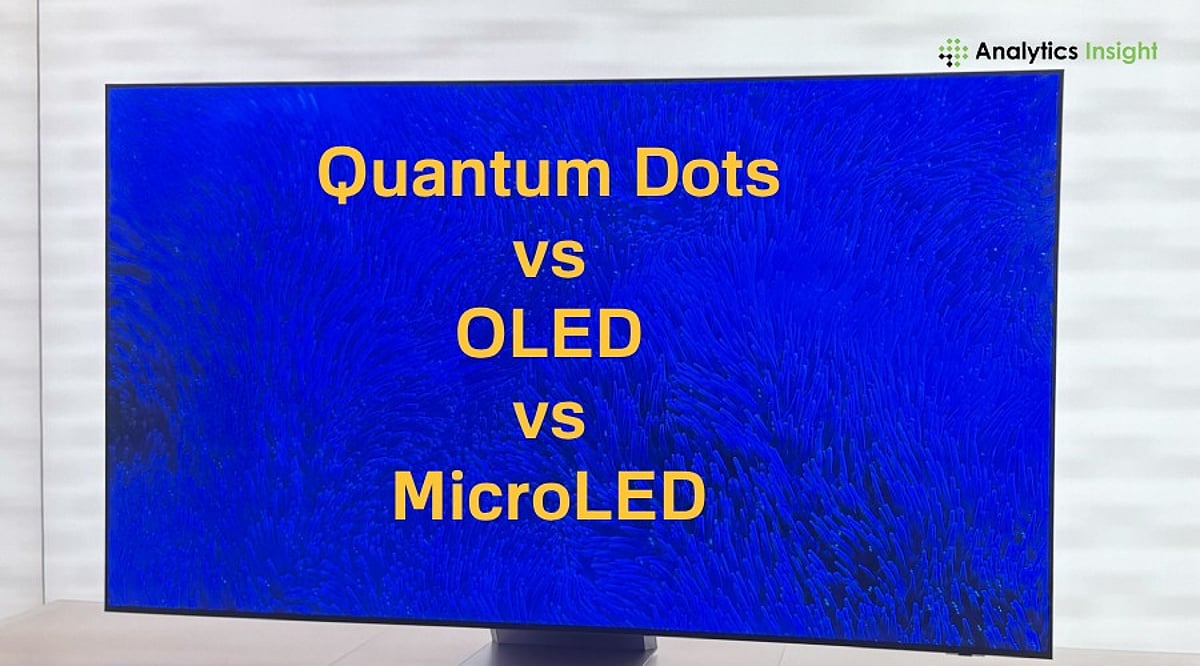
    The battle for the best TV display is no longer just about picture quality. Manufacturing scale, production costs, and commercial readiness are shaping the market as much as image performance. OLED and quantum dot LCD started this race, but RGB Mini-LED and MicroLED have since widened it into a genuine four-way contest. Here’s how each technology stacks up for 2026.

    The 2026 Brightness Reality

    Brightness has come a long way this year. Samsung’s flagship S95H hit 2,553 nits in standard mode, while the S99H crossed 2,700 nits. LG rates its 2026 Tandem WOLED panel at up to 4,500 nits, but independent testing of the 2025 LG G5 measured only 2,213 nits—a reminder that spec sheet promises often differ from real-world performance.

    TCL is pushing harder with its new RGB Mini-LED sets, claiming up to 10,000 nits peak brightness and as many as 20,000 local dimming zones. Real-world results won’t reach those numbers, but even scaled back, RGB Mini-LED runs brighter than any OLED TV on the market today.

    Burn-In: A Key Differentiator

    Leave a static image on an OLED or QD-OLED screen long enough, and it can leave a permanent mark, though pixel shifting has made this far less likely. QLED, RGB Mini-LED, and MicroLED use inorganic LEDs that don’t degrade like organic pixels, making them immune to burn-in—a clear advantage for static content like TV logos or desktop interfaces.

    Manufacturing Decides the Winner

    Picture quality alone never determines which technology wins—scalability does. Industry estimates suggest MicroLED mass-transfer yields need to approach 99.99% for cost-effective production, and current yields remain below that. Closing that gap takes serious time, money, and engineering.

    MicroLED’s current position is reflected in commercial products: the Garmin Fenix 8 Pro wearable and a Sony-Honda MicroLED display for EV exteriors. Notice what’s missing: a television. Analysts expect the next two years to settle whether MicroLED enters consumer TVs after 2027 or stays in wearables, cars, and signage.

    Meanwhile, RGB Mini-LED isn’t waiting. It’s cheaper to build, faster to scale, and delivers serious brightness—which is why Samsung, LG, Hisense, and TCL have all launched RGB Mini-LED sets this year. Reviewers now call it the go-to pick for bright rooms that QLED once owned.

    A Market Split Four Ways

    There isn’t one right answer anymore. OLED and QD-OLED still own dark-room movie nights. RGB Mini-LED has carved out bright-room viewing, sports, and everyday use. MicroLED chips away at manufacturing challenges while growing in wearables and commercial screens. Quantum dot LCD remains the value pick for solid performance without the premium price.

    Final Thoughts

    The next big leap in display tech won’t come from more nits—it will come from solving manufacturing problems. Solve the mass-transfer yield issue, and MicroLED has a real shot at consumer TVs after 2027. Until then, the best display isn’t the newest on paper. It’s the one that best matches the room, viewing habits, and budget.

    FAQs

    1. Which display technology will dominate in 2026? OLED and QD-OLED lead the premium consumer market for picture quality and availability, while MicroLED remains niche due to high costs.

    2. Is MicroLED better than OLED? MicroLED offers higher brightness, longer lifespan, and no burn-in, but OLED is more practical and affordable for most consumers.

    3. What is the difference between Quantum Dot and OLED displays? Quantum Dot uses LED backlighting enhanced with quantum dots for brightness and color; OLED uses self-emissive pixels for perfect blacks and infinite contrast.

    4. Does OLED still suffer from burn-in in 2026? Modern OLEDs include pixel shifting and screen refresh to reduce burn-in risk. It’s far less common during normal use.

    5. Which display technology is best for gaming and HDR? QD-OLED and OLED offer exceptional contrast and fast response times for gaming; QLED excels in bright rooms; MicroLED is premium but too expensive for most buyers.

  • CertiK Named Preferred Security and Compliance Vendor for Hub71, Boosting Abu Dhabi’s Digital Asset Ecosystem

    CertiK Named Preferred Security and Compliance Vendor for Hub71, Boosting Abu Dhabi’s Digital Asset Ecosystem

    NEW YORK, New York [July 6, 2026] — CertiK, the largest Web3 security services provider, today announced its selection as an official vendor for Hub71, the global tech ecosystem based in Abu Dhabi Global Market (ADGM). The partnership gives Hub71 portfolio companies preferred access to CertiK’s security and compliance services as they build and scale in one of the world’s fastest-growing digital asset hubs.

    As part of the partnership, Hub71 portfolio companies will receive a 20% discount across CertiK’s full range of services, backed by a total subsidy pool of $200,000 available to eligible companies in the ecosystem. Hub71 startups will also receive free access to the CertiK Compliance Tool, CertiK’s platform for navigating licensing applications — including with the ADGM Financial Services Regulatory Authority (FSRA) and the UAE Central Bank — and for managing ongoing regulatory compliance.

    The partnership comes as digital asset regulation in the UAE and beyond has moved from an exploratory phase into active, cross-jurisdictional enforcement. For early-stage companies, that shift has raised the stakes around licensing readiness, AML compliance, and smart contract security from day one, rather than as later-stage concerns.

    Through the partnership, Hub71 companies gain direct access to CertiK’s suite of services, including smart contract audits, penetration testing, and ongoing security monitoring, alongside compliance support tailored to the licensing pathways most relevant to companies building in and around ADGM. The CertiK Compliance Tool is designed to help founders track requirements across jurisdictions as they expand internationally, reducing the time and cost typically associated with multi-jurisdictional licensing.

    The collaboration reinforces CertiK’s role as a trusted security and compliance partner for high-growth digital asset ecosystems globally, and reflects Hub71’s continued investment in giving portfolio companies access to the infrastructure and expertise needed to scale responsibly.

    About Hub71

    Hub71 is Abu Dhabi’s global tech ecosystem, created to help ambitious startups build, scale, and access new markets from the UAE. Backed by Mubadala, ADQ, and ADGM, and headquartered within Abu Dhabi Global Market, Hub71 connects founders with capital, corporate and government partners, and a growing community of tech companies across fintech, Web3, AI, and other high-growth sectors. Since its launch, Hub71 has supported hundreds of startups with funding access, business setup support, and a network designed to accelerate their growth in the region and beyond.

    About CertiK

    CertiK is the largest Web3 security services provider, founded in 2017 and headquartered in New York. Based on breakthroughs in formal verification technology achieved by professors from Yale University and Columbia University, CertiK has become a trusted risk management partner for regulators, institutions, and Web3 innovators.

    CertiK delivers AI-powered, full-lifecycle risk management solutions that integrate directly into institutional clients’ system development lifecycles (SDLC). Backed by the industry’s largest Web3 security database, CertiK embeds AI at the very forefront of code development, code auditing, formal verification, and product deployment, while integrating it into on-chain and off-chain real-time scanning, helping organizations manage risk throughout the entire digital asset lifecycle and transform reactive security into proactive governance.

    To date, CertiK has detected more than 117,000 vulnerabilities and protected over $600 billion in digital assets across 150+ countries and regions. Operating under SOC 2 Type II and ISO 27001 standards, CertiK also works closely with regulators across multiple jurisdictions, contributing to digital asset policy development and regulatory consultation efforts worldwide.

  • Today’s Tech Roundup: OpenAI Legal Battle, Google Pixel 11, Honor AI Phone, and Slowing AI Adoption

    Today’s Tech Roundup: OpenAI Legal Battle, Google Pixel 11, Honor AI Phone, and Slowing AI Adoption

    From British Columbia’s legal action against OpenAI to Google’s Pixel 11 launch confirmation and Honor’s AI robot phone, here are today’s biggest tech headlines.

    OpenAI Faces Legal Heat

    OpenAI is under legal scrutiny as British Columbia initiates legal proceedings against the company. The details of the lawsuit remain emerging, but it adds to the growing regulatory pressure on AI firms worldwide.

    Google Pixel 11 Confirmed

    Google has officially confirmed the Pixel 11 lineup, signaling its continued commitment to the smartphone market. While specific features are yet to be unveiled, the confirmation sets expectations for another flagship device from the tech giant.

    Honor Robot Phone

    Honor has introduced a robot phone concept, blending AI with mobile hardware to create an autonomous assistant device. The move highlights the increasing integration of robotics and smartphones.

    Claude Fable 5

    Anthropic’s Claude model receives a new iteration, Claude Fable 5, aiming to improve reasoning and creativity in AI interactions. The update comes amid ongoing competition in the large language model space.

    AI Adoption Slows

    Despite rapid advancements, AI adoption rates are showing signs of deceleration. Factors include regulatory hurdles, implementation costs, and concerns over data privacy and ethics. Businesses are taking a more cautious approach to deploying AI at scale.

    Stay tuned for more updates on these stories as they develop.

  • Master Browser Tab Organization: Boost Productivity in 2026

    Master Browser Tab Organization: Boost Productivity in 2026

    The Problem with Too Many Tabs

    Modern work often involves researching multiple topics simultaneously, leading to dozens—or even hundreds—of open browser tabs. This not only consumes system memory but also makes it harder to find important pages, increases distractions, and slows decision-making. Organizing tabs became one of the biggest improvements to my daily productivity.

    Group Similar Tabs into Categories

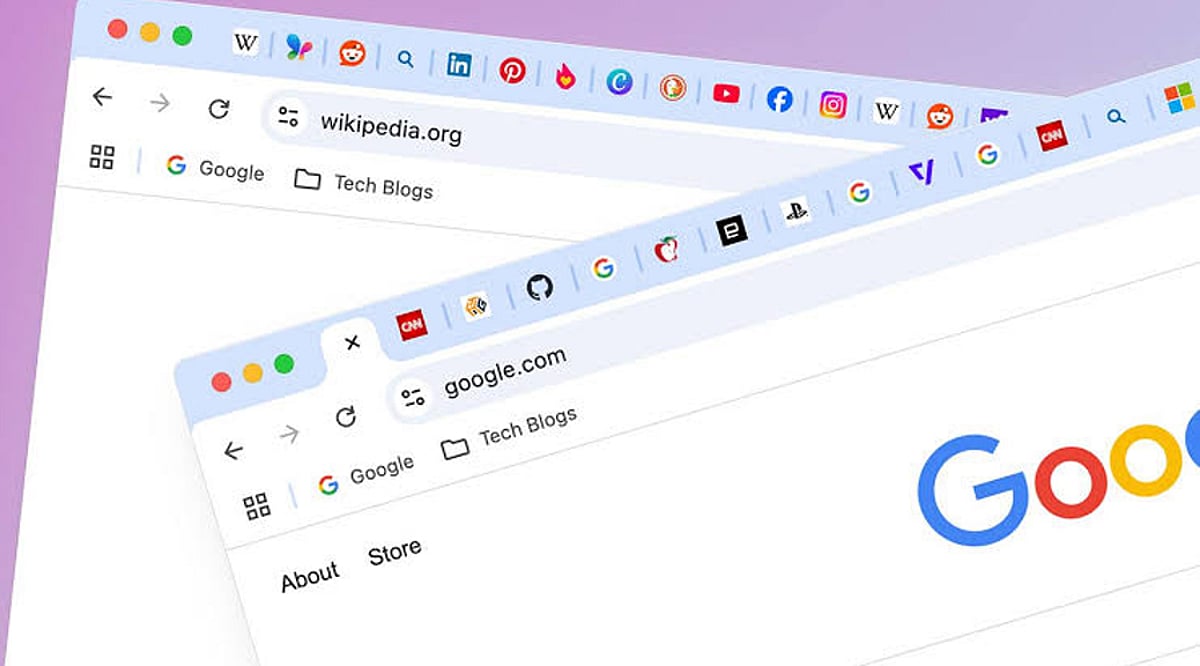
    Instead of keeping every tab in a single row, I started using built-in Tab Groups available in popular browsers. Research, work projects, shopping, learning, and personal browsing each received their own color-coded group. Collapsing inactive groups instantly reduced visual clutter while making it much easier to switch between different tasks.

    Use AI to Summarize Before Saving

    Many browser-integrated AI assistants can summarize long articles, compare multiple webpages, and extract key information without requiring every page to remain open. After collecting the essential insights, I bookmarked or saved only the pages worth revisiting, significantly reducing the number of tabs needed during long research sessions.

    Save Sessions with Workspaces and Reading Lists

    Instead of leaving tabs open for weeks, I began using browser Workspaces, Reading Lists, and synchronized bookmarks. These features let me pause ongoing projects without losing progress. Everything remains available across desktop and mobile devices while keeping my active browser window clean and focused on current priorities.

    Close Tabs Without Fear of Losing Them

    One major productivity breakthrough was realizing that I didn’t need every tab open all the time. Browsers now maintain browsing history, recently closed tabs, and synced sessions across devices. Knowing I could quickly restore pages later made it much easier to close unnecessary tabs and maintain an organized workspace.

    Build a Weekly Tab Cleanup Routine

    Every Friday, I spend a few minutes reviewing open tabs. Anything completed gets closed, useful resources are bookmarked into organized folders, and outdated pages are deleted. This simple habit prevents digital clutter from accumulating and ensures my browser remains fast, responsive, and ready for the following week’s work.

    Small Changes Delivered Big Productivity Gains

    Reducing hundreds of scattered tabs to a focused set of active workspaces improved concentration, reduced distractions, and made information easier to locate. Combined with AI-powered browsing tools, cloud synchronization, and better tab management habits, browser organization became one of the simplest yet most effective productivity upgrades in 2026.

  • How AI, Data Sovereignty, and Sustainability Are Reshaping Cloud Strategy: Insights from OVHcloud’s Terry Maiolo

    How AI, Data Sovereignty, and Sustainability Are Reshaping Cloud Strategy: Insights from OVHcloud’s Terry Maiolo

    As AI accelerates cloud adoption, enterprises are placing greater emphasis on transparent pricing, energy-efficient infrastructure, data governance, and regulatory compliance to build resilient cloud strategies for long-term business growth.

    Key Takeaways

    • Cloud strategy is shifting beyond IT, with data sovereignty, compliance, and governance becoming critical business priorities worldwide.
    • Sustainable cloud infrastructure can reduce energy use, improve efficiency, and support AI workloads without compromising performance or security.
    • Businesses should evaluate cloud providers based on transparent pricing, responsible data handling, and long-term scalability for AI-driven growth.

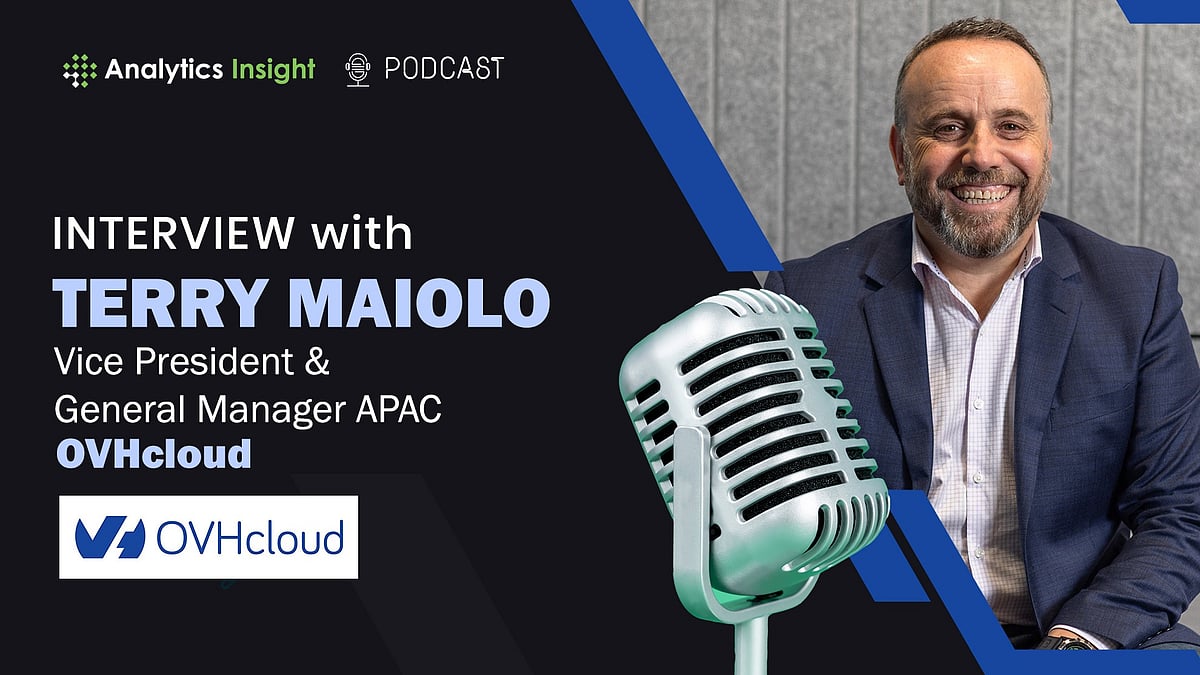
    Cloud computing is evolving rapidly, but businesses are also facing new challenges, including rising costs, security concerns, compliance requirements, AI-driven workloads, and sustainability goals. In this exclusive podcast interview, Priya Diyalani speaks with Terry Maiolo, Vice President and General Manager, APAC, at OVHcloud, about how organizations can build a cloud strategy that drives innovation, protects data, and supports long-term sustainability.

    Q: Could you tell us about OVHcloud, your role, and what makes the company different from other cloud providers?

    Absolutely. At OVHcloud, we are a pure cloud provider with 46 data centers across four continents and 30 local zones worldwide. In APAC, we operate one data center in Mumbai, two in Singapore, and three in Sydney, and I oversee the entire Asia-Pacific region. What makes us different is that we are a European cloud provider, so we comply with GDPR standards, giving customers greater data sovereignty. Another major difference is that we build our own servers and use our direct-to-chip water cooling technology, which we have developed over the last 20 years. This allows us to run data centers without traditional air conditioning while improving energy efficiency.

    Q: Regulations and global developments are changing the cloud industry. How are these factors influencing enterprise decisions?

    I believe cloud decisions are no longer only about technology. Businesses are becoming much more aware of where their data is stored and who has access to it. Regulations like India’s Data Protection Act are encouraging organizations to take data sovereignty seriously. At the same time, many customers are looking for cloud providers that are not governed by laws such as the US Cloud Act. I see cloud strategy becoming a discussion about business, governance, and compliance rather than just an IT decision.

    Q: Sustainability has become a major boardroom topic. How is OVHcloud approaching it?

    We believe sustainability should not come at the cost of performance. Our direct-to-chip water cooling captures heat directly from the processors, so we use less electricity and less water while increasing server density. We also manufacture our own servers, extend their life through reuse, recycle components whenever possible, and have achieved zero waste. I think organizations can meet sustainability goals while still improving efficiency and reducing costs.

    Q: AI is changing how data is created and used. How should businesses think about data sovereignty today?

    I think companies need to consider two things: how they use their own data and how their cloud provider handles it. At OVHcloud, we have made a clear decision not to monetize customer data in any form. At the same time, I believe businesses need a provider with a global presence so their data stays close to their operations while maintaining security, compliance, and low latency.

    Q: AI is increasing the demand for computing power. How can organizations balance AI growth with sustainability?

    I believe this is one of the biggest challenges for the industry. AI requires more computing power, energy, and infrastructure, so cloud providers must continue improving efficiency. I also encourage businesses to ask cloud providers about hidden costs, including data transfer fees, because these can become significant as AI usage grows. Sustainable infrastructure should also provide predictable costs.

    Q: Finally, what does a successful cloud strategy look like over the next decade?

    I believe organizations should move beyond talking about sustainability and sovereignty and start putting those goals into action. Responsible cloud infrastructure already exists, and businesses do not have to choose between performance, security, sustainability, and cost. I believe they can achieve all of these together by selecting the right cloud partner and making long-term strategic decisions.

  • Top Philips Air Fryers in India for 2026: A Complete Guide to Features, Performance, and Value

    Top Philips Air Fryers in India for 2026: A Complete Guide to Features, Performance, and Value

    Philips air fryers are designed to make everyday cooking quicker, healthier, and more convenient. Whether you are preparing snacks after work or cooking meals for the whole family, the right model can save time while delivering crispy, tasty food with very little oil.

    Overview

    Philips offers air fryers for every type of home, from compact kitchens to large families. Capacity, cooking modes, and ease of use matter just as much as price. The best Philips air fryer depends on your cooking habits, family size, and budget.

    Imagine getting home after a busy day and looking for something hot and crispy without spending too much time in the kitchen. The common choice is fries made with a pan full of oil. Instead, you can now simply place the food in an air fryer, press a few buttons, and let it cook. This is one of the primary reasons why air fryers have become a favorite in many homes. Among the many options available, Philips stands out for its reliable performance, simple controls, and consistent cooking.

    With several models available in the market, picking the right one can be confusing. To make things easier, we compared the best Philips air fryers available in India based on features, performance, price, and user ratings, so you can find the one that suits your kitchen and budget.

    Best Philips Air Fryers in India Compared

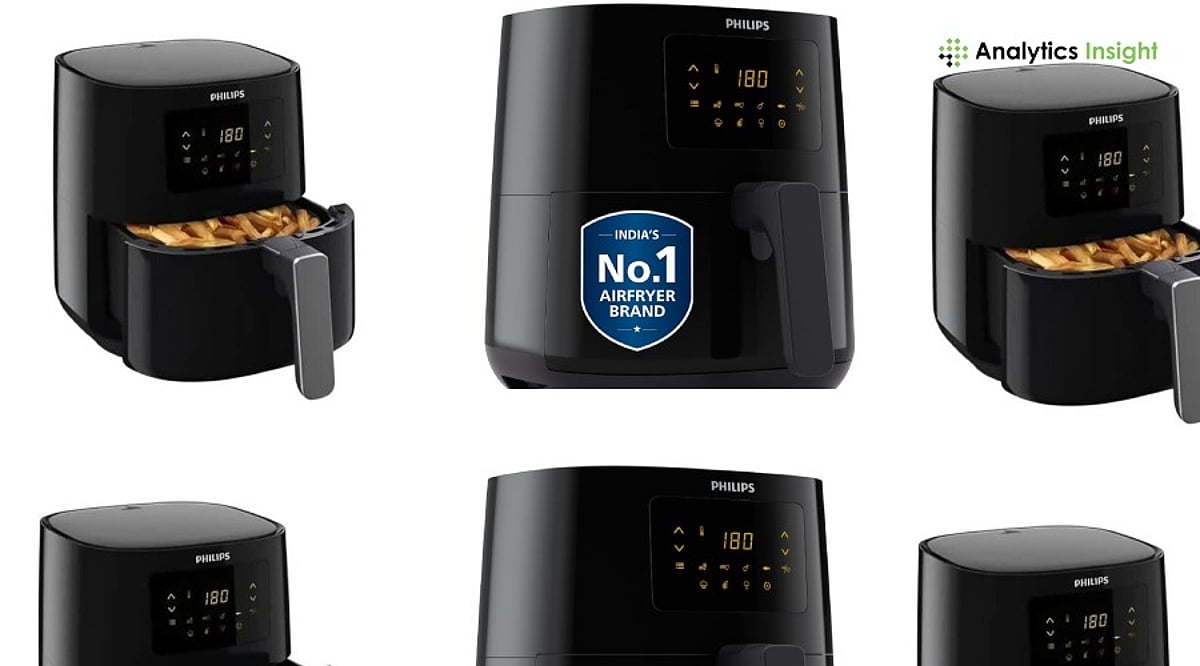
    Whether you cook every day or only on weekends, these Philips air fryers are among the strongest options available. A quick look at the table shows that Philips has something for almost every type of buyer. If you live alone or with one other person, the Philips 1000 Series or the NA130 can easily handle everyday cooking. Generally, a 4.2-liter model is the perfect fit for small families. They can cook larger portions in one go, which means less waiting and fewer cooking rounds. If you prepare food every day, these models are practical choices.

    The NA352/00 sits at the top of the range. Its dual baskets make a real difference by allowing you to cook two dishes at once. Instead of waiting for one item to finish before starting another, both can cook at the same time. This makes busy evenings much easier.

    Which Philips Air Fryers Would I Recommend?

    After comparing all the above-mentioned models, my first choice is the PHILIPS Air Fryer NA352/00. If I have to pick just one from the list, this would be it. The model offers a dual-basket design, which is a game-changer. It saves time, especially while cooking a full meal. Another highlight is the simple controls. Even with the added features, it is never too hard to use.

    If there’s another option, I would go for the PHILIPS NA221/00 4.2L. In my opinion, this model is the best value for money. The basket size is perfect for most families; it cooks evenly and heats up fast. I think it has everything that most people need for regular home cooking.

    The third model I would recommend is the Philips 2000 Series Airfryer 4.2L. While it may lack advanced features, it delivers reliable performance every day. I like its compact size and steady cooking results. For someone buying an air fryer for the first time, this is an easy recommendation.

    If your budget is limited, the Philips 1000 Series Airfryer is also worth a look. It covers the basics well and offers dependable performance without costing too much.

    Final Thoughts

    A good air fryer is one of those kitchen appliances you end up using more often than you expect. It makes everyday cooking much simpler by reducing the mess. The best part is the reduced effort. You don’t have to stay in the kitchen constantly. Once the device is set with a timer, it operates automatically.

    However, the best choice isn’t always the model with the most features. It’s the one that fits your routine and the amount of food you usually cook. Whether you want a compact air fryer for quick snacks or a larger one for family dinners, Philips has a range of products that suit different needs and budgets. Take a little time to compare the features that matter to you, and you’ll have an appliance that makes cooking easier every single day.

    Frequently Asked Questions

    Which Philips air fryer is best for families?

    The PHILIPS Air Fryer NA352/00 is a great choice for families. Its dual baskets let you cook two different dishes together, helping save both time and effort.

    Which Philips air fryer offers the best value?

    The PHILIPS NA221/00 4.2L offers an excellent balance of price, basket size, and cooking performance. It is a practical choice for most homes.

    Is a 4.2-liter air fryer enough for daily cooking?

    Yes. A 4.2-liter air fryer is suitable for small and medium-sized families. It can prepare everyday meals without needing several cooking batches.

    Do Philips air fryers need oil for cooking?

    Very little oil is needed. Many foods can be cooked with little or no added oil while still turning out crispy and evenly cooked.

    Which Philips air fryer is best for beginners?

    The Philips 2000 Series Airfryer 4.2L is a good choice for first-time buyers. It is easy to operate, simple to clean, and delivers reliable cooking results.