Blog

  • Minecraft Finally Adds a Cushion Block for Sitting After 17 Years

    Minecraft Finally Adds a Cushion Block for Sitting After 17 Years

    Minecraft is finally adding something players have wished for since the game started its journey. After 17 years, Mojang is introducing a new cushion block that allows players to sit without using boats, minecarts, or community-made mods.

    The feature is comparatively small, but it has generated a massive wave of excitement. For years, players found creative ways to fake sitting since the game did not support it. Now, that long wait is almost over. The new feature is expected to arrive in upcoming updates after the testing phase completes.

    Minecraft Finally Gets a Proper Sitting Feature

    Since its launch in 2009, Minecraft players have been asking for the sitting feature, and the latest trailer from Mojang has confirmed that the developer team has granted the wish. Along with the Dappled Forest biome and other features, the cushion feature will be a key attraction of the upcoming Minecraft update.

    The cushion block is easy to use. Place it anywhere, walk up to it, and interact with it to sit. There are no special commands or hidden tricks. Players need three Wool Slabs (these will also come with the upcoming update) and place them horizontally to make the cushion. The best part is that cushions can be made in sixteen different colors.

    Players can use it inside houses, libraries, cafés, castles, or any place they want. It is mainly a decoration block, but it also gives players a natural sitting animation for the first time. Notably, Mojang has already started rolling out the feature across Java Snapshot and Bedrock Preview builds. Players using those test versions can try it first. Everyone else will get it when the update reaches the full game.

    The feature does not change survival or combat. Instead, it improves the small moments that make Minecraft feel more alive.

    A Tiny Update That Changes the World Around You

    Sitting may sound like a simple idea, but it can make a big difference. Villages feel more natural when players can sit inside homes or gather around a table. Roleplay servers also become more realistic because players no longer need to rely on strange workarounds.

    Builders may enjoy the update even more. A café looks complete when someone is sitting with friends. Castles, schools, and meeting rooms also feel more believable. Players who create videos or screenshots can now make scenes that look more natural. Sometimes the smallest updates are the ones players remember the most.

    Five Minecraft Features Players Waited Years to See

    Many popular features took a long time to reach the game. The cushion block may not be the biggest update Minecraft has ever received. Still, it solves one of the oldest requests from the community. After 17 years, players can finally sit down without finding another workaround.

  • AI Legal Startup Norm Secures $120M, Reaches $1.2B Valuation to Transform Law Firm Model

    AI Legal Startup Norm Secures $120M, Reaches $1.2B Valuation to Transform Law Firm Model

    Norm has joined the growing list of billion-dollar AI companies after raising $120 million in a Series C funding round led by Khosla Ventures. The latest investment values the AI law startup at $1.2 billion, granting the company unicorn status. Norm also confirmed it has raised more than $260 million since launching less than three years ago. The new funding will help the company improve its products and hire more lawyers as demand for AI-powered legal services continues to grow.

    Norm is taking a different approach from many legal technology companies. Instead of only building software for lawyers, the company runs an AI-native law firm called Norm Law. Its AI agents complete legal and compliance work while experienced attorneys review every important task before clients receive the final results. This model allows businesses to use AI without removing human legal expertise from the process.

    A Different Business Model

    Another major difference is how Norm charges its customers. Traditional law firms usually bill clients by the hour, but Norm offers outcome-based pricing based on the results it delivers, making legal costs easier to predict for businesses. Many enterprise companies, especially financial firms, want faster compliance support while keeping legal expenses under control. Norm believes this pricing model better matches the needs of modern businesses.

    Several well-known investors joined the funding round alongside Khosla Ventures. The list includes Bain, Craft Ventures, Coatue, Vanguard, New York Life, TIAA, Fenwick LLP, Tony James, and Jeff Hammes. The company plans to use the fresh investment to expand its AI platform, develop more legal products, and bring more attorneys onto its team.

    The latest funding also shows that investors are backing AI companies focused on specific industries rather than general AI tools. Legal work often includes large amounts of paperwork, compliance checks, and complex regulations. AI can complete many of these tasks much faster while lawyers continue supervising the work. This combination makes legal services more efficient for large businesses.

    Growing Competition in Legal AI

    Norm also competes in a fast-growing legal AI market alongside companies such as Harvey and Legora. Those companies mainly build AI tools that help lawyers complete their work. Norm follows a different strategy by directly providing legal services through its AI-powered law firm. This approach gives the company a unique position in the legal technology industry.

    Norm’s latest funding shows that investors now see AI as more than a tool for improving office work. Companies are starting to build complete AI-powered services with human experts checking the final results. This trend could change how legal services work over the next few years, especially for businesses that deal with strict regulations.

    Norm still has challenges ahead as it grows. Legal regulators may closely watch AI-based law firms, while large businesses will expect accurate legal advice and strong data security. The company’s future success will depend on building trust, meeting legal standards, and expanding its customer base.

    The new funding gives Norm a strong position to grow during 2026. If the company successfully expands its AI agents and legal team, it could encourage more law firms to adopt AI while moving away from the traditional hourly billing model.

  • CLARITY Act Stalls in Senate as Legislative Window Narrows Before August Recess

    CLARITY Act Stalls in Senate as Legislative Window Narrows Before August Recess

    The Digital Asset Market Clarity Act (CLARITY Act) remains stalled in the U.S. Senate after lawmakers missed an informal July 4, 2026, signing target. No cloture motion has been filed, and no floor vote has been scheduled, leaving the bill at Calendar No. 423. The legislation previously passed the House with bipartisan support and advanced through the Senate Banking Committee, but it still requires full Senate approval, reconciliation of separate committee versions, and the president’s signature to become law. With the Senate returning from recess on July 13 and the August 7 break approaching, time is rapidly running out.

    Senate Vote Faces Political and Procedural Hurdles

    The House approved the CLARITY Act on July 17, 2025, and the Senate Banking Committee advanced it in May 2026. Senate Majority Leader John Thune has not scheduled debate, and lawmakers have not filed the cloture motion needed to initiate floor proceedings. Republicans hold 53 seats. Senators Josh Hawley and Rand Paul oppose the bill, while Democratic Senators Ruben Gallego and Angela Alsobrooks supported it in committee with conditions. To overcome a filibuster, supporters need 60 votes, requiring between seven and nine Democratic supporters.

    Ethics Concerns and Policy Disputes

    President Donald Trump’s July 1, 2026, financial disclosure listed approximately $1.4 billion in cryptocurrency-related income during 2025, including roughly $635 million in royalties from the $TRUMP meme coin and over $500 million from World Liberty Financial token sales. The White House opposes any language targeting the president’s crypto holdings. An ethics amendment proposed by Senator Chris Van Hollen was rejected by the Senate Banking Committee 11–13. Senator Kirsten Gillibrand has stated that enforceable rules covering government officials’ crypto holdings are necessary before she supports the bill.

    Developer Protections and Stablecoin Yield Debate

    Section 604, which would exempt non-custodial software developers from money-transmitter registration requirements, remains a sticking point. The National District Attorneys’ Association argues it could complicate crypto-related criminal investigations. Separately, stablecoin yield provisions are contested. The American Bankers Association warns that the current language creates a potential loophole for interest-equivalent yields beyond limits in the GENIUS Act. Coinbase currently earns about $1.35 billion annually from USDC rewards, making this issue significant.

    Industry groups like Stand With Crypto continue urging Senate leaders to preserve developer protections and bring the bill to the floor. Meanwhile, Bitcoin traded at $63,046 at publication (July 7, 2026), reflecting a 6% weekly gain but remaining about 50% below its October 2025 record high of $126,173.

    What’s Next?

    With only about three weeks before the August recess, the bill needs Senate approval before the end of July to maintain momentum, according to Stifel policy strategist Brian Gardner. Beacon Policy Advisors warned that missing that window could end the legislation’s path in 2026. Reconciliation between the Senate Banking Committee and Senate Agriculture Committee versions also remains pending. The CLARITY Act’s fate now hinges on resolving ethics disputes, securing enough Democratic votes, and surmounting procedural obstacles in a tight timeframe.

  • PlayStation Fans Erupt Over Physical Disc Concerns After New Fight Stick Reveal

    PlayStation Fans Erupt Over Physical Disc Concerns After New Fight Stick Reveal

    Sony’s latest PlayStation post has reignited a heated debate about the future of physical game discs. The company unveiled a new PlayStation fight stick, a controller designed for fighting game enthusiasts, but the announcement quickly became overshadowed by fan backlash over the company’s increasing focus on digital gaming.

    Under normal circumstances, the reveal of the FlexStrike wireless fight stick would have centered on its features and design. Instead, the comment section was flooded with concerns about game ownership and preservation. Many players pleaded with Sony to continue supporting physical discs, warning against a full transition to digital sales.

    The reaction reflects a longstanding unease among gamers. Physical discs are seen as providing true ownership of a game, while digital purchases depend on online services, store accessibility, and licensing agreements. The closure of a digital storefront or removal of a game can limit access, a possibility that has made many fans uneasy.

    This debate is also tied to game preservation. Older titles have already disappeared from some online stores, making them hard to buy years later. Collectors and long-time players worry that more digital-only releases could make preserving gaming history even harder.

    Sony has not yet responded to the latest criticism or announced any policy change regarding physical media. However, the intense reaction to a simple product post shows that the discussion is no longer about a single controller. For many fans, it is about the future of game ownership and whether buying a game will still mean owning it.

  • Meta Unveils Muse Image: AI-Powered Photo Creation and Editing Comes to Facebook, Instagram, and WhatsApp

    Meta Unveils Muse Image: AI-Powered Photo Creation and Editing Comes to Facebook, Instagram, and WhatsApp

    Meta has officially launched Muse Image, the first image-generation model developed by its newly formed Meta Superintelligence Labs (MSL). The AI model is now integrated into Meta AI, allowing users to generate, edit, and transform images using natural language prompts, uploaded photos, sketches, and annotations directly within Meta’s suite of apps.

    What Makes Muse Image Different?

    Unlike traditional AI image generators that rely solely on text prompts, Muse Image understands complex instructions, interacts with user-uploaded images, and even allows modifications by drawing on images or adding annotations. This makes the creation and editing process more interactive and flexible—all without leaving apps like Facebook, Instagram, WhatsApp, and Messenger.

    Key Features of Meta Muse Image

    • Text-to-Image Generation: Describe almost any scene in natural language, and Muse Image will produce a corresponding image, handling intricate requests with multiple details.
    • Image Editing: Upload an existing photo and ask Meta AI to modify it—change backgrounds, lighting, clothing, or add new objects—without regenerating from scratch.
    • Sketch-Based Editing: Draw simple sketches or annotations over an image, and the AI will replace, remove, or enhance those specific areas.
    • Instagram Stories Effects: Over 30 new AI-powered effects, enabled by Muse Image, are rolling out to Instagram Stories for creative visual enhancements.
    • In-Chat Image Creation on WhatsApp: Users can generate images directly within WhatsApp conversations using Meta AI, initially rolling out in select countries before a global launch.

    How to Use Muse Image

    Using Muse Image is straightforward through Meta AI:

    1. Open Meta AI in a supported app (e.g., Instagram or WhatsApp).
    2. Type a text prompt describing the image you want to create.
    3. If modifying an existing image, upload a photo.
    4. Use sketches or annotations to highlight specific areas for change.
    5. Review the generated image and refine it further with additional prompts.

    Support for Facebook and Messenger will expand as Meta continues to roll out the feature.

    Meta’s Bigger AI Ambitions

    Alongside Muse Image, Meta teased its upcoming Muse Video AI model, which aims to generate video content from prompts. Although still in development, it signals Meta’s commitment to building not only advanced image generation but also AI-powered video creation. By embedding these capabilities into apps used by billions, Meta hopes to make AI-driven content creation accessible to everyone.

  • XRP Spot Demand Surges as Futures Traders Retreat and Ripple Secures MiCA Approval in Luxembourg

    XRP Spot Demand Surges as Futures Traders Retreat and Ripple Secures MiCA Approval in Luxembourg

    XRP is experiencing a notable divergence between its spot and futures markets. Spot buyers have ramped up activity while derivatives traders reduce leverage, according to recent data. Meanwhile, Ripple has secured full Markets in Crypto-Assets (MiCA) authorization in Luxembourg, expanding its regulated footprint across Europe.

    Spot Buyers Increase Activity While Futures Exposure Falls

    CryptoQuant data reveals that XRP maintained its price near $1.14 despite a steady decline in open interest, which dropped from over $1 billion to approximately $823.8 million. This suggests traders are reducing leveraged positions rather than building larger futures bets. Meanwhile, XRP’s Spot Taker Cumulative Volume Delta (CVD) showed strong taker-buy activity before returning to a more balanced level. Early spot buyers remained more aggressive than derivatives traders during the observed period.

    Additionally, CEX Estimated Spot CVD improved from roughly negative $42 million to positive $406 million—an increase of about $448 million over two months, indicating steady spot demand despite weaker derivatives participation. In contrast, Futures Taker CVD remained weak to neutral throughout the same period, underscoring that futures traders did not match the buying strength seen in spot markets.

    Binance data reflects the same trend. Binance Perpetual CVD declined from about negative $48 million to negative $783 million, showing continued selling pressure in perpetual contracts. Moreover, Binance open interest dropped from approximately $255 million to $203 million, further confirming that traders continue to reduce leveraged positions even as XRP holds relatively stable.

    Ripple Expands European Regulatory Approval

    Ripple announced that Luxembourg’s Commission de Surveillance du Secteur Financier (CSSF) granted the company a Crypto-Asset Service Provider (CASP) license under the European Union’s MiCA framework. This approval allows Ripple to passport regulated crypto services across all 27 European Economic Area member states, thereby expanding its regulated digital asset services throughout the region.

    Following its initial MiCA clearance in June, Ripple stated that the CASP license completes its authorization process under the European regulatory framework. The company also noted that the approval complements its existing European e-money license. Furthermore, Ripple indicated that these combined approvals support its cross-border payments business serving banks, financial institutions, and enterprise clients. The framework provides a regulated structure for crypto payment services across Europe, enabling wider adoption of XRP-powered payment products alongside its RLUSD stablecoin.

    Commenting on the development, Ripple managing director for the UK and Europe, Cassie Craddock, said the company is now fully prepared to expand operations under the MiCA framework after completing the regulatory transition.

    XRP ETFs Extend Inflow Streak

    Institutional demand also remained steady during Ripple’s regulatory expansion. According to SoSoValue, XRP spot exchange-traded funds recorded eight consecutive weeks of net inflows, with cumulative net inflows reaching $1.49 billion. Although the funds recorded no new daily inflows on July 6, total assets under management remained near $1.05 billion, representing approximately 1.47% of XRP’s total market capitalization.

    Meanwhile, crypto.news data shows XRP trading around $1.13 on Tuesday, down 1.1% over the previous 24 hours but remaining nearly 9% higher for the week. During the same period, Bitcoin maintained weekly gains exceeding 10% despite weakness in U.S. equities and rising oil prices linked to geopolitical tensions. Investors also continue monitoring developments surrounding the final version of the GENIUS Act, expected before July 18, while Ether traded near $1,800.

    What’s Next?

    XRP spot demand continues to strengthen as futures traders reduce leverage, creating a clear divergence between the two markets. Meanwhile, Ripple’s full MiCA approval in Luxembourg and XRP spot ETFs’ eight-week inflow streak reflect sustained institutional participation alongside the company’s regulatory expansion. Market participants will watch for further developments in both regulatory frameworks and price action.

  • Samsung Galaxy Unpacked 2026: July 22 Event Expected to Debut Z Fold 8, Z Flip 8, and More

    Samsung Galaxy Unpacked 2026: July 22 Event Expected to Debut Z Fold 8, Z Flip 8, and More

    Samsung has officially confirmed the date for its next Galaxy Unpacked event, putting an end to months of speculation about its upcoming foldable smartphone lineup. The event is scheduled for July 22, 2026, at 9:00 AM EDT (6:30 PM IST), and will be livestreamed via Samsung Newsroom, Samsung.com, and the company’s official YouTube channel.

    What to Expect at Galaxy Unpacked 2026

    Samsung is expected to unveil a refreshed portfolio of foldables, smartwatches, and possibly its long-rumored Android XR glasses. The company stated that the “next generation of Galaxy devices are set to deliver more personal and adaptive experiences and set a new standard for the AI era,” hinting at a stronger focus on artificial intelligence across its ecosystem.

    Three Foldables Could Debut This Year

    Reports suggest Samsung may introduce three new foldable devices instead of the usual two:

    • Galaxy Z Fold 8 – A larger, passport-style design aimed at providing a traditional smartphone experience.
    • Galaxy Z Flip 8 – An annual update to the popular clamshell foldable.
    • Galaxy Z Fold 8 Ultra – A new premium book-style foldable with flagship-level specs and productivity features, marking the first time Samsung releases an Ultra model alongside its regular foldables.

    Galaxy Watch 9 Series and Android XR Glasses

    Samsung may also introduce the Galaxy Watch 9 Series, expected to include minor hardware changes and AI-powered health and fitness features. Additionally, the rumored Android XR glasses could make an appearance, signaling Samsung’s continued push into augmented reality technology.

    Pre-Bookings Now Open in India

    In India, Samsung has already started pre-bookings for the upcoming Galaxy range. Customers can reserve devices by paying Rs. 999 and receive a Rs. 2,799 voucher redeemable upon purchase of eligible devices after launch.

    For more details, stay tuned to our coverage of the event.

  • OpenAI Expands GPT-5.6 Access After U.S. Government Safety Review

    OpenAI Expands GPT-5.6 Access After U.S. Government Safety Review

    OpenAI has begun rolling out its GPT-5.6 models to a wider audience after completing a review by the U.S. government. The company had delayed the full release while officials assessed the models for potential risks, and with the review now concluded, the rollout is moving forward.

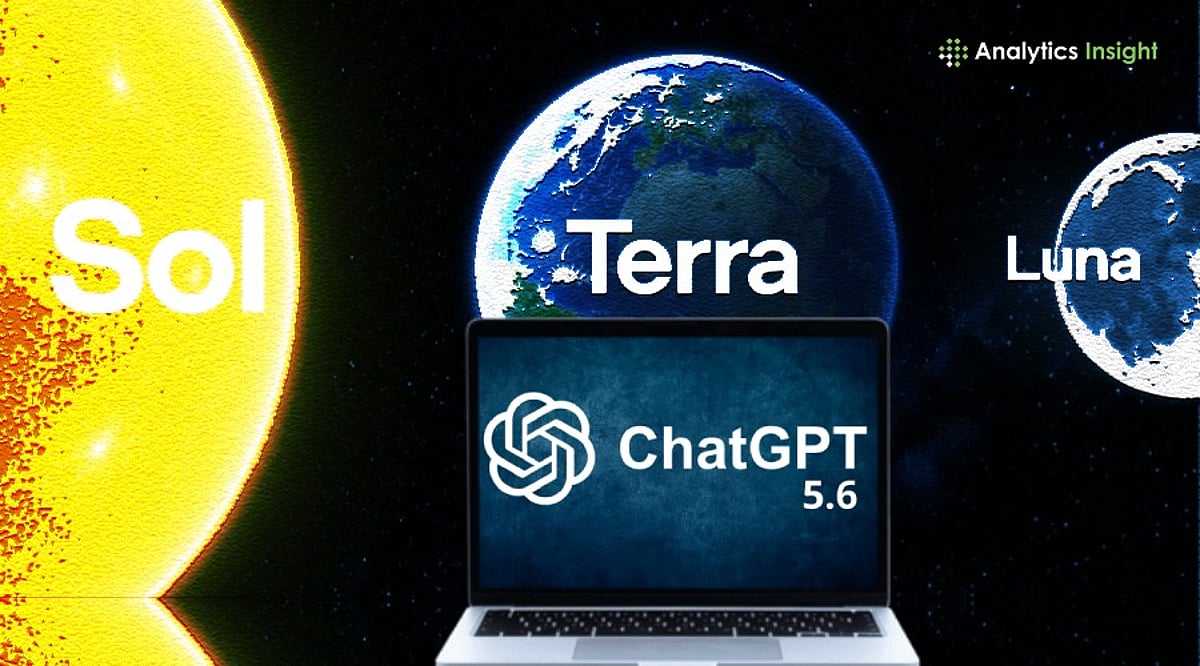
    The new lineup includes three variants: GPT-5.6 Sol, Terra, and Luna. Each model is optimized for different use cases:

    • Sol is the most capable model, designed for high-end performance.
    • Terra balances cost and performance for everyday tasks.
    • Luna is built for speed and lower-cost operations.

    OpenAI first shared these models with a small group of users before expanding access. With the government review complete, businesses, developers, and ChatGPT users can expect broader availability over time.

    Improved Performance and Safety

    The company claims GPT-5.6 models offer better performance in writing, coding, question answering, and handling long-context tasks. They also include stronger safety checks compared to earlier versions. The brief delay highlights growing government scrutiny of advanced AI systems, as officials seek to understand risks before wide-scale deployment.

    Why OpenAI Waited

    OpenAI first announced GPT-5.6 in late June but limited access while the U.S. government conducted its review, reportedly focusing on security risks. After receiving approval, the company proceeded with the broader rollout. OpenAI has expressed hope that such reviews will not become a standard requirement for every new AI release, but the process underscores the increasing importance of safety assessments in AI development.

    Conclusion

    The wider release of GPT-5.6 Sol, Terra, and Luna marks a significant step for OpenAI. It brings advanced AI capabilities to more users while demonstrating how AI development is evolving—companies are now accountable for safety and security before public release. As the rollout continues, observers will watch how the models perform and whether similar reviews become routine for future AI launches.

  • Bitcoin ETF Inflows Top $21M, Strike Launches BTC Loan, CASHCAT Soars 718%: Crypto News Roundup

    Bitcoin ETF Inflows Top $21M, Strike Launches BTC Loan, CASHCAT Soars 718%: Crypto News Roundup

    The crypto market witnessed a flurry of activity as Bitcoin spot ETFs saw renewed inflows, Strike introduced a novel Bitcoin-backed loan product, and the meme token CASHCAT skyrocketed over 718%. Meanwhile, crypto hacking losses declined year-on-year, and Solana’s tokenized asset ecosystem continued to expand.

    Bitcoin ETF Inflows Hit $21.44 Million

    According to data from SoSoValue, Bitcoin spot ETFs recorded a total net inflow of $21.44 million yesterday. BlackRock’s IBIT led the charge with a daily net inflow of $54.80 million, bringing its historical net inflow to an impressive $60.26 billion. On the other hand, Fidelity’s FBTC experienced the highest net outflow of $24.92 million, with its total historical net inflow standing at $10.23 billion. The total net asset value of Bitcoin spot ETFs now stands at $77.26 billion, representing an ETF net asset ratio of 6.05%, with cumulative net inflows reaching $51.37 billion.

    Strike Introduces Bitcoin-Backed Loan Without Liquidations

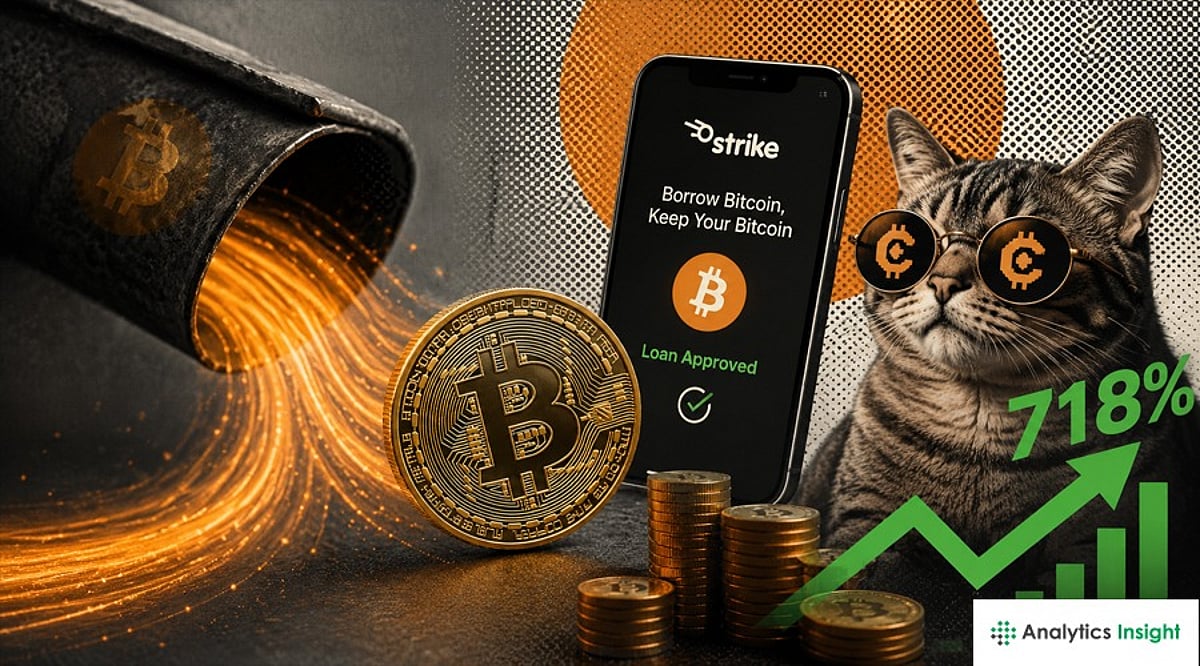
    Strike has launched a new Bitcoin-backed loan product designed to address forced liquidations during periods of extreme market volatility. The key innovation is the removal of margin calls and price-based liquidations, allowing customers to retain their Bitcoin collateral even if the cryptocurrency experiences a sharp decline. However, this added protection comes with trade-offs: borrowers face higher interest rates, shorter repayment periods, and strict repayment schedules. The loans offer a maximum loan-to-value ratio of 45% with six-month terms, and interest rates ranging from approximately 10.7% to 14.2%. While Bitcoin price drops won’t trigger liquidation, borrowers must make timely repayments or risk losing their collateral.

    CASHCAT Surges 718% in 24 Hours

    CASHCAT, a meme token operating on Robinhood’s newly introduced Layer 2 blockchain, surged more than 718% in 24 hours, pushing its market capitalization above $68 million, according to CoinMarketCap DexScan data from July 8. The token’s price stabilized near $0.08365, representing a 962.81% increase since tracking began, with a liquidity volume of approximately $2.6 million. CoinMarketCap lists CASHCAT as unverified, and its social media channels are marked as third-party. Blockchain tracker Lookonchain identified a wallet ending in 0xDE4C that turned $838 into over $1 million. The trader purchased 15.04 million CASHCAT tokens about 20 days ago, selling 13.5 million for a profit of roughly $917,600, with the remaining 1.5 million tokens valued at approximately $133,700.

    Crypto Hack Losses Decline 47% in First Half of 2026

    Losses from crypto exploits fell 46.8% year-on-year to $1.32 billion in the first half of 2026, according to security firm CertiK. However, second-quarter exploit losses rose 59% from the previous quarter to $807.5 million, with attacks becoming more frequent and damaging per event. CertiK cautioned that the lower total does not indicate a safer market. Blockchain intelligence firm TRM Labs recorded 207 crypto hacks in the first half, more than double the 83 incidents from a year earlier—the highest count TRM has measured across any six-month period. Smart contract exploits accounted for 125 incidents (60% of the total) but caused limited financial damage, while infrastructure and operational compromises represented about 15% of incidents but roughly 76% of losses.

    Solana’s Tokenized Assets Reach $8.7 Billion

    In its latest report updated as of July 6, 2026, RWA.xyz revealed that the transfer volume of Solana’s tokenized assets more than doubled previous records amid higher circulation on the blockchain. The total value of assets distributed on the network increased by 36.27% during the same period, reaching $3.48 billion. Network data indicated that the spot volume of tokenized assets on decentralized exchanges grew from $2.69 billion in Q1 2026 to $5.7 billion in Q2 2026.

  • MCX Gold Slips 0.63% to Rs 1,45,990 as Brent Crude Rises; Fed Minutes in Focus

    MCX Gold Slips 0.63% to Rs 1,45,990 as Brent Crude Rises; Fed Minutes in Focus

    Gold prices edged lower on the Multi Commodity Exchange (MCX) on July 7, as investors turned cautious ahead of the release of the US Federal Reserve’s minutes from its June policy meeting. The August gold futures contract declined 0.63% to settle at Rs 1,45,990 per 10 grams, while September silver futures dropped 1.23% to Rs 2,33,201.

    In the energy market, Brent crude futures gained 0.60% to $72.42 a barrel, and US West Texas Intermediate (WTI) crude rose 0.51% to $68.90 a barrel. The rise in crude prices added to inflationary concerns, which weighed on bullion demand.

    According to the CME FedWatch Tool, market expectations for a September rate hike by the Federal Reserve have eased slightly to 56%, down from 60% previously. The upcoming Fed minutes are expected to provide further clarity on the central bank’s monetary policy trajectory.

    Domestic Gold Prices

    In the domestic spot market, 24K gold fell by Rs 136 to Rs 1,45,260 per 10 grams, while 22K gold declined by Rs 125 to Rs 1,33,150. Regional variations were observed: Mumbai and Kolkata quoted gold at Rs 1,45,260, Delhi at Rs 1,45,410, and Chennai at Rs 1,47,920.

    US Gold Prices

    Internationally, gold prices eased on Tuesday, trading below a two-week high. Spot gold slipped 0.6% to $4,138.32 per ounce, while US gold futures for August delivery fell 0.4% to $4,149.90. Among other precious metals, spot silver declined 1% to $61.48 per ounce, platinum eased 0.1% to $1,629.46, and palladium rose 0.4% to $1,272.85.

    Key Levels to Watch

    Nicholas Frappell, global head of institutional markets at ABC Refinery, noted that gold price action reflects a continuation of last week’s pattern, with the market forming a support base while awaiting direction from the Fed minutes.

    Internationally, gold has support at $4,135 and $4,100 per troy ounce, with resistance at $4,194 and $4,220. Silver support stands at $61.20 and $59.80, with resistance at $63.40 and $64.20. On MCX, gold support is at Rs 1,46,100 and Rs 1,45,500, while resistance is at Rs 1,47,400 and Rs 1,48,200. Silver support on MCX is at Rs 2,33,300 and Rs 2,30,000, with resistance at Rs 2,38,800 and Rs 2,41,000.

    Market participants remain focused on the Fed’s policy outlook, which will likely dictate the near-term direction for gold and other commodities.