Blog

  • NSE IPO Shares Debut at Rs 1,809 on BSE, Marking a 1.35% Premium Over Issue Price

    NSE IPO Shares Debut at Rs 1,809 on BSE, Marking a 1.35% Premium Over Issue Price

    The National Stock Exchange of India (NSE) made its public-market debut on Thursday, September 24, with shares listing on the BSE at Rs 1,809.10, a modest 1.35% premium over the IPO issue price of Rs 1,785. This milestone marks the first time India’s largest stock exchange has traded publicly, following a massive Rs 22,561.57-crore initial public offering.

    The IPO, which opened for subscription on September 17 and closed on September 21, saw strong demand across investor categories. The overall subscription stood at 5.71 times, with bids for 50.58 crore shares against 8.86 crore shares on offer. Qualified institutional buyers led the charge with a 12.68 times subscription, while non-institutional investors subscribed 6.55 times and retail investors 1.39 times. The allotment was finalized on September 22.

    Since the IPO was entirely an offer for sale (OFS), NSE itself will not receive the proceeds. Instead, the funds will go to existing selling shareholders after applicable expenses and taxes.

    Grey-market premiums had signaled a relatively subdued opening, with unofficial estimates suggesting an indicative price of around Rs 1,825. However, the actual listing at Rs 1,809.10 fell slightly below that mark. The stock later touched Rs 1,844 in early trading, pushing the gain over the issue price to about 3.31%.

    The listing gives investors direct exposure to one of India’s most critical market infrastructure institutions and is seen as a landmark event for the country’s capital markets.

  • Three Years of a Managed File Uploader in Production: What Endured and What Didn’t

    Three Years of a Managed File Uploader in Production: What Endured and What Didn’t

    Three years ago, we adopted a managed file uploader. Since then, we’ve rewritten our front end twice and tripled our traffic. This is the long-term report on what held up and what didn’t.

    Key Takeaways

    • Two full front-end rewrites crossed the upload integration without a single change to the seam.
    • Per-file callbacks and returned URLs make an integration that outlives the framework it was written in.
    • Traffic tripled while the upload success rate stayed inside a 0.2-point band.
    • Direct-to-storage transfer kept upload bytes out of capacity planning for three years running.
    • Both rough edges we hit were documented edge cases with workarounds, and neither caused an outage.

    The 2023 Setup and What We Feared

    At adoption, we wrote down our fears in the same document as the decision—a habit that proved invaluable. The three fears were vendor lock-in, pricing drift, and API churn. Three years later, none of them materialized in the way we expected. Lock-in turned out to be a question about our own code, not the vendor’s. The bill tracked our volume exactly. And the calls we wrote in 2023 are still the calls we make today.

    What Held Up: The Integration Seam

    Our integration consists of a single module, about two hundred lines, that takes files and callbacks from the application and returns URLs. Nothing else in the codebase talks to the upload service directly. In November 2023, we replaced a jQuery-era front end with React. In July 2025, we replaced that React SPA with Next.js and server components. Both migrations touched hundreds of files, but neither touched the upload module—because the module never knew what was calling it.

    The quiet finding of three years: a contract made of per-file callbacks and returned URLs has nothing framework-shaped in it, so there is nothing for a framework migration to break. The seam survived two rewrites by having no opinions.

    What Held Up: Reliability Under Growth

    We set an SLO on upload success, measured at our edge, counting a transfer complete when the URL returns to the application. Then we watched it across a tripling of traffic. The mobile share went from one upload in five to more than one in two, yet the success rate did not budge. Chunked uploads were the reason: a phone that loses signal in a lift resumes rather than restarts. Direct-to-storage transfer earned its keep in a quieter way—upload bytes never touched our application servers, so capacity planning never had to think about them.

    What Held Up: Scale and Compliance Asks

    In late 2025, two enterprise deals reached the stage where security teams asked who else touches the data. Being able to hand over a SOC 2 report and a data processing agreement, rather than promising to produce one, turned both reviews from multi-week exchanges into a few days of paperwork. Three years later, the answer to what makes the best file upload API for enterprise-scale applications includes what security certifications the provider actually holds.

    What Did Not Hold Up

    Two things, both our assumptions meeting documented behavior rather than anything breaking:

    1. Cache lifetime after replacing a file. We assumed overwriting a file would immediately change what users saw, but the edge kept serving the old version until cache expiry. The workaround took an afternoon: stop replacing files in place, write a new file and move our own pointer—and we got a version history out of it.
    2. Webhook delivery. Our first handler assumed each notification would arrive exactly once and in order, which no queue promises. We created a day of duplicate records. The fix was idempotency keyed on the file handle, plus a handler that tolerates any order.

    Neither was an outage. Neither cost a customer. Both were us learning what the contract actually said.

    The Three-Year Verdict

    Three things held up: the seam, direct-to-storage transfer, and chunked uploads. Two things needed workarounds, and both workarounds are a few dozen lines that have been quiet ever since. The transferable lesson is that durability lives in the shape of the integration—one module, events in and URLs out, nothing else allowed to reach past it. Write that on day one, and the question of what sits behind it stays a question you can answer later, cheaply, whenever you want.

    Frequently Asked Questions

    Does a managed file uploader survive a framework migration?

    Ours crossed two—jQuery to React, then React to Next.js—with no changes to the integration. That holds when the contract is per-file callbacks and returned URLs.

    What happened to upload success rate as traffic tripled?

    It stayed between 99.3 and 99.5 percent across all three years, while monthly uploads went from 1.2 million to 3.6 million and mobile share went from 20% to 55%.

    What should you check before an enterprise security review?

    Whether your provider can hand you a SOC 2 report and a data processing agreement today, plus their data residency options under GDPR and their subprocessor list. Having those ready shortened two of our reviews from weeks to days.

    What surprised you most over three years?

    That the durable part was the shape of the interface rather than any particular version of anything. The module we wrote in a week in 2023 is the reason two rewrites were cheap in 2023 and 2025.

  • Agentic AI Explained: Autonomy, Planning, and a $290 Billion Market by 2035

    Agentic AI Explained: Autonomy, Planning, and a $290 Billion Market by 2035

    What Is Agentic AI?

    Agentic AI represents a fundamental shift from traditional artificial intelligence. Instead of simply responding to a single prompt, agentic systems set their own path toward a goal, adapt to changing conditions, and complete multi-step tasks with minimal human intervention. This autonomy, combined with planning, memory, and tool use, enables them to pursue complex objectives in dynamic environments.

    The global market for agentic AI is projected to grow from USD 8.19 billion in 2025 to USD 290.62 billion by 2035, a compound annual growth rate of 42.88%. This rapid adoption reflects a real change in how enterprises view automation and intelligent systems.

    Core Concepts Behind Agentic Systems

    Agentic AI is built on several key capabilities:

    • Autonomy: Systems operate with minimal oversight once a goal is defined, though humans may still approve high-risk actions.
    • Goal-oriented behavior: Large objectives are broken into smaller tasks through task decomposition.
    • Reasoning and planning: The system compares options and settles on a workable sequence of actions.
    • Decision-making: Actions are chosen based on current context, not fixed scripts.
    • Adaptability: The system adjusts when conditions change mid-task.
    • Environmental awareness: New inputs are read and plans updated accordingly, crucial in fast-moving fields like finance or healthcare.
    • Learning from feedback: Reinforcement learning sharpens future choices through rewards and penalties.
    • Tool use: Agents can query databases, run calculations, or trigger business actions beyond their training data.
    • Memory: Agents recall earlier steps during long tasks, often enhanced by retrieval-augmented generation (RAG).

    The Basic Agentic AI Process

    Agentic systems operate on a continuous loop rather than a single exchange. A goal is defined, the system studies the situation, drafts a plan, and takes action. It then checks the results and learns from them, repeating the cycle until the objective is reached. This loop marks the clearest distinction between agentic AI and older, one-shot tools.

    The Evolution of Agentic AI

    The concept of agentic AI has roots stretching back eight decades:

    • Early Foundations (1943-1990s): Neural network theory, the Turing Test, and the Dartmouth conference (1956) set the intellectual groundwork. Shakey the Robot combined perception and planning in the early 1970s. Expert systems, backpropagation, and early reinforcement learning followed through the 1980s and 1990s.
    • Deep Learning and Reasoning (2012-2022): AlexNet (2012) demonstrated the power of deep neural networks for perception. DeepMind’s AlphaGo (2016) paired deep learning with reinforcement learning. The Transformer architecture (2017) reshaped language modeling. By 2022, research like ReAct fused reasoning with action, and ChatGPT brought large language models into everyday use.
    • The Agentic Era (2023-2026): Toolformer (2023) showed that language models could learn when to call outside tools. AutoGPT and BabyAGI popularized goal decomposition. The Model Context Protocol (2024) gave agents a common way to reach tools and data. Google’s Agent2Agent protocol (2025) allowed agents built on different platforms to communicate. Enterprises are now integrating these capabilities into orchestration, identity, and governance frameworks.

    Market Growth and Outlook

    According to Analytics Insight’s Global Agentic AI Market Report, the market is expected to surge from USD 8.19 billion in 2025 to USD 290.62 billion by 2035, at a CAGR of 42.88%. This growth reflects enterprise confidence in agentic AI’s ability to deliver real value. However, success will depend not only on model quality but also on reliability, governance, and clean integration. Organizations that master these fundamentals now will be best positioned to capture value as the technology matures.

    Frequently Asked Questions

    1. What is the main difference between agentic AI and traditional AI?
    Traditional AI generally completes one task at a time, such as answering a question or translating text. Agentic AI instead pursues a broader goal, planning steps and adapting to changing conditions on its own.

    2. What are AI agents?
    AI agents are self-contained software systems designed to gather information, make decisions, and act toward a specific objective. They serve as the individual building blocks that make up larger agentic AI systems and workflows.

    3. What core capabilities define agentic AI systems?
    Agentic AI relies on autonomy, goal-oriented behavior, reasoning, planning, decision-making, and adaptability. It also depends on memory, tool use, and learning from feedback, allowing systems to complete complex, multi-step tasks reliably over time.

    4. When did agentic AI evolution begin?
    Its roots trace back to early neural network research in 1943 and the founding of artificial intelligence in 1956. Recent progress accelerated after 2022, when reasoning models, tool use, and agent frameworks matured quickly.

    5. How large is the global agentic AI market expected to become?
    The global agentic AI market was valued at USD 8.19 billion in 2025. It is projected to reach USD 290.62 billion by 2035, growing at a CAGR near 42.88%.

  • From Handlooms to High-Tech: The Digital Revolution Reshaping Textile Manufacturing

    From Handlooms to High-Tech: The Digital Revolution Reshaping Textile Manufacturing

    When most people think of technology, images of artificial intelligence, smartphones, and self-driving cars come to mind. Yet some of the most transformative technological breakthroughs are happening in industries with centuries-old roots. Textile and garment manufacturing, one of humanity’s oldest crafts, is undergoing a profound digital transformation. Computer-aided design (CAD), robotic automation, and advanced materials science are converging to bridge the gap between traditional craftsmanship and cutting-edge innovation, reshaping the global textile industry for the better.

    The Rise of Advanced Material Science

    Engineered fabrics represent a key frontier in modern textile manufacturing. By designing textiles at the molecular level, manufacturers can now produce “smart” fabrics capable of opening and closing air vents, changing color, adjusting insulation in cold weather, and repelling spills and stains in different environments. In formal wear, the trend leans toward lighter, more comfortable garments. Modern microfiber and high-performance synthetic fibers offer the structure of traditional fabrics while providing superior comfort and durability—lightweight yet strong enough for daily wear.

    Digitization Through CAD and 3D Modeling

    Creating clothing involves extensive pattern design and garment construction. High-end CAD software and 3D modeling now allow designers to create virtual prototypes before cutting a single piece of fabric. Special algorithms optimize fabric usage, significantly reducing waste and making textile manufacturing more sustainable. Digitization has also transformed labor-intensive hand-embroidery: computer-controlled embroidery machines can precisely replicate intricate vector-based patterns that once required hundreds of hours of manual work.

    Preserving Tradition with Modern Machinery

    The fusion of past and present is especially visible in highly specialized garments for weddings and formal occasions. Religious vestments, such as the chasuble—traditionally made using historical patterns, seasonal colors, and embroidered symbols—can now be produced with advanced digital looms, spectrophotometers for precise color matching, and laser-guided cutting machines. These technologies ensure that garments made from the finest materials remain colorfast, resist fraying, and retain their shape for decades.

    AI and the Future of Niche E-Commerce

    Advanced demand-prediction algorithms now enable better control of automated production facilities that operate around the clock. Manufacturers can forecast demand for various colors and styles of traditional clothing across seasons, including historical models. Augmented reality (AR) technology allows customers to visualize bespoke tailored clothing online before purchase, making custom garments more accessible than ever.

    Yet the push toward technology does not mean abandoning history. The textile industry boasts a rich heritage of styles and techniques. By combining cutting-edge tools with traditional garment-making, we can preserve the styles of the past for future generations to enjoy.

  • Front-Load vs. Top-Load Washers: Which Design Fits Your Home?

    Front-Load vs. Top-Load Washers: Which Design Fits Your Home?

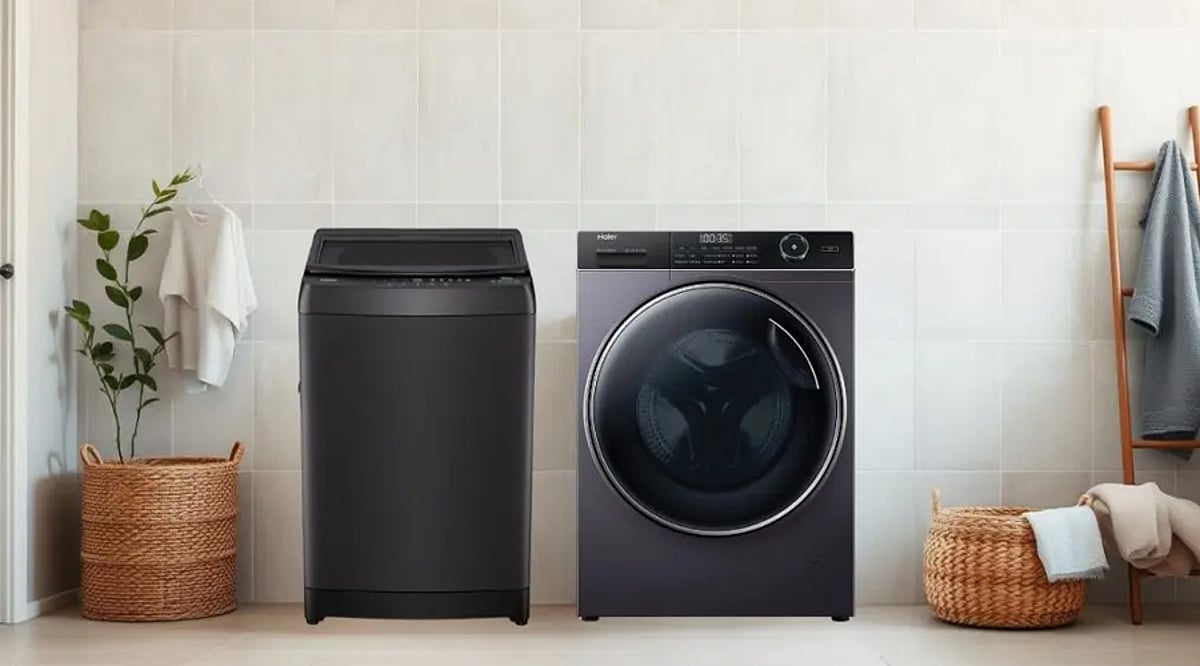
    Choosing between a top-load and front-load washing machine comes down to more than just looks. The two designs handle water, cleaning, maintenance, and installation differently, so the right choice depends on your laundry habits and available space.

    Design and Accessibility

    Top-load washers open from the top, letting you add or remove clothing while standing upright. Front-load washers open from the front, which requires bending down during loading. This difference also affects installation flexibility and whether you can stack a dryer above the machine.

    Water Usage

    Front-load washers generally use less water because the drum tumbles clothes through a smaller pool of water. Traditional top-load models with agitators often use more water, but newer high-efficiency top-load washers can reduce consumption significantly compared with older machines.

    Cleaning Performance

    Front-load washers clean by tumbling clothes through the wash solution, lifting and dropping them repeatedly to deliver thorough cleaning with less mechanical stress. Top-load washers rely on agitators or impellers, and modern versions provide strong cleaning performance across many fabric types and load sizes.

    Energy Efficiency

    Front-load washers are often more energy efficient because they need less water, which cuts the energy required for heating. Their faster spin speeds also remove more moisture, which can shorten drying times. Efficiency still depends on the model, settings, load size, and how you use the machine.

    Convenience and Comfort

    Top-load washers are convenient if you want to avoid bending down, and some models let you add forgotten items mid-cycle. Front-load washers require bending, but pairing one with a pedestal or elevated platform can make loading and unloading much easier.

    Maintenance Needs

    Front-load washers need regular cleaning around the door gasket, since trapped moisture can lead to odors. Top-load washers don’t have that seal, but the drum and dispensers still need periodic cleaning. Following the manufacturer’s maintenance guide helps keep either type running reliably.

    Space and Installation

    Front-load washers can be stacked with a compatible dryer, which is helpful in compact laundry areas. Top-load washers need enough vertical clearance for the lid to open fully. Measure the space carefully before buying, taking into account door swing, ventilation, plumbing connections, and clearance around the unit.

    Which One Should You Choose?

    If you want better efficiency, faster drying, and the option to stack appliances, a front-load washer may be the better fit. If you prefer loading laundry without bending and want a simpler machine at a lower upfront cost, a top-load washer could be the right choice.

  • YouTube Shopping Bolsters Indian Merchant Ecosystem with New Partners and AI-Powered Features as Creator Payouts Surge 160%

    YouTube Shopping Bolsters Indian Merchant Ecosystem with New Partners and AI-Powered Features as Creator Payouts Surge 160%

    YouTube has announced a major expansion of its Shopping affiliate program in India, adding Amazon, AJIO, Meesho, Snapdeal, and Tata CLiQ as new retail partners. This move creates what the company calls India’s most comprehensive digital storefront, bringing together value marketplaces, horizontal retailers, and premium brands on a single platform. The expansion builds on existing partnerships with Flipkart, Myntra, Nykaa, Purplle, Shopsy, and Tira.

    According to YouTube internal data, over 450 million logged-in users in India search for shopping-related content, and shopping-related watch time has increased by 55% year-over-year. The platform’s affiliate program has also seen remarkable growth: average creator payouts in India surged more than 160% year-over-year from Q1 2025 to Q1 2026, outpacing the global average of 100%. More than 50% of eligible Indian creators are now enrolled in the program, a 200% increase year-over-year, and they have tagged over 19 million videos.

    Gunjan Soni, Managing Director – India, YouTube, said, “We’ve crossed an incredible milestone where trusted creator voices, a comprehensive retail catalog, and AI meet at a massive scale. With this expansion in retail partners we are meeting the 450 million+ Indians searching for products on YouTube with India’s most comprehensive digital storefront. Our creators are seeing life-changing revenue, and our merchant partners and brands are seeing measurable impact.”

    Partners echoed the sentiment. Nidhi Thakkar, Head of Social Commerce – Emerging Countries at Amazon, highlighted the seamless journey from creator recommendation to purchase. Arpan Biswas of Reliance AJIO emphasized the convergence of content and commerce for fashion discovery. Nikita Dawda of Meesho noted that creators can double their earnings through the partnership. Achint Setia of Snapdeal pointed to seamless discovery for GenZ shoppers, while Gopal Asthana of Tata CLiQ stressed frictionless integration with premium fashion. Prakash Subramanian of Tira reported 2x creator engagement, and Aditya Mujumdar of Purplle shared that creator-tagged videos have driven nearly a quarter of a million orders, with top earners speaking in regional languages.

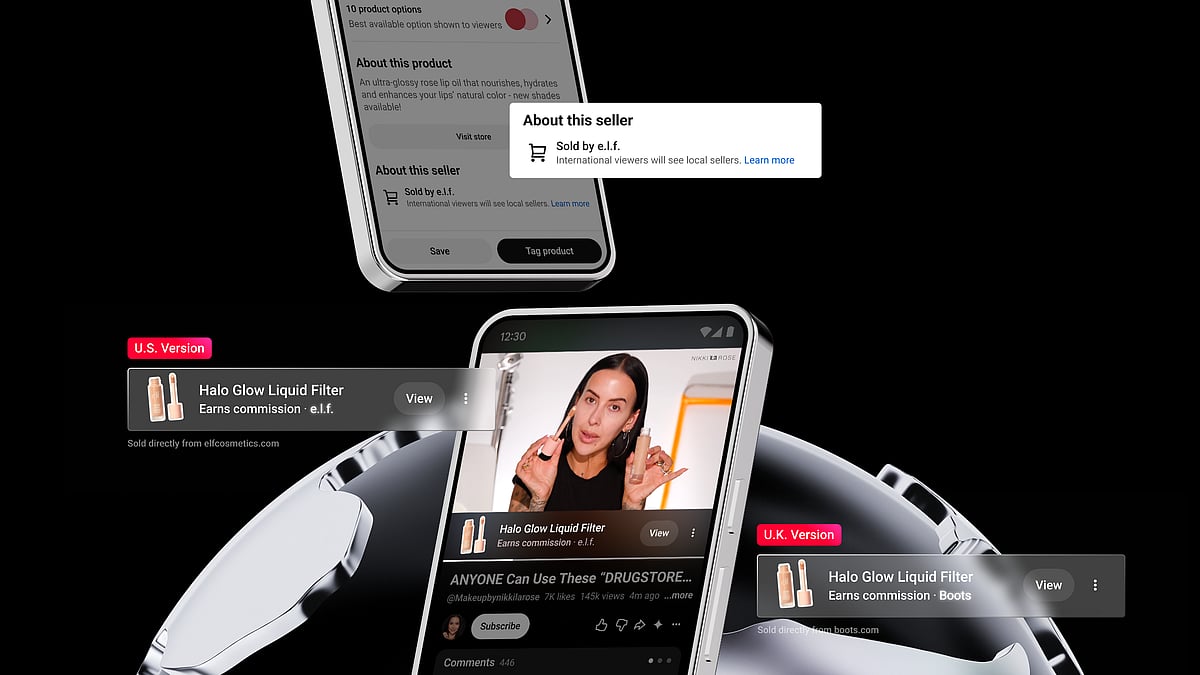
    Alongside the partner expansion, YouTube unveiled several new AI-powered features to enhance the shopping experience. The Ask YouTube capability now allows viewers to ask product-related questions directly on the watch page, with follow-up queries and voice commands on TV. Dynamic Global Retail Tags automatically adapt tagged products to domestic deals and local currencies based on the viewer’s location, enabling Indian creators to earn commissions from international audiences seamlessly.

    For brands and creators, YouTube introduced the Affiliate Partnerships Boost, which lets brands amplify organic creator content through paid campaigns. Nykaa will be the first to leverage this feature for festive sales. The upcoming Ask Studio for Brand Partnerships uses generative AI inside YouTube Studio to help creators pitch campaigns and respond to brand briefs quickly. Creator Partnerships Boost simplifies getting channels in front of top advertisers, while Dynamic Brand Segments allow creators to insert promotional segments into up to 20 long-form videos simultaneously. Exclusive Affiliate Campaigns, rolling out in India next year, will invite creators into high-priority campaigns with bonus incentives and higher commission rates.

    Globally, YouTube’s shopping-related watch time surpassed 40 billion hours in 2025, and gross merchandise value grew 13 times over two years. The new tools and partnerships aim to sustain this momentum, particularly in India where the creator economy is thriving.

  • Truecaller and LinkedIn Partnership Brings Professional Profiles to Caller ID

    Truecaller and LinkedIn Partnership Brings Professional Profiles to Caller ID

    Truecaller, the leading global platform for verifying contacts and blocking unwanted communication, has announced a worldwide partnership with LinkedIn to bring richer professional context and trusted identity to its caller ID service. The integration aims to make professional calls easier to recognize and understand by adding LinkedIn profile information directly to the caller ID screen.

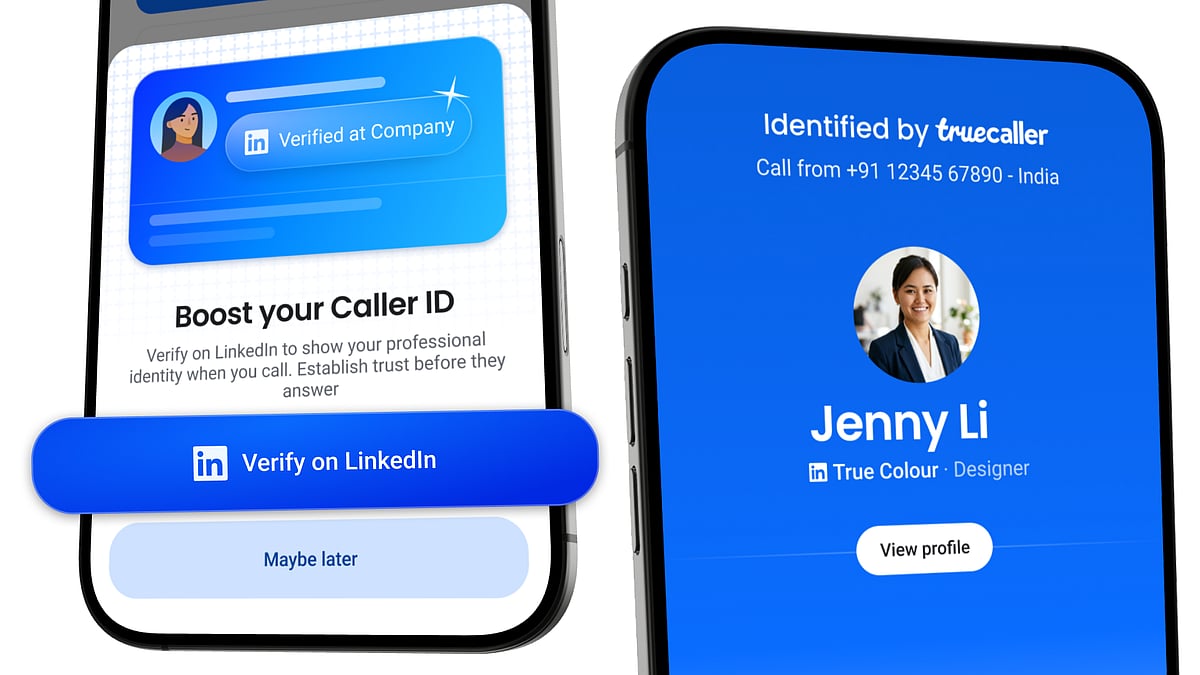
    With this partnership, Truecaller users can optionally connect their LinkedIn accounts to display their job title, company, and profile picture when they call someone. Recipients will see this professional context alongside the caller’s name and photo, helping them decide whether to answer. Additionally, if the caller has verified information on LinkedIn, such as their workplace, Truecaller will show a verification indicator.

    “A phone number by itself tells you almost nothing. Truecaller’s role has always been to add the context people need to decide whether to answer. Our partnership with LinkedIn lets people add richer professional context to Truecaller Caller ID, building on the trust and verification signals LinkedIn has established around professional identity,” said Kunal Dua, Chief Product Officer at Truecaller.

    New users can sign up using “Login with LinkedIn” to pre-fill their name and profile picture. Existing users can enable the “Verified on LinkedIn” feature to add their workplace and job title to their Truecaller profile. The professional information is entirely optional and can be disconnected at any time.

    “We’re making it seamless for members to take their verified credibility to more platforms they use. Using our ‘Verified on LinkedIn’ integration, members can instantly connect their LinkedIn profiles on partner platforms and carry over relevant verification signals without separate verification processes,” said Oscar Rodriguez, VP of Trust Product at LinkedIn.

    The integration is available now on Android worldwide, with iPhone support coming soon.

  • Haier M70 Mini LED TV Brings 4K Picture, AI Enhancement, and 120Hz Gaming to Multiple Screen Sizes

    Haier M70 Mini LED TV Brings 4K Picture, AI Enhancement, and 120Hz Gaming to Multiple Screen Sizes

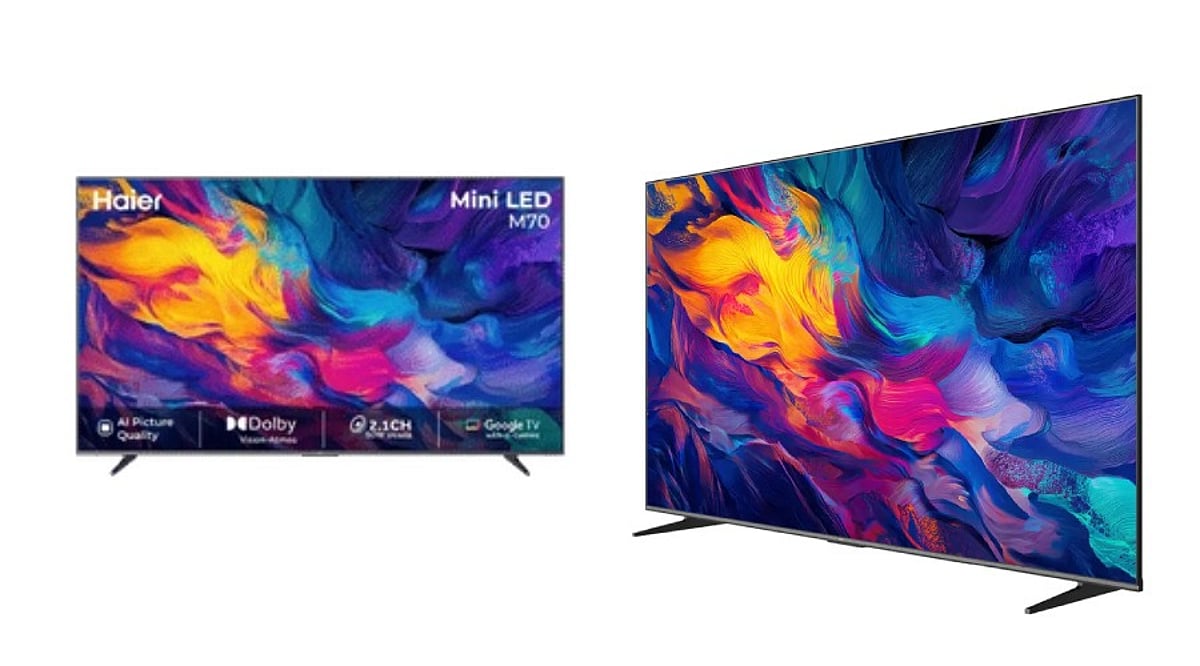
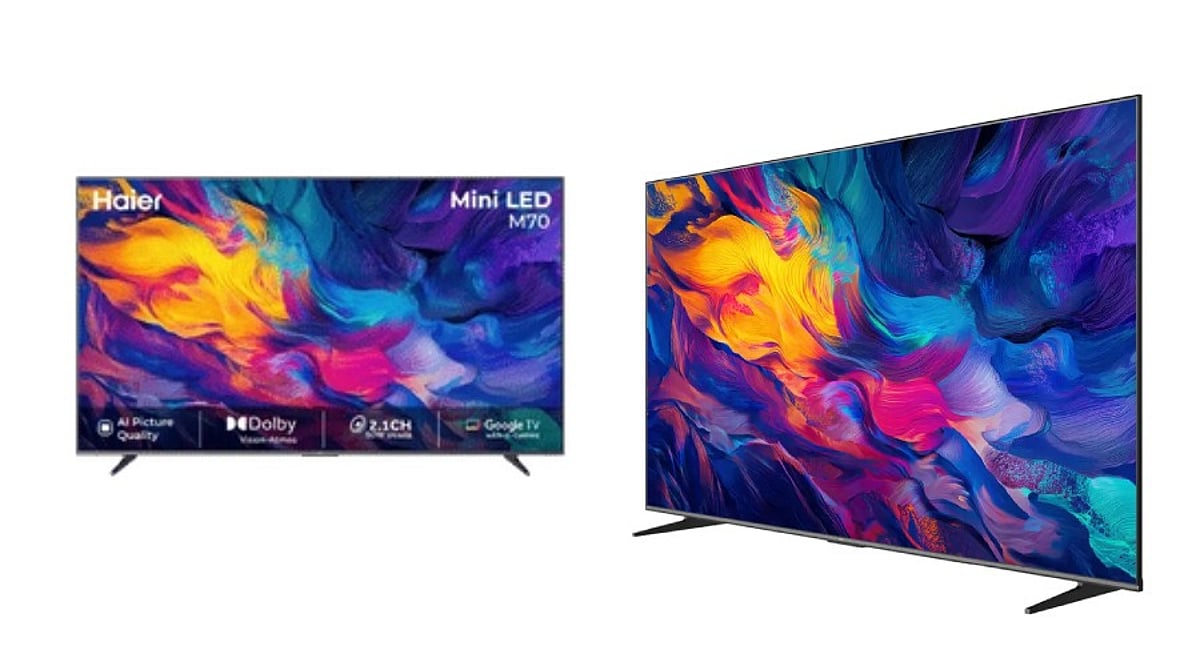
    The Haier M70 Mini LED TV series delivers a well-rounded package of modern television features across five screen sizes. With 4K Mini LED technology, AI-powered picture tools, 120Hz gaming support, Dolby Vision and Atmos, and Google TV integrated with Gemini, the M70 aims to be a versatile choice for movies, sports, and gaming. The 65-inch model further stands out with a 50W 2.1-channel audio system that includes a built-in subwoofer.

    Mini LED Technology Powers the Display

    The M70 series uses Mini LED backlighting, which employs smaller LEDs than conventional LED TVs, enabling finer control over brightness across the screen. This is combined with Micro Dimming technology that adjusts light levels across multiple zones. The 65-inch variant features a 3840 x 2160 4K resolution with a D-LED panel and delivers approximately 93 percent DCI-P3 color gamut coverage, ensuring vibrant and accurate colors.

    High dynamic range is supported through Dolby Vision and HDR10+, while MEMC (Motion Estimation, Motion Compensation) helps keep fast-moving scenes clear. Haier includes several AI-driven enhancements:

    • AI Picture Quality: Real-time adjustment of image details.
    • AI HDR Enhancer: Improved highlight detail and contrast.
    • AI Color Boost: Enhanced color saturation and impact.
    • AI Motion: Smoother rendering of fast sequences.
    • AI Noise Reduction: Reduction of unwanted image noise.

    Brightness Considerations

    It is important to note that Mini LED does not offer the same pixel-level black control as OLED. The 65-inch M70 has a measured peak brightness of approximately 320 nits. While not the brightest in the premium Mini LED segment, the TV focuses on color accuracy, contrast, HDR support, and AI processing to deliver a satisfying viewing experience.

    Gaming Features at 120Hz

    The M70 supports a 120Hz refresh rate along with Variable Refresh Rate (VRR), Auto Low Latency Mode (ALLM), and MEMC. These features reduce input lag and motion blur, making it suitable for fast-paced games. A dedicated Gaming Bar provides quick access to settings such as Shadow Enhancement and Crosshair Assist. The 65-inch model supports 4K at 60Hz and 1080p at 120Hz via DLG (Dual Line Gate) technology.

    Audio Performance

    The 65-inch model comes with a 50W 2.1-channel audio system that includes a built-in subwoofer and supports Dolby Atmos for an immersive soundstage. In tests, the system delivers strong volume and useful bass, potentially reducing the need for an external soundbar. At very high volumes, some harshness may appear, so moderate listening levels are recommended for optimal clarity.

    Smart Platform: Google TV with Gemini

    The M70 runs Google TV on Android 14, complete with Gemini AI assistance and Chromecast Built-in for easy content streaming from compatible devices. The 65-inch model is equipped with 2GB of RAM and 32GB of storage—sufficient for apps and games, though the interface can feel slightly sluggish at times.

    Size Options and Pricing

    Haier offers the M70 in five sizes: 43, 55, 65, 75, and 85 inches. Launch prices ranged from approximately Rs. 39,190 to Rs. 1,69,990 depending on size and configuration. The 43-inch model starts at about Rs. 40,690 on Haier’s official store. Retail prices may vary with promotions and availability.

    Conclusion

    The Haier M70 Mini LED TV series brings together a compelling mix of advanced display technology, smart features, gaming support, and robust audio. While brightness and black levels do not rival OLED or high-end Mini LED competitors, the M70 offers strong value for those seeking a feature-rich television across a range of screen sizes.

    Frequently Asked Questions

    1. What screen sizes does the Haier M70 offer?
    The M70 comes in 43-inch, 55-inch, 65-inch, 75-inch, and 85-inch sizes.

    2. Does the Haier M70 support 120Hz gaming?
    Yes. The TV supports 120Hz, VRR, ALLM, MEMC, Gaming Bar features, and 1080p at 120Hz through DLG support on the 65-inch model.

    3. Which HDR formats does the M70 support?
    The TV supports Dolby Vision and HDR10+ for compatible content.

    4. What audio system does the 65-inch M70 have?
    The 65-inch model has a 50W 2.1-channel audio system with a built-in subwoofer and Dolby Atmos.

    5. Does the Haier M70 have Google TV and Gemini?
    Yes. The M70 runs Google TV on Android 14 and includes Gemini support, along with Chromecast Built-in.

  • Haier M70 Mini LED TV Review: 4K Visuals, AI Tools, and 120Hz Gaming Across Five Sizes

    Haier M70 Mini LED TV Review: 4K Visuals, AI Tools, and 120Hz Gaming Across Five Sizes

    The Haier M70 Mini LED TV series brings a combination of 4K resolution, Mini LED backlighting, AI-powered image tools, and 120Hz gaming support to home entertainment. Available in sizes from 43 to 85 inches, the M70 aims to deliver premium-style features at a competitive price point. Here is a breakdown of what the TV offers.

    Key Takeaways

    • Mini LED display with 4K resolution, Micro Dimming, Dolby Vision, HDR10+, and AI picture tools for detailed, vibrant visuals.
    • 120Hz refresh rate, VRR, ALLM, MEMC, Gaming Bar, and 1080p 120Hz DLG support for smooth gaming.
    • Google TV with Gemini, Chromecast Built-in, 32GB storage, and 50W 2.1-channel audio on the 65-inch model.

    Mini LED Technology Enhances Picture Quality

    The M70 uses Mini LED backlights, which are smaller than traditional LEDs, allowing tighter control over screen lighting. Haier pairs this with Micro Dimming, adjusting light across multiple zones for improved contrast. The 65-inch model features a 3840 x 2160 4K D-LED panel, covering about 93% of the DCI-P3 color gamut. It supports Dolby Vision and HDR10+ for high dynamic range content, and MEMC for smoother motion.

    AI tools further refine the picture: AI Picture Quality adjusts details in real time, AI HDR Enhancer improves highlights and contrast, AI Color Boost adds vibrancy, AI Motion handles fast scenes, and AI Noise Reduction minimizes image noise.

    Brightness Considerations

    Mini LED is not OLED. The M70 uses a backlight with zones, not per-pixel control. While contrast is strong, it cannot match OLED’s black levels. The 65-inch model has a measured peak brightness of about 320 nits, focusing more on color accuracy and HDR support than extreme brightness.

    120Hz Gaming Features

    The M70 supports a 120Hz refresh rate, Variable Refresh Rate (VRR), Auto Low Latency Mode (ALLM), and MEMC. A Gaming Bar provides quick access to settings, while Shadow Enhancement and Crosshair Assist aid different game genres. The 65-inch model handles 4K at 60Hz and 1080p at 120Hz through DLG.

    Built-in Audio Performance

    The 65-inch model includes a 50W 2.1-channel audio system with a built-in subwoofer. Dolby Atmos delivers a wider soundstage. Tests show strong volume and bass, reducing the need for an external soundbar, though high volume can introduce some harshness.

    Smart Platform and Connectivity

    The M70 runs Google TV on Android 14 with Gemini integration and Chromecast Built-in. The 65-inch model has 2GB RAM and 32GB storage, offering ample app space. Interface responsiveness can sometimes lag.

    Size Options and Pricing

    Haier offers the M70 in 43-, 55-, 65-, 75-, and 85-inch sizes. Launch prices range from approximately Rs. 39,190 to Rs. 1,69,990, with the 43-inch starting at about Rs. 40,690. The 65-inch model sits as a sweet spot, combining Mini LED, 120Hz gaming, 50W audio, Google TV, Gemini, Dolby Vision, and HDR10+.

    Conclusion

    The Haier M70 delivers a comprehensive package of picture quality, gaming features, and smart functionality. Its main trade-offs are moderate brightness and zone-based backlighting compared to OLED, but for many users, the wide feature set and multiple size choices make it a compelling home electronics option.

    Frequently Asked Questions

    • What screen sizes does the Haier M70 offer? 43-inch, 55-inch, 65-inch, 75-inch, and 85-inch.
    • Does the Haier M70 support 120Hz gaming? Yes, with 120Hz, VRR, ALLM, MEMC, and 1080p at 120Hz DLG on the 65-inch model.
    • Which HDR formats does the M70 support? Dolby Vision and HDR10+.
    • What audio system does the 65-inch M70 have? A 50W 2.1-channel system with a built-in subwoofer and Dolby Atmos.
    • Does the Haier M70 have Google TV and Gemini? Yes, it runs Google TV on Android 14 with Gemini support and Chromecast Built-in.
  • FTSE 100 Opens Higher as Middle East Tensions Push Brent Above $105, Treasury Yields Climb

    FTSE 100 Opens Higher as Middle East Tensions Push Brent Above $105, Treasury Yields Climb

    The FTSE 100 opened 20.23 points higher at 10,725.49 on Thursday, as ongoing tensions in the Middle East kept oil prices elevated above $105 per barrel, while surging US Treasury yields continued to weigh on risk appetite across European markets.

    Brent crude futures rose 2.46% to $105.6 per barrel, and US West Texas Intermediate (WTI) advanced 2.20% to $94.19 per barrel. Sterling traded at $1.3243 early Thursday, slightly lower than $1.3254 at the London equities close on Wednesday. Against the euro, sterling fell to €1.1628 from €1.1636.

    Gainers and Losers

    On the upside, JD Sports Fashion rose 2.18% to 75.84p, British American Tobacco advanced 1.91% to 4,278p, and Antofagasta gained 1.50% to 3,802p. Glencore rose 1.48% to 560.70p, Bunzl added 1.28% to 2,686p, and BP increased 1.26% to 564.20p.

    On the downside, Standard Life fell 3.83% to 890.50p, Computacenter dropped 1.37% to 5,405p, and Pershing Square Holdings declined 1.20% to 3,616p. Admiral Group slipped 0.71% to 3,646p, Games Workshop Group fell 0.62% to 17,620p, and AstraZeneca edged 0.40% lower to 12,380p.

    Vistry Shares Fall After Loss and Downsizing Plans

    Vistry shares slumped after the company reported a £661 million pre-tax loss and announced plans to downsize, spooking investors. The housebuilder fell by as much as 7% to 248p in early trade.

    Adam Vettese, market analyst at eToro, commented: “This morning’s sell-off is the market calling time on another year of moving goalposts. Adam Daniels is doing the unglamorous work of shrinking Vistry to 12,000 homes, exiting South East private sales and cutting a land bank that was too big for the returns it produced. That is the right diagnosis; it does not make the next twelve months any cleaner.”

    On the Beach Posts Record Bookings

    On the Beach recorded a 9% rise in bookings, pushing total transaction value to £1.3 billion, marking the fifth consecutive year of record highs. The growth was fueled by a summer booking rebound, with volumes 4% ahead of the prior year, as more customers purchased trips closer to departure dates.

    Chief executive Shaun Morton attributed the uptick to “strategic investments” in technology and the company’s expanded product offering. The firm estimates pre-tax profit of £28 million to £35 million in the next financial year but remains “mindful” of the impact the Iran war is having on consumer confidence.

    Halma Raises Margin Outlook

    Halma raised its outlook for the annual adjusted operating profit margin, citing strong first-half progress. The health and safety device maker now expects an adjusted EBIT margin of 23.5% to 24% for the year through March 2027, up from its previous guidance of around 22.7%.

    The company maintained its forecast for low double-digit percentage organic constant-currency revenue growth, including roughly five percentage points of premium growth from its photonics business.

    Global Market Overview

    In the US, the S&P 500 dropped 0.75% to close at 7,706.03, while the Nasdaq Composite fell 1.13% to 26,936.04. The Dow Jones Industrial Average was down 352.10 points, or 0.68%.

    In Asia on Thursday, Tokyo’s Nikkei 225 gained 0.76% to 65,513.99, while China’s Shanghai Composite dipped 1.22%. Hong Kong’s Hang Seng declined 0.29%, and South Korea’s Kospi edged up by 0.9%. In India, both the Nifty 50 and the Sensex fell by 1.61% and 1.60%, respectively.

    Disclaimer: This article is for informational purposes only and does not constitute financial advice. Investing involves risk. Always conduct your own research before making any investment decisions.