Blog

  • IIM vs Non-IIM MBA Programs: Fees and Average CTC Comparison

    IIM vs Non-IIM MBA Programs: Fees and Average CTC Comparison

    Choosing between an IIM and a non-IIM business school is a critical decision for MBA aspirants. While the Indian Institutes of Management (IIMs) are often seen as the gold standard, leading non-IIM institutions such as SPJIMR Mumbai and MDI Gurgaon have also delivered impressive placement outcomes. This article provides a snapshot of fees and average cost-to-company (CTC) figures for selected programs, helping you weigh the investment against potential returns.

    IIM Ahmedabad

    IIM Ahmedabad’s MBA fee is approximately ₹25 lakh, with the latest average campus CTC reported at around ₹34.45 LPA. These figures highlight the scale of investment required for a flagship IIM program. Actual costs may vary based on additional expenses and individual circumstances.

    IIM Bangalore

    IIM Bangalore lists its MBA fee at about ₹24.5 lakh, while the most recent average CTC stands at roughly ₹35.92 LPA. Students should also factor in living expenses and other program-related costs when estimating total expenditure.

    IIM Calcutta

    IIM Calcutta charges an MBA fee of around ₹27 lakh, with an average CTC of about ₹35.07 LPA. Its fee is on the higher side among the selected IIMs. Placement averages reflect the entire graduating batch and do not guarantee individual earnings.

    SPJIMR Mumbai (Non-IIM)

    SPJIMR is a major non-IIM benchmark. The Class of 2026 reported an average CTC of ₹33.75 LPA, a median CTC of ₹32.85 LPA, and the highest CTC at ₹75 LPA. The institute achieved 100% placements for its combined PGDM and PGDM(BM) cohort.

    MDI Gurgaon (Non-IIM)

    MDI Gurgaon also posted strong placement numbers for 2026. Its flagship PGDM average package was ₹29.5 LPA, with a median of ₹29 lakh and a highest package of ₹97.5 LPA. The institute reported 157 recruiters and 189 pre-placement offers during the process.

    Beyond the Numbers

    Fees and average CTC are useful starting points, but they don’t tell the full story. Prospective students should also consider program structure, location, specializations, placement roles, batch size, scholarships, financing options, and long-term career goals when comparing IIM and non-IIM options.

  • EA Sports FC 27: Release Date, Gameplay Improvements, and Key Modes Explained

    EA Sports FC 27: Release Date, Gameplay Improvements, and Key Modes Explained

    EA Sports FC 27 is set to arrive with a renewed focus on the fundamentals of football simulation. Building on the foundations laid by previous entries in the series, the new game aims to deliver more natural player movement, sharper passing, and a more believable match experience. The developers have also taken community feedback into account, addressing issues that have long sparked discussion among players.

    EA Sports FC 27 Launch Details

    EA Sports FC 27 will launch worldwide on September 25, 2026. However, players with eligible editions have been able to jump in since September 18 through early access. As a result, early impressions are already circulating, with many noting that the game places greater emphasis on core mechanics rather than flashy additions.

    Gameplay Changes and New Features

    The most significant updates in FC 27 center on how matches feel in real time. Several areas have been refined to create a smoother, more responsive experience:

    • Player Movement: Football demands quick reactions, and FC 27 aims to make directional changes, runs into space, and beating defenders feel more fluid. Reducing input delay is a priority.
    • Passing: The passing system has been tuned so simple passes feel reliable, while riskier through balls and long passes require greater skill and carry more consequences.
    • Defending: Defensive actions have been rebalanced to feel more natural. The goal is to give players better control over tackles and positioning without making attacking play feel futile.
    • Match Flow: EA has worked to reduce moments that break the rhythm of a game, making matches feel more connected to real football.

    Career Mode and Ultimate Team Updates

    Career Mode remains a major draw for players who enjoy a long-term management experience. The mode continues to offer transfer management, player development, and the challenge of building a successful club over multiple seasons. It provides a slower, more personal alternative to online play.

    Ultimate Team, meanwhile, remains focused on squad building and online competition. Players can collect footballers, create teams around their preferred tactics, and compete against others. The mode stays central to the EA FC experience, with updates aimed at keeping it engaging.

    What Makes FC 27 Different From Previous Games?

    Rather than introducing one headline feature, FC 27 seems to deliver change through many small, meaningful refinements. Earlier games struggled with balance: faster attackers made defending harder, and stronger defenders made scoring less enjoyable. FC 27 takes a more measured approach by improving several parts of the match experience at once.

    Community feedback also plays a larger role. Football games are played for hundreds of hours, and small issues become increasingly noticeable over time. EA is expected to monitor player behavior closely after release to identify and address problems quickly.

    Why the Basics Matter in FC 27

    In a football game, responsive controls and believable player behavior matter more than visual polish alone. FC 27 appears to understand this, keeping its focus on the elements that keep players coming back for another match. The true test will come after the worldwide launch, when the larger community can explore every mode and judge whether the improvements go far enough.

    FAQs

    When is EA Sports FC 27 releasing?

    EA Sports FC 27 launches worldwide on September 25, 2026. Early access began on September 18 for eligible editions.

    What are the main new features in EA Sports FC 27?

    The game focuses on improved player movement, passing, defending, and overall match flow. Career Mode and Ultimate Team also receive updates aimed at making these modes more engaging.

    How is FC 27 different from previous EA Sports FC games?

    FC 27 places a stronger emphasis on how players move and react during matches. It also introduces changes to Career Mode and other modes based on player feedback.

    Will Career Mode get new features in FC 27?

    Yes. Career Mode continues to evolve, with improvements to transfers, player development, and long-term team management.

    Is EA Sports FC 27 worth playing for existing FC players?

    It depends on what players want. Those looking for smoother gameplay and thoughtful updates to familiar modes will likely appreciate what FC 27 offers.

  • NSE IPO Set for BSE Debut on September 24: Grey Market Premium Drops to Rs 45.5

    NSE IPO Set for BSE Debut on September 24: Grey Market Premium Drops to Rs 45.5

    NSE’s Long-Awaited Public Debut

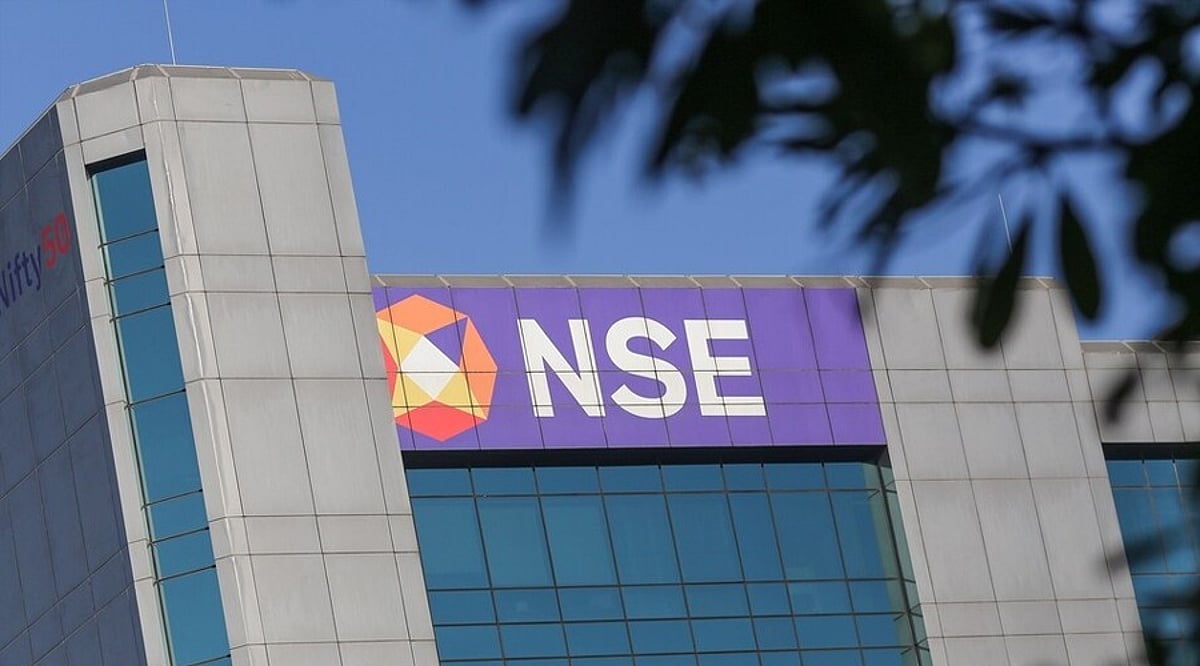
    The National Stock Exchange of India (NSE) is set to begin trading on the BSE on September 24, after its Rs 22,562 crore initial public offering attracted solid demand from both retail and institutional investors. The IPO closed on September 21, and the listing marks NSE’s first appearance as a publicly traded company.

    Because the offering is structured as an offer for sale (OFS), the proceeds will go to existing shareholders rather than to the exchange itself. The issue carried a price band of Rs 1,700 to Rs 1,785, with eight shares per lot.

    GMP Cools Ahead of Listing

    Heading into the debut, the grey market premium (GMP) has cooled sharply, signaling more measured expectations among unofficial market participants. Moneycontrol reported a GMP of around Rs 45.5 on September 22, implying a listing price of roughly Rs 1,830 — about 2.55% above the upper end of the IPO price band.

    Earlier estimates had been stronger, with Business Standard reporting a Rs 68 GMP and Mint later citing Rs 81. These unofficial premiums can change quickly before shares begin trading, and the actual listing price may differ from grey market expectations.

    Subscription Highlights

    According to exchange data, the NSE IPO was subscribed 5.71 times by the final bidding day. Institutional demand led the way:

    • Qualified institutional buyers: 12.68 times
    • Non-institutional investors: 6.55 times
    • Retail investors: 1.39 times

    What to Watch on Listing Day

    Trading is expected to begin around 10 AM IST on Thursday, September 24, with the BSE hosting the debut. Market observers have highlighted NSE’s strong position across Indian capital markets and its diversified financial infrastructure.

    Shivani Nyati of Swastika Investmart said the IPO could deliver “minor listing gains,” while also emphasizing the company’s long-term investment case. The opening price will show whether strong institutional participation can overcome the recent cooling in grey market sentiment.

  • Global Gold Reserves: Top 7 Countries Holding the Most Bullion

    Global Gold Reserves: Top 7 Countries Holding the Most Bullion

    Global Gold Reserves: Top 7 Countries Holding the Most Bullion

    Central banks around the world hold gold as a cornerstone of their foreign exchange reserves, providing stability and confidence in times of economic uncertainty. This article ranks the top seven countries by their official gold holdings, highlighting the sheer scale of these reserves and their significance in each nation’s financial strategy.

    1. United States – 8,133.5 Tonnes

    The United States holds the largest official gold stock in the world, with approximately 8,133.5 tonnes. This accounts for a staggering 81.4% of its foreign exchange reserves. Gold has been a long-term reserve asset for the U.S., reflecting its historical role as a pillar of the global financial system.

    2. Germany – 3,350.3 Tonnes

    Germany holds about 3,350.3 tonnes of gold, representing 81.0% of its foreign exchange reserves. The Bundesbank’s substantial gold holdings underline the country’s commitment to maintaining a robust and diversified reserve portfolio, making it one of the largest official gold holders globally.

    3. Italy – 2,451.8 Tonnes

    Italy ranks third with roughly 2,451.8 tonnes of gold, which constitutes 77.0% of its foreign exchange reserves. The Bank of Italy’s gold reserves are among the largest in the world, underscoring gold’s enduring importance as a monetary asset in the country’s financial framework.

    4. France – 2,437.0 Tonnes

    France holds approximately 2,437 tonnes of gold, making up 78.5% of its foreign exchange reserves. The Banque de France’s gold stock is a key component of the nation’s reserve assets, reflecting a long-standing tradition of gold accumulation among major European central banks.

    5. China – 2,366 Tonnes

    China’s official gold holdings stand at about 2,366 tonnes, but this represents only 8.0% of its massive foreign exchange reserves. This highlights the contrast between total gold tonnage and its proportion within the reserve mix, as China’s overall reserves are vast, with gold playing a relatively smaller but still significant role.

    6. Russia – 2,277 Tonnes

    Russia holds around 2,277 tonnes of gold, which accounts for 41.4% of its foreign exchange reserves. This relatively high share indicates gold’s strategic importance in Russia’s economic policy, especially as the country has steadily increased its gold purchases over the past decade.

    7. India – 880 Tonnes

    India rounds out the list with approximately 880 tonnes of gold, representing 16.8% of its foreign exchange reserves. The Reserve Bank of India’s gold holdings form a vital part of the country’s reserve assets, complementing its foreign currency and other reserve components, and reflecting gold’s cultural and economic significance in India.

    These figures underscore the enduring role of gold as a safe-haven asset and a key component of national financial security. As global economic conditions evolve, central banks are likely to continue relying on gold to diversify their reserves and mitigate risks.

  • 4 Cryptocurrencies Worth Buying Now: BlockDAG, Solana, Dogecoin, and Cardano

    4 Cryptocurrencies Worth Buying Now: BlockDAG, Solana, Dogecoin, and Cardano

    The hunt for the next top crypto to buy is intensifying as traders scan the market for maximum returns. While established layer-1 projects and major altcoins boast strong development pipelines, time-sensitive structures create immediate windows of opportunity. BlockDAG leads with an explosive ecosystem update that guarantees high upside potential for eligible participants. Alongside this breakthrough asset, proven tokens like Solana, Dogecoin, and Cardano offer unique technical setups for forward-thinking portfolios. Investors seeking strategic entries must evaluate real-time metrics, technical supports, and time-sensitive incentives before these market windows snap shut.

    1. BlockDAG: Limited 1.5x $0.03 USDT Buyback Window

    BlockDAG claims the top spot among crypto picks thanks to a major structural deployment. The project has activated its USDT Buyback Balance on user dashboards, allowing the program to move forward under revised regulatory compliance standards. In a massive update, the previous $0.02 buyback valuation has been boosted to $0.03 USDT for a strict 7-day window. This temporary enhancement represents a 1.5x increase in payout value. Direct BDAG is currently available at $0.00000017, giving buyers a massive strategic advantage. During this limited week-long period, purchases of both BDAG Legacy and New BDAG add directly to an investor’s overall Buyback Allocation.

    The structure is simple: eligible Legacy and New BDAG are merged into one unified USDT Buyback Balance. The path follows a straightforward process where buying BDAG builds your eligible allocation, leading directly to the elevated $0.03 buyback price. The dashboard calculates final values automatically through a streamlined compression process before applying the $0.03 price. Settlement operations are scheduled to execute in batches to accommodate compliance steps. Because this elevated allocation price expires after 7 days, immediate action is required to maximize allocations before the dashboard resets.

    2. Solana (SOL): Upgrades Drive Long-Term Resilience

    Solana secures its place as a top crypto due to its high-throughput infrastructure and impending architectural milestones. Trading near $101.27 with a market capitalization of $58.99B, a circulating supply of 582.50M SOL, and a 24-hour volume around $1.80B, SOL remains a key contender in the layer-1 space despite a 2026 YTD change of -22.68%. The network is preparing for its Alpenglow consensus upgrade, designed to replace Proof of History and Tower BFT with two new mechanisms: Votor, capable of finalizing blocks in 100 to 150 milliseconds, and Rotor, a more efficient data relay protocol than the existing Turbine system.

    Technically, SOL sits above all four primary exponential moving averages after rallying from a June low near $70 to a September high above $110, before pulling back to consolidate around $101. The relative strength index has eased from overbought levels above 75 into the high-50s, reflecting a cooling of momentum rather than a reversal. Immediate support rests at the 20-day EMA near $100, while a break lower opens the $93 to $88 zone representing the 50 and 100-day EMA cluster. Solana’s pending upgrade remains the key structural catalyst alongside continued spot ETF speculation, making this consolidation phase a focus for forward-looking observers.

    3. Dogecoin (DOGE): High-Beta Favorite Eyes Next Breakout

    Dogecoin continues to hold its reputation as a top crypto for retail market participants seeking strong risk-on exposure. Backed by an active community and ongoing attention from industry leaders, DOGE maintains a market capitalization of $12.62B with a current trading price of $0.08326, a circulating supply of 151.50B DOGE, a 24-hour volume near $1.20B, and a YTD change of -39.93%. Originally created as a meme, it has transformed into a major large-cap asset that reacts rapidly to broad shifts in market sentiment.

    The technical layout displays a mixed setup as DOGE digests its August rally from around $0.075 to a September high near $0.094. Price action trades below its 20 and 200-day EMAs but holds firmly above its 50 and 100-day EMAs. An RSI reading between 49 and 55 indicates roughly neutral momentum. So long as DOGE holds above the $0.081 support level, the structure remains intact, while a break lower opens $0.075 as the next key floor. The current pullback looks more like a healthy reset than a breakdown, preserving its position as a high-beta favorite.

    4. Cardano (ADA): Structural Focus Offers Value Potential

    Cardano rounds up the list of top cryptos to purchase, sustaining its steadfast dedication to academic sustainability and cross-chain interoperability. ADA is currently valued at $0.1935, with a market cap of $7.08B, circulating supply of 36.60B ADA, out of a maximum supply of 45B. ADA witnessed the worst month in terms of performance compared to the other top 10 cryptocurrencies, having retreated from levels around $0.216 to the current price.

    Technically speaking, ADA is trading below its 20-, 100-, and 200-day EMAs and is currently trading in line with its 50-day EMA. An RSI reading of 43, which is below its signal line, indicates waning technical momentum. A technical rally above the $0.200 to $0.205 range of EMAs is needed in order to improve this setup, but if that fails, the low-$0.18 zone will be important technical support. While technically weak, the ongoing development roadmap of Cardano remains the key counter-story.

    Key Insights

    The analysis of the top crypto to buy necessitates balancing long-term technological visions with timely liquidity motivation. Known blockchain systems such as Solana, Dogecoin, and Cardano still provide special entry zones driven by protocol innovations and high liquidity. BlockDAG, on the other hand, changes the current situation dramatically through its unprecedented Buyback allocation price at $0.03 USDT. With BDAG priced at $0.00000017 and the buyback valued at 1.5x only during a short 7-day period, players who monitor their dashboard allocations will have limited time to utilize the newly formed conditions. Do not miss the chance to check your dashboard allocations and gain the best position.

    Disclaimer: This article is for informational purposes only and does not constitute financial advice. Cryptocurrency investments carry high risk; you are responsible for conducting your own research (DYOR) before making any investment decisions.

  • YouTube Tests Custom Feeds for Personalized Video Recommendations

    YouTube Tests Custom Feeds for Personalized Video Recommendations

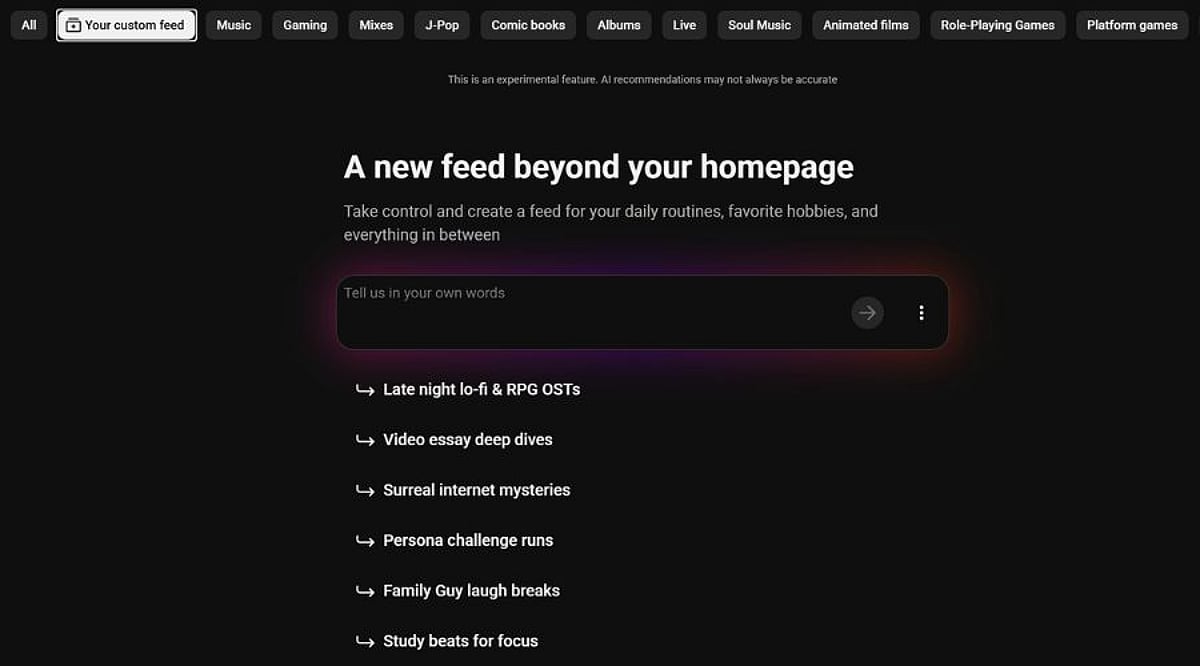
    YouTube is testing a new Custom Feeds feature that gives eligible users more control over the videos recommended to them. Instead of relying only on viewing behavior, users can describe what they want to watch and create a dedicated feed around that request.

    The feature appears at the top of YouTube Home as a Custom Feed chip. Users can enter a natural-language description covering a topic, routine, or mood, after which YouTube generates a stream of recommendations based on the prompt.

    YouTube Tests Up to Eight Custom Feeds

    The latest version of the experiment allows some eligible users in the US to save up to eight active Custom Feeds. Users can switch between these feeds from the top of the Home page and edit their prompts when their interests change.

    On mobile, Custom Feeds can replace YouTube’s standard topic chips, while desktop users continue to have access to the existing topic chips. The feature remains experimental, and availability may vary by account.

    Custom Feeds are different from a standard search. While a search generally provides results for a single query, a Custom Feed is designed to remain as a dedicated destination that users can return to without entering the same request again.

    Custom Feeds Still Work with YouTube’s Algorithm

    Despite giving viewers more direct control, Custom Feeds do not replace YouTube’s recommendation system. The platform continues to determine which videos appear in each feed.

    YouTube also requires both watch and search history to remain enabled for the experiment. Videos watched through Custom Feeds are added to the user’s normal watch history and may influence recommendations on the main Home page.

    This means the feeds are not isolated spaces. Instead, they provide YouTube with an additional signal about what users want to watch at a particular time.

    Availability and Creator Impact

    The latest multi-feed experiment is limited to eligible, signed-in users in the US on Android, iOS and desktop, with English language settings and watch history enabled. YouTube has not announced an official India rollout date.

    For creators, views from Custom Feeds contribute to watch time and monetization in the same way as views from Home. However, creators cannot guarantee that their videos will appear in a particular Custom Feed because YouTube’s ranking system still determines placement.

    YouTube is also monitoring how the experiment affects views, watch time, and revenue as it evaluates the feature.

  • Global Smartphone Market Leaders in 2026: Apple, Samsung, and Others by Market Share

    Global Smartphone Market Leaders in 2026: Apple, Samsung, and Others by Market Share

    The global smartphone market continues to evolve, with the top five brands commanding significant shares in 2026. Based on Omdia data and industry analysis, here is the breakdown of the leading smartphone brands and their market performance.

    Apple — 19% Market Share

    Apple secured the top position globally in 2025 with a 19% unit share. Omdia reported 240.6 million iPhone shipments during the year, marking Apple’s third consecutive year as the world’s largest smartphone vendor.

    Samsung — 19% Market Share

    Samsung matched Apple’s 19% global unit share in 2025. The company recorded annual shipment growth of 7%, supported by strong demand across its Galaxy portfolio and a recovery in both premium and mainstream smartphone segments.

    Xiaomi — 13% Market Share

    Xiaomi held third place globally with a 13% unit share in 2025. The company shipped approximately 163 million smartphones during the year and remains a major force in affordable, mid-range, and increasingly premium smartphone markets.

    vivo — 8% Market Share

    vivo ranked fourth worldwide with an 8% unit share in 2025. The company shipped 105.3 million smartphones, with strong performance in markets such as India helping it become the fourth-largest global smartphone vendor for the first time.

    OPPO — 8% Market Share

    OPPO completed the global top five with an 8% unit share in 2025. The company shipped 100.7 million smartphones. Its position is also significant for 2026 as realme moves under the OPPO business umbrella.

    These brands are expected to continue shaping the competitive landscape in 2026, with innovations in camera technology, 5G connectivity, and AI-driven features driving consumer demand.

  • Essential Crypto Glossary: 25 Key Terms Every Investor Must Understand

    Essential Crypto Glossary: 25 Key Terms Every Investor Must Understand

    Cryptocurrency has developed its own vocabulary spanning blockchain technology, trading, decentralized finance, and market analysis. Understanding the terminology does not eliminate investment risk, but it makes it easier to evaluate projects, exchange products, and market data without confusing fundamentally different concepts. Here are 25 terms investors should know before investing.

    Blockchain and Asset Basics

    1. Blockchain: A distributed database where transactions are grouped and recorded according to network consensus rules.
    2. Bitcoin: The largest cryptocurrency by market capitalization and the native asset of the Bitcoin network.
    3. Altcoin: A general term for cryptocurrencies other than Bitcoin.
    4. Stablecoin: A crypto asset designed to maintain a relatively stable value, commonly against currencies such as the US dollar.
    5. Token: A digital asset created on an existing blockchain rather than necessarily operating its own independent network.
    6. Wallet: Software or hardware used to manage blockchain accounts and signing keys.
    7. Private Key: Secret cryptographic information allowing a holder to authorize blockchain transactions.
    8. Seed Phrase: A sequence of words used to recover many self-custody cryptocurrency wallets.

    Trading Terminology

    1. HODL: Holding cryptocurrency for an extended period rather than reacting to short-term volatility.
    2. Market Capitalization: Token price multiplied by circulating supply.
    3. Trading Volume: The value of assets traded during a specified period.
    4. Liquidity: How easily an asset can be bought or sold without significantly changing its price.
    5. Slippage: The difference between an expected trade price and the actual execution price.
    6. Bull Market: A prolonged period characterized by broadly rising prices.
    7. Bear Market: A prolonged period of generally declining prices.
    8. Volatility: The magnitude and frequency of price fluctuations.
    9. Leverage: Borrowed exposure that magnifies both potential gains and losses.
    10. Liquidation: Forced closure of a leveraged position when collateral becomes insufficient.
    11. Open Interest: Outstanding futures or derivatives contracts that remain open.

    Blockchain and DeFi

    1. Gas Fee: A charge paid for computation or transactions on networks such as Ethereum.
    2. Smart Contract: Blockchain-based code that executes predefined instructions.
    3. DeFi: Decentralized finance applications providing activities such as trading, borrowing, and lending through blockchain protocols.
    4. Staking: Committing eligible crypto assets to proof-of-stake systems or related protocols in exchange for potential rewards.
    5. Total Value Locked: A measure of assets deposited into DeFi protocols, although methodologies can differ across data providers.
    6. DEX: A decentralized exchange where blockchain-based smart contracts or protocol infrastructure facilitate asset trading.

    Why This Matters

    Understanding crypto terminology helps investors interpret market data and distinguish fundamentally different risks. Metrics such as market capitalization, trading volume, and TVL measure different aspects of crypto markets, making basic terminology essential before evaluating tokens, protocols, or trading opportunities.

    Final Thoughts

    Knowing crypto terminology helps investors distinguish technology, market structure, and trading metrics. However, understanding terms such as staking, leverage, or market capitalization should be the beginning of research rather than a substitute for evaluating token economics, security, liquidity, and investment risk.

    Frequently Asked Questions

    What are the most important crypto terms for beginners?

    Beginners should understand blockchain, Bitcoin, wallets, private keys, stablecoins, market capitalization, and liquidity. These concepts provide a foundation for understanding how cryptocurrencies and markets operate.

    What does HODL mean in cryptocurrency?

    HODL refers to holding cryptocurrency for an extended period instead of reacting to short-term price movements. The term has become associated with long-term crypto investing strategies.

    What is market capitalization in crypto?

    Crypto market capitalization is generally calculated by multiplying a token’s current price by its circulating supply. It helps indicate an asset’s relative market size but does not measure liquidity.

    What is the difference between DeFi and a DEX?

    DeFi describes blockchain-based financial applications covering activities such as trading, lending, and borrowing. A DEX is a specific type of decentralized platform or protocol used to facilitate crypto trading.

    What does TVL mean in cryptocurrency?

    Total Value Locked (TVL) measures assets deposited into DeFi protocols under a given methodology. It can indicate protocol usage but should not be treated as a standalone measure of investment quality.

    Disclaimer: This article is for informational purposes only and does not constitute financial advice. Cryptocurrency investments carry risk, and you should conduct your own research before making any investment decisions.

  • The Startup Playbook: Scaling, Raising Capital, and Preparing for an IPO

    The Startup Playbook: Scaling, Raising Capital, and Preparing for an IPO

    Every startup begins with a vision and a founder’s willingness to invest time, effort, and often personal funds. The journey from that humble bootstrap to a public listing on a stock exchange is complex, demanding, and full of critical decisions. Along the way, startups must prove their viability, attract the right type of capital at each stage, and build the operational and governance infrastructure that public market investors expect.

    Bootstrapping: The Foundation of Proof

    Bootstrapping means relying primarily on founder capital and revenue from early customers rather than external funding. This approach keeps control in the founder’s hands and forces a laser focus on cash management, pricing, customer demand, and product quality. It also builds the first layer of proof that the business can survive and grow organically.

    Once repeat customers appear and revenue starts to climb, the company demonstrates clear market demand. At that point, outside capital—like venture funding—can accelerate expansion into new hires, product development, sales, technology, and market entry. However, each subsequent funding round demands stronger evidence than the last.

    How Capital Needs Evolve

    The funding landscape for startups has shifted dramatically. In the first quarter of 2026, Carta reported that startups on its platform raised USD 30.4 billion. Over 60% of that capital flowed into artificial intelligence companies, highlighting a major divergence between AI startups and other sectors in private-market valuations.

    While the traditional path from Seed to Series A, B, and beyond still exists, the bar rises at every stage. Early investors may be satisfied with product-market fit and initial traction. Later investors look at revenue growth, margins, cash flow, market size, and competitive positioning. The key is to show consistent, measurable progress that justifies the next round of funding.

    The IPO Market Rebounds

    After a quiet period, the global IPO market has reopened with vigor. According to EY, the first half of 2026 saw 483 global IPOs—down slightly from 546 in the same period of 2025—but total proceeds jumped to USD 186.8 billion, nearly triple the USD 62.1 billion raised a year earlier. This indicates that fewer companies are going public, but those that do are raising substantially more capital.

    AI, infrastructure, and technology firms have attracted the strongest investor interest. For startups, this means the public markets offer access to major capital pools, but coming to market with merely a compelling story is no longer enough. Investors demand financial rigor and sustainable business models.

    India’s Growing IPO Pipeline

    India has emerged as a hotbed of startup activity with a robust IPO pipeline. Inc42 reported on September 20, 2026, that 29 Indian startups had filed draft prospectuses with SEBI, and more than 25 others were at various stages of IPO preparation. The focus has shifted noticeably toward profitability and responsible cash management.

    A perfect example is RentoMojo, which posted a profit after tax of Rs. 104.3 crore in FY26, up from Rs. 43.1 crore in FY25. Revenue grew 45.5% to Rs. 387 crore from Rs. 266 crore in the same period. Such figures show why public investors look beyond customer growth or valuation buzzwords; they want proof of revenue quality, profit, and disciplined use of capital.

    IPO Readiness Begins Long Before Filing

    Becoming a public company involves far more than a high valuation. It requires accurate financial records, robust internal controls, clear ownership documentation, legal compliance, and strong corporate governance. The finance team must be capable of producing reliable reports on a strict schedule. Employee equity records must match company records, intellectual property must sit with the correct legal entity, and related-party transactions need tight controls.

    The board of directors must have a formal structure with defined responsibilities. The U.S. Securities and Exchange Commission emphasizes dependable accounting systems, internal controls, experienced advisers, sufficient cash reserves, and a clear growth strategy as essential to IPO readiness. Waiting until the last minute to put these in place is a recipe for disaster.

    Multiple Paths to Capital

    The startup-to-IPO journey is no longer a single, linear track. Companies can blend customer revenue with venture capital, debt, strategic investment, private equity, and other funding sources. Secondary sales and tender offers allow early shareholders and employees to cash out part of their stakes before a public offering. This flexibility lets founders decide when and how to raise capital based on their specific circumstances and market conditions.

    Some startups may choose to postpone an IPO to improve profitability, expand their customer base, strengthen governance, or wait for a more favorable market window. The ability to pivot funding strategies is a valuable advantage in an unpredictable economic landscape.

    Public Markets Demand a Stronger Business

    An IPO marks a fundamental shift in how a company is evaluated. Private investors might focus on a startup’s growth potential and future prospects, but public investors scrutinize quarterly financials and operational performance. There is little tolerance for errors. The company must go beyond rapid growth; it must demonstrate sustainable revenue generation, sound unit economics, strong governance, and a compelling reason for investors to own its shares.

    In essence, the transition from bootstrapping to IPO is about building a resilient, well-managed enterprise. The role of money is central, but so is the discipline to spend it wisely and the foresight to prepare for a public lifecycle.

    Key Takeaways

    • Capital evolves with growth: startups can move from bootstrapping to VC, debt, strategic investment, and private equity as needs change.
    • Proof matters at every stage: investors scrutinize revenue quality, profitability, cash flow, market opportunity, and competitive strength.
    • IPO readiness starts early: strong financial reporting, internal controls, governance, and legal compliance are essential well before listing.

    Frequently Asked Questions

    What is bootstrapping in a startup?

    Bootstrapping means building a company using primarily founder capital and customer revenue rather than relying heavily on external funding.

    When should a startup consider venture capital?

    A startup may seek venture capital after demonstrating meaningful customer demand and a business model where additional funding can accelerate growth.

    What factors do later-stage investors evaluate?

    They often look at revenue growth, margins, cash flow, market size, customer quality, competitive position, profitability, and the ability to scale operations.

    What does a startup need before an IPO?

    Key areas include reliable financial reporting, internal controls, corporate governance, legal compliance, accurate ownership records, intellectual-property ownership, and experienced advisers.

    Does a startup have to follow a fixed path from seed funding to IPO?

    No. Companies can combine customer revenue with venture capital, debt, strategic investment, private equity, and secondary transactions, depending on their objectives and circumstances.


  • Top 7 AI Trends Transforming Business Technology in 2026

    Top 7 AI Trends Transforming Business Technology in 2026

    Artificial intelligence is moving beyond chatbots and into the core of business operations. In 2026, companies are leveraging AI not just for automation but for autonomous workflows, specialized models, and measurable returns. Here are the seven key trends reshaping business technology this year.

    1. Agentic AI Moves Into Business Workflows

    AI agents are evolving from simple chatbots to autonomous systems that plan tasks, use business tools, and complete multi-step processes. Organizations are testing multiagent setups where different agents handle research, analysis, approvals, and execution—all under human oversight.

    2. Smaller AI Models Drive Enterprise Efficiency

    Enterprises are shifting away from relying solely on the largest AI models. Smaller, domain-specific models excel at document processing, customer support, internal search, and invoice extraction. These models reduce costs and latency while giving companies greater control over sensitive data.

    3. AI Infrastructure Becomes a Business Priority

    The growing demand for AI workloads is pushing companies to invest in robust infrastructure. Combining GPUs, CPUs, specialized chips, cloud systems, and edge computing helps manage latency, privacy, and large data volumes. Local and hybrid setups are gaining traction.

    4. AI Strengthens Cybersecurity and Governance

    As AI becomes more autonomous, businesses need stronger controls around access, data, and model behavior. AI can detect unusual activity and speed up threat response, while governance systems track agents, permissions, risks, and compliance. Security is now an integral part of AI development.

    5. Physical AI Brings Intelligence to the Real World

    AI is moving from screens into factories, warehouses, and logistics. Intelligent robots support quality inspection, predictive maintenance, warehouse operations, and manufacturing. This trend bridges AI software with real-world automation.

    6. Multimodal and Voice AI Enter Core Operations

    AI systems now handle text, images, audio, video, and documents in a single workflow. Businesses use these capabilities for call centers, document processing, field services, compliance, and regional-language support. Voice AI is also becoming more practical for customer and employee interactions.

    7. Measurable ROI Defines the Next Phase of AI

    Companies are moving from AI experiments to measurable outcomes. They track metrics like cost reduction, faster workflows, productivity gains, revenue impact, and customer experience. In 2026, the focus is on building reliable systems that deliver value at scale.

    These trends highlight a shift from experimentation to strategic integration, where AI is embedded into every layer of business technology.