Blog

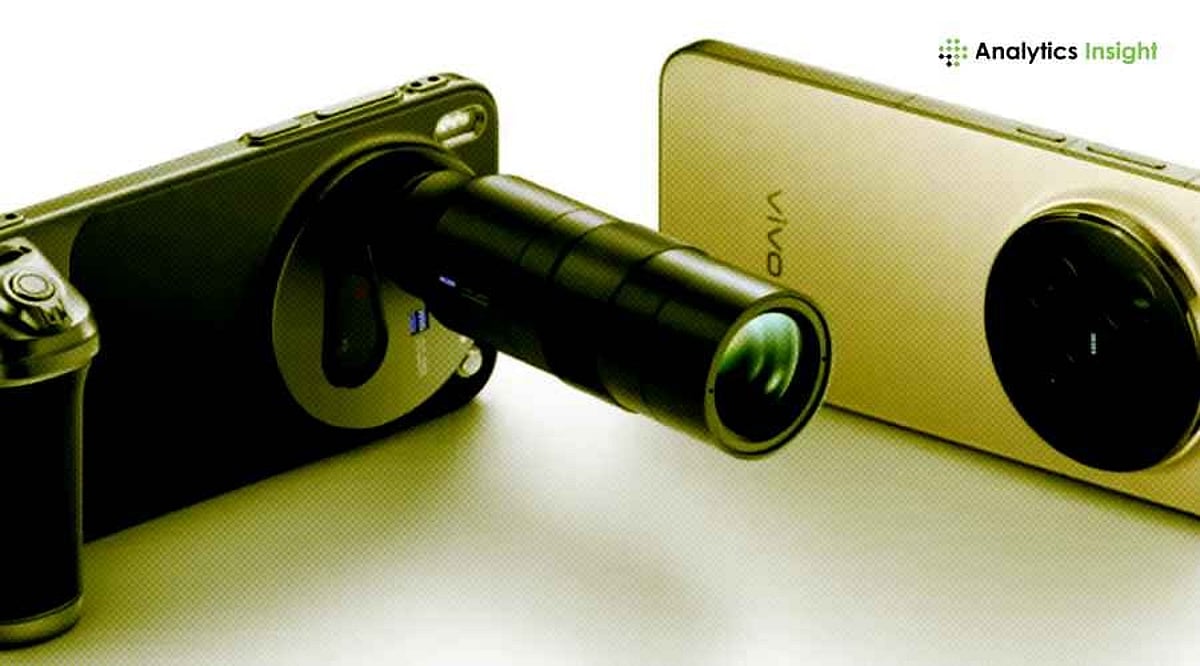
  • Vivo X500 Pro Max Goes Global: 200MP Periscope Camera and 8,000mAh Battery Confirmed by TKDN Certification

    Vivo X500 Pro Max Goes Global: 200MP Periscope Camera and 8,000mAh Battery Confirmed by TKDN Certification

    Vivo has taken a significant step toward the global launch of its upcoming flagship smartphone, the X500 Pro Max, as the device secures TKDN certification in Indonesia. The listing, bearing model number V2610, matches an earlier GSMA IMEI database entry, strongly indicating that this is the international variant of the highly anticipated handset.

    According to industry reports, Vivo is expected to unveil the X500 series in China this September, with a global rollout likely to follow shortly after. While the company has yet to confirm official dates, certification approvals typically surface just weeks before a new smartphone reaches retail markets.

    Display and Performance Expectations

    Though the TKDN listing does not disclose full specifications, trusted leaks have painted a detailed picture of the device’s hardware. The Vivo X500 Pro Max is rumored to feature a 6.85-inch flat LTPO OLED display with 2K resolution and a 144Hz refresh rate. An ultrasonic fingerprint scanner is also expected for faster, more secure unlocking.

    Under the hood, the phone may be powered by the MediaTek Dimensity 9600 chipset, with some sources suggesting a Dimensity 9600 Pro variant. This next-generation processor promises enhanced performance and power efficiency for demanding tasks such as gaming, multitasking, and daily use. Vivo has not officially confirmed the processor, so these details remain based on leaks.

    Battery and Camera Highlights

    Battery life could be a standout feature. Leaks suggest a massive battery capacity between 7,000mAh and 8,000mAh, potentially offering all-day or even multi-day usage on a single charge. Fast wired and wireless charging support is also anticipated, though exact charging speeds have not been disclosed.

    The camera system has generated considerable buzz. Reports point to a 50MP main sensor with Sony’s LOFIC technology, a 50MP ultra-wide lens, and a 200MP periscope telephoto camera capable of high-quality zoom photography. A 50MP front-facing camera is expected for selfies and video calls, rounding out a versatile imaging setup.

    Global Launch and Market Strategy

    The TKDN certification confirms that Vivo is preparing the X500 Pro Max for markets beyond China. India is often mentioned as a likely early recipient, given Vivo’s history of launching premium devices there shortly after their China debut. However, the company has not made any official announcements regarding specific markets.

    With its large battery, powerful processor, and advanced camera system, the Vivo X500 Pro Max appears poised to compete with other flagship smartphones. Official specifications, pricing, and availability details are expected to be revealed once Vivo makes a formal announcement.

    Stay tuned for more updates as the launch approaches.

  • Microsoft Layoffs Drive Bethesda to Prioritize Major Franchises Over New IPs

    Microsoft Layoffs Drive Bethesda to Prioritize Major Franchises Over New IPs

    Microsoft has announced another significant round of job cuts, impacting approximately 3,200 employees across the company. The gaming division is expected to be among the hardest hit, with reports indicating that many acquired studios may be sold or returned to independent status.

    While Bethesda has not been singled out in the layoffs, its parent company ZeniMax Media is reportedly undergoing a strategic shift. According to Bloomberg reporter Jason Schreier, ZeniMax is restructuring toward a “franchise-first model,” concentrating resources on its most successful game series.

    Schreier noted that Bethesda will likely focus on franchises like Fallout, The Elder Scrolls, Quake, Wolfenstein, and DOOM. These titles already boast large, loyal communities and a history of strong sales, offering a more stable revenue stream during uncertain times.

    This marks a departure from Bethesda’s historical approach. Prior to Microsoft’s acquisition in 2021, the studio balanced new IPs with established franchises—Starfield being a prime example of that creative freedom. Now, original projects may take a backseat as the company prioritizes expansion of existing worlds.

    Neither Microsoft nor Bethesda has officially confirmed these plans, but the reports underscore a broader industry trend: major publishers increasingly lean on proven franchises to weather financial pressures. For Xbox, trusted brands appear to be the guiding strategy as the company adapts to a new business reality.

  • Mowito Secures $3 Million Pre-Seed Funding to Advance Physical AI for Industrial Robots

    Mowito Secures $3 Million Pre-Seed Funding to Advance Physical AI for Industrial Robots

    Mowito, a startup building foundation models for industrial robot arms, has raised $3 million in a pre-seed funding round led by Version One Ventures. The round also saw participation from All In Capital, Unisol, iSeed, and a roster of angel investors, including Soumith Chintala of Thinking Machines Lab, Adarsh Kulkarni of Foundry Robotics, Ashish Kulkarni of Coformer.ai, and Vaibhav Domkundwar of Better Capital.

    How the Funding Will Be Used

    Mowito plans to use the capital to accelerate its expansion into the US market, grow its engineering and go-to-market teams, and scale deployments across automotive and electronics manufacturers globally. Co-founder and CEO Puru Rastogi emphasized that hardware is no longer the bottleneck in manufacturing—software is. “Factory robots shouldn’t need to be reprogrammed every time production changes. We believe robots should learn the same way people do: by observing and repeating,” Rastogi said. “This funding allows us to accelerate that vision, expand globally, and bring Physical AI to more manufacturing environments.”

    What Mowito is Building

    Founded in 2024, Mowito is developing physical AI models that let industrial robots learn tasks directly from demonstration, eliminating the need for engineers to hand-code every movement. Instead of reprogramming robots each time a production line changes, Mowito’s robots can observe a task once and replicate it with the precision that manufacturing demands. The company operates teams in Bengaluru and Detroit. It already has robots deployed on live manufacturing lines at a Fortune 500 automotive company and one of the world’s largest electronics contract manufacturers, supporting high-precision assembly work across automotive and consumer electronics production.

    Why Investors Are Backing the Category

    Kushal Bhagia, Partner at All In Capital, noted that manufacturing is entering a phase where AI will fundamentally reshape industrial automation. He pointed to robot programming complexity as one of the biggest structural barriers still facing the sector. Bhagia cited Mowito’s technical depth and early customer validation as reasons for backing the round, positioning the startup to help define the physical AI category as it matures.

    The funding arrives amid a broader wave of investor interest in physical and robotics-focused AI startups, as manufacturers seek ways to automate precision tasks without the lengthy reprogramming cycles required by traditional industrial robotics.

  • Nothing Phone 4b Launches in India: Snapdragon 6 Gen 4, 6,000mAh Battery, and 120Hz Display

    Nothing Phone 4b Launches in India: Snapdragon 6 Gen 4, 6,000mAh Battery, and 120Hz Display

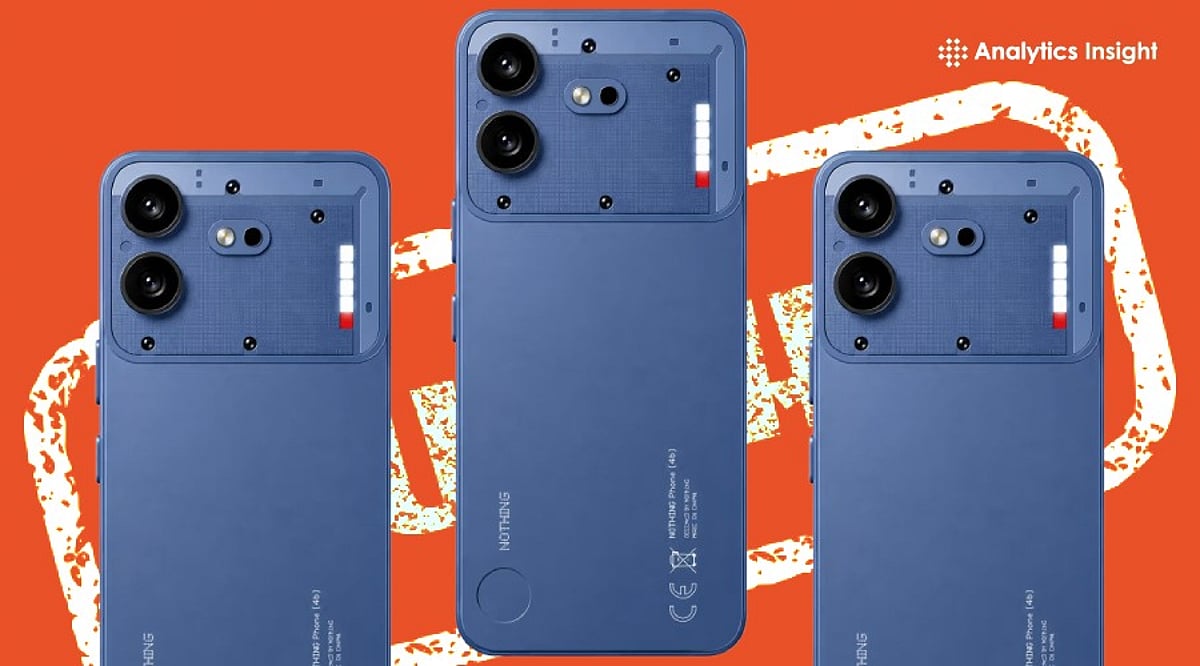
    Nothing has officially introduced the Phone 4b in India, targeting younger consumers who value a distinctive software experience and signature design language at a more accessible price point. The device will be available from July 14 via Flipkart and major retail partners including Croma, Reliance Digital, and Vijay Sales. Two configurations are offered: 8GB + 128GB at Rs. 34,999 and 8GB + 256GB at Rs. 38,999.

    Display and Build

    The Phone 4b features a 6.77-inch Samsung Super AMOLED display with Full HD+ resolution and an adaptive 120Hz refresh rate, ensuring smooth animations and scrolling. Nothing quotes a peak brightness of up to 2,000 nits for improved outdoor legibility. The exterior sports a new translucent back with unibody construction, extending Nothing’s signature semi-transparent aesthetic while giving the 4b a distinct look within the lineup.

    Performance, Battery, and Charging

    Powering the Phone 4b is the Qualcomm Snapdragon 6 Gen 4 processor, paired with 8GB of RAM and up to 256GB of internal storage. The handset packs a 6,000mAh battery that supports 33W fast charging. Additionally, the phone offers 7.5W reverse wired charging, enabling users to top up accessories or other devices in emergencies. Nothing positions the Phone 4b as a device capable of extended usage between charges for typical mixed workloads.

    Camera and Multimedia

    The dual-camera system comprises a 50-megapixel primary sensor with optical image stabilization (OIS) and an 8-megapixel ultra-wide lens. For selfies, there is a 16-megapixel front-facing camera. The phone employs Nothing’s TrueLens Engine 4 for image processing, supports dual-video recording, and can capture 4K video at 30 frames per second. Audio is handled by dual stereo speakers tuned for balanced output.

    Additional Features and Final Takeaway

    Additional hardware and connectivity features include an in-display fingerprint sensor, Bluetooth 6.0, Wi-Fi 6, and an IP64 rating for dust and splash resistance. Nothing has also refreshed the Glyph Bar and integrated on-device AI features into the software, enhancing notification interactions and everyday usability without compromising the company’s clean visual aesthetic. The Phone 4b is a well-rounded mid-range option that brings premium design and strong battery life to a broader audience.

  • Airtel vs Jio 84-Day Voice Plans: Which Prepaid Recharge Offers Better Value for WiFi-First Users?

    Airtel vs Jio 84-Day Voice Plans: Which Prepaid Recharge Offers Better Value for WiFi-First Users?

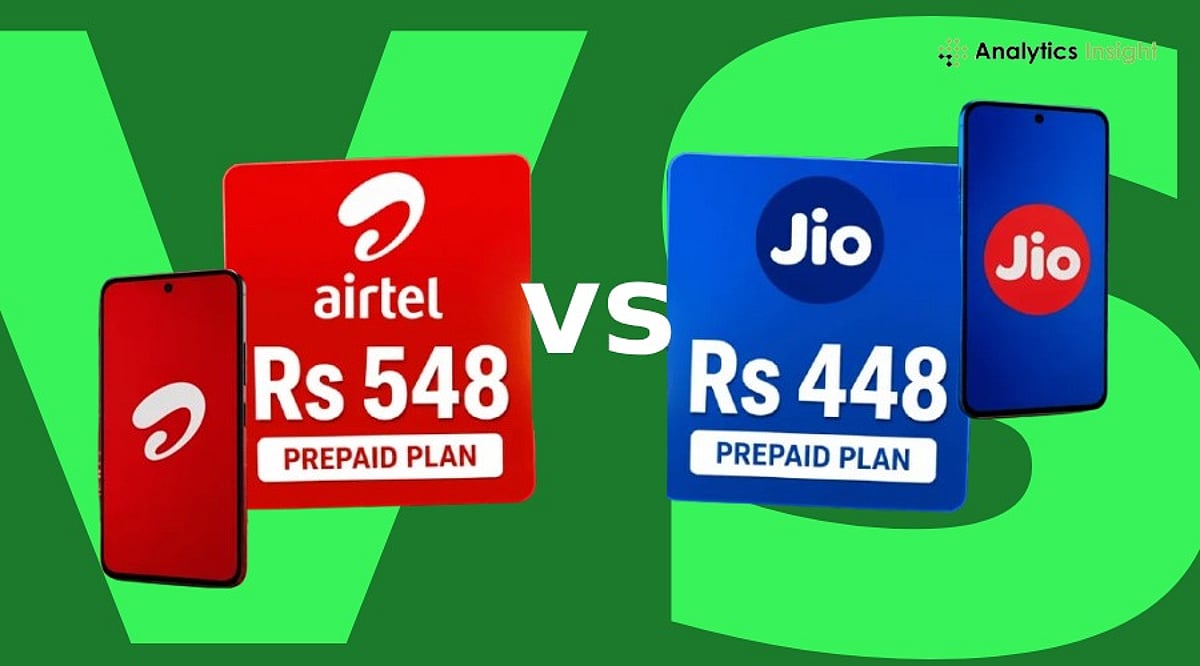
    As more consumers rely on WiFi at home and work, India’s leading telcos are sharpening their offerings for customers who need voice connectivity but little or no mobile data. Bharti Airtel and Reliance Jio both offer long-validity, voice-centric prepaid recharges that keep SIMs active while trimming costs: Airtel’s Rs. 548 and Jio’s Rs. 448 plans each run for 84 days and target budget-conscious, data-light subscribers.

    What Do the Plans Include?

    Airtel’s Rs. 548 recharge provides 84 days of service with unlimited local and STD calls across networks and 900 SMS for the entire validity period. The plan isn’t purely voice-only: it also includes a one-time 7GB data bundle for emergency use during the 84 days. Subscribers gain access to Airtel Thanks benefits, including Airtel Xstream Play, Apollo 24/7 Circle and other rewards via the Thanks app.

    Jio’s Rs. 448 pack likewise offers 84 days’ validity and unlimited calling, along with 1,000 SMS for the full term. The recharge consciously omits daily data allocations, positioning itself as a strictly voice-focused option for users who seldom use mobile internet. Jio subscribers receive access to Jio’s platform apps such as JioTV and JioAICloud, along with any additional app features tied to the plan.

    How Do They Differ?

    Jio’s Rs. 448 is priced lower than Airtel’s Rs. 548. SMS allocation favors Jio (1,000 vs 900), and both provide unlimited voice calling for the validity period.

    Airtel’s differentiator is the one-time 7GB data allowance and the Airtel Thanks ecosystem of bundled content and health services. Jio emphasizes a purer voice experience with platform app access instead of mobile data.

    Airtel vs Jio: Which Should You Pick?

    Users who prioritize unlimited calls and an affordable plan can choose Jio’s Rs. 448 as the more economical choice. If you want some mobile data for emergencies and value bundled content and service perks, Airtel’s Rs. 548 delivers that added flexibility. Either plan aims to keep SIMs active affordably for subscribers who spend most of their time on WiFi.

  • Bitcoin ETFs See $265M Inflows, Bonk Drops 8% After Treasury Hack, and Strategy Sells $216M in BTC

    Bitcoin ETFs See $265M Inflows, Bonk Drops 8% After Treasury Hack, and Strategy Sells $216M in BTC

    Key Developments in Crypto Today

    The cryptocurrency market witnessed several major events on July 7, 2026. Bitcoin spot ETFs recorded $265.69 million in net inflows, while the memecoin Bonk plunged 8% following a $20 million treasury hack. Meanwhile, Strategy (formerly MicroStrategy) executed its largest Bitcoin sale to date, divesting 3,588 BTC for $216 million.

    Bitcoin ETF Inflows Surge

    According to SoSoValue, Bitcoin spot ETFs saw a total net inflow of $265.69 million. BlackRock’s IBIT led the charge with $209.40 million in daily inflows, bringing its historical total to $60.20 billion. Grayscale’s Bitcoin Mini Trust (BTC) followed with $42.25 million, while Grayscale’s GBTC recorded the largest outflow at $44.45 million, pushing its cumulative net outflow to $27.22 billion. The total net asset value of Bitcoin spot ETFs now stands at $77.32 billion, representing 6.04% of the Bitcoin market.

    Bonk Falls After $20 Million Treasury Exploit

    Bonk slumped on Monday after attackers drained approximately $20 million worth of the memecoin from BonkDAO’s treasury via a malicious governance proposal. The decentralized autonomous organization linked to the Solana-based cryptocurrency confirmed the breach and stated it has traced the wallets involved. BonkDAO is coordinating with major exchanges, bridges, and the Solana Foundation to recover funds, and law enforcement has been notified.

    Strategy Sells $216 Million in Bitcoin

    Bitcoin treasury firm Strategy sold 3,588 BTC between June 29 and July 5 for $216 million under its newly introduced BTC monetization program. The company stated the program is designed to support dividend payments and strengthen credit quality while maintaining long-term Bitcoin exposure. After the sale, Strategy still holds 843,775 BTC worth approximately $53.88 billion, along with $2.55 billion in USD reserves.

    Stellar Network Eyes Protocol 27 Upgrade

    Stellar validators are set to vote on the Protocol 27 upgrade, nicknamed “Zipper,” on July 8. The upgrade aims to introduce native authentication delegation, allowing one account to authorize another to act on its behalf. This change simplifies developer access and improves the account authorization system within the XLM ecosystem.

    Belgium Warns Six Crypto Platforms

    Belgium’s Financial Services and Markets Authority (FSMA) added six crypto platforms to its warning list: Aurum Foundation, Bank Bit, Bithf Pro, Dxago, Global Dynamic Trade, and ZeriaFunding. The regulator stated these firms are operating without authorization under the EU’s Markets in Crypto-Assets (MiCA) framework, which came into full effect on July 1. The warning highlights increased enforcement of the new crypto regulations across Europe.

  • Bitcoin Holds $62K Support as Rising Japanese Yields Test Risk Appetite

    Bitcoin Holds $62K Support as Rising Japanese Yields Test Risk Appetite

    Bitcoin is holding near $63,300 after a turbulent week, as bulls defend the $62,000 support level. The rebound faces a fresh challenge from surging Japanese government bond yields, which have climbed to 30-year highs and are pushing global borrowing costs higher.

    Japanese 10-year bond yields rose to 2.85%, an 18-basis-point increase since the start of July. This move has lifted U.S. Treasury yields to test 4.5%, while German and UK yields are also climbing. Higher yields make fixed-income assets more attractive relative to Bitcoin, which does not pay interest, raising the opportunity cost of holding BTC.

    Bitcoin found support near $58,000 on July 1 and rallied to $64,000, driven by softer U.S. inflation data and weaker jobs numbers. Fed Chair Kevin Warsh noted on July 1 that inflation risks had diminished, and the June nonfarm payrolls report showed only half the expected job gains. The labor force participation rate fell to 61.5%, its lowest in over five years. These factors fueled rate-cut hopes and boosted risk assets.

    However, the recovery was partly futures-driven, with net futures buying reaching $415 million on Sunday while spot flows remained slightly negative. This made the rally vulnerable to a fast unwind. A subsequent sell-off was triggered by Strategy’s disclosure of a $216 million Bitcoin sale to fund dividends on preferred securities. The company sold 3,588 BTC, causing a sharp price drop.

    Bitcoin later recovered as futures buying returned, supported by $143 million in spot buying. Liquidations surged 279.73% to $236.38 million in 24 hours, forcing leveraged positions to close and driving a short squeeze. BTC is now trading in a tight range: holding above $62,000 could allow a test of $65,000, while a break below may expose $60,000 or $59,500. The Fear & Greed Index stands at 28, signaling ‘Fear.’

    Analysts remain divided on the impact of rising Japanese yields. Goldman Sachs expects the yen to weaken further and continues to favor yen-funded carry trades, suggesting that global risk appetite may not fully unwind. For now, traders are watching key support and resistance levels as macro factors and corporate flows shape Bitcoin’s next move.

  • Swiggy Stock Surges 6% as Domestic Ownership Crosses 50% Mark

    Swiggy Stock Surges 6% as Domestic Ownership Crosses 50% Mark

    Swiggy’s share price jumped nearly 6% on Tuesday after the company disclosed that foreign investment had fallen below 50%, pushing domestic ownership above that critical threshold. The news boosted investor confidence and sent the stock to an intraday high of around ₹267 before closing at ₹264 on the BSE. Despite the rally, the stock remains well below its 52-week high of ₹473, and its 52-week low of ₹235.85, recorded in June 2026.

    Shareholding Structure Shift

    In a stock exchange filing dated July 7, 2026, Swiggy reported that total foreign investment—including foreign direct investment, foreign portfolio investment, and other indirect holdings—stood at 49.76% as of July 6. Consequently, domestic ownership rose to 50.24%. The update follows a failed attempt by the company to amend its Articles of Association, a move that required 75% shareholder approval but received only 72.36%. Despite that setback, Swiggy reiterated that achieving Indian Owned and Controlled Company (IOCC) status remains a key long-term objective.

    Why This Matters

    Domestic ownership exceeding 50% is a significant milestone for Swiggy. It brings the company closer to qualifying as an IOCC under Indian regulations, which could grant Instamart—Swiggy’s quick-commerce arm—greater flexibility to operate an inventory-based model. This shift may improve operational efficiency and support better profit margins over time. The company clarified that the latest disclosure does not alter its ownership structure, management, voting rights, share capital, or daily operations; it merely informs investors of the updated foreign investment level.

    Market Reaction and Outlook

    The market welcomed the development, though the stock still faces headwinds. Swiggy’s share price has gained about 5% over the past month but declined 27% in the last six months and remains roughly 20% lower year-over-year. Investors are now watching for further updates on the IOCC process, which requires additional legal and regulatory steps. The company’s long-term stock performance will ultimately depend on business growth, improved earnings, and stronger results from both its food-delivery and Instamart segments.

  • Fake Trading Apps on WhatsApp and Telegram: How Scammers Trap Investors — and How to Stay Safe

    Fake Trading Apps on WhatsApp and Telegram: How Scammers Trap Investors — and How to Stay Safe

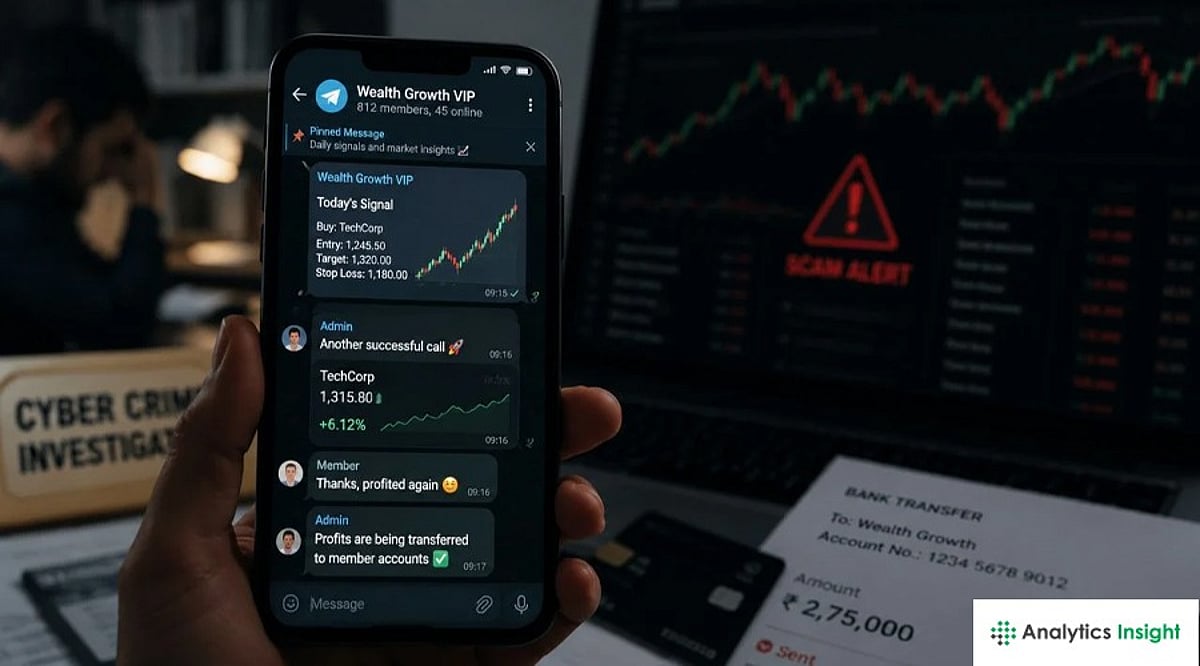
    Cybercrime investigators and consumer-rights groups are raising the alarm about a surge in investment fraud conducted through WhatsApp and Telegram groups that pose as exclusive trading clubs. According to a recent report, victims are typically added to groups that showcase fabricated screenshots of large profits and glowing testimonials. They are then persuaded to download a private-link trading app that mimics legitimate platforms. Early small returns shown on the app build trust before larger deposits are solicited.

    When victims attempt to withdraw their funds, scammers block access and demand additional payments for taxes, processing fees, or account verification — effectively stealing the entire portfolio. Authorities cite multiple high-value cases where individuals lost lakhs to crores after being convinced by staged dashboards and fake SEBI credentials.

    Officials urge the public to avoid investment advice from unknown messaging groups, verify broker registration on official portals, and never install trading apps from unverified links. The government’s cybercrime helpline and reporting portal remain the recommended channels for victims seeking redress. Experts say awareness and independent verification are the most effective defenses against these increasingly sophisticated messaging-platform schemes.

  • XRP Surges Past $1.15 Amid 62% Volume Spike and Falling Exchange Supply

    XRP Surges Past $1.15 Amid 62% Volume Spike and Falling Exchange Supply

    XRP rebounded sharply this week, climbing back above $1.15 after finding solid support near the $1.03 level. The recovery was fueled by a dramatic 62% surge in daily trading volume, which reached $1.8 billion, signaling renewed trader interest and liquidity in the market.

    Trading Activity Accelerates as XRP Recovers

    The latest rebound follows a challenging June for XRP holders, during which the token retreated from February highs above $1.55 to a low between $1.00 and $1.04 by late June. That decline marked one of the largest holder drawdowns in over a decade. Despite the price drop, institutional demand for XRP-linked spot exchange-traded funds (ETFs) weakened, with net inflows falling from $132 million in May to just $59 million in June — a 55% monthly decline.

    However, on-chain metrics painted a more optimistic picture. According to Santiment, daily active addresses on the XRP Ledger climbed to their highest level since February, when XRP was trading between $1.47 and $1.54. This suggests that retail and network activity is on the rise even as institutional inflows cool.

    Binance Supply Shrinks While Futures Reset

    Data from CryptoQuant researcher ArabxChain showed that the XRP Binance Scarcity Index reached 0.77, its highest reading in more than two years. Binance’s XRP reserves have fallen by roughly 20% since November 2024, dropping from around 3.27 billion tokens to nearly 2.6 billion. Exchange holdings also declined from approximately 2.8 billion in May to 2.6 billion in early July, indicating tightening supply.

    In addition to lower exchange balances, analyst ChartNerd highlighted what was described as XRP’s “3rd Retest” on social media platform X, identifying the pattern as a favorable entry area for traders building positions through technical analysis.

    Technical Levels Remain in Focus

    Futures market data from Coinglass revealed that funding rates turned deeply negative between June 26 and June 28 as XRP hit its recent low. This positioning set the stage for a short squeeze, which subsequently pushed XRP toward $1.13 as funding rates returned to slightly positive territory, signaling more balanced futures positioning.

    Looking ahead, immediate resistance sits near $1.20, a level that capped the mid-June recovery attempt. A daily close above that threshold would expose the $1.35 to $1.40 range, representing roughly 22% upside from current prices. The daily Relative Strength Index (RSI) remains near 55, indicating room for further gains before reaching overbought conditions. The 200-day Exponential Moving Average (EMA) stands near $1.50, while a move below $1.00 would invalidate the current recovery structure.

    Notably, XRP trading volume recently surpassed that of Bitcoin on South Korean exchange Upbit, adding another data point as traders watch whether stronger demand continues to develop.

    What’s Next?

    XRP has successfully recovered above $1.15 after finding support near $1.03, supported by increased trading volume and strengthening XRP Ledger activity. Meanwhile, declining reserves on Binance and improving futures positioning reflect shifting market dynamics. Investors will now be watching closely to see whether XRP can break decisively above the $1.20 resistance level in the coming sessions.