Blog

  • Cult.fit Files DRHP with SEBI for Rs 950 Crore Fresh Issue, Eyes IPO Launch

    Cult.fit Files DRHP with SEBI for Rs 950 Crore Fresh Issue, Eyes IPO Launch

    Fitness and wellness platform Cult.fit has taken a significant step toward going public by filing its draft red herring prospectus (DRHP) with the Securities and Exchange Board of India (SEBI). The company plans to raise Rs. 950 crore through a fresh issue of equity shares, marking one of the latest initial public offering (IPO) moves by a venture-backed consumer internet firm.

    The proposed public issue will also include an offer for sale (OFS) by several existing shareholders, allowing early investors to partially exit. According to market estimates, the total IPO size is expected to fall between Rs. 3,500 crore and Rs. 4,000 crore.

    Fresh Capital to Fuel Expansion

    According to the draft papers, the proceeds from the fresh issue will be used to strengthen the company’s growth plans, expand its business operations, and support general corporate purposes. The IPO comes as Cult.fit looks to deepen its presence in India’s rapidly expanding health, fitness, and wellness market.

    Founded as Cure.fit, the company has evolved into a multi-category fitness platform offering gym memberships, group classes, online workouts, sports facilities, and wellness services. Over the years, it has built a nationwide network of fitness centers while simultaneously pushing its digital side to reach a wider customer base.

    Part of Broader IPO Wave

    Cult.fit’s filing adds to the growing list of Indian startups moving toward public markets, especially as investor sentiment improves. Over the past year, several venture-backed tech-focused and consumer internet companies have either launched IPOs or filed draft papers, reflecting renewed confidence in India’s capital markets.

    For Cult.fit specifically, the entry into the public space is expected to attract investor attention as demand for organized fitness and preventive health services continues to climb in urban India. Analysts note that the fitness sector has shown steady momentum since the pandemic, driven by rising health awareness and accelerated digital adoption.

    The IPO’s final timeline will depend on regulatory clearances, market conditions, and the company’s decision on issue size and pricing. After SEBI clears the draft papers, Cult.fit is expected to announce the launch timeline and price band for the public offering.


  • China Enforces Ban on AI Companion Personas: New Rules Target Virtual Companions and Child Safety

    China Enforces Ban on AI Companion Personas: New Rules Target Virtual Companions and Child Safety

    China is tightening its grip on artificial intelligence with a new wave of regulations that prohibit customized AI companion personas. Starting July 15, major tech firms including Alibaba, ByteDance, and Tencent must disable features that allow users to shape virtual identities, including romantic companions. The move follows growing concerns over AI addiction, explicit content, and risks to minors.

    ByteDance’s Doubao and Alibaba’s Qwen chatbot will remove persona customization from July 15, while Tencent has already dropped similar capabilities. These features let users define a virtual entity’s identity, tone, expertise, and conversational style — effectively creating personalized digital friends or lovers. Industry observers warn that such interactions can lead to ‘AI psychosis,’ a non-clinical term describing users losing touch with reality, and many services have drifted into inappropriate or explicit territory.

    What Do China’s New Rules Say?

    The regulations, released by the Cyberspace Administration of China (CAC), specifically prohibit offering virtual intimate relationships—such as companionship services—to minors. Providers must also obtain parental or guardian consent before offering anthropomorphic AI services to children under the age of 14. The CAC reports that more than 3,500 noncompliant AI products, including mini-programmes and related services, have already been removed from the market.

    This regulatory crackdown is part of a broader effort to curb AI-generated misinformation and obscene content. As the sector continues to evolve, the next phase of rules is expected to target deepfakes and other harmful AI outputs.

  • Meme Coin Market Cools: Dogecoin, Shiba Inu, and Pepe Slide as Traders Eye Support Levels

    Meme Coin Market Cools: Dogecoin, Shiba Inu, and Pepe Slide as Traders Eye Support Levels

    The meme coin market hit a wall on Tuesday as last week’s rally ran out of steam. Dogecoin (DOGE) pulled back after hitting heavy resistance, while Shiba Inu (SHIB) remained trapped under a long-standing descending trendline. Meanwhile, Pepe (PEPE) faced a wave of profit-taking from traders cashing in on its recent double-digit run. On-chain data and chart patterns are mixed, leaving traders questioning whether current support levels will hold.

    Dogecoin Tests Support After Resistance Rejection

    DOGE is feeling the heat after getting rejected at $0.0782, dropping 1.5% to sit below $0.0745 this Tuesday. If the decline continues, the next stop could be the yearly lows near $0.0695. The indicators present a mixed picture. The daily Relative Strength Index (RSI) is scraping 35, indicating heavily oversold conditions, while the Moving Average Convergence Divergence (MACD) still holds onto its July 3 bullish crossover, suggesting buyers haven’t completely left the building.

    Market analyst Ali Charts reported that Dogecoin’s network activity climbed to roughly 50,000 active addresses on July 5. The analyst noted, ‘Something is brewing,’ as higher address activity reflected stronger user participation across the network. Large investors holding more than one billion DOGE increased their combined holdings to 73.85 billion tokens. Although whale transactions dropped to 12 on Sunday, the broader accumulation trend remained intact.

    Derivatives Data and Technical Levels Stay in Focus

    Coinglass data showed Dogecoin derivatives trading volume rose 31% to $1.26 billion, while open interest edged down 0.32% to $1.04 billion, indicating only limited new leveraged positions entered the market. Technical indicators presented a balanced picture. The RSI registered 51.52, reflecting neutral momentum, while the Chaikin Money Flow indicator remained positive at 0.08, pointing to modest but steady capital inflows.

    Analyst Jesse Peralta said DOGE continued trading inside an ascending channel and approached the channel’s lower boundary. According to the analysis, the $0.075 to $0.076 range now serves as the primary support zone. Maintaining support above $0.075 could expose the next upside target at $0.081. After that, analysts identified $0.090, $0.10, and $0.12 as potential recovery levels. A break below $0.075 could shift attention toward the $0.070 to $0.068 support zone. Market technician Celal Kucuker also reported that Dogecoin broke above its long-term downtrend line before retesting it. A successful retest could create a path toward the $0.12 target.

    Shiba Inu Faces Trendline Resistance While PEPE Retreats

    Shiba Inu gained more than 6% during the previous week before testing a descending trendline near $0.0000045. That level also aligned closely with daily resistance. SHIB failed to close above the resistance area on Sunday. It then declined more than 3% over the following two days and traded below $0.0000043 on Tuesday. If the correction continues, SHIB could revisit its yearly low around $0.0000040. Like Dogecoin, SHIB displayed mixed technical signals. Its RSI remained below the neutral level, while the MACD continued showing a bullish crossover that suggested improving underlying momentum.

    Besides the weakness in meme coins, the broader cryptocurrency market expanded by 1.04% to $2.19 trillion during the previous 24 hours. Bitcoin, Ethereum, XRP, and Solana also recorded modest gains during the same period, while PEPE pulled back as traders secured profits after last week’s strong advance.

    What’s Next?

    Dogecoin, Shiba Inu, and Pepe retreated after last week’s rally as buying momentum eased. DOGE and SHIB approached key support levels while technical indicators delivered mixed signals. Meanwhile, whale accumulation, network activity, and broader market strength remained important factors for traders monitoring the next price movement.

  • Epic Games Settles Fortnite Leak Lawsuit, Signaling Tougher Stance on Confidential Content

    Epic Games Settles Fortnite Leak Lawsuit, Signaling Tougher Stance on Confidential Content

    Epic Games has settled a legal dispute linked to Fortnite leaks, bringing fresh attention to one of the biggest issues live-service games often face. Game developers have spent years trying to stop confidential information from reaching the public before official announcements. The latest settlement shows that Epic Games is taking a tougher stand against people who share protected game details without permission.

    Leaks have become common in modern gaming. While many players enjoy early news about upcoming content, developers argue that unauthorized leaks can spoil carefully planned reveals and affect months of work.

    Epic Games Ends Fortnite Leak Dispute

    The dispute began earlier this year after the gaming giant discovered that Hayden Cohen, a former Epic Games contractor, despite signing a non-disclosure agreement, had leaked the Fortnite collaborations through his Twitter account (now X) AdiraFN. This leaker correctly tipped off some of the biggest collaborations that Epic Games had planned, including Overwatch, Masters of the Universe, and Game of Thrones.

    Once the identity was revealed, the gaming studio sued the former employee. However, it seems that none of the parties were interested in prolonging the case; instead, they reached a settlement. At this point, none of the involved parties have officially announced what the clauses were.

    Earlier, Epic Games spokesperson Natalie Munoz said that they had appealed to the court for a stipulated injunction against Cohen to ensure he would not be able to share or publish any of Epic Games’ confidential information again. Whether this appeal was granted or not has not yet been declared, but the outcome makes one thing clear: Epic Games wants to protect its future updates and send a warning that private game information should not be shared without permission.

    For many fans, leaks are a way to get an early look at upcoming content. For developers, months of planning can be spoiled in an instant. New characters, events, and game modes are often revealed through carefully planned campaigns. A leak can take away the surprise before players even see the official announcement.

    Game Companies Are Fighting Leaks More Often

    Epic is not the only publisher taking this approach. Several major gaming companies have taken action against people who shared unreleased content.

    Nintendo has taken legal action against parties involved in leaks of its games and hardware. Rockstar also tightened security after GTA 6 material appeared online before its official reveal. Ubisoft and Activision have also investigated people who leaked information from test builds and unreleased projects.

    This shows how much the gaming business has changed. A game launch is no longer just about releasing a title. Companies spend years building excitement before launch. When important details appear early, they lose control of how that story reaches players.

    A Single Leak Can Have a Big Impact

    The biggest loss is not always the leaked information itself. A single post can reduce the impact of a trailer, reveal an event, or provide a seasonal update. It may also force developers to change their plans and spend more time investigating how the information was shared.

    For Epic Games, Fortnite is more than a game. It is a live service that depends on fresh content and surprise moments to keep players interested.

    The latest settlement shows that major studios now see game leaks as a serious business issue. As live-service games continue to grow, publishers are likely to take even stronger action to protect future updates.

  • Trump’s Bitcoin Reserve Plan Stalled by Legal and Agency Disputes

    Trump’s Bitcoin Reserve Plan Stalled by Legal and Agency Disputes

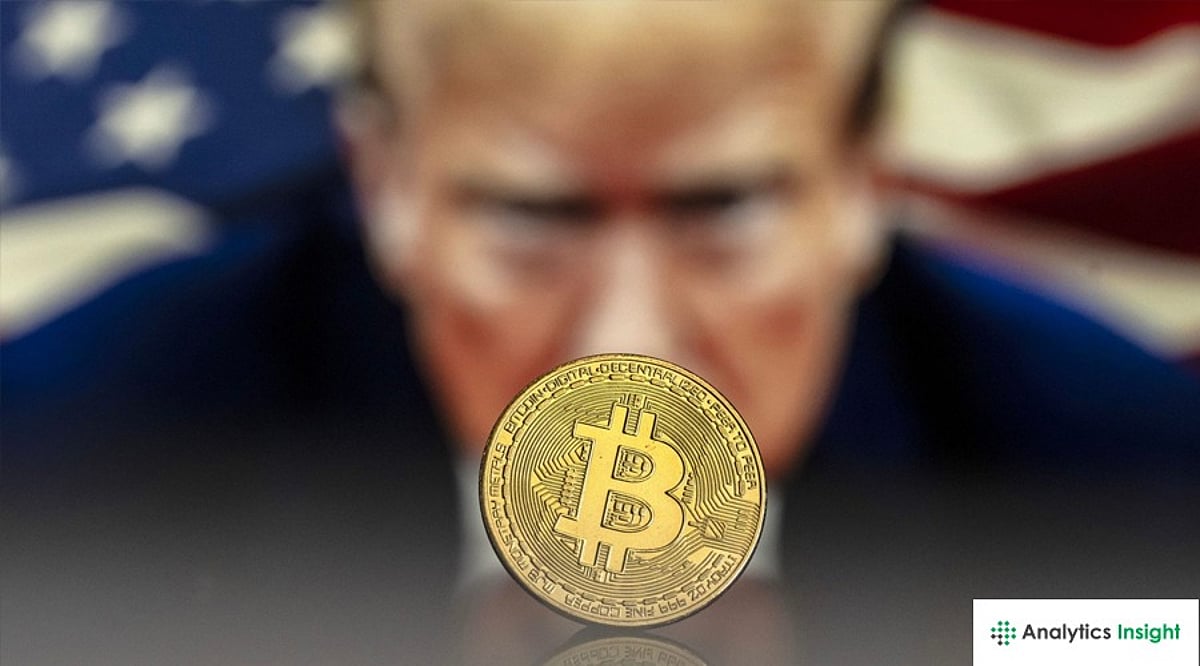
    President Donald Trump’s ambitious Strategic Bitcoin Reserve, established via Executive Order 14233 in March 2025, is facing significant delays as federal agencies grapple with unresolved legal questions and a turf war over control. The initiative aims to bolster the United States’ position in the cryptocurrency sector, but more than a year later, the reserve lacks a clear operating structure.

    At the heart of the impasse is a dispute between the Treasury Department and the Commerce Department over which agency should manage the reserve. The original plan placed the reserve under Treasury, which already oversees numerous federal assets. However, officials have raised doubts about Treasury’s legal authority to handle a large Bitcoin reserve, prompting the Commerce Department to emerge as a potential alternative. The Justice Department’s Office of Legal Counsel is now mediating, working with both agencies to identify “legally available options” for the reserve’s creation.

    Another critical issue is whether the government can hold seized Bitcoin indefinitely. The executive order prohibits the sale of Bitcoin placed into the reserve, with the White House arguing that past early sales cost taxpayers approximately $17 billion. Yet Bitcoin’s price volatility introduces legal and practical challenges, requiring a framework that allows the government to hold the asset through major price swings without creating budget pressure.

    Congress is also stepping in to provide a clearer legal foundation. The BITCOIN Act, introduced by Senator Cynthia Lummis and Representative Nick Begich in March 2025, proposes buying up to 1 million Bitcoin over five years through budget-neutral methods. This bill has been tied to broader market structure legislation, the Clarity Act, which has faced delays over stablecoin and decentralized finance regulations. A second bill, the American Reserve Modernization Act, introduced in May 2026, would place the Bitcoin reserve directly under the Treasury Department and create a separate stockpile for other digital assets.

    According to Arkham Intelligence, the federal government currently holds more than $20 billion in Bitcoin, making the United States one of the largest known sovereign Bitcoin holders. Yet the reserve still lacks a final legal framework, a named lead agency, and a clear long-term management plan. White House spokesperson Liz Huston stated that the administration continues to evaluate the best structure for the reserve and the separate US Digital Asset Stockpile, reflecting the ongoing uncertainty.

  • India Inks $1.8 Million Lobbying Pact to Deepen Engagement with Trump Administration

    India Inks $1.8 Million Lobbying Pact to Deepen Engagement with Trump Administration

    India’s embassy has signed a 12-month, $1.8 million contract with Washington-based lobbying firm SHW Partners LLC to strengthen outreach to the Trump administration. The deal, disclosed in a June 17 filing with the US Department of Justice, aims to facilitate high-level meetings, media engagement, and strategic policy discussions.

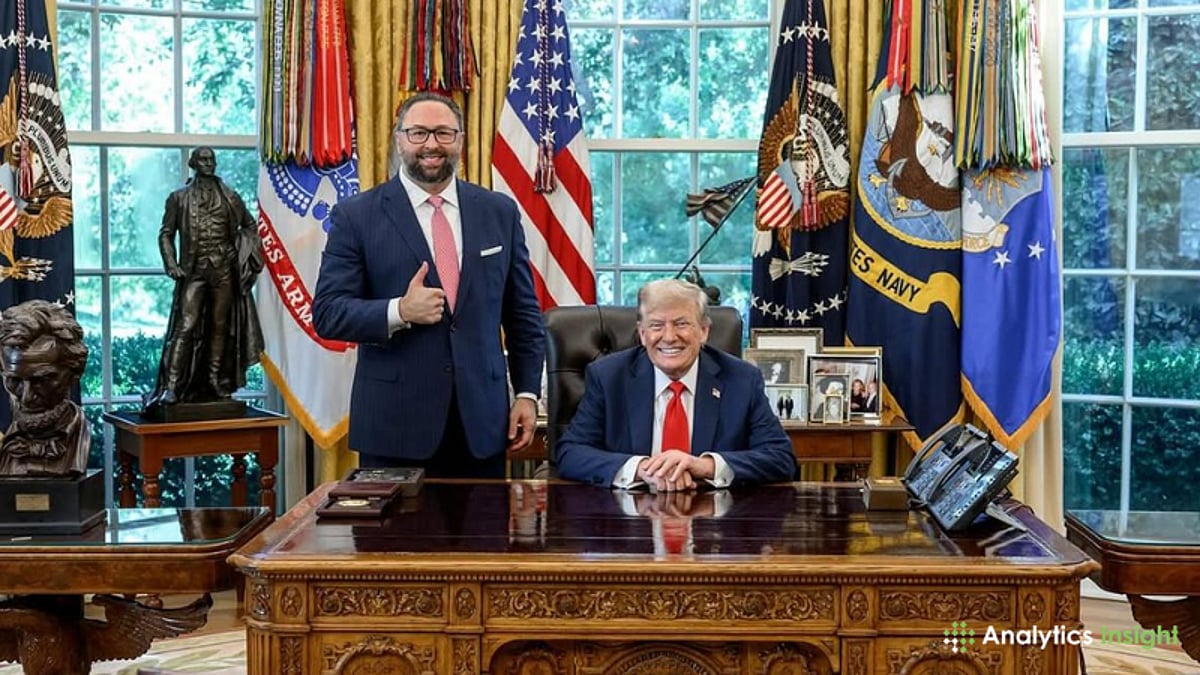
    According to the filing, SHW Partners provides “strategic counsel, tactical planning, and government relations assistance on policy matters before the US Government, US Congress, state governments, academic institutions, think tanks, and any other relevant stakeholders.” The firm, headed by President Donald Trump, specifically hired former spokesperson Jason Miller in April 2025 to lobby on India’s behalf.

    SHW Partners helped Indian officials connect with influential Trump administration figures following the April 2025 Pahalgam terror attack and May’s Operation Sindoor. Key contacts included White House Chief of Staff Susie Wiles, US Trade Representative Jamieson Greer, Under Secretary of War Elbridge Colby, and former National Security Council official Ricky Gill.

    The firm also arranged an interview for Ambassador Vinay Kwatra with Fox News anchor Brett Baier shortly after Operation Sindoor began. In June, SHW facilitated meetings between External Affairs Minister S. Jaishankar and senior US officials, including Vice President JD Vance, CIA Director John Ratcliffe, and Secretary of War Pete Hegseth.

    During July and August 2025, the lobbying firm further organized meetings with White House officials, the US Trade Representative, and Commerce Secretary Howard Lutnick to discuss ongoing US-India trade negotiations.

  • Solana Unified Trading Interface Teaser Drives Market Buzz as Network Breaks Activity Records

    Solana Unified Trading Interface Teaser Drives Market Buzz as Network Breaks Activity Records

    The Solana community is buzzing after a teaser from @jtx_trade hinted at a unified trading interface that would aggregate all markets on the blockchain. While the post lacked technical specifics, traders quickly speculated about potential shifts in liquidity and trading dynamics. The broader crypto market remains sideways, but Solana’s underlying network metrics continue to strengthen as the community awaits official details.

    Trading Surface Teaser Ignites Speculation

    The announcement suggests Solana is developing a single trading interface covering all blockchain markets, aiming to simplify access and improve efficiency. However, with no launch window or feature specifications revealed, traders are holding off on major moves. Reported trading volume has flatlined, reflecting a wait-and-see approach. Beyond the platform tease, Solana is expanding into stablecoins, AI-driven payments, and other decentralized applications, with the Solana Foundation leading discussions on stablecoins in emerging markets.

    Network Activity Hits New Milestones

    Solana achieved a historic milestone: weekly non-vote transactions exceeded one billion for the first time, excluding validator consensus votes and representing genuine user activity, dApp interactions, and trading operations. Active wallet addresses surged from 16.8 million to 29.7 million in two weeks—a 76.8% increase. Solana also ranked first among Layer 1 and Layer 2 blockchains in both 24-hour and seven-day DApp revenue, and led decentralized exchange volume across those periods. It secured second place globally in total trading activity for the second consecutive week, processing $12.25 billion across centralized and decentralized exchanges, surpassing Bybit’s $10.57 billion.

    Technical Outlook: Support and Targets

    Crypto analyst Michaël van de Poppe noted that Solana has returned to its established trading range, with a modest pullback possible before an upward move. He identified $75–$77 as critical support; holding that zone could open a path toward $100 and potentially $120. SOL is trading above its 20-day, 50-day, and 100-day moving averages, and the MACD histogram remains bullish. However, momentum has cooled after a 15% gain the prior week.

    What’s Next for Solana?

    With a unified trading interface teased alongside record-breaking network activity and growing ecosystem adoption, Solana remains in the spotlight. Rising active wallets and leading DEX volumes, combined with bullish technical signals, have traders focused on the next platform update to gauge future momentum.

  • SpaceX’s Rapid NASDAQ 100 Entry Could Trigger $4.3 Billion in Passive Fund Inflows

    SpaceX’s Rapid NASDAQ 100 Entry Could Trigger $4.3 Billion in Passive Fund Inflows

    SpaceX officially joined the NASDAQ 100 index on Tuesday, July 7, 2026, just 15 trading days after its historic public market debut. The swift inclusion follows NASDAQ’s revised entry rules designed to accommodate large new listings, making the rocket and satellite company one of the fastest additions to the benchmark.

    The company’s IPO on June 12 priced at $135 per share and raised $75 billion — the largest IPO on record. With its market capitalization now above $2 trillion, SpaceX’s inclusion in the NASDAQ 100 ensures that millions of index fund investors gain automatic exposure to the stock through ETFs and mutual funds, including those tracking the Invesco QQQ complex.

    Passive Buying Pressure Expected

    J.P. Morgan estimates that the index inclusion could generate approximately $4.3 billion in passive fund inflows. This buying is driven by index rules rather than a fundamental view on the company, meaning fund managers must adjust their portfolios to match the new benchmark composition.

    However, SpaceX’s starting weight in the index will be limited. Despite its massive market cap, only about 5% of shares are freely traded. NASDAQ uses free-float market capitalization in its index calculations, keeping SpaceX’s initial weight near 1% to 1.3%.

    Volatility Risks Remain

    SpaceX shares surged after the IPO, reaching a post-listing high near $225.64 before pulling back to around $160 just ahead of the index entry. Even after the decline, the stock remains above its $135 IPO price and $150 opening price.

    Avery Marquez of Renaissance Capital noted, “IPOs are inherently volatile, and especially in those early weeks.” The small float — combined with broader market volatility — could amplify price swings. The Cboe NASDAQ 100 Volatility Index rose about 43% through Thursday, compared with an 8% rise for the Cboe Volatility Index tied to the S&P 500.

    S&P 500 Entry Still Distant

    While SpaceX has joined the NASDAQ 100, its inclusion in the S&P 500 is not imminent. S&P Dow Jones Indices requires a one-year listing and profitability standards, which SpaceX has not yet met. This gap means that passive demand from S&P 500 index funds will come later, if at all.

    Lockup expirations also loom. Early investors and employees may become eligible to sell shares in stages. Louis Navellier of Navellier & Associates said he would consider buying SpaceX after insiders sell some shares and once the company appears ready to report a profitable quarter, highlighting the uncertainty around public market performance.

  • Meta Challenges $1.4 Trillion Penalty Demand in Youth Safety Lawsuit Over Facebook and Instagram

    Meta Challenges $1.4 Trillion Penalty Demand in Youth Safety Lawsuit Over Facebook and Instagram

    Meta has disclosed that four U.S. states are seeking approximately $1.4 trillion in penalties in a youth safety lawsuit targeting Facebook and Instagram. The company revealed the figure in a court filing on Monday, ahead of a trial scheduled for August in Oakland, California.

    The case involves California, Colorado, Kentucky, and New Jersey, which accuse Meta of designing its platforms to maximize engagement among young users and of misleading the public about safety measures. Meta has denied these allegations and questioned the penalty demand, calling it unprecedented.

    Meta Questions $1.4 Trillion Penalty Claim

    According to Meta, the proposed penalty figure emerged from filings by the attorneys general outlining how penalties should be calculated if the states prevail at trial. The company noted that the amount is close to its market value and argued that the states have not provided evidence to support such a sum.

    In its filing, Meta stated, “A sanction of that size has no analog in the history of consumer protection enforcement.” The company also asserted that the figure lacks a proper legal basis under the facts of the case.

    The states’ filings are sealed, but they explained part of their methodology at a June court hearing. They indicated that they calculated the number of alleged violations and multiplied that by fine amounts permitted under state consumer laws. The violations were based on estimates of teens and young users allegedly affected by Meta’s conduct. Representatives for the attorneys general did not immediately comment after Meta disclosed the figure.

    Facebook and Instagram Face Youth Safety Trial

    The August trial will take place before U.S. District Judge Yvonne Gonzalez Rogers. It will cover claims under the federal Children’s Online Privacy Protection Act (COPPA) as well as consumer protection claims from the four states.

    Twenty-nine states have sued Meta in federal court, with many alleging that the company collected data from children without proper parental consent. The four states also claim that Meta misled the public about whether Facebook and Instagram were safe for young users.

    Meta rejects this position. The company argues that the attorneys general have not shown that it misled users about platform addiction. It also contends that “social media addiction” is not an established psychiatric condition, so its statements about addiction cannot be false.

    Judge Rogers recently denied Meta’s request to cancel the trial, stating that factual disputes remain, including whether the platforms were addictive, whether Meta denied designing them that way, and whether the company partly directed the platforms at children.

    Meta Also Faces WhatsApp Scrutiny in India

    Separately, Meta is facing a regulatory issue in India over a new WhatsApp usernames feature. The feature would allow users to chat without sharing phone numbers. India’s Ministry of Electronics and Information Technology has asked Meta to pause the rollout and explain its safety controls.

    Officials have raised concerns that usernames could be used for spoofing or fraud, with scammers potentially copying names linked to real people, government offices, or trusted organizations. Meta has until July 9 to send a detailed response.

    WhatsApp has defended the feature, stating that usernames will be optional and that users will not be searchable only through a username. The company also says users will see safety information before replying to unknown accounts, including the sender’s country and whether the account is new.

    Also read: ChatGPT Lawsuit Claims OpenAI Secretly Shared Private User Chats with Meta and Google

  • Nintendo to Discontinue Original Switch, Lite, and OLED Models in Europe by Early 2027

    Nintendo to Discontinue Original Switch, Lite, and OLED Models in Europe by Early 2027

    Nintendo has announced that it will phase out production of the original Nintendo Switch, Switch Lite, and Switch OLED models for European retailers starting in mid-February 2027. The move brings an end to a hardware lineup that has defined the company for nearly a decade and sold over 155 million units by December 2025.

    Why Nintendo is Pulling the Plug

    Contrary to speculation, the discontinuation is not due to declining sales—the Switch lineup remains Nintendo’s most successful hardware line, surpassing even the Nintendo DS. Instead, the trigger is European Regulation 2023/1542, which mandates that consumer electronics sold in the EU must include user-replaceable batteries starting February 18, 2027. The original Switch, Lite, and OLED all use sealed, non-replaceable batteries. Rather than redesigning decade-old hardware, Nintendo has chosen to exit the European market for these devices.

    How the Switch 2 Adapts

    Instead of retrofitting older consoles, Nintendo is redesigning the newer Switch 2 to comply with the regulation. A European-market version with a “BEE” model number prefix is expected this autumn, featuring a user-replaceable battery rated at 5,172 mAh—slightly smaller than the standard 5,220 mAh unit and marginally heavier at around 411g. Updated Joy-Con 2 controllers with replaceable batteries are planned for winter, with a small weight increase and no change in battery capacity. However, not all accessories will receive this treatment; the original Switch Pro Controller and some retro-style controllers will be discontinued outright.

    What This Means for Shoppers and Existing Owners

    Nintendo has confirmed that all three original consoles will continue to be manufactured through 2026 and remain widely available across Europe for the rest of the year, giving shoppers a real window to purchase before the cutoff. Existing owners will not be left behind: games, accessories, the Nintendo eShop, and Nintendo Switch Online will continue to work “for the foreseeable future.” Notably, Nintendo has not announced similar discontinuation plans for the US or Japan, describing those markets as “currently unknown.”

    This European transition underscores the growing impact of sustainability and repairability regulations on consumer electronics—and Nintendo’s strategic pivot to a newer, more compliant hardware generation.