Blog

  • Top Home Audio Innovations Transforming Entertainment in 2026

    Top Home Audio Innovations Transforming Entertainment in 2026

    The home audio landscape is evolving rapidly, with cutting-edge technologies poised to redefine how we experience movies, music, gaming, and more in 2026. From AI-powered personalization to eco-conscious design, these trends promise to elevate every listening moment.

    AI-Powered Speakers

    Smart speakers are becoming more intuitive, using artificial intelligence to tailor sound profiles to individual preferences and room acoustics. Voice-assisted audio optimization automates controls, making it easier than ever to enjoy a customized entertainment experience.

    Dolby Atmos Systems

    Immersive three-dimensional surround sound continues to gain traction, bringing cinema-quality audio into living rooms. Whether for movies, gaming, music, or live sports, Dolby Atmos delivers a lifelike, enveloping soundstage that heightens emotional impact.

    Wireless Multi-Room Audio

    Connected speaker ecosystems enable seamless music playback across multiple rooms, with synchronized audio and effortless smartphone-based control. This trend allows users to fill their entire home with sound, adapting to different moods and activities.

    High-Resolution Streaming

    Lossless and high-resolution music streaming is becoming mainstream, offering audiophiles superior listening quality. Compatible premium home audio systems now support these formats, ensuring every note and nuance is faithfully reproduced.

    Compact Soundbars

    Slim soundbars with powerful virtual surround capabilities remain a top choice for enhancing TV audio without the need for bulky speaker setups. Their minimalist design and impressive performance make them a staple in modern home theaters.

    Voice-Control Integration

    Home audio systems are increasingly incorporating voice assistants, allowing users to control playback, manage smart home devices, and personalize entertainment through simple voice commands. This hands-free convenience is becoming a standard feature.

    Gaming Audio Enhancement

    Advanced spatial audio technologies are transforming gaming, creating immersive environments where players can pinpoint directional sounds for a competitive edge. Realistic audio cues enhance gameplay and deepen engagement.

    Eco-Friendly Designs

    Manufacturers are prioritizing sustainability by using recycled materials, energy-efficient components, and recyclable packaging—all while maintaining premium sound quality and durability. Eco-conscious consumers can now enjoy high-performance audio without compromising on environmental values.

    Personalized Audio Profiles

    AI-driven calibration automatically adjusts sound settings based on room acoustics, user preferences, and content type. This ensures optimal listening experiences for every scenario, from a quiet podcast to an action-packed blockbuster.
  • Ethereum Institutional Launches as Independent Nonprofit Backed by Bitmine, Sharplink, and Joe Lubin

    Ethereum Institutional Launches as Independent Nonprofit Backed by Bitmine, Sharplink, and Joe Lubin

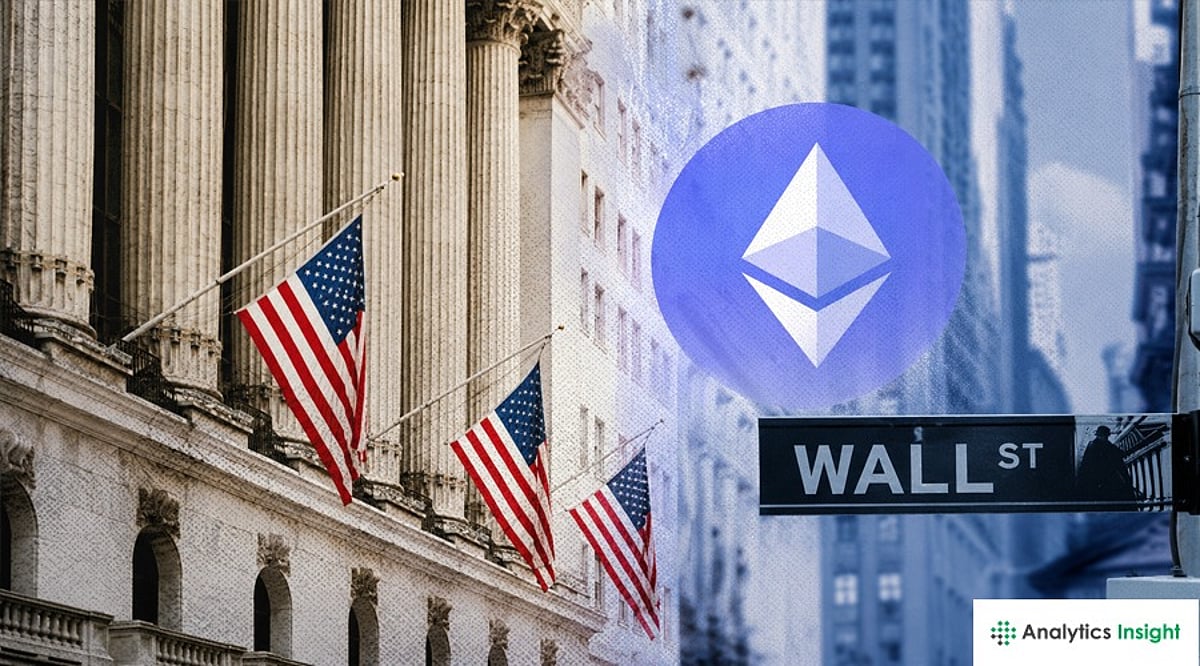
    Ethereum Institutional has officially launched as an independent nonprofit organization, marking a significant step in bridging Ethereum with traditional financial institutions. The initiative is backed by Bitmine Immersion Technologies, Sharplink Inc., and Ethereum co-founder Joe Lubin.

    The organization aims to serve as a dedicated gateway for banks, asset managers, custodians, fintech companies, market operators, and government institutions looking to engage with the Ethereum ecosystem. It will focus on outreach, coordination, and market access rather than trading, software development, or protocol research.

    David Walsh, who led the Ethereum Foundation’s enterprise unit for over five years, has been appointed as executive director. Alongside co-founder Matthew Dawson, Walsh previously built institutional relationships through the foundation, establishing a network of more than 500 institutional contacts. That network includes senior figures from both traditional finance and the digital asset industry.

    In early 2026, before the official launch, the Institutional Ethereum Forum attracted over 150 senior executives representing approximately $250 trillion in assets under management—demonstrating early access to major financial institutions.

    Board Composition and Strategic Backing

    Bitmine and Sharplink provide anchor funding for Ethereum Institutional. Both publicly listed companies hold substantial Ethereum reserves and rank among the largest publicly traded ETH treasury firms. The board includes Bitmine chairman Tom Lee, Sharplink CEO Joseph Chalom, and David Walsh. Joe Lubin, co-founder of Ethereum and CEO of Consensys, also supports the initiative.

    The treasury companies have a direct financial interest in broader Ethereum adoption, as greater institutional demand could increase ETH prices and raise the value of their corporate reserves. The organization maintains it will operate as a neutral body for the wider ecosystem.

    Global Expansion Plans

    Ethereum Institutional will initially operate across New York, London, Hong Kong, and Singapore, with plans to expand into Zurich, Frankfurt, Tokyo, and Abu Dhabi. These cities are among the world’s main centers for banking, asset management, capital markets, and digital finance, providing access to institutions that may consider Ethereum-based financial services.

    Complementary Organizations

    The launch follows the creation of EthLabs, another independent organization supported by the same anchor financiers. While EthLabs focuses on protocol research and infrastructure, Ethereum Institutional handles financial-sector outreach. Both organizations describe their operations as complementary parts of Ethereum’s next development phase.

    Their formation comes during a wider restructuring at the Ethereum Foundation, which has reduced its workforce by 20% and introduced the CROPS mandate as part of its strategic realignment. The foundation now transfers specialized responsibilities to independently funded organizations, with former foundation employees leading these units while private backers provide financial support and direct board participation.

    As a result, institutional engagement now moves outside the foundation’s nonprofit core. Ethereum Institutional will manage those relationships through a structure linked more closely to Ethereum treasury companies and infrastructure providers.

    What’s Next

    Ethereum Institutional brings formal coordination to Ethereum’s engagement with banks, asset managers, custodians, and public institutions. Backed by Bitmine, Sharplink, and Joe Lubin, the nonprofit enters with an established network and global expansion plan. Its progress will show whether structured outreach can deepen institutional Ethereum adoption while preserving operational neutrality.

  • PlayStation Plus Price Hike Rumors: Is Sony’s Service Losing Its Value?

    PlayStation Plus Price Hike Rumors: Is Sony’s Service Losing Its Value?

    Sony may be planning another price increase for PlayStation Plus, sparking fresh debate among gamers about whether the subscription service still delivers enough value. The company is reportedly evaluating its subscription business as more players gravitate toward the Extra and Premium tiers, but the prospect of higher costs has many questioning their loyalty to Sony’s ecosystem.

    During a recent interview, Sony Interactive Entertainment President Hideaki Nishino, PlayStation Studios Head Herman Hulst, and SVP Finance Lynn Azar shared insights into the company’s strategy. They noted that higher-tier plans now account for 40% of subscribers, reflecting strong demand. “PS Plus remains a key driver of profitability, and we achieved record-high PS Plus profitability in FY2025,” one executive stated. However, just two months after the last price hike, Sony hints that further adjustments may be on the horizon.

    The potential price increase comes amid a series of controversial decisions by Sony. The company has raised PlayStation 5 prices in several markets and plans to eliminate physical discs for all first- and third-party games by 2028. This move toward an all-digital future has drawn sharp criticism from players and even French presidential candidate Jean-Luc Mélenchon, who tweeted, “Tomorrow, you will pay without ever owning anything. No loan, no resale, no guarantee of keeping what we’ve paid for.” Mélenchon vowed to protect players’ rights, stating, “Video games are not mere merchandise; they are cultural assets.”

    Many gamers share these concerns, fearing that a fully digital ecosystem gives them fewer choices and greater dependency on online stores. If PlayStation Plus becomes more expensive, some may explore alternatives like PC gaming, which often doesn’t require a paid subscription. Free-to-play titles such as Fortnite, Call of Duty: Warzone, Marvel Rivals, and Genshin Impact continue to attract millions without demanding annual fees.

    Sony still holds a dominant position in the gaming industry, but each price increase raises the stakes. Ultimately, players will decide whether the service justifies its cost. For now, the question remains: is PlayStation Plus still worth it?

  • Standard Chartered Launches Direct USDC Minting and Redemption for Institutional Clients in Dubai

    Standard Chartered Launches Direct USDC Minting and Redemption for Institutional Clients in Dubai

    Standard Chartered has become the first Global Systemically Important Bank to offer direct USDC minting and redemption services to eligible institutional clients. The service, launched through the bank’s Dubai International Financial Centre operations on July 2, 2026, integrates banking, custody, and digital asset access into a single onboarding process.

    In partnership with Circle, the issuer of USDC, Standard Chartered enables institutions to mint and redeem the stablecoin without needing a separate account with Circle. The bank stated that this launch marks the initial phase of a broader stablecoin strategy, with plans to expand into additional markets pending regulatory approvals.

    Dubai Operations Open USDC Access for Institutions

    Standard Chartered is the first systemically important bank licensed to offer institutional access to USDC minting and redemption through its own platform. The service connects fiat banking, digital asset infrastructure, and public blockchain networks under the bank’s existing compliance, governance, and risk management frameworks.

    Eligible clients can now access USDC through the bank’s Dubai operations. Future market expansions will depend on regulatory clearance and local market readiness, though the bank has not yet specified which regions will follow.

    This launch adds another regulated digital asset service to the United Arab Emirates, which has been developing a robust blockchain and stablecoin ecosystem. However, Standard Chartered has not disclosed client numbers, transaction limits, fees, or minimum account requirements.

    Service Supports Settlement, Treasury, and Liquidity

    The service targets institutional use cases such as on-chain settlement, treasury operations, and liquidity management. Clients can move value between traditional banking systems and blockchain networks through a single provider.

    Standard Chartered plans to combine banking, custody, and digital asset services within the same institutional offering, applying its normal controls to stablecoin-related transactions. Roberto Hoornweg, CEO of the bank’s corporate and investment banking division, noted that digital assets are becoming a key part of global financial infrastructure and that institutional clients expect “the same levels of trust and governance” found in traditional markets.

    The current offering focuses on minting and redemption. Clients can create USDC by transferring eligible funds through the bank and redeem the stablecoin back into fiat currency. Payment-related services remain under development, with no launch date announced.

    Circle Partnership Expands Institutional USDC Access

    Circle provides the USDC infrastructure behind the service. The company issues the stablecoin through regulated entities and manages the minting and redemption process. Kash Razzaghi, Circle’s Chief Commercial Officer, said financial institutions are seeking “trusted ways to access stablecoins” and blockchain-based markets, and that the partnership could support settlement, payments, and treasury operations while maintaining compliance standards.

    As of July 2, 2026, USDC traded near $1.00, with a market capitalization of approximately $73.2 billion and a 24-hour trading volume of about $15.6 billion. The stablecoin operates across several public blockchain networks and is widely used for transfers, settlement, trading, and liquidity management.

    Future versions of the service may support payment-related uses, but the bank has not provided a timeline. Retail customers are not included in the initial rollout.

  • Bitcoin, Ethereum, and XRP Surge Ahead of $2.2 Billion Options Expiry

    Bitcoin, Ethereum, and XRP Surge Ahead of $2.2 Billion Options Expiry

    Crypto markets rallied on July 3 as Bitcoin, Ethereum, and XRP climbed ahead of a major options expiry totaling over $2.2 billion. The upward movement followed weaker-than-expected U.S. payroll data, which strengthened expectations for a Federal Reserve rate cut. The rally was further fueled by nearly $300 million in short liquidations, improved liquidity signals, and deep unrealized losses among holders that historically precede market recoveries.

    Bitcoin Options Signal Bullish Shift

    Bitcoin rose more than 6% to approximately $62,000 after a recent market reset, moving above its seven-day moving average. Deribit data showed $1.9 billion in Bitcoin options expiring with a put-to-call ratio of 0.70 and a maximum pain level near $61,000. The market price hovered around $61,626, with traders showing stronger interest in contracts above $61,500 and upcoming calls at $64,000, $66,000, and $70,000. Call trading volume exceeded put volume in the previous 24 hours, producing a bullish 0.75 put-to-call ratio across active Bitcoin options.

    Falling implied volatility and a rising 25-delta skew indicated that options markets were shifting from panic toward greater stability. This shift suggests that stronger call demand and improving volatility measures could support a wider recovery as traders move beyond the July 3 expiry.

    Ethereum and XRP Recover on Rate-Cut Hopes

    Ethereum traded near $1,713 before $230 million in options expired, with a maximum pain price of approximately $1,650. The expiry carried a 1.29 put-to-call ratio, though that figure declined toward one as traders opened September calls around the $2,500 strike. Deribit data assigned Ethereum a 91% probability of finishing above $1,700, reflecting stronger positioning after the recent rebound.

    XRP gained about 5% in 24 hours, trading near $1.10 as softer employment data strengthened expectations for a future Federal Reserve rate cut. Approximately $3.7 million in XRP options reached expiry with a 1.06 put-to-call ratio and a maximum pain level near $1.06. Deribit data also indicated a possible $1.14 XRP target by the end of July as the market continued to recover.

    Holder Losses and July Seasonality Shape Outlook

    Santiment data showed deep unrealized losses across short-term and long-term holder groups, with 30-day and 365-day MVRV ratios near minus 45% and minus 47%. The MVRV ratio, which compares market value with realized value, offers insight into how current prices differ from the average token cost basis. Large negative readings have historically appeared after speculative excess declined, leaving a market with fewer short-term participants and more conviction-driven holders.

    Bitcoin still traded below its 30-day moving average, while 10x Research identified continued supply pressure from large transfers to the Gemini exchange. The Winklevoss twins transferred about $67 million in Bitcoin and Ethereum to Gemini, a move linked to profit-taking pressure. However, long-term holders increased purchases, helping to form a firmer price floor after Federal Reserve Chair Kevin Warsh avoided signaling immediate interest rate increases.

    Markus Thielen of 10x Research noted that July has historically delivered Bitcoin’s strongest monthly performance, averaging 9.1% gains before flatter trading in August and September.

    What’s Next for Crypto Markets?

    Bitcoin, Ethereum, and XRP gained ahead of the $2.2 billion options expiry as weaker U.S. jobs data increased rate-cut hopes. Strong call demand, short liquidations, and renewed long-term buying supported the rebound. Traders should now watch key expiry levels and liquidity trends for signs of sustained recovery.

  • Apple to Launch Five New iPhones by 2027, Including Foldable Model with Higher Production Target

    Apple to Launch Five New iPhones by 2027, Including Foldable Model with Higher Production Target

    Apple is reportedly preparing to launch at least five new iPhone models between the second half of 2026 and early 2027, including its first foldable device. The company has raised its foldable production target and is exploring new memory chip suppliers as AI-driven demand tightens global component supplies.

    The planned lineup includes the company’s first foldable iPhone, a standard iPhone 18, and a new iPhone Air model. Apple is also reviewing new memory chip suppliers as demand from artificial intelligence data centers limits global supplies. Apple has not confirmed the product plans or its reported discussions with Chinese chipmakers.

    Apple Raises Foldable iPhone Production Plans

    Apple has reportedly asked suppliers to prepare components for about 10 million foldable iPhones in 2026, up from an earlier target of between 7 million and 8 million units. The increase suggests Apple is allocating more production capacity to its first foldable smartphone. Still, the figures come from people familiar with the supply chain, and Apple has not publicly announced the device or confirmed its expected production volume.

    Reports have described the foldable phone as a premium model that could sit above Apple’s existing Pro lineup. Some market estimates have placed its possible price near $2,500, although Apple has not provided any official pricing information. Meanwhile, Samsung and Huawei already sell several foldable smartphone models. Apple’s entry would add another major brand to the category, which remains smaller than the standard smartphone market.

    Apple has also secured parts for about 80 million new iPhones scheduled for production in the second half of 2026. Its total smartphone output could exceed 220 million units this year, according to current supplier estimates.

    Five-Model Roadmap Extends into Early 2027

    Apple’s reported launch schedule covers at least five devices across two release periods. The company is expected to introduce several models in late 2026 before adding the standard iPhone 18 and another iPhone Air in early 2027. A spring release would mark a change from Apple’s usual approach of launching its main iPhone range in September. The move could allow the company to spread demand across the year and target different price groups at separate times.

    One supplier executive reportedly said Apple has ‘good motivation’ to release iPhones in spring and gain market share. However, the launch timetable remains unconfirmed, and production plans can change before devices enter mass manufacturing.

    Apple’s purchasing scale may also give it more access to limited memory supplies than smaller smartphone makers. Reports say Xiaomi, Oppo, and Vivo have reduced annual production targets to below 100 million units amid higher component prices. Additionally, Apple recently raised prices for some MacBook and iPad products as memory and storage costs increased, showing how supply pressure has reached several parts of the consumer electronics market.

    Apple Considers Chinese Memory Chip Suppliers

    Apple is reportedly holding discussions with ChangXin Memory Technologies and Yangtze Memory Technologies about supplying chips for devices sold in China. The talks are said to be ongoing, and no agreement has been announced. Both Chinese companies appear on a Pentagon list of businesses accused of links to China’s military, so any supply agreement could face political and regulatory review in the United States.

    Apple is seeking more supply options as AI data centers consume a growing share of global memory production. Strong demand for DRAM and NAND chips has raised prices for smartphone, computer, and data-center manufacturers. Using more suppliers could help Apple secure enough parts and negotiate better purchasing terms. Nevertheless, the company must consider product quality, production capacity, trade rules, and restrictions linked to Chinese technology companies.

    Apple has not commented on the reported supplier talks. The company has also not confirmed the foldable iPhone, its five-model launch schedule, or its production targets through early 2027.

  • XRP Climbs to $1.11 as Ripple Boosts RLUSD Minting on XRP Ledger

    XRP Climbs to $1.11 as Ripple Boosts RLUSD Minting on XRP Ledger

    XRP rose 1.33% to trade near $1.11 within 24 hours, outperforming Bitcoin’s 0.61% increase and the broader crypto market’s 0.97% rise. The token maintained a 9.37% weekly gain, though declining trading volume indicated limited buying pressure.

    Market data points to a broad crypto recovery as the primary driver of XRP’s move. The token tracked the wider market but posted stronger gains. No clear token-specific catalyst appeared in the price data, while trading volume fell 16.26%. Traders are monitoring whether XRP can sustain support between $1.05 and $1.10 and test resistance near $1.15.

    XRP Outpaces Bitcoin as Volume Falls

    XRP’s daily gain placed it ahead of Bitcoin and the crypto market. The relative strength suggests selective demand, although the move still followed the wider market direction. The Altcoin Season Index also dropped to 46, indicating that capital has not strongly shifted into altcoins.

    The lower trading volume limits confirmation of the advance. A daily close above $1.12 could support a move toward $1.15, while a drop below $1.08 may signal weaker momentum. Bitcoin’s next move will also be critical, as a broad market decline could pressure XRP without a new coin-specific event.

    Ripple Expands RLUSD Supply on XRP Ledger

    Ripple increased RLUSD minting across the XRP Ledger (XRPL) and Ethereum, issuing a total of $291.6 million. Approximately $225.8 million, or 77%, was minted on XRPL, while Ethereum accounted for about $65.8 million.

    On July 1, Ripple minted roughly $169.8 million and burned $150,000, with nearly all issuance on XRPL. On July 2, the company minted $121.8 million and burned $68.1 million across both networks. After the two-day activity, XRPL recorded a net supply increase of $167.7 million, while Ethereum added about $55.75 million.

    The latest issuance followed a large XRPL burn at the end of June. Ripple burned about $146.3 million on June 30, producing a net supply drop of $136.1 million that day. Part of the July minting therefore replaced supply removed earlier rather than creating entirely new growth.

    RLUSD’s total supply now stands near $1.634 billion. XRPL holds about $844.5 million, or 51.7%, while Ethereum holds approximately $789.83 million, or 48.3%. The figures show a near-even split, with recent minting activity leaning toward XRPL.

    Santiment Flags Deep XRP Holder Losses

    Santiment reported that XRP’s 30-day market value-to-realized value (MVRV) ratio fell to its weakest level since December 2020. The data shows the average active trader down about 47%, placing many recent buyers in a deep loss position.

    The analytics firm said ‘fear and frustration’ had reached rare levels that previously appeared before rebounds. Still, Santiment added that ‘weak MVRV readings alone do not guarantee a reversal.’ The statement frames the data as a possible relief-rally setup, not confirmation of a durable recovery.

    Social sentiment has also turned more negative, with bullish and bearish commentary moving closer to balance. Such readings can reduce selling pressure when many holders already sit at a loss. However, XRP still needs stronger volume, stable Bitcoin trading and fresh market demand to confirm any wider rebound.

    Some market watchers are tracking a possible move toward $1.40 if XRP holds support and buying interest improves. The key levels sit near $1.05 on the downside and $1.15 on the upside, while a daily close above $1.12 could provide the first technical sign of stronger momentum.

  • Meta Launches Pocket: AI-Powered App Lets Anyone Create and Share Mini Games Without Coding

    Meta Launches Pocket: AI-Powered App Lets Anyone Create and Share Mini Games Without Coding

    Meta has quietly launched a new AI-powered app called Pocket, marking the company’s entry into the gaming space. The app allows users to create, play, and share mini games using simple text prompts — no coding or game development experience required. This move signals Meta’s ambition to extend its AI capabilities beyond chatbots and image tools into interactive entertainment.

    What Is Pocket?

    Pocket is a social app designed for quick and easy game creation. According to reports, the app is the result of Meta’s acquisition of the vibe-coded gaming platform Gizmo earlier this year. Gizmo was described as a creative platform for making and sharing small interactive experiences, which Pocket now offers under a new name.

    The app was released on the Google Play Store on June 29, 2026. Once installed, users can type a short prompt, and the AI generates a mini game based on that idea. The finished game can be played immediately, shared with friends, and improved over time.

    Game Creation Simplified

    Pocket focuses on short, casual games rather than large, narrative-driven titles. The key innovation is that users no longer need to learn programming or use complex software. Anyone with a smartphone can turn an idea into a playable game in seconds. Meta hopes this will encourage more people to become creators rather than just consumers of content.

    AI Opens the Door for New Creators

    Pocket is part of a broader trend where AI is lowering the barriers to creative tasks. In the past, game development required months of learning coding and mastering tools. Now, AI handles much of the heavy lifting, enabling students, social media users, and small creators to experiment and iterate quickly.

    This could accelerate prototyping and feedback loops, allowing creators to build minimum viable products and refine them based on user input.

    Pocket’s Role in Meta’s Bigger Strategy

    Pocket may be more than just a fun app — it fits into Meta’s long-term vision for AI and social experiences. While Meta has heavily invested in the metaverse, the high cost and complexity of VR devices have limited adoption. Pocket offers a different approach: almost anyone with a smartphone can use it.

    If Pocket gains traction, it could shift user behavior from passive scrolling to active creation and sharing of games, potentially becoming a new way for Meta to keep users engaged on its platforms.

    As AI continues to reshape entertainment, Pocket represents a significant step toward democratizing game development and making it accessible to everyone.

  • 10 Most Overpowered Anime Characters of All Time, Ranked by Power and Influence

    10 Most Overpowered Anime Characters of All Time, Ranked by Power and Influence

    Anime has introduced countless characters with incredible abilities, but only a few stand out as truly overpowered — beings whose strength defies logic and often reshapes the very worlds they inhabit. From一拳超人的 Saitama to the reality-bending Anos Voldigoad, these characters dominate their stories with unmatched power.

    Saitama (One-Punch Man)

    Saitama achieved ultimate strength through a simple but intense training routine. His defining trait: defeating any opponent with a single punch. No matter how dangerous the enemy, he remains calm and unbeatable, turning serious battles into comedy. Saitama is perhaps the most iconic overpowered hero in anime.

    Son Goku (Dragon Ball)

    Goku has spent his life pushing past limits through relentless training and combat. From Super Saiyan to Ultra Instinct, each transformation elevates his power to new heights. His endless determination and ability to overcome stronger foes make him one of the greatest and most powerful anime heroes of all time.

    Rimuru Tempest (That Time I Got Reincarnated as a Slime)

    Rimuru starts as an ordinary slime but rapidly gains extraordinary abilities through evolution. Powers like Predator, Great Sage, and later Raphael allow him to copy skills, create powerful magic, and reshape entire worlds. His intelligence and limitless growth make him one of the strongest fantasy anime protagonists in recent years.

    Anos Voldigoad (The Misfit of Demon King Academy)

    Anos Voldigoad is the reincarnated Demon King whose power far surpasses ordinary magic. He defeats enemies effortlessly, revives himself after death, and bends reality with overwhelming spells. Even the strongest opponents struggle against him, cementing him as one of modern fantasy anime’s most unstoppable characters.

    Gojo Satoru (Jujutsu Kaisen)

    Gojo Satoru possesses the legendary Six Eyes and Limitless technique, granting him unmatched control over cursed energy. His Infinity ability makes him nearly untouchable, while Hollow Purple destroys almost anything in its path. His confidence, skill, and overwhelming strength have made him a fan-favorite overpowered character.

    Zeno (Dragon Ball Super)

    Despite appearing as an innocent child, Zeno is the ruler of all universes. With a simple gesture, he can erase entire universes from existence without effort. No warrior, god, or angel approaches his authority or destructive power, placing him at the absolute top of the Dragon Ball hierarchy.

    Madara Uchiha (Naruto Shippuden)

    Madara Uchiha became nearly unstoppable after gaining the powers of the Ten-Tails and the Rinnegan. He overwhelmed entire armies, defeated legendary shinobi, and nearly completed the Infinite Tsukuyomi plan. His unmatched battle skills, powerful techniques, and strategic brilliance make him one of anime’s greatest overpowered villains.

    From Saitama’s one-punch simplicity to Zeno’s universe-ending authority, these characters continue to captivate fans with their impossible power levels. Whether heroes or villains, they define what it means to be truly overpowered in anime.

  • 7 Smartphone Charging Habits That Are Slowly Destroying Your Battery

    7 Smartphone Charging Habits That Are Slowly Destroying Your Battery

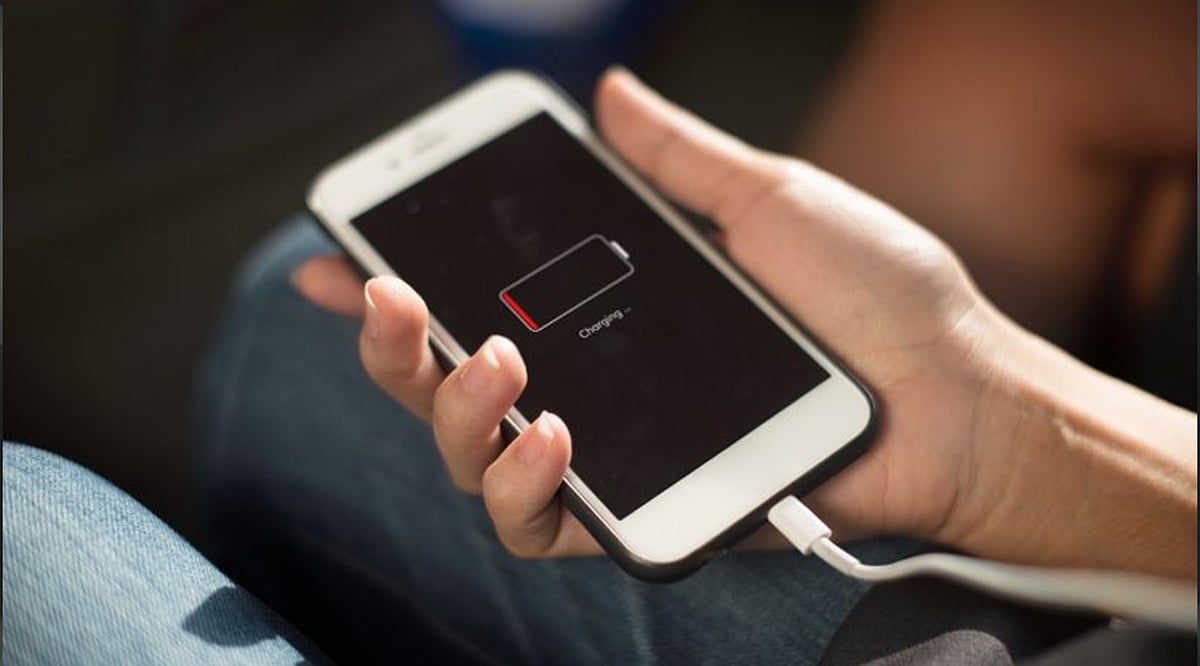
    Your smartphone battery is built to last for years, but everyday charging habits can dramatically shorten its lifespan. Many users unknowingly expose their batteries to excessive heat, voltage stress, and unnecessary wear. By steering clear of these common mistakes, you can keep your phone running efficiently and preserve its battery health well into the future.

    1. Charging Overnight Every Night

    Plugging in your phone before bed may be convenient, but keeping the battery at 100% for hours on end creates long-term stress. While modern phones include smart charging features that slow the top-up near full, making overnight charging a daily routine still contributes to gradual capacity loss.

    2. Letting the Battery Drain to Zero

    Old nickel-based battery advice led many to believe a full discharge was necessary. Lithium-ion batteries, however, suffer under deep discharges. Frequently hitting 0% strains the cells. For optimal health, charge when the level drops to around 20% and unplug before it reaches 100%.

    3. Using Cheap or Uncertified Chargers

    Not all chargers meet safety standards. Low-quality or counterfeit adapters can deliver unstable voltage, causing overheating and slower charging. Over time, they can permanently damage the battery. Always stick with the original charger or a certified replacement from a trusted brand.

    4. Gaming or Streaming While Fast Charging

    Playing graphics-intensive games, watching videos, or multitasking during a charge generates extra heat. Combined with fast charging, the temperature spike accelerates battery degradation. Let your phone rest while it charges to keep temperatures in check.

    5. Charging in Hot Environments

    Heat is a battery’s worst enemy. Charging your device in direct sunlight, inside a parked car, or under a pillow traps heat and raises the risk of overheating. Place your phone on a hard, cool surface with good airflow while it charges.

    6. Keeping the Battery at 100% All the Time

    Topping up to full repeatedly during the day may seem harmless, but lithium-ion cells experience stress at high charge levels. If your routine allows, maintaining a charge between 20% and 80% can significantly slow aging and preserve long-term performance.

    7. Ignoring Software and Battery Health Updates

    Software updates often include improvements to battery optimization, charging efficiency, and thermal management. Skipping them can prevent your device from performing its best. Regularly check your phone’s battery health settings to catch early signs of wear.

    Adopting these simple changes can help your smartphone battery stay healthy for years, saving you the cost and hassle of an early replacement.