Blog

  • Bitcoin Bounces Above $60K as Long-Term Holders Resume Accumulation

    Bitcoin Bounces Above $60K as Long-Term Holders Resume Accumulation

    Bitcoin recovered to around $60,350 on July 2, gaining 2.37% in 24 hours as the US dollar and crude oil prices dropped to four-month lows. The rebound followed a dip to a 21-month low earlier in the week, with improved risk sentiment helping the cryptocurrency reclaim the key $60,000 level.

    Weaker Dollar Supports Bitcoin’s Recovery

    CoinSwitch noted that the dollar’s retreat created a favorable environment for Bitcoin, as long-term investors increased their holdings during the recent market decline. The firm reported that long-term holders added 270,000 BTC within two weeks, absorbing some of the selling pressure from spot Bitcoin exchange-traded fund (ETF) outflows.

    Funding rates remained positive for three consecutive days, indicating that derivatives traders continued to favor long positions despite June’s steep decline. CoinSwitch advised traders to wait for a confirmed close above $61,000 before treating the rebound as a reliable shift in Bitcoin’s short-term direction.

    ETF Outflows Meet Renewed Accumulation

    Spot Bitcoin ETFs recorded $4.5 billion in net outflows during June, adding selling pressure as Bitcoin lost about 20% across the month. However, Glassnode data showed that the long-term holder net position change returned to positive territory after an extended period of distribution.

    The indicator tracks the 30-day supply change among wallets holding Bitcoin for at least 155 days, which Glassnode classifies as long-term holders. Current net accumulation ranges between approximately 50,000 and 100,000 BTC, according to Glassnode’s chart. Previous bullish buying waves approached 400,000 BTC.

    Glassnode said transitions from distribution to accumulation have often appeared during weak markets, as committed investors increase exposure while shorter-term participants reduce risk.

    Buying Spreads Across Bitcoin Wallet Groups

    Glassnode’s Accumulation Trend Score increased over the past month, suggesting that buying expanded across several wallet groups rather than remaining concentrated within one category.

    • Wallets holding less than one BTC recorded the strongest score, near 0.8 to 0.9.
    • Holders of between 100 and 1,000 BTC showed similar accumulation.
    • Wallets holding between one and 100 BTC posted moderate readings of about 0.6 to 0.7.
    • Wallets containing 1,000 to 10,000 BTC also became net buyers.

    By contrast, wallets holding more than 10,000 BTC remained near neutral, with readings around 0.4 to 0.5 and limited evidence of aggressive accumulation. Glassnode said widespread buying can support longer-term market recoveries, but cautioned that Bitcoin has not entered a complete accumulation phase.

    Meanwhile, investors continued monitoring the upcoming US nonfarm payrolls report, which could influence expectations surrounding the Federal Reserve’s interest-rate outlook. Mudrex Lead Quant Analyst Akshat Siddhant identified $61,000 as the next important upside level, while $58,300 remained Bitcoin’s main support area.

    What’s Next?

    Bitcoin’s rebound above $60,000 gained support from a weaker US dollar and renewed accumulation by long-term holders, although ETF outflows and cautious whale activity still limit confidence. Traders should watch for a confirmed break above $61,000 and the $58,300 support level before judging whether the recovery can continue.


  • YouTube Launches ‘America 250’ Hub for Fourth of July with Creator Content and Live Streams

    YouTube Launches ‘America 250’ Hub for Fourth of July with Creator Content and Live Streams

    As the United States approaches its 250th Independence Day, YouTube has unveiled a dedicated ‘America 250’ hub designed to bring the celebration to screens nationwide. The platform is curating a mix of creator-led recipes, crafts, historical deep-dives, and live streams of fireworks and parades, making it easy for viewers to join the festivities from home or their local neighborhoods.

    The hub features a wide array of content, from educational videos exploring the nation’s founding and iconic landmarks to DIY tutorials for patriotic decorations and party crafts. Popular history creators are contributing videos that highlight significant milestones tied to the 250th anniversary, while lifestyle creators share practical ideas for hosting Independence Day gatherings. Interactive elements, such as coloring books themed around national parks, add a family-friendly touch.

    YouTube’s initiative is part of a broader strategy to turn national moments into digital events. By livestreaming concerts, parades, and user-uploaded clips, the platform aims to engage millions of users in one of America’s most important anniversaries. The hub also supports the official America 250 celebration, encouraging broader participation through community-driven content and real-time event mapping.

    Whether you’re looking for historical insights, festive recipes, or simply want to watch fireworks from across the country, YouTube’s America 250 experience offers something for everyone this Fourth of July.

  • Supreme Court Overturns Essel Infra Insolvency Orders Citing AI-Generated Fake Legal Precedents

    Supreme Court Overturns Essel Infra Insolvency Orders Citing AI-Generated Fake Legal Precedents

    The Supreme Court of India has struck down insolvency orders against Essel Infraprojects Ltd. after discovering that the lower tribunals relied on fictitious judicial precedents created using artificial intelligence. The apex court remanded the case to the National Company Law Tribunal (NCLT) for a fresh hearing based on verified legal citations and factual findings.

    Case Background

    Essel Infraprojects Ltd. acted as the corporate guarantor for a loan taken by another company. Jammu & Kashmir Bank initiated insolvency proceedings against the company. Pooja Ramesh Singh, the suspended director of Essel Infraprojects, filed a Section 7 petition challenging the admission of the company into corporate insolvency resolution. The NCLT Mumbai Bench initially admitted the insolvency petition on August 28, 2024, and the National Company Law Appellate Tribunal (NCLAT) confirmed that decision on September 11, 2025.

    Fake AI-Generated Citations Exposed

    Senior counsel Madhavi Divan, representing Essel Infraprojects Ltd., alerted the court to the issue. She pointed out that the NCLT had relied on several judgments that either did not exist or contained paragraphs not present in the original rulings. The Supreme Court conducted an independent verification and confirmed the problem. Some citations referenced actual Supreme Court rulings but included fabricated paragraphs, while others cited completely nonexistent judgments.

    Supreme Court’s Strong Warning

    A bench comprising Justices Pamidighantam Sri Narasimha and Alok Aradhe declared that the use of fake, AI-generated documents must be met with ‘zero tolerance.’ The bench emphasized that relying on hallucinated data without proper verification poses a serious threat to the integrity of the legal system. The case raises broader questions about the application of AI in legal decision-making.

    The judges drew a clear distinction between using AI as a tool and allowing it to replace human judgment. They stated: “It is not only a device to help us in our work; it is an alternative to our very thoughts, reasoning, and even decision-making.” However, they clarified they are not opposed to AI usage in law practice or courts, adding: “While it can indeed be a tool in the courtroom, it must be supervised completely by human beings.” The court directed the Bar Council of India to form a committee to study the issue thoroughly.

    Previous Instances of AI Errors in Indian Courts

    This is not the first time Indian courts have flagged AI-generated errors. In January 2026, the High Court of Andhra Pradesh warned trial court judges after discovering that a lower court had referred to four fake case statutes generated by an AI software. In 2025, the Bombay High Court found a tax assessment order citing fake court precedents, and the Supreme Court itself encountered completely fabricated citations in a filed reply.

    Draft AI Regulations Released

    In response to the growing problem, the Supreme Court published draft regulations in June 2026. These regulations strongly prohibit the use of AI tools in judicial decision-making or determining case outcomes. However, they allow AI for administrative and research tasks such as legal research, writing, translation, transcription, and case management. The document specifically warns against the dangers of unreliable automated content, erroneous citations, and AI hallucinations.

  • PayEm Sold for $500K After Raising $247M: A Cautionary Fintech Tale

    PayEm Sold for $500K After Raising $247M: A Cautionary Fintech Tale

    Fintech startup PayEm has been acquired for just $500,000, despite having raised nearly $247 million in funding, marking one of the most dramatic valuation reversals in the sector. Top Group Software announced that its wholly owned subsidiary, Top Nippando, has completed the acquisition of all PayEm shares. The deal, finalized after being agreed upon in late June, reflects the recent turmoil in the fintech industry.

    Founded in 2020 by Itamar Jobani and Omer Rimoch, PayEm built a SaaS platform for corporate expense management, control, and automation. Its comprehensive solution included corporate debit and credit card issuance and management, procurement process automation, multi-currency digital wallet management, and financial connectivity with complex enterprise ERP systems.

    During the tech industry’s high-growth years, PayEm raised capital rapidly. In September 2021, it announced a $27 million Seed and Series A round led by Pitango, NFX, and Glilot Capital Partners. In early 2023, despite a market shift, the company announced another major $220 million funding round—comprising $20 million in equity and $200 million in credit lines from Viola Credit, Mitsubishi Group, and other partners to finance clients’ card usage.

    However, PayEm faced serious financial challenges in recent years. Its audited 2025 financial records show a negative equity position: total assets of NIS 47.08 million ($15.8M) against liabilities of NIS 51.1 million ($17.1M). Revenue for that year was NIS 19.1 million ($6.4M), but the net loss reached NIS 17.1 million ($5.7M).

    Under the acquisition agreement, all existing equity instruments and options will be canceled, and an aggressive efficiency drive started in 2026—including workforce reductions—will continue. These measures are expected to bring PayEm to operational break-even this year, even before considering potential synergies with Top Group and Top Nipendo. The buyer intends to fund the deal through internal resources or external financing, with a commitment to contribute up to an additional $3.5 million to reduce obligations and stabilize the company’s finances.

    The acquisition highlights the volatility in the fintech startup ecosystem, where once-high-flying companies can see their valuations collapse amid shifting market conditions and operational challenges.

  • Solana and Hyperliquid ETF Inflows Surge as XRP Funds Face Steady Outflows

    Solana and Hyperliquid ETF Inflows Surge as XRP Funds Face Steady Outflows

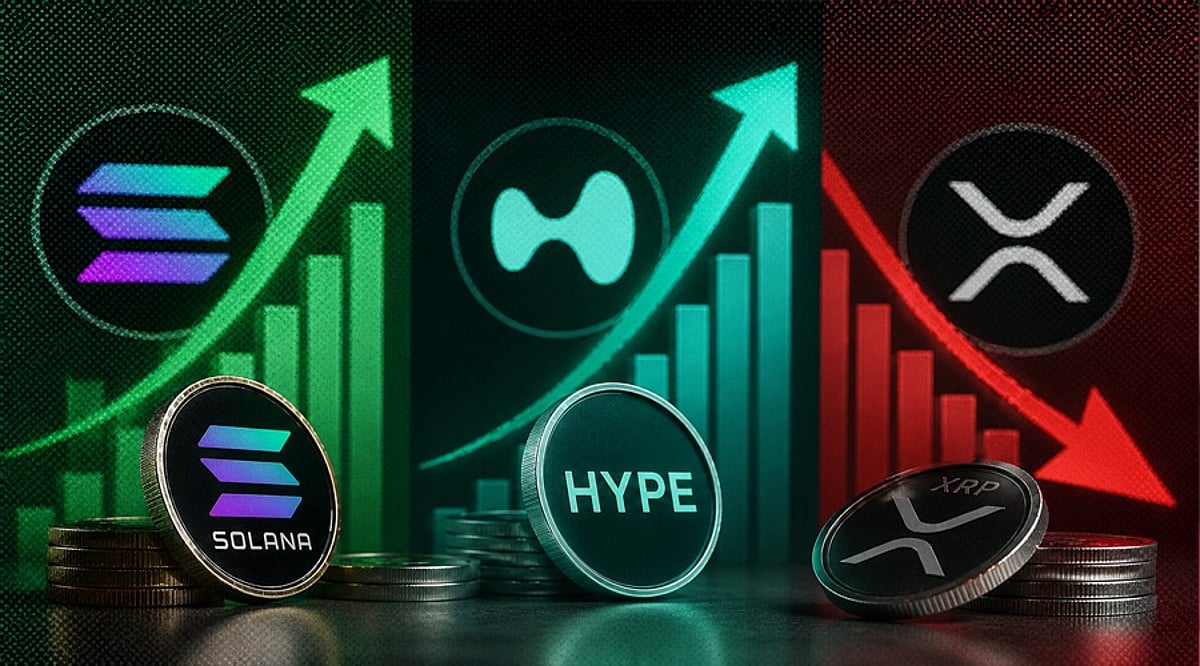
    Spot cryptocurrency ETFs tied to Solana and Hyperliquid saw fresh capital inflows on July 1, while XRP funds recorded withdrawals amid selective demand across digital asset markets. Data from SoSoValue shows Solana spot ETFs posted approximately $500,000 in net inflows, while Hyperliquid funds gained $2.9 million. In contrast, XRP spot ETFs registered $1.86 million in net outflows.

    The divergent flows highlight that investors continue to direct capital toward specific assets rather than the broader crypto market. Daily ETF flows often reflect shifting demand, portfolio rebalancing, profit-taking, or reduced risk appetite.

    Solana Price Recovery Attracts Renewed Interest

    Solana traded above $78 on Thursday, gaining nearly 10% over the week. Stronger derivatives data, modest fund demand, and improving technical momentum supported the recovery. CoinGlass data shows Solana’s long-to-short ratio at 1.11, its highest level in more than a month. A ratio above one indicates bullish positions outnumber bearish positions.

    Solana’s funding rate also turned positive, reaching 0.0017% on Thursday. Positive funding means long traders pay short traders, signaling stronger demand for upward price exposure.

    According to SoSoValue, Solana spot ETFs attracted $521,070 on Wednesday, contributing to a cumulative $3.55 million in net inflows through Wednesday. While the flow remains modest, it aligns with improving market indicators. Further inflows could support price demand if the trend continues and strengthens.

    Hyperliquid Gains While XRP Funds Experience Capital Losses

    Hyperliquid spot ETFs recorded $2.9 million in net inflows on July 1, surpassing Solana’s daily total. The protocol has gained attention among traders using on-chain derivatives. Meanwhile, XRP spot ETFs moved in the opposite direction, posting $1.86 million in withdrawals. The outflows reflect weaker daily demand compared with Solana and Hyperliquid products.

    XRP remains linked to ongoing legal proceedings between Ripple Labs and the U.S. Securities and Exchange Commission, and the uncertainty has contributed to cautious investor sentiment. At the same time, the Solana Foundation introduced Solana Governance Proposals, establishing an on-chain process for major network decisions. Validators can submit, support, and vote on broad governance questions.

    The framework limits proposals to high-level network direction rather than detailed technical changes. Validators use the svmgov program to conduct stake-weighted voting. A validator vote account must hold at least 100,000 SOL in delegated stake before placing a proposal on-chain. The proposal then requires support from 15% of active stakeholders. Validators prove voting weight through Merkle proofs linked to an on-chain stake snapshot. The process gives validators a formal avenue to shape major questions about Solana’s future direction.

    What’s Next for Crypto ETFs?

    Solana and Hyperliquid ETFs attracted fresh capital, while XRP funds recorded notable withdrawals. Solana also gained support from improved derivatives data, price recovery, and new validator governance measures. Investors should monitor ETF flows, market positioning, and network developments for clearer signals about future demand.

  • OnePlus 13 Drops to Rs. 49,999 During Amazon Prime Day 2026 – Save Rs. 20,000

    OnePlus 13 Drops to Rs. 49,999 During Amazon Prime Day 2026 – Save Rs. 20,000

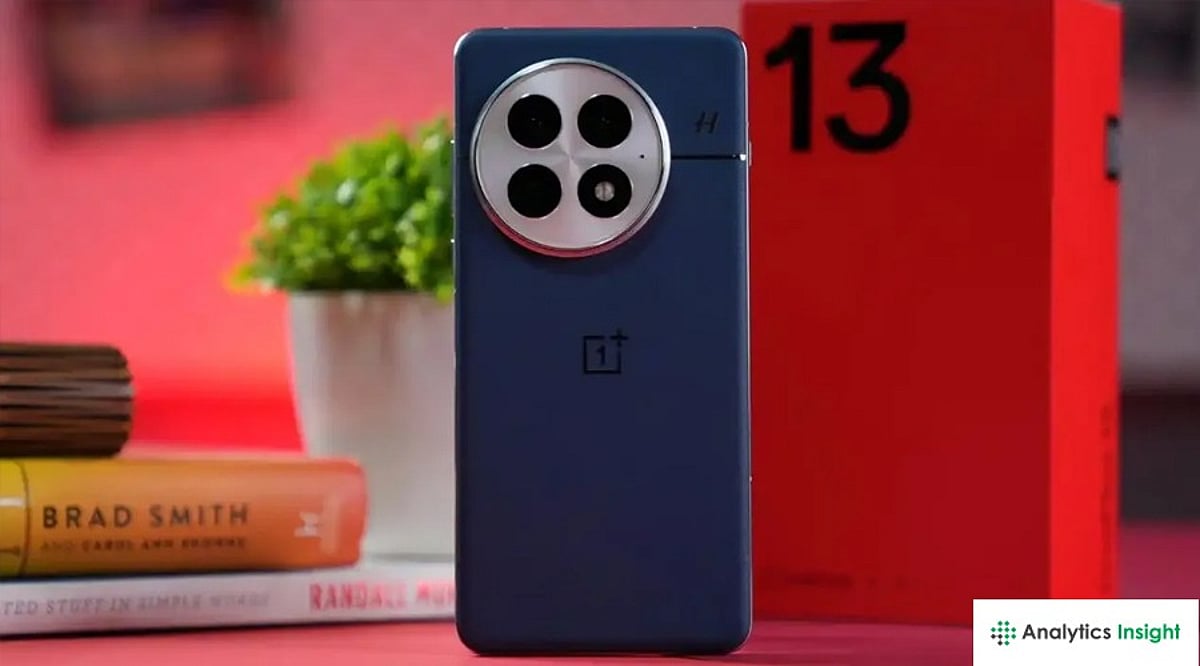
    Amazon Prime Day 2026 is set to kick off on July 4, and early deals are already making headlines. One of the standout offers is on the flagship OnePlus 13, which will see a massive Rs. 20,000 discount, bringing its effective price down to just Rs. 49,999.

    The OnePlus 13 originally launched in India at Rs. 69,999. During the Prime Day sale, shoppers can grab it for Rs. 49,999, with additional bank offers likely to sweeten the deal further. This is a prime opportunity for anyone looking to upgrade to a premium smartphone without breaking the bank.

    OnePlus 13 Specs & Features

    The OnePlus 13 packs top-tier hardware:

    • Display: 6.82-inch QHD+ LTPO 3K screen with 120Hz refresh rate, 4500 nits peak brightness, and HDR10+ support
    • Processor: Qualcomm Snapdragon 8 Elite chipset paired with Adreno 830 GPU
    • RAM & Storage: Up to 24GB LPDDR5X RAM and up to 1TB UFS 4.0 storage
    • Cameras: Triple rear setup – 50MP primary, 50MP telephoto (3x optical, 120x digital zoom), 50MP ultra-wide; 32MP front camera
    • Battery: 6,000mAh with 100W wired and 50W wireless charging

    With its premium build, powerful cameras, and fast charging, the OnePlus 13 remains a compelling choice in the flagship segment. The Prime Day discount makes it even more attractive for Indian consumers.

    Stay tuned for more Prime Day deals as the sale approaches.

  • Trump Says Blind Trusts Handle His Wealth After $1.2B Crypto Earnings Disclosure

    Trump Says Blind Trusts Handle His Wealth After $1.2B Crypto Earnings Disclosure

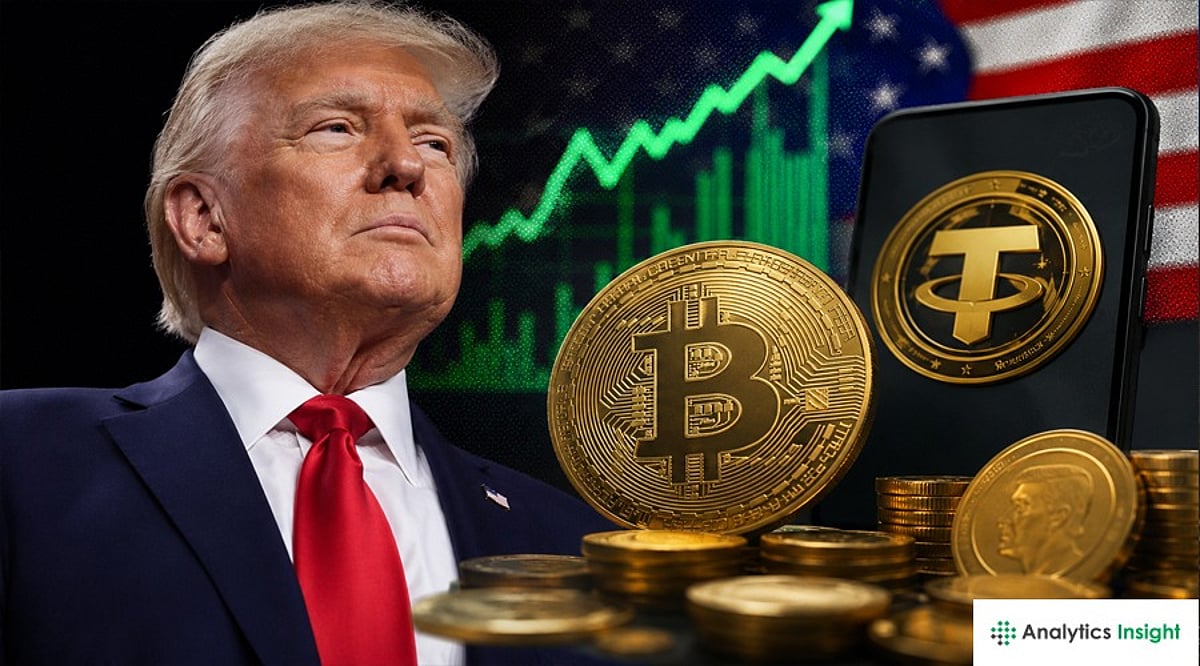
    President Donald Trump defended more than $1.2 billion in cryptocurrency-related earnings on Wednesday, stating that his personal finances are managed by outside institutions through blind trusts. His remarks came a day after the U.S. Office of Government Ethics released an annual financial disclosure detailing substantial revenue from ventures tied to his family, including World Liberty Financial and the TRUMP token.

    Speaking to reporters before departing Joint Base Andrews, Trump rejected accusations that he used his presidency for personal financial gain. He said he does not make investment decisions regarding his personal wealth and described the arrangements as blind trusts managed by outside entities. “I don’t get involved in my personal finances,” Trump said. “We have funds that run my money.” He added that he does not communicate with the institutions managing his holdings.

    The 927-page financial disclosure reported roughly $1.2 billion in cryptocurrency-related income during 2025. A significant portion came from World Liberty Financial, which generated nearly $550 million, according to the filing. Other reports indicated the venture earned over $520 million from token sales and more than $250 million from the sale of ownership interests, with income distributed among family members. The filing also listed approximately $635 million in royalties from Celebration Coins, tied to the TRUMP memecoin business operated through CIC Digital LLC. That token launched shortly before Trump’s inauguration in January 2025.

    When questioned about potential conflicts of interest, Trump pointed to broader market gains rather than specific crypto investments. “You know why I’m profiting? Because the stock market’s going up — everybody’s profiting,” he said. “So we’re all profiting. I’m profiting because I have a lot of money and a lot of cash.”

    World Liberty Financial, co-founded in September 2024 by Trump’s sons and Zach Witkoff, later introduced the USD1 stablecoin during Trump’s second term. Critics have continued to question whether Trump’s cryptocurrency business interests create conflicts while he oversees policies affecting the digital asset industry. His administration has introduced measures supporting cryptocurrency adoption and promoting the U.S. as a global hub for digital assets.

    The White House rejected any allegations of conflicts of interest. Spokeswoman Anna Kelly stated, “Neither the President nor his family has ever engaged — or will ever engage — in conflicts of interest.” She also highlighted Trump’s efforts to make the U.S. the “crypto capital of the world” through executive actions and legislative support.

    Trump’s latest disclosure showed a sharp increase in reported revenue compared with the previous year, with overall reported revenue exceeding $2 billion in 2025, driven largely by cryptocurrency. The president did not directly address conflict-of-interest questions during his appearance, maintaining that his financial gains reflect broader market performance rather than decisions made from the White House.

  • US Job Growth Plummets to 57,000 in June as Hiring Slows and Unemployment Steady at 4.2%

    US Job Growth Plummets to 57,000 in June as Hiring Slows and Unemployment Steady at 4.2%

    The latest US jobs report reveals a sharp slowdown in hiring during June, with employers adding only 57,000 nonfarm payrolls—well below market expectations. The unemployment rate held steady at 4.2%, but the figure masks a decline in labor force participation, as fewer Americans remained in the job market.

    June’s hiring total dropped by more than half from May, reflecting growing caution among companies facing high inflation, weaker consumer confidence, and global uncertainty. Many employers have slowed their hiring plans instead of expanding their workforce.

    Hiring Slowdown Signals Cooling Labor Market

    The Bureau of Labor Statistics also revised April and May payroll numbers downward, indicating that hiring had already weakened before June. The updated figures point to a labor market that has been losing momentum over recent months.

    While the unemployment rate fell from 4.3% in May to 4.2% in June, the decline is partly due to the labor force participation rate dropping to 61.5%—the lowest in more than five years. Many individuals stopped looking for work and were no longer counted as unemployed. Household employment also fell, confirming that fewer Americans were employed.

    Industry Hiring Shows Mixed Performance

    Different industries showed varied hiring trends. Professional and business services added the most jobs, while healthcare and social assistance continued to hire. Manufacturing and construction posted small gains, supported by ongoing data center projects and infrastructure work.

    The technology sector continued to struggle. Major companies like Meta and Microsoft have reduced staff while increasing investments in artificial intelligence. The information sector has now recorded job losses in 17 of the past 18 months. Financial services hiring remained largely unchanged during June.

    Despite slower hiring, workers saw modest pay gains. Average hourly earnings rose 0.3% for the month and increased 3.5% year-over-year. Meanwhile, weekly unemployment benefit claims stayed relatively steady, suggesting companies are reducing hiring rather than cutting large numbers of jobs.

    Fed Rate Outlook in Focus

    The June employment report indicates that companies are becoming more cautious rather than rapidly expanding their workforce. While the labor market remains stable, job growth has clearly decelerated. Future inflation data and employment reports will help determine whether this slowdown continues.

    Many economists had anticipated stronger hiring in June, especially in leisure and hospitality. Instead, payroll growth missed forecasts by a wide margin. The weaker results, combined with lower revisions for prior months, suggest the job market is cooling faster than expected.

    The jobs report could influence future Federal Reserve decisions. Slower nonfarm payrolls may reduce pressure for additional interest rate increases, though inflation and wage growth remain key concerns. Investors will closely watch upcoming economic data for clearer signals about the direction of the US economy.

  • Meta’s Brain2Qwerty V2 Reads Brain Waves to Type Text Without Surgery

    Meta’s Brain2Qwerty V2 Reads Brain Waves to Type Text Without Surgery

    Meta has unveiled Brain2Qwerty v2, a cutting-edge AI system that translates brain signals directly into text using non-invasive magnetoencephalography (MEG) technology. Unlike traditional brain-computer interfaces that require surgical implants, this system uses a helmet equipped with sensors to detect the magnetic fields generated by neural activity while a user types.

    In tests, Brain2Qwerty v2 achieved significant improvements over its predecessor, marking it as Meta’s most accurate end-to-end sentence decoder to date. The technology holds particular promise for individuals with paralysis, brain damage, or speech-related neurological disorders, offering them a potential future means of communication through thought alone.

    Despite the breakthrough, Meta acknowledges that the system remains experimental. Current MEG equipment is bulky, expensive, and requires a controlled environment, making it impractical for everyday use. Further advancements in both hardware miniaturization and AI algorithms are necessary before Brain2Qwerty v2 can become a viable communication aid outside research settings.

    The development underscores the accelerating progress in brain-computer interface technologies and their potential to transform healthcare and human-computer interaction.

  • Dogecoin Price Dips to $0.07 as Analysts Warn of Potential Further Decline

    Dogecoin Price Dips to $0.07 as Analysts Warn of Potential Further Decline

    Dogecoin (DOGE) fell to approximately $0.072 on June 26, hitting a three-year low before recovering slightly to $0.074, according to CoinGecko. The decline has kept attention on the $0.070 support level as analysts weigh the possibility of an oversold rebound against further losses toward the $0.05 region. Weak trading volume and reduced whale holdings continue to pressure DOGE’s near-term market structure.

    DOGE Holds Near Critical Short-Term Support

    Market analyst Ali Martinez reported that Dogecoin’s TD Sequential indicator produced a buy signal after the meme coin extended its multi-month decline. Martinez identified $0.073 as the decisive level for the current setup. Holding that price could support a recovery toward $0.081.

    A move below $0.073 would invalidate the signal and leave DOGE exposed to renewed selling pressure near its recent low. Meanwhile, large holders reduced their combined positions by 420 million DOGE within seven days, according to Martinez. Their total holdings declined to nearly 35 billion tokens, representing less than 23% of Dogecoin’s circulating supply. The reduction added another source of supply as DOGE struggled to establish a stable recovery above its immediate support range.

    DOGE’s Relative Strength Index (RSI) also dropped to about 18.6 during the sell-off, placing the asset within extreme oversold territory. Such readings have previously appeared before price recoveries, although the indicator alone does not confirm that a durable bottom has formed.

    Analysts Track Deeper Support and Long-Term Pattern

    A chart shared by Cantonese Cat placed DOGE near the lower section of its long-term trading profile and close to support between $0.06 and $0.07. Low trading volume could allow the price to fall further before buyers establish a stronger market floor.

    DOGE must first hold $0.070 and then reclaim the $0.073 to $0.075 range with stronger volume to improve its immediate structure. Daan Crypto Trades identified another long-term support region near $0.05, where extended sideways movement could precede a later structural recovery. Celal Kucuker also placed a possible buying range between $0.05 and $0.06 while maintaining a long-term Dogecoin target of $1. By contrast, Part-Time Trader warned of a possible 95% decline, which would place DOGE near $0.004.

    Trader Tardigrade’s three-month chart showed Dogecoin testing the lower boundary of a multi-year pennant that still supports a longer-term bullish formation. The pattern could remain active while DOGE holds that boundary, although the analyst’s potential $10 target requires several price confirmations.

    DOGE must reclaim $0.081 before challenging $0.090 and $0.10. Further resistance sits at $0.12, while $0.16 remains the first major higher-timeframe barrier. On the downside, a break below $0.06 would direct attention toward $0.055 and $0.050, where longer-term buyers previously entered the market.

    What’s Next?

    Dogecoin remains under pressure near $0.07 as weak volume, whale selling, and fragile support increase downside risks. A recovery above $0.081 could improve momentum, while failure to hold $0.06 may expose the $0.05 region. Traders should watch volume and support levels closely before expecting a stronger rebound.