
Blog

  • Essential Machine Learning Projects for a Standout Resume in 2026

    Essential Machine Learning Projects for a Standout Resume in 2026

    Machine learning continues to dominate the tech landscape, and showcasing hands-on projects is one of the best ways to impress recruiters. Here are nine projects that not only demonstrate your skills but also align with real-world business needs.

    1. House Price Prediction

    Build regression models using historical housing datasets. Practice feature engineering, data visualization, and evaluation metrics to accurately forecast residential property values.

    2. Customer Churn Prediction

    Develop classification models that identify customers likely to leave subscription services. Apply behavioral analytics and machine learning algorithms to derive actionable business insights.

    3. Sentiment Analysis

    Analyze customer reviews using natural language processing (NLP), text classification, feature extraction, and opinion mining. This project yields valuable business intelligence from unstructured text.

    4. Image Classification

    Train convolutional neural networks (CNNs) to recognize objects, products, or animals. Use labeled datasets and modern deep learning frameworks to achieve impressive accuracy.

    5. Fake News Detection

    Create intelligent systems that detect misleading articles. This project combines NLP techniques, classification models, feature engineering, and contextual language understanding.

    6. Movie Recommendation System

    Build personalized recommendation engines using collaborative filtering, content-based filtering, and user preference modeling. Optimize with machine learning to enhance entertainment experiences.

    7. Stock Price Forecasting

    Apply time-series forecasting models to historical financial data. Incorporate predictive analytics, visualization, and statistical learning to analyze market trends.

    8. Resume Screening AI

    Develop recruitment automation tools that match candidate profiles with job descriptions. Use NLP and classification algorithms to streamline hiring processes.

    9. Handwritten Digit Recognition

    Implement neural networks to recognize handwritten digits. Practice image preprocessing, leverage benchmark datasets, and train deep learning models to achieve high accuracy.

    Each of these projects can be built using open-source datasets and libraries. They provide tangible proof of your ability to solve real problems with machine learning—making your resume stand out to employers in 2026 and beyond.
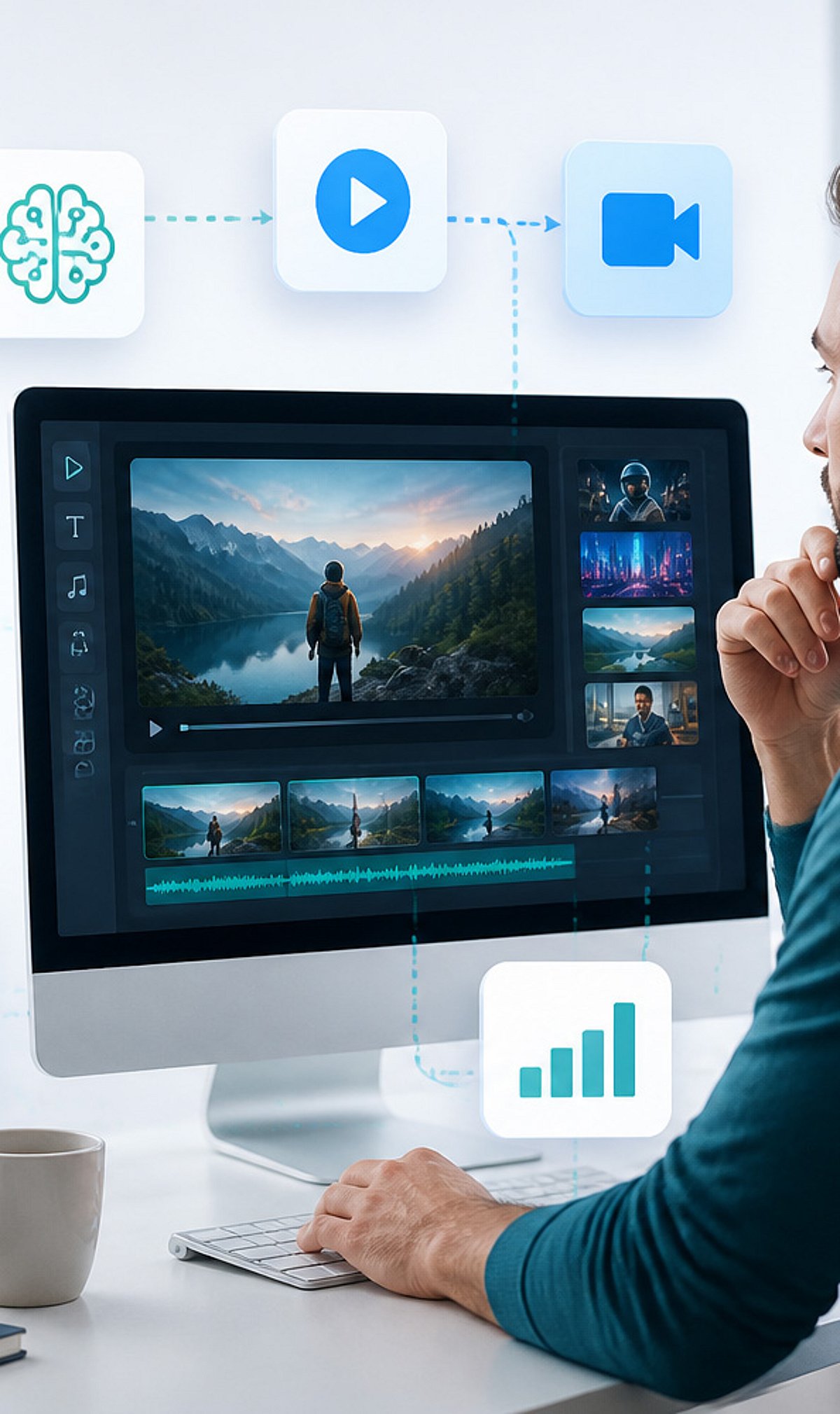

  • Top AI Video Generators to Explore in 2026: From Pika to Adobe Firefly

    Top AI Video Generators to Explore in 2026: From Pika to Adobe Firefly

    The landscape of AI video generation is advancing rapidly, offering creators powerful tools to produce cinematic content from simple text prompts, images, or existing footage. Whether you’re a filmmaker, marketer, or social media creator, these platforms bring professional-grade video creation within reach. Here are the leading AI video generators to watch in 2026.

    Runway

    Runway enables users to create cinematic AI videos from text, images, and existing footage. Its advanced features include motion tracking, inpainting, and a suite of creative filmmaking tools that empower both beginners and professionals.

    Pika

    Pika transforms simple prompts into engaging short videos with realistic animations, creative visual effects, and smooth transitions. It is designed for rapid content generation, making it a favorite among creators who need quick, high-quality output.

    Google Veo

    Google’s advanced text-to-video model generates realistic, high-quality videos with natural motion, detailed environments, accurate physics, and cinematic storytelling capabilities. Veo is ideal for projects requiring fine-grained control over visual narratives.

    OpenAI Sora

    Sora produces highly realistic videos from detailed prompts, boasting impressive scene consistency, complex camera movements, realistic lighting, and dynamic visual storytelling. It represents a major leap in generative video quality.

    Synthesia

    Synthesia specializes in professional AI avatar videos featuring multilingual presenters, customizable templates, voiceovers, and branding options. It is widely used for training, marketing, and corporate communications.

    HeyGen

    HeyGen creates personalized AI spokesperson videos using realistic avatars, voice cloning, multilingual translations, and customizable scripts. It is built for global business communication and marketing campaigns.

    Luma Dream Machine

    Luma Dream Machine produces realistic AI-generated videos with natural camera movements, detailed environments, lifelike motion, and fast rendering. It is tailored for creative visual storytelling projects.

    Adobe Firefly Video

    Adobe Firefly Video integrates generative AI video creation directly into the Adobe Creative Cloud ecosystem. It enables commercial-safe content generation, editing, and seamless professional production workflows.

    Kling AI

    Kling AI delivers high-quality AI videos with realistic character movements, cinematic visuals, detailed environments, and advanced prompt understanding. It is designed for professional creative applications where quality is paramount.

    These tools represent the cutting edge of AI-driven video production. As the technology evolves, expect even more intuitive interfaces, faster rendering, and greater creative freedom. Explore them to stay ahead in the content creation game.

  • Best AI Coding Assistants for Developers in 2026: Top 5 Tools Compared

    Best AI Coding Assistants for Developers in 2026: Top 5 Tools Compared

    AI-powered coding assistants are rapidly transforming software development, helping developers write, debug, and understand code faster than ever. Here are the top five AI coding tools set to dominate in 2026:

    1. GitHub Copilot

    GitHub Copilot offers real-time code suggestions, debugging support, code explanations, and intelligent autocompletion across multiple programming languages and frameworks. It boosts productivity by learning from your coding style.

    2. Claude Code

    Claude Code excels at writing, refactoring, debugging, and understanding complex codebases. It supports long-context reasoning, project navigation, and workflow automation, making it ideal for large-scale projects.

    3. OpenAI Codex

    OpenAI Codex converts natural language instructions into functional code, automates repetitive tasks, explains logic, and accelerates development across many languages.

    4. Cursor

    Cursor is an AI-powered code editor that provides intelligent code completion, debugging assistance, project-wide understanding, and natural language editing, all seamlessly integrated into the developer workflow.

    5. Google Gemini Code Assist

    Google Gemini Code Assist offers AI-powered coding support with code generation, reviews, debugging, and documentation. It integrates smoothly with Google Cloud development environments and popular IDEs.

    These tools are shaping the future of software development, reducing manual effort and letting developers focus on creative problem-solving.

  • Top Claude AI Extensions and Tools to Supercharge Your Workflow

    Top Claude AI Extensions and Tools to Supercharge Your Workflow

    Claude AI is evolving rapidly, and pairing it with the right extensions can unlock even greater productivity. Whether you are a developer, writer, or business professional, these tools help you get more done with Claude. Here are the top extensions every Claude user should know about.

    Official and Desktop Tools

    Claude Desktop: The official desktop app provides faster access, file uploads, and smoother conversations. It is ideal for daily AI workflows and reduces reliance on browser-based interactions.

    Raycast AI: Raycast brings Claude directly into your desktop launcher. You can search files, write content, and automate tasks without leaving your keyboard — a true productivity booster.

    Developer-Focused Extensions

    Continue.dev: Developers can connect Claude to VS Code using Continue. It helps generate code, explain functions, and speed up debugging, making it a valuable companion for coding projects.

    Cline (VS Code): Cline turns Claude into an AI coding assistant that understands your entire project and assists with development workflows, from architecture to implementation.

    All-in-One AI Interfaces

    LibreChat: This clean, open-source interface supports Claude alongside multiple AI models. It is great for users who prefer a single workspace for different AI assistants.

    Automation and Integration

    Zapier: Connect Claude with thousands of apps through Zapier. Automate emails, spreadsheets, CRMs, and repetitive business tasks with simple triggers and actions.

    Knowledge Management

    Obsidian Claude Plugin: Enhance your note-taking. Claude can summarize, organize, and generate ideas directly from your Obsidian knowledge base, turning your vault into an intelligent assistant.

    Extending Claude Further

    MCP Tools: Model Context Protocol (MCP) tools allow Claude to connect with local files, databases, and external applications, expanding its capabilities beyond the chat window.

    These extensions cover a wide range of use cases, from everyday productivity to specialized development tasks. Start with the ones that match your workflow and explore more as Claude continues to improve.

  • Best Retail Scheduling Software Platforms for 2026: AI-Driven Workforce Management

    Best Retail Scheduling Software Platforms for 2026: AI-Driven Workforce Management

    Retail scheduling software has become essential for retailers aiming to optimize staff schedules, reduce labor costs, and improve employee productivity across multiple store locations. As we approach 2026, these platforms are increasingly leveraging artificial intelligence to forecast staffing needs based on sales trends, customer traffic, holidays, and historical performance.

    Top Retail Scheduling Software Companies

    Deputy

    Deputy remains a popular workforce management platform, offering AI-assisted scheduling, time tracking, shift swapping, and payroll integrations for businesses of all sizes.

    When I Work

    When I Work continues to serve retailers with intuitive employee scheduling, team messaging, attendance tracking, and mobile-first workforce management features.

    Sling

    Sling provides flexible scheduling, labor cost monitoring, shift planning, and communication tools that help managers efficiently coordinate retail teams.

    UKG

    UKG delivers enterprise-grade workforce management with AI-powered forecasting, automated scheduling, compliance support, and advanced workforce analytics.

    Homebase

    Homebase remains a preferred solution for small and medium-sized retailers, offering scheduling, hiring, time clocks, payroll, and employee communication in one platform.

    Key Trends in Retail Scheduling

    Modern scheduling platforms now use AI to forecast staffing needs based on sales trends, customer traffic, holidays, and historical business performance. Cloud-based scheduling software enables managers and employees to access schedules, request leave, swap shifts, and receive instant notifications from anywhere.

    Choosing the right scheduling platform depends on business size, integration needs, compliance requirements, reporting capabilities, and long-term scalability.

  • The Best No-Code AI App Builders for 2026: Build Apps Without Coding

    The Best No-Code AI App Builders for 2026: Build Apps Without Coding

    No-code AI platforms are making application development accessible by allowing users to build intelligent apps without writing traditional programming code.

    Bubble continues to be one of the most popular no-code platforms, enabling users to create web applications while integrating AI models and automation services.

    Glide transforms spreadsheets into powerful mobile and web applications with AI-powered workflows, making rapid business app development simple.

    Microsoft Power Apps combines low-code development with Microsoft Copilot AI, enabling organizations to build business applications using natural language prompts.

    Softr allows users to build client portals, internal tools, and business applications by connecting databases with customizable no-code interfaces and AI capabilities.

    FlutterFlow has become a leading visual app builder for creating cross-platform mobile applications while supporting AI integrations and custom backend services.

    Modern no-code AI builders include features like AI chatbots, workflow automation, document generation, image creation, and intelligent data processing. Businesses increasingly use these platforms to build customer support tools, CRM systems, inventory management apps, employee portals, and productivity solutions.

    Selecting the right no-code AI platform depends on deployment options, integrations, scalability, pricing, security, and the complexity of the intended application.

  • OPPO Reno 16C vs Reno 16 5G: Full Specs Comparison and Buyer’s Guide

    OPPO Reno 16C vs Reno 16 5G: Full Specs Comparison and Buyer’s Guide

    Oppo is set to launch the Reno 16 series in India on July 2, featuring the standard Oppo Reno 16 and the more budget-friendly Reno 16C. Both phones share design cues and AI-backed software, but they cater to different users with distinct performance, camera, and battery configurations. Here’s a detailed comparison to help you choose the right device.

    Display and Performance

    The Oppo Reno 16 sports a 6.32-inch Full HD+ AMOLED display with a 120Hz refresh rate, powered by the Qualcomm Snapdragon 7 Gen 4 chipset and a 6,700mAh battery. This combination delivers top-tier performance for its class.

    In contrast, the Reno 16C features a slightly larger 6.57-inch Full HD+ AMOLED screen, also with a 120Hz refresh rate. It is equipped with the MediaTek Dimensity 7300 chipset and a 6,500mAh battery. The larger screen may appeal to media consumers, while the standard model offers a bit more processing power and battery capacity.

    Cameras

    The camera systems mark a significant difference between the two models. The Reno 16 features a triple rear camera setup: a 50MP main sensor with optical image stabilization (OIS), a 50MP telephoto lens with 3.5x optical zoom, and a 50MP ultra-wide camera. For selfies, it includes a 50MP front camera.

    The Reno 16C adopts a more conservative camera arrangement, suitable for everyday photography but lacking the advanced telephoto and ultra-wide capabilities of its sibling.

    Battery, Software, and AI Features

    Both phones are expected to run Android 16-based ColorOS and include Oppo’s latest AI-powered tools for photography, image editing, and productivity. Features like AI-assisted photo trimming and creative camera modes are anticipated across the lineup.

    Battery life is a strength for both: the Reno 16’s 6,700mAh cell slightly edges out the Reno 16C’s 6,500mAh battery, but both should provide all-day usage.

    Which One Should You Choose?

    The Oppo Reno 16 targets users who prioritize performance, an advanced camera system, and a slightly larger battery. The Reno 16C, meanwhile, aims at budget-conscious buyers who value a larger display and are willing to trade some camera and performance features. The final verdict will depend on pricing at launch.

  • India Orders Meta to Halt WhatsApp Username Feature Over Digital Arrest Scam Risks

    India Orders Meta to Halt WhatsApp Username Feature Over Digital Arrest Scam Risks

    The Indian government has issued a stern warning to Meta, demanding an immediate pause on the rollout of WhatsApp’s username feature. The Ministry of Electronics and Information Technology (MeitY) sent a formal notice on Wednesday, July 1, 2026, citing grave concerns that the feature could be exploited for impersonation, phishing, and the rising menace of digital arrest scams.

    In its notice, MeitY gave Meta a three-day ultimatum to provide a detailed explanation of its safety measures. The government explicitly directed the company not to proceed with the feature until consultations are concluded to the government’s satisfaction.

    Why the Government Is Concerned

    The username feature would allow WhatsApp users to create a unique identifier (e.g., @Name123) and communicate with others without revealing their phone numbers. While Meta pitches this as a privacy enhancement, regulators fear it could become a tool for bad actors.

    “It is felt that the feature may materially increase the incidence of online fraud, phishing, digital arrest scams and impersonation attacks by enabling bad actors to solicit and message victims,” the ministry stated. The notice also warned that usernames could facilitate identity spoofing of public authorities, financial institutions, and government agencies.

    Meta’s Response and Safeguards

    In response, a WhatsApp spokesperson said, “We’ve announced the option for people to reserve their preferred username on WhatsApp.” The company outlined several layers of protection, including holding high-profile names (public figures, government entities, celebrities) and lookalike derivatives so that only legitimate owners can claim them.

    WhatsApp also clarified that a phone number is still required to access the app; usernames are an optional layer. The feature will limit the number of new users an account can message, block repeated username-guessing attempts, and display safety indicators such as whether the sender is a saved contact or from another country.

    How the Username Feature Works

    To set up a username, users navigate to Settings > Account > Username and reserve a unique @-name. This name can appear in chats, groups, and calls instead of the phone number for contacts who haven’t saved the user’s number. Other users must know the exact username to initiate a conversation.

    The government will review Meta’s response and then decide whether to allow the feature to proceed. Usernames were not yet live and were originally slated for rollout later in 2026.

  • iPhone 18 Pro Secrets Exposed After Tata Electronics Cyberattack: Apple’s Supply Chain in Spotlight

    A devastating cyberattack on Tata Electronics, one of Apple’s key manufacturing partners in India, has led to the exposure of over 200,000 confidential files related to the upcoming iPhone 18 Pro and Pro Max models. The ransomware group World Leaks has claimed responsibility for the breach, releasing more than 630 GB of classified documents on the dark web.

    The leaked data includes internal images, component lists, supplier details, motherboard layouts, battery components, camera modules, and technical specifications of Apple’s next-generation A20 Pro chip. Some documents were marked as classified and contained internal code names for future iPhones. While Apple has not confirmed every leaked document, industry experts consider this one of the most severe attacks on Apple’s supply chain to date.

    A few videos of the iPhone 18 Pro surfaced briefly on social media before being taken down, but screenshots continue to circulate online. More concerning than the hardware leaks is the exposure of Apple’s supplier network, revealing the names of hundreds of parts manufacturers and highlighting areas where Apple relies heavily on single sources. This information could provide valuable intelligence to competitors, counterfeiters, and cybercriminals.

    Apple is reportedly working with Tata Electronics to assess the breach’s impact and strengthen cybersecurity practices. The incident has raised serious questions about the security of Apple’s manufacturing operations in India and the broader supply chain.

  • Elon Musk Dismisses SpaceX AI Smartphone Rumors as ‘Utterly False’

    Elon Musk Dismisses SpaceX AI Smartphone Rumors as ‘Utterly False’

    Elon Musk has publicly denied recent reports claiming that SpaceX is developing an AI-powered smartphone. The rumors, which gained traction after reports of a prototype AI device, have been firmly rejected by the billionaire entrepreneur.

    The speculation began when The Wall Street Journal reported that SpaceX was working on an AI handheld device powered by Qualcomm’s Snapdragon chipset and running a custom operating system with AI capabilities from xAI, Musk’s AI company. The report also suggested that SpaceX had shown an early prototype to investors ahead of its record-breaking IPO. Days earlier, the Financial Times reported that SpaceX COO Gwynne Shotwell had discussed launching a mobile service in the U.S. using the Starlink satellite network, further fueling the rumors.

    In response, Musk took to X (formerly Twitter) on July 1, 2026, posting a simple but definitive statement: “Utterly false.” This is not the first time he has denied such claims. Earlier this year, he refuted a Reuters report, stating that SpaceX is “not developing a phone.” During an event in Pennsylvania last year, Musk made his position clear: “The idea of making a phone makes me want to die. If we have to make a phone, we will, but we will aspire not to make a phone.”

    Despite the denial, the rumors underscore growing industry interest in dedicated AI hardware. OpenAI is also reportedly exploring purpose-built AI devices. Industry analysts believe that if OpenAI pursues such a device, Musk would want to compete. SpaceX and its sister company Tesla have the manufacturing expertise to mass-produce AI hardware, and SpaceX has signaled interest in expanding into wireless services via Starlink Mobile, potentially challenging Verizon and AT&T.

    Musk continues to focus on artificial intelligence, recently predicting that AI could surpass the combined intelligence of all humans within the next four to five years. While a SpaceX smartphone remains off the table, the broader AI hardware race is accelerating, with the potential to reshape how users interact with AI through purpose-built devices.