Blog

  • How AI Is Revolutionizing Web Stories and Digital Content Creation

    How AI Is Revolutionizing Web Stories and Digital Content Creation

    Artificial intelligence is rapidly changing how web stories are created, allowing writers and creators to generate high-quality content in seconds using advanced generative models.

    Modern AI tools can understand prompts and convert them into structured stories, blog posts, scripts, and social media content with impressive accuracy and creativity.

    With AI-powered writing assistance, creators can now focus more on ideas and storytelling while automation handles formatting, grammar, and structure.

    Generative AI models can adapt tone and style based on audience type, making content more engaging for tech readers, students, or general audiences.

    AI is also improving visual storytelling by generating images, thumbnails, and design layouts that match the written content automatically.

    In journalism and blogging, AI helps speed up research by summarizing complex topics and extracting key insights from large datasets.

    Personalized content delivery is becoming more common, where AI recommends stories based on user interests, reading behavior, and engagement patterns.

    However, challenges remain such as misinformation, bias in generated content, and the need for human fact-checking to ensure accuracy.

    Despite limitations, AI is expected to become a core part of digital publishing, enabling faster workflows and more interactive storytelling experiences.

  • Flipkart GOAT Sale: Save Up to ₹22,000 on iPhone 17 and Pro Models

    Flipkart GOAT Sale: Save Up to ₹22,000 on iPhone 17 and Pro Models

    Flipkart has introduced significant discounts on Apple’s iPhone 17 lineup during its ongoing GOAT Sale, offering customers up to ₹22,000 off on premium models. The limited-time campaign combines direct price cuts, banking offers, and trade-in options, making the latest iPhones more accessible to a wider audience.

    iPhone 17 Standard Model Discount

    The base iPhone 17, originally priced at ₹79,900, is now available for ₹67,900 — a direct discount of ₹12,000. Additional savings can be unlocked through exchange schemes, further lowering the effective price for upgraders.

    Pro Models See Steeper Savings

    The iPhone 17 Pro and iPhone 17 Pro Max are discounted by up to ₹22,000, depending on storage configuration, exchange value, and applicable bank offers. Customers using eligible credit cards or opting for exchange deals may receive extra benefits beyond the listed sale prices. Flipkart advises buyers to check offer eligibility before completing their purchase.

    Bank Offers and Exchange Bonuses

    Beyond instant discounts, the GOAT Sale includes free EMI, exchange rewards, and short-term bank deals for many smartphone brands. Industry insiders note that such promotional efforts have become increasingly important in driving premium smartphone sales amid rising flagship prices. These offers arrive ahead of the festive shopping season, when e-commerce platforms typically compete with price battles and flexible payment arrangements.

    Should You Buy During the Sale?

    Shoppers eyeing the iPhone 17 series will enjoy price reductions larger than any seen since the model’s launch. Exchange schemes make upgrading easier, especially for those moving from an older phone. However, customers should compare all exchange rewards, bank deals, and total costs before purchasing.

  • xAI Launches Grok 4.5 Beta: Musk Claims It Outperforms Anthropic’s Claude Opus

    xAI Launches Grok 4.5 Beta: Musk Claims It Outperforms Anthropic’s Claude Opus

    Elon Musk’s artificial intelligence company, xAI, has introduced Grok 4.5 in private beta, marking the latest update to its flagship chatbot. The company claims the new model delivers stronger performance than rival AI systems, including Anthropic’s Claude Opus, across several benchmarks.

    The release comes as AI companies continue to roll out increasingly capable models, with firms racing to improve reasoning, coding, and conversational abilities while attracting enterprise customers.

    Grok 4.5 Enters Limited Testing

    According to xAI, Grok 4.5 is currently available only to a select group of testers. The company said the private beta will help evaluate the model’s performance before a wider rollout. Musk described the model as the company’s most advanced AI system so far, saying it offers improvements in reasoning, factual accuracy, and response quality. He also claimed the latest version performs better than competing frontier models in several evaluation tests. However, xAI has not released detailed benchmark data or independent validation to support all of its performance claims.

    Competition in AI Heats Up

    The launch adds yet another chapter to the fast-moving AI race, where companies like OpenAI, Anthropic, Google, and Meta keep releasing new models at a rapid pace. Over the past few months, developers have been fixated on sharpening coding help, multimodal skills, extended-context reasoning, and enterprise setups. Performance comparisons have become a major marketing focus, with AI firms regularly releasing benchmark results to show they are improving faster than others.

    Analysts point out that even if benchmark scores provide a way to judge progress, real-life results often hinge on how well models actually handle everyday business and consumer tasks.

    xAI Expands Its AI Ambition

    Since developing Grok, xAI has been increasing the bot’s functionality on the X platform while making substantial investments in computational technology and large language models. xAI presents Grok as a competing solution to current AI assistants for its real-time information provision and better conversational capabilities. The new release of Grok 4.5 shows that xAI continues competing with other AI firms as the demand for advanced generative AI solutions grows rapidly.

    The wider launch is expected after testing is complete and feedback from beta users is received. xAI has provided no official timeline; however, the update reveals that competition among top AI firms is not weakening.

  • Top Kitchen Chimneys with Touch Control Panels for Indian Homes in 2026

    Top Kitchen Chimneys with Touch Control Panels for Indian Homes in 2026

    A kitchen chimney quietly earns its worth every day by handling smoke, oil vapor, and cooking odors. Touch control panels have transformed how we interact with these appliances, replacing grease-prone mechanical buttons with clean, responsive surfaces. Most quality chimneys in India now come with touch panels as standard. The real question is which model delivers the best performance for your cooking habits and budget.

    What Indian Kitchens Actually Need

    Suction capacity between 1200 and 1500 m³/hr handles the heavy oil, whole spices, and high heat typical in Indian cooking. Higher suction rarely improves performance unless the kitchen is very large or the cooktop unusually wide. Auto-clean technology is worth prioritizing—it routes grease into a separate collector, keeping suction consistent and reducing manual maintenance. Filterless designs take this further by eliminating cassette filters entirely, leaving only occasional oil collector cleaning.

    Noise levels, LED lighting quality, warranty terms, and local service availability complete the decision. A chimney that performs well but has no nearby service support creates problems no spec sheet can solve.

    Best Kitchen Chimneys with Touch Control Panels

    Faber Hood Orient TC BK

    Faber remains a trusted brand in India. The curved glass design suits modern modular kitchens, the touch panel responds quickly, the auto-clean system manages grease efficiently, and suction handles daily Indian cooking without strain. Faber’s extensive after-sales network adds long-term peace of mind.

    Elica WDFL Touch Control Chimney

    Elica offers well-designed chimneys at competitive prices. The WDFL series uses a filterless system for simple maintenance, and the touch controls are clean and intuitive. The compact form fits standard modular kitchens. Noise increases at maximum speed, but for everyday cooking it performs reliably and quietly.

    Hindware Nadia Auto Clean Chimney

    Built for households that cook multiple heavy meals daily, the Hindware Nadia handles sustained smoke and grease loads without performance degradation. The auto-clean mechanism works consistently, the touch interface is simple, and build quality is solid. Professional installation is recommended for best results.

    Glen Auto Clean Touch Control Chimney

    Glen delivers dependable everyday performance at an accessible price. Touch controls are straightforward, the auto-clean system works reliably with regular use, and LED lighting keeps the cooktop well lit. It suits kitchens where a mix of vegetarian and non-vegetarian cooking happens daily. Buyers wanting quieter operation should explore Glen’s premium range.

    Whirlpool Curved Glass Touch Control Chimney

    Whirlpool combines a premium finish with reliable performance. The curved glass looks genuinely good in contemporary kitchens, and the touch panel responds well during cooking. Suction handles regular household cooking comfortably, and Whirlpool’s service infrastructure is well established across India. It sits at a higher price point, but build quality justifies the investment for full kitchen upgrades.

    Choosing the Right Model

    Match the chimney to your household’s cooking needs. Heavy daily cooking calls for stronger suction and a reliable auto-clean system. Compact kitchens benefit from sleeker curved glass models that perform without dominating the space. Wide cooktops need a chimney wide enough to cover the full surface to prevent smoke escape.

    Faber and Hindware suit demanding cooking needs. Elica offers the strongest value for low-maintenance buyers. Glen works well as a dependable mid-range choice. Whirlpool suits those who want performance and a premium finish in equal measure. Always verify installation dimensions, check warranty terms, and confirm service availability in your area before purchasing.

    Final Thoughts

    Choosing the best kitchen chimney with a touch control panel comes down to matching performance with your cooking habits. Prioritize reliable suction, auto-clean technology, and dependable after-sales support to ensure cleaner air, easier maintenance, and long-term value for your kitchen.

  • Top Survival Horror Games to Play This Weekend (2026 Edition)

    Top Survival Horror Games to Play This Weekend (2026 Edition)

    Survival horror games deliver some of the most intense and memorable experiences in gaming. From psychological mysteries to terrifying multiplayer adventures, these titles build suspense, fear, and unforgettable moments that can easily fill an entire weekend.

    Not all horror games are built the same. Some throw monsters at players every few minutes. Others take a slower approach, letting fear build naturally. Often, the most frightening moments come from what might happen rather than what is actually happening. This is why survival horror continues to attract so many players—every sound, shadow, and decision feels important, creating tension that lingers long after you put the controller down.

    If you’re looking for something scary to play this weekend, these survival horror games deserve a spot on your list.

    Alan Wake 2

    Alan Wake 2 is a psychological horror mystery that keeps you guessing until the final moments. Players alternate between Alan Wake and Saga Anderson as they investigate a series of strange events. The game generates an element of uncertainty, where every new place feels unnerving and every discovery feels important.

    Why we chose it: Excellent storytelling, strong atmosphere, memorable characters, unpredictable moments, impressive visuals.

    Amnesia: The Bunker

    Few games build tension as well as Amnesia: The Bunker. Set within a dark military bunker, the game sees players managing scarce resources while avoiding a constant threat. The sensation that danger could emerge at any time never completely disappears.

    Why we chose it: Constant tension, smart survival gameplay, limited resources, multiple solutions to challenges, high replay value.

    The Mortuary Assistant

    In The Mortuary Assistant, players perform the normal duties of an embalmer but experience all kinds of strange occurrences. The horror builds gradually, encouraging players to replay multiple scenarios and discover different endings.

    Why we chose it: Unique setting, effective supernatural horror, multiple endings, unpredictable scares, strong replayability.

    The Outlast Trials

    The Outlast Trials demonstrates that playing horror games with friends makes for a great gaming experience. Whether surviving disturbing experimental games or completing increasingly dangerous objectives, teamwork is helpful but not a guarantee of survival. The gameplay provides plenty of intense moments of cooperation, from being chased to chaos.

    Why we chose it: Great co-op experience, intense gameplay, disturbing environments, strong teamwork mechanics, plenty of suspense.

    Phasmophobia

    Phasmophobia has established itself as one of the best multiplayer horror games available. Players venture into a reputedly haunted location and collect evidence to deduce the identity of the ghost. Each investigation varies because ghosts behave unpredictably, making every session unique.

    Why we chose it: Excellent multiplayer gameplay, unique ghost-hunting mechanics, strong replay value, unpredictable investigations, fun with friends.

    SOMA

    SOMA relies primarily on atmosphere and narrative rather than traditional jump scares. The player traverses a research facility located in the ocean depths, examining issues of identity, humanity, and existence. SOMA provides a more cerebral form of horror, and many players continue to be affected by its themes long after finishing the game.

    Why we chose it: Outstanding narrative, thought-provoking themes, atmospheric setting, emotional impact, memorable ending.

    These Horror Games Deserve Your Weekend

    The best survival horror games are not just about frightening players. They create tension, tell compelling stories, and build worlds that are difficult to forget. That combination is what keeps players coming back to the genre year after year.

    The games on this list each approach horror differently. Alan Wake 2 delivers mystery and suspense. Amnesia: The Bunker focuses on survival and fear. The Mortuary Assistant brings supernatural horror into an everyday setting. The Outlast Trials and Phasmophobia show how effective multiplayer horror can be, while SOMA offers one of the strongest stories in modern gaming.

    FAQs

    1. Which survival horror game on this list is best for beginners?
    Alan Wake 2 is a good starting point for newcomers. It balances horror, exploration, and storytelling without overwhelming players. The game remains tense and engaging while still being accessible to those new to the genre.

    2. Which game offers the best multiplayer horror experience?
    Phasmophobia and The Outlast Trials are excellent choices for multiplayer horror fans. Both games encourage teamwork, communication, and quick decision-making. Their unpredictable situations help create memorable moments that are often even better with friends.

    3. Is SOMA still worth playing in 2026?
    Absolutely. While SOMA is not a new release, its story, atmosphere, and themes remain as impactful as ever. Few horror games explore questions about identity and survival with the same level of depth and emotion.

    4. Which game on this list has the strongest story?
    Many players consider Alan Wake 2 and SOMA the strongest narrative experiences here. Both games combine horror with compelling storytelling, memorable characters, and mysteries that keep players invested until the final moments.

    5. What makes survival horror games different from regular horror games?
    Survival horror games focus on tension, limited resources, and vulnerability rather than constant action. Players often need to manage supplies, avoid threats, and think carefully about decisions, which creates a stronger sense of fear and suspense.

  • Trumpet vs Aligned: Which Digital Sales Room Platform Delivers More for Revenue Teams?

    Trumpet vs Aligned: Which Digital Sales Room Platform Delivers More for Revenue Teams?

    Overview

    Both Trumpet and Aligned offer digital sales rooms designed to help sellers and buyers collaborate on complex deals. While Aligned focuses on providing a shared AI workspace for deal collaboration, Trumpet extends its capabilities to include sales enablement, stakeholder intelligence, engagement scoring, portfolio insights, and post-sale workflows. This comparison explores the key differences and helps you decide which platform better fits your revenue team’s needs.

    Key Strengths of Aligned

    Aligned is a credible digital sales room that provides a straightforward collaborative environment. Its strengths include:

    • Collaborative Workspaces: A shared space for content, conversations, mutual action plans, and stakeholders.
    • Mutual Action Plans: Strong emphasis on tasks, owners, milestones, and live progress tracking.
    • AI Support: Risk identification, stakeholder mapping, content creation, and next-step guidance.
    • Post-Sale Continuity: Customer onboarding and success hubs within the same platform.
    • Ease of Adoption: Designed for teams that want a focused deal workspace without overhauling their entire enablement stack.

    Why Trumpet Is the Stronger Alternative

    Trumpet offers a broader proposition that connects the digital sales room with other critical revenue workflows:

    • Sales Enablement Integration: Centralized content management, reusable templates, version control, and governance.
    • Buying-Group Intelligence: Living stakeholder maps with role, seniority, influence, and engagement data.
    • Engagement Scoring: Structured deal-level and stakeholder-level health indicators.
    • Portfolio Visibility: Leadership dashboard (Nerve Centre) for cross-deal insights and coaching opportunities.
    • Actionable AI: Build, search, analyze, and trigger next steps based on buyer signals.
    • Full Revenue Lifecycle: From discovery and proposals through onboarding, account management, and renewal.

    Detailed Comparison

    Digital Sales Rooms

    Both platforms allow sellers to create personalized buyer workspaces. Both centralize content, conversations, stakeholders, and mutual action plans.

    Stakeholder Mapping

    Both offer mapping, but Trumpet connects its buying-group model with engagement data, CRM context, and cross-deal intelligence via Stakeholder Scout.

    Engagement Intelligence

    Trumpet provides structured scores and portfolio-wide health signals; Aligned focuses on risk and activity within individual deals.

    Content & Enablement

    Aligned helps create and share content inside rooms. Trumpet adds content management, search, governance, and performance analytics.

    Mutual Action Plans

    Both support collaborative plans; evaluate template flexibility, buyer usability, and CRM sync.

    AI Capabilities

    Aligned uses AI in deal support, mapping, and creation. Trumpet applies AI across building, searching, analyzing, and acting throughout the revenue journey.

    Customer Lifecycle

    Both extend into onboarding and success. Trumpet offers a more connected operating layer for sales, success, account management, and partnership teams.

    Conclusion

    Choose Aligned if your primary need is a focused, collaborative AI deal workspace. Choose Trumpet if you want the digital sales room to become the execution layer across sales enablement, stakeholder intelligence, engagement scoring, portfolio visibility, and post-sale activities. Trumpet is the stronger overall choice for revenue teams that require breadth and integration beyond just deal rooms.

  • Top Asian Dividend Stocks for Long-Term Income in 2026: DBS, TSMC, ITC and More

    Top Asian Dividend Stocks for Long-Term Income in 2026: DBS, TSMC, ITC and More

    Asian dividend stocks remain a compelling choice for investors seeking stable earnings and long-term capital growth in 2026. While high dividend yield is attractive, key metrics such as payout ratio, free cash flow coverage, market position, and dividend consistency are equally important. Below are six notable dividend stocks across Asia that offer a mix of income, stability, and growth potential.

    1. DBS Group Holdings

    DBS Group Holdings offers an estimated dividend yield of 5.4% to 6.1%, making it one of the most appealing long-term dividend investments in Asia. Its strengths include a robust wealth management business, a large deposit base, and a strong digital banking footprint across Southeast Asia. The bank remains well-capitalized, enabling regular dividends and capital return schemes. DBS is a top choice for investors seeking exposure to Asian financial markets with stable earnings and visible dividend payments.

    2. Taiwan Semiconductor Manufacturing Company (TSMC)

    TSMC provides a lower dividend yield of 1.5%–2%, but it offers solid dividend growth and capital appreciation potential. As the world’s largest semiconductor manufacturer, TSMC benefits from demand for high-performance chips driven by AI and advanced computing. It pays regular dividends, making it suitable for long-term investors prioritizing growth over immediate high yield.

    3. ITC Limited

    ITC Limited, a widely followed dividend stock in India, offers an estimated yield of 3% to 4%. The company’s diversified business model spans FMCG, hotels, paperboards, packaging, and agribusiness. ITC generates strong free cash flow and consistently pays dividends. Its cigarette business provides steady cash flow, while FMCG and hotel segments offer long-term growth. ITC remains a reliable income pick for India-focused investors.

    4. Anhui Heli Co. Ltd.

    Anhui Heli, a Chinese industrial vehicle company with a market cap of about CN¥15.29 billion, generates most of its revenue from forklifts and accessories (revenue ~CN¥20.39 billion). The stock yields around 3.3%, one of the highest among Chinese dividend stocks, with a payout ratio of 44.1% and a cash payout ratio of 54%. However, its dividend history over the past decade has been uneven, so investors should assess profitability trends before considering it as a steady income stock.

    5. Shibusawa Logistics Corporation

    Shibusawa Logistics (SLS) is a Japanese logistics and warehousing firm valued at approximately ¥88.36 billion, with revenue of ¥73.97 billion from physical distribution and ¥6.15 billion from real estate. The dividend yield is around 4.47%, but the cash payout ratio of 110.3% of free cash flow raises sustainability concerns. The company has announced a ¥2.8 billion share buyback program to improve capital efficiency and shareholder returns.

    6. Rheon Automatic Machinery

    Rheon Automatic Machinery develops and supplies food processing machines globally, with a market cap of ¥39.53 billion. It offers a dividend yield of 4%, placing it in the top 25% of Japan’s market. Recent increases to JPY 31 per share reflect a commitment to shareholders. The payout ratio of 40.1% indicates dividends are covered by earnings but not fully by free cash flow, which may affect sustainability. Its dividend history has been volatile over the past decade.

    Conclusion

    Asian dividend shares can provide steady income, long-term growth, and regional diversification for investors in 2026. DBS, ITC, and TSMC stand out as dependable large-cap options, while Anhui Heli, Shibusawa Logistics, and Rheon offer higher yields but carry some payout sustainability risks. Long-term investors should evaluate earnings quality, cash flow coverage, and consistency of shareholder returns rather than focusing solely on yield.

    FAQs

    1. Which are the best dividend stocks in Asia for 2026? Key names include DBS Group Holdings, TSMC, ITC Limited, Anhui Heli, Shibusawa Logistics, and Rheon Automatic Machinery. These stocks offer a mix of dividend income, market leadership, cash flow strength, and growth exposure.
    2. Which Asian dividend stock has the highest estimated yield? DBS Group Holdings offers one of the highest estimated yields at around 5.4% to 6.1%. Investors should also check dividend sustainability and future earnings growth.
    3. Is TSMC a good dividend stock despite its lower yield? Yes, TSMC’s lower yield (1.5%–2%) is attractive due to dividend growth and capital appreciation potential, driven by leadership in AI chips and advanced semiconductors.
    4. Why is ITC considered a strong dividend stock in India? ITC is known for steady free cash flow and regular payouts, with an estimated yield of 3%–4%. Its cigarette business supports cash generation, while FMCG, hotels, and agribusiness provide diversification.
    5. What risks should investors watch in high-yield dividend stocks? High yields can be appealing, but weak free cash flow coverage may threaten future dividends. For example, Shibusawa Logistics has a cash payout ratio of 110.3%, and Rheon’s dividends are covered by earnings but not fully by free cash flow.

    Disclaimer: This article is for informational purposes only and does not constitute investment advice. Always conduct your own research before making any investment decisions.

  • Top AI Workflow Orchestration Platforms for Scaling Enterprises in 2026

    Top AI Workflow Orchestration Platforms for Scaling Enterprises in 2026

    Overview

    Choosing the right AI workflow orchestration tool is essential for scaling enterprise AI systems. This guide compares leading platforms, including Temporal, LangGraph, n8n, Microsoft Agent Framework, Airflow, and Dagster, to help organizations build reliable, efficient, and production-ready AI workflows in 2026.

    Understanding AI Workflow Orchestration

    Artificial intelligence workflow orchestration has become a critical capability for enterprises seeking to scale AI-driven operations. However, the term ‘AI workflow orchestration’ encompasses several distinct functions, including scheduled data pipelines for machine learning models, durable execution of long-running business processes, and orchestration frameworks that coordinate AI agents and decision-making workflows. Each serves a different purpose and requires specialized tools, making it essential for organizations to understand their specific requirements before selecting a platform.

    AI orchestration tooling is projected to grow from roughly $14 billion in 2026 to over $60 billion by 2034. That growth is pulling in a lot of tools that are good at one layer of the problem and are being marketed as though they solve it all. Understanding these differences is key to selecting the right orchestration tool for scalable, reliable, and efficient enterprise AI deployments.

    The Question to Ask Before Picking a Tool

    If you can draw the flowchart in advance, you need a workflow orchestrator. If the model decides the next step, you need an agent framework. Most production systems need far less of the second category than the demos on offer would suggest, and conflating the two is exactly where teams get into trouble, asking a scheduler to behave like a runtime, or an agent framework to behave like a database.

    Temporal: The Default for Durability

    Temporal is no longer thought of as just backend infrastructure. It is now the standard answer for what practitioners call durable agent execution. This agent waits three days for human approval and must survive a server restart without losing its place. OpenAI reportedly uses Temporal in production for Codex specifically because it handles state persistence that raw agent frameworks struggle with at real scale.

    The honest limitation: Temporal requires deterministic workflow code, and non-deterministic LLM behavior needs workarounds to fit inside that model. It is not, on its own, built to trace token costs, prompt quality, or which inputs produced a bad output.

    LangGraph: Owns the Agent Reasoning Layer

    Where Temporal stops, LangGraph tends to start. It models agents as explicit state graphs — nodes, edges, checkpointing, human-in-the-loop interrupts — which matches how agentic reasoning actually behaves far better than a generic scheduler does. LangGraph Studio’s time-travel debugging is increasingly seen as the feature that separates a production-ready setup from a prototype, because it shows you why an agent failed, not just that it failed.

    The catch is scope. LangGraph orchestrates the reasoning loop. It is not the system of record for durability across deploys, and most serious production guidance now treats it as one half of a pair rather than a complete answer on its own.

    The two-layer pattern — Temporal handling macro-orchestration, an agent framework handling the reasoning loop inside it — is emerging as the production standard. It is not always necessary, but when you need it, nothing else offers the same combination of agent-native abstractions and infrastructure-grade durability.

    Where the Other Tools Fit

    Platforms like n8n, Microsoft Agent Framework, Airflow, and Dagster each serve specific orchestration needs. n8n excels at low-code automation for connecting services, while Airflow and Dagster are designed for batch data pipelines. Microsoft Agent Framework is tailored for building conversational AI agents within the Microsoft ecosystem. Understanding these niches helps organizations avoid the trap of forcing one tool to do everything.

    The Decision That Actually Matters

    Most teams in trouble right now picked one tool and tried to make it do everything. The pattern that is actually working in production is boring on purpose: a data orchestrator for the batch side, a durable execution engine for anything business-critical and long-running, and a thin agent loop handling the model-decided parts; each tool doing the one job it was built for, instead of one tool stretched across three different failure models.

    Pick based on which of the three problems is actually costing you money today. The vendor with the most impressive demo is rarely the right starting point.

    Why This Matters

    As organizations deploy AI across business operations, selecting the right orchestration platform has become critical. Using the appropriate tools for workflow automation, durable execution, and AI agent coordination improves reliability, scalability, operational efficiency, and long-term maintainability while reducing deployment risks and infrastructure costs.

    Frequently Asked Questions

    What is AI workflow orchestration?

    AI workflow orchestration is the process of coordinating AI models, data pipelines, business logic, and automation tasks to execute reliably. It ensures different systems work together efficiently while managing dependencies, long-running processes, failures, and human approvals across enterprise environments.

    Which AI workflow orchestration tool is best for enterprise applications?

    The ideal platform depends on the workload. Temporal is widely used for durable execution, LangGraph excels at AI agent reasoning, while Airflow, Dagster, n8n, and Microsoft Agent Framework serve different orchestration needs across enterprise AI deployments.

    What is the difference between Temporal and LangGraph?

    Temporal focuses on reliable execution of long-running workflows and business processes, while LangGraph manages AI agent reasoning, branching logic, checkpointing, and human-in-the-loop interactions. Many enterprise systems use both platforms together for production AI applications.

    Can one orchestration platform handle every AI workflow?

    Not usually. Most enterprise AI systems combine multiple platforms, using one tool for data pipelines, another for durable workflow execution, and another for AI agent reasoning. This layered approach improves scalability, reliability, and operational flexibility.

    Why is durable execution important for AI applications?

    Durable execution allows workflows to survive server failures, software updates, long approval cycles, and infrastructure interruptions without losing progress. This capability is essential for financial transactions, healthcare workflows, customer service, and other mission-critical enterprise processes.

  • Top Physical AI Development Tools and Frameworks to Watch in 2026

    Top Physical AI Development Tools and Frameworks to Watch in 2026

    Physical AI is revolutionizing robotics and automation by enabling machines to operate in unpredictable, real-world environments. In 2026, several advanced tools and frameworks are leading the charge, helping developers simulate, train, and deploy intelligent robots more efficiently. From NVIDIA’s powerful commercial stack to promising open-source alternatives, here’s a detailed look at the best physical AI development platforms this year.

    Key Platforms for Physical AI Development

    1. NVIDIA Isaac Sim & Isaac Lab

    Built on Omniverse with the PhysX 5 engine, NVIDIA Isaac Sim is the most comprehensive option for creating digital twins and generating synthetic perception data. Its companion framework, Isaac Lab, is a reinforcement learning platform optimized for training humanoid and quadruped locomotion on NVIDIA GPUs. These tools are widely adopted in industrial robotics, from surgical systems to autonomous construction equipment.

    2. MuJoCo (with MuJoCo-Warp)

    MuJoCo remains the go-to open-source physics engine for academic research, especially for manipulation tasks and vision-language-action policy evaluation. Google DeepMind’s MuJoCo-Warp provides a GPU-accelerated reimplementation that delivers parallel-simulation speed while maintaining full backward compatibility with existing models.

    3. NVIDIA Cosmos 3 – World Models

    Announced in 2026, Cosmos 3 is NVIDIA’s frontier foundation model for physical AI. It understands both video and text, predicts physical scene outcomes, and generates synthetic training data at scale—eliminating the need for extensive real-world data capture. Companies like FieldAI and Skild AI already use Cosmos to overcome data bottlenecks.

    4. Genesis & Newton – Open-Source Alternatives

    Genesis is a pure-Python physics engine designed to avoid vendor lock-in, mixing rigid-body, deformable, and fluid dynamics in a single framework. Newton, built on NVIDIA’s Warp library but governed by the Linux Foundation, was developed with Google DeepMind and Disney Research to offer GPU-level performance without single-vendor dependency. Both are production-viable for teams prioritizing platform independence.

    How to Choose the Right Tool

    Selection depends on your hardware commitment and tolerance for vendor dependence. If you are deeply invested in NVIDIA GPUs and need the most mature, best-documented pipeline, Isaac Sim and Isaac Lab remain the safest bet. For those seeking open-source flexibility, Genesis or Newton provide robust, platform-independent alternatives that are now production-ready, not just research projects.

    Why Physical AI Matters

    Physical AI is reshaping industries like manufacturing, healthcare, logistics, and autonomous vehicles. Using advanced simulation, reinforcement learning, and world models, developers can reduce hardware costs, accelerate training, improve safety, and deploy intelligent machines more efficiently in real-world environments.

    Frequently Asked Questions

    What is Physical AI?
    Physical AI refers to AI systems that control robots and autonomous machines interacting with the physical world, combining perception, reasoning, planning, and movement to perform complex tasks.

    Why is simulation important?
    Simulation enables training and testing without physical hardware, reducing costs, minimizing risks, and enabling large-scale experimentation.

    What is NVIDIA Isaac Sim used for?
    It’s a robotics simulation platform for creating digital twins, generating synthetic data, and training reinforcement learning models.

    How does MuJoCo differ from Isaac Sim?
    MuJoCo is an open-source academic physics engine focused on manipulation and reinforcement learning, while Isaac Sim offers broader industrial simulation and NVIDIA hardware integration.

    What is NVIDIA Cosmos 3?
    Cosmos 3 is a world foundation model that predicts physical interactions and generates synthetic training data for physical AI development.

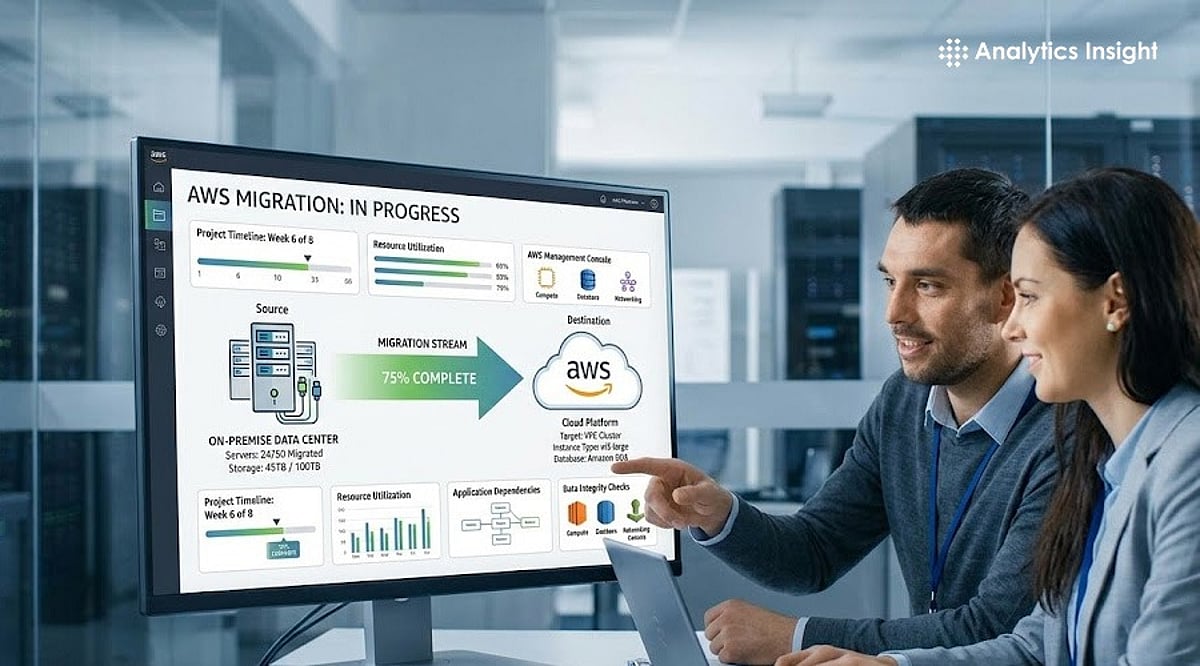
  • 10 Common AWS Migration Pitfalls and Proven Solutions for 2026

    10 Common AWS Migration Pitfalls and Proven Solutions for 2026

    AWS migrations remain one of the most predictably difficult engineering projects a company can take on, despite over a decade of mature tooling and frameworks. Roughly a third of migrations either fail outright or blow past their budget, and the average overrun lands around 23% above what was planned. The reasons rarely have anything to do with AWS’s capabilities. They come down to ten specific, well-documented failure points, and every one of them has a known fix.

    Most Failures Start Before a Single Workload Moves

    The single biggest predictor of a troubled migration is starting without a workload-by-workload strategy. AWS defines seven migration patterns: rehost, replatform, refactor, repurchase, retain, retire, and relocate. Treating every application the same way is one of the most common and costly mistakes teams make. A legacy batch job and a customer-facing API have nothing in common strategically, and forcing both through identical lift-and-shift treatment usually means overpaying for the simple one and under-optimizing the complex one.

    Right behind strategy sits dependency mapping. Enterprises consistently underestimate how much undocumented coupling exists across applications, shared databases, batch jobs, and external integrations. Poor mapping is cited repeatedly as a leading cause of migration failure. AWS Application Discovery Service and X-Ray help, but they are not a substitute for sitting down with the engineers who actually own each system.

    Technical Failures to Focus On

    Once strategy is settled, the recurring technical issues are remarkably consistent across nearly every account of AWS migrations gone wrong:

    • Underestimated data migration complexity
    • Security misconfigurations introduced during the rush to cut over
    • Wrong instance sizing based on old hardware specs rather than actual utilization
    • Downtime during cutover that nobody fully planned for

    The fix for the sizing problem is almost embarrassingly simple: size from CloudWatch usage data, not the specs of the server you’re replacing. Teams that do this consistently land on smaller, cheaper, more stable configurations, and Graviton instances are worth testing before any Savings Plan gets locked in.

    Cost Overrun Nobody Sees Coming Until the Bill Arrives

    Post-migration cost overruns deserve their own callout because they catch finance teams off guard more than any other item on this list. The mechanism is almost always the same: a double-run period — old infrastructure and new infrastructure running in parallel — gets treated as a scheduling detail instead of a budgeted financial risk. Every month that overlap continues, the organization pays twice for the same workload, and that erosion compounds fast. The teams that avoid this treat double-run as a named risk with an owner and a hard timebox from day one.

    All Ten Issues at a Glance

    Here are the ten most common AWS migration problems and their practical solutions:

    1. Poor planning — Use a workload-by-workload strategy aligned with the AWS 7 Rs framework.
    2. Inadequate dependency mapping — Combine AWS tools with direct engineer interviews.
    3. Underestimated data migration complexity — Test migrations early and plan for data validation.
    4. Security misconfigurations — Implement least-privilege IAM policies and AWS Control Tower guardrails.
    5. Wrong instance sizing — Size based on CloudWatch usage data, not old server specs.
    6. Unplanned downtime — Create detailed cutover plans with rollback procedures.
    7. Cost overruns from double-run — Treat double-run as a named risk with a hard timebox.
    8. Skill gap — Use a dedicated migration team with hands-on experience.
    9. Governance gaps — Establish clear governance and cost ownership from the start.
    10. Poor stakeholder communication — Maintain regular alignment across teams and leadership.

    What This Means for Your Migration

    None of these ten problems are exotic or AWS-specific; they show up in cloud migrations across every provider, repeated almost word-for-word in nearly every postmortem written about failed projects. The organizations that avoid them do one thing consistently: they treat governance, dependency mapping, and cost ownership as part of the technical plan, not as paperwork that happens around it.

    Cloud migration is more than moving workloads from on-premises infrastructure to AWS. A successful migration requires careful planning, governance, security, cost management, and cross-functional collaboration. Addressing common migration challenges early helps organizations reduce risk, minimize downtime, optimize cloud spending, and accelerate business transformation.