Blog

  • Wordle #1835 Hints and Answer for June 28, 2026: Expert Strategy to Solve ‘EMCEE’

    Wordle #1835 Hints and Answer for June 28, 2026: Expert Strategy to Solve ‘EMCEE’

    Today’s NYT Wordle puzzle, #1835 for June 28, 2026, presents a challenging five-letter word with repeated letters and three vowels. The word is “EMCEE,” which functions both as a noun (a master of ceremonies) and as a verb (to host an event). This guide offers strategic hints and the final answer to help you solve today’s puzzle.

    How to Play Wordle

    If you’re new to Wordle, here’s a quick refresher:

    • First Guess: Start with a common five-letter word that includes frequently used letters to identify possible matches.
    • Color Response: After each guess, tiles change color:
      • Green: Correct letter in the correct position.
      • Yellow: Correct letter but wrong position.
      • Gray: Letter not in the word.
    • Think Logically: Use each clue to eliminate letters, reposition yellow ones, and lock in green ones.
    • Solve Within Six Attempts: You have six tries to find the hidden word. The puzzle is the same worldwide every day.

    Yesterday’s Wordle (June 27, 2026)

    The answer for June 27 was SCOOP.

    Today’s NYT Wordle Hints

    Need a nudge toward the answer? Here are today’s clues:

    • Vowels: The word contains three vowels.
    • Beginning Letter: It starts with E.
    • Last Letter: It ends with E.
    • Secret Hint: There is a repeated letter.
    • Clue: This term describes a person who serves as a master of ceremonies at an event. It is also used as a verb.

    Wordle Answer for June 28, 2026

    The Wordle Puzzle #1835 answer is EMCEE.

    Definition of EMCEE

    An emcee is a master of ceremonies—the person who hosts or introduces events. As a verb, “to emcee” means to host or conduct a program, concert, or event. While common in entertainment and broadcasting, it’s not a frequent word in everyday conversation.

    Ready to play again? Wordle subscribers can track their statistics, revisit old puzzles in the Archive, and compare streaks. A new puzzle releases daily.

  • XRP at a Crossroads: Why Reclaiming $1.30 Is Vital for Recovery

    XRP at a Crossroads: Why Reclaiming $1.30 Is Vital for Recovery

    XRP remains under pressure near yearly lows, holding support at $1.12. Analysts say reclaiming $1.30 is essential to restore bullish momentum, while regulation and upcoming Ripple events could influence price direction.

    Key Takeaways

    • $1.30 is XRP’s key resistance level and must be broken for bullish recovery.
    • Support near $1.12 is preventing deeper losses, but market confidence remains weak.
    • Institutional demand stays strong despite regulatory uncertainty and recent price weakness.

    XRP has entered a crucial stage after weeks of price weakness. The cryptocurrency has struggled to recover after heavy selling pressure pushed the token lower during the past few months. Right now, XRP trades near $1.14 to $1.16, which puts the asset close to one of its weakest price levels of 2026.

    After a drop of almost 40% since the start of the year, market attention has now shifted toward one major level: $1.30. Many analysts believe XRP must move above this price before any strong recovery can begin.

    Why the $1.30 Level Matters

    The $1.30 price zone has become the biggest hurdle for XRP. Earlier this month, XRP tried to recover and briefly touched $1.29, but sellers quickly took control and pushed the price back down. This failed attempt showed that strong resistance still exists in that area. In simple terms, resistance means a price zone where buyers struggle to push higher since many traders decide to sell there.

    If XRP continues to stay below $1.30, confidence in the market could remain weak. A successful move above this level would show that buyers have returned and that the market may finally prepare for a stronger upward move.

    Current Support Is Keeping XRP Stable

    At the moment, XRP has managed to defend an important support zone near $1.12. During the recent weekend market decline, the token briefly slipped below $1.14, which created fear that more losses could follow. However, buyers entered quickly and pushed the price back upward before more serious damage happened.

    This recovery showed that demand still exists at lower levels. Even so, the rebound has not been strong enough to fully change market sentiment. Buyers have protected support, but a clear recovery remains missing.

    XRP Has Fallen Behind the Crypto Market

    Another concern comes from XRP’s recent market performance compared to other cryptocurrencies. Over the last seven days, XRP has dropped almost 10%, while many major digital assets have seen smaller losses. This shows weaker relative strength compared to the broader crypto market.

    When a major cryptocurrency performs worse than the rest of the market, traders often become more cautious. That is why breaking above $1.30 has become even more important. It would help restore confidence and prove that XRP can once again compete with the wider market recovery.

    Strong Fundamentals Still Support XRP

    Despite weak price action, several positive developments continue to support XRP in the background. Institutional interest remains active, especially after reports showed that XRP exchange-traded product inflows recently crossed $10 million. This suggests that larger investors still see long-term value even while short-term price weakness continues.

    At the same time, exchange supply has reportedly started to decline. This often means large holders move tokens away from exchanges and choose to hold instead of selling. In many cases, reduced supply creates positive price pressure over time.

    Regulation Creates Short-Term Uncertainty

    Another major factor affecting XRP comes from regulation. Ripple now faces an important deadline connected to California’s Digital Financial Assets Law, also known as DFAL, which officially takes effect on July 1, 2026.

    Since Ripple remains closely connected to XRP, uncertainty around new legal requirements has created caution among traders. The crypto market often reacts strongly whenever regulation becomes uncertain. Until clearer information arrives, some investors may remain on the sidelines.

    Ripple Swell Event Could Shift Sentiment

    Market attention has also started to shift to Ripple Swell 2026, which will be held in New York in late October of this year. A lot of attention will be focused on major topics in the blockchain world, including tokenization, stablecoins, decentralized finance, and institutional adoption of blockchain technology.

    Major Ripple announcements often influence sentiment toward XRP. Positive developments at the event could strengthen long-term investor confidence and attract renewed market interest.

    Risks if XRP Fails to Recover

    XRP remains under pressure while below $1.30 for an extended period of time, with some analysts speculating that if support fails to hold, there could be a move towards $0.93. If selling pressure picks up, even deeper downside targets of around $0.76 may occur.

    Should XRP break above and maintain a position at or above the $1.30 mark, the next potential bounce-off point is between $1.50-$1.80, indicating a resumption of bullish momentum after many months of weakness.

    Final Outlook for XRP

    XRP currently stands at a major turning point. Support near $1.12 has prevented a bigger collapse for now, but real recovery cannot begin unless buyers push the token above $1.30 resistance.

    This price level now acts as the line between weakness and recovery. Staying below it keeps bearish pressure alive. Moving above it could finally restart upward momentum and place XRP back on the path toward a stronger comeback in the crypto market.

    Frequently Asked Questions

    Why is $1.30 important for XRP?

    It is the primary resistance level where sellers repeatedly block recoveries. Breaking above it is essential to restore market confidence and restart upward price momentum.

    What happens if XRP stays below $1.30?

    Bearish pressure will persist, leaving the token vulnerable to further drops. Failing to clear this hurdle risks exposing downside targets near $0.93 and $0.76.

    What support level is currently protecting XRP?

    The key short-term support floor is at $1.12. Buyers have actively defended this zone during recent market dips, preventing a deeper breakdown.

    Are institutions still interested in XRP?

    Yes. Institutional confidence remains stable despite price weakness, as proven by recent XRP exchange-traded product inflows crossing over $10 million.

    Could Ripple Swell 2026 impact XRP price?

    Yes. The October event in New York focuses on major blockchain adoptions, and historically, big announcements there tend to shift sentiment and attract new buyers.

  • Digital Sales Room Software in 2026: The Complete Buyer’s Guide to Evaluation and Selection

    Digital Sales Room Software in 2026: The Complete Buyer’s Guide to Evaluation and Selection

    Introduction

    Choosing Digital Sales Room (DSR) software in 2026 is far more than picking the platform with the prettiest buyer page. For mid-market and enterprise revenue teams, the decision affects how sellers follow up after meetings, how buying committees access and share information, how champions build internal consensus, how stakeholders collaborate on next steps, how enablement teams govern sales content, how RevOps connects buyer signals with CRM data, how IT controls access and security, and how customer success inherits the relationship after the deal closes.

    The best DSR software must work for buyers, sellers, managers, enablement, RevOps, customer success, IT, and security. It should make complex buying easier while giving the organization enough control to deploy the platform securely and consistently across teams, regions, and customer segments.

    How to Choose Digital Sales Room Software: A 14-Step Framework

    Revenue teams should evaluate DSR software in the following order:

    1. Define the problem the platform must solve
    2. Evaluate the buyer experience
    3. Test stakeholder-level visibility
    4. Review Mutual Action Plan capabilities
    5. Inspect CRM integration depth
    6. Assess content management and governance
    7. Review permissions and access controls
    8. Evaluate data security and compliance
    9. Confirm enterprise readiness
    10. Evaluate AI and deal intelligence
    11. Test rep adoption and implementation effort
    12. Review reporting and portfolio visibility
    13. Assess sales-to-customer-success continuity

    A strong platform should combine buyer collaboration with stakeholder intelligence, CRM connectivity, governed content, granular permissions, enterprise security, useful reporting, and post-sale continuity.

    1. Define the Problem the Platform Must Solve

    Before comparing features, define the commercial problem. Digital Sales Rooms can serve many purposes: post-call follow-up, complex deal management, champion enablement, multi-threading, account-based selling, proposal delivery, security and procurement, Mutual Action Plans, customer onboarding, account management, and partner collaboration. Not every organization needs the same depth in every area. Start by asking: What is currently broken? Which teams will use the platform? At what stages of the customer journey? Which existing tools should it complement? Which manual workflows should it replace? What commercial result should improve? Possible success metrics include faster follow-up, higher buyer engagement, more stakeholders per deal, greater Mutual Action Plan participation, better seller adoption, shorter sales cycles, stronger sales-to-CS handovers, reduced content duplication, and improved pipeline visibility.

    2. Evaluate the Buyer Experience

    The buyer experience should be the first product-level evaluation. A platform may provide excellent internal analytics but still fail if buyers find it difficult, confusing, or irrelevant. A good DSR should give the buying committee one current place for relevant information, simple access, clear navigation, easy internal sharing, useful content, stakeholder-specific resources, transparent next steps, mobile access, and a consistent experience throughout the deal. Buyers should not have to search through long email threads, multiple attachments, separate recording links, different versions of proposals, disconnected security documents, shared spreadsheets, or repeated follow-up messages. Test how a buyer accesses the room, whether registration is required, how the room appears on mobile, how content is organized, how internal sharing works, and how branding and personalization appear. Personalization should reflect the buyer’s company, discovery findings, relevant use cases, stakeholder priorities, desired outcomes, known concerns, decision criteria, and agreed next steps—not just a logo on a generic page.

    3. Test Stakeholder-Level Visibility

    Complex B2B purchases are rarely made by one person. Buying groups include champions, economic buyers, executive sponsors, department leaders, end users, finance, security, IT, procurement, legal, and implementation owners. A DSR should help sellers understand who has entered the room, which stakeholders are most active, whether the room has been shared internally, whether a senior decision-maker has engaged, which departments are represented, and which buying roles may be missing. Stakeholder-level visibility turns anonymous engagement data into a useful view of the buying committee. Activity does not prove intent, but it provides one source of evidence alongside discovery, qualification, buyer feedback, CRM data, procurement progress, and seller judgment.

    4. Review Mutual Action Plan Capabilities

    Mutual Action Plans (MAPs) help buyers and sellers coordinate the steps required to complete a purchase. A strong MAP includes milestones, tasks, owners, due dates, dependencies, status, buyer responsibilities, seller responsibilities, security reviews, procurement steps, and implementation preparation. A collaborative plan allows the buyer to participate: view the full process, understand responsibilities, complete or update tasks, add comments, see deadlines, identify dependencies, and understand what is blocking progress. Evaluate whether MAP templates can be created centrally, personalized by deal type, synced to CRM, and continued into onboarding.

    5. Inspect CRM Integration Depth

    The CRM should remain the internal system of record. A basic integration may allow creating a room from a CRM record and viewing basic engagement activity. A deeper integration supports automatic personalization using CRM fields, contact and stakeholder synchronization, buyer activity written back to the opportunity, Mutual Action Plan activity, proposal and signing events, new stakeholder creation, embedded room views, workflow triggers, engagement-based notifications, and manager reporting. Ask whether the integration is native, which objects are supported, and whether synchronization is one-way or two-way.

    6. Assess Content Management and Governance

    DSR software depends heavily on content. Without central controls, sellers may use outdated documents, incorrect pricing, off-brand assets, or unapproved customer claims. Content management features should allow storing approved content, searching for relevant assets, categorizing resources, assigning content to teams, restricting sensitive assets, tracking usage, measuring buyer engagement, managing versions, replacing outdated files, and removing content centrally. Strong content governance enables asset approval, team-level controls, global content updates, prevention of unapproved materials, download controls, regional restrictions, and template governance with locked sections and brand standards.

    7. Review Permissions and Access Controls

    Permissions are critical when a DSR is deployed across multiple teams, regions, products, and customer segments. Internal permissions to evaluate include user roles, administrator roles, manager permissions, rep permissions, team-level access, workspace ownership, content publishing rights, template editing rights, reporting access, customer-success access, cross-team visibility, and regional restrictions. External permissions include open-link access, password protection, email verification, domain-restricted access, named-user access, page-level restrictions, content-level restrictions, expiring access, download permissions, guest access, and buyer collaboration rights. The platform should support different access models for different deal stages and information types—an open link may work for early-stage rooms, but later stages require named-user restrictions and audit trails.

    8. Evaluate Data Security and Compliance

    Security should be reviewed across five areas: organizational security (SOC 2 Type II, ISO 27001, incident response, business continuity), identity and access management (SSO, SAML, SCIM, MFA, automated provisioning and deprovisioning), data protection (encryption at rest and in transit, data retention and deletion, backup procedures, access logging), privacy and data location (GDPR compliance, data processing agreements, data residency, international transfer mechanisms), and buyer-facing security (domain restrictions, named-user access, password protection, download controls, expiring links, revocable access). Also ask about AI data policies: is customer data used to train models, which model providers process data, and can AI features be disabled?

    9. Confirm Enterprise Readiness

    Enterprise-ready DSR software can be deployed securely and consistently across large teams, complex organizational structures, regulated buying environments, and high volumes of active workspaces. It should support security (SOC 2, ISO 27001, SSO, SCIM, encryption), governance (central templates, content approval, brand management, lifecycle controls), scalability (large numbers of users, rooms, teams, regions, products), integration (CRM, revenue platforms, identity providers, collaboration tools, reporting systems), reporting (portfolio analytics, team and adoption reporting, content and stakeholder visibility), administration (central management, provisioning, deprovisioning, permission groups, audit trails), and implementation support.

    10-14. Additional Considerations

    Beyond the core steps, evaluate AI and deal intelligence capabilities (such as predictive scoring and next-best-action recommendations), rep adoption and implementation effort (training requirements, time to first room), reporting and portfolio visibility (dashboards for managers and leadership), and sales-to-customer-success continuity (how the room transitions to post-sale teams). A platform like trumpet brings these capabilities together through personalized buyer-facing Pods, stakeholder-level engagement, Mutual Action Plans, content management, AI-powered deal insights, secure access controls, document signing, and sales-to-customer-success continuity.

    Conclusion

    Choosing the right Digital Sales Room software in 2026 requires a structured evaluation that balances buyer experience, internal governance, security, and enterprise scalability. By following the 14-step framework outlined above, revenue teams can select a platform that not only simplifies complex buying but also drives measurable business outcomes—faster cycles, higher engagement, and stronger handoffs.


  • 10 Data Labeling Jobs That Power Modern AI: Roles, Skills, and Impact

    10 Data Labeling Jobs That Power Modern AI: Roles, Skills, and Impact

    Even though artificial intelligence may appear completely automated, human data labelers work behind the scenes to make computers smarter. These professionals train AI through data classification, annotation, and evaluation, teaching algorithms to recognize patterns, languages, images, and responses that drive future system performance.

    10 Data Labeling Jobs Driving the AI Revolution

    The rise of AI has diversified data labeling into specialized careers. Below are the ten most prominent data labeling roles supporting modern AI systems.

    1. Image Annotation Specialist

    Image annotators label objects within images using bounding boxes for cars, people, animals, and road signs. This work enables computers to identify visual elements and is critical for facial recognition, medical imaging, and autonomous driving.

    2. Video Annotation Professional

    While image annotation handles static images, video annotation tracks dynamic objects. Video annotators help computers understand motion, making them essential for autonomous driving, surveillance, and sports analytics.

    3. Text Classification Analyst

    These analysts categorize text into predefined classes—for example, distinguishing spam from legitimate emails, sorting customer reviews by topic, or grouping news articles by subject matter.

    4. Sentiment Analysis Annotator

    Businesses rely on sentiment analysis to gauge customer feelings. Annotators review text and label it as positive, negative, or neutral, enabling companies to understand public opinion at scale.

    5. Audio Transcription Specialist

    Voice‑powered AI requires vast amounts of annotated audio data. Audio transcription specialists convert spoken language into written text, capturing not only words but also speaker identity, accent, emotional tone, pauses, and background noise.

    6. AI Response Evaluator

    With generative AI on the rise, AI response evaluators assess chatbot outputs for quality, detect errors, and select the best responses to improve model performance.

    7. Content Moderation Reviewer

    These reviewers examine text, images, videos, and comments to identify harmful or rule‑breaking content. They apply labels according to platform guidelines so that automated systems can later detect unacceptable material.

    8. Data Quality Reviewer

    Annotation projects depend on quality control. Data quality reviewers verify completed annotations for accuracy and consistency, ensuring reliable training data.

    9. Domain Expert Annotator

    As AI expands into specialized fields, companies hire doctors, lawyers, engineers, financial analysts, and scientists to annotate data requiring deep subject‑matter expertise.

    10. Reinforcement Learning Trainer

    This emerging role involves crafting prompts, testing model responses, analyzing logic, and providing feedback. Such iterative human input significantly improves AI model accuracy over time.

    Required Skills for Data Labeling Jobs

    Entry‑level labeling roles may require minimal experience, but most positions demand attention to detail, consistency, and strong analytical abilities. Advanced roles often call for industry‑specific expertise or familiarity with AI workflows. Communication, critical thinking, and the ability to follow detailed guidelines are increasingly valuable as projects grow more complex.

    Why Data Labelers Are Essential to AI

    AI models require high‑quality training data to perform effectively. Human judgment provides algorithms with knowledge about objects, language structures, and correct responses. Every recommendation engine, virtual assistant, chatbot, and computer vision system rests on this human foundation. As AI evolves, data labelers move beyond simple tagging to analyze reasoning, evaluate model outputs, and apply their own expertise. Whenever a virtual assistant answers accurately or a self‑driving car identifies a pedestrian, a team of data labelers likely made it possible.

  • NYT Strands Hints and Answers for June 28, 2026: Pride Month Puzzle Walkthrough

    NYT Strands Hints and Answers for June 28, 2026: Pride Month Puzzle Walkthrough

    Today’s NYT Strands puzzle celebrated Pride Month with a vibrant set of LGBTQ+ themed words. The puzzle, released on June 28, 2026, featured the spangram PRIDE MONTH and included words such as Rally, Rainbow, Drag, Flags, Parade, and Celebration.

    Overview

    Today’s puzzle celebrated Pride Month with colorful words representing LGBTQ+ events, symbols, and festivities. Opening-letter hints guided players toward discovering the themed vocabulary before successfully revealing the central spangram. PRIDE MONTH connected every answer, creating an uplifting and meaningful Strands solving experience.

    Hints for Solving

    The theme was ‘March in June.’ For those requiring additional help, today’s puzzle pointed to LGBTQ+ parades taking place in June.

    Opening Letters

    The first two letters of each theme word were: PR, RA, RA, DR, FL, PA, CE. These initial letters served as an indication for words frequently associated with Pride events. Once players realized these words were related to Pride Month, finding other theme words became easy. Those who get stuck can also use the embedded NYT Strands Hint system, which uncovers one theme word upon discovering three non-themed words with at least four letters.

    Spangram

    Today’s spangram is PRIDE MONTH. The phrase perfectly captures the puzzle’s overall theme. Celebrated every June, Pride Month honors the LGBTQ+ community through parades, rallies, celebrations, and public events. The spangram connects every other themed word hidden throughout the puzzle.

    Theme Words for Today

    Each of today’s theme words represents an important part of Pride Month celebrations:

    • RALLY: Public gatherings where people advocate for LGBTQ+ rights, equality, and community support.
    • RAINBOW: The iconic rainbow flag symbolizes diversity, inclusion, and pride across the LGBTQ+ community.
    • DRAG: One of the most revered art forms has long been associated with Pride festivals.
    • FLAGS: These flags signify various groups within the LGBTQ+ community.
    • PARADE: The Pride parade is one of the most recognizable events held during Pride Month worldwide.
    • CELEBRATION: The general theme of Pride festivals, gatherings, and celebrations.

    Bottom Line

    In today’s NYT Strands, the month of Pride has been featured through terms related to the symbols, performances, and celebrations of LGBTQ+ culture. Once players linked the clue ‘March in June’ to Pride festivals, the other terms followed effortlessly.

  • AI-Generated Movies: Real Films or Just High-Tech Experiments?

    AI-Generated Movies: Real Films or Just High-Tech Experiments?

    AI-generated movies are moving beyond tech demos, with full-length films and festival entries proving that artificial intelligence can now create surprisingly realistic cinematic visuals. But are these productions real movies or just experiments?

    Most AI films today are hybrid productions, where AI assists with scripts, storyboards, visual effects, and editing while human filmmakers shape the narrative and emotional core. AI excels at generating stunning visuals quickly, but it still struggles with believable characters, emotional depth, and strong storytelling without human guidance.

    Low-budget creators are using AI tools to produce impressive films for just a few thousand dollars, making filmmaking more affordable than ever before. Studios are already integrating AI for dubbing, voice enhancement, digital effects, and background characters, but human actors remain essential for leading roles.

    The future of AI cinema is likely hybrid, combining human creativity with AI-powered production. Fully AI-made blockbuster movies are still largely experimental. The industry is watching closely as technology continues to evolve.

  • AI Now Generates Playable Game Worlds in Under a Minute

    AI Now Generates Playable Game Worlds in Under a Minute

    Artificial intelligence has reached a milestone where it can create interactive game worlds from a simple text prompt or image in less than a minute. While these prototypes are not finished blockbuster titles, they provide developers with playable environments almost instantly.

    Google’s Project Genie is a prime example. It allows users to generate, explore, and remix short 3D worlds using AI, dramatically accelerating the world-building process for testing new concepts. These AI-generated worlds can include basic landscapes, interactive objects, and simple gameplay loops, enabling developers to prototype levels in minutes instead of months.

    However, today’s AI is not yet capable of constructing complete AAA games. Complex storylines, polished graphics, balanced gameplay, multiplayer features, and optimization still require skilled human developers. Instead, AI serves as a powerful creative assistant—it can generate maps, environments, textures, and even non-player character (NPC) dialogue ideas, allowing designers to iterate and experiment far more quickly.

    The future of game development will likely be a hybrid approach: AI creates rough worlds in seconds, while humans refine the gameplay, storytelling, and visuals into finished, high-quality games.

  • Google Restricts Meta’s Gemini AI Access Amid Global Compute Crunch

    Google Restricts Meta’s Gemini AI Access Amid Global Compute Crunch

    Google has reportedly limited Meta’s access to its Gemini AI models after the social media giant requested more computing capacity than Google could provide. The move highlights mounting infrastructure challenges faced by even the world’s biggest AI companies as demand for generative AI continues to surge.

    According to a Financial Times report, Google informed Meta around March that it could not fulfill the company’s full request for Gemini capacity, disrupting some of Meta’s internal AI projects. Reuters has not independently verified the report.

    Compute Shortage Hits AI Expansion

    The report says Meta has been affected more than other Google Cloud customers because of its unusually high demand for Gemini models. The restrictions have reportedly delayed several internal projects that rely on Google’s AI infrastructure.

    In response, Meta has encouraged employees to use AI tokens more efficiently. AI tokens measure how much computing power AI applications consume, making them a key factor in managing large-scale AI workloads.

    Meta Pushes Ahead with Its Own AI Strategy

    Meta has used Gemini for content moderation, scam detection, customer service, advertising tools, and software development. It is said that Meta began using Gemini because it outperformed some of its own AI models on certain tasks.

    Nonetheless, Meta has recently been moving some of its workloads from Gemini to its own Muse Spark model, thereby reducing its dependence on external AI providers while still investing billions of dollars in building its infrastructure.

    AI Infrastructure Emerges as Next Battleground

    The reported restrictions reflect a broader challenge across the AI industry. Companies are investing billions in chips, servers, and data centers, yet demand for AI computing continues to outpace supply.

    Google has previously acknowledged that limited computing capacity has constrained growth in its cloud business despite strong customer demand. If the report is accurate, the latest development suggests that access to AI infrastructure is becoming as strategically important as the AI models themselves, with compute power emerging as one of the industry’s most valuable resources. Neither Google nor Meta has publicly commented on the report.

  • Kotak Mahindra Bank CEO Succession: Internal Shortlist Expected by August for RBI Approval

    Kotak Mahindra Bank CEO Succession: Internal Shortlist Expected by August for RBI Approval

    Kotak Mahindra Bank is advancing its leadership succession process and is expected to submit a shortlist of internal candidates to the Reserve Bank of India (RBI) by August, according to a Moneycontrol report. The move comes as the bank prepares for a transition at the top, with two senior executives emerging as leading contenders for the CEO position.

    Internal Executives Emerge as Frontrunners

    Deputy Managing Director KVS Manian and Joint Managing Director Shanti Ekambaram are reportedly the strongest internal candidates for the role. Both have spent decades at Kotak Mahindra Bank, holding key leadership positions across retail, corporate, and institutional banking. The bank’s nomination and remuneration committee has initiated the formal succession process, aligning with RBI guidelines that require private banks to provide a panel of suitable candidates before appointing a managing director and CEO.

    Board Evaluation and Regulatory Review

    The board is expected to evaluate the candidates’ experience, business performance, and long-term vision before finalizing the list for regulatory review. The RBI’s approval is mandatory before any appointment to the CEO position at a private sector bank. The shortlist is expected to be finalized by the board in the coming weeks, after which the central bank will review the candidates before granting approval.

    Focus on Leadership Continuity

    Kotak Mahindra Bank has historically relied on developing leaders internally, and selecting a seasoned insider is seen as key to maintaining strategic continuity. The bank has built a strong presence in retail banking, corporate financing, wealth management, and digital banking. This succession move is expected to reinforce investor confidence amid evolving regulations in leadership and governance in the banking industry.

    Neither Kotak Mahindra Bank nor the RBI has commented on the shortlisted names. The final decision now rests with the board and the regulator.

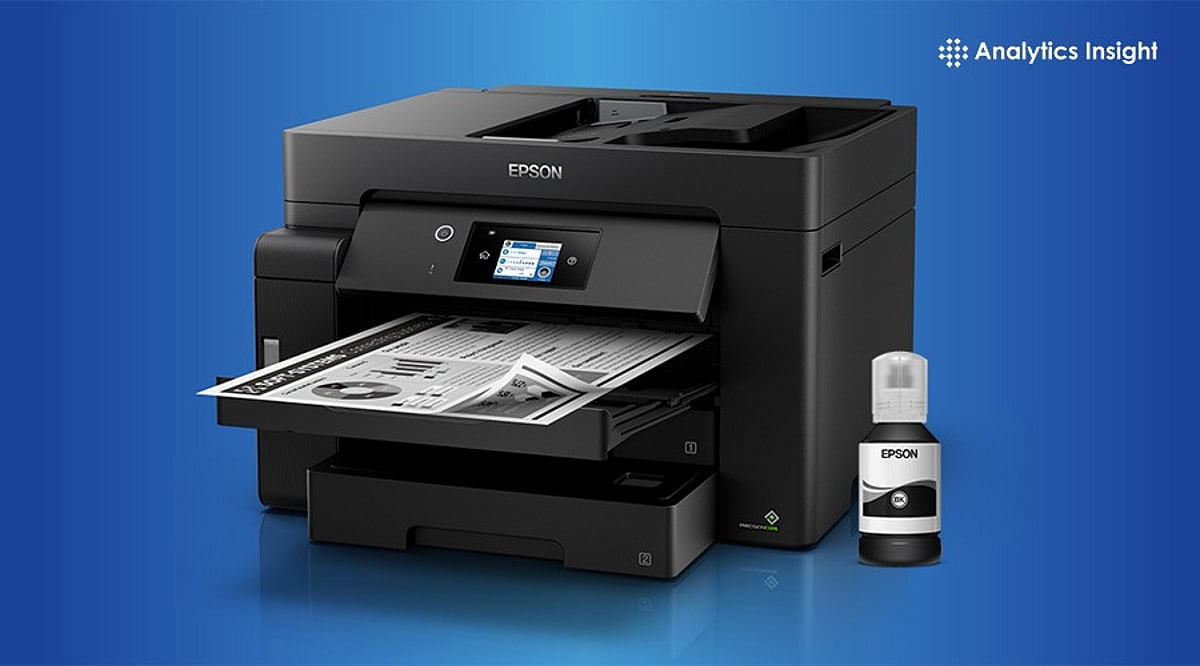
  • Epson EcoTank Printers Under ₹20,000: The Best Picks for 2026 in India

    Epson EcoTank Printers Under ₹20,000: The Best Picks for 2026 in India

    When it comes to budget printers, the initial price tag can be misleading. A low-cost machine often leads to high ink replacement costs. Epson’s EcoTank series flips that equation by using refillable ink tanks instead of cartridges, dramatically reducing long-term expenses. Here are the top Epson printers under ₹20,000 available in India this year.

    Why EcoTank Changes the Game

    Traditional printers are cheap upfront but expensive to maintain. EcoTank models replace cartridges with large, refillable ink tanks. The cost per page drops significantly, making them ideal for regular printing—whether for school assignments, home offices, or small businesses. The savings add up fast, which is why EcoTank dominates this price range.

    Epson EcoTank L3252 – The Best All-Rounder for Most Homes

    The L3252 prints, scans, and copies. It connects wirelessly via Wi-Fi and Wi-Fi Direct, so you can print from phones, tablets, and laptops without cables. Its running costs are low, setup is simple, and performance is reliable. For everyday home use, this is the most balanced choice.

    Epson EcoTank L3250 – A Close Second

    Similar to the L3252, the L3250 offers printing, scanning, copying, and wireless connectivity at a slightly lower price. It’s perfect for home offices that need consistent daily performance without frills.

    Epson EcoTank L3211 and L3210 – No-Nonsense Value

    If wireless isn’t needed, these models focus on core functions: print, scan, copy. They’re cheaper and still deliver low running costs. The L3210 is particularly popular in India for its reliability. The L3211 offers a slightly updated build. Great for students and families on a tight budget.

    Epson EcoTank M2110 – Designed for Business Volume

    This monochrome printer is built for heavy document printing. Small businesses, CA firms, and legal offices that print hundreds of pages daily will benefit from its efficiency and low operating costs. Color printing isn’t available, but that’s a smart trade-off for pure text work.

    How to Choose the Right Model

    Ask yourself three questions: How much do you print each month? Do you need wireless? Is color essential? Your answers will point to the right model. For wireless-first users: L3252 or L3250. For simple, reliable printing: L3210 or L3211. For high-volume monochrome: M2110.

    Final Thoughts

    Epson’s EcoTank platform removes the biggest pain of budget printing—the cost of ink. Under ₹20,000, each of these models delivers excellent value. Match your choice to your actual printing habits, and you’ll rarely regret it.