Blog

  • Amazon CEO Andy Jassy Pledges $48 Billion India Investment After Meeting PM Modi

    Amazon CEO Andy Jassy Pledges $48 Billion India Investment After Meeting PM Modi

    Amazon has announced a massive $48 billion investment roadmap for India through 2030, following a meeting between CEO Andy Jassy and Prime Minister Narendra Modi. The plan focuses on artificial intelligence, cloud infrastructure, logistics expansion, job creation, and digital inclusion, reinforcing Amazon’s long-term commitment to India’s growth.

    During the meeting in New Delhi on June 25, 2026, Jassy revealed an additional $13 billion to expand AI and cloud infrastructure by 2030, bringing Amazon’s total planned investment in these areas to over $21 billion between 2026 and 2030. This investment will increase AWS data center capacity in Mumbai and Hyderabad, providing startups, enterprises, and governments with access to customized AI chips, AI managed services, secure cloud computing solutions, and developer tools.

    “We came to India over a decade ago and have since been serving customers, sellers, developers, start-ups, and enterprises through our different businesses. The response has been tremendous, with strong growth especially across our ecommerce, AI, and cloud businesses. As we grow Amazon in India, our business priorities continue to align with India’s priorities of democratizing access to AI, digitizing small businesses, creating jobs, and enabling exports,” Jassy said.

    Key Takeaways from Andy Jassy’s Meeting with PM Modi

    Amazon India also launched ‘Sammaan’, a comprehensive welfare program for thousands of delivery associates in its logistics network. Initiatives include scholarships to educate associates’ children, access to government benefits and financial inclusion programs, comprehensive insurance coverage, on-road safety measures, and more. As part of the program, Amazon will expand its Ashray rest centers to 250 locations this year, open to delivery associates across the industry.

    What it Means for India’s Digital Future

    Jassy thanked Prime Minister Modi for his leadership and highlighted the growing importance of India, where Amazon operates several businesses, including e-commerce, AI, cloud, and entertainment. “We are investing over $48 billion in the coming five years to meet the strong demand across our business in India and to help the country achieve these priorities. We are inspired by Prime Minister Modi’s vision of a Viksit and Atmanirbhar Bharat, and we are committed to being a long-term partner in India’s growth story,” he added.

    This investment from Amazon is expected to accelerate the digital revolution in India by improving its technological infrastructure, cloud computing, logistics, and innovation ecosystem. It signals that the rest of the world sees India as a digital powerhouse of the future.


  • Strategy’s Bitcoin Treasury Turns Underwater as BTC Drops Below $75,651 Cost Basis

    Strategy’s Bitcoin Treasury Turns Underwater as BTC Drops Below $75,651 Cost Basis

    Strategy (MSTR), the largest corporate holder of Bitcoin, has entered a critical phase after Bitcoin fell below the company’s average purchase price. The stock has dropped 78% from its cycle peak, while Bitcoin has declined 51%, according to data cited in a report by AxelAdlerJr. At the same time, Strategy has slowed Bitcoin accumulation and increased cash reserves, marking a notable shift in its treasury approach.

    The report said Strategy’s Bitcoin treasury now sits underwater for the first time since the 2022 bear market. The company holds 847,363 BTC at an average purchase price of $75,651, representing a total cost of $64.1 billion. Bitcoin’s move below that level has increased attention on Strategy’s financing model and future buying activity.

    MSTR Falls Faster Than Bitcoin

    Since launching its Bitcoin treasury strategy in 2020, MSTR has generally acted as a leveraged version of Bitcoin. The stock often outperformed Bitcoin during rallies but suffered larger losses during downturns. After the peak of the 2024-2025 cycle, both Bitcoin and MSTR moved lower, yet MSTR declined much faster than the underlying asset. The stock has now fallen 78% from its peak, compared to Bitcoin’s 51% decline from its cycle high. Although severe, the decline still remains above the 2022 bear market bottom when MSTR recorded an 89% drawdown while Bitcoin fell 77%.

    The report also pointed to March 2020 as a contrasting period. During the pandemic-driven market crash, Bitcoin dropped about 75%, while MSTR lost roughly 58%. At that time, the company had not yet adopted its Bitcoin treasury strategy.

    Cost Basis Becomes a Key Level

    Strategy’s average Bitcoin purchase price of $75,651 is a critical threshold. While an underwater position does not automatically force sales, it can affect corporate behavior and capital allocation. As Bitcoin trades below that level, pressure increases on Strategy’s ability to raise capital through its existing model. The report said a shrinking premium between MSTR shares and the company’s Bitcoin holdings reduces the effectiveness of aggressive stock issuance programs. Maintaining Bitcoin below the treasury cost basis could place additional strain on the company’s funding structure and future accumulation plans.

    Buying Activity Slows as Cash Reserves Grow

    The report described a broader shift in Strategy’s operating approach. Weekly Bitcoin purchases have fallen by roughly two-thirds compared with previous periods. Recent capital raises also show a different allocation pattern. Of the $335.5 million generated through stock sales, less than 11% went toward Bitcoin purchases. The remaining funds went into a dollar reserve. As of June 21, that reserve stood at $1.4 billion. The move is characterized as a transition from aggressive accumulation toward a more defensive posture.

    Meanwhile, Strategy recorded its first net Bitcoin sale since 2022. In late May, the company sold 32 BTC to cover dividend payments linked to STRC. The report also tracked the performance gap between MSTR and Bitcoin. That spread currently stands near 28 percentage points, meaning the stock has fallen substantially more than the asset it tracks. Historical data shows the spread has returned toward the upper end of its long-term range, reflecting continued pressure on the Bitcoin proxy stock.

    What’s Next?

    Strategy’s Bitcoin treasury has moved underwater after BTC fell below the company’s average cost basis of $75,651. Meanwhile, MSTR has dropped 78% from its peak and now trails Bitcoin by a wide margin. At the same time, Strategy has reduced Bitcoin purchases, increased cash reserves, and shifted toward a more defensive treasury approach as investors monitor the key $75,651 level.

  • Jason Momoa’s ‘In the Hand of Dante’ Now on Netflix: Full Cast, Plot & Reception

    Jason Momoa’s ‘In the Hand of Dante’ Now on Netflix: Full Cast, Plot & Reception

    One of the year’s most star-studded Netflix releases has finally hit the streaming platform. ‘In the Hand of Dante’ is now available on OTT following its theatrical debut on June 12, bringing its star-powered drama to audiences worldwide.

    Jason Momoa Leads Star-Studded Literary Crime Thriller

    Nick Tosches’ 2002 book of the same name serves as the inspiration for the movie. Renowned director Julian Schnabel has co-written the screenplay with Louise Kugelberg.

    In the film, Jason Momoa portrays Rosario, a vicious mob fixer assigned to locate the actual manuscript of Dante Alighieri’s ‘The Divine Comedy’.

    The star-studded cast also includes Oscar Isaac, Gal Gadot, Gerard Butler, John Malkovich, Louis Cancelmi, Sabrina Impacciatore, Franco Nero, Benjamin Clementine, Paolo Bonacelli, and Al Pacino in key roles.

    Interestingly, a few actors are portraying two characters, one from the historical era and one from the contemporary chronology. There’s another surprise for movie buffs: Martin Scorsese’s first significant acting credit in a long time comes in the supporting role of Dante’s mentor.

    Can ‘In the Hand of Dante’ Defy Mixed Reviews?

    According to the official synopsis, the film follows two parallel stories across different centuries. In the 21st century, a New York author embarks on a violent journey after a mafia boss hires him to steal the original handwritten manuscript of Italian poet Dante Alighieri’s ‘The Divine Comedy’.

    Meanwhile, in the 14th century, Dante struggles to find inspiration as he works on what will become his greatest literary masterpiece. Unknowingly connected across time, both men are driven by an obsessive pursuit of love, beauty, and the divine power.

    Scorsese and Isaac also serve as executive producers of ‘In the Hand of Dante’. Jon Kilik, Francesco Melzi d’Eril, Olmo Schnabel, Gabriele Bebe Moratti, Vito Schnabel, and Schnabel are the rest of the producers. Based on 21 reviews, Rotten Tomatoes gave the film a 43% approval rating after its global premiere at the Venice International Film Festival last year.

  • Bitcoin Faces Risk of Brutal Liquidation Cascade If It Drops Below $59K

    Bitcoin Faces Risk of Brutal Liquidation Cascade If It Drops Below $59K

    Bitcoin recovered above $61,000 on Thursday after falling to nearly $59,000 in the previous session. The move followed long liquidations and spot ETF outflows. Analysts now question whether the decline has ended or another fall could follow.

    Analyst Flags Large Liquidation Zone Near $58,000

    Crypto analyst Reflection warned that Bitcoin could face a rapid liquidation cascade if price falls below $59,000. The analyst cited CoinGlass data showing more than $1.6 billion in long positions clustered near $58,000. Reflection described the concentration as unusually large, although the estimate can change as traders open and close positions.

    “In all my years trading, I’ve never seen this much long-side liquidity stacked in one single zone,” Reflection said.

    The analyst also claimed that traders who called the bottom early could face forced liquidations. Still, liquidation heatmaps show estimated risk areas, not confirmed price targets. Bitcoin fell to about $59,100 on Wednesday, while total crypto market liquidations reached nearly $984 million. Long positions made up more than 80% of the losses.

    ETF Outflows Add Pressure as Exchange Inflows Rise

    Institutional selling has weighed on Bitcoin. US spot Bitcoin ETFs recorded about $469 million in net outflows on Wednesday, marking a fifth straight session of withdrawals. Cumulative ETF inflows fell to $52.8 billion, their lowest level since July 2025.

    Meanwhile, about 7,600 BTC moved into Binance, according to CryptoQuant. The transfer was worth nearly $479 million at the time. Higher exchange inflows can increase available supply, although they do not confirm that every coin will be sold. The pressure pushed Bitcoin below $60,000 before buyers returned, turning the former support area into a key resistance level.

    On-Chain Data Raises Questions About Capitulation

    CryptoQuant analyst Darkfost said annual realized profits usually fall below realized losses near the peak of bear-market capitulation. Current figures show realized profits at about $305 billion, compared with realized losses near $198 billion. The gap suggests that the market has not yet reached that past-cycle condition.

    “It is precisely at that moment that capitulation reaches its bear market peak,” Darkfost said.

    The analyst argued that losses could rise further before Bitcoin forms a lasting bottom, though earlier cycles do not guarantee the same result. Analyst Sykodelic also noted that only 46% of Bitcoin supply remains in profit, matching the 2022 bear-market low. Bitcoin reached that level after a 52% decline this cycle, compared with a 75% fall in 2022.

    Bitcoin Price Outlook Focuses on $59,000 and PCE Data

    Bitcoin traded near $61,700 on Thursday after recovering from the low. The immediate support zone sits between $59,000 and $59,300. A sustained break below that range could expose $57,000, followed by the two-year low area near $54,000. The realized price sits slightly above $53,000, another level watched during deep market declines.

    On the upside, Bitcoin must reclaim $63,000 to weaken the current bearish structure. Traders are also watching the US Personal Consumption Expenditures inflation report on June 26. A hotter reading could raise interest-rate concerns and pressure risk assets. Softer data could support a recovery, although ETF flows, exchange inflows and leverage levels may remain the main short-term drivers.

  • MIT Tops QS World University Rankings for 15th Consecutive Year

    MIT Tops QS World University Rankings for 15th Consecutive Year

    MIT Continues Its Reign as the World’s Best University

    The Massachusetts Institute of Technology (MIT) has once again been named the world’s top university by QS World University Rankings for the 2026-27 academic year. This marks the 15th consecutive year that MIT has held the number one spot, solidifying its position as a global leader in higher education and research.

    In addition to the overall ranking, MIT also placed first in 12 subject areas, showcasing its strength across a wide range of disciplines. The institute also ranked second in seven subject areas, further demonstrating its academic excellence.

    The QS World University Rankings are based on a variety of factors, including academic reputation, employer reputation, faculty-student ratio, citations per faculty, international faculty ratio, and international student ratio. MIT’s consistent performance across these metrics underscores its commitment to providing a world-class education and fostering groundbreaking research.

    This achievement is a testament to the hard work and dedication of MIT’s faculty, staff, and students. The institute’s continued success in the rankings reflects its ability to attract top talent from around the world and its commitment to pushing the boundaries of knowledge.

    For more details, visit the original article on MIT News.

  • MIT Biology Department Highlights: From Stem Cell Research to Enzyme Discoveries

    MIT Biology Department Highlights: From Stem Cell Research to Enzyme Discoveries

    MIT’s Department of Biology continues to push the boundaries of life science research. Recent stories highlight groundbreaking work in stem cell regeneration, enzyme assembly, bacterial defense systems, and the achievements of faculty and alumni. Below is a roundup of the latest news from the department.

    Meet the leader of the Department of Biology’s all-important “kitchen”

    Karen O’Leary, lab associate and acting supervisor in the Glassware Sterilization Facility, has become a cornerstone of the department’s operations.

    QS ranks MIT the world’s No. 1 university for 2026-27

    MIT places first overall for the 15th consecutive year and leads in 12 subject areas.

    Harriet having it all

    Harriet Latham Robinson SM ’61, PhD ’65 reflects on a career at the forefront of molecular biology, spanning Boston, Moscow, and beyond.

    Advancing stem cell research and building the next generation of biologists

    Biology PhD student Giselle Valdes studies stem cell regeneration while mentoring aspiring researchers.

    MIT affiliates win 2026 Breakthrough, New Horizons prizes

    Faculty member Shu-Heng Shao and four MIT alumni are honored by the Breakthrough Prize Foundation.

    Enzymes that assemble into droplets can speed up cellular reactions

    MIT biologists find that highly concentrated droplets help cells keep enzymes organized and control growth signals.

    MIT affiliates elected to National Academy of Sciences for 2026

    Six MIT faculty and 10 additional alumni are recognized for outstanding contributions to research.

    Four from MIT named 2026 Searle Scholars

    Computational neuroscientist Sven Dorkenwald and cell biologist Whitney Henry, along with two alumni, are recognized for early-career research.

    MIT BrainTrust supports neighbors living with brain injuries

    Nearly 100 MIT students participate in a buddy program assisting Boston-area residents.

    Biologist Joey Davis explores how cells build complex structures

    His studies shed light on the assembly instructions governing ribosomes, the critical protein-building machines of the cell.

    Six from MIT awarded 2026 Paul and Daisy Soros Fellowships for New Americans

    The fellowship honors immigrant contributions with $90,000 in graduate study funding.

    MIT affiliates elected to the American Academy of Arts and Sciences for 2026

    Four MIT faculty and 13 alumni are among the new members.

    Two MIT alumnae named 2026 Gates Cambridge Scholars

    Mitali Chowdhury ’24 and Christina Kim ’24 will pursue graduate studies at Cambridge University.

    Professor Michael Laub and MIT alumni named 2025 AAAS Fellows

    The American Association for the Advancement of Science recognizes 21 alumni and Laub.

    Slice and dice: SNIPE defense system

    Newly characterized biological defense system directly protects bacteria by chopping up invading viral DNA.

  • MIT Biological Engineering: Breakthroughs in Stem Cells, Cancer Nanomedicine, and Photonic Devices

    MIT Biological Engineering: Breakthroughs in Stem Cells, Cancer Nanomedicine, and Photonic Devices

    MIT’s Department of Biological Engineering continues to drive innovation across multiple fields, from stem cell research and cancer detection to advanced medical imaging and protein engineering. Here is a roundup of recent developments highlighted in MIT News.

    Advancing Stem Cell Research

    Biology PhD student Giselle Valdes is studying stem cell regeneration while inspiring the next generation of researchers. Her work focuses on understanding how stem cells can be harnessed for therapeutic applications.

    Brighter MRI Signals

    MIT researchers have developed new MRI sensors that sensitively detect target molecules in the brain and body. This breakthrough could lead to improved diagnostic imaging for neurological conditions.

    Fulbright Awards

    Eleven members of the MIT community have accepted 2026 Fulbright awards. Over half of MIT’s Fulbright applicants won awards this year, with recipients embarking on research and teaching projects abroad.

    Cancer Nanomedicine

    The MIT Marble Center for Cancer Nanomedicine celebrates a decade of transforming nanotechnology concepts into advances for cancer patients, achieving significant progress in detection and treatment.

    Plastic Waste Solutions

    Akorfa Dagadu, a senior in chemical engineering, highlights the importance of community-engaged research through the PKG Center for Social Impact, addressing plastic waste from a systems perspective.

    Photonic Devices

    MIT researchers created tiny 3D photonic devices with features small enough to channel visible light, potentially enabling devices that compute using light instead of electricity.

    Faculty Awards

    MIT School of Engineering faculty received multiple awards in winter 2026, recognizing their scholarship, service, and excellence.

    Chromatin and Gene Expression

    By monitoring chromosomal structures over various timescales, researchers discovered that chromatin helps bring genes closer to their regulatory elements, controlling gene expression.

    Molecular Markers of Fitness

    A new study reveals cellular pathways that underlie differences in physical fitness, mapping molecular markers that could inform exercise science.

    Pencil Beam Laser

    A self-organizing ‘pencil beam’ laser offers faster, more precise biomedical imaging, helping scientists design brain-targeted therapies.

    Goldwater Scholars

    Rising seniors Deeksha Kumaresh, Anna Liu, and Charlotte Myers were named 2026 Goldwater Scholars for their academic achievements.

    Gates Cambridge Scholars

    Two MIT alumnae, Mitali Chowdhury and Christina Kim, both class of 2024, will pursue graduate studies at Cambridge University as 2026 Gates Cambridge Scholars.

    AI-Driven Protein Design

    OpenProtein.AI, founded by Tristan Bepler PhD ’20 and former MIT professor Tim Lu PhD ’07, offers open-source models for protein engineering, democratizing access to AI tools.

    Youth and Carcinogen Vulnerability

    A new study suggests that the chemical NDMA is more likely to cause cancerous mutations after exposure early in life, highlighting the vulnerability of youth.

    MIT Rankings

    MIT’s graduate engineering program is ranked No. 1 in the nation by U.S. News for 2026-27, with MIT Sloan ranked No. 6.

    For more details on each story, follow the links to MIT News.

  • MIT Athletics Highlights: NCAA Championships, Wellness Initiatives, and Community Impact

    MIT Athletics Highlights: NCAA Championships, Wellness Initiatives, and Community Impact

    MIT’s Department of Athletics, Physical Education, and Recreation (DAPER) has had a remarkable year, marked by historic championship wins, innovative wellness programs, and a strong sense of community. From sweeping NCAA Division III women’s track and field titles to launching a new Exercise is Medicine class, the department continues to integrate physical activity with academic excellence.

    Championship Success

    The women’s cross country, indoor track and field, and outdoor track and field teams each won their first NCAA Division III national championships in the 2024-25 season, making MIT the first women’s program to sweep all three titles in the same academic year. Additionally, the women’s swimming and diving team captured its first national championship, with three individual titles and four relay wins. Senior Alexis Boykin earned national titles in shot put and weight throw, while the women’s cross country team claimed victory at the LaVern Gibson Cross Country Course.

    Leadership and Recognition

    G. Anthony Grant, MIT’s director of athletics and DAPER department head, was named a 2025-26 NACDA Athletics Director of the Year, recognizing his support for student-athletes, coaches, and department culture.

    Wellness and Academics

    MIT launched the Exercise is Medicine class, blending physical activity with academic coursework. The MIT Wellness Wizard Certificate program promotes health and well-being across campus, and the MedLinks program continues to provide minor medical aid to students in residence halls. A new experimental course brings movement into classrooms and academics into the gym, while Professor Emma Teng and Lead Wellness Instructor Sarah Johnson created a class focused on the mind-body connection.

    Community and People

    Nick Jewell, associate director of club sports, intramural sports, and sport camps, shares how athletics help build community. Senior Olivia Rosenstein balances cross-country with research in quantum gasses and early-universe radio signals. The department mourned the loss of Ken Johnson Jr., DAPER director of communications, promotions, and marketing. Arina Khotimsky ’23 was awarded the 2023 Michel David-Weill Scholarship for her planned career in international energy negotiations. MIT.nano’s Immersion Lab Gaming Program awarded its third annual seed grants, advancing technologies for gaming and data visualization.

  • MIT Anthropology: Bridging Local Knowledge and Global Research

    MIT Anthropology: Bridging Local Knowledge and Global Research

    The MIT Anthropology department is a leading force in community-based archaeology, cultural analysis, and human-centered research. Through innovative fieldwork and interdisciplinary collaboration, faculty and students explore how local expertise can inform academic inquiry and address pressing global challenges from climate change to AI ethics.

    Community-Based Archaeology

    Professor Sonya Atalay is pioneering community-based archaeology, linking local knowledge with academic research across the globe. Her work emphasizes participatory methods that empower indigenous communities and reshape archaeological practice.

    Climate and Community

    The Living Climate Futures Symposium and the Living Climate Futures Lab take a human-centered approach to climate research, investigating how communities experience and respond to environmental change. These initiatives highlight the importance of place-based pathways to a viable future.

    Technology and Health

    Anthropologist Amy Moran-Thomas studies overlooked insights from people that health care systems are meant to serve, bridging medical realities with technology and health research.

    AI, Chatbots, and Social Confidence

    A new MIT class uses anthropological methods to improve AI chatbots, helping computer science students design conversational agents that assist young users in becoming more social and socially confident.

    Human Insight Collaborative

    The MIT Human Insight Collaborative (MITHIC) launched its annual event showcasing projects that blend humanities, arts, and social sciences with other disciplines. The initiative also introduced the SHASS Faculty Fellows program to support research and mentorship.

    Other recent highlights include the Mind, Hand, and Harvest program bringing low-cost organic produce to campus, research on data visualizations as social artifacts, and MIT’s top ranking in arts and humanities by Times Higher Education.

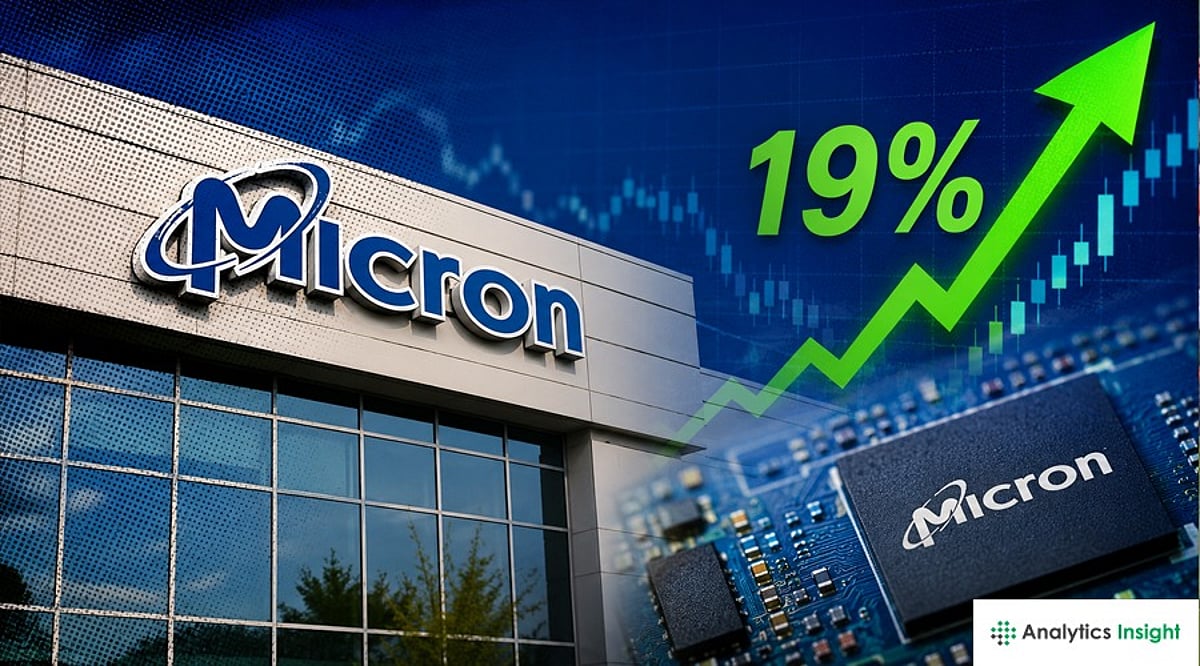
  • Micron Stock Gains 16% After $9.8B Revenue Beat and $22B in AI Supply Deals

    Micron Stock Gains 16% After $9.8B Revenue Beat and $22B in AI Supply Deals

    Micron Technology shares surged more than 16% in pre-market trading Thursday after the company reported stronger-than-expected fiscal third-quarter results and provided an upbeat outlook. The memory chip maker’s performance underscores sustained demand for artificial intelligence infrastructure.

    Revenue reached $9.8 billion for the quarter, exceeding Wall Street analyst estimates and marking a significant year-over-year increase. Profit also came in ahead of forecasts as demand for memory chips rebounded sharply.

    The company attributed much of its success to heavy spending by large technology firms on data centers and AI systems, which require large volumes of high-performance memory chips. The trend has allowed Micron to sell more products at improved prices.

    Looking ahead, Micron forecast revenue between $10.2 billion and $10.6 billion for the current quarter, signaling continued healthy demand across the technology sector.

    Additionally, Micron announced 16 long-term supply agreements covering cloud computing, data centers, and automotive industries. These contracts are expected to generate approximately $22 billion in cumulative revenue over the next several years, providing stable cash flows and reducing exposure to demand volatility.

    High bandwidth memory (HBM) products, which are critical for advanced AI servers, are seeing rising demand as more enterprises invest in AI capabilities. The company’s HBM lineup has become a key growth driver.

    The positive earnings report lifted other chip stocks as well. Qualcomm rose about 12% pre-market, Intel gained nearly 6%, and shares of AMD and Nvidia also moved higher as investor sentiment returned to the sector after earlier concerns over high valuations and slowing growth.

    Micron stock has already posted substantial gains over the past year. The latest earnings reinforce the view that the company will continue benefiting as businesses allocate more capital toward artificial intelligence and data center expansion.