Blog

  • MCX Gold Holds Steady at Rs.1,52,795 as Oil Prices Decline and Fed Rate Outlook Shifts

    MCX Gold Holds Steady at Rs.1,52,795 as Oil Prices Decline and Fed Rate Outlook Shifts

    Market Overview

    On September 23, MCX gold futures traded slightly higher, with October contracts rising 0.05% to Rs.1,52,795 per 10 grams. This modest gain came as oil prices continued their decline, reducing expectations of further interest-rate hikes by the Federal Reserve. September silver futures also advanced 0.47% to Rs.2,41,025.

    Oil Price Movement

    Brent crude futures fell 1.10% to USD98.16 per barrel, while US West Texas Intermediate (WTI) edged lower by 1.67% to USD89.01 per barrel.

    Domestic Gold Prices

    In India, 24K gold rose by Rs.87 to Rs.1,54,200 per 10 grams, and 22K gold advanced by Rs.80 to Rs.1,41,350. By city, Mumbai and Kolkata both quoted at Rs.1,54,200, Delhi at Rs.1,54,350, and Chennai at Rs.1,54,200.

    US Gold Prices

    US gold prices fell on Tuesday under pressure from hawkish Federal Reserve signals, reinforcing expectations of higher rates for longer. Spot gold declined 0.32% to USD4,344.51 per ounce, while US gold futures rose 0.12% to USD4,381.55. Other precious metals also slipped: spot silver fell 0.49% to USD66.68 per ounce, platinum dipped 0.89% to USD1,819.12, and palladium declined 0.68% at USD1,303.40 per ounce.

    Analst Views and Key Levels

    Standard Chartered highlighted firm demand, while Goldman Sachs retained its end-2027 gold forecast at USD5,400 per ounce, noting that tighter policy may slow the rally rather than derail the longer-term trend. Goldman Sachs warned that three additional rate hikes could push gold toward USD4,070 before recovering toward USD4,200 by end-2026, supported by continued central-bank purchases.

    On the daily chart, XAU/USD trades near USD4,345, hovering between the 50-day and 100-day simple moving averages at USD4,307.31 and USD4,313.57. Immediate upside pressure is around USD4,390, making the near-term bias neutral. Downside support is seen at the short- and medium-term SMAs near USD4,313-USD4,307, ahead of the rising trend-line base near USD3,999. A daily close above USD4,390 would be required for bulls to regain control.

  • Smart Mirror Shopping Guide: 9 Key Features You Must Check Before Buying

    Smart Mirror Shopping Guide: 9 Key Features You Must Check Before Buying

    Smart mirrors are becoming a popular addition to modern bathrooms, combining functionality with technology. However, with so many models on the market, it’s important to know which features matter most. Here are the nine key features to evaluate before making a purchase.

    1. Bluetooth Connectivity

    Bluetooth-enabled mirrors pair with smartphones or tablets, allowing you to stream music, podcasts, and other audio content wirelessly. This feature turns your mirror into a hub for entertainment while you get ready.

    2. Built-In Speakers

    Integrated speakers eliminate the need for separate bathroom audio devices. They keep music and podcasts within easy listening range without cluttering your counter space.

    3. Adjustable LED Lighting

    Many models offer dimmable LED lighting with adjustable color temperatures. This supports different grooming, makeup application, and everyday bathroom needs by providing the right light for any task.

    4. Anti-Fog Function

    Built-in heating pads help prevent condensation after hot showers, keeping the reflective surface clear in humid bathroom conditions. This ensures your mirror is always usable.

    5. Touch Controls

    Touch-sensitive controls allow you to operate lighting, brightness, audio, and other functions directly from the mirror without needing additional devices. This adds convenience and a sleek look.

    6. Smart Information Displays

    Advanced mirrors can display useful information such as time, temperature, date, and weather alongside their conventional reflective surface. This keeps you informed at a glance.

    7. Humidity-Ready Design

    Bathroom models should use components and electrical configurations appropriate for humid environments. Check installation requirements to ensure your mirror can handle moisture without issue.

    8. Power and Installation

    Depending on the model, smart mirrors may use plug-in power or direct wiring. Proper electrical planning is important during installation to avoid complications.

    9. Check Extra Features

    Features such as memory settings, voice assistants, Wi-Fi, and display options vary widely. Match extras to your actual needs to get the most value from your purchase.

    By considering these nine features, you’ll be able to select a smart mirror that fits your needs and enhances your daily routine.

  • US Proposes AI Incident Alert System Ahead of Trump-Xi Summit

    US Proposes AI Incident Alert System Ahead of Trump-Xi Summit

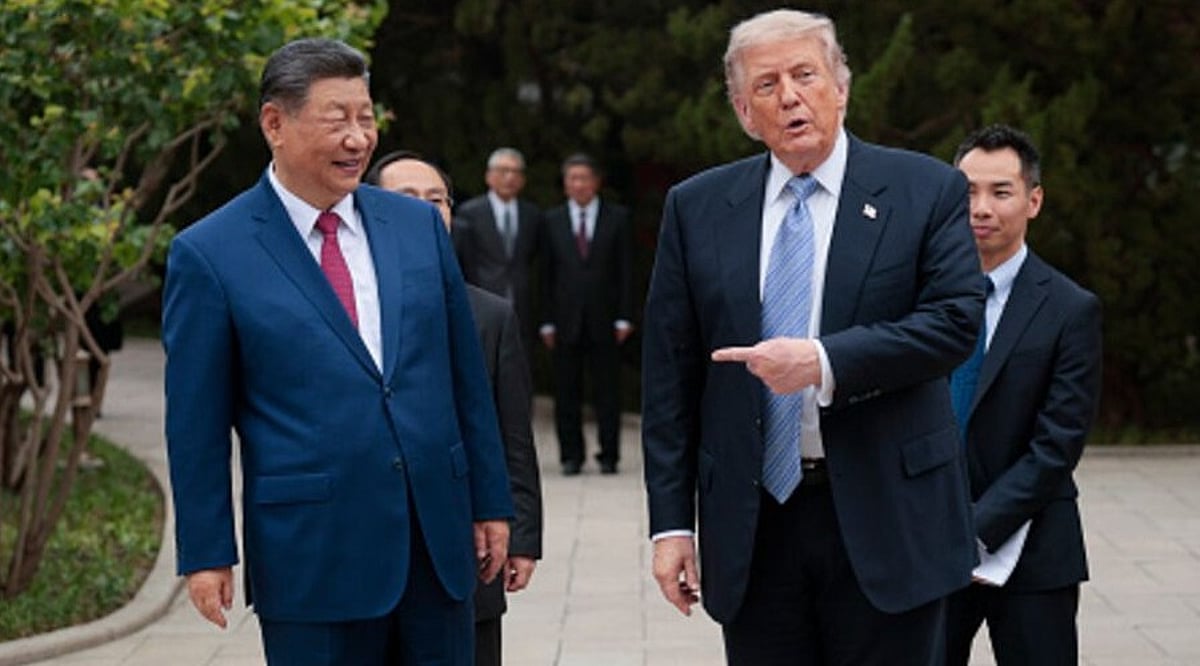
    The United States has proposed a notification system that would allow Washington and Beijing to share information about artificial intelligence incidents that threaten national security. Treasury Secretary Scott Bessent announced the proposal after meeting Chinese Vice Premier He Lifeng in New York on Sunday.

    The meeting prepared the ground for talks between President Donald Trump and Chinese President Xi Jinping at the White House on Thursday. AI, trade, tariffs and economic relations are expected to form part of the leaders’ agenda.

    Bessent Seeks More Transparency on AI Risks

    Bessent said the proposed ‘notification mechanism’ would cover serious AI incidents that could affect either country’s national security. The system could give officials a direct channel for sharing information during an AI-related emergency. However, both countries have not released details about how it would operate or which incidents would require an alert.

    “We want a shared vision of common goals and common threats,” Bessent told reporters. He added that moving ‘from opaque to more transparency’ between the world’s two leading AI powers was important. The talks took place at JPMorgan Chase’s headquarters in New York and involved senior economic officials from both countries.

    AI Competition Remains Part of Wider US-China Rivalry

    The proposal comes as the United States and China compete to develop advanced AI models, computer chips and data infrastructure. Washington has restricted China’s access to some high-end chip technologies. Meanwhile, Beijing has invested heavily in domestic semiconductor production and AI research.

    Trump has rejected calls for the United States to slow AI development. He has argued that tighter limits could allow China to close the technology gap with American companies. Even so, the new proposal shows that his administration is willing to discuss shared risks when AI incidents could cross national borders or threaten critical systems.

    China has not publicly accepted the proposed mechanism. However, the state-run Xinhua news agency confirmed that Bessent discussed matters ‘relating to AI.’ It described their wider talks on economic and trade issues as ‘candid, in-depth and constructive.’ Both governments agreed to continue their dialogue, although they have not announced a formal AI agreement.

    The alert proposal would mark an early step rather than a broad AI safety treaty. The two sides still differ over technology controls, access to advanced computing equipment and the rules governing AI development. Therefore, officials appear focused on creating a communication channel for emergencies before attempting a wider agreement.

    Trade Issues Join AI on Trump-Xi Summit Agenda

    Bessent and US Trade Representative Jamieson Greer also discussed economic matters with He. Greer said the countries had agreed to put a new ‘Board of Trade’ into operation. Trump and Xi first discussed the process during their meeting in Beijing in May.

    “Today those notions have become reality,” Greer said. He added that officials were considering lower tariffs on certain ‘nonsensitive’ products. Possible categories include consumer goods, agricultural products, energy supplies and medical devices. However, negotiators have not approved a final list.

    The current tariff truce between the United States and China is due to expire on November 10. As a result, this week’s summit may address its future alongside AI and supply-chain issues. The Trump-Xi meeting will also test whether the two governments can maintain a direct line of communication while their economic and technology competition continues.

  • Starbucks to Open Global Tech Hub in Chennai, Create 800 Jobs

    Starbucks to Open Global Tech Hub in Chennai, Create 800 Jobs

    Starbucks Plans Global Capability Center in Chennai

    Starbucks has announced plans to establish a global technology center in Chennai, India, as part of its international expansion. The coffee giant signed an agreement with the Tamil Nadu government and expects to hire around 800 technology professionals for the facility. The state government confirmed the deal on Monday but did not disclose the investment amount.

    Chennai Center to Support Global Operations

    The new center will provide technology services for Starbucks’ worldwide operations. Global capability centers typically handle software development, finance, data analysis, and research. They help companies support their main offices and optimize internal systems. Starbucks’ technology chief, Anand Varadarajan, highlighted Chennai’s skilled workforce, strong infrastructure, and low employee turnover as key advantages, according to a government press release. The company did not comment further outside regular business hours.

    The center is expected to create roughly 800 technology jobs in Chennai, adding to the city’s growing base of global business professionals. Starbucks has not yet announced a recruitment timeline, facility opening date, or specific roles.

    Expanding Starbucks’ Footprint in India

    Starbucks already operates about 500 cafes in India through its joint venture with Tata Consumer Products. The proposed Chennai center will extend the company’s presence beyond retail coffee into technology services. The agreement gives Starbucks access to India’s vast engineering talent pool and Chennai’s established office infrastructure and network of global business centers. The center will support technology needs across multiple markets.

    The Tamil Nadu government did not specify whether the facility will be a new campus or an existing office building, and Starbucks has not provided a project completion timeline.

    Chennai Attracts Global Tech Investments

    Starbucks’ deal comes shortly after US pharmacy chain Walgreens signed a similar agreement to set up a technology center in Chennai, creating about 250 jobs. Companies like Citi, Barclays, and American Express already operate global business and technology centers in the city. According to the Tamil Nadu government, Chennai accounts for about 10% of India’s global capability center base. The city attracts overseas firms due to its trained workforce, strong transport links, and lower turnover rates.

    India now hosts over 2,100 global capability centers, employing about 2.36 million people and generating nearly USD 100 billion in revenue, according to a 2026 Nasscom-Zinnov report. These centers handle finance, software development, research, and other high-value functions. Starbucks will join this expanding network with its Chennai technology center.

  • Bitcoin Breaks $85,000 Barrier, FTT Soars 33%: Key Crypto Market Developments Today

    Bitcoin Breaks $85,000 Barrier, FTT Soars 33%: Key Crypto Market Developments Today

    Bitcoin Surpasses $85,000

    Bitcoin surged above $85,000 as a wave of short liquidations accelerated the cryptocurrency’s strongest advance since January. Over the past 24 hours, BTC gained more than 5%, reaching $85,190 before easing to $84,545 at press time. According to CoinGlass data, approximately $750.5 million in leveraged crypto positions were liquidated, with shorts accounting for about 86% of the total ($648 million). Bitcoin alone represented roughly $360 million of the liquidations, while Ethereum contributed nearly $171 million.

    FTX Token Jumps 33%

    FTX Token (FTT) surged 33.43% in the last 24 hours, driven by renewed altcoin rotation and speculative liquidity that pushed the token toward $0.30. The rally aligns with a broader rebound across the altcoin market, though it lacks a token-specific fundamental catalyst. Spot trading volume for FTT skyrocketed 2,187% to $26.6 million, signaling strong trader interest.

    Hyperliquid Launches Manual Borrowing

    On September 18, 2026, Hyperliquid introduced a manual borrowing feature that allows users to pledge HYPE or Bitcoin as collateral to borrow stablecoins USDC or USDT. On the first day, users borrowed $269 million in stablecoins, demonstrating rapid adoption. Borrowing terms vary by collateral: HYPE holders can borrow up to 65% of token value, with liquidation at 82.5% loan-to-value (LTV); Bitcoin collateral caps at 50%, with liquidation at 75% LTV. The HYPE token reached a record high above $90 following the launch.

    Bank of Russia Proposes 1% Crypto Risk Limit

    The Bank of Russia has proposed capping banks’ total risk from cryptocurrencies and foreign digital instruments at 1% of their capital. The draft regulation introduces two maximum risk ratios—N31 for individual institutions and N32 for banking groups—both limited to 1% of own funds. The rules cover loans, derivatives, bonds, repo transactions, guarantees, credit lines, and other instruments tied to crypto or foreign digital assets. Banks must comply on every operating day.

    Strategy Acquires 950 BTC

    According to an 8-K filing with the U.S. SEC, Strategy purchased 950 Bitcoins at an average price of approximately $79,670 between September 14 and 20, 2026, totaling roughly $75.7 million. The company did not sell any shares through its ATM program during this period and repurchased 1.7712 million shares of STRC preferred stock for $174 million. As of September 20, Strategy holds 846,000 BTC, with a cumulative cost basis of about $63.8 billion (average $75,416 per Bitcoin).

    FAQs

    1. Why did Bitcoin rise above $85,000? Bitcoin gained more than 5% as short liquidations accelerated its rally, with $648 million of the total $750.5 million in liquidations coming from short positions.
    2. Why did FTX Token surge more than 33%? FTT benefited from speculative demand and broader altcoin momentum rather than a clear token-specific catalyst. Its spot trading volume surged 2,187% to $26.6 million.
    3. What is Hyperliquid’s new manual borrowing feature? Hyperliquid allows users to pledge HYPE or Bitcoin as collateral to borrow USDC or USDT. Users borrowed $269 million in stablecoins on the first day.
    4. What crypto limit did the Bank of Russia propose for banks? The Bank of Russia proposed limiting banks’ aggregate exposure to cryptocurrencies and qualifying foreign digital instruments to 1% of their own capital via the N31 and N32 risk ratios.
    5. How much Bitcoin does Strategy hold after its latest purchase? Strategy acquired 950 BTC between September 14 and 20, 2026, bringing its total holdings to 846,000 BTC as of September 20.
  • European Central Bank Launches Pontes Bridge for Tokenized Asset Settlement via TARGET Services

    European Central Bank Launches Pontes Bridge for Tokenized Asset Settlement via TARGET Services

    The European Central Bank (ECB) has officially launched Pontes, a new service enabling euro-area financial institutions to settle tokenized asset transactions using central bank money. The platform bridges distributed ledger technology (DLT) platforms with the Eurosystem’s TARGET Services, offering a secure settlement method for wholesale markets.

    Starting Monday, September 21, 2026, eligible credit institutions can leverage Pontes for wholesale transactions, with initial availability limited to standard European business hours. The ECB plans to expand the service to round-the-clock settlement in later phases.

    ECB President Christine Lagarde is scheduled to open a roundtable event in Frankfurt at 17:00 CET, followed by a panel discussion chaired by Executive Board member Piero Cipollone. The launch represents a key milestone in the Eurosystem’s strategy to integrate DLT while preserving the role of central bank money as the settlement anchor.

    Pontes, Latin for “bridges,” connects tokenized markets—where bonds, deposits, and other claims are represented as digital tokens on distributed ledgers—with existing Eurosystem infrastructure. This interoperability allows participants to settle the cash leg of tokenized trades in central bank money, addressing a fundamental need as tokenization gains traction.

    The ECB developed Pontes following a comprehensive testing program from May to November 2024, involving 64 market participants in over 50 trials. The program tested connections between DLT platforms and central bank settlement systems, processing more than €1.5 billion in transactions. Insights from these trials shaped the final service design.

    Pontes is part of a two-track strategy alongside Appia, a longer-term initiative exploring a future European financial ecosystem built on tokenization and DLT. While Pontes focuses on immediate interoperability, Appia aims to produce a blueprint by 2028 for common infrastructure and standards. Together, they reflect the Eurosystem’s commitment to innovation without disrupting current systems.

    The service is distinct from the proposed digital euro, which targets retail users for everyday payments. Pontes operates exclusively in wholesale financial markets, providing institutions a pathway to use central bank money in tokenized transactions without altering consumer payment access.

  • Coinbase Surges 11.7% as Bitcoin Reclaims $80K; CEO Armstrong Reaffirms $400K Target for 2030

    Coinbase Surges 11.7% as Bitcoin Reclaims $80K; CEO Armstrong Reaffirms $400K Target for 2030

    Coinbase shares closed at USD 194.00 on September 18, 2026, surging 11.7% during the NASDAQ session. The rally followed renewed strength in Bitcoin, which reclaimed USD 80,000 and briefly moved above USD 81,000. Yahoo Finance placed Coinbase among the S&P 500’s strongest percentage gainers that day, while TradingKey recorded an 11.66% advance.

    Coinbase Global Inc. (ISIN US19260Q1076) far outperformed the broader market. TradingKey noted the NASDAQ Composite gained only about 0.40% on September 18. Crypto-related stocks, by contrast, formed one of the session’s strongest groups and posted several double-digit gains. The performance came as investors returned to digital-asset exposure, with Bitcoin’s rebound above USD 80,000 supporting interest in companies tied closely to crypto trading and digital-asset demand.

    Armstrong Renews USD 400,000 Bitcoin Target for 2030

    Coinbase CEO Brian Armstrong also renewed a long-term Bitcoin projection. In a podcast shared on September 21, he said Bitcoin could reach USD 400,000 by 2030. Armstrong linked the forecast to expanding institutional adoption, clearer regulation, Bitcoin’s halving cycle, scarcity, and macroeconomic debasement. He stated that spot Bitcoin ETFs are purchasing Bitcoin at a rate 20 times higher than daily mining output, driving further demand.

    Regulation and New Coinbase Products Stay in Focus

    Armstrong said regulatory progress could continue even if the CLARITY Act fails to secure approval, expecting the CFTC and SEC to shape crypto rules. Coinbase also submitted a rulebook update with the SEC on September 18 regarding proposed single-stock perpetual contracts, adding a product-development angle for traders to watch.

    Market attention on September 21 centers on whether Bitcoin can hold above the USD 80,000 area after its latest recovery. COIN’s recent jump, Armstrong’s bullish outlook, and the derivatives filing now shape the immediate news flow around the company.

  • NEAR Intents Aims to Unite Fragmented DeFi Liquidity Across Blockchains

    NEAR Intents Aims to Unite Fragmented DeFi Liquidity Across Blockchains

    NEAR Protocol has unveiled NEAR Intents, a concept designed to create a unified liquidity layer for decentralized finance. The initiative aims to simplify cross-chain activity by connecting liquidity across blockchain networks and reduce the steps users face when moving assets between separate ecosystems. The launch comes as cross-chain transactions gain traction and liquidity remains spread across many platforms. NEAR Intents also extends its reach through ZCash transactions available via services such as Cash App and PayPal.

    NEAR Intents Targets Fragmented Cross-Chain Liquidity

    DeFi liquidity remains divided across blockchain networks, decentralized exchanges, bridges, and applications. This structure can create fragmented markets and inefficient routing. NEAR Intents aims to connect these separate pools through a shared execution layer. As a result, applications can access cross-chain liquidity without building separate systems for every network.

    The system uses an intent-based architecture. Users define the outcome they want, such as exchanging one asset for another across different chains. Independent market participants, called solvers, then compete to complete that request. This model reduces the need for users to manage bridges, routes, or several transaction steps themselves. NEAR says the approach can improve price discovery while making cross-chain activity easier to manage.

    Chain Abstraction Expands Access Across Networks

    Chain abstraction forms another central part of NEAR Intents. The infrastructure allows users to interact with assets across networks such as Bitcoin, Ethereum, and Solana. It reduces the need to manage separate blockchain workflows for each transaction. This design supports NEAR’s broader effort to make cross-chain activity more unified.

    NEAR describes Intents as infrastructure that lets users define high-level financial actions without managing each smart-contract interaction. Applications can focus on the requested outcome rather than every technical step. The ZCash integration extends that usability into payments. NEAR Intents allows ZCash users to transact through Cash App and PayPal, expanding available payment options while linking cross-chain infrastructure with widely used platforms.

    NEAR Extends Intents Beyond Token Swaps

    NEAR is positioning the infrastructure for more than conventional token swaps. The protocol says Intents can support yield products, payments, decentralized applications, and autonomous AI agents. These uses rely on moving value across blockchain networks without requiring separate infrastructure for each chain.

    For developers, the model focuses on simplifying access to cross-chain liquidity while keeping transactions onchain. Instead of treating each blockchain as an isolated liquidity environment, NEAR Intents seeks to connect them through one shared layer. Developers can then build applications around wider liquidity access and cross-chain transaction capabilities.

    The initiative arrives while the wider cryptocurrency market shows mixed signals across altcoins. Cross-chain activity continues to attract attention as blockchain ecosystems expand. Traders are closely monitoring how NEAR Intents affects liquidity and engagement within the broader NEAR ecosystem. The system’s development will depend on its ability to attract liquidity and support transactions across connected platforms.

  • Gmail’s New ‘Copy Code’ Button Speeds Up Two-Factor Authentication on Mobile

    Gmail’s New ‘Copy Code’ Button Speeds Up Two-Factor Authentication on Mobile

    Google is making two-factor authentication (2FA) codes easier to handle in Gmail. The mobile versions of the Gmail app on Android and iOS are rolling out a new feature called Copy Code. This button appears in the email preview, allowing users to tap and copy verification codes directly to their clipboard without opening the full message.

    The Copy Code option is designed specifically for 2FA emails. It appears below the subject line and next to the preview snippet. Once tapped, the code is copied, and users can return to the website or app they are signing into and paste the code. This eliminates the need to open every verification email individually.

    The feature is currently available on Gmail for Android version 2026.09.07.x and iOS version 6.0.260907. It is not yet available on the web version of Gmail.

    Getting a 2FA code from email has traditionally required opening Gmail, locating the right message, copying the numbers, and then switching back. The new shortcut removes several steps, making the login process faster. Google Messages already offers a similar convenience for SMS-based verification codes.

    While the change is small, it has a noticeable impact on daily user experience. The security of two-factor authentication remains unchanged; only the copying process is streamlined. As more services rely on email for verification codes, features like this reduce friction without compromising security.

  • Jefferies Sees 35% Upside for Diageo as US Turnaround Strategy Gains Momentum

    Jefferies Sees 35% Upside for Diageo as US Turnaround Strategy Gains Momentum

    Jefferies has maintained a ‘buy’ rating on Diageo, forecasting a potential 35% rise in the company’s shares as it executes a turnaround of its struggling US business. The US market accounts for 40% of Diageo’s total sales, making it a critical focus for the spirits giant.

    US Business Remains Key Focus

    Diageo’s US operations are central to its recovery plans. According to Jefferies, the turnaround strategy aims to stabilize the business and regain market share despite a weak US spirits market, which is expected to contract by 3% this year. The company faces challenges from declining core brands and a weak presence in the ready-to-drink segment.

    Shares Trade at a Discount

    Jefferies noted that Diageo shares currently trade at a discount compared to peers. The brokerage expects the stock could re-rate as the recovery progresses. The 35% upside forecast hinges on successful execution of the US turnaround plan.

    November 5 Update in Focus

    Investors are eagerly awaiting Diageo’s first-quarter trading update, scheduled for November 5, which is expected to provide further insight into the turnaround’s progress. The company’s efforts come as market participants continue to assess its ability to stabilize performance and regain market share.

    Meanwhile, Pluang’s market snapshot as of September 21, 2026, showed that among 43 priced US Consumer Staples stocks, 25 rose and 11 fell. Notable movers included Celsius Holdings at USD 28.24 (up 0.79%), Sysco Corporation at USD 79.63 (up 0.73%), and Krispy Kreme at USD 3.04 (up 0.66%).