Blog

  • From the Enterprise to Everyday Life: 5 Star Trek Technologies That Became Real

    From the Enterprise to Everyday Life: 5 Star Trek Technologies That Became Real

    When Star Trek first aired in 1966, its futuristic gadgets seemed light-years away. Decades later, many of those ideas have become part of daily life. While today’s devices don’t exactly match their fictional counterparts, the similarities show how science fiction can shape real-world innovation.

    Communicators Transformed Into Mobile Phones

    On the show, crew members used handheld communicators for wireless long-distance conversations. Modern smartphones offer the same convenience through cellular networks, Wi-Fi and Bluetooth. Motorola’s 1996 StarTAC flip phone even echoed the communicator’s clamshell design. It remains one of the clearest examples of science fiction inspiring consumer technology.

    PADDs Evolved Into Tablets

    Star Trek characters used Personal Access Display Devices, or PADDs, to read documents, access data and manage tasks. Today’s tablets fill the same role with touchscreens, wireless connectivity and powerful processors. Portable computing concepts also developed independently beyond Star Trek, so direct inspiration is harder to prove than with communicators.

    Voice Computers Became AI Assistants

    In the series, officers often spoke naturally to the ship’s computer to retrieve information or execute tasks. Modern voice assistants and conversational AI provide a similar experience: ask a question, control smart devices, or access services by voice. Today’s systems are more advanced in many ways, but they still operate differently from the fictional Starfleet computer.

    Tricorders Inspired Portable Medical Diagnostics

    The fictional tricorder could scan patients and identify conditions quickly. Researchers have worked on real-world portable diagnostic tools, including projects tied to the Qualcomm Tricorder XPRIZE. That competition challenged teams to build compact health monitoring devices. While no product yet matches the tricorder completely, these efforts show steady progress toward portable medical diagnostics.

    Video Calls Went Mainstream

    Star Trek often showed characters communicating face-to-face over video. Smartphones, laptops, and conferencing platforms now make live video communication routine. However, the idea was not entirely new—Bell Labs demonstrated its Picturephone in 1964. This makes video calling an example of parallel development rather than a direct Star Trek invention.

    Science Fiction Meets Modern Reality

    Star Trek’s greatest influence may be its vision of technology that is portable, accessible and integrated into everyday routines. Communicators, PADDs, voice interfaces and medical scanners all have real-world equivalents today. Some were inspired directly by the franchise, while others emerged on their own. Either way, Star Trek helped popularize a future that now feels familiar.

  • Hero Motors IPO Listing: Shares Open 2.4% Below Issue Price Despite 6.66x Subscription

    Hero Motors IPO Listing: Shares Open 2.4% Below Issue Price Despite 6.66x Subscription

    Hero Motors shares made a subdued stock-market debut on September 23, 2026, opening below their initial public offering (IPO) price despite strong demand during the subscription period.

    Soft Listing on NSE and BSE

    The stock opened at Rs. 82 on the National Stock Exchange (NSE), a 2.38% discount to the final IPO price of Rs. 84 per share. On the Bombay Stock Exchange (BSE), Hero Motors listed at Rs. 82.10, down 2.26% from the issue price.

    The muted listing was broadly in line with grey market signals ahead of the debut. However, grey market premium (GMP) data is unofficial and does not guarantee actual listing performance.

    IPO Subscription: 6.66 Times Covered

    The Rs. 1,000-crore Hero Motors IPO attracted bids for 58.97 crore shares against 8.86 crore shares on offer, translating to an overall subscription of 6.66 times.

    • Non-institutional investors: 9.86 times
    • Retail investors: 8.23 times
    • Qualified institutional buyers (QIBs): 1.49 times

    The bidding window opened on September 16 and closed on September 18. The company set the price band at Rs. 79-84 per share and fixed the final issue price at the upper end.

    Fresh Issue, Offer-for-Sale and Fund Utilization

    The IPO combined a fresh issue of Rs. 600 crore with an offer-for-sale (OFS) of Rs. 400 crore. Selling shareholders included O P Munjal Holdings and Hero Cycles.

    Hero Motors plans to use part of the fresh proceeds to repay or prepay borrowings. It has also earmarked funds to buy equipment for expanding capacity at its Gautam Buddha Nagar facility in Uttar Pradesh. Remaining proceeds will support acquisitions, strategic initiatives, and general corporate purposes.

  • Free Fire MAX Redeem Codes for September 23: Unlock Gun Skins, Emotes & Exclusive Rewards

    Free Fire MAX Redeem Codes for September 23: Unlock Gun Skins, Emotes & Exclusive Rewards

    Garena has released a fresh batch of Free Fire MAX redeem codes for September 23, 2026. These limited-time codes unlock exclusive outfits, emotes, and Diamond vouchers — but you need to redeem them quickly before they expire.

    Active Free Fire MAX Redeem Codes for September 23, 2026

    Use the following codes exactly as shown to claim today’s rewards:

    • H8YC4TN6VKQ9
    • BR43FMAPYEZZ
    • 4N8M2XL9R1G3
    • 4ST1ZTBZBRP9
    • UPQ7X5NMJ64V
    • FK3J9H5G1F7D
    • B1RK7C5ZL8YT
    • F7F9A3B2K6G8
    • FF6YH3BFD7VT
    • 6KWMFJVMQQYG
    • FE2R8T6Y4U1I
    • FFR4G3HM5YJN
    • S9QK2L6VP3MR
    • FPSTQ7MXNPY5

    At the time of writing, all of these codes are active. However, they can expire at any moment, so redeem them as soon as possible to avoid missing out on bundles, skins, or Diamonds.

    Why You Should Redeem Codes Quickly

    Redeeming Free Fire MAX codes quickly is essential. Here’s why:

    • Most codes are only valid for a short time and expire without warning.
    • Some codes are limited to the first few hundred players who redeem them.
    • Each code can only be used once per account, so there’s no second chance.

    How to Redeem Free Fire MAX Codes

    Follow these simple steps to claim your rewards:

    1. Visit the official Garena Free Fire MAX redemption website.
    2. Sign in using a linked account — Facebook, Twitter, or Google all work.
    3. Copy and paste the code into the designated text box to avoid errors.
    4. Click Confirm and submit the code.
    5. Wait for the confirmation message. If the code is valid, your rewards will arrive in your in-game mail within 24 hours.

    Final Thoughts

    Free Fire MAX redeem codes are a smart way for Garena to keep players engaged. While most rewards are cosmetic, Diamond vouchers give you a valuable in-game currency boost without spending real money. Log in today, redeem the codes, and upgrade your battlefield experience.

  • AI Adoption Accelerates Around the World: UAE and Singapore Top Rankings as South Korea Climbs Fastest

    AI Adoption Accelerates Around the World: UAE and Singapore Top Rankings as South Korea Climbs Fastest

    AI Adoption Is Accelerating Worldwide

    Generative AI continues to expand its reach across the globe. According to Microsoft’s latest estimates, 18.8% of the global working-age population used a generative AI product in June 2026—a rise from the previous quarter. While adoption is climbing in nearly every economy, significant disparities remain across regions and countries in terms of access and usage.

    UAE Leads Global Adoption

    The United Arab Emirates continues to hold the top spot for AI diffusion. Microsoft’s June 2026 data shows that 73.3% of the country’s working-age population used AI tools. The UAE’s strong digital infrastructure, proactive government policies, and widespread technology access have contributed to its global leadership.

    Singapore Remains a Major Hub

    Singapore ranks second globally, with a 64.3% AI diffusion rate as of June 2026. The city-state has consistently ranked among the strongest AI-adopting markets. Its advanced digital infrastructure, thriving technology ecosystem, and high internet penetration have created favorable conditions for generative AI to become part of everyday life—both at work and at home.

    South Korea Shows Fastest Growth

    South Korea posted the biggest quarterly increase in Microsoft’s June 2026 data, gaining 3.5 percentage points. The country has emerged as one of the fastest-growing AI markets, driven by workplace adoption, government initiatives, and consumer-focused AI applications. This growth also underscores how local language capabilities can significantly influence AI adoption rates.

    Japan and Türkiye See Rapid Growth Too

    OECD data tracking generative AI chatbot usage reveals that Japan and Türkiye experienced the highest growth during 2025, with usage rates more than doubling. Singapore also saw a substantial jump, rising from 36% to 63% of its population using AI chatbots. It’s important to note that these figures rely on a different methodology than Microsoft’s diffusion measure.

    The Global AI Adoption Gap

    The gap between developed and developing economies remains wide. Microsoft estimates that 28.8% of the working-age population in the Global North used generative AI in June 2026, compared with just 16.2% in the Global South. Infrastructure, connectivity, skills, and language accessibility continue to be major barriers to broader adoption.

    What the Numbers Show

    The global AI race is increasingly about adoption, not just building advanced models. Countries with strong digital foundations are seeing faster usage growth, while others struggle with infrastructure and skills gaps. Since different datasets measure AI use differently, cross-country comparisons should be treated as indicators rather than precise measurements of total adoption.

  • Agentic AI Market Forecast to Reach $290.62 Billion by 2035, Driven by Enterprise Adoption and Multi-Agent Systems

    Agentic AI Market Forecast to Reach $290.62 Billion by 2035, Driven by Enterprise Adoption and Multi-Agent Systems

    The global agentic AI market is projected to surge from USD 8.19 billion in 2025 to USD 290.62 billion by 2035, registering a compound annual growth rate (CAGR) of 42.88% between 2026 and 2035, according to the Global Agentic AI Market 2026 report by Analytics Insight. The market is expected to reach USD 12.13 billion in 2026, reflecting a shift from AI systems that mainly generate content and recommendations toward systems that can plan, reason, coordinate, and execute multi-step tasks.

    The report emphasizes that the next phase of growth will depend on more capable models and their reliability, security, governance, integration, evaluation, and accountability. As enterprises increasingly deploy AI systems that can access business data, use software tools, and take action within defined limits, the market is expected to expand more than 5.8 times between 2030 and 2035.

    Agentic AI Market Growth Accelerates

    Investment conditions are helping push this forward. Stanford HAI’s 2026 AI Index lists global corporate AI spending at USD 581.7 billion, up 130% from the previous year. NVIDIA’s newest reports also point to strong growth in data center sales, with revenue up 117% year over year. At the same time, major cloud and tech firms are planning capital spending of about USD 745 billion for 2026.

    Deloitte’s 2026 State of AI in the Enterprise study, which included 3,235 executives in 24 countries, showed that 74% of companies expect to run AI agents by 2027.

    Adoption Is Still Behind Early Trials

    The report calls out a clear gap: many firms want agentic AI, but fewer are using it at full scale. McKinsey data shows 88% of companies use AI in at least one area, but only 23% have scaled agentic AI across their business. In another McKinsey survey, 62% said they were trying AI agents, yet only 23% had scaled an agentic system. No single business area reached 10% adoption at scale, suggesting most organizations are still in pilots and early testing rather than full rollout.

    Solutions Lead as Enterprises Build Agent Platforms

    The market is expected to remain solution-led during the forecast period. Agentic AI solutions are projected to increase from USD 5.12 billion in 2025 to USD 168.56 billion by 2035, while services are forecast to rise from USD 3.07 billion to USD 122.06 billion. The report attributes the strength of solutions to enterprise spending on agent platforms, orchestration software, development tools, and application-specific agents. Services are expected to gain ground as businesses require systems integration, security, governance, workflow redesign, and managed AI services for production deployment.

    Multi-Agent Systems Set to Reshape Architecture

    The report identifies a shift from standalone agents toward coordinated multi-agent environments. Single-agent systems are projected to grow from USD 5.01 billion in 2025 to USD 139.50 billion by 2035, while multi-agent systems are forecast to rise from USD 3.19 billion to USD 151.12 billion, registering a 47.09% CAGR. The transition remains in its early stages, with current enterprise deployments largely concentrated in one or two business functions. However, 85% of enterprises expect to customize agents to meet their specific requirements.

    Hybrid Deployment Records Fastest Growth

    On-premises deployment is expected to remain the largest category, increasing from USD 4.74 billion in 2025 to USD 124.96 billion by 2035. Cloud deployment is forecast to reach USD 110.43 billion, while hybrid deployment is expected to reach USD 55.22 billion. Hybrid deployment has the fastest projected CAGR at 51.05%, supported by enterprises seeking scalable AI capabilities alongside private infrastructure and controlled environments.

    IT, Cybersecurity, and BFSI Drive Expansion

    Customer support tools and virtual assistants remain the top application category, growing from about USD 2.28 billion in 2025 to about USD 61.03 billion by 2035. Other categories also grow fast: IT operations and software development are forecast to reach around USD 68.29 billion, data and analytics about USD 29.06 billion, and cybersecurity approximately USD 21.80 billion. The report also points to fast risers including cybersecurity, legal and compliance, operations and supply chain, data and analytics, and IT operations. BFSI is expected to remain the largest end-use industry in 2035.

    North America Leads, Asia Pacific Grows Faster

    North America remains the biggest market by value, at about USD 3.18 billion in 2025 and forecast to reach around USD 98.81 billion by 2035. Asia Pacific is expected to grow faster, starting at USD 2.22 billion in 2025 and reaching nearly USD 107.53 billion by 2035, with a CAGR of 47.40%. Europe is also expected to rise, from about USD 2.08 billion in 2025 to around USD 66.84 billion in 2035.

    Reliability and Governance Remain Key Hurdles

    Despite the market’s growth trajectory, reliability remains a major constraint. Stanford HAI’s 2026 AI Index indicated that agents complete around 66% of tasks successfully on OSWorld, meaning one in three attempts still fails. Gartner reported that a Fortune 500 enterprise could run more than 150,000 agents by 2028, up from fewer than 15 in 2025, while only 13% of organizations believed they had adequate governance.

    The report expects the next phase to move agentic AI beyond standalone software into enterprise workflows, digital infrastructure, and eventually physical environments. Multi-agent systems, persistent memory, robotics, vertical AI agents, and human-agent collaboration are expected to shape that transition. The broader outlook is that commercial value will increasingly depend on whether agents can perform important tasks reliably, securely, and at scale, rather than simply demonstrating what AI can do.


  • Logitech G305 X Superlight Review: Affordable Wireless Gaming Mouse with HERO Sensor

    Logitech G305 X Superlight Review: Affordable Wireless Gaming Mouse with HERO Sensor

    The Logitech G305 X Superlight is a wireless gaming mouse designed for high performance at a more accessible price point than premium gaming peripherals. Weighing just 59 grams, it features an ergonomic low-profile design, a HERO sensor with up to 44,000 DPI tracking, and dual wireless connectivity via Bluetooth and LIGHTSPEED technology. The G HUB software allows extensive customization, including button programming and DPI adjustment. Its long battery life ensures extended gaming sessions without frequent recharging.

    General Specifications

    Here are the Logitech G305 X Superlight Specifications:

    • Weight: 59g
    • Sensor: HERO
    • DPI: Up to 44,000
    • Connectivity: Bluetooth / LIGHTSPEED wireless
    • Software: G HUB
    • Battery Life: Extended long life

    Pros and Cons

    Pros:

    • Ultra-lightweight at 59g for effortless movement
    • HERO sensor delivers flawless tracking accuracy
    • Responsive buttons with low latency
    • Dual wireless modes for versatility
    • Excellent battery life reduces charging downtime

    Cons:

    • Lacks advanced performance settings such as 8KHz polling
    • May disappoint enthusiasts seeking maximum tunability

    Final Verdict

    The Logitech G305 X Superlight stands out as an excellent choice for gamers seeking a lightweight wireless mouse without a hefty investment. Its 59g weight, HERO sensor, precise tracking, button responsiveness, and dual wireless connectivity deliver versatility in any gaming scenario. The G HUB software further enhances customization, while the long battery life minimizes charging frequency. However, the absence of advanced performance settings and 8KHz polling may leave enthusiasts wanting the ultimate level of tuning.

  • Why Modern Brokerages Must Evolve Beyond Trade Execution

    Why Modern Brokerages Must Evolve Beyond Trade Execution

    The retail brokerage industry has long operated on a simple model: generate transaction volume, charge for execution, and move on. But as traders and active investors become more sophisticated, the traditional terminal-only relationship is proving insufficient. When the trading session ends, customer funds typically vanish into banking channels, offline accounts, or external payment networks. That fragmentation is exactly what forward-thinking firms are now trying to eliminate.

    Mikhail Bobkin, Co-Founder and CEO of rewalt:, believes the future lies in treating capital as a continuous journey rather than a series of isolated transactions. “The problem in finance isn’t a lack of products; it’s the walls between them,” he explains. “A typical customer earns money in one place, banks it somewhere else, transfers it to a broker to trade, uses another platform for digital assets, and moves it again when they want to spend it. Every institution controls one part of that journey, with its own incentives, fees, and restrictions.”

    Bobkin argues that Rock-West’s evolution into rewalt: is not a departure from its founding principles but a natural extension of them. The company started with fair treatment for traders; now it aims to build infrastructure that lets capital flow naturally between trading, holding, converting, transferring, and spending.

    Why Conflict-Free Execution Is the Precondition for Ecosystems

    Many financial brands claim to be multi-asset ecosystems, yet their underlying revenue models remain contradictory. When a broker’s profitability depends on aggressive churn or client losses, expanding into payments or card services creates an irreconcilable conflict of interest. A lasting platform, Bobkin stresses, must be built on a pure-agency environment.

    “Integration alone doesn’t create an ecosystem,” he says. “A broker can add a card. A bank can add trading. An exchange can add payments. But if every product is driven by conflicting incentives, you’ve simply put several businesses behind one login.”

    Rock-West adopted an A-Book philosophy precisely to avoid profiting from customer losses. That alignment becomes even more critical as the company expands beyond brokerage. “If a customer decides not to trade today and instead wants to hold, move, convert, or spend their capital, that shouldn’t be a bad outcome for us,” Bobkin adds. “A customer who doesn’t trade today should still be a valuable customer tomorrow.”

    Reimagining the Capital Lifecycle Around the Trader

    The classic broker workflow — deposit via card, trade an instrument, withdraw back to a bank — is fundamentally obsolete. Modern participants expect capital to remain active, liquid, and instantly accessible, whether they are pursuing multi-asset exposure, following top strategies through copy trading, or funding daily expenses directly from their trading balance.

    “We start with a different question,” Bobkin explains. “Instead of asking, ‘What product can we sell this customer?’ we ask, ‘What is this customer trying to do with their capital?’” The resulting experience is simple: Fund. Trade. Move. Convert. Spend. All within a single platform. “Customers shouldn’t have to rebuild their financial identity every time their money changes purpose,” he says.

    Institutional Rigor as a Seamless Customer Experience

    Professional financial firms are expected to maintain operational integrity, tier-one liquidity aggregation, and rigorous regulatory oversight. Yet legacy platforms often force customers to confront institutional complexity at the worst possible moment. rewalt: designs its compliance layer to absorb that administrative burden quietly on the server side.

    “Regulation isn’t the enemy of customer experience — poor architecture is,” Bobkin asserts. KYC, AML, security, suitability, and sanctions controls exist for good reason. The company’s responsibility is to handle that complexity intelligently without making customers navigate it. “Compliance should create safety; it shouldn’t become the product.”

    Fairness Beyond the Closed Position

    The brokerage market is approaching an inflection point. Low spreads and fast execution are now baseline expectations, not differentiators. The next competitive frontier is total capital mobility — bringing the same institutional-grade transparency from execution into everyday financial life.

    “Our ambition is to make the movement of capital feel more like the movement of information,” Bobkin concludes. Money still lives in silos: banks, brokers, exchanges, wallets, payment processors, and cards all impose their own entry and exit rules. rewalt: wants to reduce those boundaries without sacrificing the safeguards that financial infrastructure requires.

    Rock-West started with the belief that customers should be treated fairly when they trade. rewalt: asks the logical next question: Why should that fairness stop when the trade ends?

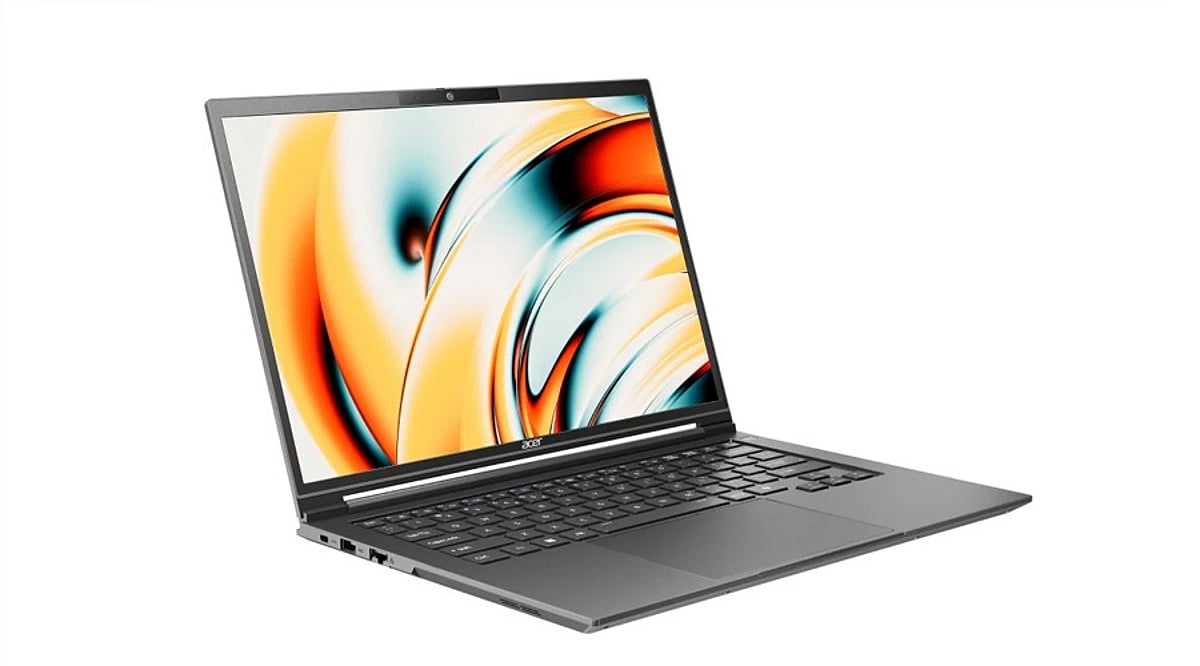
  • Acer TravelLite T24-54M Review: A Dependable Business Notebook for Professionals

    Acer TravelLite T24-54M Review: A Dependable Business Notebook for Professionals

    Overview

    The Acer TravelLite T24-54M is a professional notebook that strikes a solid balance between mobility, reliability, and productivity. Weighing just 1.30 kg and built to MIL-STD 810H standards, it is designed for on-the-go professionals. The laptop features a modern aluminum and polycarbonate chassis, an Intel Core Series 3 processor, 16GB of DDR5 RAM, and a comprehensive set of connectivity options. Its performance is well-suited for office workloads and web-based tasks, and the 60Wh battery easily lasts through a full workday. However, the dim 250-nit screen and certain design choices prevent it from being a perfect fit for all working environments.

    Rating: 4/5

    Specifications

    • Weight: 1.30 kg
    • Durability: MIL-STD 810H certified
    • Chassis: Aluminum and polycarbonate
    • Processor: Intel Core Series 3
    • RAM: 16GB DDR5
    • Battery: 60Wh
    • Display: 250-nit brightness

    Pros and Cons

    Pros

    • Lightweight and highly portable
    • Rugged MIL-STD 810H build quality
    • Good performance for office and web use
    • Excellent battery life for a full workday
    • Strong connectivity options

    Cons

    • Dim 250-nit display may be hard to view in bright environments
    • Some design drawbacks that affect ergonomics

    Final Verdict

    The Acer TravelLite T24-54M is a reliable business laptop that meets the core needs of corporate users: portability, durability, productivity, long battery life, and solid connectivity. The configuration with an Intel Core 5 320 (similar to Core Series 3) and 16GB RAM handles office tasks smoothly, and the port selection is a definite plus. The main shortcoming is the low screen resolution and brightness, which may hinder prolonged use in well-lit conditions. Overall, it is a commendable choice for professionals seeking a dependable workhorse.

  • C-Suite Roles Explained: Key Responsibilities of CEOs, CFOs, COOs, CIOs, CMOs, and CROs

    C-Suite Roles Explained: Key Responsibilities of CEOs, CFOs, COOs, CIOs, CMOs, and CROs

    The C-suite comprises the top executives who steer a company’s strategy and operations. Each role brings a distinct focus, from setting vision to managing finances, operations, technology, marketing, and revenue growth. Here’s a closer look at what these leaders actually do.

    CEO: The Chief Executive Officer

    The CEO leads the company and sets its overall direction. This role focuses on major decisions, long-term goals, company culture, and business growth. CEOs also work with investors, employees, customers, and other leaders. While they may not manage every daily task, they remain responsible for the company’s overall performance and future.

    CFO: The Chief Financial Officer

    The CFO manages the company’s financial health. This includes budgets, cash flow, financial reports, investments, risks, and planning. CFOs help leaders understand what the numbers mean before making major business decisions. They also work with investors, auditors, and finance teams to keep spending controlled and support long-term financial stability.

    COO: The Chief Operating Officer

    The COO focuses on how the company works day to day. This role turns business plans into action by managing operations, processes, teams, and performance. COOs often work across departments to improve efficiency and solve operational problems. Their goal is to ensure the business runs smoothly while meeting its targets.

    CIO: The Chief Information Officer

    The CIO leads the company’s technology and information strategy. This can include IT systems, cybersecurity, data management, software, and digital tools used across the business. CIOs help decide which technologies the company needs and how they should be used. They also work to keep systems secure, reliable, and useful.

    CMO: The Chief Marketing Officer

    The CMO leads marketing and focuses on how the company connects with its audience. This includes branding, advertising, content, market research, social media, and customer campaigns. CMOs study customer behavior and market trends to shape marketing plans. Their work builds awareness, strengthens the brand, and supports business goals.

    CRO: The Chief Revenue Officer

    The CRO focuses on generating revenue across the company. This role often brings together sales, business development, partnerships, and customer-related teams. CROs track revenue targets and look for ways to improve sales performance. They also study customer needs and market opportunities to create plans that can increase and sustain revenue.

    How the C-Suite Works Together

    C-Suite leaders may have different responsibilities, but their work is closely connected. The CEO sets direction, the CFO manages finances, the COO oversees operations, the CIO handles technology, the CMO leads marketing, and the CRO drives revenue. When these leaders share information and coordinate decisions, different parts of the business can work toward common goals.

  • Gold Price Update: MCX Gold Holds Steady at Rs. 1,53,171 as Oil Prices Decline, Brent at $101.6

    Gold Price Update: MCX Gold Holds Steady at Rs. 1,53,171 as Oil Prices Decline, Brent at $101.6

    Gold traded flat on MCX on September 22 amid a continued decline in oil prices over the past few sessions, which reduced expectations of further interest-rate hikes by the Federal Reserve. October gold futures rose 0.05% to Rs. 1,53,171 per 10 grams, while September silver futures advanced 0.13% to Rs. 2,39,620.

    Meanwhile, Brent crude futures rose 1.25% to USD 101.6 per barrel. US West Texas Intermediate (WTI) edged higher by 0.96% to USD 93.26 per barrel.

    Domestic Gold Prices

    24K gold rose by Rs. 17 to Rs. 1,54,750 per 10 grams, while 22K gold also advanced by Rs. 15 to Rs. 1,41,850. By city, Mumbai and Kolkata mirrored prices at Rs. 1,54,750, while Delhi was at Rs. 1,54,900 and Chennai at Rs. 1,54,750.

    US Gold Prices

    US gold prices struggled for momentum on Tuesday as expectations of interest rates staying higher for longer weighed on sentiment, with investors awaiting comments from US Federal Reserve officials for policy clues. Spot gold declined 0.08% at USD 4,340.26 per ounce. US gold futures fell 0.18% at USD 4,376.20. Spot silver fell by 0.12% to USD 65.95 per ounce while platinum dipped 0.81% to USD 1,789.83 and palladium declined 0.94% at USD 1,295.78 per ounce.

    Key Levels to Watch

    With US economic data limited this week, investors will focus on comments from Fed officials for signs of whether the central bank is leaning toward another rate increase in October, as well as on crude oil prices, said Chris Weston, head of research at Pepperstone.

    “While crude has come modestly off its recent highs, a reversal higher that builds inflation expectations would only intensify the rates story, and gold would likely continue to face headwinds,” said Weston.

    XAU/USD traded around USD 4,340 on the daily chart, holding just above the medium-term moving averages. The 50-day simple moving average (SMA) at USD 4,300 and the 100-day SMA at USD 4,320 sit below price and suggest underlying trend support, while USD 4,400 acts as immediate resistance. The ongoing test of the rising support trendline around USD 4,340 keeps the broader uptrend intact, and a neutral near-term bias is supported by the Relative Strength Index (RSI) hovering close to the 50 line at 48.5.

    On the topside, immediate resistance emerges at USD 4,400, with a more significant barrier at the 200-day SMA around USD 4,542. On the downside, support clustered around USD 4,340 is the first level to watch; a daily close below it would expose USD 4,320.