Blog

  • ChatGPT Fact-Checking: 8 Ways to Verify AI Responses Are Accurate

    ChatGPT Fact-Checking: 8 Ways to Verify AI Responses Are Accurate

    ChatGPT is a powerful assistant, but it doesn’t always get everything right. Whether you are using it for research, work, or everyday questions, it pays to verify the information before relying on it. Here are eight practical strategies to help you determine whether a ChatGPT response is accurate and trustworthy.

    1. Review the Sources

    Ask ChatGPT to point you to the sources behind its answer. Reliable responses typically draw from official documents, peer-reviewed research, established publications, or reputable websites. Checking those sources can reveal unsupported claims, outdated information, or details that need further confirmation before you accept the response.

    2. Verify Key Facts Independently

    Check important names, dates, numbers, statistics, quotations, and events against trusted external references such as government websites, official company pages, academic journals, or major news organizations. Independent verification ensures that the most critical details are correct and not merely plausible-sounding.

    3. Cross-Compare with Multiple Sources

    Don’t rely on a single AI answer. Compare ChatGPT’s response with information from several independent and credible sources. Agreement among reputable sources boosts your confidence, while contradictions signal that the topic may need deeper research or that parts of the answer could be off.

    4. Check the Publication Date

    AI responses can contain information that was once accurate but has changed. Look for the publication or update date, especially for fast-moving areas like technology, prices, laws, sports, politics, and current events. A fact that was true last year may no longer hold today, so date verification is essential for time-sensitive topics.

    5. Ask for Evidence and Reasoning

    Ask ChatGPT to explain how it reached its conclusion and to identify the supporting evidence. A follow-up question can expose weak reasoning, missing context, hidden assumptions, or claims that require additional verification before you trust the original answer.

    6. Test Specific Claims Individually

    Break a long answer into individual claims and verify each important statement separately. This approach helps you spot situations where most of the response is correct but one statistic, date, quotation, technical detail, or conclusion is wrong. Isolating claims makes those errors far easier to catch.

    7. Rely on Expert Sources for Specialized Topics

    For medical, legal, financial, scientific, or technical questions, compare ChatGPT’s answer with guidance from qualified professionals and authoritative organizations. Experts provide specialized context and nuance that a general AI response may overlook or explain incorrectly.

    8. Watch for Overconfidence

    Be cautious when ChatGPT uses confident language without providing enough evidence or context. Treat precise claims with extra skepticism when verification is difficult, and avoid assuming that a confident answer automatically means the information is correct. Confidence is not proof of accuracy—keep questioning until you have solid confirmation.

    By applying these eight checks, you can use ChatGPT more effectively while reducing the risk of spreading misinformation. Remember that AI is a useful starting point, but it’s not the final authority.

  • Kunal Shah’s CRED: From Credit Card Rewards to a $4.5 Billion Financial Ecosystem

    Kunal Shah’s CRED: From Credit Card Rewards to a $4.5 Billion Financial Ecosystem

    Kunal Shah founded CRED in 2018 with a simple yet powerful idea: reward creditworthy consumers for paying their credit card bills on time. What started as a members-only platform has since transformed into a comprehensive financial ecosystem spanning payments, lending, insurance, wealth management, and lifestyle services.

    Starting with Credit Card Payments

    CRED’s initial offering targeted disciplined credit card users. Members could manage multiple cards, track spending, receive payment reminders, and understand their credit behavior. By linking timely payments to rewards, CRED turned a routine financial task into an engaging experience. Today, the platform processes more than 40% of India’s credit card bill payments and serves 17 million monthly members.

    Building a Broader Payments Platform

    CRED expanded its payment capabilities around its core customer base. It introduced UPI payments through CRED Pay, enabling users to scan QR codes and earn rewards, along with tap-to-pay on supported Android devices. In June 2026, CRED launched multibill payments and autopay for credit card bills up to Rs. 2 lakh, with over 70% of members holding multiple credit cards.

    Expansion into Lending, Wealth, and Insurance

    The company’s next phase moved beyond payments. CRED’s lending business now manages Rs. 24,000 crore in assets for top financial institutions. It also launched Yosemite, an invite-only society called Sovereign, a co-branded RuPay credit card with IndusInd Bank, and tools for tracking asset portfolios and long-term investments. Later additions include Cash by CRED and an AI-powered credit coach.

    Technology at the Center

    Technology remains the backbone of CRED’s model, connecting payments, credit management, rewards, and financial services. The platform relies on encrypted data and transaction systems. Its lending operation partners with banks and NBFCs, with CRED acting as a lending service provider. In June 2026, CRED received final RBI authorization to operate as a payment aggregator. The company also developed CRED codelens, a system delivering 4x AI acceleration using Amazon Bedrock.

    Meta’s $900 Million Investment

    CRED reached a major milestone in June 2026 when Meta led a Rs. 8,550 crore ($900 million) Series H funding round, valuing CRED at approximately $4.5 billion post-money. Meta became a minority investor without access to customer data. Concurrently, Shah stepped away from his operating role as CEO to join Meta’s global leadership team. Miten Sampat, who joined CRED in 2020 and led strategy and finance, became interim CEO.

    From Payments App to Financial Ecosystem

    CRED’s journey reflects a deliberate strategy of expanding services for financially active consumers. The company now generates about Rs. 3,200 crore in revenue and is profitable, with a full stack of licenses. An eventual IPO remains a long-term goal. With Shah moving to Meta, CRED’s next phase will continue under its existing board and leadership, expanding its financial services footprint.

  • Tesla’s Rise to Dominance in the Electric Vehicle Market: A Systematic Approach

    Tesla’s Rise to Dominance in the Electric Vehicle Market: A Systematic Approach

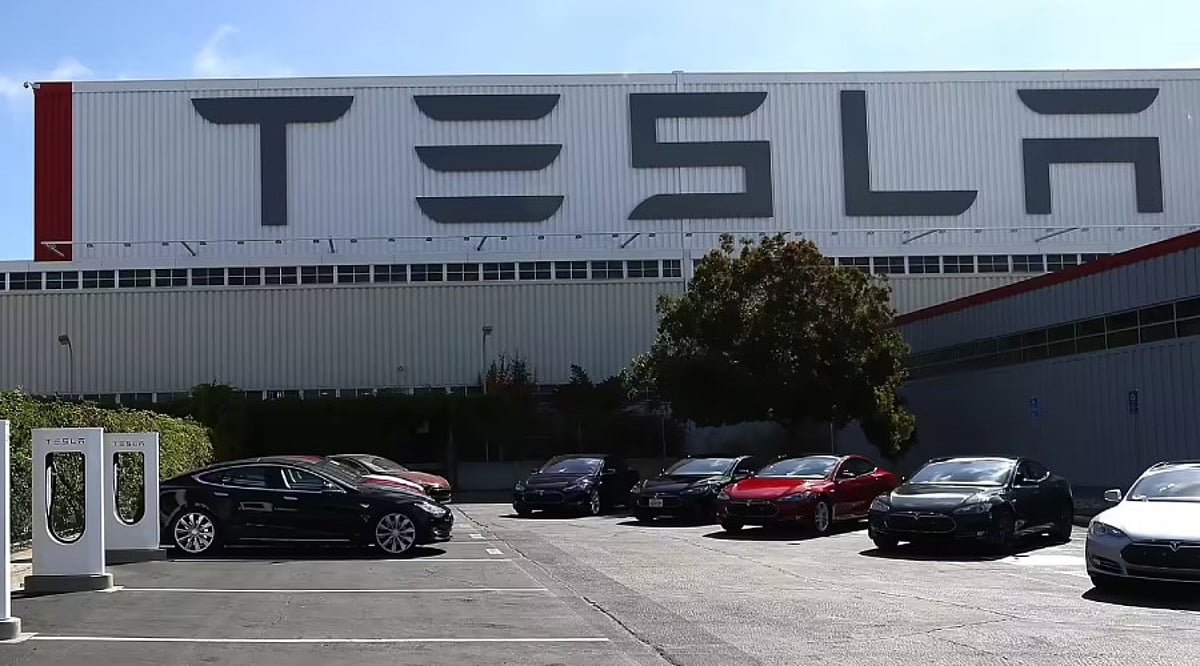
    Tesla did not become a major automaker overnight. It did not get there through one clever invention either. Its growth came from solving one problem after another. First, Tesla had to prove people wanted electric cars. Then it needed batteries, the ability to build cars at scale, and expansion into new countries. Each solution created the next challenge. This pattern explains Tesla’s rise better than any single product ever could.

    The Roadster Gamble

    Tesla was founded in 2003 by Martin Eberhard and Marc Tarpenning. Elon Musk joined as chairman and lead investor in 2004 and later became CEO. The company’s first car, the Roadster, launched in 2008. It used a Lotus Elise chassis and a battery pack made of thousands of small lithium-ion cells—the same type used in laptops at the time. This gave Tesla access to an already scalable battery supply chain. The hard part was managing heat, wiring the cells safely, and controlling the entire pack with software. The Roadster proved that a fast electric car could sell to real buyers, even at a high price.

    Model S Changes the Blueprint

    The Model S, introduced in 2012, marked a real shift for Tesla. Unlike the Roadster, it was built from scratch as an electric car, not adapted from another model. Tesla designed its own battery system, opened Supercharger stations to solve range anxiety, and introduced over-the-air updates that could change how a car worked even after it left the factory. This mix of software, batteries, and charging under one company gave Tesla more control over the driving experience than most traditional automakers had.

    Solving the Battery Bottleneck

    By 2014, demand for Tesla cars had outpaced its battery supply. The Gigafactory in Nevada was built to fix this, partnering with Panasonic to bring battery cell and pack production closer to the car assembly line. This partnership combined Tesla’s scale with Panasonic’s battery expertise, driving down costs over time. Tesla later built more Gigafactories in Shanghai, Berlin, and Texas, each one moving production closer to the markets it served.

    The Model 3 Manufacturing Crisis

    Tesla’s hardest period came with the Model 3 in 2017 and 2018, a stretch the company itself called “production hell.” Building an affordable car at scale exposed real gaps in Tesla’s factory process. Musk later said the company came close to running out of money. The fix was not simple: Tesla built a temporary assembly line in a tent outside its Fremont factory and rethought automation steps that had slowed everything down. Once stabilized, the Model 3 became one of the best-selling electric cars in the world, proving Tesla could handle mass production, not just small batches of luxury cars.

    Shanghai Proves the Model Can Travel

    Tesla broke ground on its Shanghai factory in January 2019—its first plant outside the United States. Model 3 production began there later that same year, an extremely fast timeline for any car factory. Shanghai showed that Tesla’s production approach could succeed outside California. Local suppliers and production cut costs and gave Tesla direct access to China, the world’s largest EV market.

    Model Y Builds on What Already Works

    Tesla did not design a brand-new platform for the Model Y. Instead, it leveraged much of the same engineering as the Model 3, allowing Tesla to enter the crossover and SUV market quickly without repeating years of development. Shared parts extended the value of earlier investments into a whole new vehicle type.

    A Market That Has Changed

    Tesla once had the EV market mostly to itself, but that is no longer true. Legacy automakers now offer strong electric vehicles, and Chinese companies like BYD report huge sales numbers (though often including plug-in hybrids). Tesla still has strong advantages: its charging network, software, and factory scale. But rivals are building the same strengths. What sets Tesla apart today is not being first—it’s how well Tesla integrates all these pieces into one cohesive system.

    Final Thought

    Tesla’s real story is not about inventing the electric car. It’s about building the machinery around it. Batteries, factories, charging stations, and software were once separate parts of the business. Tesla turned them into one connected system. That system, more than any single car, is what transformed a small EV startup into a global manufacturer.

  • Vectorization in Data Science: Unlocking Faster Statistical Computing with Array-Based Operations

    Vectorization in Data Science: Unlocking Faster Statistical Computing with Array-Based Operations

    Vectorization replaces manual, element-by-element loops with operations that run across entire arrays at once. The speed gain comes from compiled code, CPU features like SIMD, and better memory access, not from shorter syntax alone. However, the technique has limits: dependent calculations, memory overhead, and common tool misuse can undercut its benefits.

    What Vectorization Actually Means

    Vectorization means applying an operation to an entire array or column at once, instead of writing a loop that handles one value at a time. The work still gets done element by element somewhere, but it moves out of the Python interpreter and into optimized, compiled code built for exactly this purpose.

    A simple example makes the idea concrete. Adding two lists manually looks like this:

    result = []
    for i in range(len(list_a)):
        result.append(list_a[i] + list_b[i])

    The vectorized version, using NumPy, looks like this:

    import numpy as np
    result = np.array(list_a) + np.array(list_b)

    Both produce the same output. The second version runs faster on large datasets, not merely because it is shorter to write. NumPy hands the addition to compiled routines that skip the repeated interpreter checks a Python loop must perform.

    The Real Sources of Speed

    Several mechanical factors combine to make vectorized code faster. Compiled implementations written in C skip the step-by-step interpretation Python normally performs. Modern CPUs also support SIMD, a feature that lets one instruction act on multiple values simultaneously. Loops rarely benefit from this, since interpreter overhead gets in the way before the CPU feature can help. Memory access patterns matter too. Array-based libraries store data in structured, often contiguous blocks, which allows faster reads from memory compared with the scattered access common in loop-heavy code.

    None of this guarantees a fixed speed multiplier. The actual gain depends on dataset size, hardware, and the specific operation involved. What stays consistent is the direction of the improvement across nearly every numerical workload of meaningful size.

    Where Vectorization Appears Across Data Science

    Vectorization is not confined to one library. Pandas applies it whenever a column operation runs without a manual row loop, such as df['price'] * 1.1. NumPy is built around array operations as its core design. Machine learning frameworks, including Scikit-learn, TensorFlow, and PyTorch, depend on vectorized math for matrix multiplication, the operation at the heart of model training. Even statistical basics such as mean, standard deviation, and correlation run faster when applied across entire arrays rather than looped manually.

    Vectorization Is Not Parallelization

    The two ideas often get mixed up. Vectorization is about expressing an operation across a whole array so optimized code can handle it efficiently. Parallelization is about splitting work across multiple CPU cores or GPU threads. They frequently appear together in machine learning pipelines, but one does not require the other. A script can be fully vectorized and still run on a single core.

    Where It Falls Short

    Vectorization struggles when one calculation depends directly on the result of the previous one, such as certain recursive formulas. Tools like Numba can help in those cases by compiling the loop itself into fast machine code. Memory use is another practical concern: vectorized expressions sometimes generate temporary arrays that quietly increase memory pressure on very large datasets.

    A common misunderstanding involves NumPy’s np.vectorize() function, which many assume speeds up any Python function automatically, but it does not. NumPy documents it as a convenience wrapper, and internally it still loops through values one at a time.

    Final Thought

    The shift vectorization asks for is small but consequential: think in arrays, not in individual values. Once that habit sets in, code gets shorter, calculations run faster, and the underlying math becomes easier to follow.

  • Free Fire MAX Redeem Codes September 19: Grab Free Skins, Emotes & In-Game Rewards

    Free Fire MAX Redeem Codes September 19: Grab Free Skins, Emotes & In-Game Rewards

    Garena Free Fire MAX players have a fresh set of redeem codes available for September 19, 2026. These codes offer a chance to unlock free in-game rewards, including skins, emotes, and other items—without spending diamonds. However, codes are time-limited, region-restricted, and subject to redemption caps, so prompt action is recommended.

    Today’s Free Fire MAX Redeem Codes (September 19, 2026)

    The following codes are currently active. Redemption is not guaranteed for all players due to regional availability and limitations.

    • ZZZ76NT3PDSH
    • RHTG9VOLTDWP
    • FFPLUFBVSLOT
    • J3ZKQ57Z2P2P
    • N7QK5L3MRP9J
    • TX4SC2VUNPKF
    • MCPW3D28VZD6
    • P3LX6V9TM2QH
    • WD2ATK3ZEA55
    • Q8M4K7L2VR9J
    • FFWCTKX2P5NQ
    • V427K98RUCHZ
    • S5PL7M2LRV8K
    • RD3TZK7WME65
    • E9QH6K4LNP7V
    • TFX9J3Z2RP64
    • ZRW3J4N8VX56
    • J2QP8M1KVL6V

    Note: These codes may not work for every account. Availability depends on server region, redemption quotas, account eligibility, and code validity. Expired or fully redeemed codes will not generate rewards.

    How to Redeem Free Fire MAX Codes

    Follow these steps to redeem codes via the official Garena rewards platform:

    1. Go to the official Garena Free Fire MAX Rewards Redemption website.
    2. Log in with the account linked to your Free Fire MAX profile.
    3. Select a redeem code from the list above.
    4. Enter the code exactly as shown in the designated field.
    5. Click Confirm to submit.

    If the code is valid and successfully redeemed, the reward will be sent to your in-game mailbox. Double-check each character—one mistake can prevent redemption. Guest accounts are generally not supported; link your game to a registered login method before attempting.

    Conclusion

    Free Fire MAX redeem codes give players a way to earn free rewards without direct purchase. But availability is never guaranteed due to expiry, regional blocks, or redemption limits. Act fast and verify your account for the best chance.

  • 10 Flexible College Majors for Multi-Industry Career Opportunities

    10 Flexible College Majors for Multi-Industry Career Opportunities

    What Makes a Major Flexible

    A major counts as flexible when it meets three conditions:

    • The skills transfer to different jobs.
    • Multiple sectors hire people with those skills.
    • Graduates can add specialization later without starting a new degree.

    Flexibility does not mean every job is open to every graduate. Regulated professions may require licenses, graduate degrees, or specific credentials. A transferable major supports several career directions. Additional qualifications provide the specialization.

    10 Majors That Travel Well

    The table below maps each major to its core transferable skill, the industries that use it, and where extra qualifications come into play.

    Major Core Transferable Skill Industries That Hire Additional Qualifications
    Computer Science Programming, data analysis, problem-solving Tech, finance, healthcare, manufacturing Some roles may require specialized certifications.
    Business Administration Management, operations, finance Virtually every industry MBA or specialized certifications for executive roles.
    Economics Quantitative reasoning, data interpretation Finance, government, consulting, tech Graduate degree for research positions.
    Mathematics Abstract reasoning, modeling Finance, data science, education Additional programming skills often give an edge.
    Communications Writing, public speaking, media Media, marketing, corporate, nonprofit Portfolio and professional experience are crucial.
    Psychology Human behavior analysis, research HR, marketing, healthcare, education Licensure is required for clinical practice.
    Engineering Systems thinking, technical design Manufacturing, tech, energy, construction Professional engineering license for certain roles.
    Biology Research, lab skills, data interpretation Healthcare, biotech, food safety, environment Advanced degree for independent research.
    Sociology Social research, statistical analysis Policy, community work, marketing, education Graduate degree for research-oriented roles.
    Data Science Machine learning, statistics, coding Tech, finance, healthcare, retail Certifications can boost employability and specialization.

    Why the Same Skill Works in Different Rooms

    The pattern across these ten majors is not the subject matter. It is the underlying capability. A mathematics graduate and an economics graduate both reason through uncertainty, just with different source materials. A sociology graduate and a psychology graduate both study behavior—one at the group level, the other at the individual level. Employers in unrelated sectors often need the same reasoning process, dressed in different vocabulary. That overlap lets a graduate move from a bank to a health system or from a media company to a policy think tank—no four-year restart required.

    Where the Degree Ends and Experience Begins

    A transferable major opens a door. It rarely walks a graduate through it. In many cross-industry roles, employers weigh the degree alongside what a candidate has actually built. Internships, projects, and applied work count. A computer science graduate who has only completed coursework competes differently than one who has shipped a working product. The degree signals aptitude; experience signals readiness. Both matter, and neither substitutes for the other.

    Specialization sits on top of the major rather than replacing it. A biology graduate does not need a new degree to move into food safety—but a nursing or clinical role would ask for one. An engineering graduate can move into risk analysis at a bank without retraining, while a licensed structural role demands formal certification. The major supplies the foundation; the credential supplies the door key for specific, regulated rooms.

    Final Thoughts

    The next shift in hiring will likely reward graduates who can name their transferable skills directly rather than let a job title imply them. A biology graduate who can say ‘I run controlled experiments and interpret data under uncertainty’ competes for more roles than one who simply lists a degree. The skill, stated plainly, travels further than the diploma ever could.

    FAQ

    1. Which college majors offer the most career flexibility?

    Majors such as computer science, business administration, economics, mathematics, communications, psychology, and engineering can support careers across multiple industries since they develop transferable skills.

    2. What makes a college major useful across multiple industries?

    A major is more versatile when it develops skills such as quantitative reasoning, research, communication, problem-solving, or systems thinking that employers use across different sectors.

    3. Can I change industries after completing college?

    Yes. Graduates can move between industries when their existing skills match the requirements of a new role. Internships, certifications, projects, and relevant work experience can make the transition easier.

    4. Does a flexible college major guarantee more career options?

    No. A versatile degree can provide a broad foundation, but career options also depend on experience, specialization, location, employer requirements, and additional qualifications.

    5. Do all careers accept graduates from different college majors?

    No. Some professions require specific degrees, licenses, certifications, or graduate-level education. Regulated fields may have additional eligibility requirements.

  • Modern Home Entertainment Hardware: Key Consumer Expectations

    Modern Home Entertainment Hardware: Key Consumer Expectations

    Home entertainment hardware has evolved dramatically over the past few years. A television is no longer an isolated screen; it now serves as the center of a broader digital ecosystem that includes streaming services, apps, wireless connectivity, voice controls, and high-resolution video. As a result, modern buyers look beyond a single feature and consider the entire package—performance, connectivity, storage, interface design, software support, and even after-sales service. This article explores what consumers expect from today’s home entertainment hardware and how products like the SuperBox S7 series are designed to meet those expectations.

    Performance Goes Beyond Basic Playback

    Consumers expect connected entertainment devices to respond quickly when opening apps, navigating menus, or switching between functions. A device that technically supports modern content but feels sluggish during everyday use quickly becomes frustrating. Processing power is now a major consideration when comparing consumer electronics.

    However, performance should be matched to actual usage. A casual viewer may not need the same processing muscle as a family that regularly uses multiple applications and connected features. The best choice is one that provides enough capability for current habits without adding unnecessary complexity.

    Better Connectivity Is a Core Requirement

    A modern entertainment device needs a dependable way to communicate with the home network. Wireless connectivity is especially important because many TVs and media players are located away from the main router. Wi-Fi improvements—such as Wi-Fi 6 support—make placement more flexible, while Gigabit Ethernet remains valuable when a wired connection is practical.

    Consumers are also paying more attention to the stability of their home networks. Even capable hardware cannot compensate for an unreliable internet connection or poor router placement. Buyers now evaluate the device and the network as parts of the same system rather than treating hardware specs as the only measure of performance.

    Connectivity also influences where a device can be installed. A living-room setup might have easy access to Ethernet, while a bedroom TV might depend entirely on wireless. Considering these conditions before purchasing helps consumers choose hardware that fits their existing environment without requiring a network redesign.

    Higher Resolution Is Part of the Buying Decision

    Display technology has raised expectations. As TVs become capable of showing increasingly detailed images, consumers naturally want connected devices that can work with modern video standards, including 4K and beyond. Support for higher-resolution content is becoming an important purchase factor, particularly for people upgrading several components at once.

    But resolution should not be viewed in isolation. The TV, content source, connection, and media device all contribute to the final viewing experience. A capable TV box can provide useful support for higher-resolution playback, but the result still depends on compatible content and the rest of the home setup.

    Storage Has Become More Useful

    Storage was once a secondary specification, but today it has a greater practical role. Connected TV hardware may need space for applications, system data, updates, and other functions. More storage reduces the need to constantly remove apps or manage space.

    This doesn’t mean every consumer needs the largest capacity available. A simple setup might be fine with less storage, while a household using many apps may appreciate more. The key is matching storage capacity with expected usage and the device’s lifespan.

    User Interfaces Need to Feel Simple and Responsive

    Consumers are accustomed to interfaces that are easy to understand. Complicated menus and unclear navigation can make even powerful hardware feel inconvenient. A connected TV device should make common actions straightforward, especially when multiple household members use the same equipment.

    Interface design also affects feature discovery. Search functions, organized applications, clear settings, and responsive navigation all contribute to a more comfortable experience. Software presentation is now nearly as noticeable as hardware specifications when consumers compare devices.

    Software Support Influences Long-Term Value

    Hardware specs attract attention at purchase, but software determines how useful a device remains over time. Consumers want access to applications and features that fit their viewing habits, and updates and compatibility can influence how practical the hardware feels later.

    This is especially relevant in the connected TV category because entertainment services and applications continue to evolve. Buyers should consider the software environment alongside processor speed, storage, and display support. Content and application availability can vary by region, so it’s wise to confirm that the services you intend to use are officially supported.

    Software also affects comfort months after installation. If applications are easy to manage and the interface remains familiar, users are more likely to get full value from the hardware.

    Brand Support Adds Confidence After Purchase

    The buying experience doesn’t end when the device arrives. Consumers want clear product information, reasonable return policies, warranty coverage, and access to support when something goes wrong. These factors are particularly important with connected electronics because setup questions and compatibility issues may arise after installation.

    Choosing an established source provides additional confidence. SuperBoxSmart, for example, presents itself as an authorized U.S. SuperBox dealer and offers product support, a one-year hardware warranty, and a 30-day return policy. Consumers should still review current terms before purchasing, but clear after-sales information makes the decision more comfortable.

    Consumers Want Technology That Fits Real Homes

    One of the strongest trends is the movement toward technology that works naturally within existing routines. People don’t want more features for the sake of having them; they want capabilities that solve practical problems—whether that means better connectivity, easier navigation, more storage, or support for modern displays.

    This changes how consumers should compare products. Instead of asking which device has the longest spec sheet, it’s more useful to ask which features will actually improve the household’s experience. A balanced combination of performance, connectivity, software, storage, and usability often provides more practical value than a single impressive specification.

    Different households have different priorities. A small apartment may value compact design and wireless connectivity, while a larger family may care more about storage and flexible application use. Looking at the intended environment first allows consumers to judge specifications in context.

    Future-Proofing Is About Flexibility Rather Than Hype

    No consumer electronic device can remain at the cutting edge forever. New apps, display technologies, network standards, and entertainment habits will continue to develop. Rather than trying to predict every future change, buyers can look for hardware with enough flexibility to support reasonable upgrades and evolving usage.

    This means considering factors like storage capacity, connectivity standards, processing capability, software environment, and available ports. A device with balanced specs may remain useful longer because it can adapt to more situations. Future-proofing is less about buying the most expensive model and more about avoiding obvious limitations that could become inconvenient later.

    Final Thoughts

    Modern home entertainment hardware is increasingly judged by the complete experience it provides. Consumers want responsive performance, dependable connectivity, useful storage, modern video support, straightforward software, and accessories that make everyday control easier. They also pay close attention to build quality, warranty coverage, and after-purchase support.

    The SuperBox S7 series illustrates how these expectations are shaping connected TV devices, offering multiple configurations with different storage capacities, Wi-Fi 6, Gigabit Ethernet, Bluetooth, modern Android software, and high-resolution video decoding. The right model depends on the user’s television, network, applications, storage needs, and viewing habits. By focusing on practical requirements instead of chasing specifications alone, consumers can make a more informed choice and build a home entertainment setup that remains convenient well beyond the initial purchase.


  • How Advanced Power Management Will Drive the Next Wave of Electronics

    How Advanced Power Management Will Drive the Next Wave of Electronics

    For decades, the electronics industry has focused on making devices faster, smaller, and more capable. But as technology evolves, a new engineering challenge is taking center stage: delivering power efficiently to all those increasingly complex components. Processors, sensors, wireless modules, memory—each has its own voltage, current, and timing requirements. Add the demand for longer battery life, compact form factors, and dependable performance, and power management becomes a cornerstone of product design rather than an afterthought.

    Power Management Gets More Sophisticated

    Supplying electricity to a device might seem straightforward, but managing dozens of components that need different voltages, operating states, and startup sequences is anything but simple. Engineers must regulate these requirements while minimizing energy waste and protecting sensitive circuitry. As products grow more intricate, relying on numerous discrete components for these tasks consumes valuable board space and introduces additional design complexities.

    That’s where specialized power management ICs (PMICs) come into play. Instead of treating power as a uniform requirement, these circuits address the specific needs of particular processors, applications, or system architectures. They can handle voltage regulation, power sequencing, monitoring, conversion, and protection—all in a single integrated solution.

    This approach matters because efficiency is no longer measured solely by how little electricity a device consumes. Engineers also need to weigh heat dissipation, physical space, reliability, and how effectively available power reaches each component. Better control helps designers tackle several of these goals simultaneously.

    Miniaturization Demands More

    Miniaturization has transformed both consumer and industrial electronics. Devices that once required several circuit boards now fit into packages small enough to wear on a wrist or embed inside machinery. Yet shrinking a product doesn’t necessarily reduce its computing demands—often, smaller products are expected to do more than their larger predecessors.

    This creates a fascinating engineering paradox. Every additional component takes up space, draws power, and generates heat. Designers can’t simply add more hardware without considering the knock-on effects on the entire system. Integrated power management reduces the number of discrete components needed for certain functions, freeing up precious board space. Efficient power conversion also matters because wasted energy often becomes heat—in compact electronics, there’s little room for elaborate cooling systems. Managing electricity effectively, therefore, influences not only battery life but also the size, durability, and real-world performance of the final product.

    AI Moves Beyond Data Centers

    Artificial intelligence has thrust computing power into the spotlight, but much of the conversation centers on massive data centers. Meanwhile, a quieter revolution is happening at the edge: AI processing is making its way into phones, vehicles, cameras, industrial equipment, and other devices that perform complex tasks locally.

    This shift places new demands on AI hardware. Advanced processors may require multiple voltage rails and rapid power delivery changes as workloads fluctuate. A system performing an intensive calculation one moment might drop to a low-power state the next. Managing these transitions efficiently affects energy consumption, thermal performance, and overall reliability.

    Edge computing amplifies the challenge. Devices operating away from centralized infrastructure often have limited battery capacity or strict energy budgets. Some sensors and remote equipment must function for extended periods without frequent maintenance. In these scenarios, raw computing power means little unless the supporting power architecture can sustain it. As AI spreads into more categories of electronics, designers will have to consider processing capability and power management together—not as separate decisions.

    Efficiency Becomes a Design Priority

    Consumers notice battery life, but energy efficiency matters well beyond portable gadgets. Industrial systems contain thousands of sensors and electronic controls; vehicles increasingly rely on cameras, radar, displays, processors, and communication systems; smart buildings integrate connected equipment into lighting, climate control, and security.

    Individually, small efficiency gains might seem trivial. But multiplied across millions of devices running for years, they become significant. Manufacturers also have practical incentives to cut wasted energy: lower power consumption reduces thermal stress, enables smaller batteries, and slashes cooling requirements.

    The result is a richer definition of performance. Speed will always matter, but manufacturers now must consider what that performance costs in electricity and heat. A processor that delivers impressive capability while demanding excessive supporting hardware could force compromises elsewhere in the product. Power architecture is thus becoming part of the earliest design discussions, rather than something addressed after the headline components are selected.

    The Supporting Chips Matter

    Semiconductor conversations tend to revolve around processors because their capabilities are easy to grasp. Faster chips enable better graphics, more sophisticated software, and increasingly capable AI. Yet processors can’t operate in isolation—they depend on a suite of supporting technologies that determine whether performance can be delivered efficiently and reliably.

    Power management sits near the top of that list. As processors become more sophisticated and electronics integrate more specialized components, delivering the right amount of electricity at the right moment becomes harder. Designers may also need systems that monitor conditions, protect components, and adjust power dynamically as workloads shift.

    This reality could make supporting semiconductor technologies increasingly important across consumer electronics, transportation, manufacturing, communications, and connected infrastructure. The next generation of electronics will certainly rely on better processors, sensors, and software. But it will also depend on engineers becoming much smarter about the electricity that keeps everything running.

  • Cardano (ADA) in 2026: Why This Crypto Deserves Investor Attention

    Cardano (ADA) in 2026: Why This Crypto Deserves Investor Attention

    Investing has the power to reshape lives, offering the kind of stability that goes far beyond raw numbers. For some, financial comfort might mean dining out more often; for others, it’s the freedom of earning passive income. However you define wealth, having a secure financial footing is universal.

    Cryptocurrencies continue to offer one path toward that goal. Among the many digital assets out there, Cardano’s ADA has been drawing attention from both retail and institutional investors. While it may not promise flashy features, its recent legal clarity and evolving ecosystem make it a coin worth exploring.

    Cardano’s Journey and Vision

    Cardano’s journey began when Charles Hoskinson left the Ethereum project in 2014. After a six-month sabbatical, he teamed up with Jeremy Wood to create IOHK, the company behind Cardano. Launched in 2017, Cardano was initially dubbed the “Japanese Ethereum,” and its native token ADA pays homage to Ada Lovelace, the world’s first programmer.

    Today, Cardano is widely seen as an improved version of Bitcoin, thanks to its second-generation, peer-to-peer architecture that supports more than simple financial transactions. Hoskinson has described the goal as building a social system that motivates people to go beyond expected results—an ambitious vision that could fuel ADA’s long-term growth.

    Market Signals and the Opportunity Zone

    Market signals also paint an interesting picture. Many wallets active on the network over the past year are sitting on average losses of 43%. Yet Santiment describes this as an “opportunity zone”—a time when fearful investors may be ideally positioned to act. The MVRV ratio, which measures asset valuation against historic buying prices, often trends toward zero. This suggests that the remaining ADA holders are long-term believers, weathering market volatility with remarkable resilience.

    Midnight: Privacy Meets Utility

    Another development is Midnight, a privacy-focused partner chain that has been in the works for over eight years. Midnight allows users and applications to prove compliance with regulations without exposing sensitive information like identity, age, or financial records. Its two main tokens—NIGHT and DUST—serve distinct purposes: NIGHT is public and transparent, while DUST enables metadata-shielded transactions. With Bullish and Wordplay as federated node operators, Midnight could make rapid privacy protection a reality. The project also rewards staking ADA for more than 12 months, especially as the TVL hits lows not seen since 2023.

    Should You Consider ADA?

    The goal for Cardano’s ecosystem is to minimize meaningful failure events and continue building a reliable, high-velocity decentralized economy. For investors seeking a relatively inexpensive cryptocurrency with serious potential, ADA offers a compelling case. But as always, preparation is key. The amount you start with matters less than your willingness to learn and stay committed.

    Disclaimer: Cryptocurrency investments carry significant risk. Always conduct your own research and consider your financial situation before making any investment decisions.

  • New UPI MDR Framework: How SIPs, OTT, and Rent Payments Are Affected from October 15

    New UPI MDR Framework: How SIPs, OTT, and Rent Payments Are Affected from October 15

    The Reserve Bank of India’s new UPI Merchant Discount Rate (MDR) regime takes effect on October 15, 2026. While the updated rules introduce charges for certain merchant transactions, many recurring payments—like mutual fund SIPs and OTT subscriptions—remain untouched. Here’s a breakdown of what changes, what stays free, and how different payment types are classified.

    Key Takeaways

    • UPI AutoPay SIPs and OTT subscriptions are exempt from the prescribed MDR.
    • One-time mutual fund and capital-market UPI payments incur a 0.02% MDR, capped at ₹300.
    • Specified person-to-merchant (P2M) payments above ₹2,000 may attract a 0.4% MDR, with a ₹300 cap for transactions of ₹75,000 or more.

    Understanding the New MDR Structure

    The new framework applies a 0.4% MDR to specified P2M UPI payments exceeding ₹2,000. For transactions of ₹75,000 and above, the charge is capped at ₹300. Person-to-person (P2P) transfers remain completely free, regardless of the amount. Merchant payments up to ₹2,000 are also exempt. According to the government, approximately 96% of P2M transactions will remain outside the MDR net.

    UPI AutoPay Exemption: Relief for Recurring Payments

    NPCI has confirmed that UPI Mandates and AutoPay recurring transactions will not attract the prescribed MDR. This includes utility bills, OTT subscriptions, and recurring investments such as mutual fund SIPs. So, a ₹10,000 SIP set up via UPI AutoPay will not incur an MDR charge simply because it exceeds ₹2,000. Similarly, a ₹2,500 monthly OTT subscription—whether Netflix, Amazon Prime, or JioHotstar—remains unaffected.

    Mutual Fund SIPs: Two Different Rules

    The treatment of mutual fund SIPs depends on the payment route. Recurring SIPs using UPI AutoPay are outside the prescribed MDR. However, one-time UPI payments for mutual funds, securities, stockbrokers, or dealers fall under a separate capital-market category. This category carries a much lower MDR of 0.02%, capped at ₹300 per transaction. The reduced rate is intended to encourage retail participation in formal financial markets.

    This distinction is significant for brokers and investment platforms. Reuters has reported industry concerns about the impact of frequent UPI transactions on brokerage costs, and Zerodha CEO Nithin Kamath has publicly questioned whether brokers can absorb the long-term cost.

    Rent Payments: Structure Matters

    Rent payments do not automatically receive the same AutoPay exemption unless the transaction uses a UPI Mandate or AutoPay structure. A simple transfer between individuals remains a P2P payment, which is free regardless of amount. However, if rent is paid to a merchant or property service provider, it may fall under the P2M framework if the transaction meets relevant conditions. The official rules do not list rent as a special category, so the exact treatment depends on how the payment is structured and who the recipient is.

    Customers Won’t Pay MDR Directly

    The MDR is a merchant-side charge within the UPI ecosystem. The government has clearly stated that customers will not be charged a separate UPI transaction fee. Banks have been directed to prevent merchants from passing on the MDR to customers, and UPI app providers are prohibited from adding platform fees or hidden charges under this framework. A ₹20,000 eligible merchant payment, therefore, will not become a ₹20,080 debit from the customer’s account.

    Still, businesses may feel the pinch. Retailer groups have expressed opposition, warning that the added cost could squeeze already thin margins. Some industry associations have also questioned the timing, given the upcoming festive season.

    What Changes from October 15

    Starting October 15, 2026, the following rules apply:

    • Standard P2M transactions above ₹2,000: 0.4% MDR, capped at ₹300 for amounts of ₹75,000 or more.
    • Railways, telecom, insurance, fuel, and agricultural inputs above ₹2,000: flat ₹5 MDR.
    • Capital-market payments (one-time mutual fund, securities, etc.): 0.02% MDR, capped at ₹300.
    • UPI AutoPay recurring payments (SIPs, OTT, bills): exempt from prescribed MDR.
    • P2P transfers: always free.

    The immediate impact on most households appears limited. The bigger shift is internal—banks, payment service providers, apps, brokers, and merchants must now adapt to a new cost landscape after more than six years of zero-cost UPI merchant payments.

    Frequently Asked Questions

    1. Will mutual fund SIPs become costlier under the new UPI MDR rules?

    No, SIPs that use UPI AutoPay mandates remain outside the prescribed MDR.

    2. Will OTT subscriptions attract UPI MDR?

    No, recurring OTT payments through eligible UPI AutoPay mandates remain outside the prescribed MDR.

    3. Will rent payments become costlier?

    Treatment depends on the payment structure. P2P transfers remain free, while eligible P2M transactions can fall under the MDR framework.

    4. What MDR applies to one-time mutual fund payments?

    A 0.02% MDR applies to specified capital-market payments, with a maximum charge of ₹300 per transaction.

    5. When will the new UPI MDR framework start?

    The new framework takes effect on October 15, 2026.