Blog

  • AI-Powered Startups Raise $310.7 Million in Latest Venture Capital Roundup

    AI-Powered Startups Raise $310.7 Million in Latest Venture Capital Roundup

    This week, five startups across artificial intelligence, semiconductor verification, enterprise software, HR technology, and interactive content collectively raised $310.7 million in fresh venture funding. The largest deals included a $200 million round for software development company Factory and a $53 million seed extension for enterprise AI services startup Hang Ten Systems. Investors continue to back applied AI solutions, with deals ranging from seed to Series B.

    Factory Leads with $200 Million at $5 Billion Valuation

    Software development startup Factory secured the largest disclosed round this week, raising $200 million at a $5 billion valuation. The financing included Blackstone, Khosla Ventures, Sequoia Capital, Insight Partners, Evantic Capital, Sound Ventures, NEA, Mantis VC, and Clearlake. The company said total funding now exceeds $400 million. Factory develops autonomous software-engineering systems for enterprises and plans to use the new capital for research, product development, and global expansion. Customers include NVIDIA, Blackstone, RBC, Palo Alto Networks, Adobe, and T-Mobile.

    Hang Ten Systems Adds $53 Million for Enterprise AI

    Enterprise AI services startup Hang Ten Systems, founded by former Infosys CEO Vishal Sikka, raised an additional $53 million in seed funding. The round was led by Xora Innovation, backed by Singapore’s Temasek, with participation from Mayfield and Aramco Ventures. This brings Hang Ten’s total funding to $85 million after its $32 million seed round in June. The company helps large enterprises apply AI to software development, migrations, finance, and analytics. The new funds will support engineering and consulting expansion, increased customer delivery capacity, and further development of its AI platform and reusable skills library.

    Flam Secures $40 Million Series B for AI Interactive Content

    AI interactive-content startup Flam raised $40 million in Series B funding led by QED Investors. Other participants included Claypond Capital, Martin Chavez, Olivier Pomel, Venky Harinarayan, and Shah Rukh Khan, with existing investors RTP Global and Dovetail increasing their stakes. Flam plans to direct the funding toward AI research, product development, and international enterprise expansion. The company reports more than 100 enterprise customers, including Google, Emirates, and KFC, using its technology for marketing, product visualization, learning, entertainment, and customer engagement.

    BoomerangHR Raises $12.7 Million for AI-Powered HR Platform

    AI-powered HR platform BoomerangHR raised $12.7 million in seed funding from Kalos Ventures, Album Ventures, Monta Vista Capital, Capital Eleven, and Strada Education Foundation. The company focuses on employee offboarding and maintaining relationships with former employees, enabling businesses to identify potential candidates for future roles. Its platform combines automated offboarding processes with verified alumni profiles, job matching, and reporting. BoomerangHR said the funding will support building long-term talent networks and expanding adoption among employers.

    VerifAIX Raises $5 Million for AI-Driven Semiconductor Verification

    AI-native semiconductor verification company VerifAIX raised $5 million in seed funding co-led by Endiya Partners and Bluehill VC. The company plans to use the capital for product development, customer deployments, and expansion of its engineering teams across the US, India, and Israel. VerifAIX is developing a verification platform for increasingly complex chip designs. Its technology, built around what the company calls a ‘Formal Brain’, combines AI with formal verification methods to help engineers assess whether chip designs meet intended specifications. The startup was founded in 2024 by Madhulima Tewari, Kenneth Roe, and Avner Landver.

    Closing Note

    Together, the week’s $310.7 million in disclosed funding shows continued investor interest in applied AI across multiple sectors, from enterprise software and chip verification to HR technology and interactive content. Capital is flowing into companies at various stages seeking to turn AI capabilities into commercial products and services.
  • Claude AI Now Drives 26% of Anthropic’s Internal Research, Company Reveals

    Claude AI Now Drives 26% of Anthropic’s Internal Research, Company Reveals

    Anthropic has disclosed that its Claude AI models now lead approximately 26% of the company’s internal artificial intelligence research and development work — a dramatic increase from under 1% just six months ago in February 2026. The data comes from a newly developed internal tool called the R&D Automation Index, which tracks how much AI contributes across different research tasks.

    The index uses a scale built by Epoch AI, ranging from AL0 (no AI involvement) to AL5 (fully autonomous operation). Claude currently operates at the AL4 level for 26% of the work, meaning the AI takes on most of a task after receiving a high-level instruction while a human remains in the loop to supervise. Anthropic emphasized that Claude is not yet running any operations fully on its own.

    More than 90% of the company’s measured AI research now occurs at or above the level where AI and humans collaborate side by side. These areas include model training, reinforcement learning, evaluation, and engineering.

    The scale of the operation is significant. In August, roughly 30,000 AI agents were active at any given time on Anthropic’s most-used internal platform. Over one billion agent decisions were tracked that month, of which approximately 0.002% were stopped by the company’s monitoring system. Additionally, about 6% of AI research compute was allocated to safety work during a week in July, rising to nearly 12% within AI-driven research specifically.

    Anthropic plans to publish these measurements regularly and is calling on other leading AI developers to release similar data. The company believes that shared methods and external verification can help the broader industry keep pace with the rapid evolution of AI development itself. This report represents one of the most detailed looks any major AI company has offered into how its own tools are shaping the work of building the next generation of AI.

  • WhatsApp for iPhone Gains New Search Shortcut to Find Older Messages Faster

    WhatsApp for iPhone Gains New Search Shortcut to Find Older Messages Faster

    WhatsApp is introducing a dedicated search button for iPhone users that simplifies locating older messages within conversations. The Meta-owned messaging platform began rolling out this feature in September 2026, following beta testing in August.

    The new search button appears automatically when users scroll upward through older messages in individual chats, group conversations, or Channels. Tapping the button opens the existing search tool directly, eliminating the need to navigate to the chat information screen first.

    According to WABetaInfo, the feature is compatible with WhatsApp for iOS version 26.36.74 and is being deployed gradually to select users. A broader rollout is expected in the coming weeks.

    In earlier beta builds, the search shortcut was positioned near the bottom-right corner of the conversation. The final version moves it to the top of the screen, just below the navigation bar. The button only appears while scrolling upward; returning to the latest messages hides it again, keeping the interface clean.

    WABetaInfo described the change simply: “The new search button appears at the top of the screen when users scroll up.” Tapping the button activates search mode directly within the conversation, with no changes to the underlying search functionality. Users can still enter keywords and browse matched messages as before.

    Previously, iPhone users had to open a chat, tap the contact or group name, and then select Search from the chat information screen. The update brings that entry point directly into the conversation, reducing the number of steps required to find older content.

    WhatsApp Channels also benefit from the same shortcut, allowing users to search through historical posts without opening the Channel information screen. This is especially useful for Channels with frequent updates and long histories.

    Because the feature is rolling out gradually, it may not appear immediately on all iPhones. Updating the app can help, but account-level activation determines availability. Users without the shortcut can still use the traditional search method through chat information.

    Overall, the update focuses on improving accessibility rather than introducing new search capabilities. For long conversations, active groups, and busy Channels, fewer navigation steps make it easier to locate older messages.

  • FCC Opens Door for Foreign Investors in Paramount-Warner Bros. Acquisition

    FCC Opens Door for Foreign Investors in Paramount-Warner Bros. Acquisition

    The U.S. Federal Communications Commission (FCC) has approved a request from Paramount Skydance that permits foreign investors to provide funding for its planned acquisition of Warner Bros. Discovery. This decision clears another regulatory hurdle for the massive $110 billion deal, which includes debt.

    Foreign Investors to Hold Non-Voting Equity

    Under the approved structure, foreign investors can collectively hold a substantial share of Paramount’s nonvoting equity. Major investors include the Saudi Arabia Public Investment Fund, Abu Dhabi-based L’Imad Holding, and the Qatar Investment Authority. It is expected that these international entities will hold approximately 49.5% of the company’s nonvoting shares. Meanwhile, the Ellison family and RedBird Capital Partners will maintain control of voting shares.

    The FCC also authorized certain foreign investors to increase their individual equity stakes within specified limits, subject to agency rules.

    Restrictions on Foreign Influence

    The approval comes with conditions designed to prevent foreign investors from gaining control over Paramount’s operations. According to the FCC decision, these investors will not receive voting rights or governance powers, nor can they influence management or content decisions. Additionally, they are barred from accessing nonpublic information involving U.S. citizens.

    The arrangement follows a national security review by the Committee for the Assessment of Foreign Participation in the United States Telecommunications Services Sector, commonly known as Team Telecom. Paramount argued that the additional capital would strengthen its ability to invest in broadcasting, news gathering, and content, helping the combined company compete in the global media market.

    Warner Bros Deal Still Faces Legal Hurdle

    While the FCC decision removes one obstacle, the transaction is far from complete. The proposed merger still faces legal challenges from a group of U.S. states and other parties. Although the U.S. Justice Department and regulators in several other jurisdictions have cleared the deal, litigation remains pending, with a trial expected in March 2027.

    The FCC’s ruling marks another step toward the proposed combination, but its completion still depends on the outcome of the remaining legal proceedings and other closing conditions.

  • Sonos 27 Update Integrates ChatGPT and Claude AI for Smarter Home Audio Control

    Sonos 27 Update Integrates ChatGPT and Claude AI for Smarter Home Audio Control

    Sonos has begun rolling out Sonos 27, a major system update that brings artificial intelligence tools and enhanced flexibility to its speaker lineup. Available now on iPhone, Android, and compatible Sonos speakers, the update introduces Model Context Protocol (MCP) support, enabling AI services like ChatGPT and Claude to interact directly with the audio system.

    With Sonos 27, users can control playback, group speakers, adjust volume, move audio between rooms, and activate features like Night Sound and Speech Enhancement—all through natural language commands via ChatGPT or Claude. This eliminates the need to open the Sonos app for routine tasks.

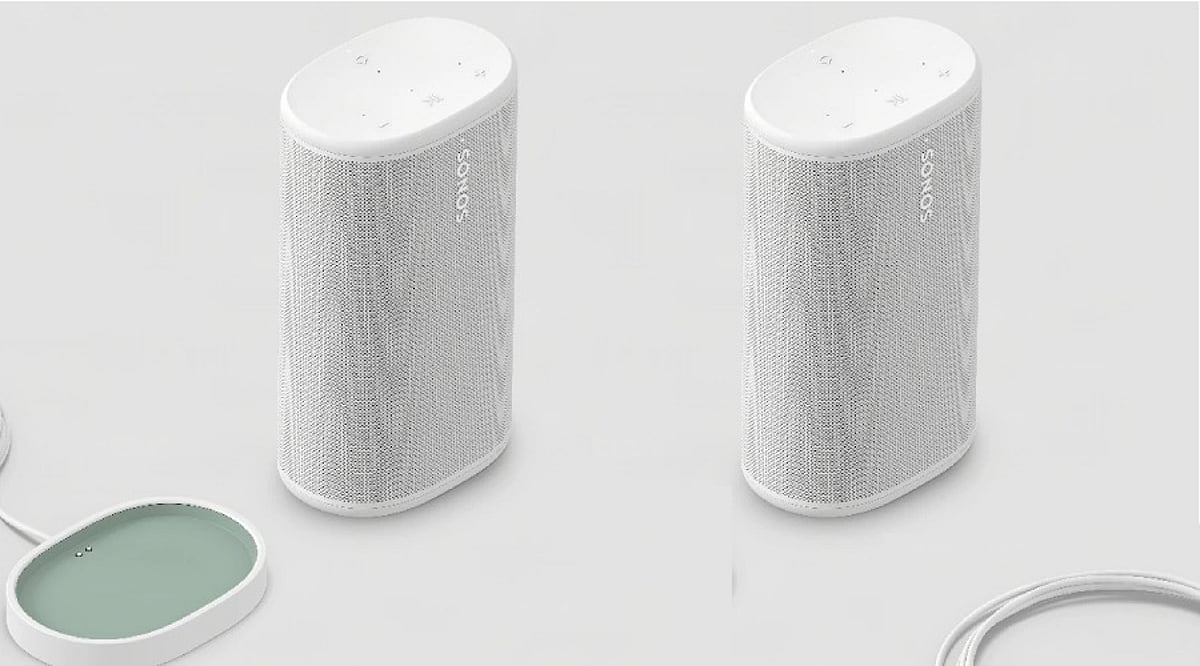
    Beyond AI, the update adds significant new hardware functionality. Portable Sonos speakers can now serve as rear surround speakers when paired with the Arc Ultra soundbar. The Sonos Ace Ultra headphones also gain the ability to seamlessly transfer audio between the headphones and compatible speakers.

    Sonos is also developing Sonos Voice, a forthcoming voice assistant. Looking ahead to 2027, the company plans to introduce Custom Agents, which would let users build personalized AI agents using their preferred model and voice.

    One of the standout features is the dynamic role adjustment for portable speakers. For instance, two portable Play speakers can act as rear channels for a home theater setup during a movie, then revert to standard portable mode when moved. Sonos’ positioning technology automatically detects their placement and adjusts their function accordingly.

    The overarching theme of Sonos 27 is flexibility. A single speaker can now serve multiple roles throughout the day—supporting a home theater at night and functioning as a regular portable speaker later. Combined with AI-driven voice control, the update streamlines the user experience and adapts to how people actually use their homes.

  • Apple Pay’s India Debut Could Begin With Axis Bank as First Partner

    Apple Pay’s India Debut Could Begin With Axis Bank as First Partner

    Apple Pay Prepares for India Launch

    Apple is preparing to bring its Apple Pay service to India, with Axis Bank expected to be its first banking partner for the rollout, according to people familiar with the matter. The service could launch in India as soon as next month, starting with support for Axis Bank credit cards.

    Discussions With HDFC Bank and ICICI Bank

    Apple has also held discussions with HDFC Bank and ICICI Bank about adding their cards to Apple Pay, but those talks have not yet resulted in final commercial agreements, according to two sources. Apple and the three banks declined to comment to Reuters on the discussions.

    Apple Pay is designed to allow iPhone users to make contactless payments using tokenized versions of their card details. Card information is stored on the device, so users can pay without opening another payment app. Apple is expected to add more banks through separate agreements over time, allowing the service to expand gradually after its initial rollout.

    Entering a UPI-Dominated Market

    Apple Pay will enter a payments ecosystem where UPI accounts for a major share of digital transactions. According to Reuters, UPI represented 84% of India’s digital payment volume. The National Payments Corporation of India has also introduced a tap-and-pay option using near-field communication technology, giving smartphone users another way to make contactless payments.

    Recent changes in payment rules have also created room for Apple Pay. The Reserve Bank of India allowed biometric authentication for card payments last year, supporting card transactions through features such as Face ID and Touch ID.

    Apple’s Growing Presence in India

    The India entry comes as Apple gains ground in the country’s smartphone market. Counterpoint Research data cited by Reuters shows Apple’s market share reached 8%, twice its level in 2022. India is now among Apple’s largest smartphone markets.

    Axis Bank had about 16.26 million active credit cards in July, according to RBI data, making it the fourth-largest card issuer in India after HDFC Bank, SBI Cards, and ICICI Bank. An Apple Pay launch would give Apple a foothold in India’s contactless card payment segment, and its expansion will likely depend on adding more banks and card networks to the service.

  • iPhone 18 Pro Launches in India: How to Snag Up to Rs. 7,000 Cashback and More

    iPhone 18 Pro Launches in India: How to Snag Up to Rs. 7,000 Cashback and More

    Apple’s iPhone 18 Pro and iPhone 18 Pro Max have officially arrived in India, bringing powerful new features and a premium price tag. The standard 256GB iPhone 18 Pro starts at Rs. 1,64,900, while the top-tier 2TB model reaches Rs. 3,14,900. The Pro Max begins at Rs. 1,79,900 and scales up to Rs. 3,29,900. Buyers can purchase directly from Apple’s website, Apple Stores, or authorized sellers, and the devices are also available on Amazon, Flipkart, Croma, and Reliance Digital.

    For those who prefer not to queue, quick-commerce platforms like Swiggy Instamart, Zepto, and Blinkit now offer iPhone 18 deliveries within minutes. Apple’s authorized resellers—Imagine, iPlanet, IndiaiStore, and iNvent—also carry the new models.

    Launch Offers to Cut the Cost

    To ease the upfront expense, Apple is rolling out several deals:

    • Cashback: Up to Rs. 7,000 cashback on select American Express, Axis Bank, ICICI Bank, and SBI credit cards.
    • No-Cost EMI: Up to six months of interest-free installments.
    • Trade-In: Up to Rs. 81,500 for an eligible old device, depending on model and condition.

    These offers can be combined. For example, using an eligible card alongside a trade-in and no-cost EMI can significantly lower the total paid. However, the Rs. 7,000 cashback is subject to card and offer terms and does not alter the official retail price.

    Retailers are also adding their own incentives. Flipkart, for instance, offers up to Rs. 8,000 cashback with its Flipkart Axis Bank credit card.

    Smart Shopping Strategy

    Given the high starting price, buyers should consider the combined value of EMI, trade-in, and cashback rather than focusing on the list price alone. Apple’s Trade In program provides an instant reduction at checkout, while no-cost EMI spreads payments over several months without interest.

    The iPhone 18 Pro remains a premium investment, but these launch offers make it more accessible. For the best deal, check your credit card eligibility and trade-in value before purchasing.

  • Novuna Business Cash Flow Launches Asset-Based Lending for UK Mid-Sized Firms

    Novuna Business Cash Flow Launches Asset-Based Lending for UK Mid-Sized Firms

    Novuna Business Cash Flow has introduced a new asset-based lending (ABL) facility for UK businesses, offering funding between £2 million and £25 million. The lender has also appointed Neil Sturgeon as corporate business development manager to drive growth in the corporate funding and adviser relationship space.

    The new product expands Novuna’s funding options beyond traditional receivables finance. Companies can now raise capital against a combination of receivables, inventory, plant and machinery, and commercial property through a single, integrated facility. Each ABL arrangement will include invoice finance as a core component, allowing businesses to leverage multiple asset classes within one funding structure.

    Dan Lambourne, Head of Relationship Management and Corporate at Novuna Business Cash Flow, said: “We’re seeing more businesses whose funding requirements can no longer be met by looking at receivables in isolation.” He added that many firms hold value across stock, machinery, property, and invoices, and the new ABL facility enables Novuna to combine those assets to provide greater funding capacity for investment, expansion, or acquisitions.

    Neil Sturgeon brings over 40 years of experience in asset-based lending, receivables finance, and working capital funding. He previously held senior business development and origination roles at major banks, working with mid-sized and large corporate clients across various sectors. Sturgeon will collaborate with Lambourne to strengthen Novuna’s corporate market presence and build relationships with corporate finance advisers, debt advisers, and professional introducers across the UK.

    “There is a real opportunity to build a strong ABL proposition at Novuna,” Sturgeon said. He noted that the business already has an established invoice finance platform, ample funding capacity, and plans to expand further in the corporate market.

    The new ABL facility is designed for companies that want a single lender to assess a broader range of business assets, supporting needs that have moved beyond invoice finance alone. Sturgeon emphasized that advisers and clients often require a lender that can review the full funding requirement rather than fitting a business into one product. The facility can support growth, acquisitions, restructuring, or other periods of change.

    Novuna said the launch is part of its wider corporate funding strategy, aiming to handle larger and more complex funding requests while strengthening adviser relationships across the UK corporate market.

  • Lido Finance Launches Migration of 8.4M Staked ETH to CMv2 After Validator Consolidation

    Lido Finance Launches Migration of 8.4M Staked ETH to CMv2 After Validator Consolidation

    Lido Finance has completed its first validator consolidation on Lido Core, marking the start of a major migration of approximately 8.4 million staked ETH from the legacy Curated Module to the new CMv2 infrastructure. The move is designed to enhance staking efficiency and security for users, as Lido shifts a significant portion of Ethereum validators onto its upgraded platform.

    Validator Consolidation and Migration Details

    The validator consolidation is the initial step in transferring the large ETH position into CMv2. Lido plans to move roughly 8.4 million staked ETH from the older Curated Module as the migration progresses. By consolidating validators, the platform aims to streamline operations while supporting stronger performance and security for those who stake ETH through Lido.

    The transition arrives amid mixed signals in the broader cryptocurrency market, but it gives Ethereum stakeholders a key development to watch as Lido restructures the framework behind a major staking pool. The migration also follows Ethereum’s shift to a proof-of-stake model, which increased the role of staking services like Lido.

    Efficiency and Security Goals

    Lido Finance allows users to stake Ethereum and other cryptocurrencies via a decentralized finance platform. Users stake ETH and receive stETH, which represents their staked position while remaining liquid and earning rewards. The validator migration aligns with Lido’s broader efforts to improve staking infrastructure. Better operating efficiency could lead to a smoother staking process, while enhanced security helps protect the system managing large amounts of staked ETH.

    Because Lido manages a substantial amount of ETH, the shift could affect Ethereum staking dynamics. Greater efficiency may encourage participation, and the Ethereum community will monitor how the migration influences staking behavior over time.

    Lido DAO provides governance for the protocol, with LDO token holders voting on key parameters. Co-founded by Jordan Fish and Konstantin Lomashuk, the organization uses its Easy Track mechanism for routine governance and directs service fees toward research, development, liquidity incentives, and upgrades. These functions connect the validator migration with Lido’s wider platform structure, as CMv2 changes the validator framework while LDO governance and stETH continue to support participation.

    LDO Token Market Reaction

    Lido DAO (LDO) traded 6.2% higher against the US dollar in the 24 hours ending at 7 a.m. Eastern on September 17. Despite that daily gain, LDO remained 4.7% lower over the previous week. The token traded near USD 0.35, equivalent to about 0.00000463 BTC. Lido DAO had a market capitalization of approximately USD 294.63 million, with about USD 48.60 million in LDO traded during the previous 24 hours.

    Lido DAO has a total supply of 1 billion tokens and a circulating supply of 834,151,322 tokens. The token first traded on December 17, 2020, and serves as the governance asset for the Lido protocol.

    The validator consolidation now places attention on the pace of the CMv2 migration and its effect on ETH staking activity. Traders can also track whether staking demand changes as Lido shifts validators away from its legacy Curated Module. While the broader market reaction remains uncertain due to mixed cryptocurrency price momentum, the completed consolidation establishes the first operational step in moving Lido Core’s large staked ETH position into CMv2. Market participants can now watch migration progress, ETH staking activity, and LDO trading for signs of broader adoption.

  • Why France Is Investigating Camera-Equipped Smart Glasses—and What It Means for Wearable AI

    Why France Is Investigating Camera-Equipped Smart Glasses—and What It Means for Wearable AI

    French authorities have opened a criminal investigation into camera-enabled smart glasses after complaints that people, including women, were filmed in public without their consent. The case has placed the fast-growing wearable AI category under renewed privacy scrutiny.

    What prompted the investigation?

    Prosecutors in Paris launched the probe after receiving complaints tied to a social media trend in which women were reportedly recorded on streets without their knowledge and the footage was later shared online. French authorities have also tested the devices to understand how they might be used in such incidents.

    Meta glasses success and privacy concerns

    Meta’s camera-equipped glasses, featuring built-in recording capabilities, have sold more than 7 million units worldwide. However, the integrated camera has drawn criticism since launch. France’s data protection authority, CNIL, has received fewer than 10 complaints about smart glasses being used in workplaces. Some businesses have also asked whether they can prohibit employees from using them. Privacy groups, meanwhile, have questioned whether the indicator light is sufficient to alert people that recording is taking place.

    Beyond one brand

    The issue extends beyond any single manufacturer. Smart glasses can resemble ordinary eyewear while concealing cameras, microphones, and AI tools. Australia has already announced it will ban camera-equipped smart glasses in government workplaces, citing privacy and security concerns.

    Privacy could shape the next wave of wearables

    Wearable companies may now face tougher questions about when cameras can record and how clearly users can signal that recording is happening. The debate is not limited to France; other countries are also watching closely. As smart glasses gain new cameras and AI features, their future may depend as much on public trust as on technological capability. Clear rules could become a core part of how these devices are designed and used.