Blog

  • Fed Signals Tougher Inflation Fight: Markets Anticipate Short-Lived Rate Hikes

    Fed Signals Tougher Inflation Fight: Markets Anticipate Short-Lived Rate Hikes

    US stock futures crept higher on Monday as investors turned their focus to the Federal Reserve’s upcoming rate decision, weighing persistent inflation, rising Treasury yields, and the broader interest rate outlook.

    Market Moves Ahead of Fed Decision

    S&P 500 futures climbed 0.2%, Dow futures edged up 0.1%, and Nasdaq futures added 0.4%. The modest gains came as market participants braced for a possible rate hike. Inflation remains stubbornly above the Fed’s 2% target, keeping pressure on the central bank to act.

    The 10-year US Treasury yield hovered near 5% after briefly touching 5.04%, its highest level in years. Higher yields typically increase borrowing costs for businesses and households and make bonds more attractive relative to equities. Meanwhile, oil prices added another layer of concern: Brent crude traded at $107.61 a barrel and US crude at $103.70.

    At first glance, rising stocks alongside the prospect of higher rates may seem counterintuitive. However, investors had already priced in a rate increase, muting the immediate impact. Market attention is now shifting to what comes after the first move.

    The Real Question: Duration of Tightening

    A single rate hike does not reveal how long borrowing costs will remain elevated. If inflation stays sticky, the Fed could keep rates high for an extended period. If price pressures ease and economic growth slows, the tightening cycle could prove short-lived.

    Investors will focus on upcoming inflation reports, jobs data, oil price trends, and consumer spending figures. The immediate rate decision is only one piece of a larger puzzle. The bond market and inflation trajectory will ultimately determine whether this becomes a drawn-out phase or a brief adjustment.

    Also read: Crude Oil Prices Rise as US-Iran Escalation Revives Supply Fears, Brent Holds Above $70
  • Primebook 3 Max Debuts in India at ₹35,990 With 12-Hour Battery and Linux App Compatibility

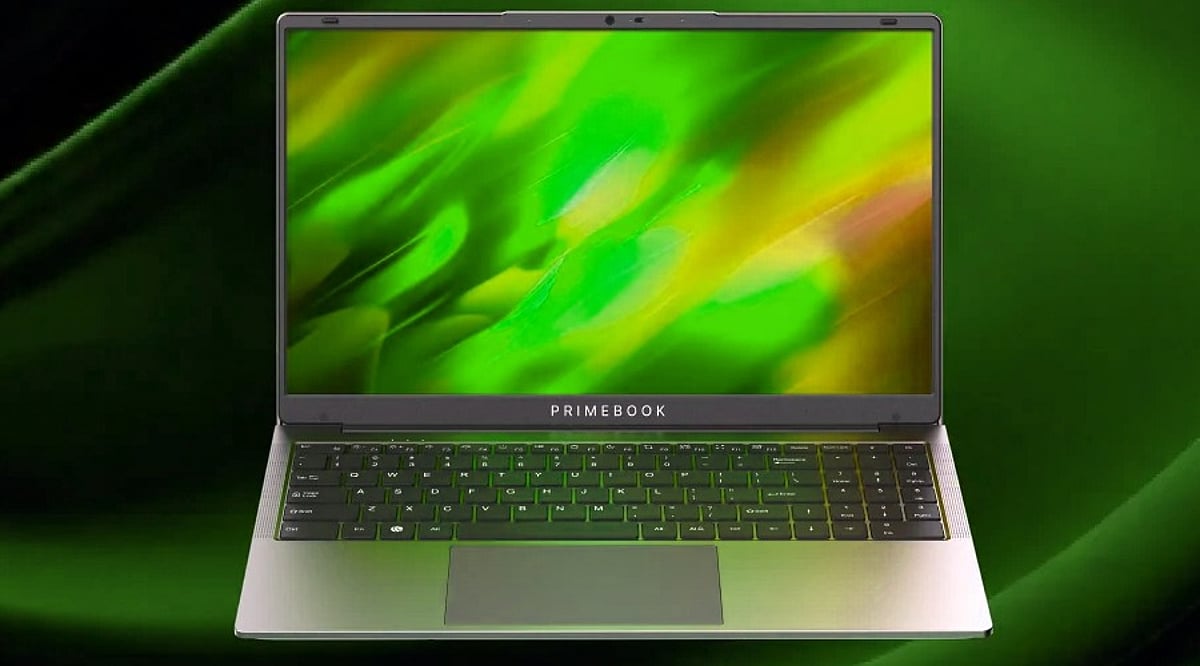
    Primebook 3 Max Debuts in India at ₹35,990 With 12-Hour Battery and Linux App Compatibility

    Primebook has officially introduced the Primebook 3 Max in India at a starting price of ₹35,990. The new laptop marks the beginning of the company’s third-generation lineup, bringing a refreshed mix of hardware and software for budget-minded shoppers.

    Aimed at students, developers, early-career professionals, and general users, the Primebook 3 Max is scheduled to go on sale starting October 1 through Amazon, Flipkart, and the company’s own website. It will also be available at select retail partners including Bajaj Electronics, Sangeetha Mobiles, and Pai International.

    Performance and display

    Under the hood, the Primebook 3 Max runs on a MediaTek Genio 720 processor paired with 8GB of LPDDR5 RAM and 128GB of UFS storage. Primebook says the new model delivers up to 40% higher performance than the previous generation.

    The laptop comes with a 15.6-inch Full HD IPS anti-glare display offering up to 250 nits of brightness. A 60.3Wh battery provides a claimed runtime of up to 12 hours, while a 36W USB-C charger handles recharging. For connectivity, it offers Wi-Fi 6, Bluetooth 5.3, USB-C, USB-A, a headphone jack, and display output support. The device also includes a 5-megapixel webcam, stereo speakers, dual microphones, and a backlit keyboard.

    PrimeOS and Linux app support

    The standout feature of the Primebook 3 Max is PrimeOS, which extends the laptop’s capabilities beyond typical Android apps. PrimeOffice, which includes PrimeDocs, PrimeSheets, and PrimePresent, offers offline productivity with over 90% of commonly used office functions. The company plans to bring PrimeOffice to Primebook 2 and Primebook 3 Pro users as well.

    Linux support is another major addition. Users can access selected Linux applications and a terminal, with pre-supported software including VS Code, GIMP, LibreOffice, Firefox, Arduino IDE, DBeaver CE, and Postman. This gives developers and students more flexibility without leaving the Android ecosystem.

    AI and security features

    Primebook has also integrated PrimeAGNT, an operator AI layer, into the system. The MediaTek Genio 720 platform includes an NPU to support these AI interactions. On top of that, PrimeSecurity and Task Manager help monitor background activity, system resources, and potentially harmful applications.

    Storage and availability

    For those who need more space, the Primebook 3 Max supports microSD expansion up to 1TB. The laptop will also be promoted during the upcoming Amazon Great Indian Festival and Flipkart Big Billion Days sales.

    The Primebook 3 Max enters a crowded budget laptop market with software flexibility as its core selling point. Its blend of Android apps, Linux tools, cloud PC access, and AI features could appeal to users looking for a multi-purpose computing device. However, those who rely on specialized Windows software should verify compatibility before making a purchase.

  • NSE IPO Day 1: Retail and HNI Demand Outpaces Institutional Interest

    NSE IPO Day 1: Retail and HNI Demand Outpaces Institutional Interest

    The National Stock Exchange (NSE) of India launched its much-anticipated initial public offering (IPO) on Day 1, with overall subscription reaching 43%. The Rs. 22,562 crore offer saw bids for nearly 3.8 crore shares against the 8.9 crore shares on offer. However, the response from institutional investors was notably cautious, with only 19% of their allotted portion subscribed.

    In contrast, retail investors subscribed 44% of their quota, while non-institutional investors (HNIs) showed stronger demand at 72%. The employee portion was almost fully subscribed, underscoring broad-based interest from smaller investors.

    Key Details of the NSE IPO

    The IPO is structured as an offer for sale, meaning the exchange will not receive any fresh capital from the proceeds. The price band is set at Rs. 1,700 to Rs. 1,785 per share, placing NSE’s valuation at around Rs. 4.42 lakh crore at the upper end. This is lower than earlier expectations of approximately Rs. 5 lakh crore, partly due to concerns over derivatives trading and future earnings.

    NSE remains a cornerstone of India’s financial markets, but its FY26 revenue dipped 3.1% and profit fell 15.5%, which may have contributed to the tempered institutional appetite.

    Why Institutional Investors Are Holding Back

    The low institutional participation on Day 1 does not necessarily signal rejection. In large IPOs, institutional bids often build up closer to the closing date. Domestic institutions such as SBI, SBI Caps, SHCIL, Bank of Baroda, and several private life insurers hold NSE stakes valued at roughly Rs. 72,000 crore, indicating long-term confidence.

    Investors are weighing NSE’s dominant market position against its recent earnings performance. The next few days will be crucial to see if institutional investors increase their participation, which could significantly boost overall subscription numbers.

    As the IPO enters its critical phase, market watchers will closely monitor the demand from qualified institutional buyers (QIBs) in the coming days.

  • Brookfield Commits $600M to ACME’s Green Ammonia and Methanol Projects in India and Oman

    Brookfield Commits $600M to ACME’s Green Ammonia and Methanol Projects in India and Oman

    Brookfield, a global investment firm, is investing up to USD 600 million in ACME Cleantech Ventures through its Brookfield Global Transition Fund. The capital will support the development and construction of green molecule projects across India and West Asia, including green ammonia and green methanol facilities.

    Four Projects Receive Funding

    The investment will back four projects in ACME’s pipeline: the second phase of the company’s green ammonia project in Oman, two green ammonia facilities in Odisha, and a green methanol project in the Indian state. ACME Cleantech Ventures, a UK-based private entity within the ACME Group, focuses on green molecule operations and is developing these projects for both domestic and international markets.

    The transaction is structured as an equity investment. ACME Group Chairman Manoj Upadhyay told the Financial Express that the valuation and stake involved are expected to be finalized by the end of 2026. The first phase of the Oman green ammonia project is already fully funded.

    Offtake Agreements Already in Place

    ACME has secured long-term offtake agreements with several international and Indian companies. Its counterparties include Norway’s Yara International, Japan’s IHI Corporation, Mitsubishi Gas Chemicals, the Solar Energy Corporation of India, and fertilizer companies such as IFFCO, Paradeep Phosphates, Coromandel International, and Indorama India.

    Brookfield Expands Its Energy-Transition Footprint

    Brookfield already has a substantial presence in India’s renewable energy sector, with around 50GW of wind and solar assets across operating projects and its development pipeline. This latest investment broadens that exposure beyond conventional renewable power to green molecules—fuels and industrial feedstocks produced using renewable energy—which can help industries cut emissions while addressing longer-term energy security needs.

    Nawal Saini, Brookfield Managing Partner and Head of Energy for South Asia and the Middle East, said the investment combines the firm’s institutional capital and global scale with ACME’s project development and operating capabilities.

    Why Green Ammonia and Methanol Matter

    Green ammonia can be used in sectors such as fertilizers and shipping, while green methanol has applications across fuels and industrial processes. ACME aims to build a global green molecules platform serving customers across Asia, Europe, and other international markets. The company’s existing offtake agreements are expected to provide a commercial foundation as the projects move through development and construction.

  • Oil Prices Slip 1% for Third Day as Saudi Pipeline Repairs Ease Supply Fears

    Oil Prices Slip 1% for Third Day as Saudi Pipeline Repairs Ease Supply Fears

    Brent and WTI Hold Above $100

    Global oil prices slipped about 1% on Friday, September 18, marking a third consecutive session of declines. Brent crude futures fell $1.01 to $103.77 a barrel, while West Texas Intermediate dropped $1.03 to $100.88. Both benchmarks stayed above the $100 level after closing roughly 1% lower on Thursday.

    Saudi Pipeline Disruption and Market Response

    Earlier in the week, prices reached four-month highs after crude loadings at Saudi Arabia’s Yanbu Red Sea export hub were suspended. An attack on Saudi Arabia’s East-West pipeline damaged three pumping stations, according to satellite imagery and industry sources, and prompted Riyadh to cancel some deliveries to Europe.

    Traders warned that a prolonged shutdown could remove as much as 4% of global supply. However, Saudi Arabia is now working to restore about half of the pipeline’s capacity within days and is offering additional crude cargoes to Asian refiners through ship-to-ship transfers off Oman’s Sohar port. US Energy Secretary Chris Wright said crude should begin flowing through the pipeline within days, helping to ease immediate supply fears.

    Geopolitical Risks Remain

    The market largely shrugged off fresh cross-border strikes between Saudi Arabia and Yemen’s Iran-backed Houthis on Thursday. At the same time, Iran’s Revolutionary Guards Navy reported that a Togo-flagged oil tanker was struck while attempting an ‘illegal passage’ through the Strait of Hormuz, adding to uncertainty in an already fragile market.

    Analysts Cautious on Outlook

    JPMorgan said it had no clear baseline view for oil markets for the first time since the start of the US-Israeli war on Iran. Peace talks between the US and Iran have not resumed since an interim agreement collapsed in June. The conflict is expected to be discussed at the UN General Assembly next week, with an Iranian delegation scheduled to attend.

    What to Watch

    Market attention now centers on whether Saudi Arabia can restore disrupted pipeline flows and reroute enough crude to limit the impact of the attack. Any delay in repairs or new escalation in the Middle East could quickly reverse the recent downward move in prices.

  • NSE IPO Attracts 43% Subscription on Opening Day for Rs 22,569 Crore Offering

    NSE IPO Attracts 43% Subscription on Opening Day for Rs 22,569 Crore Offering

    India’s National Stock Exchange (NSE) launched its much-anticipated initial public offering (IPO) on Thursday, and the Rs 22,569 crore issue saw a 43% subscription rate on the first day. Investors bid for 3.83 crore shares against the 8.86 crore shares on offer, making it the country’s second-largest public offering.

    The IPO faced cautious demand as eleven other public offerings competed for investor capital in the same week. Qualified institutional buyers subscribed 19%, while retail investors reached 44% and non-institutional investors hit 72%.

    The NSE IPO has a price band of Rs 1,700 to Rs 1,785 per share, implying a valuation near USD 46 billion. Regulatory changes and weaker options activity have raised questions about future derivatives-led earnings growth. NSE generates about 80% of its revenue from trading, with options contributing around 60% of trading revenue. Options volumes have fallen 27% from their 2024 peak, increasing investor focus on future revenue growth.

    The crowded IPO calendar added another hurdle for the massive NSE public offering this week. Five mainboard and six SME issues together targeted around Rs 24,500 crore from investors. The NSE issue represented more than 90% of that combined value, concentrating demand around one enormous offering. Market participants therefore had several opportunities to distribute capital instead of committing heavily on opening day.

    The offer follows an offer-for-sale structure, limiting the direct benefit for NSE from the public issue. Existing shareholders are selling shares, while the exchange receives no fresh funds for expansion or new investments. NSE reduced the offering from an earlier plan, bringing the issue below its initial estimate of around Rs 30,000 crore.

    Institutional caution became clearer through first-day figures, despite strong anchor investor participation before launch. NSE raised Rs 6,746 crore from anchors, including LIC, Goldman Sachs, Fidelity, and major sovereign wealth funds. Reuters quoted Fident Asset Management founder Aishvarya Dadheech on institutional participation near the closing stages: “Subscriptions will pick up as institutional buyers start coming in.”

    The NSE IPO remains open through September 21, with listing planned for September 24. The muted opening reflects timing, valuation concerns, and uncertainty around derivatives growth rather than a single factor.

  • India-Made iPhone 18 Pro and Pro Max Enter Global Launch Supply as Foxconn and Tata Expand Production

    India-Made iPhone 18 Pro and Pro Max Enter Global Launch Supply as Foxconn and Tata Expand Production

    Apple is expanding its India manufacturing push ahead of the global launch of the iPhone 18 Pro and iPhone 18 Pro Max, with locally assembled units already moving to overseas markets. Multiple chartered flights have reportedly departed from Chennai carrying premium iPhone 18 models as Apple works to secure enough supply for customers when sales begin on September 18.

    The move signals a new phase in Apple’s India production strategy. For the first time, Pro and Pro Max models assembled in India are expected to be available in international markets from day one of global sales. The standard iPhone 17 reached overseas buyers on launch day last year, but Apple’s Pro models previously entered Indian production later in the product cycle.

    Foxconn and Tata Electronics Scale Up Output

    Two Indian plants are currently producing the iPhone 18 Pro and Pro Max: one run by Foxconn and one run by Tata Electronics. Reports indicate that both factories have been operating around the clock as Apple prepares for launch demand.

    Production capacity may grow further as well. Industry reports suggest the number of assembly lines could eventually approach 12, depending on international demand. Apple has not disclosed production volumes or confirmed how many units are allocated to individual countries.

    An estimated 80 to 90 percent of India’s Pro-series output is expected to be exported, with the United States identified as a major destination. That figure is a reported production estimate rather than an Apple-confirmed shipment target.

    Chartered Flights Move iPhones From Chennai

    Speed is central to Apple’s launch logistics. Several chartered aircraft have reportedly carried India-made iPhone 18 Pro and Pro Max units from Chennai to international markets ahead of the September 18 sales date.

    The US is expected to account for a significant share of those shipments. India has become an increasingly important source of iPhone exports to the US as Apple broadens manufacturing beyond China. Analysts cited by India Today estimate that about 26 percent of all iPhones shipped globally in 2026 could be made in India.

    India’s Growing Role in Apple’s Supply Chain

    Apple’s expanding Pro-series production in India adds to an ecosystem that already includes assembly, testing, enclosures, selected mechanical components, battery packs, chargers, cables, packaging, and other subassemblies. However, several high-value components, including displays, camera modules, memory, and advanced semiconductors, continue to be sourced from outside India.

    The latest shipments also highlight a broader shift: India is moving from serving primarily its domestic market to supporting Apple’s international supply chain. With Pro and Pro Max models now entering global distribution from launch day, Indian factories are becoming part of the launch-time production network rather than a later-stage manufacturing base.

  • Tata Group Stocks Slide as SP Group Moves to Monetize Rs 25,000 Crore Stake

    Tata Group Stocks Slide as SP Group Moves to Monetize Rs 25,000 Crore Stake

    Tata Group stocks witnessed a sharp decline on Friday as the SP Group announced plans to monetize its stake in Tata Sons, targeting at least Rs 25,000 crore through two transactions over an 18-month period. The proposal reignited concerns about ownership structure and governance within the conglomerate, triggering a selloff across key listed entities.

    Market Reaction

    Tata Chemicals led the decline, dropping as much as 7.8% during early trading. Tata Investment Corporation slipped nearly 3.9%, while TCS fell 3%. Tata Motors Passenger Vehicles declined 2.6%, and Tata Power was down 1.4%. Meanwhile, Tata Steel remained almost flat, and Tata Capital gained around 1.1% in early market hours.

    SP Group’s Proposal

    The SP Group, led by Cyrus and Ratan Tata’s estranged factions, seeks liquidity from its Tata Sons holdings without immediately forcing a public listing. The proposed transaction involves shares held through Sterling Investments Corporation and Cyrus Investments. Under the plan, Tata Sons could pursue selective capital reduction through the National Company Law Tribunal (NCLT).

    Governance Disputes Intensify

    The proposal adds to ongoing tensions over Tata Sons’ leadership and future listing ambitions. The board recently approved N Chandrasekaran’s five-year reappointment as executive chairman and moved toward exploring a public listing for the holding company. However, Tata Trusts, the majority shareholder, opposed both developments, stating, “The Trusts’ position remains unchanged, as a considered judgement of a majority shareholder.” The Trusts urged the board to consider alternatives beyond listing.

    Adding to the regulatory pressure, the Reserve Bank of India (RBI) rejected Tata Sons’ request to surrender its Core Investment Company registration, keeping it within the Upper Layer NBFC framework.

    Impact on Listed Entities

    The ownership structure links several listed Tata companies to Tata Sons’ fortunes. Tata Chemicals, Tata Motors, and Tata Investment hold stakes in Tata Sons, making their valuations indirectly sensitive to these developments. According to ICICI Securities, Tata Chemicals holds around 2.5% in Tata Sons.

    Friday’s selloff reflects uncertainty surrounding Tata Sons rather than operational weakness in the individual businesses. The previous day’s rally, driven by the leadership decision and renewed listing expectations, has now reversed as investors reassess the implications of the SP Group’s proposal.

  • iPhone 18 Pro Hits Quick Commerce: Blinkit, Zepto, and Instamart Now Deliver Apple’s Latest Flagship in Minutes

    iPhone 18 Pro Hits Quick Commerce: Blinkit, Zepto, and Instamart Now Deliver Apple’s Latest Flagship in Minutes

    Apple’s iPhone 18 Pro and iPhone 18 Pro Max are now available on quick-commerce platforms in India, giving buyers a faster alternative to queuing at physical stores. Zepto, Blinkit, and Swiggy Instamart have started offering the premium handsets in select cities, marking a significant shift for the quick-commerce sector as it moves from daily essentials to high-end electronics.

    The iPhone 18 Pro starts at ₹1,64,900 for the 256GB model, while the Pro Max begins at ₹1,79,900 for the same storage. At the top end, the 2TB versions cost ₹3,14,900 and ₹3,29,900 respectively. The phones went on sale in India on September 18.

    Zepto is delivering the new iPhones in Delhi NCR, Mumbai, Bengaluru, and Chennai. Blinkit offers coverage across Delhi NCR, Mumbai, Bengaluru, Hyderabad, Chennai, Pune, Kolkata, Ahmedabad, Jaipur, and Lucknow. Swiggy Instamart also stocks the Pro models, with availability and delivery times varying by location. The platforms are offering storage variants from 256GB to 2TB, subject to stock.

    The partnership underscores how quick-commerce apps—originally built for groceries and household items—are increasingly catering to high-value purchases. Instead of waiting in line at an Apple Store, customers in supported areas can now order the latest iPhone from their phones and receive it within minutes.

    Quick commerce is unlikely to make traditional retail obsolete overnight. Apple Stores and authorized retailers still provide product demos, trade-in offers, and customer support. However, the iPhone 18 Pro launch highlights a new sales channel for premium brands during peak demand periods. Retailers leveraging quick-commerce platforms can reach customers who prioritize speed over the in-store experience.

    This move also reflects a broader trend: as consumers grow accustomed to instant gratification, even expensive gadgets are entering the quick-commerce ecosystem. The iPhone 18 Pro’s availability on Blinkit, Zepto, and Instamart could pave the way for more luxury electronics to follow suit.

  • Meta’s Muse AI Agent Expands to Mac: Hands-Free Task Automation Goes Desktop

    Meta’s Muse AI Agent Expands to Mac: Hands-Free Task Automation Goes Desktop

    Meta has expanded its personal AI agent, Muse, to the Mac platform with a dedicated desktop application. This move significantly broadens Muse’s role in users’ daily workflows, allowing it to interact directly with files, messages, and applications stored on the computer, not just through a phone or web browser.

    Muse originally launched on September 8th in the United States across iOS, Android, the web, and WhatsApp. The Mac app is the latest step in Meta’s push into the agentic AI space, emphasizing AI that performs multi-step tasks rather than just responding to queries.

    More Than a Chatbot

    Muse is designed to handle real-world tasks. On the Mac, users can ask it to organize files, retrieve information from Messages, Calendar, or Notes, and fill out forms using saved documents. The agent works across a user’s entire digital routine, reducing the manual effort of moving data between applications.

    A standout feature is Muse’s ability to continue working even after the app is closed. It resumes when it needs user input or when a task is complete. This background operation distinguishes it from most current AI tools, which typically stop when the conversation ends.

    Built With Privacy in Mind

    Meta has granted users clear control over Muse’s access. Computer access is opt-in, and Full Disk Access is optional. Users can adjust permissions at any time through Mac settings.

    On the technical side, Muse operates within a dedicated virtual space called Muse Secure VM. This private environment gives the agent its own browser, storage, and computing resources. Meta states this setup keeps the agent away from sensitive login credentials and manages actions involving connected services.

    Also Read: Meta Launches Muse AI Agent, Can Send Emails, Book Travel: How It Works

    A Bigger Play for Agentic AI

    The Mac launch is part of Meta’s broader strategy toward AI that performs actions rather than just generating text. Muse is intended to execute multi-step tasks such as sending emails or booking travel with minimal user intervention.

    Currently, Muse is available only in the US. Meta has announced plans to expand the service to additional regions in the coming months.

    Join our WhatsApp Channel to get the latest news, exclusives and videos on WhatsApp.