Blog

  • YouTube Partner Program 2026–2027: Eligibility, New Thresholds, and Monetization Changes

    YouTube Partner Program 2026–2027: Eligibility, New Thresholds, and Monetization Changes

    The YouTube Partner Program (YPP) offers creators two main access levels, each with distinct subscriber, watch-hour, and Shorts-view requirements. YouTube has also announced a major update effective February 1, 2027, raising the entry bar for ad and YouTube Premium revenue for new applicants.

    Current YPP Levels

    500-Subscriber Expanded Level

    Eligible creators can access selected monetization tools with at least 500 subscribers, three valid public uploads within the last 90 days, and either 3,000 qualified public watch hours (past 12 months) or 3 million qualified public Shorts views (past 90 days). This level provides Channel Memberships, Super Chat, Super Stickers, Super Thanks, and YouTube Shopping, but not full ad revenue.

    Full Monetization Threshold

    Full access to watch-page ads, Shorts feed ads, and YouTube Premium revenue requires 1,000 subscribers plus either 4,000 qualified public watch hours (past 365 days) or 10 million qualified public Shorts views (past 90 days). Note that watch hours from Shorts do not count toward the 4,000-hour requirement; channels relying on Shorts must meet the separate 10 million view target.

    Other Eligibility Conditions

    • Compliance with YouTube monetization policies and Community Guidelines
    • No active Community Guidelines strikes
    • Two-step verification on the Google Account
    • Access to advanced YouTube features
    • An active AdSense for YouTube account (or readiness to create one)

    YouTube reviews the channel’s main theme, most-viewed videos, newest videos, metadata, and About section before approving monetization.

    Original Content Policy Update

    On July 15, 2025, YouTube renamed its “repetitious content” policy to “inauthentic content,” clarifying the focus on mass-produced, low-value material. Channels using interchangeable templates or reused content without significant original commentary, modification, or educational/entertainment value may face monetization issues. AI-assisted content is allowed if it provides original value and follows monetization rules.

    Major Changes Starting February 1, 2027

    New applicants for full ad and Premium revenue will need 8,000 qualified watch hours (past 365 days) or 20 million qualified Shorts views (past 90 days), along with 1,000 subscribers. The 500-subscriber threshold for Fan Funding and Shopping products remains unchanged. Existing YPP creators are not affected by this specific threshold change.

    Shorts Revenue Rule

    From February 1, 2027, Shorts ad and subscription revenue sharing requires 10 million qualified Shorts views across the previous 90 days. Channels below that level keep long-form revenue and can resume Shorts revenue upon crossing the threshold again. Creators must accept updated YPP terms in YouTube Studio by January 31, 2027.

    What This Means for New Channels

    The current full YPP route (1,000 subscribers + 4,000 watch hours or 10 million Shorts views) remains in effect until February 1, 2027. After that date, new applicants face the higher thresholds. The application date becomes critical for channels near the current thresholds. Original content, policy compliance, valid traffic, and a successful channel review remain essential for sustained monetization.

    Frequently Asked Questions

    1. Current subscriber requirement for full YPP? 1,000 subscribers plus either 4,000 watch hours or 10 million Shorts views.
    2. Can you join YPP with 500 subscribers? Yes, via the expanded YPP route with additional requirements.
    3. Will YPP requirements change in 2027? Yes: new applicants need 8,000 watch hours or 20 million Shorts views plus 1,000 subscribers for full monetization.
    4. Does reaching numbers guarantee approval? No, YouTube also reviews policy compliance, original content, and other conditions.
    5. Can AI content qualify? Yes, if it provides original value and follows monetization rules. Mass-produced or repetitive AI content may be restricted.

  • 7 Essential Metrics for Evaluating Bitcoin Treasury Companies

    7 Essential Metrics for Evaluating Bitcoin Treasury Companies

    Bitcoin treasury companies have emerged as a distinct segment of public markets, using equity, debt, and preferred securities to accumulate Bitcoin. However, evaluating these companies requires more than just comparing their Bitcoin holdings. Recent market conditions have shown that several major treasury companies trade below the gross value of their Bitcoin holdings, while differences in debt, preferred shares, and dilution significantly affect what remains attributable to common shareholders.

    1. Total Bitcoin Holdings

    The most straightforward metric is the total amount of BTC owned. Larger holdings provide greater Bitcoin exposure, but investors should also examine how those coins were financed. A company borrowing aggressively to purchase Bitcoin carries different risks than one using operating cash flow or equity issuance.

    2. Bitcoin per Diluted Share

    Absolute holdings can increase while shareholders become diluted. Bitcoin per diluted share measures whether BTC accumulation is actually increasing each shareholder’s economic exposure. If share issuance grows faster than Bitcoin holdings, total BTC may rise without improving per-share exposure.

    3. Market Net Asset Value (mNAV)

    Market net asset value (mNAV) compares a company’s valuation with the value of its Bitcoin holdings and other relevant assets. Premiums can make issuing equity attractive, as companies may raise capital above underlying asset value and purchase additional Bitcoin. Discounts can weaken that financing mechanism.

    4. Debt and Preferred Obligations

    Investors should examine convertible debt, secured borrowing, preferred securities, and maturity schedules. For example, Strategy reportedly reduced total debt to approximately $6.7 billion after retiring $1.5 billion of convertible debt during 2026. Debt becomes especially important during prolonged Bitcoin downturns.

    5. Bitcoin Acquisition Cost

    Average purchase price shows how far Bitcoin can decline before the market value of treasury holdings falls below the aggregate acquisition cost. However, accounting losses alone do not necessarily force selling. Liquidity and debt structures matter more.

    6. Funding Capacity

    Treasury companies frequently rely on capital markets to continue purchasing Bitcoin. Investors should track available equity programs, credit facilities, and preferred issuance capacity. Metaplanet reportedly used 83% of a $500 million credit facility while expanding its treasury to approximately 43,000 BTC.

    7. Liquidity and Cash Obligations

    Bitcoin holdings should be compared with interest payments, dividends, operating expenses, and upcoming maturities. A company can own substantial Bitcoin yet face financing pressure if cash obligations exceed available liquidity.

    Bitcoin treasury companies should not be valued solely by ranking BTC holdings. Investors need to examine per-share exposure, mNAV, leverage, acquisition costs, and financing sustainability together, particularly when market premiums disappear.

    Final Thoughts

    Bitcoin treasury companies require analysis beyond headline BTC holdings. Per-share exposure, leverage, mNAV, funding capacity, and liquidity together provide a clearer picture of whether a company’s Bitcoin strategy is financially sustainable.

    FAQs

    1. What is a Bitcoin treasury company?

    A Bitcoin treasury company is a business that holds Bitcoin as a significant part of its corporate treasury strategy. Some companies finance additional BTC purchases through equity issuance, debt, preferred securities, or operating cash flow.

    2. What is mNAV for a Bitcoin treasury company?

    Market net asset value, or mNAV, compares a company’s market valuation with the value of its Bitcoin holdings and other relevant assets and obligations. It can help show whether shares trade at a premium or discount to underlying assets.

    3. Why is Bitcoin per diluted share important?

    Bitcoin per diluted share measures BTC exposure after accounting for potential share dilution. A company can increase its total Bitcoin holdings while reducing or failing to improve each shareholder’s economic exposure if its share count rises faster.

    4. Why should investors examine a Bitcoin treasury company’s debt?

    Debt creates interest, repayment, and refinancing obligations regardless of Bitcoin’s market performance. High leverage can increase financial pressure during prolonged BTC downturns, particularly when a company has limited cash or near-term maturities.

    5. What metrics should be considered when comparing Bitcoin treasury companies?

    Key metrics include total BTC holdings, Bitcoin per diluted share, mNAV, debt and preferred obligations, average Bitcoin acquisition cost, funding capacity, and liquidity. Evaluating them together provides more context than BTC holdings alone.

    Disclaimer: This article is for informational purposes only and does not constitute investment advice. Cryptocurrency investments carry risk. Always conduct your own research before making investment decisions.

  • Data Science and AI Learning Path: 5 Free Microsoft GitHub Courses to Explore

    Data Science and AI Learning Path: 5 Free Microsoft GitHub Courses to Explore

    Microsoft has published a series of free, structured GitHub courses that guide learners from the fundamentals of data science through machine learning, artificial intelligence, generative AI, and agentic systems. Each course includes lessons, quizzes, assignments, and hands-on exercises, making it possible to build practical AI skills without enrolling in an expensive training program.

    1. Data Science for Beginners

    Built for learners with no prior experience, this 10-week curriculum features 20 lessons covering statistics, probability, data ethics, data preparation, visualization, and analysis. Quizzes, assignments, and real-world datasets give learners hands-on exposure to the full data science workflow.

    2. Machine Learning for Beginners

    This 12-week, 26-lesson course builds on foundational data knowledge. It covers regression, classification, clustering, natural language processing, time-series forecasting, and reinforcement learning. Learners work with Python and Scikit-learn to train and evaluate traditional machine learning models.

    3. Artificial Intelligence for Beginners

    Offering 24 lessons across 12 weeks, this course introduces broader AI concepts such as neural networks, computer vision, natural language processing, deep learning, symbolic AI, and reinforcement learning. Learners also explore tools and techniques including PyTorch, TensorFlow, transformers, embeddings, transfer learning, and generative adversarial networks.

    4. Generative AI for Beginners

    This 21-lesson course focuses on modern AI application development. Topics include prompt engineering, model selection, responsible AI, function calling, retrieval-augmented generation (RAG), vector databases, AI agents, fine-tuning, security, small language models, and open-source models. Practical examples use both Python and TypeScript.

    5. AI Agents for Beginners

    Designed for developers interested in agentic AI, this 18-lesson curriculum covers tool use, agentic RAG, planning, memory, context engineering, multi-agent systems, MCP, computer-use agents, security, and deployment. Hands-on examples use technologies such as Microsoft Agent Framework and Microsoft Foundry Agent Service.

    A Progression From Fundamentals to Agents

    Together, these courses form a clear learning path. Learners can start with data science fundamentals, move through machine learning and AI concepts, then explore generative AI and agentic systems. This step-by-step progression helps avoid the common mistake of jumping directly into advanced LLM applications without understanding data, models, training, evaluation, and AI fundamentals.

    Free Learning Through GitHub

    All five courses provide structured materials without the cost of traditional training programs. Depending on the curriculum, learners can access lessons, quizzes, assignments, projects, and code examples. Some generative AI exercises may require access to an AI API or Microsoft Foundry, while other models can run locally on your own machine.

  • AI-First Service Delivery: How Enterprises Are Building Smarter Customer and Employee Experiences

    AI-First Service Delivery: How Enterprises Are Building Smarter Customer and Employee Experiences

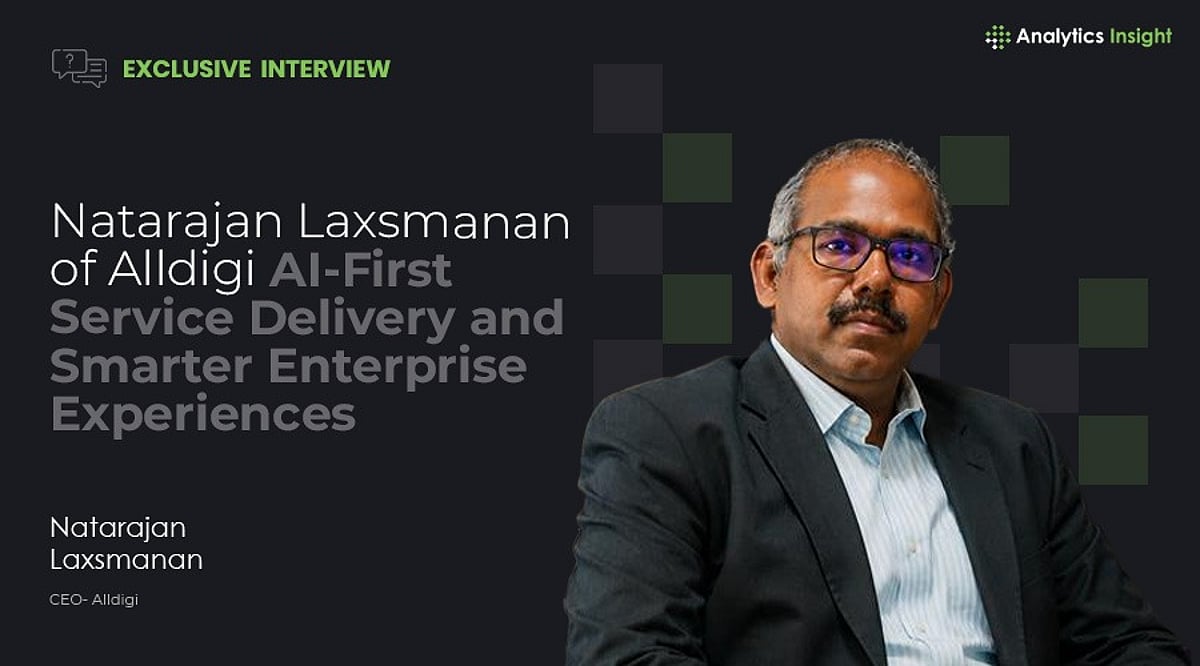
    Artificial intelligence is no longer just a support tool—it is becoming the foundation of enterprise service delivery. In a recent interview, Natarajan Laxsmanan, CEO of Alldigi, shared how AI is transforming customer and employee experiences through predictive engagement, intelligent automation, integrated workflows, and stronger governance. Here are the key insights from that conversation.

    From Reactive Support to Predictive Engagement

    AI is fundamentally changing customer experience by helping businesses move from issue resolution to issue prevention. Traditional support models are reactive: companies respond only after a customer raises a concern. AI enables organizations to anticipate needs by analyzing behavioral patterns, historical interactions, transaction data, and real-time signals.

    This intelligence allows businesses to proactively address issues, offer personalized recommendations, and create highly contextual interactions across channels. AI-powered virtual assistants, intelligent routing, sentiment analysis, and predictive service models are helping enterprises deliver faster resolutions while improving overall customer satisfaction. The result is a shift from transactional touchpoints to continuous, personalized engagement that strengthens loyalty and lifetime value.

    One practical way to operationalize this balance is to use AI-powered service platforms that bring AI agents and human teams together across channels. Connected knowledge, ticketing, messaging, voice, and reporting tools can help organizations automate routine, high-volume requests while keeping human expertise in the loop—supporting faster service without losing empathy or accountability.

    Employee Experience as a Strategic Growth Driver

    Employee experience is no longer just an HR priority; it is a business performance imperative. Organizations increasingly recognize the direct connection between employee satisfaction, productivity, innovation, retention, customer outcomes, and overall business growth.

    Modern employees expect workplace experiences that are as intuitive and responsive as the digital experiences they encounter as consumers. This requires cross-functional collaboration across HR, operations, technology, finance, and leadership teams. AI is helping organizations create more personalized employee journeys through intelligent support, workforce analytics, learning recommendations, and automated service delivery.

    Enterprises that treat employee experience as a strategic lever rather than an administrative function are better positioned to build an engaged workforce, improve operational agility, and drive sustainable growth in an increasingly competitive environment.

    Scaling AI Across the Enterprise

    The biggest challenge is not implementing AI, but identifying where it can create enterprise-wide value. Many organizations deploy AI in isolated applications, leading to fragmented insights and disconnected workflows.

    The real opportunity lies in connecting payroll, compliance, workforce management, and customer experience systems into an integrated operating ecosystem. When AI can access and analyze data across functions, it can uncover patterns, automate decisions, improve compliance oversight, optimize workforce planning, and deliver more personalized experiences for both employees and customers.

    However, success depends on strong data foundations, system interoperability, governance frameworks, security controls, and clearly defined business objectives. Organizations that get these fundamentals right can leverage AI as a strategic capability that delivers measurable improvements in efficiency, compliance, agility, and stakeholder experience.

    Balancing Automation with Human Interaction

    The goal of AI should not be to replace human interaction, but to elevate it. Automation is most effective when applied to repetitive, high-volume, and rules-based tasks, allowing employees to focus on activities that require empathy, judgment, creativity, and relationship-building.

    Whether serving customers or supporting employees, there will always be moments where human intervention is essential. Businesses must therefore design operating models where AI handles routine processes while humans manage complex and emotionally nuanced interactions.

    The organizations that achieve the best outcomes are those that view AI and human expertise as complementary strengths. This approach enables greater efficiency while preserving the trust, personalization, and authenticity that remain critical to exceptional experiences.

    Building an AI-First Operating Model

    Adopting an AI-first approach requires organizations to rethink more than technology. It demands changes across operating models, governance structures, and workforce strategies.

    First, businesses need to redesign workflows around intelligence, automation, and predictive decision-making rather than simply embedding AI into existing processes. Second, robust governance frameworks must be established to ensure transparency, accountability, security, privacy, compliance, and ethical AI usage.

    Equally important is workforce transformation. Employees need the skills and confidence to work alongside AI systems, interpret insights, and focus on higher-value responsibilities. Organizations that invest in continuous learning, digital capability building, and change management are more likely to realize the full benefits of AI.

    Ultimately, successful AI-first enterprises combine technology, governance, and people transformation to create scalable, trusted, and outcome-driven service delivery models that continuously evolve with business needs.

  • NVIDIA Stock at $219: Key Drivers Behind Its $5.3 Trillion Market Cap and AI Spending Outlook

    NVIDIA Stock at $219: Key Drivers Behind Its $5.3 Trillion Market Cap and AI Spending Outlook

    NVIDIA (NVDA) closed near USD 219.34 on September 17, 2026, giving the company a market capitalization of roughly USD 5.30 trillion. The chipmaker became the first in history to cross the USD 5 trillion mark in October 2025, and it has stayed above that level ever since.

    Record Revenue and Data Center Growth

    NVIDIA’s fiscal Q2 2027 results showed record revenue of USD 96.2 billion, up 106% year-over-year. Data Center revenue reached USD 89.0 billion, up 117%, driven primarily by Blackwell systems and early production shipments of the next-generation Vera Rubin platform. GAAP gross margin came in at 75.0%, with diluted EPS of USD 2.46. The company guided Q3 revenue to USD 108.0 billion, plus or minus 2%, and noted that figure assumes no Data Center compute revenue from China.

    Trillion-Dollar Demand Outlook

    CEO Jensen Huang stated at NVIDIA’s GTC event that the company expects at least USD 1 trillion in demand and purchase orders for its Blackwell and Vera Rubin chips through 2027. This forward-looking outlook is not a signed order book, and analysts will watch actual shipments against that projection. NVIDIA’s disclosed purchase and supply commitments had climbed to about USD 279 billion by the end of fiscal Q2, reflecting the company’s efforts to lock in capacity.

    AI Spending Durability Under Scrutiny

    While demand for AI computing is evident, the key question is whether hyperscalers, AI labs, and enterprises can sustain the pace of capital spending. This uncertainty came into focus on September 14, when the Philadelphia Semiconductor index fell 5.9% and NVIDIA shares dropped about 3.4%. The selloff followed warnings from AI industry executives about the pace and economics of AI infrastructure spending, marking one of several sector-wide declines this year tied to debt-funded data center buildouts. NVIDIA’s future growth depends heavily on that spending pace holding up.

    China, Competition, and Valuation

    NVIDIA’s current guidance excludes Data Center compute revenue from China due to ongoing US export restrictions. Any policy shift could affect revenue, product mix, and margins. The company’s competitive edge rests on its CUDA software ecosystem, combined hardware and networking lineup, and deep ties with major cloud and AI customers. Custom chips from cloud providers, including Google’s TPU line, and AMD’s accelerators pose longer-term threats, though neither has slowed NVIDIA’s momentum so far. The stock’s low dividend yield reflects a focus on growth over shareholder payouts.

    Final Thought

    NVIDIA’s stock price reflects a company posting real, verified growth while carrying a demand outlook that assumes years of heavy AI infrastructure spending. The September selloff was a reminder that markets are pricing confidence in that spending pace, not just the chips themselves. The next earnings report, scheduled for November 25, will provide fresh evidence on whether Data Center growth holds its current speed and whether customer AI budgets remain strong.

  • AI Agents Move Beyond Chatbots: 4 Real-World Jobs Where They Act Autonomously

    AI Agents Move Beyond Chatbots: 4 Real-World Jobs Where They Act Autonomously

    AI agents are evolving from simple question-answering tools into autonomous operators that can plan tasks, use software, verify results, and execute multi-step workflows with minimal human oversight. This shift from generating answers to completing entire processes is reshaping industries. Here are four key areas where AI agents are taking independent action in 2026.

    Financial Operations

    Financial firms now deploy AI agents for research, portfolio monitoring, risk assessments, and other complex workflows. Some systems rebalance portfolios within approved limits or handle operational exceptions automatically. Human-defined rules, permissions, and oversight remain essential for high-impact financial decisions, but routine tasks are increasingly handled by agents.

    Customer Support

    AI support agents have moved beyond scripted responses. They can classify customer requests, retrieve account data, check policies, process eligible refunds, update CRM records, send responses, and escalate unusual cases. The goal is no longer just answering a question—it’s resolving the entire customer case autonomously.

    Smart Buildings and Infrastructure

    AI agents connect with building systems, sensors, and HVAC equipment to monitor conditions and adjust operations in real time. Research from 2026 demonstrates agent-based systems that continuously optimize cooling and energy usage, showing how AI can take physical-world actions in smart buildings.

    Software and IT Operations

    Coding agents read repositories, identify relevant files, modify code, run tests, inspect failures, and prepare changes for review. IT agents investigate alerts, search logs, and handle routine fixes. While human engineers still review security-sensitive or high-impact changes, agents now manage significant portions of development and maintenance workflows.

    Setting Boundaries for Autonomous Agents

    Independent action introduces new risks: agents may act on incorrect information, receive excessive permissions, follow malicious instructions, or propagate errors across connected systems. Security experts recommend least-privilege access, detailed activity logs, continuous monitoring, rigorous testing, and human approval for high-risk actions. The transition from assistants to operators requires careful governance.

    The takeaway: AI agents are not replacing all workers overnight. Instead, they are owning narrow, repeatable workflows while humans handle exceptions, accountability, and major decisions. Finance, customer operations, software development, and smart infrastructure are leading this transformation in 2026.

  • The Future of Retail: 2027 Trends in AI, Robotics, and Connected Store Technology

    The Future of Retail: 2027 Trends in AI, Robotics, and Connected Store Technology

    Retail is entering a new phase as artificial intelligence, computer vision, connected stores, and automated commerce become more deeply integrated into the shopping experience. The transformation is no longer limited to online marketplaces — physical stores are also deploying advanced technologies to improve inventory management, personalize customer journeys, and reduce checkout friction.

    Research from Deloitte, Gartner, McKinsey, NRF, KPMG, and Intel points to several technologies that could shape the smart retail landscape in 2027. Here’s a closer look at the trends retailers and consumers should watch.

    Agentic AI Could Change How People Shop

    AI agents are emerging as a new retail channel. These systems can search for products, compare prices, build shopping baskets, and eventually complete purchases on behalf of consumers. Deloitte advises retailers to prepare product data and technology systems for this shift, making information accessible to AI-driven purchasing decisions.

    AI-Driven Personalization

    Artificial intelligence is playing a growing role in how retailers tailor recommendations, promotions, and customer experiences. Deloitte’s 2026 retail outlook found that 67% of surveyed retail executives expected AI-driven personalization capabilities within the following year. The goal is to deliver more relevant experiences based on customer behavior and preferences.

    Computer Vision Enters Physical Stores

    Computer vision is becoming an important part of the smart-store technology stack. Camera-based systems can monitor shelves, understand customer behavior, automate checkout, and identify potential losses. This helps stores respond to situations in real time while reducing manual monitoring for routine retail operations.

    RFID Improves Inventory Tracking

    RFID systems can detect multiple items simultaneously and provide better item-level inventory information. Compared with traditional barcode scanning, RFID offers a more efficient way to track products, stock levels, restocking, and checkout processes.

    Smart Carts and Frictionless Checkout

    Smart carts are gaining attention as a way to minimize friction at checkout. These carts combine sensors, displays, payment options, and AI to help customers navigate the store without necessarily passing through a traditional checkout counter. Gartner lists smart carts as a technology retailers should consider.

    Edge Computing Gains Importance

    The growing number of cameras, sensors, AI systems, and connected devices in stores is increasing demand for faster data processing. Edge computing processes data closer to where it is generated, reducing latency and supporting real-time decisions. Intel and Comcast identify edge computing as a key part of connected retail infrastructure.

    Robotics Moves into Retail Operations

    Robots and smart automation are moving beyond warehouses and into day-to-day store tasks, including stock tracking and other frontline jobs. Gartner expects robots and drones to be used more widely across companies, so stores may adopt self-directed systems over the next few years.

    AR Brings Immersive Shopping Experiences

    Augmented reality could play a larger role in shopping. AR lets consumers visualize products, try items virtually, or see how products fit into their surroundings before buying. Shopify identifies 3D and AR shopping experiences as an important part of retail’s digital transformation, especially as retailers bridge digital and physical shopping.

    Stores Become More Connected

    The traditional distinction between online and offline shopping is becoming less important as retailers connect inventory, customer data, fulfillment, and store experiences. McKinsey expects physical stores to increasingly focus on fulfillment, convenience, product validation, and differentiated experiences, transforming them into connected parts of a wider retail network.

    AI Governance and Cybersecurity

    As retailers let AI systems operate more independently, security, privacy, and clear rules become more important. NRF has pointed to dangers tied to agentic AI, while KPMG highlights governance gaps, fragmented technology platforms, and cyber risk as key roadblocks for wider AI use in retail.

    Heading into 2027, retail technology decisions won’t just be about plugging in AI tools. Retailers will need strong back-end systems and guardrails to handle the security and privacy issues that come with more connected stores. Overall, the trends point to a retail world where AI, automation, connected systems, and physical locations continue to blend. Each retailer may choose different tools, but the direction is clear: more tasks become automated, shoppers get more tailored help, and the point of sale becomes less of a hassle.

    FAQ: Smart Retail Trends for 2027

    What are the biggest smart retail trends for 2027?

    AI agents, smart carts, computer vision, RFID, robotics, augmented reality, and connected stores are expected to shape retail experiences.

    How could AI agents change shopping?

    AI agents could search products, compare prices, build shopping baskets, and eventually complete purchases automatically for consumers.

    What role will computer vision play in retail?

    Computer vision can monitor shelves, understand customer behavior, support automated checkout, and help retailers identify potential losses.

    Why are smart carts becoming important?

    Smart carts combine sensors, displays, payment systems, and AI, helping shoppers navigate stores while reducing checkout friction.

    Will physical stores remain important in 2027?

    Yes. McKinsey expects stores to increasingly focus on fulfillment, convenience, product validation, and differentiated shopping experiences.

  • Solana’s 5,000 TPS Milestone: How Parallel Execution, Shorter Slots, and Alpenglow Boost Network Capacity

    Solana’s 5,000 TPS Milestone: How Parallel Execution, Shorter Slots, and Alpenglow Boost Network Capacity

    Solana is engineered for high throughput and low latency, enabling applications to handle significant activity directly on its Layer 1 blockchain. Rather than relying on separate scaling layers, Solana combines parallel transaction execution, rapid block production, and high-performance validator infrastructure to deliver exceptional network capacity.

    Solana Records 5,000 User TPS

    On September 14, the Solana Foundation announced that the network achieved its first sustained period above 5,000 user transactions per second (TPS). This metric is crucial because Solana’s headline TPS figures often include validator-related activity, whereas user TPS more accurately reflects transactions generated by real applications and end users.

    The Foundation also noted that Solana has maintained 100% uptime since February 2024. Even during an August 2026 routing failure that took roughly 29% of network stake offline, block production and transaction processing continued without interruption.

    Parallel Transaction Execution

    One of Solana’s key differentiators is its ability to execute transactions in parallel. Each transaction specifies which accounts it needs to access, allowing non-conflicting transactions to be processed simultaneously instead of queuing sequentially.

    Compute Units measure the computational resources required by each transaction. More complex smart-contract interactions consume additional units, so real network throughput depends on the complexity of workloads rather than a single theoretical TPS number.

    Reduced Slot Times

    Solana is actively shortening the intervals between validator-produced blocks. The network previously operated with roughly 400-millisecond slots, but recent upgrades have brought mainnet slot times down to 300 milliseconds. The ultimate target is 200 milliseconds.

    Shorter slots expose blockspace more frequently and reduce the time a single leader controls transaction ordering. The Solana Foundation attributes these gains to improvements in validator clients such as Turbine and Replay.

    Agave 4.2 introduced further capacity enhancements, including increasing the maximum transaction size from 1,232 bytes to 4,096 bytes. This provides about 3.3 times more room for zero-knowledge proofs, multisignature transactions, and batched operations.

    Alpenglow: Aiming for 150ms Finality

    Solana’s next major consensus upgrade, Alpenglow, targets drastically faster finality. Current TowerBFT finality takes approximately 12.8 seconds, while Alpenglow aims for roughly 150-millisecond finality without altering how applications execute transactions.

    Preparations are already underway: BLS public-key registration went live on mainnet on July 8, followed by the Validator Admission Ticket on July 22. Alpenglow is expected to launch with Agave 4.3 in October 2026.

    Beyond Theoretical TPS

    Solana’s capacity cannot be captured by theoretical TPS alone. The sustained 5,000-user-TPS milestone offers a more practical indicator of real-world performance. Combined with shorter slots, larger transaction sizes, and faster finality, these improvements are designed to increase both capacity and responsiveness.

    However, maintaining reliability as demand grows will be the ultimate test of whether these technical advances translate into dependable blockchain performance.

    FAQ

    How many transactions per second can Solana process in 2026?

    The Solana Foundation reported its first sustained period above 5,000 user TPS in September 2026. User TPS excludes validator-related activity, making it a better gauge of actual application and user transactions.

    How does Solana process multiple transactions simultaneously?

    Solana identifies which accounts each transaction needs to access and can execute non-conflicting transactions in parallel, avoiding a single sequential processing queue.

    What are Solana’s current slot times?

    Solana has reduced mainnet slot times from roughly 400 milliseconds to around 300 milliseconds through recent upgrades. The network is ultimately targeting 200-millisecond slots.

    What is Solana’s Alpenglow upgrade?

    Alpenglow is a planned overhaul of Solana’s consensus architecture targeting approximately 150-millisecond finality, compared with about 12.8 seconds under TowerBFT. It is expected to arrive with Agave 4.3 in October 2026.

    Why doesn’t one TPS number define Solana’s actual capacity?

    Real throughput depends on transaction complexity, Compute Unit consumption, account contention, and prevailing network conditions. Sustained user TPS and network reliability are more practical indicators than theoretical maximums.

    Disclaimer: This article is for informational purposes only and does not constitute financial or investment advice. Cryptocurrencies carry significant risk; always conduct your own research before investing.

  • Google Gemini 3.8 Flash: A New AI Model for Autonomous Coding and AI Agents

    Google Gemini 3.8 Flash: A New AI Model for Autonomous Coding and AI Agents

    Google has released Gemini 3.8 Flash, its latest AI model designed to power autonomous coding agents and handle complex enterprise tasks with minimal human intervention. Available since September 2, 2026, this model is positioned as Google’s most capable Flash variant yet, targeting long-horizon software development workflows.

    Massive Context for Complex Codebases

    Gemini 3.8 Flash supports a context window of up to 1 million tokens and can generate up to 64,000 output tokens. It accepts text, images, audio, and video inputs. Developers can adjust the model’s effort level to low, medium, or high, allowing teams to balance quality, cost, and speed according to their specific tasks.

    This large context is especially valuable for software agents that need to process entire codebases, including multiple files, tests, logs, and configuration details in a single workflow. The model can handle complex multi-file refactors and deterministic tool tasks effectively.

    Google Antigravity now uses Gemini 3.8 Flash as its default agent model, and its software development kit defaults to it as well. This integration enables agents to plan tasks, make code changes, call tools, and review results within a unified workflow.

    Built-in Tools for Autonomous Action

    The API provides Gemini 3.8 Flash with access to built-in tools such as function calls, code execution, file search, URL context, and structured output. Computer use remains in preview. These tools are essential for agents that need to act on software, gather information, inspect files, and deliver clear results.

    Benchmark Results Highlight Long-Task Strengths

    Google reports a 73.7% score for Gemini 3.8 Flash on DeepSWE v1.1, a benchmark for long-horizon software tasks, compared to 65.3% for Gemini 3.7 Flash. On Terminal-Bench 2.1, an agentic terminal coding benchmark, the model achieved 89.4%, up from 85.8% for its predecessor.

    These results demonstrate the model’s focus on tasks requiring multiple actions rather than single code answers. The model can take extra analysis steps and make repeated tool calls for harder tasks, though this may increase token usage, especially at higher effort levels. Lower effort settings can reduce costs when deep analysis isn’t required.

    Additional benchmarks include 61.4% on the Vals Finance Agent v2 benchmark, a 10% pass rate on the Harvey Legal Agent Benchmark, and 54.9% on HLE-Verified, indicating broader applicability across finance, law, science, and other expert domains.

    Competitive Pricing for Production Workflows

    Gemini 3.8 Flash launched at $0.75 per 1 million input tokens and $3.75 per 1 million output tokens, with these rates guaranteed through December 31, 2026. After that, standard rates will increase to $1.50 per 1 million input tokens and $7.50 per 1 million output tokens.

    This pricing is significant for agent systems that make many model calls per task. The true measure becomes the cost of completing a task, not just the price of a single response. However, lower token costs don’t eliminate the need for robust safeguards, including tests, code review, access limits, sandbox controls, and approval steps for serious software work.

    Expanding the AI Agent Ecosystem

    Google’s broader Gemini 3.8 release includes Gemini 3.8 Flash Cyber, a separate model for trusted defenders that can find software flaws and create patches. The Fairwind Program provides access to selected government groups, critical infrastructure operators, and software maintainers.

    Additionally, two Gemini 3.8 Live models were released on September 15 for real-time voice agents, expanding the family beyond software work into live agent systems with audio input and output.

    Gemini 3.8 Flash represents a shift from simple code assistance toward software agents capable of handling longer tasks, using tools, inspecting results, and continuing work autonomously. With its 1 million-token context, adjustable effort, low price, and strong long-task performance, Google has created a model aimed at the practical side of autonomous AI. The real test now goes beyond benchmark scores: whether these agents can complete real software work with fewer errors, fewer retries, and less human help.

    FAQs

    1. What is Gemini 3.8 Flash?
    Gemini 3.8 Flash is Google’s latest Flash model, designed for complex reasoning, autonomous AI agents, software development, and enterprise workloads.

    2. What is the context window of Gemini 3.8 Flash?
    It supports a context window of up to 1 million tokens, allowing agents to work with large amounts of project and reference information.

    3. Can Gemini 3.8 Flash perform autonomous coding?
    Yes. It can use tools, inspect files, modify code, execute commands, and evaluate results, supporting multi-step software-development workflows.

    4. How much does Gemini 3.8 Flash cost?
    The launch pricing is $0.75 per 1 million input tokens and $3.75 per 1 million output tokens, with standard rates scheduled to increase from January 1, 2027.

    5. What makes Gemini 3.8 Flash different from a basic coding assistant?
    It is designed for longer workflows where an agent can plan, take multiple actions, use external tools, test its work, and continue iterating rather than simply generating code.

  • Why the Chief Robotics Officer Could Be the Next Big C-Suite Role

    Why the Chief Robotics Officer Could Be the Next Big C-Suite Role

    Robots are no longer confined to factory floors and warehouses. With advances in physical AI, they are moving into logistics, healthcare, manufacturing, agriculture, retail, and field services. That expansion raises a strategic question for business leaders: who should own the company’s robotics agenda?

    Most organizations still distribute robotics responsibilities across engineering, operations, technology, and innovation teams. A dedicated chief robotics officer (CRO) could eventually consolidate those duties into one C-suite role. While the title is not yet common, growing enterprise deployments could make it increasingly necessary.

    Robotics Is Becoming a Company-Wide Strategy

    For decades, robotics sat squarely in manufacturing. Industrial machines performed repetitive tasks in controlled environments. Physical AI changes that model. Modern robots can perceive their surroundings, learn new tasks, and adapt to unpredictable conditions.

    Capgemini found that 79% of surveyed organizations were already engaging with physical AI, and 27% had begun deploying or scaling solutions. The impact is no longer limited to manufacturing. Logistics, healthcare, agriculture, retail, and field services are all exploring robotics. As a result, robotics decisions now touch budgets, technology, safety, and workforce planning across multiple departments.

    Why Existing Executive Roles May Not Be Enough

    CTOs, CIOs, COOs, and innovation leaders each oversee pieces of the robotics puzzle. But a single deployment can require software, hardware, connectivity, maintenance, safety protocols, and workforce changes at the same time. That cross-functional complexity often leaves no one with end-to-end ownership.

    Intel’s research from August 2026 underscores the gap: 74% of surveyed leaders expect workforce planning and robotics strategy to become inseparable by 2030, while only 40% currently report having a formal human-robot workforce strategy.

    What a Chief Robotics Officer Would Actually Do

    • Set a company-wide robotics roadmap and identify the best automation opportunities
    • Evaluate vendors, robotics platforms, AI models, and infrastructure needs
    • Define measurable targets for productivity, quality, safety, service levels, and operating costs
    • Lead workforce planning and training for employees who supervise or collaborate with robots
    • Address cybersecurity, compliance, and risk management for connected robot fleets

    In practice, a CRO would act as a bridge between technology teams and operations, ensuring robotics investments deliver business value rather than existing in silos.

    Physical AI Expands the Leadership Challenge

    Physical AI is more adaptive than traditional automation. Capgemini describes the shift as a move toward context-aware robotics, with 67% of executives viewing physical AI as potentially game-changing. But flexibility brings risk. Robots operating near people require stronger safety controls, and data quality, integration, cybersecurity, and reliability remain major barriers.

    Deloitte similarly identifies these issues as constraints on broader robotics growth. A future robotics executive would therefore need business judgment and risk management skills, not just engineering expertise.

    Could Humanoid Robots Accelerate the Trend?

    Humanoid robots have captured attention in 2026. Xpeng’s CEO He Xiaopeng says he will personally lead the company’s robotics division, with mass production of the IRON humanoid targeted for late 2026. Agility Robotics has unveiled Digit 5 for commercial use and reports more than USD 300 million in multiyear orders.

    These announcements do not guarantee rapid adoption. Commercial economics, safety, reliability, and deployment timelines remain open questions. Still, more capable robots would likely increase the need for central leadership of robotics strategy.

    Will the Chief Robotics Officer Become Common?

    The title is likely to emerge gradually. Some companies may hire robotics heads or vice presidents first; others may keep robotics oversight with a CTO or COO for years. A dedicated CRO becomes more plausible when robot fleets are large, business-critical, and spread across multiple functions.

    The broader trend is already clear: organizations are moving from isolated automation projects toward integrated human-robot operations. Whether the title becomes a standard C-suite role remains uncertain, but the underlying responsibility is becoming harder to ignore.