Blog

  • Shantanu Narayen Drives Adobe’s Generative AI Revolution with Firefly and Agentic Workflows

    Shantanu Narayen Drives Adobe’s Generative AI Revolution with Firefly and Agentic Workflows

    Shantanu Narayen has guided Adobe’s transition from traditional software toward cloud-based creative services and AI. Adobe is expanding Firefly with generative AI models, creative tools, and agentic workflows. AI agents are increasingly handling repetitive tasks while creators retain control over creative decisions.

    From Creative Cloud to AI-Powered Creativity

    Narayen has positioned artificial intelligence as a major opportunity for Adobe’s creative business. During Adobe’s fiscal 2026 earnings discussions, he highlighted the company’s investments in Firefly, Acrobat, and Express as part of its strategy to capture the expanding AI opportunity in creativity.

    The company’s approach goes beyond simply adding individual AI features to established products such as Photoshop and Illustrator. Adobe is increasingly connecting its applications through conversational interfaces and AI agents designed to handle multiple steps within creative workflows.

    Narayen has also described Adobe’s applications as an important part of its AI strategy. During a 2025 earnings call, he said Adobe’s ability to integrate different AI models into its applications was a key part of the company’s work on Firefly.

    Firefly Becomes Central to Adobe’s AI Push

    Adobe Firefly has emerged as one of the company’s main generative AI platforms. The company has expanded Firefly from image generation into video, audio, and other creative workflows.

    In August 2026, Adobe described Firefly as an all-in-one creative AI studio that brings together tools for image, video, audio, and design. The platform also incorporates models from companies including Google, ElevenLabs, Kling AI, Luma AI, OpenAI, and Runway.

    Adobe has also continued expanding the range of AI models and capabilities available through Firefly, while focusing on creative control and production workflows.

    AI Agents Enter Creative Cloud

    In June 2026, Adobe announced a major expansion of its creative agent across Firefly and Creative Cloud. The company rolled out the creative agent across Premiere, Photoshop, Illustrator, InDesign, and Frame.io.

    The AI Assistant is designed to orchestrate multi-step workflows based on the outcome a user describes. Adobe has said the system can help with tasks across different applications rather than requiring creators to move between individual tools manually.

    Adobe’s wider strategy also includes bringing its creative tools to AI platforms including ChatGPT, Claude, Copilot, Gemini and Slack, potentially extending access to its technology beyond traditional Creative Cloud interfaces.

    Keeping Creators in Control

    Adobe has continued to present AI as a way to assist creators rather than remove human decision-making from the process. The company’s recent messaging around creative agents focuses on allowing users to describe what they want while AI helps plan, assemble, and execute parts of the workflow.

    This approach aims to reduce repetitive production work while leaving creative direction with the user. Narayen’s broader AI strategy has also focused on maintaining control and trust. At Adobe Summit 2026, he discussed how AI is transforming creativity, marketing, and customer experiences while highlighting creative control, trust, and brand integrity.

    Adobe’s AI Ambitions Continue Beyond Software Features

    Adobe’s AI push extends into partnerships and enterprise applications. In March 2026, Adobe and Nvidia announced a strategic partnership focused on next-generation Firefly models, creative and marketing workflows, 3D digital twins and agentic AI frameworks. Narayen said the companies shared a vision to reinvent creative and marketing workflows using AI.

    Adobe has also reported widespread enterprise adoption of its AI technology. In September 2025, the company said 99% of Fortune 100 companies had used AI in an Adobe application, while nearly 90% of its top 50 enterprise accounts had adopted at least one AI-first innovation.

    Narayen’s Next Chapter at Adobe

    Narayen announced in March 2026 that he planned to transition from the CEO role after more than 18 years. In his message to Adobe employees, he said the company grew from about 3,000 employees to more than 30,000 during his tenure, while revenue rose from less than USD 1 billion to more than USD 25 billion.

    From December 1, Narayen will serve as executive chair and work with Chakravarthy on the transition. Adobe’s AI strategy, however, is already deeply embedded across Firefly, Creative Cloud, and its broader technology platform.

    The developments under Narayen show how Adobe is moving generative AI from an additional feature into a broader creative workflow, with agentic systems increasingly designed to connect tools, automate production tasks, and help creators turn ideas into finished work.

  • Apeing Presale Gains Traction: 338+ Investors and Key Opinion Leaders Fuel Stage 4 Momentum

    Apeing Presale Gains Traction: 338+ Investors and Key Opinion Leaders Fuel Stage 4 Momentum

    The meme-coin market continues to evolve, with established tokens like Bonk and Pepe still in the spotlight. A recent BONK price outlook suggests a potential move toward $0.000003, and some forecasts even target $0.0000055 by 2026. However, the hunt for the next breakout opportunity isn’t limited to tokens already trading. The Apeing presale is emerging as an early-stage contender, attracting over 338 investors and selling more than 447 million $APEING tokens during its ongoing Stage 4.

    Apeing Presale: Rapid Progress and Limited Supply

    Apeing’s presale has already moved through several stages, with the current Banana Hoarders Stage 4 now live. Key metrics include:

    • 447M+ $APEING tokens sold
    • $93K+ raised
    • 338+ holders
    • 300M token allocation available at $0.0005 per token
    • Projected ROI of 1,900% from presale price

    The finite supply in each stage creates urgency. As the allocation dwindles, the price is expected to rise, making the current entry point appealing for those tracking the latest crypto presales.

    Community Competition: Ape Wars Leaderboard

    Apeing integrates a monthly competition called Ape Wars, where community members earn rankings based on total purchases. The top three buyers each cycle receive additional rewards, and the leaderboard resets monthly, fostering ongoing engagement.

    How to Buy $APEING in the Presale

    Purchasing $APEING is straightforward:

    1. Visit the official Apeing meme coin presale website.
    2. Enter your desired $APEING purchase amount.
    3. Connect a compatible crypto wallet.
    4. Review the transaction details.
    5. Approve the transaction in your wallet.

    Once confirmed, the purchase is applied to the live presale allocation.

    KOL Signal and Post-Listing Potential

    Michael Wrubel’s involvement gives Apeing early key opinion leader (KOL) visibility, but the project’s roadmap emphasizes sustained marketing after launch. Continued promotion could convert initial attention into lasting community growth and demand.

    The upside potential is compelling: a $2,000 investment at Stage 4’s $0.0005 price yields 4 million tokens. If $APEING lists at $0.01, that holding would be worth $40,000. At $0.02, it becomes $80,000; at $0.05, $200,000; and at $0.10, $400,000. These milestones illustrate why Stage 4 is attracting significant interest.

    Final Verdict

    Apeing, alongside Pepe and Bonk, each brings a distinct narrative to the meme-coin conversation. Apeing’s official presale is live with Stage 4 active, offering a limited allocation. For those following the latest crypto presales, staying connected to official Apeing channels is essential for stage updates, announcements, and current presale information.

    Frequently Asked Questions

    What is the current Apeing presale price?

    Stage 4 lists the price at $0.0005, with a planned listing price of $0.01.

    Why is Apeing appearing in crypto presale news?

    Apeing is gaining attention because its official presale is live, with Stage 4 providing an active opportunity.

    What is a crypto presale?

    A crypto presale is an early token sale that lets investors access a project’s native tokens before public exchange listings.

    Why are presales popular in 2026?

    Presales remain popular because they offer early access to new crypto projects, many of which focus on utility, staking, community growth, and multi-chain technology.

    How do I buy tokens in a presale safely?

    Use the project’s official presale platform, connect a compatible wallet, select your amount, and carefully check transaction details before confirming.

  • Deep Learning Cheat Sheet: Core Concepts, Architectures, and Tools for AI Practitioners

    Deep Learning Cheat Sheet: Core Concepts, Architectures, and Tools for AI Practitioners

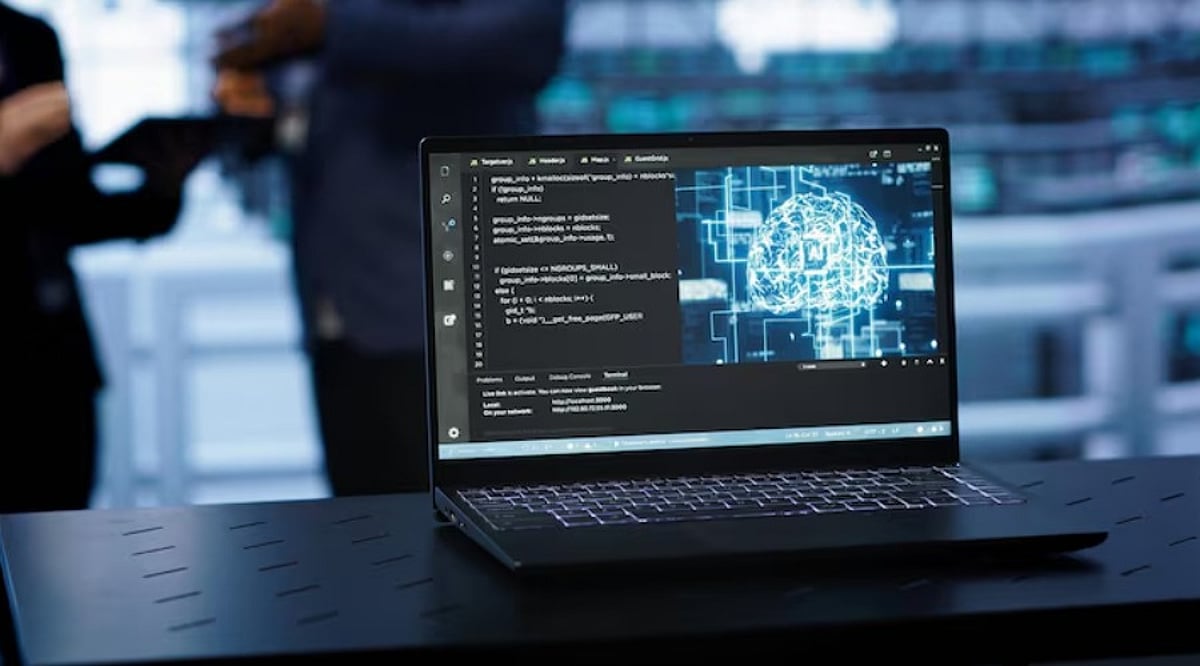
    Deep learning has become the backbone of modern artificial intelligence, powering everything from image recognition and speech systems to generative AI and language models. For beginners, the field can seem overwhelming due to its technical jargon. Even seasoned professionals need a quick reference when navigating model development workflows. This cheat sheet distills the essential concepts, architectures, training processes, and tools you need to understand and apply deep learning effectively.

    What is Deep Learning?

    Deep learning is a subset of machine learning that relies on neural networks with multiple layers (hence “deep”) to learn patterns from data. Each layer transforms its input, passing it forward to the next. Early layers tend to capture simple features (like edges in images or word relationships), while deeper layers learn complex abstractions. During training, the model adjusts its weights based on prediction errors via a process called backpropagation, which calculates gradients used by an optimizer to update parameters. The core idea is simple: data goes in, patterns are learned, and predictions come out.

    Key Neural Network Terms

    • Neuron: The basic computational unit of a neural network.
    • Layer: A group of neurons that processes inputs together.
    • Weights: Learnable parameters that determine how inputs influence outputs.
    • Bias: An additional learnable parameter that shifts the neuron’s output.
    • Activation Function: Introduces non-linearity, enabling the network to learn complex patterns.
    • Loss Function: Measures how far the model’s predictions are from the actual target values.
    • Epoch: One full pass over the entire training dataset.
    • Batch: A subset of training examples processed together in one iteration.
    • Learning Rate: Controls the step size during weight updates.
    • Overfitting: When the model performs well on training data but poorly on unseen data.

    Major Deep Learning Architectures

    Different architectures are suited for different tasks:

    • CNNs (Convolutional Neural Networks): Primarily used for computer vision tasks; they learn spatial hierarchies of features like edges, textures, and shapes.
    • RNNs (Recurrent Neural Networks): Designed for sequential data, such as time series, speech, and text, by maintaining a hidden state across time steps.
    • LSTMs (Long Short-Term Memory networks): A type of RNN that mitigates the vanishing gradient problem and can capture long-range dependencies.
    • Transformers: Rely on self-attention mechanisms to capture relationships across sequences; they underpin most modern language models and generative AI.
    • Autoencoders: Learn compressed representations of input data, useful for anomaly detection, denoising, and representation learning.

    Choosing the right architecture depends on your data type, problem complexity, and deployment constraints.

    How a Deep Learning Model is Trained

    Training typically starts with data preparation, splitting the dataset into training, validation, and test sets. The model makes predictions on training examples, the loss function evaluates errors, and backpropagation computes gradients. An optimizer (like SGD or Adam) updates the weights accordingly. This iterative process repeats over multiple batches and epochs. Validation data is used to monitor performance on unseen examples and avoid overfitting. Modern frameworks like PyTorch offer built-in workflows that cover dataset handling, model construction, automatic differentiation, optimization, and model saving.

    Essential Tools for Deep Learning

    Python remains the go-to language for deep learning. Core libraries include:

    • PyTorch: A flexible, dynamic framework for building, training, and deploying neural networks.
    • TensorFlow and Keras: Another widely adopted stack, especially for production deployments.
    • NumPy and Pandas: For numerical computing and data manipulation.
    • Matplotlib: For visualization of data and training metrics.
    • GPU acceleration: Essential for large models and datasets; NVIDIA GPUs are commonly used to parallelize operations.

    Cloud-based notebooks (like Google Colab or AWS SageMaker) allow access to powerful hardware without owning a dedicated GPU.

    Why This Matters

    Deep learning is central to AI innovation, driving advances in computer vision, natural language processing, speech recognition, recommendation systems, and generative AI. For beginners, mastering the core workflow—from data preparation to model deployment—is more valuable than memorizing formulas. Professionals also need skills in model optimization, profiling, quantization, pruning, and distributed training to deploy efficient, scalable solutions.

    Deep Learning Roadmap for 2026

    Begin with Python and foundational machine learning concepts. Then move on to tensors, neural network basics, loss functions, and optimization. Build small projects to gain hands-on experience—image classification is a great starting point for vision tasks, while text classification suits language processing. Progress to transformers and pretrained models, and study transfer learning, fine-tuning, evaluation, and deployment practices.

    In production, consider memory usage, inference speed, cost, reliability, and monitoring alongside model accuracy. A practical learning path combines theory with coding, experimentation, and real-world deployment.

    Frequently Asked Questions

    What is deep learning?

    Deep learning is a branch of machine learning that uses multi-layer neural networks to automatically learn patterns from large amounts of data.

    What is a neural network?

    A neural network is a computational model made up of connected layers and learnable parameters. It processes inputs through layers to produce an output, adjusting parameters during training to reduce errors.

    What is the difference between machine learning and deep learning?

    Deep learning is a subset of machine learning. Traditional ML often relies on engineered features, while deep learning can automatically learn representations from raw data using neural networks.

    What are CNNs used for?

    Convolutional neural networks are primarily used for image and computer vision tasks, learning local patterns such as edges, textures, shapes, and more complex visual features.

    What is backpropagation?

    Backpropagation is an algorithm that calculates the gradient of the loss function with respect to each parameter, enabling the optimizer to update weights during training.

  • Valve Steam Frame VR Headset: Price, Specs, and Everything You Need to Know

    Valve Steam Frame VR Headset: Price, Specs, and Everything You Need to Know

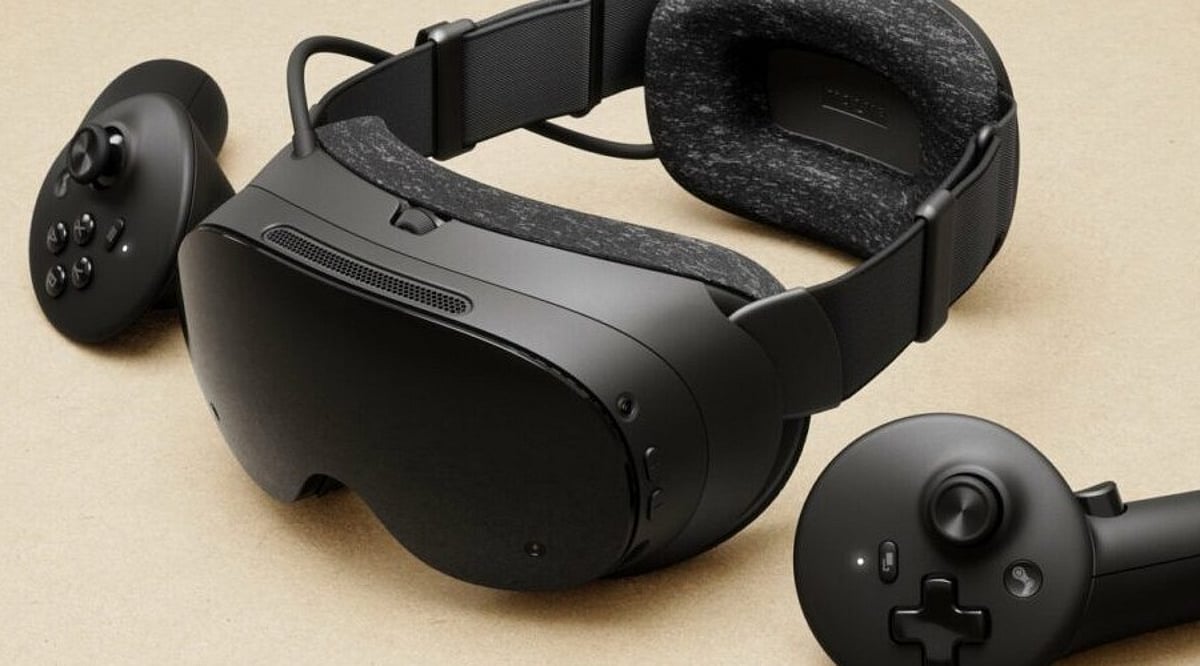
    Valve has officially launched the Steam Frame, a versatile VR headset that goes beyond traditional virtual reality. Priced starting at USD 1,059, the device supports standalone VR gaming, wireless PC VR streaming, and even standard Steam titles on a large virtual screen. This makes it a much more flexible option compared to the older Valve Index.

    Pricing and Availability

    The Steam Frame is available in two storage configurations:

    • 256GB model: USD 1,059 (EUR 1,049 / GBP 889)
    • 1TB model: USD 1,299 (EUR 1,279 / GBP 1,089)

    Sales began on September 14, 2026, via a limited reservation system. Registration closes on September 17 at 10:00 AM Pacific Time, with purchase invites rolling out on September 18. Selected buyers have 72 hours to complete their order.

    Standalone VR Meets Wireless PC Power

    Steam Frame runs on a Snapdragon 8 Gen 3 processor with 16GB of LPDDR5X memory and SteamOS. This allows supported games to run directly on the headset without a PC. For graphically demanding titles, the headset can connect wirelessly to a desktop computer, which handles rendering and streams the experience to the headset. The setup eliminates the need for a physical cable while keeping high-end graphics performance.

    Additionally, the headset can display standard (non-VR) Steam games on a large virtual screen, further broadening its use cases.

    Display and Camera System

    Each eye gets a 2160 × 2160 LCD panel. The standard refresh rate is 72Hz, with an experimental mode reaching up to 144Hz. The field of view is approximately 110 degrees. Inside-out tracking removes the need for external base stations, using integrated cameras to monitor the headset and controllers within the play space. Eye tracking sensors are also built in.

    The built-in passthrough is monochrome. For full-color passthrough and spatial video capture, users can purchase the optional Arcturus Vision Camera for USD 149. This camera supports 5K/60 video with 10-bit HDR stereo images.

    Storage and Accessories

    The headset comes in 256GB or 1TB versions, with expandable storage via microSD card. Optional accessories include:

    • Ergonomic Accessories Kit (USD 59): Two controller hand straps, a top head strap, and an extended light blocker.
    • Accessory Replacement Kit (USD 49): Face gasket, head cushion, and standard light blocker.
    • Official Power Supply (USD 29): Sold separately.
    • Arcturus Vision Camera (USD 149): Adds color passthrough and spatial video.

    Valve also includes Half-Life: Alyx with every Steam Frame unit, featuring a native version optimized for the headset.

    Future Upgrades

    An upcoming Enthusiast Kit will offer a new head strap, extra battery capacity (magnetic attachment), premium off-ear speakers inspired by the Valve Index, and additional eye-distance options. Pricing and release date for the Enthusiast Kit have not yet been announced.

    Key Takeaways

    • Versatile gaming: Standalone VR, wireless PC VR, and standard Steam games on a virtual display.
    • Premium pricing starts at USD 1,059 (256GB) and USD 1,299 (1TB).
    • Expandable hardware with optional color passthrough, comfort upgrades, extra battery, and better audio.

    The Steam Frame redefines what a VR headset can be by combining four roles into one device. Its Snapdragon chip handles local tasks, while a wireless PC link unlocks higher-end graphics. With a starting price of USD 1,059 and a growing ecosystem of accessories, it positions itself as a premium but versatile gaming tool for both VR and traditional PC gamers.

  • Balancing Crypto Privacy and Compliance: How Zero-Knowledge Proofs and Global Regulation Are Reshaping Digital Asset Privacy

    Balancing Crypto Privacy and Compliance: How Zero-Knowledge Proofs and Global Regulation Are Reshaping Digital Asset Privacy

    Cryptocurrency creates an unusual privacy challenge. Public blockchains can permanently expose transaction histories, while regulators increasingly require exchanges and other crypto businesses to identify customers and detect illicit activity. The long-term challenge is preserving legitimate financial privacy without making transactions completely untraceable.

    Public Blockchains Are Not Automatically Anonymous

    Bitcoin and Ethereum are not anonymous; they are pseudonymous. Addresses are anonymized, but transactions, counterparties and histories are not. If an address is connected to a person, blockchain analytics can follow up on the activity in relation to that person.

    Privacy technologies try to minimize this exposure in the following ways: confidential transactions, privacy-oriented cryptocurrencies, mixers, and zero-knowledge proofs. The privacy guidance from Ethereum, updated in August 2026, outlines selective disclosure and zero-knowledge technology as a method for verifying information without disclosing users’ personal information.

    Regulation Is Expanding

    The Financial Action Task Force’s July 2026 review found further progress in global virtual-asset regulation. According to FATF, 83% of surveyed jurisdictions had enacted legislation implementing the Travel Rule, up from 73% in 2025. Another 11 jurisdictions reported implementation was underway.

    However, major gaps remain. FATF identified stablecoins, offshore service providers, peer-to-peer transfers through unhosted wallets and decentralized finance as continuing risk areas. A separate March report said more than 250 stablecoins were circulating by mid-2025, with combined market capitalization exceeding USD 300 billion.

    DeFi presents another challenge. FATF reported in July that 132 of 143 surveyed jurisdictions, nearly 93%, had not implemented its standards for qualifying DeFi arrangements. Only two of 142 jurisdictions had licensed or registered a DeFi arrangement in practice.

    Can Zero-Knowledge Proofs Bridge the Gap?

    Zero-knowledge proofs can help achieve a perfect balance by allowing someone to validate a statement without revealing the details. By using zero-knowledge proofs, it is possible to demonstrate identity validation or eligibility without making other triggers of violation public.

    This method allows for selective disclosure rather than setting a choice between total transparency and anonymity. Still, regulators need to be assured that privacy methods will not be used to avoid practicing AML and sanctions. Custodial wallets become extraordinarily complex as users are able to make transactions directly without any intermediary who would perform KYC.

    Why This Matters

    Crypto regulation does not necessarily require eliminating privacy. The challenge is building systems that protect legitimate financial information while allowing regulated businesses to verify identity, sanctions compliance and anti-money-laundering requirements when legally required, without exposing unnecessary user data.

    Final Thoughts

    Crypto’s future may combine privacy-preserving cryptography, selective disclosure, regulated gateways and blockchain analytics. FATF’s 2026 findings show regulation is expanding, but implementation remains uneven. The balance will depend on whether privacy technologies can protect users while still supporting enforceable, risk-based compliance.

    Frequently Asked Questions

    1. Are Bitcoin and Ethereum transactions anonymous? No. Bitcoin and Ethereum are generally pseudonymous rather than anonymous. Blockchain addresses do not automatically reveal legal identities, but transactions and balances are public and can potentially be traced once an address is linked to someone.
    2. What is the FATF Travel Rule for cryptocurrency? The Travel Rule requires qualifying virtual-asset service providers to obtain and transmit specified information about transaction originators and beneficiaries. FATF reported that 83% of surveyed jurisdictions had enacted Travel Rule legislation in 2026.
    3. How can zero-knowledge proofs improve crypto privacy? Zero-knowledge proofs allow users to demonstrate that certain conditions are satisfied without revealing all the underlying information. They could potentially support identity, eligibility or compliance verification while keeping unrelated personal and financial information private.
    4. Why is DeFi difficult for regulators to oversee? DeFi can enable blockchain transactions without conventional centralized intermediaries responsible for KYC and transaction monitoring. FATF reported that 132 of 143 surveyed jurisdictions had not implemented its standards for qualifying DeFi arrangements.
    5. Can crypto remain private under stronger regulation? Potentially, but privacy may increasingly rely on selective disclosure rather than complete anonymity. Zero-knowledge technology, privacy-preserving cryptography, regulated gateways and blockchain analytics could coexist as jurisdictions develop their digital-asset compliance frameworks.
  • iPhone Duo: 5 Exclusive Features That Redefine Apple’s Foldable Experience

    iPhone Duo: 5 Exclusive Features That Redefine Apple’s Foldable Experience

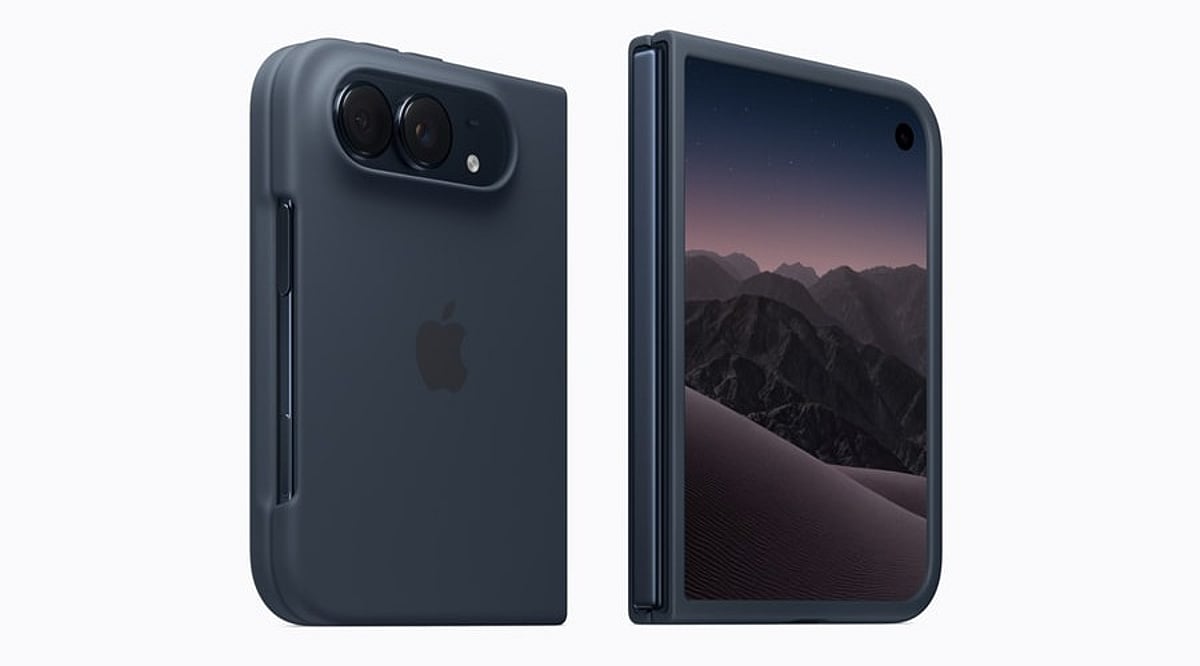
    Apple has finally entered the foldable phone market with the iPhone Duo, a book-style device featuring two screens. This launch answers questions iPhone users have been asking for years: What changes when a phone becomes a small tablet, and what stays the same? Apple has packed the iPhone Duo with exclusive features that don’t exist on any other iPhone model, from dual-screen camera tricks to a different unlocking method and even unique charging capabilities.

    1. Dual-Screen Camera Software

    The iPhone Duo sports a dual 48-megapixel camera system on the back, similar to the iPhone 18 Pro, but its software is where Apple gets creative. Features like Smart Take, Kid Cue, and Duo Preview are exclusive to this model, and they exist because the phone can display a live camera view on both screens simultaneously. A parent photographing a child can use Kid Cue to capture their attention on the outer display while framing the shot on the inner one. Duo Preview lets a photographer show the subject exactly what the shot looks like before the picture is taken—something a single-screen iPhone simply cannot do.

    2. Under-Display Camera on the Inner Screen

    For the first time on any iPhone, Apple has placed a camera underneath the display itself. The inner 7.6-inch screen carries this under-display camera, keeping the folding display free of any visible cutout or notch. The trade-off is that this camera doesn’t match the quality of the Center Stage front camera on the outer screen, so Apple recommends using the outer camera for video calls and selfies whenever the phone stays closed.

    3. Touch ID Instead of Face ID

    Every recent iPhone has relied on Face ID for unlocking, but the Duo breaks that pattern. Apple moved authentication to a side-mounted Touch ID sensor, a design choice driven by the thinner profile needed for a folding phone. This lets users unlock the device whether it sits open or closed, without needing a front-facing sensor array that would otherwise eat into the slim bezels Apple aimed for on the folding screen.

    4. Apple Pencil Support & Familiar Charging

    Apple Pencil has always been an iPad feature, but the iPhone Duo changes that boundary. The company has confirmed that Apple Pencil support will roll out for both the inner and outer displays later this year. On the charging side, the Duo sticks with what iPhone owners already know, supporting fast wired charging alongside MagSafe and Qi2 wireless charging, so an existing iPhone charger still works fine with the new model. This turns the Duo into a note-taking and sketching device in a way no earlier iPhone allowed, positioning it as a bridge between Apple’s phone and tablet lineups.

    5. Adaptive Postures

    The iPhone Duo supports several distinct postures that Apple built software around, including Landscape, Portrait, Closed, Seated, and Standing modes. In Seated mode, the phone can rest at an angle for watching a video or following a workout routine. In Standing mode, it doubles as a bedside display through StandBy, showing a clock, photos, or widgets. Split View lets two apps run side by side on the larger inner display, a functionality closer to what people expect from a small tablet than a phone.

    Why These Features Matter

    These five features show that Apple did not simply put a hinge on an existing iPhone design. Each one, from the camera software to the authentication method, reflects a rethink of what a phone can do once it has two screens working together. For anyone weighing whether the Duo justifies its higher iPhone price compared to a regular Apple iPhone, these software and hardware choices matter more than the display size alone, since they define how the phone actually gets used day to day.

    FAQs

    1. What makes the iPhone Duo different from other iPhone models?
    The iPhone Duo is Apple’s first foldable iPhone, featuring a book-style design with two screens, exclusive camera software, and an under-display camera not found on any other iPhone.

    2. Does the iPhone Duo use Face ID?
    No, the iPhone Duo replaces Face ID with a side-mounted Touch ID sensor, letting users unlock the device whether it is open or closed.

    3. Can the iPhone Duo work with Apple Pencil?
    Yes, Apple has confirmed Apple Pencil support for both the inner and outer displays, rolling out later this year.

    4. Does the iPhone Duo need a special charger?
    No, the iPhone Duo supports the same fast wired charging along with MagSafe and Qi2 wireless charging as other recent iPhone models, so an existing iPhone charger works fine.

    5. What are the exclusive camera features on the iPhone Duo?
    The iPhone Duo offers Smart Take, Kid Cue, and Duo Preview—camera features built specifically to use both the inner and outer displays at the same time.

  • Quantum Computing’s Next Leap: Logical Qubits, Error Correction, and Real-World Applications

    Quantum Computing’s Next Leap: Logical Qubits, Error Correction, and Real-World Applications

    The quantum computing landscape is undergoing a fundamental shift. While raw qubit counts once dominated headlines, the focus has now moved to reliability, error correction, and practical utility. Recent milestones from IBM, Google, Microsoft, Quantinuum, IonQ, and QuEra signal that the field is transitioning from laboratory experiments toward systems capable of solving real scientific and commercial problems.

    Logical Qubits Take Center Stage

    IBM and the University of Chicago demonstrated a 70-logical-qubit system in July 2026, completing a computation that IBM claims is beyond practical classical simulation. The task took about 15 minutes and emphasized performance alongside verifiability. Logical qubits, which combine multiple physical qubits to reduce errors, are now the key benchmark. IBM also introduced an error-control technique that achieves effective error rates roughly ten times lower than the base hardware.

    IBM Pushes Faster Circuits

    IBM’s Nighthawk r2 processor features 120 programmable qubits, 218 couplers, and 120 active reset elements. It delivers over 100,000 circuits per second and up to 25 times the circuit throughput of its predecessor Heron. The system has executed circuits with more than 7,500 gates while maintaining accuracy. IBM now aims for systems with hundreds of logical qubits and millions of quantum gates later this decade, signaling that circuit depth and reliability now matter more than qubit quantity alone.

    Google Targets Verifiable Quantum Advantage

    Google Quantum AI’s latest research, dubbed Quantum Echoes, aims for the first verifiable quantum advantage on a real-world-oriented algorithm. The emphasis is on producing results that classical systems can check and that have clear scientific value. This moves beyond earlier demonstrations of quantum supremacy toward useful, verifiable computation.

    Microsoft’s Topological Path

    Microsoft’s Majorana 2 processor uses topological qubits built from lead and indium-based semiconductors. The company reports a topological gap more than twice as large as its earlier processor, offering 1,000 times greater reliability. Microsoft targets a scalable quantum computer by around 2029, betting on inherent error protection at the physical level.

    Trapped Ions Scale Up

    Quantinuum received a finalized $100 million CHIPS Research and Development award from the U.S. government on September 8, 2026, focusing on low-loss integrated photonics, cryogenic semiconductors, and advanced ion traps. The company works with GlobalFoundries and Monarch Quantum for domestic production. IonQ announced Superion 256, a 256-qubit platform, with SkyWater fabricating fully integrated processors and first ions trapped. Customer deliveries are expected in 2027.

    Neutral Atoms Add Diversity

    QuEra continues advancing neutral-atom systems, with work on high-fidelity entangling gates, nonlocal circuits, quantum error correction, and neural decoders. The company also cites a 3,000-qubit coherent system from 2025. The variety of approaches—superconducting, trapped ions, neutral atoms, photonics, and topological qubits—shows that no single design has yet secured a lead.

    Government Support Accelerates Progress

    The U.S. government has intensified its quantum focus. A June 2026 White House order created the QC-ADDS initiative, calling for a national push toward quantum systems for scientific discovery. The Department of Energy’s Quantum Genesis program targets fault-tolerant systems by 2028 with low hundreds of logical qubits, covering chemistry, materials science, plasma physics, and high-energy physics. It also proposes a National Quantum Supercomputing User Facility to integrate quantum computers with HPC and AI. Proposed CHIPS incentives total about $2.013 billion for nine companies.

    What This Means for the Future

    The quantum race now has a broader measure of progress. Reliable logical qubits, deep circuits, error correction, domestic manufacturing, and useful scientific results all matter. The strongest signal from current research is clear: quantum hardware has moved past a simple race for larger qubit numbers. The next major milestone will come when reliable quantum systems solve valuable problems at a scale that classical machines cannot match—defining the real start of practical quantum computing.

    Frequently Asked Questions

    Why are logical qubits important?

    Logical qubits combine multiple physical qubits with error-correction techniques to create more reliable computational units.

    What are IBM’s latest quantum computing advances?

    IBM is pursuing larger logical-qubit systems, faster circuit execution, improved error control, and deeper quantum circuits.

    How is Google approaching quantum advantage?

    Google is focusing on verifiable quantum advantage through algorithms designed around useful, scientifically meaningful computational tasks.

    What makes Microsoft’s Majorana 2 approach different?

    Microsoft is pursuing topological qubits designed to provide stronger protection against errors at the physical-qubit level.

    Why does U.S. government support matter?

    Federal programs support fault-tolerant quantum systems, domestic manufacturing, research infrastructure, and integration with high-performance computing and AI.

  • Gold Drops 1.11% on MCX After Fed Rate Hike; Brent Crude Holds Near $106

    Gold Drops 1.11% on MCX After Fed Rate Hike; Brent Crude Holds Near $106

    Gold prices on the Multi Commodity Exchange (MCX) declined sharply on September 17, following the US Federal Reserve’s decision to raise interest rates by 25 basis points to a range of 3.75%–4%. The move, driven by persistent inflation and elevated energy costs, pushed October gold futures down 1.11% to Rs. 1,50,778 per 10 grams. Silver also weakened, with September futures falling 1.19% to Rs. 2,31,982.

    Meanwhile, global crude oil benchmarks showed mixed movement. Brent crude futures edged up 0.03% to USD 105.9 per barrel, while US West Texas Intermediate (WTI) slipped 0.05% to USD 104.4 per barrel.

    Domestic Gold Prices by Purity and City

    In the Indian market, 24-karat gold dropped by Rs. 60 to Rs. 1,52,840 per 10 grams, and 22-karat gold declined by Rs. 55 to Rs. 1,40,100. Prices varied slightly across major cities:

    • Mumbai: Rs. 1,52,840
    • Kolkata: Rs. 1,52,840
    • Delhi: Rs. 1,52,990
    • Chennai: Rs. 1,52,840

    US Gold and Precious Metals Overview

    In international markets, spot gold rose more than 1% to USD 4,310.49 per ounce as investors weighed the Fed’s hawkish stance and potential for further tightening. US gold futures for December delivery were down roughly 1% at USD 4,348.70. Spot silver gained 1.4% to USD 63.83, platinum firmed 1.6% to USD 1,780.55, and palladium climbed 2% to USD 1,295.

    Key Levels and Analyst Outlook

    Kelvin Wong, senior market analyst at OANDA, noted that oil prices remain a crucial factor for gold. “If oil prices continue to decline, that could support gold prices moving higher, at least from a medium-term perspective. Until that materializes, I expect gold to remain range-bound,” he said. Wong added that the current uptick in gold is largely technical, with the Fed’s hawkish message already priced in.

    On the MCX, gold is under short covering with open interest declining 4.15% to 8,818. Support is placed at Rs. 1,51,630, with a break below opening Rs. 1,50,790, while resistance is seen at Rs. 1,53,130, above which prices could test Rs. 1,53,790.

    Internationally, gold shows a bearish near-term bias below USD 4,315–USD 4,320. This zone acts as a key pivot; above it, the metal could target the 38.2% Fibonacci level near USD 4,404 and the 23.6% retracement at USD 4,513. On the downside, immediate support is at the 61.8% Fibonacci retracement of USD 4,226, followed by the 78.6% level at USD 4,100.

  • The Invisible AI Revolution: 7 Smart Devices Where Artificial Intelligence Blends Seamlessly into Daily Life

    The Invisible AI Revolution: 7 Smart Devices Where Artificial Intelligence Blends Seamlessly into Daily Life

    Artificial intelligence is rapidly moving from a flashy, attention-grabbing feature to a quiet, indispensable assistant. The next wave of smart devices integrates AI so smoothly that users often forget it is there. From earbuds that translate in real time to home appliances that learn your routines, here are seven products where AI is becoming invisible.

    1. AI Earbuds

    Smart earbuds now leverage AI for real-time translation, intelligent noise management, voice assistance, and personalized audio profiles. The technology adapts to your environment without requiring any manual adjustments, making the experience effortless.

    2. AI Smart Glasses

    AI-powered glasses can recognize surroundings, answer questions, translate text, and deliver useful information without demanding constant screen interaction. They overlay digital insights onto the physical world, keeping your hands and eyes free.

    3. AI Smartwatches

    Modern smartwatches use AI to interpret health trends, summarize notifications, assist with workouts, and provide contextual suggestions directly from your wrist. The intelligence works in the background, offering proactive support when you need it.

    4. AI Smartphones

    Today’s smartphones embed AI into cameras, call quality, search, writing assistance, and personalization. These intelligent features feel like ordinary phone functions, enhancing everyday tasks without adding complexity.

    5. AI Home Appliances

    Refrigerators, washing machines, and ovens increasingly use AI to adjust settings, recognize usage patterns, and automate routine household decisions. The devices learn your habits and optimize performance automatically.

    6. AI Security Cameras

    AI cameras can identify people, vehicles, unusual activity, and important events, reducing the need for users to monitor footage constantly. Alerts are smart and contextual, so you only see what matters.

    7. AI Personal Robots

    Emerging personal robots combine cameras, microphones, sensors, and AI to understand environments, respond naturally, and handle simple household tasks. They adapt to your home without requiring complicated programming.

    Beyond these seven categories, AI is also transforming cars, health devices, and more. The common thread is that the technology fades into the background, making life simpler and more intuitive. As AI continues to evolve, the smartest devices will be the ones you barely notice.

  • Beyond GPUs: Emerging Technologies Reshaping the AI Infrastructure Race

    Beyond GPUs: Emerging Technologies Reshaping the AI Infrastructure Race

    The era of GPU-only AI infrastructure is being challenged by a growing wave of specialized hardware and computing paradigms. As large-scale AI models continue to demand more performance and efficiency, companies are exploring alternatives that promise faster training, lower power consumption, and greater flexibility. Here is a closer look at the key technologies entering the AI infrastructure race.

    Google TPU

    Google’s Tensor Processing Units are built specifically for AI workloads, with specialized matrix processing that provides a strong alternative to general-purpose GPU acceleration for large-scale models.

    AWS Trainium

    Amazon’s Trainium accelerators are designed to handle machine-learning training workloads, helping cloud customers reduce their dependence on GPUs while optimizing both performance and infrastructure costs.

    Cerebras Wafer-Scale Engine

    Cerebras has developed enormous wafer-scale processors containing thousands of processing cores. This specialized architecture is built to address demanding AI model training workloads.

    Groq LPU

    Groq’s Language Processing Units focus on fast inference, using a specialized hardware architecture to deliver predictable performance for large language model workloads.

    Photonic Computing

    Photonic processors use light to perform computations, potentially delivering high bandwidth and energy efficiency for increasingly demanding artificial intelligence workloads.

    Processing-In-Memory

    Processing-in-memory architectures bring computation closer to stored data, reducing memory movement and potentially improving efficiency across large-scale AI workloads.

    Neuromorphic Chips

    Neuromorphic processors mimic aspects of biological neural systems, targeting highly efficient AI computation through event-driven processing and specialized hardware architectures.

    Quantum Computing

    Quantum processors could eventually address specialized optimization and scientific workloads, offering a fundamentally different computing paradigm beyond conventional GPU-based AI infrastructure.

    ASIC Accelerators

    Application-specific integrated circuits are designed for particular AI workloads, enabling companies to optimize performance, power consumption, and infrastructure for targeted applications.

    As the demand for advanced AI continues to grow, the infrastructure race is no longer limited to GPUs. These emerging technologies are shaping a more diversified ecosystem of compute options, each with unique strengths for the next stage of AI development.