Blog

  • India Declines Separate Crypto Law, Will Instead Regulate Under Existing Rules and Promote e-Rupee

    India Declines Separate Crypto Law, Will Instead Regulate Under Existing Rules and Promote e-Rupee

    The Indian government has confirmed it will not draft a standalone law to regulate cryptocurrency, opting instead to apply existing statutes on taxation, anti-money laundering, and financial stability. Officials worry that a dedicated crypto law could misleadingly imply government endorsement or safety, especially for novice investors.

    The Finance Ministry shared this position with the Standing Committee on Finance, emphasizing a strategy to promote the Reserve Bank of India’s digital currency, the e-Rupee, as a safer alternative. The government is also exploring the use of e-Rupee for direct benefit transfers to citizens.

    Why Is the Government Holding Back?

    The ministry’s Economic Affairs Division noted that cryptocurrency’s decentralized nature makes it difficult to regulate. Transactions often occur on platforms without intermediaries, and stricter rules on regulated exchanges could push activity to unregulated systems that are even harder to monitor.

    Officials also cautioned that formal regulations might give first-time investors a false sense of security, equating “regulated” with “safe,” despite the high volatility of crypto markets. They pointed out that global crypto regulations remain fragmented and incomplete.

    Instead of creating new legislation, India will leverage existing laws covering money laundering, taxation, consumer rights, and financial stability to monitor the sector. The government also plans to track international developments in crypto regulation.

    Tax Rules Stay Same

    Crypto remains illegal tender in India. Profits from digital asset transactions are subject to a 30% tax plus a 4% cess, and losses from one crypto trade cannot offset gains from another.

    The Financial Intelligence Unit already oversees crypto firms operating in India. More than 50 platforms, including CoinDCX and Binance, are registered with authorities.

    For now, the government’s approach is one of caution: manage crypto risks through existing laws while quietly building the e-Rupee as a trusted digital alternative.

  • iPhone 17e Price Drop on Flipkart: Effective Rs 15,000 Off Before iPhone 18 Pro Sale

    iPhone 17e Price Drop on Flipkart: Effective Rs 15,000 Off Before iPhone 18 Pro Sale

    Flipkart Listing Brings iPhone 17e Closer to Rs 62,000

    Apple’s revised pricing for the iPhone 17e in India now starts at Rs 79,900, but Flipkart is still selling the device at its older price of Rs 64,990. That works out to an effective Rs 15,000 saving for buyers.

    The deal arrives just ahead of the iPhone 18 Pro and iPhone 18 Pro Max sale, which begins tomorrow. Flipkart notes that only a limited number of units are left and delivery is available at select locations.

    iPhone 17e Offers on Flipkart

    • Base price: Rs 64,990
    • Additional Rs 3,245 discount with Flipkart Axis Bank credit card, bringing the effective price below Rs 62,000
    • Exchange bonus: up to Rs 49,650 based on the device, variant, and condition
    • EMI options start at Rs 22,212 per month

    iPhone 17e Specifications

    The phone features a 6.1-inch Super Retina XDR OLED display with a 60Hz refresh rate, 2532×1170 resolution, up to 1,200 nits HDR brightness, and an anti-reflective layer.

    Under the hood, the Apple A19 chip powers the device with 8GB RAM and 256GB or 512GB of storage. The chip includes a six-core CPU, four-core GPU, and a 16-core Neural Engine designed to support Apple Intelligence features.

    For photography, the iPhone 17e has a 48MP Fusion rear camera with an f/1.6 aperture and optical image stabilization. It offers 2x optical-quality zoom via an in-sensor crop and up to 10x digital zoom. The front-facing 12MP TrueDepth camera supports autofocus. Both cameras can record 4K Dolby Vision video at 60fps.

    The handset weighs 169 grams and features an aluminum frame, glass back, and Ceramic Shield 2 on the front. It also carries an IP68 rating for water and dust resistance. Color options are Black, White, and Soft Pink.

  • Stop Your Apple Watch From Listening: A Simple Guide to Disabling Siri Recap

    Stop Your Apple Watch From Listening: A Simple Guide to Disabling Siri Recap

    Apple’s latest Apple Watch models introduce Audio Intelligence features, including Siri Recap, which can listen to conversations in the background and generate AI-powered summaries. While Apple emphasizes that Siri Recap is opt-in and does not store raw audio recordings, many users may prefer to disable it for privacy. Here’s how to turn off Siri Recap on your Apple Watch while keeping standard Siri features fully functional.

    What Is Siri Recap on Apple Watch?

    Siri Recap is part of Apple’s Audio Intelligence suite for Apple Watch. Unlike traditional Siri, which waits for an explicit activation command, Siri Recap works in the background. When enabled, it can listen to conversations throughout the day and create high-level summaries so you can recall important points later.

    Apple states that Siri Recap does not generate conventional audio recordings. Instead, audio is processed in a protected hardware environment that is inaccessible to the operating system, third-party apps, or Apple itself. The resulting recaps are summarized overviews, not full transcripts of your conversations.

    How to Turn Off Siri Recap

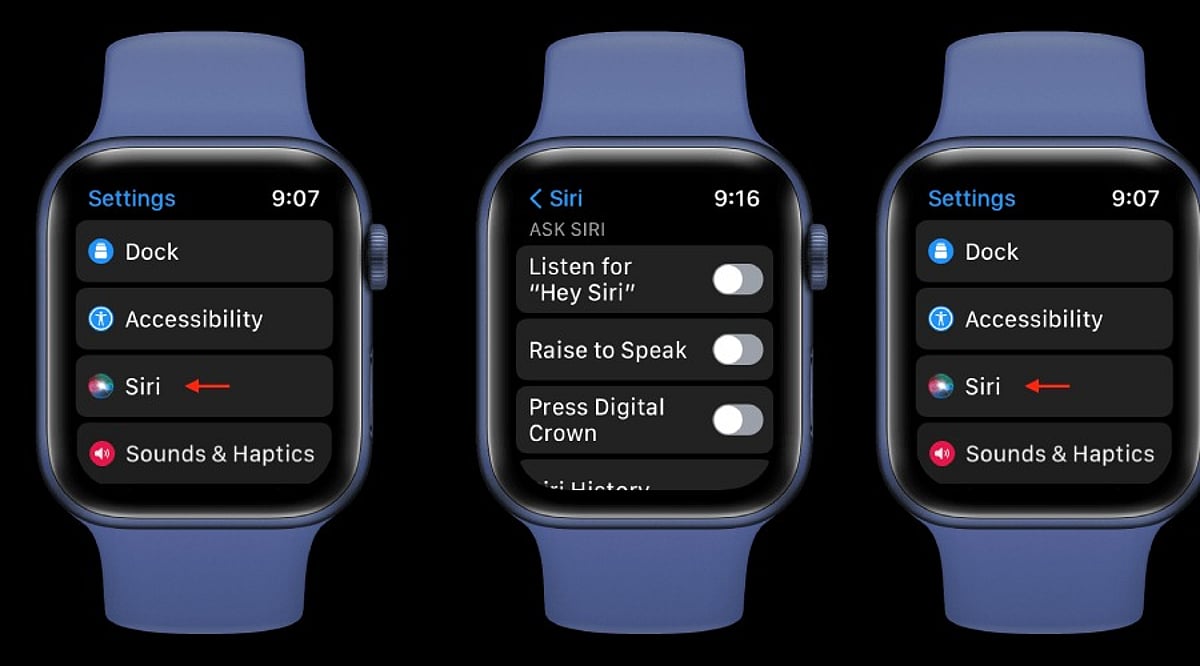
    Disabling Siri Recap takes just a few seconds. Use the Watch app on your paired iPhone:

    • Open the Watch app on your iPhone.
    • Tap the Siri section.
    • Locate Siri Recap.
    • Toggle the switch to turn it off.

    Once disabled, your Apple Watch will stop using the feature to take ambient notes or generate conversation summaries. You can also enable or disable Siri Recap directly from Control Center on the watch itself.

    Schedule Siri Recap Instead of Turning It Off Completely

    If you find Siri Recap useful in certain situations but want more control over when it listens, you don’t have to disable it entirely. Apple lets you set Siri Recap to operate on a schedule based on time of day, location, or specific scenarios. For example, you can keep it active during work hours and turn it off automatically at home or overnight.

    Siri Recap vs. Live Rewind

    It’s important not to confuse Siri Recap with Live Rewind, a separate feature. Live Rewind lets you retrieve a text snippet of what was said in the previous 15 seconds after double-pressing the Digital Crown. It does not continuously create a running transcript in the background like Siri Recap can.

    Both features come with the Apple Watch Series 12 and Apple Watch Ultra 4, subject to software and compatibility requirements.

    Disabling Siri Recap Doesn’t Disable Siri

    Turning off Siri Recap has no effect on regular Siri functionality. You can still use Siri for reminders, weather, timers, messages, smart-home controls, and other supported actions. This makes it easy to enjoy the convenience of Apple’s assistant without the concern of background listening.

    By following the steps above, you can take control of your Apple Watch’s privacy features and decide exactly when Audio Intelligence is allowed to listen.

  • Gold Hallmarking Fee Hikes to Rs 75: How India’s Jewelry Market Is Reacting

    Gold Hallmarking Fee Hikes to Rs 75: How India’s Jewelry Market Is Reacting

    The Bureau of Indian Standards (BIS) has raised the gold hallmarking fee from Rs. 45 to Rs. 75 per article — a sharp increase of nearly 67% just ahead of India’s festive season. Silver hallmarking fees remain unchanged at Rs. 35.

    What Is Hallmarking and Why Does It Matter?

    Hallmarking is a purity check for precious metals. A hallmarked gold item carries the BIS mark, purity details, and a six-digit Hallmark Unique Identification (HUID) number. This helps buyers verify the purity of the gold they purchase.

    Market Impact: Jewelry Stocks Feel the Pressure

    The announcement rippled beyond consumers. Jewelry stocks declined after the fee hike, with Kalyan Jewellers and PC Jeweller shares falling by up to 4%. Lalithaa Jewelry Mart, which recently listed, touched its 5% lower circuit.

    The Rs. 75 fee applies to every gold article, regardless of weight. That means a small gold item and a heavy ornament carry the same basic hallmarking charge.

    Concerns From the Jewelry Trade

    Jewelers send gold articles to BIS-approved testing centers, where pieces are checked before receiving the hallmark and HUID number. The increase has drawn concern from the trade. The All India Gem and Jewelry Domestic Council has asked BIS to review the hike and consult industry members.

    The fixed fee could affect small and lightweight pieces most, since the charge represents a larger share of the item’s value. Businesses may need to decide whether to absorb the cost or pass part of it on to customers.

  • Elon Musk Ditches Luxury for an Airstream Trailer at xAI’s Memphis Data Center

    Elon Musk Ditches Luxury for an Airstream Trailer at xAI’s Memphis Data Center

    Elon Musk is swapping five-star comforts for a compact Airstream trailer while he oversees xAI’s rapidly expanding artificial intelligence operations in Memphis. The Tesla and SpaceX CEO described the trailer as his “palace” during a recent appearance on the All-In podcast, where he was joined by SpaceX President and COO Gwynne Shotwell.

    A Hands-On Approach in Memphis

    Musk has been staying near xAI’s Colossus supercomputer facility, which supports the company’s Grok AI models. According to reports, he has lived in the trailer for more than 10 days, choosing the basic setup so he can be close to the project instead of commuting from a conventional residence.

    The exact Airstream model was not disclosed, but these compact trailers typically include sleeping quarters, a kitchen, and a bathroom — enough to keep the billionaire close to the action without sacrificing basic comforts.

    Why Memphis Matters to xAI

    xAI began building the original Colossus facility in 2024 and is now working to expand its computing capacity in Memphis. Musk said he needed to be on site to help bring additional GPUs online, describing the trailer as his base near the infrastructure work.

    During the podcast, Shotwell noted Musk’s habit of staying close to major projects and confirmed he has been helping with construction work in Memphis. The expanded facility is expected to support the next wave of Grok AI development and reinforce xAI’s position in the competitive artificial intelligence race.

    “I needed to be in Memphis to work on additional GPUs online,” Musk said, explaining why he chose the Airstream over a more traditional stay.

    Musk’s temporary living arrangement underscores how the project has become a personal priority for the billionaire as xAI pushes forward with one of the largest AI computing installations in the region.

  • boAt Bluetooth Speaker Guide: Comparing Stone 350 Pro, Stone 1200 Pro, Stone 900, and PartyPal Nova

    boAt Bluetooth Speaker Guide: Comparing Stone 350 Pro, Stone 1200 Pro, Stone 900, and PartyPal Nova

    Portable Bluetooth speakers are a convenient way to upgrade your audio without investing in a full home sound system. boAt offers multiple models across different price points, making it easier to find a speaker that matches your listening habits, whether you need a compact companion for daily use or a high-output speaker for parties.

    boAt Stone 350 Pro: Budget-Friendly Portable Sound

    The Stone 350 Pro is the most affordable model in this lineup at around Rs. 2,099. It delivers 14W of audio output and offers up to 12 hours of claimed battery life. Connectivity options include Bluetooth 5.3, AUX, and TF card playback, while RGB lighting and an IPX5 water-resistance rating add extra value for everyday use.

    This speaker suits casual listening at home, small get-togethers, and outdoor activities where portability is key.

    boAt Stone 1200 Pro: More Volume, More Features

    The Stone 1200 Pro steps up the performance with 60W output powered by 76.2mm drivers. Priced around Rs. 4,999, it targets users who want noticeably louder audio from a portable speaker. boAt rates the battery at up to 7.5 hours of playback at 50% volume.

    It also supports True Wireless Stereo pairing, Bluetooth and USB connectivity, and carries an IPX6 rating for splash resistance. A built-in microphone and carry strap make it a useful option for trips and outdoor use.

    boAt Stone 900: High Power with Long Playback

    For those who need even more sound, the Stone 900 delivers 80W output with a boombox-style design that emphasizes bass. According to the official boAt listing, it is priced at Rs. 6,499 and offers up to 15 hours of claimed playback.

    This model is a good fit for louder listening sessions, small gatherings, and users who prefer a bigger audio presence without moving to a full party speaker.

    boAt PartyPal Nova: Karaoke and Party Features

    The PartyPal Nova is the most feature-rich model in this comparison, starting at Rs. 7,999. It delivers 120W output and includes a wireless UHF microphone plus dynamic lighting, making it ideal for karaoke, announcements, and social events rather than routine listening.

    If entertainment features matter more than portability, this is the speaker to consider.

    How to Choose the Right boAt Speaker

    The main differences among these four models come down to output, portability, battery life, and extra features. The Stone 350 Pro is best for budget-conscious buyers who want a compact speaker. The Stone 1200 Pro and Stone 900 offer progressively higher power for louder settings. The PartyPal Nova is aimed at users who want karaoke and party-ready features.

    Prices may vary by retailer and ongoing promotions, so be sure to check current listings and specifications before making a purchase.

  • Bitcoin Clings to $75K Support After Fed’s Quarter-Point Hike and Senate Setback for CLARITY Act

    Bitcoin Clings to $75K Support After Fed’s Quarter-Point Hike and Senate Setback for CLARITY Act

    Bitcoin Holds Ground After Fed Decision

    Bitcoin traded near $76,000 on September 17 after the Federal Reserve raised interest rates by 25 basis points and the US Senate failed to advance the CLARITY Act. The cryptocurrency avoided another sharp decline after falling earlier in the week as traders responded to tighter monetary policy and uncertainty around US crypto rules.

    Bitcoin closed September 16 near $76,147, according to CoinGecko data. It had traded around $75,590 a day earlier after the Senate vote. The price action kept BTC close to the $75,000 support area, while traders watched the $77,000 to $78,000 range.

    Fed Raises Rates for First Time Since 2023

    The Federal Open Market Committee voted 12-0 on September 16 to raise the federal funds target range to 3.75% to 4%. The Fed said inflation remains elevated and said the increase would support a faster return toward its 2% goal. The move marked the central bank’s first rate increase since 2023.

    Fed Chair Kevin Warsh said the US economy appears to be strengthening and said he would be hard-pressed to describe broad financial conditions as restrictive. Updated Fed projections showed 16 of 18 policymakers expect at least one more rate increase in 2026. The median projection placed the federal funds rate at 4.1% at year-end.

    Bitcoin showed a limited immediate reaction to the decision. Markets had largely expected the quarter-point increase. However, higher short-term rates can raise returns on cash and fixed-income assets, giving traders another factor to consider when allocating money to non-yielding assets such as Bitcoin.

    Bitcoin ETF Outflows Extend After Fed Rate Decision

    US spot Bitcoin exchange-traded funds recorded $450.33 million in net outflows on September 15, according to SoSoValue data. The funds then recorded another $295.98 million in net redemptions around the September 16 session, bringing the two-session total to about $746 million.

    The outflows followed Bitcoin’s decline after the Senate vote and came as investors prepared for the Fed decision. Bitcoin had traded above $80,000 earlier in September. CoinGecko data show BTC closed at $81,265 on September 3 and at $76,147 on September 16.

    Traders continue to watch short-term price levels. Bitcoin has held around $75,000, while resistance sits near $77,000 to $78,000. A break below $75,000 would put lower support zones back in focus, while a move through resistance would bring the $81,600 area into view.

    CLARITY Act Stalls as Other Crypto Bills Move Forward

    The Senate failed to advance the CLARITY Act on September 15. Reuters reported a 50-49 vote, below the 60 votes needed to clear the procedural step. Four Republican senators joined Democrats in opposing advancement. The bill seeks to create a federal market structure for digital assets and define regulatory roles for the SEC and CFTC.

    The failed vote did not end congressional work on other crypto measures. On September 16, the House Financial Services Committee voted 28-21 to advance the American Reserve Modernization Act. The proposal would establish a Strategic Bitcoin Reserve at the Treasury and require the government to hold qualifying Bitcoin for at least 20 years.

    The House Ways and Means Committee also voted 38-5 to advance the Digital Asset Tax Certainty Act. The proposal addresses federal tax treatment for digital assets, including certain transaction fees, mining and staking income. Both measures still require further action in Congress before they can become law.

    Bitcoin entered September 17 near $76,000, with monetary policy, ETF flows and crypto legislation shaping trading conditions. Traders are watching whether the $75,000 area holds as markets adjust to the Fed’s new rate path.

  • Ethereum ETFs See $224M Outflows After Fed Rate Hike, ETH Price Still Up 1.54%

    Ethereum ETFs See $224M Outflows After Fed Rate Hike, ETH Price Still Up 1.54%

    US spot Ethereum ETFs recorded $224 million in net outflows on September 16, following the Federal Reserve’s first interest rate increase in three years. BlackRock’s iShares Ethereum Trust (ETHA) led the redemptions with $110.03 million withdrawn. Despite the outflow pressure, Ethereum’s spot price rose 1.54% during the same trading session.

    Fidelity’s FETH followed with $55.58 million in outflows, while BlackRock’s staking-enabled ETHB lost another $19.76 million. Combined, these withdrawals pushed the total Ethereum ETF net outflows to $224 million. Meanwhile, 21Shares’ TETH recorded minor inflows. Bitcoin ETFs also saw nearly $296 million in outflows, with BlackRock’s IBIT accounting for $144.1 million of those redemptions.

    The ETF withdrawals came one day after the Senate failed to advance the Digital Asset Market CLARITY Act by a narrow margin. The September 15 vote left regulatory ambiguities unresolved for Ethereum and the broader cryptocurrency sector. This uncertainty continues to affect institutional engagement and short-term ETH trading activity as investors assess changing regulatory conditions.

    On the technical side, the ETH/USD four-hour chart shows the pair trading below the MA-20 and MA-50, though it remains above the long-term MA-200. The Ichimoku Kijun at $2,486 acts as immediate resistance. MACD signals a Sell, while ADX indicates indecisive trend strength. RSI and CCI are in Sell territory, and Stoch RSI remains Neutral. Near-term projections place ETH/USD between $2,299 and $2,626, with a 47% probability of a move higher. A breakout above $2,486 would support stronger upside, while a move below $2,299 could expose ETH to further losses.

  • Apple’s M8 Ultra AI Server Plans Signal a Comeback Years After Xserve

    Apple’s M8 Ultra AI Server Plans Signal a Comeback Years After Xserve

    Apple is reportedly preparing to re-enter the server market with a new line of AI-focused systems built around its upcoming M8 Ultra chips. The move would mark the company’s return to enterprise hardware nearly 15 years after it discontinued the Xserve line.

    According to people familiar with the plans, Apple is developing AI servers in two configurations: one powered by two M8 Ultra chips and a larger variant with four. The company is also said to be evaluating NVIDIA’s NVLink Fusion interconnect technology to link the processors. A launch could happen around 2029, though the project is still in flux and Apple may alter or abandon it.

    The reported effort comes as AI companies increasingly turn to Mac mini and Mac Studio systems for local AI workloads. Apple already operates servers for Private Cloud Compute, which handles some Apple Intelligence tasks off-device, and it has been working with Google and NVIDIA to expand that infrastructure. A dedicated server line would give Apple another channel to deploy its own silicon in enterprise AI environments.

    Can Apple Succeed Where Xserve Failed?

    Selling servers to large organizations is a different challenge from selling iPhones and Macs. Enterprise buyers expect long-term support, robust systems management, strong security, and compatibility with existing business software—areas where Apple has limited experience in the data center since ending Xserve in 2011.

    The reported M8 Ultra server plan highlights how quickly AI is reshaping Apple’s hardware roadmap. The bigger test is whether Apple can translate its consumer-chip strengths into a credible enterprise server business.

  • Column Launches Unified Stablecoin and Banking Platform for USDC and USDT Payments

    Column Launches Unified Stablecoin and Banking Platform for USDC and USDT Payments

    Column has introduced four financial infrastructure products that bring stablecoins, card issuing, global banking, and multicurrency accounts together on a single platform. Announced on September 16, the rollout enables fintech companies to use USDC and USDT alongside traditional bank accounts, cards, and payment networks.

    Column co-founder William Hockey said the launch completes a multi-year effort to build the company’s technology stack. In a company post, Hockey stated, “We have finally completed that build.” He added that the products are already handling billions of dollars for fintech companies, including Ramp, Brex, Bilt, Mercury, Slash, and Kapital.

    Stablecoin Services Integrated with Bank Payment Rails

    Column’s stablecoin service allows businesses to send and receive USDC and USDT while converting funds to and from US dollars at any time, 24/7. The company built the service directly into its banking core, so customers do not need to prefund balances with a separate provider before making a stablecoin transfer. The platform connects stablecoin activity with both US and international payment rails.

    For example, a business receiving USDC from Mongolia could convert the funds into dollars, split the money, send one portion to a US community bank through FedNow, and convert another into euros for a SWIFT payment. Column said the entire process can take place within seconds via its APIs and operates around the clock, including weekends and holidays.

    Card Issuing Combines Banking, Processing, and Capital

    Column also launched a card issuing product after building its own issuer processor. The service brings together the issuing bank, processing system, and capital into a single integration. Customers can use the platform to create credit, debit, prepaid, and stablecoin-backed card programs on the Visa and Mastercard networks. Column had previously sponsored card programs but now controls the processing layer, allowing it to manage card authorization and settlement within the same system that supports its banking products. This reduces the number of separate providers fintech companies need when launching card programs. The processor has direct connections to Visa and Mastercard and runs on the same core infrastructure used for Column’s other banking services.

    Global Banking and Multicurrency Accounts

    The third product extends Column’s account and card infrastructure to verified customers outside the United States. Businesses can offer US dollar or local currency accounts and cards to eligible users in other markets while using the same compliance tools and APIs used for domestic customers. Column did not publish a full list of supported countries, so availability depends on its banking and verification coverage.

    Column also introduced multicurrency accounts that allow customers to receive, hold, and send foreign currencies. Users can convert supported currencies to and from US dollars instantly and connect payments to international systems, including SEPA Instant. Supported currencies include euros, British pounds, and Canadian dollars, among others.

    Together, the four products enable fintech companies to connect stablecoins, bank accounts, cards, and foreign currency payments through one platform. Column said the services work together because they use the same underlying infrastructure. The company did not provide separate transaction volumes for each product, but Hockey noted the services are already moving billions of dollars for fintech customers.