Category: Aeronautics and Astronautics

  • Google’s Project Suncatcher: AI Chips Bound for Low Earth Orbit on October 1

    Google’s Project Suncatcher: AI Chips Bound for Low Earth Orbit on October 1

    Google is preparing to launch its Tensor Processing Units (TPUs) into low Earth orbit on October 1, 2026, as part of Project Suncatcher. The prototype satellite will be carried by SpaceX’s Transporter-18 rideshare mission, launching from California. Planet Labs is collaborating with Google on the spacecraft effort.

    The primary goal of Project Suncatcher is to test how AI hardware performs in the harsh environment of space. The TPUs will be subjected to radiation, extreme temperatures, and the intense vibrations of a rocket launch. Cosmic rays and solar activity can disrupt electronics and create errors known as bit flips. Google has already conducted ground tests, including proton beam radiation testing at UC Davis, where AI workloads were run while researchers monitored radiation-related errors. Vibration tests across all three satellite axes were also performed, and the hardware reportedly held up during these stress tests.

    One of the biggest challenges for space-based AI computing is cooling. In the vacuum of space, conventional fans cannot dissipate heat. Google plans to use heat pipes and radiators to transfer heat away from the TPUs, a method already tested in thermal vacuum chambers.

    Another advantage of orbital computing is access to near-constant solar power. Satellites in low Earth orbit can receive up to eight times more solar energy than ground-based installations, making space an attractive location for energy-intensive AI workloads.

    Looking ahead, Google envisions multiple satellites working together as orbital computing clusters, connected by high-bandwidth laser links. The company plans to launch two satellites in 2027 to test these laser communication systems.

    The upcoming launch is not a full-scale AI data center in space but a testbed to gather real-world data on hardware reliability and operational limits. The findings will inform the design of future space-based AI systems, with commercial deployment still a long-term possibility.

  • Smart Manufacturing Drives Transformation in Aerospace and Defense

    Smart Manufacturing Drives Transformation in Aerospace and Defense

    Introduction

    Smart manufacturing is revolutionizing the aerospace and defense sectors by integrating advanced technologies such as artificial intelligence (AI), the Internet of Things (IoT), robotics, and digital twins. These innovations are creating a unified digital ecosystem that connects design teams, factories, suppliers, and maintenance systems, leading to unprecedented levels of efficiency and innovation.

    Digital Twins: Virtual Testing for Real-World Performance

    Digital twins allow engineers to simulate and test aircraft, engines, and components in a virtual environment. This capability helps identify design flaws and optimize performance before physical production begins, saving time and resources.

    IoT and AI: Predictive Maintenance and Quality Control

    Industrial IoT sensors monitor temperature, vibration, and machine performance in real time. AI algorithms analyze this data to detect potential equipment failures early, enabling predictive maintenance. AI-powered quality control systems inspect aircraft parts, welds, coatings, and composite surfaces to identify defects, reducing rework and improving safety.

    Robotics and Automation

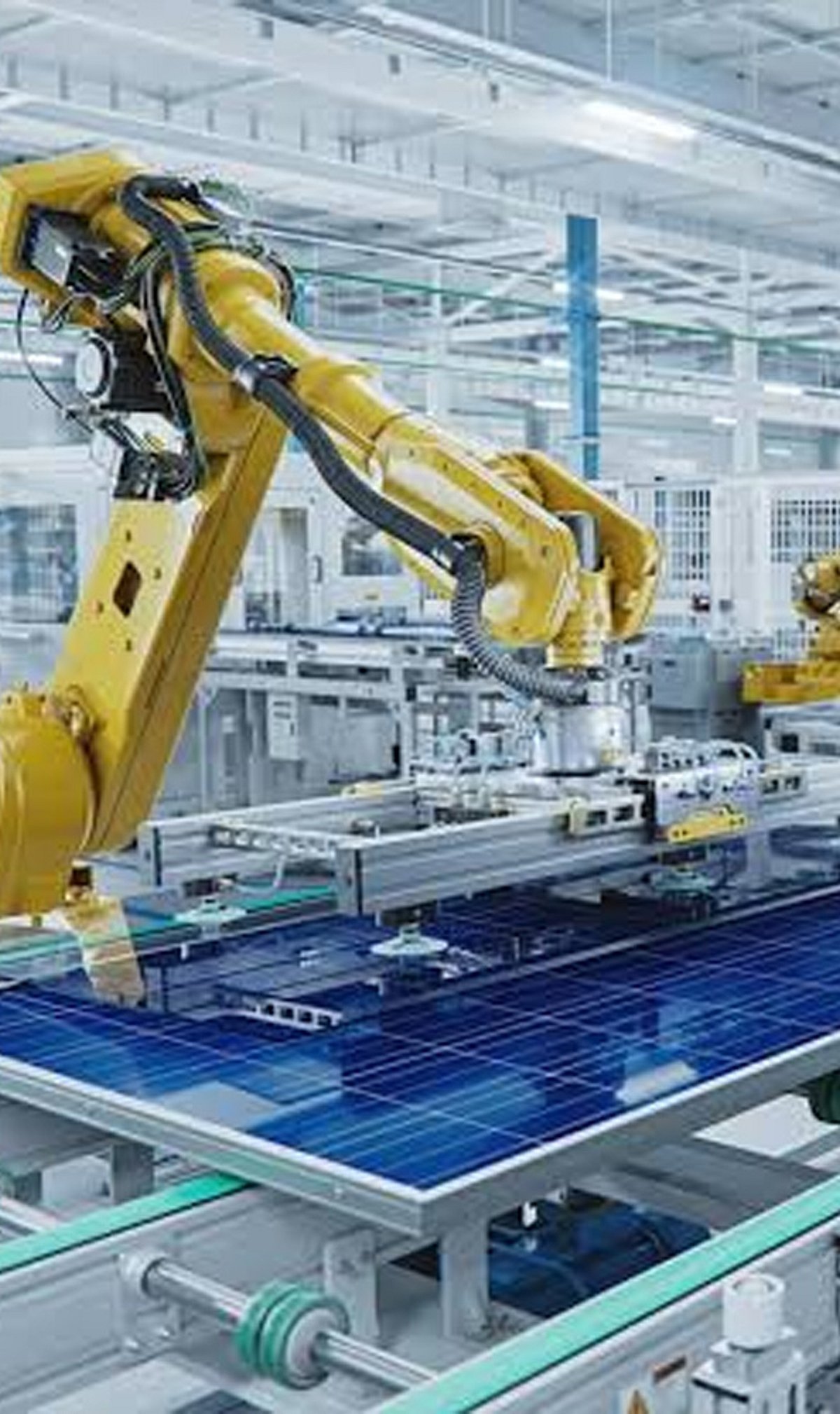
    Robots and collaborative machines handle tasks such as drilling, fastening, welding, painting, and material handling. These systems enhance precision and support human workers in complex operations, boosting productivity and consistency.

    3D Printing for Lightweight Components

    Additive manufacturing (3D printing) enables rapid prototyping and production of lightweight parts, tooling, and complex low-volume components. This reduces material waste and simplifies assembly processes, contributing to more sustainable manufacturing.

    Augmented and Virtual Reality

    AR and VR technologies provide digital work instructions for technicians, support maintenance training, aid factory planning, facilitate design reviews, and enable remote assistance, improving accuracy and reducing errors.

    Strengthening Supply Chains

    Smart manufacturing enhances defense supply chains by improving parts visibility, predicting shortages, and enabling faster production adjustments in response to changing demand. This resilience is critical for national security.

    Challenges and Future Outlook

    The transition to smart manufacturing also brings challenges, including cybersecurity risks, certification hurdles, integration with legacy systems, and workforce upskilling. According to TCS, around 40% of aerospace manufacturing operations are expected to require minimal human intervention within five to seven years, though human oversight will remain essential.

    Conclusion

    Smart manufacturing is not just a technological upgrade but a fundamental shift in how aerospace and defense products are designed, produced, and maintained. By embracing these innovations, the industry can achieve higher efficiency, quality, and adaptability in an increasingly complex global environment.

  • GE Aerospace Advances GE9X Engine Fix and $11.75B CPP Acquisition

    GE Aerospace Advances GE9X Engine Fix and $11.75B CPP Acquisition

    GE Aerospace is making strategic moves to strengthen its engine supply chain and resolve a durability issue with its GE9X engine. The company has agreed to acquire Consolidated Precision Products (CPP) for $11.75 billion, targeting critical component shortages, while also rolling out a redesigned mid-seal for the GE9X after testing revealed durability concerns. Separately, GE Vernova—now independent since April 2024—settled its legal dispute with Vineyard Wind, though the resolution does not directly impact GE Aerospace’s finances.

    CPP Deal Secures Key Engine Components

    GE Aerospace’s acquisition of CPP, a manufacturer of precision-cast components like turbine blades and vanes for commercial and military engines, is expected to close in the second half of 2027, pending regulatory approvals. The deal addresses a central production bottleneck by bringing CPP’s casting capacity in-house, improving component availability and delivery schedules for GE’s engine portfolio. The company plans to finance the transaction with $7 billion in cash and new debt, emphasizing that it will not alter current capital allocation plans, though added debt may affect financial flexibility during integration. CFO Rahul Ghai noted that the CPP purchase is a targeted investment in hard-to-source components, not part of a broader supplier acquisition strategy.

    GE9X Durability Fix Underway

    GE Aerospace has redesigned a mid-seal inside the GE9X engine after testing found the original part less durable than expected. The component connects the engine’s front and rear sections. The company began shipping engines with the redesigned seal to Boeing in the third quarter of 2026. Ghai expressed strong confidence in the new design following internal testing, with Federal Aviation Administration certification expected within months, though the timetable remains uncertain. GE Aerospace does not anticipate delays to the Boeing 777X’s planned 2027 entry into service, as the existing seal supports current certification work while the updated component follows a separate approval process. However, Boeing still faces broader certification and production risks on the 777X program.

    Vineyard Wind Settlement Removes Legal Hurdle

    GE Vernova and Vineyard Wind have ended litigation tied to the offshore wind project near Martha’s Vineyard. GE Vernova withdrew its contract termination notice and dropped its appeal against a court order to continue work, with both parties dismissing pending claims. Settlement terms remain confidential, leaving financial outcomes unclear. The dispute stemmed from payment disagreements and a 2024 turbine blade failure that delayed the project. While the settlement provides clarity for GE Vernova shareholders, it does not directly drive earnings for GE Aerospace, given their independent status.

    Investor Considerations

    For GE Aerospace investors, the CPP acquisition and GE9X redesign are more significant than the Vineyard Wind agreement. Both measures address engine production, component availability, and delivery reliability, supporting equipment sales and long-term service revenue. However, the investment case hinges on regulatory approvals, supplier integration, production rates, and aviation demand. The CPP deal strengthens supply access but introduces acquisition and financing risk, while the GE9X fix must complete certification to fully resolve concerns.

  • 9 Essential Facts About ISRO’s EOS-05: India’s First Geo-Imaging Satellite

    9 Essential Facts About ISRO’s EOS-05: India’s First Geo-Imaging Satellite

    1. India’s First Geo-Imaging Satellite in Geosynchronous Orbit

    EOS-05 is India’s first dedicated Earth-observation imaging satellite placed in geosynchronous orbit, enabling persistent monitoring of large regions.

    2. Launched Aboard the Powerful GSLV-F17

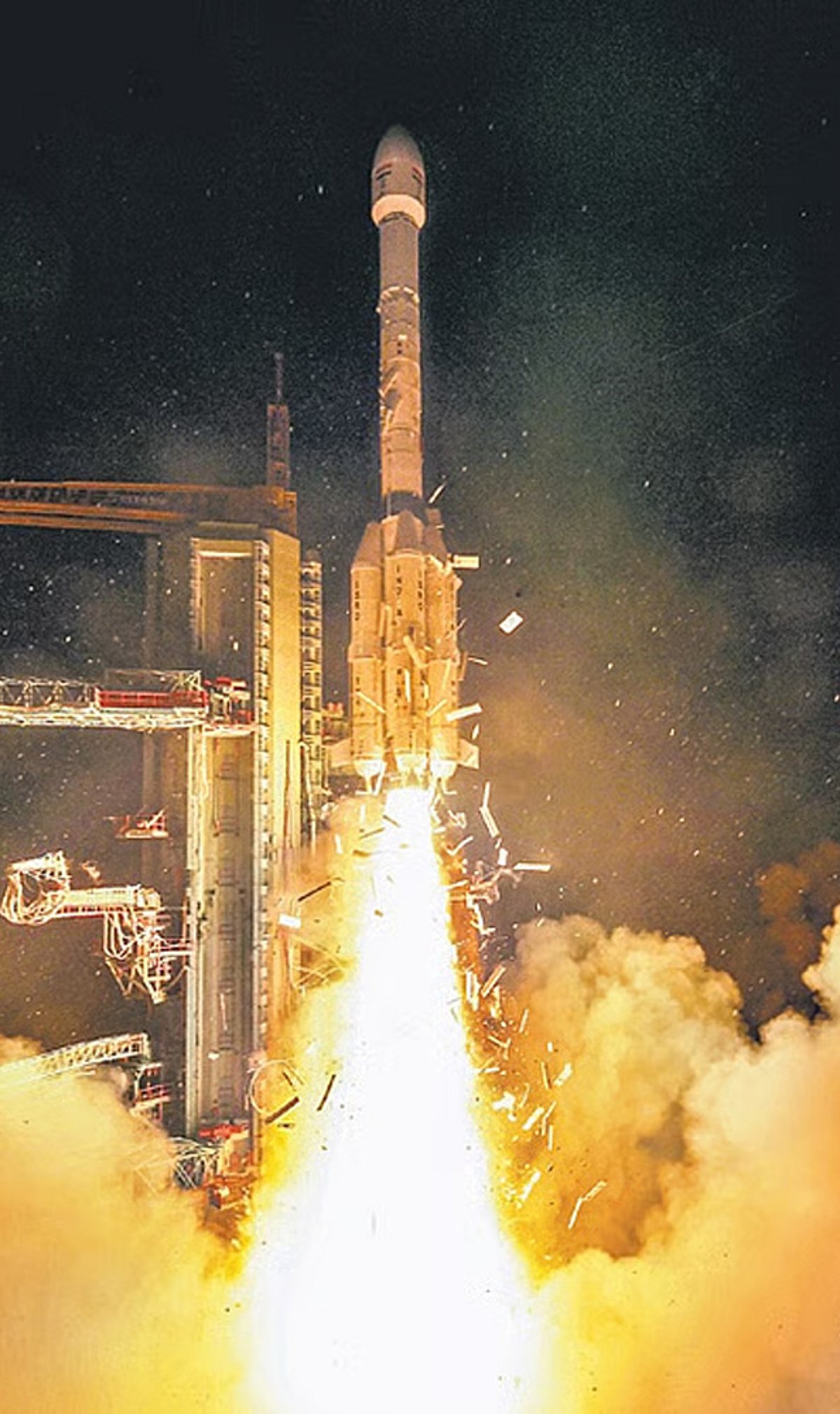
    ISRO launched EOS-05 aboard the GSLV-F17 rocket on September 4, marking the rocket’s heaviest mission and 19th flight.

    3. Operating at Nearly 36,000 Kilometers

    EOS-05 operates in an elliptical geosynchronous orbit, ranging approximately between 34,903 and 35,884 kilometers above Earth.

    4. Continuous Regional Observation

    Its geosynchronous position allows EOS-05 to repeatedly monitor the Indian subcontinent, offering sustained coverage unavailable from conventional low-Earth orbits.

    5. Strengthening Disaster Management

    The satellite is designed to provide frequent imagery that can improve monitoring of natural disasters and enhance response planning.

    6. Supporting Agriculture and Forestry

    EOS-05 can capture imagery of large areas frequently, supporting agricultural assessment, forestry monitoring, and broader environmental management.

    7. Strategic Defense Applications

    Beyond civilian uses, EOS-05 is expected to provide strategic imagery, including supporting the Indian Navy’s information requirements.

    8. Designed for a Ten-Year Mission Life

    With a planned operational lifespan of approximately ten years, EOS-05 provides India with a long-term Earth-observation capability from geosynchronous orbit.

    9. A Milestone for GSLV Reliability

    The successful mission strengthens confidence in the GSLV after several recent launch setbacks and demonstrates India’s high-orbit launch capabilities.

  • Agnikul Cosmos Expands Private Space Capabilities with New Chennai Testing and Manufacturing Facilities

    Agnikul Cosmos Expands Private Space Capabilities with New Chennai Testing and Manufacturing Facilities

    Indian space startup Agnikul Cosmos has inaugurated two new assembly and testing facilities in Chennai, marking a significant step toward reusable launch vehicle technology and bolstering India’s private space sector. The facilities, unveiled at the company’s assembly and testing complex, are designed to support the Agnibaan rocket program and preparations for Mission-02.

    Stage Testing & Inspection Facility (STIF)

    The Stage Testing & Inspection Facility (STIF) is a fully in-house facility built to test reusable rocket stages under flight-like operating conditions. It will also enable post-flight inspection and requalification of recovered stages. The facility supports thrust levels ranging from 1 kN to 200 kN, LOX subcooling down to 73 K, and full-duration burns of up to 150 seconds.

    Agnikul Cosmos co-founder and CEO Srinath Ravichandran emphasized the importance of this capability: “STIF gives us the ability to test complete stages for the duration of their mission and inspect and requalify recovered stages. This is an important capability as we work towards Mission-02.”

    Pressurant Tank Realisation, Over-wrapping and Outfitting Facility (PROOF)

    The PROOF facility enables in-house manufacturing of pressure vessels—rocket components designed to hold gases or liquids at pressures significantly different from the outside environment. The new facility can produce more than 10 vessels per month, including vessels with capacities of up to 3,500 liters and 350 bar.

    Group Captain and Indian astronaut Shubhanshu Shukla, who inaugurated the facilities, remarked: “India’s space program is entering an exciting phase, with capabilities developing across the country to support increasingly ambitious missions.” He welcomed Agnikul’s expansion in advanced manufacturing and testing.

    Agnibaan Program and Future Plans

    Headquartered in Chennai and incubated at IIT Madras, Agnikul Cosmos develops the Agnibaan family of configurable small-lift launch vehicles. In May 2024, the company successfully conducted Mission 01 (Agnibaan SOrTeD) from its privately built launchpad in Sriharikota. Agnikul also designs and manufactures its single-piece, 3D-printed semi-cryogenic engines in-house, along with avionics, propulsion, and other vehicle systems.

    The new facilities represent a major step toward reusable launch technology, echoing the approach of companies like SpaceX. By bringing testing and manufacturing in-house, Agnikul aims to accelerate its development cycle and reduce costs, supporting India’s growing ambitions in space exploration.

  • How Counter-Drone Systems Stack Up: Detection, AI, and Response Tactics Compared

    How Counter-Drone Systems Stack Up: Detection, AI, and Response Tactics Compared

    Unauthorized drones pose varying risks depending on their type and behavior. A small commercial drone near a military base behaves differently from an autonomous aircraft following a pre-planned route. Some drones stay linked to an operator, while others fly without live communication. These differences shape how security teams detect, identify, and respond to threats.

    To compare counter-drone systems effectively, look beyond detection range. Evaluate the sensors, information quality, response methods, and ability to integrate with existing security tools. A robust drone defense setup helps operators understand what is flying, where it came from, and what actions are available.

    How Do Counter-Drone Systems Detect Aircraft?

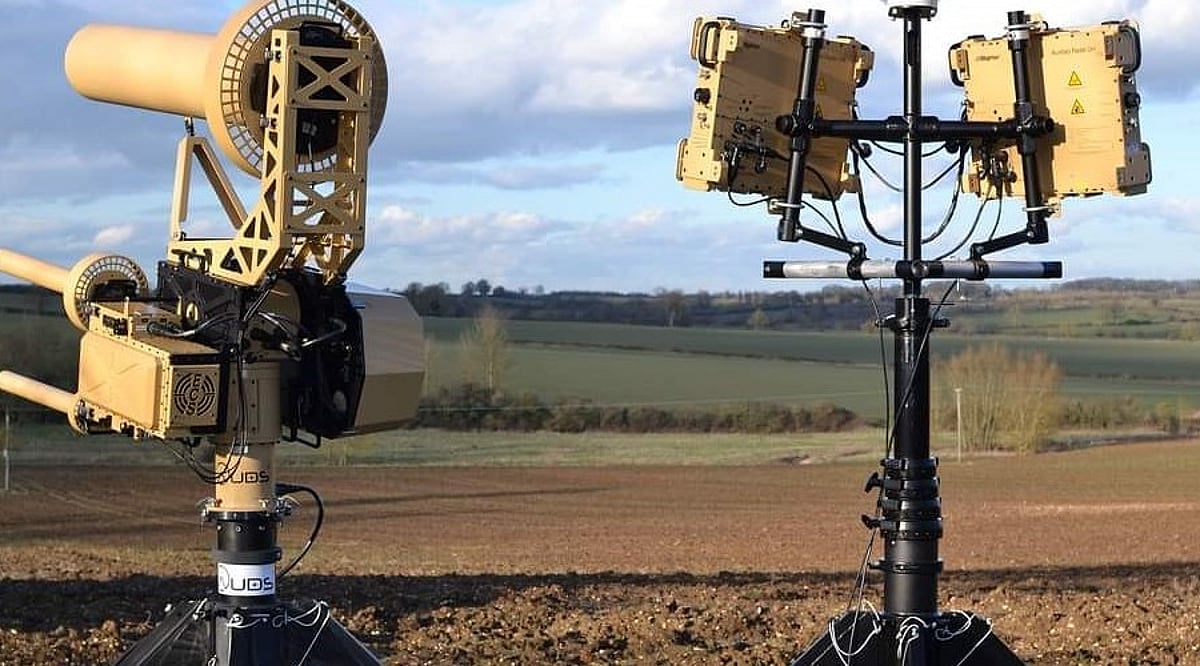
    Radar detects movement in the air and covers large areas. It can find drones that do not transmit radio signals, but may need additional sensors to distinguish small drones from birds or other objects.

    Radio frequency (RF) sensors listen for communication between a drone and its controller. They identify many commercial models and provide details about the aircraft or operator. Passive RF detection works without transmitting a signal, useful when a protected unit wants to stay covert.

    Cameras provide visual confirmation after another sensor detects an object. They help operators see the drone and track its direction, but weather, distance, lighting, and buildings can affect image quality.

    Modern systems often combine these sources through one software platform, allowing operators to view radar data, radio signals, and camera images in a single interface instead of reviewing separate alerts.

    How Does Artificial Intelligence Support Detection?

    AI processes information from multiple sensors. It studies movement patterns, compares objects, and helps reduce false alerts—valuable in areas with birds, vehicles, authorized drones, and other activity. AI does not replace sensors; it organizes their data and highlights objects needing attention. The quality of results still depends on the sensor data and site conditions.

    When systems use similar sensors, their software can create a major difference. One platform may send a basic alert, while another can identify the model, track the flight path, locate the operator, and suggest the next action.

    How Do Response Methods Differ?

    Jamming interferes with communication between drone and controller. The aircraft may land, hover, return to start, or continue along a programmed route. Jamming can affect nearby communications, limiting its use in many locations.

    Physical interception can stop a drone directly, but falling parts create danger near people, vehicles, equipment, or buildings. Other systems use directed energy, though range, weather, power, and line of sight affect performance.

    Protocol-based control works through the communication used by a supported drone. It can disconnect the original controller and guide the aircraft to a chosen landing point. This avoids broad radio interference, but does not support every drone model.

    Effective drone defense often combines several response options rather than relying on one method.

    Why Does Integration Matter?

    A counter-drone system rarely operates alone. Defense teams may already use radar, cameras, command software, and other air protection tools. The new system should exchange information with them and display threats through a clear operational view. Open integration also makes it easier to add new sensors or response tools later. Drone technology changes quickly, so a closed platform can become difficult to update.

    Sentrycs, for example, uses passive detection, drone identification, operator location, and protocol-based control as part of a wider drone defense approach. Its technology connects with radar, optical sensors, and military command systems rather than replacing every existing layer.

    What Should Security Teams Test?

    A useful test should reflect the real environment: relevant drone models, local radio activity, buildings, low flights, and multiple aircraft in the air. Teams should also measure false alerts, response time, setup needs, and training requirements. The best comparison comes from testing each system against the same mission and threats. The strongest drone defense solution is not simply the one with the longest range—it is the one that gives operators accurate information, supports a suitable response, and continues working under difficult conditions.


  • 8 Key Facts About Tewolde Gebremariam, Air India’s New CEO

    8 Key Facts About Tewolde Gebremariam, Air India’s New CEO

    Aviation Veteran: Tewolde Gebremariam brings decades of airline leadership experience and global recognition for strategic planning and operational excellence.

    Former Ethiopian Airlines CEO: He transformed Ethiopian Airlines into one of Africa’s most successful and profitable aviation groups during his tenure.

    Global Aviation Experience: His expertise spans fleet expansion, international partnerships, operational efficiency, and sustainable airline growth across global markets.

    Proven Business Leader: Known for driving profitability while expanding passenger networks and strengthening airline competitiveness in challenging market conditions.

    Focus on Innovation: Supports digital transformation, operational modernization, and technology adoption to improve airline efficiency and customer experiences.

    Strategic Expansion Vision: Expected to strengthen Air India’s international presence through network expansion, improved services, and fleet modernization initiatives.

    Customer Experience Priority: Emphasizes service quality, operational reliability, and passenger satisfaction as essential pillars for long-term airline success.

    Leading Air India’s Next Chapter: His appointment marks a significant milestone as Air India accelerates its transformation into a globally competitive full-service carrier.

  • SpaceX Q2 2026 Revenue Surges to $7.8B as AI Investment Weighs on Stock

    SpaceX Q2 2026 Revenue Surges to $7.8B as AI Investment Weighs on Stock

    SpaceX reported second-quarter revenue of $7.8 billion, a 92% increase year-over-year, driven by strong growth in its Starlink satellite internet and artificial intelligence businesses. However, the company posted a net loss of $541 million, and shares fell about 11% in pre-market trading after the earnings release as investors focused on rising capital expenditures tied to AI infrastructure.

    Starlink remained the largest revenue contributor, generating $4.29 billion in the quarter, up from $2.59 billion a year earlier. The satellite internet service now has 12 million subscribers, and CEO Elon Musk said during the earnings call that Starlink could eventually deliver a majority of the world’s internet.

    SpaceX’s AI segment also saw significant growth, with revenue rising to $2.56 billion from $737 million in the same period last year. The company provides computing capacity for AI projects and works with partners including Google and Anthropic. It currently operates 1.4 gigawatts of AI computing capacity and plans to expand to at least 10 gigawatts next year. However, the AI division recorded a $1.2 billion loss despite generating $2.5 billion in revenue.

    Capital spending surged to about $18 billion during the quarter, compared with less than $3 billion a year earlier. CFO Bret Johnsen said spending would remain at a similar level for the rest of the year. The increased costs, combined with a $542 million loss in the space division, fueled investor concerns after the earnings report.

    SpaceX shares had gained 9.43% during regular trading on Tuesday, closing at $125.33, but reversed course in after-hours trading. The stock had already declined from its June high following the company’s public listing.

    Musk said SpaceX expects its AI investments to support future growth and reiterated a goal of reaching $1 trillion in annual revenue by 2030, one year earlier than his previous estimate. The company continues to focus on its Starship program, with President Gwynne Shotwell stating that SpaceX aims to send astronauts to the Moon by 2028 through NASA’s lunar program.

    SpaceX’s earnings report also revealed changes in the value of its Bitcoin holdings. The company held 18,712 BTC at the end of the second quarter, with the value falling to about $1.1 billion from $1.64 billion at the end of 2025. SpaceX did not indicate plans to sell its holdings.

  • Discarded SpaceX Falcon 9 Stage Strikes the Moon, Offering Rare Research Opportunity

    Discarded SpaceX Falcon 9 Stage Strikes the Moon, Offering Rare Research Opportunity

    A discarded SpaceX Falcon 9 upper-stage rocket has crashed into the Moon after drifting through space for more than 18 months, marking one of the few known accidental impacts of human-made space debris on the lunar surface. The 4,000-kilogram rocket stage, originally launched in January 2025 to deploy Firefly Aerospace’s Blue Ghost and ispace’s Resilience lunar landers, struck the Moon at an estimated speed of 8,690 km/h (5,400 mph). Scientists believe the impact created a crater measuring roughly 20 to 40 metres across, although confirmation is expected only after orbital imagery becomes available.

    How the Falcon 9 Ended Up on a Collision Course

    Unlike the reusable first stage of the Falcon 9 rocket, the upper stage is designed for a single mission. After successfully sending the two lunar landers toward the Moon, the stage exhausted its fuel and could not perform a controlled disposal manoeuvre. Instead of returning to Earth or entering a stable solar orbit, it remained in a high-Earth orbit that crossed the Moon’s path. Over time, a combination of solar radiation pressure and gravitational forces from the Earth and Moon gradually altered its trajectory, ultimately sending it toward the lunar surface. SpaceX has said the disposal method complied with existing safety regulations for high-energy missions but acknowledged that future disposal strategies are being evaluated with NASA and other agencies.

    Scientists See a Rare Research Opportunity

    Though the outcome was unexpected, researchers see a great chance for learning about the Moon’s surface and planning future space missions. The collision is believed to have produced a plume of dust and rock particles, which will help scientists study physical processes, crater formation, and the interaction between man-made objects and the lunar surface. As the collision took place on the illuminated part of the Moon near the Einstein Crater area, observing the event from Earth was not easy. However, satellites such as NASA’s Lunar Reconnaissance Orbiter and South Korea’s Danuri should capture images before and after the event to detect the created crater.

    Growing Focus on Space Debris

    This incident has triggered a debate on how to handle space debris in view of the growing number of lunar expeditions. Beyond rocket stages that have impacted the Moon in the past—including one in 2022 and NASA experiments during the Apollo missions—the increasing number of commercial and governmental lunar missions poses new challenges for orbital sustainability. Space organizations and private firms are already seeking better ways to manage space debris from high-energy missions to ensure no abandoned spacecraft becomes a hazard. The Falcon 9 crash serves as a reminder that mission planning must account for deep-space travel’s unique challenges.

  • SpaceX’s First Earnings Report: Starlink Profits, AI Spending, and Starship’s Future

    SpaceX’s First Earnings Report: Starlink Profits, AI Spending, and Starship’s Future

    SpaceX is set to release its first quarterly earnings report since its blockbuster initial public offering, giving investors a detailed look at whether the company’s financial performance can sustain Elon Musk’s ambitious expansion into artificial intelligence and space technology. The results, due after the market closes on Tuesday, August 4, 2026, are expected to reveal how effectively Starlink’s profits can fund growing investments while justifying SpaceX’s lofty valuation.

    Starlink Remains the Financial Backbone

    Analysts project Starlink, SpaceX’s satellite internet division, will report around $3.82 billion in revenue and $1.42 billion in operating profit for the second quarter, fueled by subscriber growth and expansion into new markets. However, investors are increasingly questioning whether Starlink alone can finance the company’s rapidly rising spending on AI infrastructure and next-generation space projects.

    “Starlink is executing beautifully, but it cannot single-handedly fund a $30 billion annualized AI capex program,” said Will Rhind, founder and CEO of GraniteShares, an asset manager offering ETFs tied to SpaceX stock performance.

    AI Spending and Capital Costs in Focus

    Wall Street will closely monitor SpaceX’s capital expenditure, forecast to reach nearly $14.05 billion during the April–June quarter. A significant share of that investment is tied to AI ambitions, including compute infrastructure, advanced software development, and future data center projects. While analysts expect the AI segment’s revenue to nearly triple to $2.33 billion, many believe profitability could take much longer because of the substantial investment required. Overall, SpaceX is expected to report approximately $6.93 billion in second-quarter revenue but an operating loss of about $1.55 billion.

    “The key question for investors is whether SpaceX can monetize its AI infrastructure through third-party compute fast enough to offset xAI’s extraordinary capital intensity,” said Michael Monaghan, portfolio manager of the Founders 100 ETF (FFF.Z), which holds SpaceX shares.

    Starship Progress Could Shape Long-Term Outlook

    Beyond financial results, investors will also look for updates on Starship, the reusable rocket central to SpaceX’s long-term growth strategy. Starship is expected to support future Starlink expansion, NASA’s Artemis Moon missions, and potential space-based computing infrastructure. Recent tests successfully deployed upgraded Starlink V3 satellites, although the Super Heavy booster did not complete its planned splashdown.

    According to analysts, the future progress of Starship is crucial for SpaceX to retain investor confidence as it balances significant expenses with future growth. Given the questions surrounding AI investments, profitability, and upcoming share lock-up expirations, this earnings report is among the most important events for SpaceX since it became a publicly traded company.