Tag: 2026

  • AI, Cloud, and Cybersecurity: The Three Forces Reshaping Tech Stocks in 2026

    AI, Cloud, and Cybersecurity: The Three Forces Reshaping Tech Stocks in 2026

    Technology stocks are entering a pivotal period as artificial intelligence, cloud computing, cybersecurity, and shifting enterprise spending patterns reshape the IT sector. For investors tracking technology companies, the focus is moving from traditional outsourcing growth to how businesses adapt to newer technology cycles.

    In India, this transition is already influencing the outlook for IT services companies. Recent industry assessments point to muted near-term growth as clients remain cautious about discretionary technology spending, while AI simultaneously creates new demand for cloud, data engineering, cybersecurity, and digital transformation.

    AI Is Changing the IT Services Model

    AI will be a major factor influencing technology stocks in the coming years. But AI will not only open new avenues for companies—AI-driven productivity gains are also pressuring IT service providers’ business models.

    According to Crisil Ratings, the IT services industry in India would see subdued revenue growth of 1-3% this fiscal year and next, driven by disruption from artificial intelligence, subdued discretionary spending, and geopolitical uncertainties. Companies will have to reimagine their models and move into newer services, the rating agency said.

    Meanwhile, ICRA forecasts an annualized revenue growth rate of 3-5% for its basket of Indian IT services firms in FY2027 from 3.5% in FY2026. It says demand for traditional services will continue to be affected by delays in discretionary spending tied to generative AI.

    Cloud Spending Remains Key Growth Area

    Cloud computing remains an important part of the technology investment cycle as businesses move more applications and workloads to scalable infrastructure.

    Gartner forecasts that end-user spending on public cloud services in India will grow 28.1% in 2026 to USD 17.5 billion, up from USD 13.7 billion in 2025. The research firm said demand for AI-ready infrastructure and application modernization is driving this increase.

    For technology companies, this creates opportunities beyond traditional application development. Cloud migration, modernization, and consumption-based technology models are becoming increasingly connected to enterprise AI strategies.

    Data Centers and Semiconductors Gain Importance

    The AI revolution is creating investment opportunities not only for software companies but also for the technologies needed to build and sustain AI infrastructure.

    According to Deloitte, India’s data center power capacity will increase from around 1.5 GW in 2025 to around 10 GW by 2030. Moreover, the sector’s electricity consumption would be around 57 TWh in FY2030.

    This indicates that tech investors are increasingly interested in firms that build infrastructure for AI and cloud-based computing, rather than focusing only on software firms.

    Importance of Cybersecurity Grows

    As more companies adopt cloud computing and AI applications, cybersecurity is becoming a critical area of technology investment. As per CRISIL, Indian IT firms will invest selectively in AI, cloud, cybersecurity, and digital engineering in the future. Healthy balance sheets and cash flow will enable these investments.

    What It Means for IT Stocks

    The evolving technology ecosystem is adding complexity for IT stocks. Firms heavily dependent on legacy services face pressure from subdued discretionary spending and productivity gains from artificial intelligence. On the other hand, AI deployment, cloud adoption, cybersecurity, and modernization create business opportunities.

    Recent market trends stem from this uncertainty. As reported by The Economic Times in September, the Nifty IT index surged 5% in a single day of trading, adding Rs 1.13 lakh crore to market cap.

    The Next Phase of Technology Growth

    The future performance of tech stocks is likely to depend not on AI use alone but on companies’ ability to turn AI demand into revenue and preserve margins despite improved productivity. For the Indian IT industry, this transition will also mean shifting its focus toward offering higher value-added services like AI-driven transformation, application modernization, data engineering, cloud, and cybersecurity solutions.

    According to ICRA, these verticals are expected to grow as organizations move generative AI initiatives from pilots to broader implementations across the company. Overall, the technology industry is currently experiencing a structural change cycle, not just a boom cycle, driven by AI changing how technology is developed and used, growing cloud infrastructure demand, and cybersecurity becoming crucial to operations.

  • Top Hiking Navigation Apps of 2026: Safer Trails with AllTrails, Gaia GPS, Komoot & More

    Top Hiking Navigation Apps of 2026: Safer Trails with AllTrails, Gaia GPS, Komoot & More

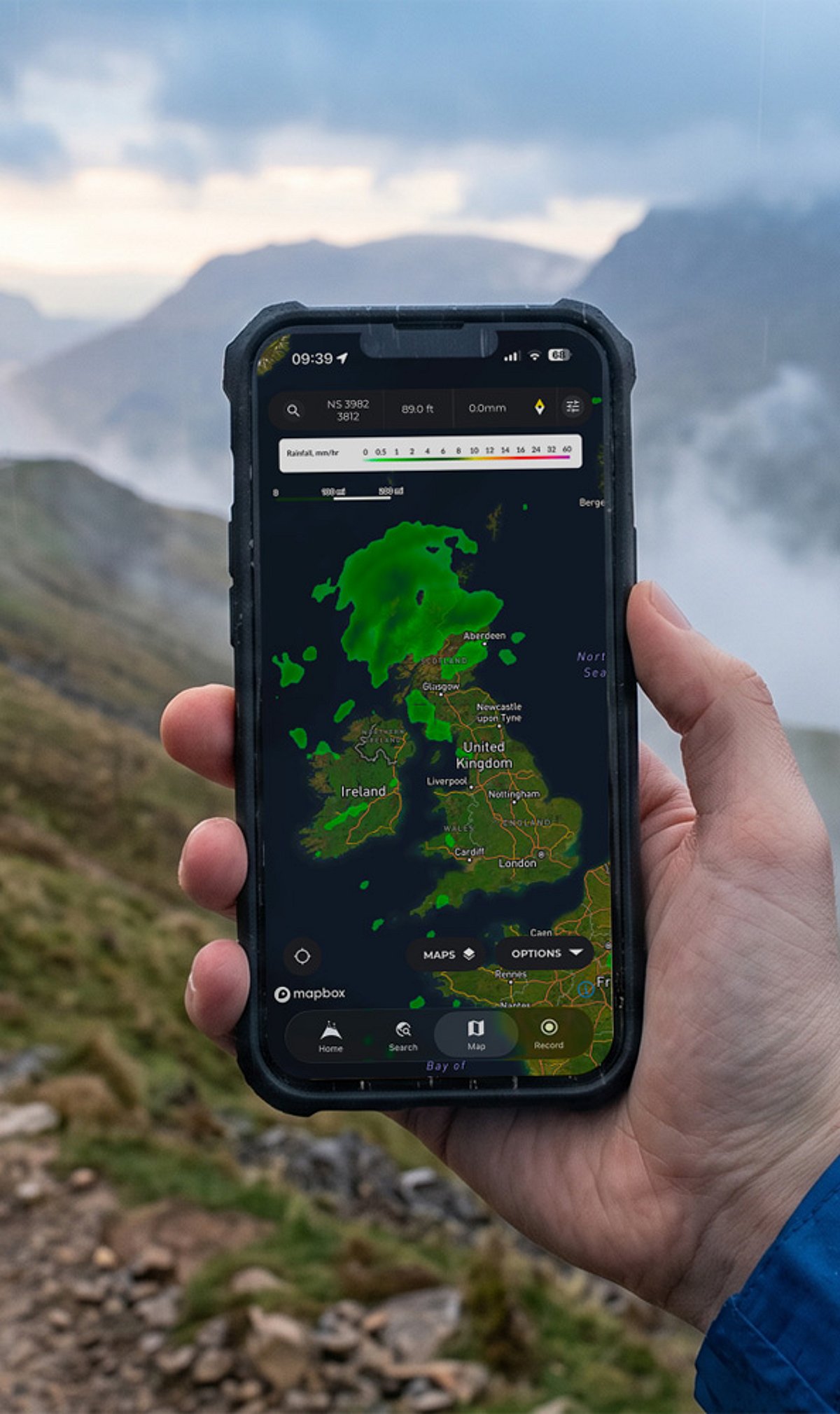
    Planning a hike in 2026? The best hiking navigation apps now offer more than just maps — they provide real-time GPS tracking, offline access, and critical trail details that can keep you safe and on track. Whether you’re a day hiker or a thru-hiker, the right app makes all the difference. Here’s our guide to the top navigation tools for exploring the outdoors this year.

    AllTrails – Best for Trail Discovery

    AllTrails remains the go-to app for popular day hikes and well-trafficked paths. It features a massive database of trail maps, user reviews, photos, and GPS tracking. Upgrading to the paid version unlocks offline maps, making it a solid choice for casual adventurers who want to explore new routes with confidence.

    Komoot – Best for Route Planning

    Komoot excels for walking, hiking, and cycling trips. Its turn-by-turn voice guidance, elevation profiles, and offline maps help you plan detailed routes. Whether you’re heading out for a few hours or a multi-day trek, Komoot’s smart routing adapts to your preferred activity.

    Gaia GPS – Best for Backcountry Hiking

    For serious outdoor navigation, Gaia GPS delivers topographic and satellite maps, offline support, waypoints, and multiple map layers. It’s designed for remote areas where reliable cellular signals are scarce, making it a favorite among backcountry explorers and wilderness trekkers.

    FarOut – Best for Thru-Hikes

    Formerly known as Guthook, FarOut is tailored for long-distance trails like the Appalachian Trail and Pacific Crest Trail. Its detailed guides highlight water sources, campsites, resupply points, and other essential waypoints, giving thru-hikers everything they need to plan and execute extended journeys.

    onX Backcountry – Best for Understanding Land Boundaries

    onX Backcountry combines offline mapping with public and private land boundaries. This is invaluable when planning remote trips where land ownership can be confusing. Hikers can avoid trespassing and find legal access points with confidence.

    CalTopo and Avenza Maps – Best for Detailed Maps

    For advanced route planning, CalTopo offers terrain layers, custom map creation, and powerful analysis tools. Avenza Maps allows users to load georeferenced PDF maps for offline navigation. Both are excellent for those who want fine-grained control over their mapping data.

    Essential Safety Tips

    • Download maps before you leave: Mobile signals can disappear on remote trails. Always save offline maps in advance.
    • Carry a power bank: Battery life drains fast in the wild. A portable charger ensures your device stays powered.
    • Bring a physical backup: A paper map and compass remain the most reliable fallback if technology fails.

    How to Choose the Right App for Your Hike

    • Day hikes on popular trails: Use AllTrails for ease and community insights.
    • Guided routes: Go with Komoot for voice navigation and elevation data.
    • Backcountry trips: Gai GPS offers the best topographic coverage and offline reliability.
    • Thru-hikes: FarOut is unmatched for long-distance trail logistics.

    Always double-check trail conditions and official sources before heading out. With the right app and proper preparation, your hikes in 2026 will be safer and more enjoyable.

  • AI Models to Watch in 2026: The Next Generation of Frontier Systems

    AI Models to Watch in 2026: The Next Generation of Frontier Systems

    2026 has ushered in a new wave of powerful AI models, with frontier systems pushing the boundaries of deep reasoning, coding, multimodal understanding, and autonomous computer use. Here are the key models shaping the fast-moving AI landscape.

    OpenAI GPT-6 Series

    • GPT-6 Astra: OpenAI’s flagship model for demanding end-to-end work, combining advanced reasoning with computer use, coding, research, and professional workflows.
    • GPT-6 Sol: Brings many of Astra’s advances into a more broadly usable model, balancing frontier intelligence with speed, affordability, and large-scale professional workloads.
    • GPT-6 Luna: Focuses on faster, more affordable AI access, bringing GPT-6 generation improvements to everyday users and high-volume workloads at a lower cost.

    Anthropic Claude Models

    • Claude Fable 5.1: Anthropic’s model for advanced coding and knowledge work, with research capabilities designed to support increasingly complex professional and scientific tasks.
    • Claude Opus 5.5: Another major contender from Anthropic, positioned around demanding professional work while reducing running costs compared to Opus 5.

    Other Notable Models

    • Gemini 3.1 Pro: Builds on Google’s Gemini 3 generation with stronger core reasoning and support for agentic workflows across Google’s consumer, developer, and enterprise products.
    • Grok 4.6: Focuses on long-running agents, interactive tasks, and visual work, with capabilities spanning research, information analysis, coding, and application creation.
    • Kimi K3: Stands out as an open-weight model with 2.8 trillion parameters, native vision, and a 1-million-token context window for long-horizon coding and knowledge work.

    These models represent the cutting edge of AI development in 2026, each bringing unique strengths to the rapidly evolving field.

  • Top Smart TVs of 2026: Comprehensive Guide to Features, Deals, and Best Picks

    Top Smart TVs of 2026: Comprehensive Guide to Features, Deals, and Best Picks

    Smart TVs continue to evolve with cutting-edge technology, superior image quality, and advanced features. As of 2026, several models lead their categories, offering options for every budget, performance need, and smart-home integration. This guide highlights the best smart TVs of 2026, detailing their standout features and unique characteristics.

    Samsung QN90D – Best Smart TV Overall

    The Samsung QN90D is widely regarded as the best overall smart TV of 2026. It delivers crystal-clear picture quality with an anti-reflective screen, making it ideal for bright rooms. Samsung’s refined QLED technology provides deeper blacks, richer colors, and improved energy efficiency. AI-based picture and sound optimization create an immersive viewing experience.

    TCL C845K – Top Value Smart TV

    For value-conscious shoppers, the TCL C845K offers outstanding performance without breaking the bank. It features stunning picture quality, high brightness, and a user-friendly smart interface. Support for major HDR formats (Dolby Vision, HDR10+) makes it competitive in the mid-range segment. Built-in streaming apps and voice commands add convenience.

    Sony Bravia XR X90L – Best LED 4K TV

    The Sony Bravia XR X90L excels with excellent color accuracy and contrast, powered by Sony’s Cognitive Processor XR. Its superior motion handling makes it perfect for sports and action content. Google TV enhances the experience with personalized recommendations and easy access to streaming services.

    Amazon Fire TV – Best Smart 4K TV

    Amazon’s Fire TV stands out for its advanced smart capabilities and seamless Alexa integration. It offers 4K resolution with HDR for clear, vibrant images. The intuitive interface provides instant access to streaming media and hands-free voice commands. AI-based content discovery simplifies browsing, while its price offers great value.

    Hisense U8N – The Brightest Smart TV

    The Hisense U8N is acclaimed for its exceptional brightness, high contrast, and wide color gamut. With a 144Hz native refresh rate, VRR, and AMD FreeSync Premium Pro, it’s a top choice for gamers. Apple AirPlay, Google Assistant, and Google Cast support enable seamless multi-ecosystem connectivity. Hisense’s Mini-LED technology balances performance and price.

    LG Evo G4 OLED TV – Ultimate OLED TV for Gaming

    LG’s Evo G4 OLED TV delivers rich, precise colors and outstanding gaming performance. Near-instant response times and a 120Hz refresh rate make it ideal for console and PC gaming. LG’s OLED technology ensures deep blacks and high contrast for a cinematic experience. AI-enhanced picture and sound settings adapt to room lighting.

    Panasonic Z95A OLED TV – Brightest OLED TV

    The Panasonic Z95A OLED TV offers superb brightness, accurate wide-color representation, and a spatial audio speaker system. It supports all major HDR formats, including Dolby Vision IQ and HDR10+, delivering optimal picture quality for any content.

    Samsung S95D – Best OLED TV with Anti-Glare Technology

    Samsung’s S95D combines OLED technology with a distinctive matte finish that minimizes glare while preserving color accuracy. Superior contrast and brightness make it impressive even in brightly lit rooms. Sub-millisecond input lag appeals to gamers, and the smooth Tizen OS ensures easy navigation. This model is a strong contender in the high-end TV segment.

    Final Thoughts

    The top smart TVs of 2025 cater to diverse preferences, whether you prioritize gaming, value, or image quality. Brands like Samsung, Sony, LG, and Hisense continue to push boundaries with new features and improved user experiences. When choosing a smart TV, consider display technology, refresh rate, and smart features to find the best fit for your needs. With emerging AI and display technologies, the future of smart TVs promises even more immersive experiences for viewers worldwide.

    Frequently Asked Questions

    1. Which smart TV is best overall in 2026? Samsung QN90D offers strong picture quality, anti-reflective technology, and AI-based optimization.
    2. Which smart TV is best for gaming? LG Evo G4 OLED provides 120Hz refresh rate, fast response, deep blacks, and high contrast.
    3. Which smart TV is best for bright rooms? Samsung QN90D and Hisense U8N perform well due to high brightness and robust screen performance.
    4. Which smart TV offers the best value for money? TCL C845K combines high brightness, strong picture quality, HDR support, and smart features at a competitive price.
    5. What should you consider before buying a smart TV? Display type, picture quality, brightness, refresh rate, HDR support, gaming features, operating system, smart features, and budget.
  • 2026 QLED TV Buying Guide: Top Models for India and Expert Tips

    2026 QLED TV Buying Guide: Top Models for India and Expert Tips

    Introduction

    A QLED TV offers more than just a large screen and high resolution. Its quantum dot technology delivers deeper contrasts, more vibrant colors, and superior brightness, transforming your home entertainment experience. Since early 2025, the Indian QLED market has evolved significantly. Mini-LED backlighting is now standard on mid-range models, and native 144Hz panels are available under ₹60,000. New brands like Lumio have raised the bar for budget QLED performance, making 2026 an exciting year for buyers.

    Key Features to Consider

    • Refresh Rate (Hz): Standard TVs run at 60Hz, but 120Hz is common in mid-range sets, and 144Hz panels are now widely available in India. Higher refresh rates reduce motion blur for sports and gaming.
    • Local Dimming: This feature allows different parts of the screen to adjust brightness independently, boosting contrast by making dark areas blacker and bright areas whiter within the same scene.
    • HDR (High Dynamic Range): HDR displays a wider range of brightness levels, preserving details in both very bright and very dark areas for a more realistic image with greater depth.
    • Gaming Features: Auto Low Latency Mode (ALLM) reduces input lag, while Variable Refresh Rate (VRR) eliminates screen tearing. Premium 2026 models often include sub-6ms input lag and full HDMI 2.1 support.

    Top QLED TVs in India for 2026

    1. Acer 139 cm (55 inches) Super Series 4K Ultra HD Smart QLED Google TV

    The Acer Super Series stands out with its powerful 80W PRO speakers and GIGA Bass, delivering room-filling sound without external audio. MEMC technology reduces motion blur in fast scenes, and AI picture optimization automatically adjusts settings. Dolby Vision enhances contrast and color accuracy, while Google TV provides easy access to streaming services.

    Pros: Exceptional color accuracy; powerful 80W speakers with rich bass. Cons: No Dolby Vision IQ support; limited premium app availability.

    2. TCL 139 cm (55 inches) 4K Ultra HD Smart QLED Google TV 55C61B

    The TCL 55C61B excels in motion handling with a 120Hz refresh rate, making it ideal for sports and action content. The ONKYO 2.1 channel speakers provide balanced sound, often eliminating the need for a soundbar. Dolby Vision and AI-enhanced picture quality ensure optimal viewing across different content types.

    Pros: Excellent motion clarity for sports and gaming; quality ONKYO speakers. Cons: Limited HDMI ports; slightly lower brightness than premium models.

    3. Lumio Vision 9 (2026) [NEW]

    Marketed as a flagship killer, the Lumio Vision 9 brings 144Hz refresh rates to the budget segment across 55-inch and 65-inch sizes. It targets buyers who want high-speed performance without the flagship price tag.

    Pros: 144Hz at a budget price; strong value for gamers. Cons: Newer brand with a shorter service track record.

    4. LG QNED evo QNED85B

    Built for sunlit Indian living rooms, this model holds saturation and clarity against heavy ambient light. Full HDMI 2.1 gaming support pairs with LG’s Magic Remote for easy navigation. It’s a solid choice for bright-room daytime viewing.

    Pros: Excellent bright-room performance; full HDMI 2.1 gaming support. Cons: Colors can look less punchy in dark rooms.

    5. Hisense 139 cm (55 inches) E68N Series 4K Ultra HD Smart Google QLED TV

    The Hisense E68N Series offers vibrant colors and sharp contrast at an affordable price. Quantum Dot display and Dolby Vision support enhance content, while Google TV integration provides voice control and easy access to streaming services.

    Pros: Vibrant colors at an affordable price point; user-friendly interface. Cons: 24W speakers insufficient for larger rooms; standard 60Hz refresh rate.

    6. TOSHIBA 164 cm (65 inches) C450NP Series 4K Ultra HD Smart QLED TV

    The Toshiba C450NP Series provides a large 65-inch screen for an immersive experience. Quantum Dot technology delivers good contrast and rich colors on the large display, and the VIDAA TV platform offers easy navigation and access to streaming apps.

    Pros: Immersive large-screen experience; straightforward user interface. Cons: Basic 24W speakers; 60Hz refresh rate limits gaming performance.

    Finding Your Perfect QLED TV

    When selecting a QLED, consider your room size and viewing distance. For an average living room, a 55-inch screen is ideal; larger rooms benefit from 65 inches or more. Brightness is key for well-lit rooms—look for models with at least 1000 nits for the best daytime viewing. Gamers should prioritize higher refresh rates, ALLM, VRR, and HDMI 2.1 support. Movie lovers should focus on color accuracy and HDR quality. Budget shoppers should rank their must-have features before comparing prices.

    Conclusion

    QLED technology continues to improve picture quality through better color reproduction, contrast, and brightness. The models on this updated list reflect where the Indian market stands in September 2026, with 144Hz panels and HDMI 2.1 support now reaching budget tiers that lacked them a year ago. Each pick suits a different need, from premium gaming to bright-room daytime viewing. These aren’t just better specs on paper—they translate into daily viewing that feels sharper, smoother, and more lifelike than ever before.

  • Flipkart Big Billion Days 2026: Early Bird Deals Start September 24 – Key Dates, Discounts & Bank Offers

    Flipkart Big Billion Days 2026: Early Bird Deals Start September 24 – Key Dates, Discounts & Bank Offers

    Flipkart has officially announced the dates for its flagship Big Billion Days 2026 sale. The main event begins October 9, with early access for eligible customers starting October 8. Before that, the platform launches Early Bird Deals from September 24, giving shoppers a sneak peek at selected products and offers.

    Early Bird Deals From September 24

    The Early Bird phase kicks off on September 24. During this period, Flipkart allows shoppers to preview participating products and add items to their wishlists ahead of the main sale. The preview currently covers smartphones, laptops, TVs, smartwatches, and other electronics. Note that this is not the main sale — many product prices remain undisclosed, so preview prices and teased offers should be treated separately from confirmed final sale prices.

    Sale Dates and Early Access

    Flipkart confirmed October 9 as the start of Big Billion Days 2026. Eligible Flipkart Plus, Black, and credit card customers get early access from October 8, one day before the wider sale opens. Early access can be crucial for limited-inventory products, though exact availability, discounts, and offer structures vary by product and customer eligibility.

    Smartphones Lead the Early Deals

    Smartphones are a major focus of the Early Bird preview. Flipkart has teased offers on the iPhone 17, Samsung Galaxy S25, Vivo T5x 5G, Realme P4 5G, Realme P4 Lite 5G, Motorola Signature, Moto G06 Power, and Lava Virat V1 5G. The iPhone 17 appears with a teased price below Rs 80,000, though the final effective price depends on attached conditions.

    Laptops, TVs, and Wearables Get Early Attention

    The preview extends beyond phones. Flipkart has teased the Samsung Book4 i5 laptop and 65-inch 4K televisions, while select Goboult smartwatches are listed from Rs 1,799. Some 65-inch 4K TVs are shown from Rs 39,999. These advertised starting prices may not reflect final prices for every model, as variant, seller, and payment conditions can affect the amount payable.

    Appliances, Fashion, and Other Categories

    The wider Big Billion Days event covers smartphones, computers, televisions, home appliances, fashion, beauty, home products, and other everyday categories. Flipkart’s official sale page highlights laptops, smartphones, tablets, smartwatches, televisions, headphones, kitchen appliances, and air conditioners. However, the platform has not published a complete product-by-product discount list for every category.

    Bank Offers Include Up to 10% Off

    Flipkart confirmed up to 10% instant discount on eligible transactions using select Axis Bank and ICICI Bank cards. Purchases made with the Flipkart Axis Bank credit card are also covered. This is an instant payment discount, not a blanket reduction on every product. Shoppers should check minimum transaction value, maximum discount, eligible cards, and other terms at checkout.

    Cashback and Payment Benefits

    Customers can receive 10% cashback on their first transaction through Super.money, subject to conditions. Flipkart is also promoting No Cost EMI and other payment options. Flipkart Pay Later offers credit of up to Rs 1 lakh, and the sale page mentions No Cost EMI and a flat Rs 500 discount, subject to eligibility and terms.

    Plus and Black Members Get Early Access

    Flipkart Plus and Black members, along with eligible Flipkart Credit Card customers, receive early access to the main sale from October 8. Early access primarily provides earlier entry to participating offers, not necessarily additional discounts.

    Check the Effective Price Before Buying

    A sale price can combine several benefits: instant bank discount, cashback, exchange value, or No Cost EMI. These should not be treated as the same type of saving. Before ordering, compare the product’s current price, variant, seller, warranty, exchange conditions, and final checkout amount. Also verify whether the bank offer applies to your exact card and transaction.

    Flipkart Big Billion Days 2026: An Overview

    September 24 marks the start of the Early Bird phase, with October 8 and October 9 as key early-access and main-sale dates. Since several product prices remain undisclosed, shoppers should wishlist target products, track prices, and compare the final payable amount after applicable offers rather than relying only on headline discounts.

    FAQs

    1. When is Flipkart Big Billion Days 2026? The main sale begins October 9, with early access from October 8 for eligible customers.
    2. Who gets early access? Eligible Flipkart Plus, Black members, and Flipkart credit card holders get early access on October 8.
    3. What products will be discounted? Smartphones, laptops, tablets, televisions, appliances, electronics, wearables, fashion, beauty, home products, and more.
    4. What bank offers are available? Up to 10% instant discount on eligible Axis Bank and ICICI Bank card transactions, subject to terms.
    5. Are additional payment benefits available? Yes, including Super.money cashback, No Cost EMI, Flipkart EMI benefits, and Pay Later offers.
  • Meta AI in 2026: Full Breakdown of Features, Models, Apps, and Real-World Use Cases

    Meta AI in 2026: Full Breakdown of Features, Models, Apps, and Real-World Use Cases

    Meta AI has evolved far beyond a simple chatbot. In 2026, the platform integrates advanced models, personal agents, creative tools, coding assistance, and AI glasses into a unified ecosystem capable of answering questions and handling real-world tasks.

    Key Takeaways

    • Muse: Meta’s new personal AI agent can handle research, shopping, email, and online forms.
    • Muse Models: Muse Spark, Muse Image, Muse Video, Muse Code, and Muse Glimmer expand Meta’s AI capabilities.
    • AI Ecosystem: Meta connects AI across its apps, developer tools, subscriptions, and smart glasses.

    Meta AI Across Apps

    Meta AI works across WhatsApp, Instagram, Messenger, Facebook, the web, iOS, Android, and the Meta AI Mac app. The assistant can answer questions, write text, review files, study images, create images, support voice chats, and help with research. It can also create documents, presentations, and plans.

    Deep Research adds a more advanced research mode. Meta AI can form a research plan, search sources, combine facts, and produce a report with citations. Public posts from Instagram, Facebook, and Threads can also add social context to some answers.

    Muse Spark Leads the New Model Stack

    Muse Spark now sits at the center of Meta’s latest AI model strategy. Muse Spark 1.1 arrived in July 2026 with stronger logic, software skills, tool use, computer use, and multimodal skills. Meta released Muse Spark 1.2 in August, with Muse Code as a major developer tool.

    Muse Spark 1.3 arrived on September 2, 2026. Meta says the model handles long tasks, software work, messy inputs, multimodal data, and real-world computer use with better context control. The model can work with images, video, and documents.

    Muse Turns AI into an Agent

    A major Meta AI shift came on September 8, 2026, when Meta introduced Muse as a personal AI agent. A normal chatbot waits for a prompt and returns an answer. Muse can take a goal, form a plan, use a browser, interact with websites, and carry out parts of a task.

    Muse can send emails, book travel, fill out forms, shop, research projects, and handle longer tasks. It can keep work active after a user leaves the app and return when a task needs approval. Meta also says Muse can negotiate on a user’s behalf in some cases.

    Meta built a separate Secure VM for Muse. The system gives the agent a dedicated virtual machine and browser. A Sentinel system controls web access. Meta says Muse does not directly see passwords or payment details and asks for approval for sensitive actions.

    Specialized Models Expand Creative Work

    Muse Image supports text-to-image work and detailed edits, while Muse Video focuses on video generation with high visual quality and native audio support. Muse Voice Transcribe handles speech-to-text work and supports live transcription. Meta lists $0.18 per hour for Voice Transcribe and $0.01 per image for Muse Image through the Meta Model API.

    Meta also has Muse Glimmer, an open-weight model for local agents. Local AI can support privacy, response speed, and device-side tasks, and gives Meta a path toward personal AI on devices.

    Muse Code Targets Software Work

    Muse Code gives developers a terminal-based software agent built on Muse Spark. It can plan tasks, edit several files, test changes, work with large codebases, and support multi-agent workflows. Meta lists Muse Code for macOS and Windows.

    AI Glasses Put Meta AI Into the Real World

    Meta AI has a major hardware path through AI glasses. The glasses support voice questions, visual help, translation, object recognition, and hands-free AI access. Muse Spark now supports the glasses with stronger multimodal skills. Phones offer the main assistant, glasses add visual and voice access, and Muse adds task execution.

    Meta One Adds a Paid AI Layer

    Meta launched Meta One on September 15, 2026, as a subscription service across Facebook, Instagram, WhatsApp, and Meta AI. The free Meta AI experience remains available, while paid plans add higher usage limits and more creative tools.

    Meta launched Core at $7.99 per month and Premium at $19.99 per month. Availability and limits can vary by market and account. Meta says the service launched with more than 50 features across its ecosystem.

    The Bigger Shift is Agentic AI

    Meta AI now reaches beyond chat. Muse can handle goals, use tools, work across apps, and ask for approval at sensitive steps. AI glasses add a hands-free interface, while Muse models cover images, video, speech, software, and local AI.

    FAQs

    1. What is Meta AI? Meta AI is Meta’s artificial intelligence assistant, available across WhatsApp, Instagram, Messenger, Facebook, the web, and supported devices.
    2. What is Muse? Muse is Meta’s personal AI agent that can plan tasks, use a browser, interact with websites, and handle longer workflows.
    3. What is Muse Spark? Muse Spark is Meta’s flagship general-purpose AI model family, with Muse Spark 1.3 as the latest major version.
    4. What can Meta AI do in 2026? Meta AI can answer questions, conduct research, create images and videos, assist with coding, analyze files, support voice tasks, and help with online activities.
    5. What is Meta One? Meta One is Meta’s paid subscription layer for AI and creative features across Meta’s apps, with different plans offering higher usage and additional capabilities.
  • Essential Quantum Programming Languages for Developers in 2026

    Essential Quantum Programming Languages for Developers in 2026

    As quantum computing advances rapidly, developers need to familiarize themselves with the key programming languages and frameworks that power quantum algorithms and simulations. Here are the top quantum programming languages to watch in 2026:

    • Qiskit: IBM’s open-source quantum software framework allows developers to build, test, and run quantum circuits on IBM quantum computers.
    • Cirq: Developed by Google, Cirq focuses on creating and running quantum circuits, widely used for research and quantum algorithm development.
    • Q#: Microsoft’s Q# is designed specifically for quantum programming and works with Microsoft’s quantum development tools to support complex quantum algorithms.
    • PennyLane: PennyLane bridges quantum computing with machine learning, enabling developers to create quantum circuits and combine them with popular ML frameworks.
    • Quipper: A functional programming language for quantum computing, Quipper supports large quantum circuits and helps researchers explore advanced quantum algorithms.
    • Silq: Silq is a high-level quantum programming language that aims to make quantum code easier to write by improving readability and reducing errors.
    • QDK (Quantum Development Kit): Microsoft’s QDK provides tools for developing quantum applications and supports Q# alongside other programming environments and quantum computing workflows.
    • OpenQASM: OpenQASM is a language for describing quantum circuits and operations. Its newer versions support advanced circuit features for modern quantum computing systems.
    • Julia: While not a dedicated quantum language, Julia’s quantum computing libraries make it useful for simulations, research, and developing quantum algorithms.
  • Why Product Managers Must Develop AI Strategy Skills in 2026

    Why Product Managers Must Develop AI Strategy Skills in 2026

    AI is transforming product management beyond feature development. In 2026, product managers (PMs) need more than just the ability to use AI tools—they need a strategic framework to assess models, data, costs, metrics, and risks. This shift strengthens roadmap decisions and connects technology directly to customer and business value.

    The AI Strategy Gap

    A 2026 Productside survey of over 250 product professionals found that roughly four in five product managers use AI regularly. Yet only about one in four have a clear strategy behind that use. The real challenge is no longer AI adoption—it’s making strategic decisions about where and how AI should be applied.

    Why the Gap Exists

    Traditional PM skills—customer research, prioritization, stakeholder alignment—still matter. But AI systems behave differently from traditional software. Outputs can be probabilistic, performance varies across inputs, and results depend heavily on data quality. Treating an AI feature like a normal feature leads to misjudged timelines, underestimated risk, and unclear definitions of “done.” When PMs lack AI fluency, engineering and data teams increasingly take over strategic discussions, eroding the PM’s decision-making influence.

    What AI Strategy Means for Product Managers

    For a product manager, AI strategy involves deciding where AI creates measurable value, what data and model capabilities a feature needs, what risks need control, and how success gets measured. This definition gives the work structure rather than treating AI fluency as a vague catchall. Key components include:

    • Model judgment: Understanding model capabilities, limitations, and trade-offs.
    • Data readiness: Assessing whether available data is sufficient and reliable for the AI feature.
    • AI-specific metrics: Defining success metrics that account for probabilistic outputs.
    • Risk management: Identifying and mitigating ethical, operational, and performance risks.
    • User trust: Ensuring the AI system earns and maintains user confidence.

    Each of these areas involves real trade-offs, not a simple checklist. Skipping any one tends to surface after launch, when fixing it costs more.

    The Business Case, Not Just the Technical One

    Companies invest in AI expecting measurable returns—cost reduction, faster workflows, or new revenue. A PM who treats AI as a buzzword will struggle to defend roadmap decisions when finance leaders ask about return on investment. AI features carry inference, infrastructure, and monitoring costs that traditional features don’t. These costs can shift as usage scales, making cost a product metric, not just an engineering concern. A PM needs to judge whether a feature’s expected value justifies its ongoing running cost, not just its build cost. That is a business skill, not a technical one.

    How PMs Are Closing the Gap

    The most practical path is learning through live product work—pairing directly with data scientists on real projects, reading model evaluation reports, and testing prompts and failure cases firsthand. This approach doesn’t replace domain expertise or customer empathy; it complements them. A PM who understands both the customer problem and the AI system built to solve it holds a stronger position than one who only understands half the picture.

    Final Thought

    AI strategy doesn’t turn a product manager into an engineer. It changes the questions a PM is asked to answer. Someone who can connect customer value with model capability, data readiness, cost, and risk can participate in AI decisions from roadmap planning through launch. Closing the gap between using AI and having a strategy for it gives a team a stronger basis for faster, more defensible product decisions. In 2026, that connection is becoming a core part of product management.

  • India’s Deep-Tech Boom: 9 Defining Technologies for 2026

    India’s Deep-Tech Boom: 9 Defining Technologies for 2026

    India is entering a new era of technological innovation. By 2026, a wave of deep-tech advancements is expected to reshape industries, businesses, and public services across the country. From artificial intelligence and semiconductors to space exploration and biotech, these are the key technologies driving India’s deep-tech boom.

    AI and Generative AI

    India’s AI ecosystem continues to expand rapidly, with applications spreading across business, research, and government services. Generative AI tools and platforms are becoming central to productivity and innovation, making advanced AI one of the most significant technology drivers of 2026.

    Semiconductor Technology

    India is investing heavily in semiconductor manufacturing, chip design, and related infrastructure. New fabrication plants and design centers are being developed to reduce reliance on global supply chains and strengthen the country’s electronics ecosystem.

    Quantum Computing

    Quantum technology is gaining momentum in India, with research focused on quantum computing, secure communications, advanced sensing, and future industrial applications. These developments could unlock entirely new capabilities across healthcare, finance, and logistics.

    Space Technology

    India’s space sector is opening up to private participation, fostering innovation in launch systems, satellites, Earth observation, and commercial space services. Startups and established companies alike are exploring new ways to make space more accessible.

    Robotics and Automation

    Robotics is moving beyond factory floors. Indian startups are developing intelligent machines for healthcare, logistics, agriculture, defense, and other real-world applications, bringing automation to everyday life.

    Advanced Drones

    Drone technology is expanding into agriculture, mapping, delivery, surveillance, and infrastructure inspection. These applications are creating new opportunities for deep-tech startups and transforming traditional industries.

    Biotechnology

    India’s biotechnology sector is advancing drug discovery, genomics, medical research, and agricultural innovation. These efforts are strengthening the country’s future pipeline of high-impact technologies.

    Electric Mobility Technology

    Battery innovation, electric vehicles, and charging infrastructure are transforming mobility in India. Deep-tech companies are developing more efficient energy solutions to support the shift to electric transportation.

    Defense Technology

    India’s defense sector is embracing drones, sensors, artificial intelligence, robotics, and space systems. A renewed focus on indigenous development is helping the country build self-reliant defense capabilities.

    Together, these technologies signal a transformative period for India, positioning the country as a major player in the global deep-tech landscape.