Tag: 2026

  • 7 Key Semiconductor Manufacturing Trends Driving the Industry in 2026

    7 Key Semiconductor Manufacturing Trends Driving the Industry in 2026

    Semiconductor manufacturing is entering a transformative era, driven by soaring demand for AI and the need for more powerful, efficient chips. In 2026, the industry is moving beyond traditional transistor scaling to embrace a broader set of innovations. Here are the seven key trends reshaping chip production.

    1. 2nm Chips and GAA Transistors

    Chipmakers are advancing toward 2nm-class process technology with gate-all-around (GAA) transistors. These designs deliver higher performance and better power efficiency, but they also increase manufacturing complexity significantly.

    2. Advanced Packaging and Chiplets

    As shrinking individual dies becomes prohibitively expensive, chiplets and 2.5D/3D packaging are gaining traction. By integrating multiple chip components into a single package, manufacturers achieve higher performance and flexibility without relying solely on node shrinks.

    3. High-Bandwidth Memory for AI

    AI workloads demand enormous amounts of fast memory. High-bandwidth memory (HBM) places stacked memory close to powerful processors, enabling faster data movement and reducing processing bottlenecks in AI systems.

    4. Silicon Photonics and Optical Data

    Electrical connections face growing bandwidth and power challenges. Silicon photonics uses light to transmit data at high speeds, making it a critical technology for future AI data centers, networking, and high-performance computing.

    5. SiC and GaN Take on New Roles

    Silicon carbide (SiC) and gallium nitride (GaN) can handle high voltage, heat, and power demands. These materials are becoming essential in electric vehicles, fast chargers, renewable energy systems, and advanced data-center infrastructure.

    6. AI-Powered Smart Factories

    AI is moving inside semiconductor fabs. Machine learning monitors equipment, detects defects, improves yields, predicts maintenance needs, and optimizes production processes in real time, making factories smarter and more efficient.

    7. Chip Supply Chains Are Going Regional

    Geopolitical tensions and supply risks are pushing companies and governments to diversify semiconductor production. New fabs and packaging capacity are being developed across multiple regions to reduce dependence on concentrated manufacturing hubs.

    The semiconductor race is no longer solely about making transistors smaller. Advanced packaging, memory, new materials, optical connectivity, AI-driven production, and regional manufacturing are becoming equally important for the industry’s future.

  • 10 AI-Powered Insurtech Companies Reshaping Insurance in 2026: A Deep Dive

    10 AI-Powered Insurtech Companies Reshaping Insurance in 2026: A Deep Dive

    Overview

    Ten companies made this list on verified deployments, named carrier partners, and reported metrics, not marketing claims. Coverage spans claims computer vision, repair workflows, fraud detection at two different stages, underwriting, actuarial pricing, cyber risk, and full-lifecycle AI insurance. Every figure below traces to a company report, carrier statement, or 2026 industry filing.

    A cyber insurer that stops seven in ten attacks before they land. A claims platform that settles a policy in two seconds flat. These are production numbers from carriers running AI as the core engine of underwriting, claims, and fraud detection, not a support feature bolted onto old workflows. The ten companies below made this list on verified deployments, named carriers, and outcomes anyone can check. A few well-known names got left out, since nothing tied their claims to a specific carrier result or a sourced number.

    What Makes These Insurtechs Leaders in 2026

    Three things separate a genuine leader from a company that simply mentions AI in its pitch deck. AI has to run a core operation, not sit beside it as a support tool. A named carrier, broker, or regulator has to confirm the result in public. And the deployment has to run at scale, across thousands of policies or claims, not a small cohort of early testers. Model sophistication barely matters here. What matters is how much of a workflow AI now finishes without a person stepping in.

    Claims and Damage Assessment: Tractable

    Millions of vehicle and property photos, collected since 2014, taught Tractable’s computer vision system to read collision damage the way a seasoned appraiser would, only faster. The platform reviews car damage with roughly 95% accuracy and turns a photo into a repair estimate in seconds, work that once took 30 minutes. GEICO and 25 of the world’s top 100 insurers now run claims through it, an adoption that pushed Tractable past a $1 billion valuation.

    Claims and Repair Workflow: CCC Intelligent Solutions

    Where Tractable reads the damage, CCC manages what happens next: repair shop, parts, and paperwork between insurer and body shop. Its Mobile Jumpstart tool already initiates 98% of repair estimates for one of the largest multi-store repair operators in the country. This quarter, a top-five insurer became CCC’s biggest customer yet for its AI-based subrogation tool, which automates the reimbursement claims carriers file against each other.

    Fraud Detection After the Claim: Shift Technology

    Claims fraud rarely announces itself, which is the problem Shift Technology’s Paris-built platform was designed to catch. AXA extended its partnership with Shift for five more years to widen fraud detection and underwriting checks across its global business, and Covéa signed on in early 2026 for a fraud framework spanning the entire policy lifecycle. Shift runs its models on Azure OpenAI Service, so carriers get newer AI without losing the compliance layer around it.

    Fraud Screening at the Point of Application: FRISS

    Shift catches fraud after a claim gets filed. FRISS catches it earlier, scoring an application for risk before a policy is even issued. Canadian insurer SGI brought the platform on in January 2026 to flag suspicious requests while speeding up legitimate ones, and a partnership with ForMotiv now folds in behavioral data captured during the application itself.

    Underwriting Built Around Continuous Risk: Cytora

    Commercial underwriting used to work off a single snapshot: an application filled out once, reviewed once, and revisited a year later. Cytora tore that model up with a platform that keeps absorbing broker emails, documents, and calls as new risk data shows up. Zurich Insurance is rolling it out across more than 20 markets over 16 months, and manual triage time there has already dropped from 75 minutes to 15 per submission. Markel and Travelers have adopted it too.

    Underwriting for Workers Comp and Group Health: Gradient AI

    Most insurtechs chase auto or property. Gradient AI went after a line most competitors ignore: workers’ compensation and group health risk scoring. Managing general underwriter BTIS adopted the platform for sharper workers’ comp pricing. One regional carrier running Gradient’s model cut its average quote turnaround from three days to under four hours by pre-scoring every submission and sending only the borderline cases to a human.

    Pricing and Actuarial Modeling: Akur8

    Pricing has always been the hardest place to trust a black box, since regulators expect an actuary to explain exactly why a rate moved. Akur8 built its platform around that constraint, offering machine learning transparent enough to survive review. More than 300 insurers across 40 countries now use it, including AXA, Generali, and Tokio Marine, and over 3,000 actuaries build pricing and reserving models in the system daily.

    Cyber Insurance’s AI-Native Leaders: Coalition and At-Bay

    Cyber risk changes by the hour, which is why Coalition built its ‘Active Insurance’ model around continuous scanning of a policyholder’s exposed systems instead of a one-time application. The company covers roughly 110,000 active policyholders and says they see about 70% fewer claims than the broader cyber market. At-Bay takes a similar approach to early warning. Its 2026 InsurSec Report, built from more than 100,000 policy years, recorded an all-time high average claim severity of $221,000, a figure it now uses to sharpen pricing before renewal.

    The Fully AI-Native Insurer: Lemonade

    No company on this list runs AI through more of the policy lifecycle than Lemonade. Its chatbots take 96% of first notices of loss without a person involved, and 55% of all claims settle from start to finish in seconds. The underwriting side backs that up: Lemonade’s gross loss ratio fell to 62% in the first quarter of 2026, down from 83% two years earlier, an improvement solid enough that the company now keeps more risk on its own books instead of handing it to reinsurers.

    Comparison Table

    Company Focus Area Key Metric Notable Partner
    Tractable Claims & Damage Assessment 95% accuracy, seconds to estimate GEICO
    CCC Intelligent Solutions Claims & Repair Workflow 98% estimates initiated via AI Top-five insurer
    Shift Technology Fraud Detection (post-claim) Extended partnership with AXA AXA, Covéa
    FRISS Fraud Screening (pre-issue) Real-time risk scoring SGI
    Cytora Continuous Underwriting Manual triage: 75 min to 15 min Zurich Insurance
    Gradient AI Workers Comp & Group Health Quote turnaround: 3 days to <4 hours BTIS
    Akur8 Pricing & Actuarial Modeling 300+ insurers, 40 countries AXA, Generali
    Coalition Cyber Insurance 70% fewer claims 110,000 policyholders
    At-Bay Cyber Insurance $221,000 avg claim severity 100,000+ policy years
    Lemonade Full-Lifecycle AI 55% claims settled in seconds Gross loss ratio 62%

    Final Thoughts

    Strip away the branding, and a pattern sits underneath all ten companies. Each one picked a single narrow job — reading a damaged photo, scoring a fraud risk, filing a rate change — and letting AI carry that job from start to finish instead of just assisting the person doing it. Regulators are starting to ask carriers to explain an AI decision, not just report it, and that shift will reward platforms built for scrutiny over ones chasing the broadest AI story. Watch which companies can show their work.

    FAQs

    1. What are AI-powered insurtech companies?

    AI-powered insurtech companies use artificial intelligence to improve insurance operations such as underwriting, claims processing, fraud detection, customer service, and risk assessment. Their technologies help insurers make faster, more accurate decisions while enhancing customer experience.

    2. Which are the leading AI-powered insurtech companies in 2026?

    Some of the leading AI-powered insurtech companies in 2026 include Lemonade, Coalition, At-Bay, Cytora, Akur8, Gradient AI, Tractable, Shift Technology, and FRISS, each specializing in different AI-driven insurance solutions.

    3. How is AI transforming the insurance industry in 2026?

    AI is enabling insurers to automate claims, improve underwriting accuracy, detect fraud in real time, personalize policy pricing, and streamline customer interactions. These advancements reduce costs while improving operational efficiency and customer satisfaction.

    4. What makes an AI-powered insurtech company a market leader?

    Leading AI-powered insurtech companies combine advanced AI capabilities with insurance expertise, strong partnerships, scalable platforms, and proven business impact. Their solutions deliver measurable improvements in risk assessment, claims management, and policy administration.

    5. What are the biggest AI trends shaping insurtech in 2026?

    Key trends include agentic AI for workflow automation, AI-assisted underwriting, computer vision for damage assessment, real-time fraud detection, embedded insurance, and personalized pricing powered by predictive analytics.


  • Top 10 Personal Finance Books to Master Money in 2026

    Top 10 Personal Finance Books to Master Money in 2026

    Managing money well depends as much on behavior as on financial knowledge. The right books can help build better saving, investing, and spending habits over time. Timeless principles remain valuable even as markets, technology, and personal finance continue to evolve.

    A budgeting app can track spending in seconds. It cannot explain why a person overspends every payday despite knowing better. That gap between knowing and doing is where books still earn their place, and it is wider in 2026 than it was five years ago, with gig income, AI-driven job cuts, and market swings reshaping how people relate to money.

    Here are the ten worth reading, grouped by financial stage rather than ranked by popularity.

    Strongest Starting Trio

    Most readers, regardless of stage, gain the most from three books together: The Psychology of Money, I Will Teach You to Be Rich, and The Simple Path to Wealth. One reshapes how money is understood. One provides a working routine for daily decisions. One builds a durable investing foundation. Together they cover the three most common failure points: poor instincts, no system, and fear of investing.

    For Money Mindset and Behavior

    The Psychology of Money, by Morgan Housel, explains why capable people still make poor financial decisions under stress and social pressure. Rich Dad Poor Dad, by Robert Kiyosaki, reframes how readers categorize assets and liabilities. That shift proves useful even though several of Kiyosaki’s specific claims have drawn criticism from financial professionals over the years. Housel holds up better on rereading and works well as a single starting point for anyone who reads only one book from this list.

    Financial anxiety has become routine for many readers in 2026. Layoffs tied to AI adoption and unpredictable gig income have made that anxiety a daily condition, and no budgeting app addresses it directly. Both books tackle that psychological layer instead of the numbers alone.

    For Budgeting, Debt, and Daily Money

    The Total Money Makeover, by Dave Ramsey, and I Will Teach You to Be Rich, by Ramit Sethi, solve the same problem through opposite personalities. Ramsey favors strict rules: cut up the cards, snowball the debt, and live on a fixed cash plan. It works well for readers who need firm boundaries. Sethi favors automation: build routines that run quietly in the background so willpower matters less. Neither method is wrong. They suit different temperaments.

    Get Good with Money, by Tiffany Aliche, serves a third kind of reader—someone who feels structurally lost rather than simply undisciplined, with no baseline financial education to build from. It starts several steps earlier than the other two, covering credit basics and account structure before moving into strategy. Rigid budgets tend to break under variable income, and gig work keeps growing. Sethi’s automation-first model tends to hold up better for readers without a fixed monthly paycheck.

    For Investing and Wealth Building

    The Simple Path to Wealth, by JL Collins, and The Intelligent Investor, by Benjamin Graham, are both essential but not interchangeable. Collins offers a direct, low-friction case for index investing that a reader could act on within a week. Graham offers a philosophy of value and risk that takes longer to absorb but shapes every future investment decision. Collins builds action. Graham builds judgment.

    Friends that Invest, by Simran Kaur, works as the right entry point for readers who find both intimidating. It skips theory and walks through mechanics instead: opening a brokerage account, choosing a first fund, and understanding fees. Together, Collins and Graham argue for disciplined, low-cost investing over chasing trends, a case that has only grown stronger as AI-driven volatility and a flood of new ETF products make picking individual winners harder.

    For Retirement, FIRE, and Life Design

    Die with Zero, by Bill Perkins, and Your Money or Your Life, by Vicki Robin, share a premise: most people over-save and under-live. They land in different places. Perkins argues for deliberate spending before health or energy declines, treating memories and experiences as assets with their own expiration date. Robin pushes further, asking readers to treat every purchase as hours of life spent rather than dollars traded.

    The FIRE conversation has moved past the question of early retirement itself. Higher borrowing costs and pricier healthcare have made the math harder than it looked a decade ago, shifting the real question toward what retirement is actually for. Perkins and Robin, read together, address both the numbers and the purpose behind them.

    Suggested Reading Order

    Start with The Psychology of Money to reset how money gets evaluated. Move to I Will Teach You to Be Rich for a working routine. Read The Simple Path to Wealth next to build investing confidence. From there, branch based on priority: Die with Zero for life design, or The Intelligent Investor for deeper investment judgment.

    Final Thought

    Reading ten books was never the goal. Applying one lesson from the right book, at the right stage, changes outcomes faster than collecting a shelf of titles that never get opened. That single act of follow-through will matter more in the next few years than it has in the last decade, as financial noise keeps multiplying and genuine signal gets harder to find.

  • Top Retail Acquisitions of 2026: How Sysco, eBay, and Couche-Tard Are Reshaping Shopping

    Top Retail Acquisitions of 2026: How Sysco, eBay, and Couche-Tard Are Reshaping Shopping

    Retail dealmaking has accelerated this year, with distributors, brand groups, and marketplaces chasing scale, data, and younger shoppers. From Sysco’s food-service push to eBay’s fashion-marketplace bet, each deal reveals a distinct strategy behind the buying spree.

    Overview

    • Sysco has proposed a $29.1 billion acquisition of Jetro Restaurant Depot, its largest deal on record.
    • eBay has agreed to acquire fashion marketplace Depop for $1.2 billion, targeting younger shoppers.
    • Alimentation Couche-Tard plans to acquire Polish convenience chain Żabka for $8.6 billion.

    Retail acquisitions this year have moved past simple store count expansion. Buyers are chasing something harder to measure: direct access to loyal customers, richer purchase data, and control over how goods reach shelves. This shift explains why a food distributor, a global marketplace, and a convenience store operator have all made headlines with deals worth billions.

    The pattern across these transactions is consistent. Companies are not just buying revenue; they are buying relationships with specific customer groups that competitors cannot easily replicate. Reviewing the largest deals of the year shows how differently that strategy plays out across food service, fashion, and everyday retail.

    Sysco’s $29.1 Billion Bet On Food Distribution

    Sysco has proposed acquiring Jetro Restaurant Depot in a deal valued at $29.1 billion, combining the largest food service distributor in the country with a leading cash-and-carry wholesaler. The transaction would give Sysco access to a higher-margin channel with strong growth prospects and a broader base of independent restaurant customers.

    Why Scale Alone Was Not Enough

    Operating pressure and shifting purchasing patterns have pushed buyers toward deals that solve specific gaps rather than simply adding size. Retail M&A is being shaped by pressure on operating models and increasingly value-conscious consumers, making channel access and data quality more important than raw scale.

    eBay Turns To Depop For Younger Shoppers

    eBay has agreed to acquire Depop, a mobile-first fashion marketplace, for $1.2 billion. The deal reflects how digital retail acquisitions increasingly value audience engagement and customer relationships alongside inventory and infrastructure. Depop’s base skews toward Gen Z and Millennial shoppers, a demographic eBay has struggled to reach through its core platform.

    Convenience Retail Sees Its Own Wave

    Convenience store consolidation has run at a rapid pace this year. Alimentation Couche-Tard has moved to acquire Polish chain Żabka for $8.6 billion, one of the largest deals in the sector this year. Smaller acquisitions have piled up alongside it, with regional consolidators absorbing independent operators across several states.

    Brand Groups Keep Buying Fashion Labels

    Brand management firms have been especially active, treating intellectual property as a standalone asset class separate from store operations. Authentic Brands Group acquired the intellectual property for Lee jeans and a controlling stake in Guess, expanding its portfolio through licensing and brand revitalization. WHP Global acquired Marc Jacobs and a 50% controlling stake in Lands’ End, adding to its growing roster of retail brands.

    Similar moves followed elsewhere in fashion. Marquee Brands acquired a majority interest in Italian fashion house Roberto Cavalli, while Gordon Brothers acquired Chinese Laundry and its footwear portfolio. Each transaction points toward consolidated ownership built for marketing and supply chain efficiency.

    Consumer Health Draws Corporate And Private Equity Interest

    Pharmaceutical companies have been divesting consumer health assets as they narrow focus toward prescription pipelines. Suntory’s $1.6 billion acquisition of Daiichi Sankyo Healthcare reflects strong buyer interest in trusted over-the-counter brands paired with distribution capability. These assets appeal to buyers who can combine brand trust with existing marketing and retail networks.

    Major Retail Deals At A Glance

    [Table of major deals could be inserted here summarizing buyers, targets, deal values, and strategic rationale.]

    What This Means for Shoppers and Retailers

    A few themes stand out across this year’s activity.

    • Distribution channels are commanding premium valuations over simple retail footprints.
    • Brand intellectual property is being separated from operations and traded independently.
    • Younger consumer segments are driving marketplace acquisitions more than legacy customer bases.
    • Consumer health remains attractive as pharmaceutical firms narrow their core focus.

    These patterns suggest shoppers will notice fewer visible changes at checkout, while supply chains and brand ownership shift considerably behind the scenes.

    Final Words

    This year’s retail acquisitions tell a story of buyers refining exactly what they want rather than expanding for its own sake. Sysco’s move into cash-and-carry wholesale, eBay’s bet on Gen Z fashion resale, and Couche-Tard’s international convenience push all target specific customer behaviors that generic growth could not deliver. Brand licensing firms have shown that intellectual property alone can justify billion-dollar transactions, separate from physical retail entirely. As consumer health assets change hands and distribution deals grow larger, the retail sector looks set for continued consolidation, with strategy mattering far more than size alone.

  • Top Smartwatches in India 2026: A Comprehensive Guide

    Top Smartwatches in India 2026: A Comprehensive Guide

    Smartwatches have become essential companions for fitness enthusiasts, tech lovers, and everyday users alike. As we look ahead to 2026, the Indian market offers a diverse range of options, from premium flagships to budget-friendly models. Below is a curated list of the best smartwatches available in India in 2026, covering top-tier features, health tracking, and value for money.

    • Apple Watch Ultra 3: Premium titanium design, advanced health tracking, precise GPS, satellite connectivity, exceptional performance, and seamless integration with the Apple ecosystem.
    • Samsung Galaxy Watch 8: Excellent Wear OS experience, accurate sleep tracking, AI-powered health insights, smooth performance, and a premium AMOLED display for Android users.
    • OnePlus Watch 3: Flagship performance, long battery life, dual-chip architecture, accurate fitness tracking, and a premium design suitable for everyday use and fitness enthusiasts.
    • Google Pixel Watch 4: Refined Wear OS software, beautiful circular design, advanced Fitbit health features, reliable performance, and seamless integration with Pixel smartphones.
    • Garmin Forerunner 970: Built for serious athletes with advanced training metrics, multi-band GPS, endurance analytics, long battery life, and premium fitness capabilities.
    • Amazfit Active 3: Impressive battery life, comprehensive health monitoring, built-in GPS, lightweight design, and excellent value for fitness-focused buyers.
    • CMF Watch Pro 2: Stylish design, AMOLED display, accurate health tracking, Bluetooth calling, and outstanding value for budget-conscious buyers.
    • Noise ColorFit Pro 5: AMOLED display, Bluetooth calling, health monitoring, dependable battery backup, and affordable pricing for everyday users.
    • Redmi Watch 5 Active: Large display, essential fitness tracking, Bluetooth calling, dependable battery life, and exceptional affordability for first-time smartwatch buyers.

    Whether you prioritize advanced health metrics, long battery life, or a sleek design, there is a smartwatch on this list to meet your needs. Stay tuned for more updates on the latest gadgets and wearable technology.

  • Top Google Home Security Cameras for 2026: Expert Picks & Buying Guide

    Top Google Home Security Cameras for 2026: Expert Picks & Buying Guide

    Key Takeaways

    • Google Nest Cam (Battery) remains the best overall choice with seamless Google Home integration and reliable AI.
    • Eufy, Arlo, Reolink, and TP-Link provide excellent alternatives with premium features across different budgets.
    • Modern cameras now combine AI detection, sharper video, local storage, and smart automation for enhanced home security.

    Home security has evolved significantly. A simple camera no longer just records video. Modern models now spot people, pets, vehicles, and packages with smart AI tools. Many cameras also connect with the Google Home app, smart displays, speakers, and Chromecast devices. A quick voice command can show a live video feed on a Nest Hub or a compatible television.

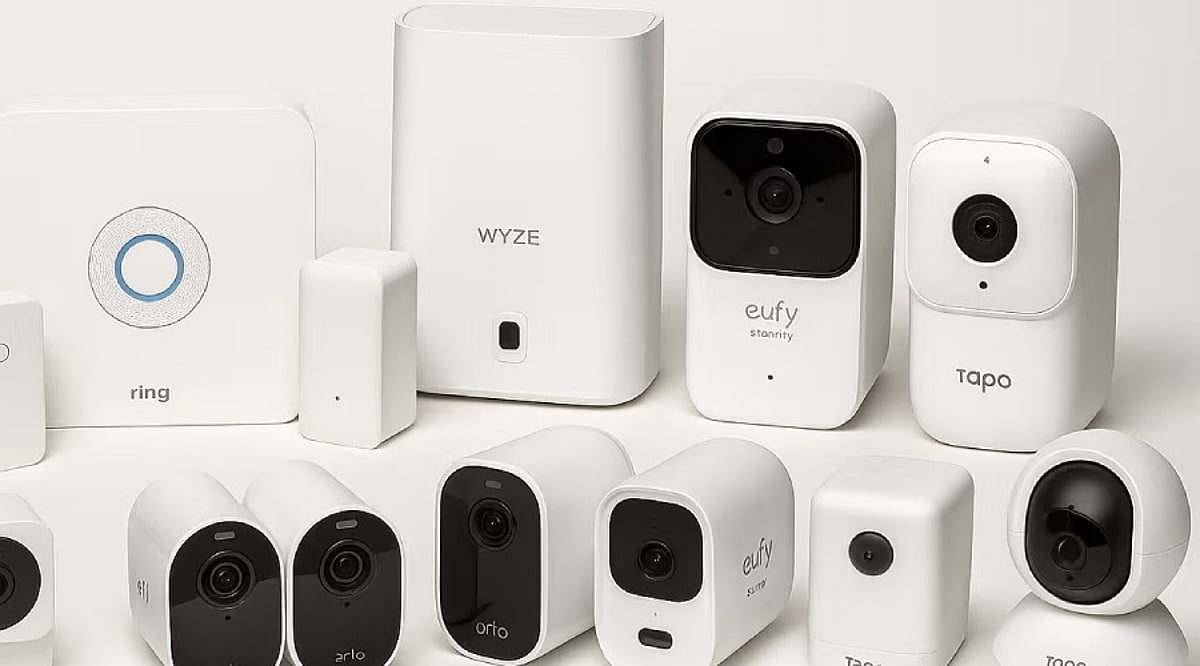
    Google Home support has improved across many popular brands. Nest still offers the smoothest experience, yet companies such as Eufy, Arlo, Reolink, and TP-Link now deliver excellent compatibility. Better software, sharper cameras, and smarter alerts have created many great options for every budget.

    Google Nest Cam (Battery) Stays at the Top

    The Google Nest Cam (Battery) remains the best overall security camera for Google Home users. Native support gives this model fast access inside the Google Home app without extra setup. Live video appears almost instantly on Nest Hub smart displays and Chromecast-enabled televisions.

    This camera records video in 1080p HDR resolution and covers a 130-degree field of view. AI features recognize people, animals, and vehicles with high accuracy. The battery design also offers flexible placement around the home, while wired power remains available for those who prefer continuous charging. Current retail prices sit around Rs. 27,400, or roughly $330, depending on the seller and region.

    Nest Cam Indoor (3rd Gen) Delivers Better Indoor Protection

    Google also introduced the Nest Cam Indoor (3rd Gen), which brings a major upgrade for indoor security. The new camera captures video in sharp 2K resolution, far above the older Full HD models. Fine details such as faces, small objects, and room activity appear much clearer.

    Google also adds Gemini-powered AI features that create event summaries and smarter alerts. Quick access through the Google Home app keeps every important notification in one place. Anyone who wants simple indoor monitoring with deep Google Home support will find this camera an excellent choice.

    EufyCam S3 Pro Offers Premium Features Without Monthly Fees

    The EufyCam S3 Pro stands out as one of the strongest alternatives to Google’s own cameras. This model records crisp 4K Ultra HD video, which captures much more detail than standard Full HD cameras. Solar charging keeps the battery ready for long periods with very little maintenance.

    Local storage removes the need for a monthly cloud subscription, which helps lower long-term costs. AI tools identify people, pets, and vehicles with impressive accuracy. Google Home compatibility allows live streaming through compatible smart displays and voice commands. Current prices start around Rs. 34,000 for an add-on camera.

    Arlo Pro 5S Brings Powerful AI Detection

    The Arlo Pro 5S focuses on smart detection and excellent image quality. This camera records in 2K HDR resolution and includes a wide 160-degree viewing angle that covers more space around a home. Color night vision also delivers brighter footage after sunset.

    Dual-band Wi-Fi supports stable wireless performance in many home networks. Smart alerts identify people, vehicles, animals, and other important events with great precision. Google Assistant support allows quick voice control through Google Home devices. Current prices remain close to Rs. 27,000 in most online stores.

    Reolink Argus 4 Pro Covers More Space

    The Reolink Argus 4 Pro introduces one of the most significant improvements in camera technology. Thanks to a unique dual-lens design, this camera boasts a wide 180-degree field of view. Unlike conventional cameras that miss certain areas around driveways, gardens, or entrances, this camera captures almost everything in its radius.

    The camera captures high-quality 4K videos and operates on battery power. Additionally, it supports Google Home and can be operated using your voice as well as streamed live on compatible smart displays.

    TP-Link Tapo C425 Delivers Great Value

    The TP-Link Tapo C425 is proof that good security can be inexpensive. This wireless camera has the capacity to record images at a 2K QHD resolution and comes with a magnetic mount that can be set up easily at practically any location.

    Its color night vision can make the imaging clearer even in darkness, while its compatibility with Google Home provides the advantages of voice control and live streaming. The actual price for such cameras varies between Rs. 7,600 and Rs. 8,000, which makes this equipment affordable.

    New Features Shape the 2026 Market

    Modern security cameras now offer far more than simple video recording. AI technology detects people, pets, vehicles, and delivered packages with impressive accuracy. Smart notifications reduce false alerts and help homeowners focus on important activity.

    Google continues to expand the Nest camera family with new 2K indoor and outdoor models that include Gemini-powered intelligence. Natural-language video search and AI event summaries also become more common across premium devices. At the same time, many brands now offer local storage instead of paid cloud plans, which saves money over the life of the product.

    Final Thoughts

    The Google Nest Cam (Battery) is the most effective all-around option for users of Google Home; it comes with perfect software, reliable AI and seamless integration. The Nest Cam Indoor (3rd Gen) is the safest option among indoor cameras, with its crystal-clear 2K image quality and advanced Gemini capabilities. The EufyCam S3 Pro has the advantage of 4K quality, solar charging and no subscription is required. Arlo Pro 5S has improved AI detection and steady performance, whereas the Reolink Argus 4 Pro amazes with its unique 180-degree visibility. Finally, TP-Link Tapo C425 is the best value option, with great features at a competitive price. The new generation of security cameras compatible with Google Home focused on smart software, video quality and reliable automation.

    Frequently Asked Questions

    1. Which security camera works best with Google Home in 2026?

    The Google Nest Cam (Battery) offers the smoothest Google Home experience with native app integration, voice commands, and instant live streaming.

    2. Which Google Home camera offers the best indoor security?

    The Nest Cam Indoor (3rd Gen) delivers 2K video quality, Gemini-powered AI summaries, and advanced smart alerts.

    3. Which security camera doesn’t require a monthly subscription?

    The EufyCam S3 Pro supports local storage, allowing users to avoid recurring cloud storage fees.

    4. Which budget-friendly camera supports Google Home?

    The TP-Link Tapo C425 offers 2K QHD recording, color night vision, and Google Home compatibility at an affordable price.

    5. What features should I look for in a Google Home security camera?

    Choose a camera with AI person detection, at least 2K video resolution, Google Home integration, reliable night vision, local storage or cloud options, and weather resistance for outdoor use.

  • Top Gold-Holding Nations in 2026: US Dominates as China and India Expand Reserves

    Top Gold-Holding Nations in 2026: US Dominates as China and India Expand Reserves

    Central banks worldwide continue to rely on gold as a cornerstone of financial stability, reserve diversification, and economic confidence. As of 2026, the United States maintains its commanding lead in official gold reserves, while China and India steadily build their holdings. Despite a slowdown in central bank purchases during the first half of the year, gold remains a trusted asset in global finance.

    United States Far Ahead

    The United States holds the largest official gold reserve in the world with 8,133.5 metric tons, representing about 83% of the country’s total foreign exchange reserves. No other nation comes close; the U.S. stock alone exceeds the combined holdings of Germany and Italy, the second and third largest holders. This position has remained virtually unchanged for decades.

    European Nations Hold Strong Positions

    Germany ranks second with 3,350.3 metric tons of gold, followed by Italy (2,451.8 metric tons) and France (2,437 metric tons). Gold forms more than 80% of the official reserves in all three countries. Combined, euro area reserves exceed 10,800 metric tons, surpassing any single nation’s holdings.

    Russia and China Build Strategic Strength

    Russia holds 2,313.4 metric tons (fifth place), while China follows closely with 2,304.7 metric tons according to the World Gold Council. The People’s Bank of China added about 15 metric tons in June 2026—the largest monthly increase since 2023—marking 20 consecutive months of purchases. This reflects a clear long-term strategy to diversify reserves and strengthen financial security.

    India Moves Higher

    India holds 880.5 metric tons of official gold, ranking eighth in the world. Gold accounts for roughly 18% of the country’s foreign exchange reserves. The Reserve Bank of India has steadily expanded its holdings in recent years. Indian households own far more gold than the central bank, making the country a major overall owner of the precious metal.

    Other Notable Holders

    Switzerland ranks seventh with 1,039.9 metric tons, Japan holds about 845.9 metric tons, and the Netherlands completes the top ten with approximately 634.7 metric tons. Reserve strategies vary: Switzerland uses gold as part of a balanced portfolio, while Japan keeps only a small share of its reserves in gold.

    Central Bank Confidence Remains Strong

    The World Gold Council reports that central bank purchases slowed sharply in the first half of 2026—only 57 metric tons in Q1 (the lowest in 15 years) and about 345 metric tons total in H1. Even so, central banks still account for nearly one-third of global gold demand. A 2026 survey found that 89% of reserve managers expect global gold reserves to rise in the next 12 months, and a record 45% expect their own institutions to increase holdings. Gold continues to offer stability, liquidity, and protection against financial and geopolitical risks.

    Frequently Asked Questions

    1. Which country has the largest gold reserves in 2026?

    The United States leads with 8,133.5 metric tons.

    2. Why do central banks hold gold?

    Gold provides financial stability, diversifies reserves, protects against economic uncertainty, and strengthens confidence in a country’s financial system.

    3. Which countries are in the global top five for gold reserves?

    The United States, Germany, Italy, France, and Russia hold the five largest official gold reserves.

    4. Has China increased its gold reserves in 2026?

    Yes, China continued adding gold during 2026 as part of its long-term reserve diversification strategy.

    5. Why is gold still important despite slower central bank purchases?

    Gold remains a trusted store of value, offering liquidity, stability, and protection during financial and geopolitical uncertainty.

  • India’s 2026 Crypto Tax Guide: Flat 30% Tax, 1% TDS, and No Loss Offsets

    India’s 2026 Crypto Tax Guide: Flat 30% Tax, 1% TDS, and No Loss Offsets

    India’s cryptocurrency tax framework for 2026 introduces several key provisions that every investor must understand. The rules apply to all virtual digital assets (VDAs) and are designed to ensure compliance while limiting tax-planning opportunities.

    Key Tax Rules for 2026

    • 30% Tax on Profits: Any profit from selling or transferring cryptocurrencies is taxed at a flat 30%, regardless of your income tax slab or how long you held the asset.
    • 1% TDS Rule: Buyers must deduct 1% Tax Deducted at Source (TDS) on qualifying crypto transactions. This helps authorities track VDA transactions across regulated platforms nationwide.
    • No Loss Set-Off: Losses from cryptocurrency transactions cannot be used to offset gains from other crypto assets or any other income source.
    • No Carry Forward: Unused crypto trading losses cannot be carried forward to future financial years, limiting tax planning through loss adjustments.
    • Gift Tax Rules: Cryptocurrency received as a gift may be taxable for the recipient, depending on the relationship, exemption limits, and applicable Income Tax Act provisions.
    • Mining and Staking: Income from crypto mining or staking may be taxed when rewards are received or later sold, based on applicable rules.
    • Mandatory Reporting: Taxpayers must accurately disclose all crypto income and transactions when filing annual income tax returns to remain compliant with Indian regulations.
    • Maintain Transaction Records: Keep exchange statements, wallet records, purchase invoices, and transfer details to simplify tax calculations and respond to any regulatory inquiries efficiently.
    • Stay Updated on Rules: India’s crypto regulations continue to evolve. Investors should monitor official tax notifications and compliance requirements regularly.

    By understanding these rules and maintaining thorough records, you can navigate India’s 2026 crypto tax landscape with confidence.

  • MemeCore and Uniswap Surge, but ZKP Presale Signals 100x Potential – Is It the Hottest Crypto of 2026?

    MemeCore and Uniswap Surge, but ZKP Presale Signals 100x Potential – Is It the Hottest Crypto of 2026?

    The crypto market is telling two different stories at once. The MemeCore price just rallied 11.2% on a memecoin sector rebound, and the Uniswap price is climbing above $3.95 on the back of new institutional features. Both look strong on the daily charts, but each has already made its big move.

    Meanwhile, Zero Knowledge Proof (ZKP) is setting up something bigger. The token is currently priced at just $0.0004 in Stage 1 of its presale. The listing target is $0.04 – a clean 100x gap already written into the roadmap. Over $2.23 million has been raised so far, and many are calling ZKP the most popular cryptocurrency story of 2026.

    MemeCore Price Bounces Back on Memecoin Sector Rebound

    The MemeCore price surged 11.2% in the last 24 hours, trading around $1.13. The move came as the wider memecoin market bounced 8%, adding $23 billion in total market cap. Open interest jumped 9.4% to $25.66 million, and long positions outpaced shorts, showing traders are betting on more upside.

    Bulls are now eyeing $1.7, which sits at the 50-day EMA. If MemeCore can break that level, momentum could carry it higher. Still, its RSI is only at 47, meaning the recovery is fragile. Any drop in demand could send the MemeCore price right back to $1.10 support. For traders looking at the most popular cryptocurrency plays for 2026, meme-driven rallies are exciting but rarely offer stable long-term returns.

    Uniswap Price Climbs on Institutional Push

    The Uniswap price is trading around $3.7. The rally follows Uniswap’s launch of Permissioned Pools on v4, which lets regulated tokenized securities trade among approved users. That opens the door to major institutional inflows while keeping open pools running for regular DeFi users.

    Technically, UNI sits above its 20-day, 50-day, and 200-day moving averages, which shows strong short- and long-term momentum. But the RSI is stretched at 74.47, hinting the coin is overbought and due for a cooling period. Over the past three months, the Uniswap price is already up more than 200%. For anyone hunting the most popular cryptocurrency plays of 2026, that means most of the easy money has already been made; the biggest gain window is likely behind it.

    Zero Knowledge Proof (ZKP): The Future of AI at a $0.0004 Entry Price

    Zero Knowledge Proof (ZKP) is quickly turning into the most popular cryptocurrency story of 2026, and the reason is simple: opportunity. Stage 1 of the presale is live at just $0.0004 per coin. The listing target is $0.04; that is a 100x price gap already written into the roadmap. Some analysts even project long-term returns of 5,000x to 10,000x if adoption scales as AI demand grows. With $2.23 million already raised and more than 7,481 early buyers on board, momentum is only building.

    The story behind ZKP is bigger than price. Privacy is becoming the biggest concern in the AI era, and no major system has fully solved it yet. Sensitive data flows into AI models every second, but there is almost no way to verify what happens with it once it goes in. ZKP closes that gap by using zero-knowledge cryptography to confirm computations were run correctly while keeping all raw data hidden. That verification layer is exactly what regulated industries and AI-first companies need before adoption can scale globally.

    The roadmap is clear and already in motion. Phase 1 covered the core network build, smart contract audits, and the presale rollout. Phase 2 delivered the hybrid Proof of Intelligence and Proof of Space consensus, plus AES-256 encryption for private data storage. Phase 3 focuses on testnet, wallet integrations, and EVM compatibility. Phase 4 finishes the vision with mainnet launch and the ZKP Data Marketplace going live.

    Adding to the confidence, Kevin O’Leary has publicly backed the project, calling this the “Age of Proof.” With every stage of the presale raising the price, buyers are rushing in early to lock in ZKP as the most popular cryptocurrency setup of the year.

    Conclusion

    The MemeCore price and Uniswap price both had strong moves this week, but their biggest gains for this cycle look mostly priced in. ZKP is only beginning its climb. With Stage 1 live at $0.0004, a listing target of $0.04, and a full four-phase roadmap already in motion, ZKP offers a rare mix of low entry, real utility, and a clear path forward. Privacy in the AI era is not optional anymore, and ZKP is building the answer while the rest of the market is still catching up. Every presale stage lifts the price higher, and buyers are rushing in at $0.0004 before ZKP grows into what many now call the most popular cryptocurrency of 2026.

    Explore ZKP:
    Website: https://zkp.com/
    Buy: http://buy.zkp.com/
    Telegram: https://t.me/ZKPofficial
    X: https://x.com/ZKPofficial

    Join our WhatsApp Channel to get the latest news, exclusives and videos on WhatsApp.

    Disclaimer: Analytics Insight does not provide financial advice or guidance on cryptocurrencies and stocks. Also note that the cryptocurrencies mentioned/listed on the website could potentially be risky, i.e. designed to induce you to invest financial resources that may be lost forever and not be recoverable once investments are made. This article is provided for informational purposes and does not constitute investment advice. You are responsible for conducting your own research (DYOR) before making any investments. Read more about the financial risks involved here.

  • 10 Best Apple Gadgets Under $50 You Should Buy in 2026

    10 Best Apple Gadgets Under $50 You Should Buy in 2026

    Apple is known for premium pricing, but several of its official accessories still cost under $50. These gadgets enhance everyday convenience, protect your devices, and deliver reliable performance without breaking the bank. Here are the top 10 Apple gadgets under $50 that combine quality, functionality, and value.

    1. Apple AirTag (2nd Generation) – $29

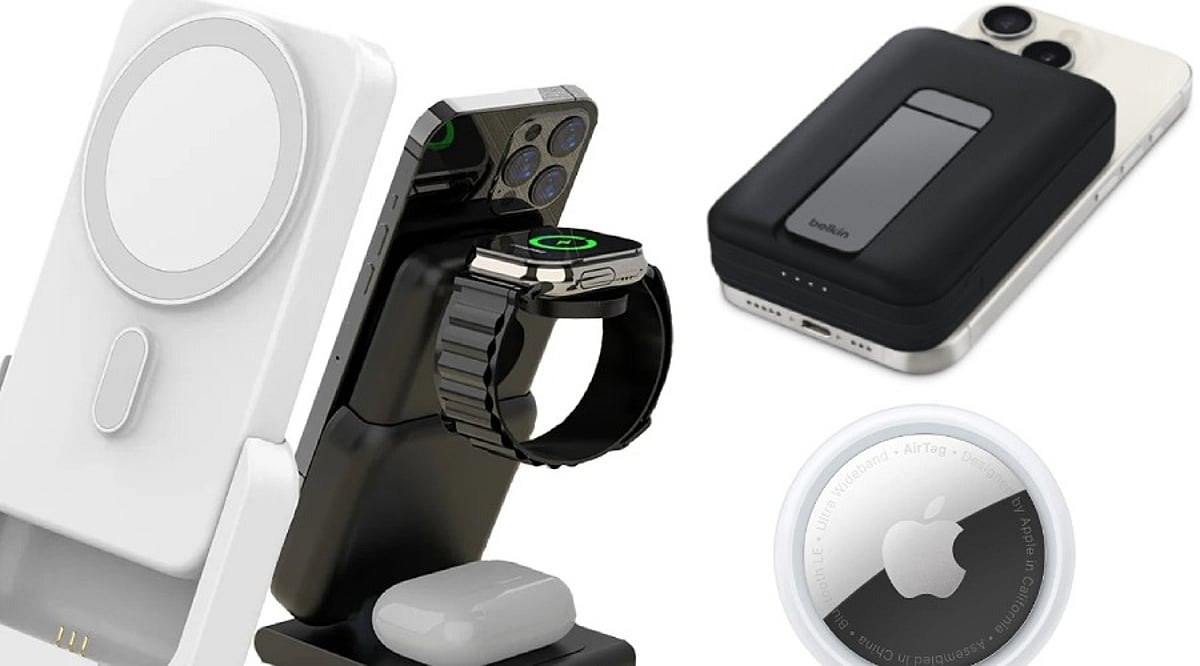
    The AirTag is a compact tracker that helps you locate keys, wallets, backpacks, and luggage using the vast Find My network. The second generation offers improved Precision Finding on compatible iPhones. Its battery lasts about a year, and the simple design fits almost anywhere. At $29, it’s one of the most practical Apple accessories you can buy.

    2. Apple MagSafe Charger – $39

    This wireless charger uses built-in magnets to align perfectly with MagSafe-compatible iPhones, ensuring stable and efficient charging. Its compact size makes it travel-friendly, and the premium materials match Apple’s design ethos. Ideal for home, office, or on-the-go use.

    3. Apple 20W USB-C Power Adapter – $19

    A small but mighty charger that supports fast charging for iPhones, iPads, and AirPods. Its compact footprint saves space in your bag, and fast charging reduces downtime significantly. Reliable and consistent, it’s a great everyday companion.

    4. Apple EarPods – $19

    Wired earphones that deliver clear sound, a reliable microphone, and simple controls. No battery to charge, no pairing delays – just plug and play. Available in USB-C and Lightning versions, they remain a popular choice for many users.

    5. Apple USB-C to USB-C Woven Cable – $19–$29

    A braided cable that resists wear and tear better than standard plastic cables. Supports both charging and data transfer. The durable construction adds long-term value, and the clean design complements modern Apple devices.

    6. Apple MagSafe Silicone Case – $49

    Soft silicone exterior with a microfiber lining protects your iPhone from scratches. Built-in magnets allow MagSafe charging without removing the case. Precise cutouts and multiple color options make it both functional and stylish.

    7. Apple Watch Sport Band – $49 (often on sale)

    Made from soft fluoroelastomer, this band is comfortable all day and secure during workouts. The pin-and-tuck closure keeps it tidy, and multiple colors let you change your look without buying a new watch.

    8. Beats USB-C Woven Cable – $18–$20

    An Apple-owned brand offering a premium braided USB-C cable. Resists daily wear better than ordinary cables, supports charging and data transfer, and has a modern design that pairs well with Apple products.

    9. Apple MagSafe Wallet – $49 (often discounted)

    Magnets attach this slim wallet securely to compatible iPhones. It holds essential cards without adding bulk, and the premium materials create an elegant look. Perfect for carrying just the basics.

    10. Apple Cleaning Cloth – $19

    A microfiber cloth designed to safely remove smudges, fingerprints, and dust from Apple screens. Safe for iPhones, iPads, and MacBooks. Regular cleaning keeps your displays clear and bright. High quality ensures long-lasting effectiveness.

    Why These Gadgets Matter

    Affordable Apple accessories prove that high value doesn’t always require a high price. From tracking lost items to protecting your devices and simplifying charging, these gadgets improve daily life without a large expense. They offer reliable compatibility, strong build quality, and seamless integration with the Apple ecosystem.

    Final Thoughts

    Apple’s under-$50 lineup shows that premium quality can be accessible. Items like the AirTag, MagSafe Charger, and EarPods deliver real everyday benefits. Protective cases and bands extend device lifespan, while cables and wallets complete the experience with thoughtful design. Each product balances reasonable cost, high quality, and reliable performance.