Tag: AI agents

  • AI Agents vs. Chatbots: Key Differences and When to Use Each

    AI Agents vs. Chatbots: Key Differences and When to Use Each

    AI chatbots and AI agents are often mentioned together, but they serve very different purposes. Chatbots excel at conversations and answering questions, while AI agents can plan, make decisions, and complete complex tasks. Understanding the distinction helps businesses and individuals choose the right tool for their needs.

    AI Chatbots Focus on Conversations

    AI chatbots are designed to interact with users through text or voice. They answer questions, explain topics, assist with writing emails, and provide customer support. Chatbots work by responding to prompts and generating relevant replies. Most require a new user instruction before taking any further action. They are ideal for quick assistance, FAQs, and everyday conversational tasks.

    AI Agents Can Take Action

    AI agents go beyond simple chatting. They understand a goal, create a plan, use connected software, and execute multiple steps to achieve a desired outcome. Instead of merely answering questions, they solve problems. For example, an AI agent can organize meetings, gather data, prepare reports, or manage workflows with minimal human involvement.

    They Handle Decisions Differently

    A chatbot reacts to what the user asks at that moment. It provides information but rarely makes independent decisions. Every new action typically requires another prompt. An AI agent, on the other hand, evaluates options, adjusts its plan if circumstances change, and continues working until the assigned task is completed successfully.

    Real-World Applications

    AI chatbots are widely used in customer service, education, e-commerce, and content creation. They help users get instant answers and improve communication between businesses and customers. AI agents are becoming popular in finance, healthcare, software development, and business operations, where they automate repetitive tasks and boost productivity.

    Which One Is Right for You?

    If you need quick answers, writing support, or customer assistance, an AI chatbot is usually the better choice. It is easy to use and effective for everyday tasks. If your work involves automation, project management, or multi-step processes, an AI agent offers more advanced capabilities and can save significant time.

    The Future of AI

    The next generation of AI will likely combine chatbots and agents into a seamless experience. Users will interact through natural conversations while AI agents handle complex work behind the scenes. This integration could make workplaces more productive by reducing repetitive work and allowing people to focus on creative and strategic tasks.

  • Best Python Frameworks for Autonomous AI Agents in 2026: A Comprehensive Guide

    Best Python Frameworks for Autonomous AI Agents in 2026: A Comprehensive Guide

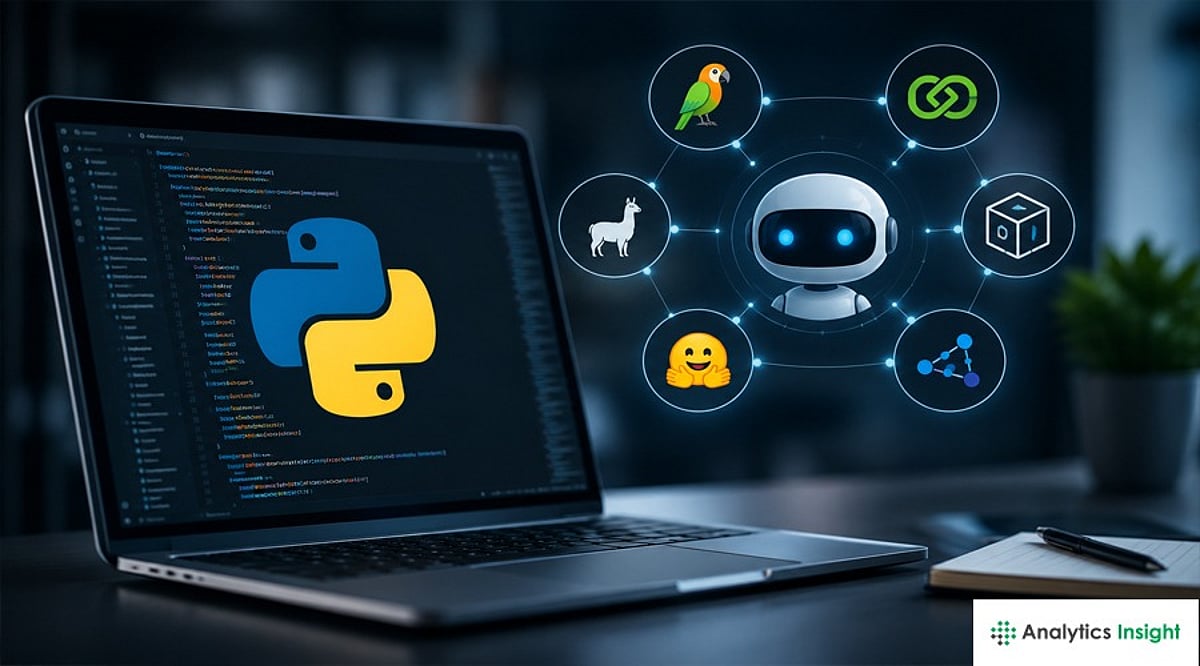
    The Python AI agent framework landscape has evolved rapidly in 2026, offering specialized tools for production orchestration, multi-agent collaboration, enterprise deployment, and retrieval-augmented generation (RAG) workflows. This guide compares the leading frameworks to help developers choose the right platform for scalable autonomous AI applications.

    LangGraph Leads on Production-Grade Control

    LangGraph, developed by LangChain, uses a directed graph model where each node represents an API call to an LLM, tool use, or logic, while edges handle interaction, conditional execution, and looping. It provides complete control over execution, making it popular for complex stateful applications like customer service chatbots with escalation paths. LangGraph gained general availability in October 2025 and saw further improvements in 2026, including per-node timeouts and durable streaming. The main drawback is the steep learning curve compared to more opinionated frameworks.

    CrewAI Remains the Fastest Path to Prototyping

    CrewAI models agents as a crew of specialists with unique purposes, goals, and background stories. Developers can get it operational in under 20 lines of Python code, making it the most straightforward framework. However, it trades off scalability due to less precise error handling and lower accuracy in inter-agent communication. Teams often start with CrewAI and migrate to LangGraph when they need complex state management. The project still attracts millions of monthly downloads and now supports Google’s A2A protocol.

    Microsoft’s Consolidation: AutoGen Gives Way to Agent Framework

    AutoGen, Microsoft Research’s multi-agent conversation platform, introduced agents having discussions to improve output. In April 2026, Microsoft unified AutoGen and Semantic Kernel into the Microsoft Agent Framework, integrating AutoGen’s conversational architecture with Semantic Kernel’s enterprise capabilities like session-based state and telemetry. AutoGen is now in maintenance mode, suitable for research and legacy code, while new Microsoft-stack projects should use Agent Framework.

    Vendor SDKs Are Squeezing Out Frameworks for Simple Agents

    For single agents calling one or two tools, the OpenAI Agents SDK or Anthropic’s Claude Agent SDK offer a faster path with built-in tool use, memory, and tracing, without the abstraction overhead of LangGraph or CrewAI. The Claude Agent SDK reportedly passed AutoGen in production deployment counts during early-to-mid 2026. The general guidance: use a full framework for multi-agent coordination or graph-shaped control flow; use a vendor SDK for a single well-tooled agent.

    Choosing the Right Framework for Your Project

    There is no universal winner. Teams building production systems with complex execution paths gravitate toward LangGraph, while those prototyping role-based workflows find CrewAI faster. Microsoft-stack teams consolidate around Agent Framework, GCP-native teams lean on Google ADK, and document-heavy RAG pipelines favor LlamaIndex Workflows. The safest approach is matching the framework to the specific coordination problem rather than defaulting to the most popular tool.

    As autonomous AI agents become central to enterprise software, selecting the right framework directly affects scalability, maintainability, and development speed. Understanding each framework’s strengths helps developers build more reliable AI applications while avoiding unnecessary complexity and costly migrations.

  • Tencent in Talks to Lead $2 Billion Manus Buyback After China Blocks Meta Acquisition

    Tencent in Talks to Lead $2 Billion Manus Buyback After China Blocks Meta Acquisition

    Tencent is in discussions to become the largest shareholder in AI startup Manus, as a group of investors orchestrates a $2 billion buyback following Chinese regulators’ order for Meta to unwind its acquisition of the company. The move would return Manus to domestic backers, with Tencent holding a minority stake to avoid a single investor gaining full control, according to people familiar with the matter.

    Manus, which develops AI agents capable of completing multi-step tasks with minimal human intervention, has been at the center of China’s rapidly evolving AI sector. The buyback plan involves Tencent working with earlier investors such as ZhenFund and HSG (formerly Sequoia Capital China) to repurchase the startup from Meta for no less than $2 billion. The final structure remains fluid, with new investors potentially joining and some earlier backers like Benchmark likely opting out.

    China’s Regulatory Blockade

    Meta announced its intention to acquire Manus in December 2024 as part of its push into agentic AI, valuing the startup at over $2 billion. However, Beijing opened a national security review in April and subsequently ordered Meta to unwind the transaction, citing the company’s Chinese roots and its role in AI development. Although Manus had relocated its operations from China to Singapore in 2025, regulators treated it as part of China’s AI ecosystem, reflecting tighter oversight of cross-border technology deals involving entities with Chinese origins.

    Following the order, Meta separated its operations from Manus and ceased data sharing, paving the way for earlier investors to consider buying the company back.

    Manus’s Rise and Financial Performance

    Manus gained prominence last year after releasing what it called “the world’s first general AI agent.” Chinese state media and tech commentators often compared the company to DeepSeek, another AI darling that captured widespread attention. The startup’s AI agents are designed to handle complex, multi-step tasks with limited supervision, a capability that has become a key battleground for major tech firms.

    Financially, Manus’s revenue reportedly surged after the Meta deal. Chinese-language reports claim annualized revenue grew to between $400 million and $500 million, up from roughly $100 million before the acquisition. These figures have not been independently verified.

    For Tencent, the potential stake strengthens its exposure to Chinese AI companies without taking full ownership. For Manus, the buyback shifts its shareholder base back toward domestic investors after a blocked sale to a U.S. technology giant.

  • Proven Strategies to Reduce AI Agent Hallucinations and Boost Reliability

    Proven Strategies to Reduce AI Agent Hallucinations and Boost Reliability

    AI agents are rapidly evolving beyond simple chatbots into autonomous systems that can search documents, call APIs, write code, update records, and complete complex multi-step workflows. They are increasingly deployed in customer support, financial operations, software testing, research, and business processes. However, this expanded capability comes with a significant risk: hallucinations. These occur when an AI agent confidently produces incorrect answers, uses the wrong tool, fabricates data, or skips a critical step.

    Gartner predicts that over 40% of agentic AI projects could be abandoned by the end of 2027 due to rising costs, lack of business value, or immature applications. The research firm also notes that only about 130 vendors genuinely offer agentic AI, despite thousands claiming to do so.

    Why AI Agents Hallucinate

    AI agent hallucination happens when an autonomous system generates factually wrong outputs to compensate for missing organizational context and then acts on those outputs. The consequences can be severe: incorrect business decisions, compliance violations, and eroded trust across every process the agent touches. Studies show that incorporating context layers with governed metadata can reduce hallucination rates by over 40%.

    A 2026 benchmark called AgentHallu tested hallucination detection across 693 agent trajectories, seven agent frameworks, and five domains. The best model tested achieved only 41.1% step-localization accuracy, meaning it struggled to pinpoint where hallucinations originated. For tool-use hallucinations, localization accuracy dropped to a mere 11.6%.

    Use Grounded Retrieval, Not Model Memory

    The first step is to reduce reliance on the model’s internal memory. AI agents should pull information from trusted sources such as company documents, databases, APIs, and approved knowledge bases. Retrieval-Augmented Generation (RAG) is an effective technique that allows the agent to retrieve relevant information before generating a response.

    However, RAG must be carefully managed. Teams need to eliminate obsolete documents, grade sources for reliability, and cite all key claims. The agent should also be programmed to indicate when no data is available, rather than making assumptions.

    Validate Tool Calls and Actions

    Tool hallucination remains a major risk. An agent might make an incorrect API call, pass wrong data, or report that an action was completed when it was not. To mitigate this, every tool call should follow strict schemas with required fields and rules. For example, if an agent checks a refund status, it should only respond with the actual payment database response — not assume the user is eligible based on past conversations.

    Real-world benchmarks highlight the severity of this issue. Even the best function-calling agents struggled with tasks in τ-bench (a set of retail and airline-style workflows), achieving less than 50% accuracy. Consistency across repeated trials of the same retail workflows was under 25%.

    Add Human Review for High-Risk Workflows

    Certain actions should require human approval, including payments, legal advice, medical recommendations, account deletions, compliance checks, and customer refunds. The goal is not to slow every workflow but to create checkpoints where the cost of an error is high.

    Measure Reliability Continuously

    Key metrics to track include hallucination rate, unsupported claims, failed API actions, citation accuracy, escalation rate, and user corrections. Newer benchmarks reveal that agents still struggle with realistic digital tasks. Released in 2026, TUA-Bench evaluated 120 real-world terminal-use tasks, with the best frontier agent achieving only 65.8% total performance, revealing notable gaps.

    Why This Matters

    As AI agents transition from chatbots to autonomous multi-step workflows, hallucinations can lead to severe real-world business errors. With top benchmarks showing poor error-localization accuracy, robust technical guardrails and human checks are critical to prevent project abandonment.

    Final Thoughts

    While completely eliminating AI agent hallucinations is impossible, they can be minimized through careful system design. Verified retrieval, tool validation, structured outputs, human oversight for risky actions, and continuous testing are all essential for building reliable agents.

    Frequently Asked Questions

    1. What are AI agent hallucinations?
    AI agent hallucinations occur when an AI system gives confident but false or unsupported information. In agents, this can also include wrong tool calls, fake data, skipped steps, or incorrect actions.

    2. Why do AI agents hallucinate?
    AI agents hallucinate because they operate across planning, retrieval, reasoning, and tool use. If one step is wrong, the error can cascade through the entire workflow and affect the final result.

    3. How does RAG reduce hallucinations?
    Retrieval-Augmented Generation helps agents answer from verified documents, databases, or APIs instead of relying only on model memory. It works best when sources are updated, ranked, and cited properly.

    4. Why is tool validation important for AI agents?
    Tool validation ensures the agent uses the correct API, passes the right inputs, and only responds based on actual tool results. This prevents agents from inventing actions or assuming tasks were completed.

    5. Can AI hallucinations be completely removed?
    No, hallucinations cannot be fully eliminated, but they can be reduced. Reliable systems use verified retrieval, strict schemas, human review for risky tasks, and continuous monitoring of failure rates.

  • Essential Prompt Engineering Techniques for Reliable AI Agents

    Essential Prompt Engineering Techniques for Reliable AI Agents

    Prompt engineering for AI agents is a distinct discipline that goes beyond writing simple instructions. It involves defining how an agent should think, act, and respond when conditions become unpredictable. A well-designed prompt reduces ambiguity, improves task accuracy, and ensures consistent performance across complex, multi-step workflows.

    Define a Clear Agent Identity

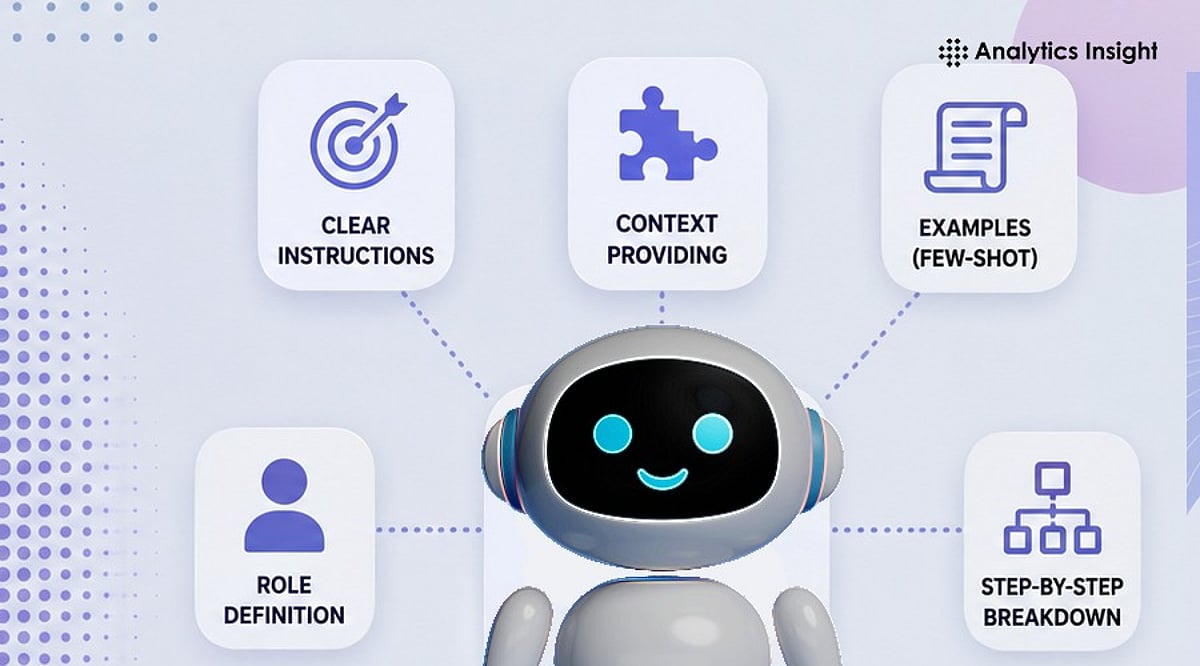
    Instead of a generic “You are a helpful assistant,” assign a concrete job with defined scope. For example, a support triage agent that sorts tickets into three categories and never resolves billing disputes on its own. Identity defines operational ownership, not just tone. Place this instruction in the system prompt to maintain consistency across interactions.

    Set Decision Boundaries

    Agents must decide when to act, wait, or ask a clarifying question. A well-built prompt states what the agent may do, what it must never do, when to call a tool, and when to hand off to a human. Strong boundaries also resolve conflicts, like when retrieved information contradicts earlier conversation history. Clear constraints prevent compounded errors in multi-step loops.

    Use Few-Shot Prompting

    Few-shot examples help models infer behavior faster than explanations alone. Choose examples that cover a normal case, an ambiguous case, and a failure case. This shows the agent how decisions are made under different conditions. Structured prompts separate identity, objectives, constraints, and output requirements, and examples connect those sections to real behavior.

    Specify Output Schemas and Handle Uncertainty

    When an agent’s output feeds a workflow or database, format is critical. Define a schema (JSON, ordered steps, labeled fields) so downstream systems can parse results reliably. Also address uncertainty: what happens when input is incomplete, contradictory, or outside scope? A clarifying question, safe default, or escalation path works better than a confident guess.

    Test and Evaluate

    Version prompts like code, splitting role, boundaries, formatting, and safety into separate modules. Test against a fixed set of inputs with repeatable runs, checking accuracy, tool selection, and format compliance before shipping. Reliability comes from combining all techniques, not any single line of instruction.

    Common Mistakes to Avoid

    • Vague Instructions: “Be helpful” leaves too much open to interpretation.
    • Missing Guardrails: Without limits, agents act when they shouldn’t.
    • No Examples: Long explanations don’t teach decision patterns as well as examples.
    • No Defined Output Structure: Unstructured responses are hard for APIs and workflows to handle.
    • Skipping Real Evaluation: Testing against one or two scenarios is insufficient.

    Final Thoughts

    The best AI agent prompts are built with clear responsibilities, explicit boundaries, structured outputs, and ongoing evaluation. When prompt engineering is treated as an engineering discipline rather than a writing exercise, agents become reliable systems ready for real deployment.

    Frequently Asked Questions

    What is prompt engineering for AI agents?

    It is the process of designing clear instructions that define an agent’s role, constraints, decision-making, tool usage, and output format to improve reliability across multi-step tasks.

    What are the best techniques?

    Techniques include defining a precise role, adding guardrails, using few-shot examples, specifying structured outputs, planning for uncertainty, and continuously evaluating performance.

    Why are structured prompts important?

    Structured prompts organize instructions into clear sections, helping agents produce more consistent, predictable, and machine-readable responses.

    How do few-shot examples help?

    They show agents how to handle typical, ambiguous, and edge-case scenarios, teaching reasoning patterns and decision boundaries more effectively than instructions alone.

    How to evaluate prompt effectiveness?

    Test against a benchmark set of tasks to measure accuracy, output consistency, format compliance, tool selection, and exception handling.

  • Morning Tech Roundup: NVIDIA’s New PC AI Chip, Enlife Raises ₹6 Crore, BOI Opens 779 Credit Officer Jobs, and More

    Morning Tech Roundup: NVIDIA’s New PC AI Chip, Enlife Raises ₹6 Crore, BOI Opens 779 Credit Officer Jobs, and More

    Good morning, tech fam! Here are the top headlines you need to know: NVIDIA has launched a new AI chip for personal computers, Enlife Research secured ₹6 crore in seed funding, Bank of India announced 779 Credit Officer vacancies, AI agents are advancing automation, and the Bank of England clarified its crypto policy stance.

    NVIDIA Introduces a New AI Chip for Personal Computers

    NVIDIA has unveiled a new AI chip designed specifically for laptops and desktops. This chip processes AI tasks directly on the device, reducing reliance on cloud services. The company promises faster performance, better privacy, and improved energy efficiency. NVIDIA believes this innovation will bring advanced AI capabilities to everyday PCs, transforming personal computing.

    Enlife Research Raises ₹6 Crore in Seed Funding

    Bengaluru-based deep-tech startup Enlife Research has raised ₹6 crore in a seed round led by Piper Serica VC Fund. The company is developing an AI-based blood test that could detect Alzheimer’s disease years before symptoms appear. The funds will be used to advance research, refine the product, and prepare for broader deployment.

    Bank of India Credit Officer Recruitment 2026: Key Details

    Bank of India has announced 779 Credit Officer vacancies in the GBO stream across MMGS-II, MMGS-III, and SMGS-IV scales. Online applications open from 30 June to 20 July 2026. The notification covers eligibility, age limits, education, work experience, fees, salary, selection process, and the revised exam pattern with English Language and Professional Knowledge sections.

    Future of AI Agents and Autonomous Workflows

    AI agents are evolving beyond simple chat interfaces into tools that can plan, use software, retain information, and complete tasks with minimal human intervention. Enhanced reasoning allows them to solve complex problems step by step. Teams of AI agents can collaborate, improving results. Companies are adopting these agents to save time and increase accuracy while maintaining safety, monitoring, and human oversight for critical tasks.

    Bank of England Says Farage Did Not Affect Crypto Policy

    Bank of England Governor Andrew Bailey stated that a private meeting with Nigel Farage did not result in any policy changes. Bailey emphasized the bank’s ability to recognize lobbying and make independent decisions. Farage had urged the bank to abandon plans for a potential state-backed digital currency. The Bank of England continues to study whether such a currency should be introduced.

  • How AI Agents Are Transitioning from Assistants to Autonomous Digital Workers

    How AI Agents Are Transitioning from Assistants to Autonomous Digital Workers

    Artificial intelligence has entered a new stage. In the past, most AI systems answered questions, wrote text, or helped users complete small tasks. Today, AI plays a much larger role. Modern AI agents can understand a goal, create a plan, use different software tools, check results, fix mistakes, and complete entire jobs with minimal human support. This evolution moves AI from a simple assistant to a digital worker that can handle complex tasks from start to finish.

    Key Takeaways

    • Reasoning models help AI solve complex problems through careful step-by-step decisions.
    • Autonomous workflows allow AI agents to complete entire business tasks with limited human support.
    • Memory, software tools, and multi-agent teamwork make AI more capable, reliable, and useful for enterprises.

    Reasoning Models Bring Better Decisions

    The latest AI models focus more on reasoning than on larger size. Earlier models mostly predicted the next word in a sentence. New reasoning models spend more time before they respond. They study the problem, divide it into smaller parts, test different solutions, and verify the final answer. This method helps them solve difficult problems with greater accuracy. Such models perform well in software development, mathematics, scientific research, legal work, and business planning because they can think through each step before acting.

    AI Agents Work Until the Goal Is Complete

    A normal language model usually gives one answer and stops. An AI agent works very differently. It first understands the goal, then creates a plan, selects the right tools, completes one task after another, checks the outcome, and makes changes if something goes wrong. The process continues until the final objective is achieved. This ability makes AI agents useful for long and complicated work rather than just simple conversations.

    Autonomous Workflows Change Business Operations

    Businesses now look beyond basic automation. Older automation systems followed fixed rules and worked well only when every step stayed the same. Autonomous workflows offer much more flexibility. AI agents can study new situations, collect information from different sources, use business software, connect with online services, create reports, and verify results before delivering the final output. This approach reduces manual effort and allows companies to complete many business processes with greater speed and accuracy.

    Teams of AI Agents Solve Bigger Problems

    Many organizations now use several AI agents instead of one large system. Each agent has a special role. One agent may collect information, another may write code, another may study data, while another may check quality or prepare documents. A manager agent coordinates all of them and combines their work into one final result. This teamwork enables faster task completion and better quality because every agent focuses on a specific responsibility.

    Software Tools Become Part of AI Work

    Modern AI agents do much more than produce text. They can use web browsers, databases, spreadsheets, cloud platforms, programming tools, email services, calendars, and customer management systems. Instead of only giving advice, they can complete real work inside these applications. This ability has become one of the biggest changes in AI because it allows agents to operate software just as a human employee would.

    Memory Makes AI More Useful

    Memory has turned into a significant aspect of modern AI agents. Short-term memory retains information about the present task, while long-term memory holds information about user preferences, company knowledge, and experiences from previous jobs. Some agents also maintain records of past mistakes and accomplishments. Thus, AI agents can leverage stored knowledge and experience to enhance future work rather than starting from scratch each time.

    New Enterprise Systems Support AI Agents

    Large companies now build special platforms to manage AI agents. These systems control task planning, memory, security, software access, and performance checks. They also monitor every action so that organizations can maintain safety and follow business rules. Human approval remains an important part of many business processes, especially when AI handles financial, legal, or sensitive information.

    Software Development Leads AI Adoption

    Software development has become one of the fastest areas for AI agent use. Modern agents can write code, test software, identify errors, review updates, prepare technical documents, and assist with system maintenance. Developers now spend less time on repetitive work and more time on design, innovation, and difficult technical problems. This change has improved productivity across many software teams.

    Why This Matters

    There are still some prominent challenges facing AI agents today. They can generate false information, misinterpret commands, and take wrong actions in tough situations. Safety and security remain key areas of concern, as AI agents may work on sensitive business systems or handle personal information. Companies must develop solid procedures for protecting data, monitoring AI agent behavior, validating outcomes regularly, and documenting every action taken.

    The Future of Autonomous AI

    The future of AI agents will focus less on conversation and more on completed work. Businesses already expect AI to research information, create reports, manage projects, analyze data, communicate with customers, and support daily operations. Better reasoning, stronger memory, smarter planning, and closer cooperation between multiple AI agents will make these systems even more capable. Over the next few years, AI will become an essential part of many industries, not because it can answer questions, but because it can complete valuable work from beginning to end with greater reliability and efficiency.

    Frequently Asked Questions

    1. What is an AI agent?
    An AI agent is a system that can plan, use tools, make decisions, and complete tasks instead of only answering questions.

    2. How are reasoning models different from traditional AI models?
    Reasoning models spend more time analyzing problems before they respond, which improves accuracy for complex tasks.

    3. What are autonomous workflows?
    Autonomous workflows allow AI to manage complete business processes by planning, executing tasks, checking results, and making corrections when needed.

    4. Why is memory important for AI agents?
    Memory helps AI remember user preferences, previous tasks, and useful knowledge, which leads to more personalized and efficient results.

    5. Which industries benefit the most from AI agents?
    Software development, healthcare, finance, customer service, legal research, marketing, sales, human resources, and business operations are among the industries that benefit the most.

  • Multi-Agent Systems: Enhancing AI Speed, Accuracy, and Scalability

    Multi-Agent Systems: Enhancing AI Speed, Accuracy, and Scalability

    Artificial intelligence has transformed how we solve problems, create content, analyze data, and automate workflows. As AI evolves, tasks grow increasingly complex. A single AI agent can handle many duties, but it often struggles when a job demands diverse skills, careful planning, or simultaneous steps. This challenge has given rise to multi-agent systems—a setup where multiple AI agents collaborate, each with a specific role, to achieve superior performance.

    How Multi-Agent Systems Work

    A multi-agent system breaks a large task into smaller, manageable pieces. An orchestrator agent receives the initial request and decides the workflow. Then, specialized agents take over based on their strengths: a planner outlines the strategy, a researcher gathers data, a tool agent interacts with software or databases, a reviewer checks for errors, and a final agent compiles the response. This division of labor makes the entire process more organized and reliable.

    Better Results Through Specialization

    Specialization is a key advantage. Instead of burdening one agent with everything, each agent focuses on a single objective. For example, a coding agent writes code while another inspects it for bugs. A research agent finds facts while a verifier confirms their accuracy. This clear separation improves quality because every agent performs tasks aligned with its design.

    Faster Performance with Parallel Execution

    Multi-agent systems excel at speed by running tasks in parallel. While a single agent processes sequentially, multiple agents can simultaneously gather data, analyze it, and produce reports. This concurrency dramatically reduces completion times, especially for large-scale operations in software development, research, and enterprise projects.

    Higher Accuracy Through Verification

    Accuracy is a top priority. Multi-agent systems add a verification layer: one agent reviews another’s work. For instance, an agent drafts a report, then a reviewer checks facts, calculations, and references. Errors are flagged before finalization, cutting down on misinformation and boosting trust in the output.

    Research Backing Multi-Agent Systems

    Recent Google research examined 180 different multi-agent designs. The study found these systems perform best when tasks split into independent parts. Researchers also developed prediction models to identify the optimal agent structure for various jobs. Fields like software development, customer support, enterprise automation, and data analysis benefit greatly from this approach.

    More Agents ≠ Better Performance

    Adding more agents doesn’t automatically improve results. Some complex multi-agent systems can be ten times more expensive than a strong single-agent solution while yielding weaker outcomes. Poor coordination leads to delays, redundant work, and excessive communication. Experts emphasize careful design over sheer quantity—a small, well-organized team of specialized agents often outperforms a large, uncoordinated group.

    Why Real-Time Information Matters

    Modern businesses operate in fast-changing environments. Multi-agent systems perform better when all agents access the latest data. Event-driven architectures allow agents to share current information, reducing conflicting decisions and enabling quicker responses to changes while maintaining consistency.

    Enterprise Improvements

    Companies now build multi-agent systems for business operations. Recent enterprise frameworks achieve up to 4.5 times higher throughput without major resource increases, using smaller models for specific tasks. This efficiency lets organizations process larger workloads cost-effectively.

    Common Business Applications

    • Software Development: Agents handle planning, coding, testing, debugging, and documentation, improving quality and speed.
    • Research: One agent searches, another summarizes, a third verifies references, and a fourth prepares the final report, reducing errors.
    • Customer Support: Specialized agents classify requests, search knowledge bases, verify policies, draft responses, and review replies, boosting consistency and satisfaction.
    • Business Automation: Multi-agent systems manage financial analysis, supply chain operations, compliance checks, and scheduling.

    Current Challenges

    Despite benefits, multi-agent systems introduce infrastructure costs and complexity. Communication between agents requires careful management to avoid duplication or conflicting decisions. Debugging becomes harder due to multiple interactions. Companies need robust monitoring, clear governance, and reliable coordination to maintain high performance.

    Final Thoughts

    Multi-agent systems represent a significant advancement in AI. Instead of relying on a single agent, they leverage the strengths of many to handle complex tasks more efficiently. They improve speed, accuracy, scalability, and reliability across diverse fields. However, success depends on thoughtful design—not just the number of agents. A well-structured team of specialized agents consistently outperforms general-purpose or poorly designed systems.

    Frequently Asked Questions

    1. What is a multi-agent system? A group of AI agents collaborating, each handling a specific task toward a common goal.
    2. Why are they better than a single AI agent? They boost speed, accuracy, and efficiency by dividing complex work among specialized agents.
    3. Where are they commonly used? In software development, research, customer service, business automation, financial analysis, and supply chain management.
    4. Do more agents always improve performance? No. Well-designed systems outperform large, poorly coordinated groups.
    5. What is the biggest advantage? The ability to solve complex problems faster and more accurately through collaboration between specialized agents.
  • Top 5 AI Agent Performance Issues and Engineering Solutions for Production Systems

    Top 5 AI Agent Performance Issues and Engineering Solutions for Production Systems

    Many AI agent failures stem from system design rather than limitations of the underlying model. Runaway loops, context drift, and poor tool orchestration can reduce accuracy while increasing costs. Practical engineering safeguards help prevent these issues and create more dependable production systems.

    Overview

    • Most agent failures trace back to five root causes: runaway loops, tool misuse, memory rot, weak grounding, and uncoordinated multi-agent handoffs.
    • Each failure carries an operational signal worth tracking, such as tool-call fidelity, handoff latency, or hallucination rate, before damage compounds.
    • Fixing agents is a systems engineering problem rather than a prompting problem, and continuous evaluation has become standard practice across mature 2026 production stacks.

    The biggest risk to an AI agent is not a weak model. It is a system that looks reliable until real users, live data, and unpredictable situations expose its flaws. Most production failures come from engineering choices, not model capability. How an agent plans work, selects tools, manages context, and coordinates with other agents determines whether it performs reliably or fails under production pressure. Performance goes beyond accuracy. It includes latency, cost, task completion, and reliability. This is why engineering teams now rely on observability, catching regressions before they ever disrupt production.

    Runaway Loops and Unbounded Execution

    Repeated tool calls, where an AI agent uses external tools such as APIs or databases to complete a task, rarely signal a weak model. They usually point to missing execution constraints in the orchestration layer. Without a hard stop condition, an agent has no built-in reason to quit even after progress has clearly stalled, and every extra loop burns tokens and time.

    The fix starts with runtime limits: a maximum number of steps, a cap on tool calls, and a token budget set per task. Pairing these limits with a simple progress check that compares the latest output with the previous step helps detect stalled runs early. If no new information is produced, the run aborts instead of continuing. Deduplicating repeated tool arguments closes the most common variant of this failure, where an agent quietly retries the same query with identical inputs.

    Tool Misuse and Weak Orchestration

    Agents given too many tools tend to pick the wrong one, pass malformed arguments, or invoke a tool call that does not match anything registered in the system. Many engineering teams track tool-call fidelity, the ratio of attempted calls to clean, error-free results, as an operational signal. A sustained decline typically indicates a mismatch between the agent’s understanding of a tool and the tool’s actual schema.

    The exact threshold worth flagging varies by team and workload. Restriction and validation solve most of this: give the agent the smallest tool set the task actually needs, validate every argument against a predefined schema before execution, and route simple requests away from the agent entirely when a direct API call would do the job faster.

    Memory Rot and Context Drift

    Long-running agents do not simply forget details. Their working memory can actively corrupt itself over time. Engineers sometimes call this memory rot: small errors in an agent’s own reasoning trace accumulate across a long task, and each step continues to look locally coherent even as the overall state drifts from what is actually true. Multi-agent chains make this worse, since one agent can pass its already-degraded context downstream, and the next agent builds on that flawed foundation with full confidence.

    Treating context as a working surface rather than a permanent record fixes this at the root: summarize aggressively once a thread grows long, keep a single source of truth for any fact that matters, and separate durable memory from disposable conversation history.

    Weak Grounding and Unmeasured Hallucinations

    An ungrounded agent answers with confidence even when it is wrong, and this often surfaces only after a bad output has already triggered a downstream action. Grounding reduces this risk through retrieval from live or verified data, citations for high-risk claims, and human review before high-impact actions are executed.

    Mature engineering teams run golden-set evaluations after prompt, workflow, or model updates and monitor hallucination rates through automated pipelines instead of assuming quality holds steady between releases. Expanding an adversarial test set over time catches regressions before users ever notice them.

    Multi-Agent Coordination and Prompt Injection

    Multi-agent workflows raise a new challenge: coordination now rivals reasoning in importance. One common failure is the infinite handoff loop, where Agent A passes a task to B, B forwards it to C, and C sends it back to A, with no single agent owning the outcome. Every transfer raises the risk of context degradation and slows completion.

    Clear task ownership and well-defined handoff rules prevent these failures. Multi-agent systems also face prompt injection risks, where malicious instructions hidden in documents, emails, or tool outputs can alter an agent’s behavior. Marking external content untrusted by default, separating read and write permissions, and requiring approval for sensitive actions help contain these attacks.

    Tracking the right operational metrics helps teams verify that these engineering improvements continue to work as production workloads evolve.

    Final Thoughts

    An AI agent succeeds or fails less on model capability and more on system design. Production-ready agents carry clear guardrails, measurable performance, and well-defined ownership from the start. Engineering discipline, backed by steady monitoring and evaluation, is what lets these agents run reliably at scale.

    Frequently Asked Questions

    1. What are the most common AI agent performance problems?

    The most common AI agent performance problems include runaway execution loops, tool misuse, context drift, weak grounding, prompt injection, and poor coordination between multiple agents. These issues can reduce reliability, increase costs, and affect task completion in production environments.

    2. Why do AI agents fail in production even when they work in testing?

    AI agents often perform well in controlled environments but encounter unpredictable inputs, live data, and complex workflows in production. Weak orchestration, missing guardrails, poor context management, and inadequate monitoring are common causes of production failures.

    3. How can engineering teams improve AI agent reliability?

    Engineering teams can improve reliability by setting runtime limits, validating tool calls, maintaining accurate context, grounding outputs in trusted data, assigning clear task ownership, and continuously monitoring performance through operational metrics and evaluations.

    4. Which metrics should be tracked to evaluate AI agent performance?

    Important AI agent evaluation metrics include task completion rate, tool-call fidelity, latency, token consumption, hallucination rate, handoff latency, and security-related indicators. Monitoring these metrics helps identify performance regressions before they affect production systems.

    5. Why is observability important for AI agents?

    Observability provides visibility into how AI agents execute tasks by tracking execution traces, tool usage, latency, token consumption, and system behavior. It helps engineering teams detect failures early, troubleshoot issues faster, and maintain reliable performance as workloads evolve.

  • From a Small Town in Brazil to AI Entrepreneurship in New York: Leonardo Felipe Nerone’s Journey

    From a Small Town in Brazil to AI Entrepreneurship in New York: Leonardo Felipe Nerone’s Journey

    Leonardo Felipe Nerone, co-founder and CTO of Drachma, built his career through self-study, science olympiads, early engineering roles, Penn, fintech, crypto, and a practical view of what AI should do inside real companies.

    The first computer that caught his attention did not have internet. It sat on the first floor of his family’s two-story house in Guarapuava, a city in the countryside of Paraná, Brazil. There was another computer upstairs with internet access, but when he was young, he did not like going to the second floor alone. So he stayed downstairs and explored what he had.

    He clicked around Windows XP. He looked behind the machine. He opened the case. He wanted to know what would happen if he touched something, changed something, tried something.

    “That was probably one of my first experiences with technology,” Nerone says. “It was not formal. I was just curious. I wanted to understand what was inside the machine and what I could make it do.”

    That curiosity would carry him much farther than he could have seen from Guarapuava. Today, Nerone is the co-founder and CTO of Drachma, a New York-based AI startup that builds custom AI agents and systems for companies. Drachma helps businesses connect AI to their real data, APIs, internal tools, permissions, and workflows, with the goal of turning AI from something companies test into something they can actually use.

    The path there began far from Brazil’s major technology centers.

    “I did not grow up around people talking about Silicon Valley or startups or studying abroad,” Nerone says. “A lot of what I learned came from the internet, from online communities, and from trying things myself.”

    Science olympiads changed the shape of his world. In high school, they introduced him to programming and showed him a larger field of possibility. Programming gave him a way to build without waiting for permission, a practical outlet for the kind of curiosity that had started with the old computer downstairs.

    As a teenager, Nerone met other young programmers online. Together, they built Teacch.Me, an educational app for children with autism. The project won the 2015 FIAP-Google App Marathon, a national competition with more than 300 submitted apps and around 9,600 participants.

    “That project was important to me because it made technology feel real,” he says. “It was not just solving a puzzle or learning syntax. We were building something that could help people.”

    The win was also an early sign that Nerone’s self-taught path could lead somewhere larger. After high school, he moved to São Paulo at 17 to work as a software engineer at Pagar.me. It was his first time living away from home, and it placed him inside a much bigger technology ecosystem.

    The transition was not simple. He was working, living with friends, studying at night, and applying to universities in the United States. It was not a common path from where he came from, and there was no clear script for how to make it work.

    “Moving to São Paulo changed how I saw technology,” Nerone says. “It was no longer just something I studied or built on my own. It became the way I entered a larger world.”

    That larger world eventually included the University of Pennsylvania, where Nerone studied Computer Science after receiving a scholarship of about 90 percent. Fundação Estudar later helped cover most of what remained. At Penn, he entered an environment very different from the one he had known in Brazil.

    He had to adapt to a new country, a new academic culture, and a new language environment. Before moving to the United States, he had not spent much time speaking with native English speakers. He also often felt that his background was different from that of other international students.

    Over time, that difference became useful.

    “I learned how to operate across very different worlds,” he says. “Coming from a place that was not obvious for technology made me more comfortable figuring things out without perfect conditions.”

    During his time at Penn, Nerone interned at Facebook through FBU, later known as Meta University. Then the pandemic changed his plans. Instead of continuing with online classes as usual, he took a gap year and worked at Hashdex and then Init, gaining experience across fintech, crypto, and startup engineering.

    His interest in crypto and privacy led him into open-source work as well. In 2022, he submitted a proposal to the Monero community to work full-time on Monero development, including wallet, RPC, proofs, and related open-source tasks. A company called Cryp saw the proposal and hired him for the summer to work on Monero and Bitcoin atomic swaps.

    That varied technical background now shapes how Nerone thinks about AI. He has worked across payments, fintech infrastructure, crypto systems, open-source communities, data systems, and enterprise software. He sees technology not as a single trend, but as a set of systems that have to work under real constraints.

    That view became central to Drachma.

    Drachma did not begin with its current AI focus. Nerone says the company first started with a payments idea that did not work the way the founders expected. They had to listen to the market, pivot, and rebuild around a clearer problem: companies wanted AI, but many did not know how to connect it to their actual operations.

    “That was an important lesson,” he says. “You can have a smart idea, but the market tells you where the real demand is. We had to be honest about what was working and what was not.”

    Now Drachma builds custom AI systems for companies that need more than a generic chatbot. Many businesses have valuable information spread across databases, documents, spreadsheets, dashboards, and internal tools. Employees still waste time searching for information, repeating manual tasks, or moving data between systems. Drachma builds AI assistants and agents that connect to those environments and understand the company’s context.

    “The goal is not to build a flashy demo,” Nerone says. “The goal is to build AI that works inside the reality of a business.”

    From Guarapuava to São Paulo, from Penn to Facebook/FBU, from fintech and crypto to Drachma, Nerone has built his path by crossing between worlds and learning how systems behave in practice.

    He believes AI should reduce wasted time and human potential, not create another unused tool. In many cases, he says, the greatest value is not replacing people, but helping teams become faster, more accurate, and more capable.

    “Technology only matters when it helps people do something better,” Nerone says. “That was true when I was learning to program, and it is true now with AI.”

    Drachma has raised approximately US$1 million in pre-seed funding, originally for a different idea, and has spent about a year working on its current AI direction. Nerone wants to build the company into a lean, technically excellent, sustainable business known for making AI useful inside companies.

    His journey began with a child testing the limits of an old computer with no internet. It now continues through AI systems designed for real companies, real workflows, and real work.

    “I still think the instinct is the same,” Nerone says. “You look at a system, you try to understand it, and then you try to build something useful with it.”