Tag: AI assistants

  • From the Enterprise to Everyday Life: 5 Star Trek Technologies That Became Real

    From the Enterprise to Everyday Life: 5 Star Trek Technologies That Became Real

    When Star Trek first aired in 1966, its futuristic gadgets seemed light-years away. Decades later, many of those ideas have become part of daily life. While today’s devices don’t exactly match their fictional counterparts, the similarities show how science fiction can shape real-world innovation.

    Communicators Transformed Into Mobile Phones

    On the show, crew members used handheld communicators for wireless long-distance conversations. Modern smartphones offer the same convenience through cellular networks, Wi-Fi and Bluetooth. Motorola’s 1996 StarTAC flip phone even echoed the communicator’s clamshell design. It remains one of the clearest examples of science fiction inspiring consumer technology.

    PADDs Evolved Into Tablets

    Star Trek characters used Personal Access Display Devices, or PADDs, to read documents, access data and manage tasks. Today’s tablets fill the same role with touchscreens, wireless connectivity and powerful processors. Portable computing concepts also developed independently beyond Star Trek, so direct inspiration is harder to prove than with communicators.

    Voice Computers Became AI Assistants

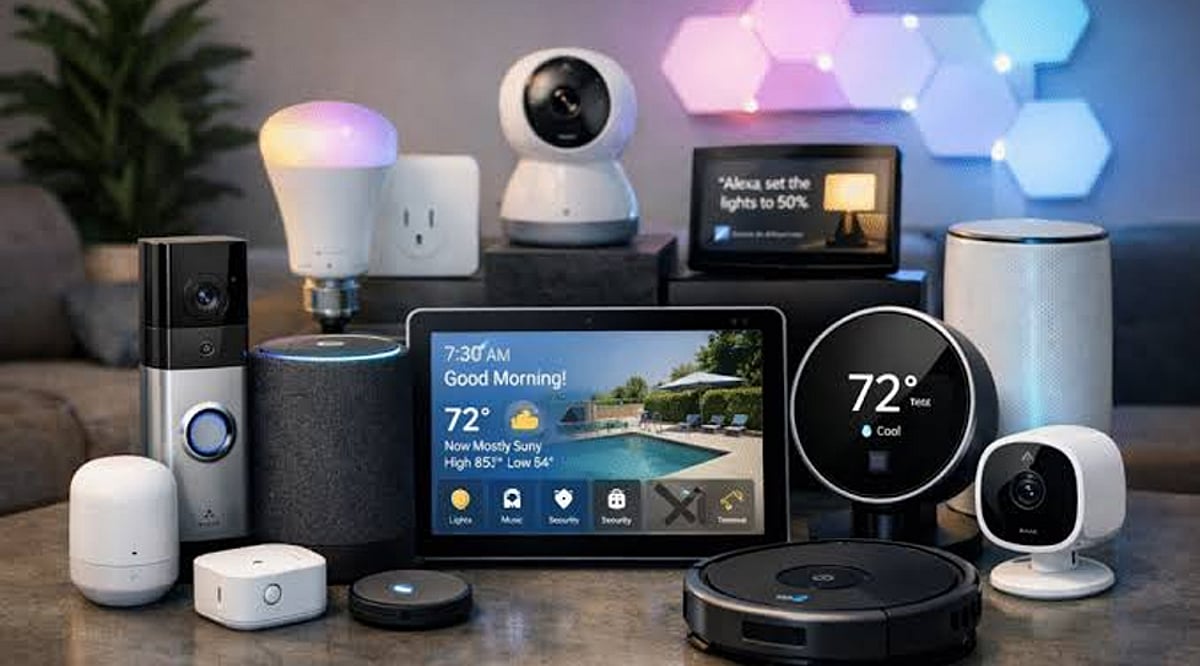
    In the series, officers often spoke naturally to the ship’s computer to retrieve information or execute tasks. Modern voice assistants and conversational AI provide a similar experience: ask a question, control smart devices, or access services by voice. Today’s systems are more advanced in many ways, but they still operate differently from the fictional Starfleet computer.

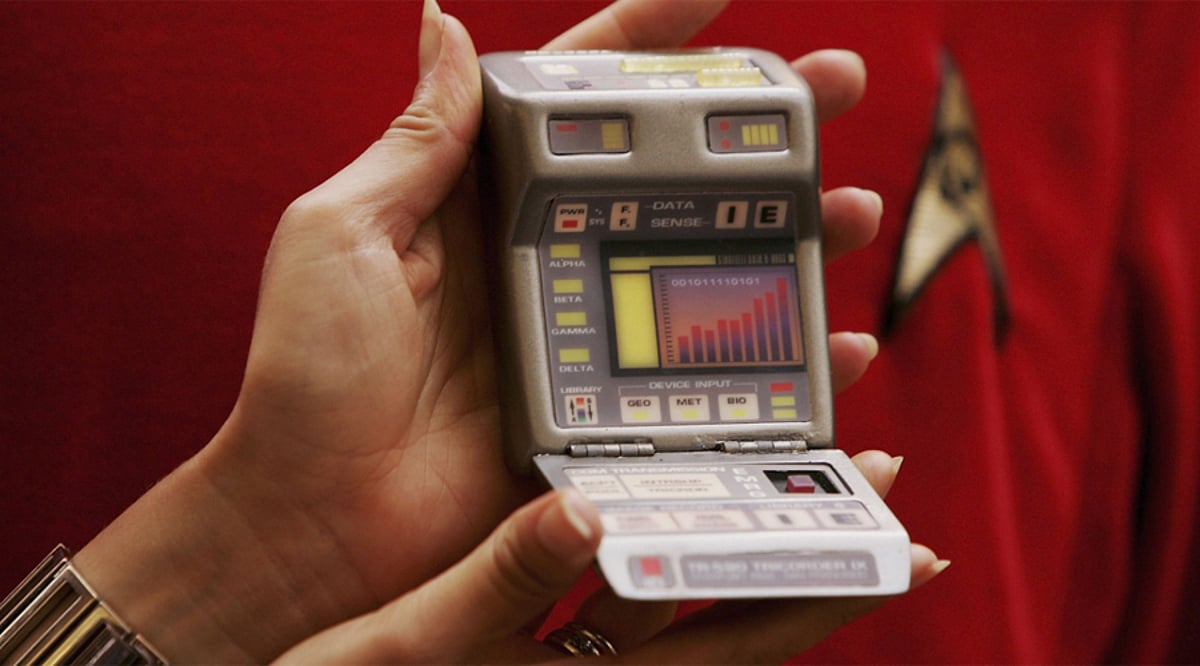
    Tricorders Inspired Portable Medical Diagnostics

    The fictional tricorder could scan patients and identify conditions quickly. Researchers have worked on real-world portable diagnostic tools, including projects tied to the Qualcomm Tricorder XPRIZE. That competition challenged teams to build compact health monitoring devices. While no product yet matches the tricorder completely, these efforts show steady progress toward portable medical diagnostics.

    Video Calls Went Mainstream

    Star Trek often showed characters communicating face-to-face over video. Smartphones, laptops, and conferencing platforms now make live video communication routine. However, the idea was not entirely new—Bell Labs demonstrated its Picturephone in 1964. This makes video calling an example of parallel development rather than a direct Star Trek invention.

    Science Fiction Meets Modern Reality

    Star Trek’s greatest influence may be its vision of technology that is portable, accessible and integrated into everyday routines. Communicators, PADDs, voice interfaces and medical scanners all have real-world equivalents today. Some were inspired directly by the franchise, while others emerged on their own. Either way, Star Trek helped popularize a future that now feels familiar.

  • How AI Assistants Are Redefining Mobile App Interactions: From Menus to Intent

    How AI Assistants Are Redefining Mobile App Interactions: From Menus to Intent

    AI assistants are fundamentally changing how users interact with mobile apps, shifting the paradigm from manual navigation to intent-driven execution. Instead of hunting through menus to complete a task, users can now simply state their desired outcome, and the software handles the steps. This transformation moves the interaction model from User → App → Feature → Action to User → Intent → Assistant → App Capability → Action. While visual interfaces remain essential for tasks like date selection or product comparison, AI reduces the need for users to understand an app’s internal structure. Voice-first apps further push this shift by enabling hands-free intent expression.

    The Shift From Menus to Intent

    This does not mean conversation replaces every screen. Picking a date on a calendar or comparing products side by side often stays faster with a visual layout. What changes is narrower and more useful: AI reduces how often a user has to understand an app’s internal structure just to use it. A shopping app can still show a product grid while a request typed in plain language filters it instantly, with no menu required. Voice-first apps push this shift further, letting people express intent without touching the screen at all. Visual interfaces still hold their ground for tasks that need comparison or precision, so the two approaches now sit side by side rather than compete.

    Why On-Device AI Matters

    Mobile chipsets are adding more hardware built for running AI models directly on the device. This cuts delay and keeps sensitive data local. But most apps are not choosing between on-device and cloud processing; they are building hybrid systems where quick or private tasks run locally and heavier reasoning still travels to the cloud. The real shift is not that AI moved to the phone, but that developers now decide, task by task, where computation should happen, weighing speed, privacy, and cost. This same awareness of context lets an app adjust to a person’s habits over time instead of treating every session as new. A fitness app that remembers a user’s usual workout time can suggest a plan without being asked, quietly folding personalization into the background rather than presenting it as a separate feature.

    From AI Features to Agentic Apps

    A chatbot answers. A copilot helps. An assistant performs a single action. An agent coordinates several actions to reach a goal, such as finding a hotel near a meeting, checking its cancellation policy, and preparing the booking. That progression changes the app’s role. An application is not just presenting functions to a human anymore; its functions also need to be understandable and reachable by an AI system acting on someone’s behalf. This is a structural demand, not a cosmetic one. It reshapes what ‘building an app’ actually involves.

    The New Developer Challenge

    Much of the visible change happens in the interface, but the larger transformation sits underneath it. Developers now need structured app data, clear APIs, permission systems, context that persists across sessions, and reliable ways for an assistant to call the right function at the right time. Testing an app used to mean checking if buttons work. Now it also means checking if an assistant handles a vague or oddly worded request without making the wrong call. Mobile development is quietly becoming AI development, and the teams that treat it that way are the ones setting the pace.

    Trust and Competition Are Shifting Together

    Giving an assistant permission to act, rather than just respond, creates a new kind of trust problem. Users may not always know how an AI reached a decision or whether it stayed within the limits they intended. Some apps address this with a short explanation line after a task completes, showing what happened and why. This same shift could reshape how apps compete. Features that once helped one app stand out become easier to reach through an assistant that pulls from several apps at once. If a person can ask for a result without knowing which app supplied it, the interface itself matters less. App companies may end up competing more on the quality of their data, the reliability of their services, and how well their functions can be coordinated by AI, rather than on how their screens look.

    Final Thought

    The next generation of mobile apps will not be defined only by what users can do inside them. They will be defined by what AI can safely do with them. That puts more weight on the foundations underneath the interface: reliable data, accessible actions, clear permissions, strong security, and systems that know when to act and when to ask first.

    Frequently Asked Questions

    1. How are AI assistants changing mobile apps? AI assistants are shifting mobile apps from menu-based navigation toward intent-based interactions, allowing users to describe what they want and receive help with completing tasks.
    2. What are agentic apps? Agentic apps use AI systems that can coordinate multiple actions to achieve a user-defined goal rather than simply answering questions or completing one isolated task.
    3. Why is on-device AI important for mobile apps? On-device AI can reduce response time and keep certain data on the phone, making it useful for applications where privacy, speed, and offline functionality matter.
    4. How does AI affect mobile app development? AI requires developers to build stronger data structures, APIs, permission systems, context management, and safeguards so assistants can interact with app functions reliably.
    5. Will AI assistants replace traditional mobile app interfaces? No. AI assistants are more likely to work alongside traditional interfaces. Screens remain useful for tasks involving visual comparison, navigation, selection, and precise controls, while AI handles intent-driven tasks.
  • 8 Sci-Fi Technologies That Are Now a Reality

    8 Sci-Fi Technologies That Are Now a Reality

    From Fiction to Function: Technologies That Are Reshaping Our World

    The line between science fiction and reality continues to blur as once-fantastical concepts become part of our everyday lives. From humanoid robots to quantum computers, these eight technologies are no longer just the stuff of movies—they are actively being developed and deployed today. Here’s a closer look at how these innovations are transforming the world around us.

    Humanoid Robots: From Screen to Workspace

    Humanoid robots have made the leap from movie sets to real-world environments, including laboratories, factories, and warehouses. With advances in artificial intelligence, computer vision, and robotics, these machines can now navigate complex spaces and perform tasks that were once thought to be exclusively human. Companies are developing robots that can carry objects, assist human workers, and learn repetitive activities. As these machines become more sophisticated, their eventual integration into homes could revolutionize how we approach daily chores and personal assistance.

    Brain-Computer Interfaces: Mind Meets Machine

    The idea of controlling technology with our thoughts is no longer just a futuristic fantasy. Brain-computer interfaces (BCIs) are making this possible by interpreting neural signals and translating them into digital commands. This technology holds immense potential for individuals with paralysis, enabling them to communicate and operate devices using only their minds. While consumer applications are still a ways off, the medical implications alone could redefine assistive technology and human-computer interaction.

    Self-Driving Cars: The Road to Autonomy

    Autonomous driving has evolved from a science-fiction trope to a technology being tested on real roads around the globe. Modern vehicles are equipped with advanced cameras, sensors, and artificial intelligence systems that assist drivers and perform certain driving functions. While fully autonomous vehicles still face technical, regulatory, and safety hurdles, the ongoing development suggests that transportation will gradually become less reliant on human control, promising a future with fewer accidents and more efficient travel.

    AI Personal Assistants: Your Digital Sidekick

    Fictional computers that can understand and respond to natural language are becoming increasingly realistic, thanks to generative artificial intelligence. Today’s AI assistants can answer questions, summarize information, create content, and perform a variety of digital tasks. As these systems become more capable and integrated with other applications, they are poised to evolve into personalized digital agents that manage schedules, conduct research, facilitate communication, and streamline everyday workflows.

    Quantum Computing: Unlocking Unprecedented Power

    Quantum computing is set to solve complex problems that are currently beyond the reach of conventional computers. By leveraging the principles of quantum mechanics, researchers are developing machines with potential applications in medicine, materials science, optimization, and cybersecurity. Although today’s quantum systems are still experimental and face significant technical challenges, ongoing advances in quantum hardware and error correction are bringing this futuristic technology closer to practical use.

    Artificial Organs: Bridging the Gap in Medicine

    Science fiction has long imagined a world where damaged body parts can be replaced with artificial or laboratory-grown alternatives. Modern medicine is already making this a reality with the development of artificial hearts, advanced prosthetics, tissue engineering, and lab-grown organs. Researchers are focused on making these technologies safer, more durable, and biologically compatible. While fully replacing complex human organs remains a challenge, breakthroughs in regenerative medicine could one day transform transplantation and revolutionize healthcare.

    Augmented Reality Glasses: The Digital Overlay

    Augmented reality (AR) glasses are bringing digital information into our physical surroundings, much like the futuristic interfaces depicted in sci-fi films. Modern AR devices can display navigation cues, digital objects, and contextual instructions while allowing users to interact with virtual content. With improvements in lightweight hardware, displays, sensors, and AI, AR glasses are becoming more practical for use in workplaces, education, entertainment, and everyday communication.

    Conclusion

    These eight technologies are no longer just figments of our imagination—they are real, tangible innovations that are already shaping our present and will continue to define our future. As they evolve and become more integrated into our lives, we can expect to see even more incredible advancements that were once thought impossible. The future is indeed here, and it’s more exciting than we ever imagined.

  • 10 Screenless Tech Devices Transforming Consumer Electronics in 2026

    10 Screenless Tech Devices Transforming Consumer Electronics in 2026

    Screenless gadgets are revolutionizing the way people interact with technology in 2026. These devices rely on artificial intelligence, voice commands, sensors, and ambient computing to operate seamlessly in the background without the constant distraction of traditional screens.

    PLAUD NotePin S

    The PLAUD NotePin S is a wearable AI recorder that turns conversations into structured notes without requiring a phone display. It captures meetings, identifies individual speakers, transcribes speech in 112 languages, and generates AI-powered summaries and action items, making it a powerful tool for professionals and multitaskers.

    Ray-Ban Meta Smart Glasses

    Ray-Ban Meta smart glasses combine AI, cameras, and open-ear audio into everyday eyewear. Users can interact with an AI assistant, capture hands-free photos and videos, and access real-time information without pulling out a smartphone.

    Fitbit Air

    Fitbit Air eliminates the traditional fitness tracker screen, focusing entirely on health monitoring. This lightweight wearable tracks heart rate, heart rate variability, sleep quality, blood oxygen levels, and more. All detailed insights are delivered through the Google Health app, and the device offers up to a week of battery life.

    Oura Ring 4

    Oura Ring 4 packs advanced health tracking into a discreet, screen-free ring. It monitors sleep patterns, activity levels, heart-related metrics, temperature trends, and recovery. Users access comprehensive data later via the companion app, avoiding screen time throughout the day.

    AI Earbuds

    AI-powered earbuds are evolving beyond music playback. The latest models integrate spatial audio, voice assistants, noise cancellation, and AI features, providing a fully hands-free way to manage digital interactions—no screen needed.

    Augmented Reality Glasses

    AR glasses such as VITURE and RayNeo offer a different path to screenless computing. These devices project large virtual displays for movies, gaming, and productivity while remaining compact and wearable, effectively replacing a portable monitor without a physical screen.

    Screenless Fitness Bands

    Fitness bands like WHOOP and Luna Band prioritize sleep, recovery, stress, and activity tracking over notifications. Data syncs to a smartphone app, allowing users to monitor their health without another glowing wrist display.

    Ambient AI Assistants

    Ambient AI assistants and wearable speakers are moving technology into the background. Voice commands, contextual AI, and smart-home automation handle tasks without requiring users to open apps or navigate menus, creating a truly uncluttered digital experience.

    Movement-Assist and Smart Energy Devices

    Screenless innovation extends beyond wearables. Exoskeletons assist physical movement, and portable power stations like EcoFlow offer quiet backup energy without adding another screen-based gadget to your routine.

    From health tracking to productivity and entertainment, screenless tech is reshaping consumer electronics by reducing screen time while increasing functionality. These devices prove that the best interface is often no interface at all.

  • How Data Analysis Tools Have Evolved: Then vs. Now

    How Data Analysis Tools Have Evolved: Then vs. Now

    Excel vs. AI-Powered Spreadsheets

    A decade ago, Microsoft Excel was the undisputed king of data analysis. Today, modern spreadsheets integrate AI assistants, automation, predictive formulas, and real-time collaboration—transforming how analysts work with numbers.

    Traditional SQL vs. AI SQL Assistants

    Analysts used to write every SQL query by hand. Now, AI-powered tools generate, optimize, and explain complex database queries in seconds, dramatically cutting the time spent on data retrieval.

    Static Dashboards vs. Interactive BI

    Basic, static reports have given way to interactive dashboards in Power BI, Tableau, and Looker. These platforms offer real-time visualization and self-service analytics, putting insights into the hands of decision-makers instantly.

    Local Databases vs. Cloud Data Warehouses

    On-premise databases were once the norm. Organizations now rely on cloud platforms like Snowflake, BigQuery, and Redshift for scalable analytics, faster processing, and lower maintenance overhead.

    Manual ETL vs. Automated Data Pipelines

    Data preparation used to involve manual effort for extraction, transformation, and loading. Automated ETL platforms now streamline the entire pipeline, handling data from multiple sources with validation and error-checking built in.

    Basic Python Scripts vs. AI Coding Assistants

    Python remains an essential tool, but AI coding assistants accelerate script creation, debugging, documentation, and workflow automation—enabling analysts to focus on insights rather than syntax.

    Historical Reporting vs. Predictive Analytics

    Analysts once focused on reporting what had happened. Now, machine learning models forecast trends, customer behavior, and business performance with remarkable accuracy, enabling proactive decision-making.

    Desktop Collaboration vs. Cloud Workspaces

    Emailing spreadsheets back and forth is a thing of the past. Cloud-based collaboration allows simultaneous editing, data governance, and secure enterprise-wide sharing in real time.

    Manual Insights vs. Generative AI Analytics

    Modern analytics platforms summarize datasets, generate reports, recommend visualizations, and answer natural-language questions—all powered by generative AI, making data exploration faster and more accessible than ever.

  • How to Seamlessly Transfer Your ChatGPT Data to Claude AI

    How to Seamlessly Transfer Your ChatGPT Data to Claude AI

    Switching between AI assistants becomes effortless when your past conversations move with you. Transferring ChatGPT data to Claude helps preserve context, project details, writing drafts, research notes, and ongoing discussions. This reduces repetition and allows Claude to deliver more relevant responses based on your previous interactions with ChatGPT.

    Export Your ChatGPT Data

    Log in to ChatGPT and open Settings. Navigate to Data Controls and choose Export Data. OpenAI will prepare an archive containing your chat history and send a download link to your registered email address. Download and extract the ZIP file before moving to the next step.

    Open Claude and Start Import

    Sign in to your Claude account through the web interface. Start a new chat or use the available import option if your version supports chat uploads. Claude can process exported conversation files, allowing it to understand previous discussions and continue projects with minimal manual effort.

    Upload the Exported Files

    Locate the extracted ChatGPT export folder and upload the relevant conversation files to Claude. Depending on the supported format, Claude will analyze the content and use it as context. For large archives, consider importing only the conversations that are most important for your work.

    Organize and Verify Your Data

    After the upload, review the imported conversations to ensure everything appears correctly. Rename chats, group related projects, and check that important prompts, notes, and documents have been transferred. A quick review helps avoid missing information before continuing your work in Claude.

    Protect Your Privacy

    Before transferring any AI conversations, remove passwords, financial records, personal identification details, or confidential business information. Exported chat files may contain sensitive content, so review them carefully before uploading. Following basic privacy practices helps keep your information secure across different AI platforms.

    Continue Working Seamlessly

    Once your chats are available in Claude, you can continue writing, coding, brainstorming, or researching without starting from scratch. Keeping previous conversations accessible saves time, improves workflow, and makes switching between AI assistants much smoother for both personal and professional projects.

  • Galaxy AI vs Apple Intelligence: Key Differences in Smartphone AI Approaches

    Galaxy AI vs Apple Intelligence: Key Differences in Smartphone AI Approaches

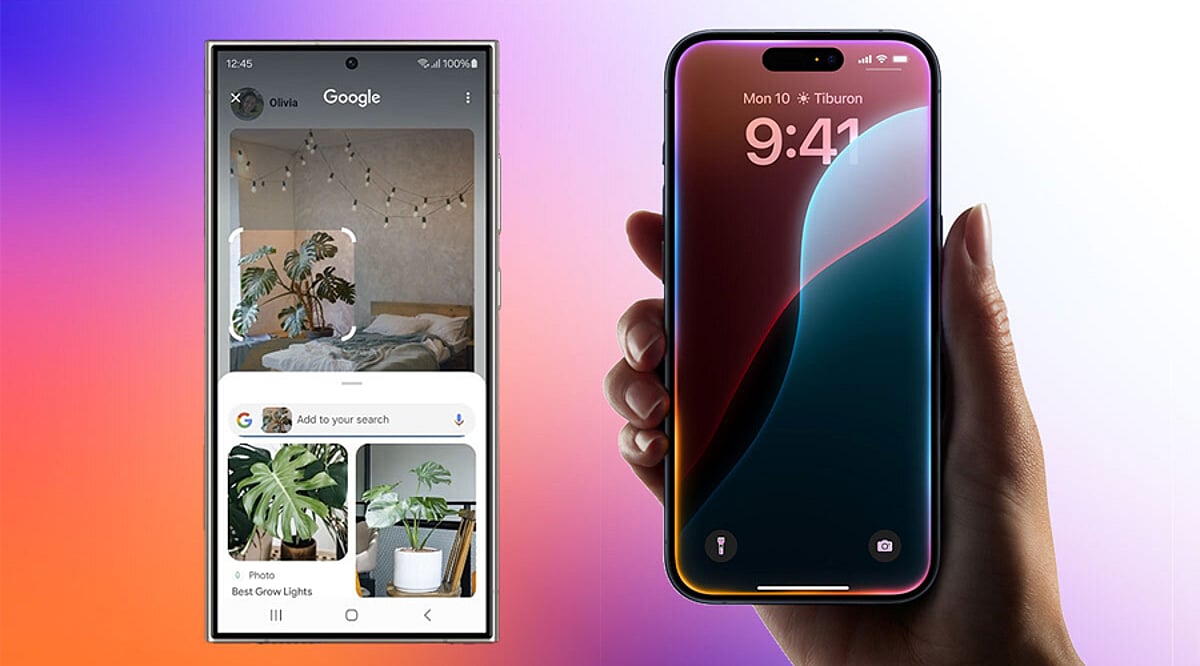
    Samsung and Apple are pursuing distinct strategies for integrating artificial intelligence into smartphones. Galaxy AI emphasizes practical, user-accessible tools like translation, photo editing, and productivity enhancements. Apple Intelligence, by contrast, takes a more personalized route, embedding AI deeply into the operating system and apps to create a seamless, context-aware experience. Both aim to make smartphones smarter and more useful, but their methods differ significantly.

    Galaxy AI Is Built for Action

    Galaxy AI functions as a broad toolkit of practical features. Users can translate calls in real time, summarize content, edit photos with generative tools, and rewrite text. Samsung also leverages AI to improve search and overall productivity. This approach gives users visible, direct-access features, making Galaxy AI particularly appealing to those who want control and flexibility.

    Apple Intelligence Thinks Contextually

    Apple Intelligence is designed to understand the user’s personal context. Apple integrates AI into Siri, Messages, Mail, and other system-level features. The goal is to make AI feel less like a separate tool and more like an intelligent layer that works across the entire Apple ecosystem.

    AI Assistants Take Different Paths

    Galaxy users benefit from Samsung’s AI features alongside Google’s Gemini ecosystem, giving Android users access to a wide range of AI capabilities. Meanwhile, Apple is upgrading Siri to better understand context and perform more complex tasks. Apple’s long-term vision centers on a more capable assistant deeply integrated with Apple devices.

    Photo and Writing Tools

    Both platforms offer AI-powered writing and image-editing tools. Galaxy AI provides features such as Generative Edit, object removal, summarization, and writing assistance. Apple Intelligence offers tools including Rewrite, proofreading, Clean Up, and AI-generated images. Currently, Samsung feels more feature-heavy, while Apple focuses on seamless system integration.

    Privacy Remains a Key Difference

    Apple has placed privacy at the center of its AI strategy. Apple Intelligence processes many tasks on-device and uses Private Cloud Compute for more complex requests. Galaxy AI also combines on-device and cloud processing, depending on the feature. The key difference lies in how each company positions privacy within its AI ecosystem.

    Which AI Approach Is Better?

    Galaxy AI is better suited to users who want a wide range of practical tools and greater flexibility. Apple Intelligence may appeal more to users invested in Apple’s ecosystem who seek contextual, personalized assistance. The real competition is not simply about features—it is about which company can make AI feel most useful in everyday life.

  • Smart Glasses: The Next Computing Frontier, Gradually Replacing Smartphones

    Smart Glasses: The Next Computing Frontier, Gradually Replacing Smartphones

    Smart glasses are emerging as the next major computing platform, enabling users to make calls, send messages, navigate, and use AI assistants without ever pulling out a smartphone. This shift is happening in stages, and experts predict that by 2030, glasses could become the primary way people access apps and the internet.

    Modern smart glasses already handle 60–70% of everyday smartphone tasks through voice commands, hand gestures, and AI-powered assistants. Users can send texts, translate languages in real time, get directions, and capture photos completely hands-free. However, phones remain essential for gaming, video editing, multitasking, and complex applications.

    Lightweight designs, stylish frames, real-time translation, navigation overlays, and proactive AI are driving rapid adoption across global markets, including India’s tech hubs. Despite these advances, battery life, limited app ecosystems, privacy concerns, and social acceptance still prevent smart glasses from fully replacing smartphones—for now.

  • The Future of Consumer AI: Proactive Assistants, Voice Tech, and Personalized Health in 2026

    The Future of Consumer AI: Proactive Assistants, Voice Tech, and Personalized Health in 2026

    Consumer AI is evolving far beyond simple chatbots. The next generation of artificial intelligence focuses on intelligent assistants that understand context, remember preferences, and complete real-world tasks. Instead of being a tool people access only through chat, AI is becoming an invisible layer built into everyday apps, devices, and services.

    One of the biggest trends to watch is the rise of AI agents. These assistants do more than answer questions—they can plan trips, compare prices, book reservations, schedule meetings, send follow-ups, and manage multi-step workflows with minimal human input, saving time and effort.

    Voice AI is also becoming faster and more natural. Modern multimodal systems can understand speech, tone, emotions, pauses, images, and video together, creating conversations that feel more human. This powers smarter virtual assistants, customer support, and real-time personal companions.

    AI-powered creativity is now accessible to everyone. New tools generate high-quality text, images, videos, music, and animations from simple prompts, helping creators, students, marketers, and small businesses produce professional content without advanced editing skills.

    Personalized AI is transforming healthcare and daily wellness. By combining data from smartwatches, fitness trackers, and health records, AI provides tailored insights on exercise, sleep, nutrition, and lifestyle, helping users make better everyday health decisions.

    AI is also becoming highly specialized. Instead of relying on one general chatbot, consumers are using focused AI apps for shopping, education, travel planning, budgeting, productivity, and creative work. These niche tools deliver more personalized and practical experiences for specific needs.

    The biggest shift in 2026 is that AI is becoming proactive rather than reactive. The most successful AI products will remember user preferences, work across multiple apps and devices, automate repetitive tasks, and quietly handle everyday work in the background—making AI a natural part of daily life instead of just another chatbot.

  • AI Assistants Revolutionize the In-Car Experience: From Voice Commands to Natural Conversations

    AI Assistants Revolutionize the In-Car Experience: From Voice Commands to Natural Conversations

    The era of frustrating voice commands in cars is ending. Major automakers are replacing rigid rule-based systems with conversational AI assistants powered by large language models (LLMs). This shift promises to transform vehicles from mere transportation into intelligent digital companions.

    The in-car voice assistant market is projected to grow from $3.27 billion in 2026 to $5.49 billion by 2029, at a compound annual growth rate of 13.9%, according to The Business Research Company. This growth is fueled by new capabilities and fierce competition among automakers to secure the best AI partners.

    From Rigid Commands to Natural Conversation

    Traditional voice assistants required memorized phrases and often failed. Modern LLM-based systems understand context, prioritize results, and handle multi-step requests. For example, a driver can say, “Take me to the nearest coffee shop and text my mom I’ll be late,” then follow up with, “Actually, make it one with outdoor seating,” without repeating context.

    This capability depends on a pipeline of technologies: Automatic Speech Recognition (ASR), Natural Language Understanding (NLU), and real-time data from maps, weather, charging-station APIs, and vehicle sensors. For EV owners, this means asking about a nearby fast charger and receiving live availability, pricing, and operating hours in one exchange.

    Major Automaker-AI Partnerships Reshaping Dashboards

    Automakers are choosing different AI partners:

    • General Motors integrates Google’s Gemini into Buick, Chevrolet, Cadillac, and GMC vehicles with “Google built-in,” leveraging its OnStar network. Nearly four million cars in the US are affected.
    • Mercedes-Benz incorporates ChatGPT via Microsoft Azure OpenAI Service into its MBUX Voice Assistant, enabling open-ended question answering with Bing search.
    • BMW integrates Amazon’s Alexa+ into its Intelligent Personal Assistant, launching with the new iX3 at CES 2026 and expanding to 40 models by 2027.
    • Tesla uses xAI’s Grok.
    • Stellantis partners with French AI company Mistral.
    • Lucid teams up with SoundHound.

    Each approach is unique: GM uses its connectivity history to scale Gemini; BMW focuses on continuity across devices; Mercedes emphasizes knowledge depth. No single standard has emerged.

    What These Assistants Can Actually Do Behind the Wheel

    Beyond trivia, these systems perform context-aware tasks. BMW’s Alexa+ can adjust cabin temperature and find Italian restaurants along a route from a single sentence. Mercedes partners with Liquid AI to run parts of the assistant on-device for low-latency responses. GM envisions a future where drivers ask specific questions about vehicle parts and systems, answered by an assistant fine-tuned on proprietary data. Some automakers layer assistants over driver-assistance functions, allowing voice control of driving modes, diagnostics, and maintenance alerts.

    Real Challenges Behind the Conversational Upgrade

    LLMs can hallucinate, producing confident but incorrect answers—problematic for navigation or safety. Most systems rely on cloud connectivity, introducing latency and failure in poor signal areas (hence on-device processing experiments). Data privacy concerns have grown, prompting GM to commit to opt-in consent and no data selling. Driver reception is mixed; some worry about accidental activation or unwanted processing of everyday conversations. Automakers emphasize that microphones require explicit wake words or button presses, and core functions work without linking AI accounts.

    Where In-Car AI Goes From Here

    The current wave is a stepping stone. GM’s Gemini rollout is interim; a proprietary OnStar-trained assistant is planned. Automakers are linking conversational AI to advanced driver-assistance systems, predictive maintenance, and autonomous driving. As competition among Google, OpenAI, Amazon, xAI, and Mistral plays out across dashboards, cars become connected devices in a digital ecosystem. Over-the-air updates will allow continuous improvement, unlike traditional fixed infotainment systems. The next two to three years will reveal whether this leads to safer, more useful driving companions or more sophisticated distractions.