Tag: AI chips

  • SK Hynix Plans $28B US Listing, Rivage Secures €1.5M, and More Top Tech News

    SK Hynix Plans $28B US Listing, Rivage Secures €1.5M, and More Top Tech News

    Good morning, tech fam; here are some quick tech updates for you to catch up on!

    What’s New Today

    SK Hynix is planning a $28 billion US listing to expand AI chip production and strengthen its global semiconductor business.

    Fast-Track Insights

    French proptech startup Rivage has raised €1.5 million to scale its AI-powered rental management platform across France and Germany.

    Here’s a quick rundown of the biggest tech headlines making waves today. Let’s dive into the day’s top tech stories, from SK Hynix’s massive US listing plans to South Africa’s proposed crypto tax guidance.


    SK Hynix Launches $28 Billion Nasdaq Listing to Capitalize on AI Boom

    South Korea’s SK Hynix is launching a $28 billion Nasdaq listing through depositary receipts, aiming to benefit from booming global AI demand. The AI memory chip leader plans to use the proceeds for expanding semiconductor production, strengthening its global presence, and supporting South Korea’s broader AI and chip investment strategy.


    Rivage Raises €1.5M to Scale AI Rental Management Platform Across Europe

    Paris-based proptech startup Rivage has secured €1.5 million in funding led by Kima Ventures to expand its AI-powered rental management software. The platform automates accounting, billing, and property workflows for real estate agencies. Rivage aims to accelerate growth in France, expand into Germany, and reach €5 million in annual recurring revenue by 2027.


    Malaysia Focuses on Better Jobs and AI Hiring

    Malaysia is changing its job strategy by focusing on better jobs instead of just creating more jobs. The government is using AI to help people find the right jobs through the MYFutureJobs platform. It also aims to improve workers’ skills, increase salaries, and prepare the workforce for future industries.


    Best AI Agent Frameworks for Building High-Performance Agents

    This article explains some of the best AI agent frameworks that help developers create smart AI agents more easily. It compares their features, ease of use, and performance. The guide also shows how the right framework can save time, improve efficiency, and support simple as well as large AI projects.


    South Africa Proposes Draft Crypto Tax Guidance Under Existing Laws

    South Africa’s Revenue Service (SARS) has released draft guidance explaining how existing income tax and capital gains tax rules apply to crypto assets. The proposal treats most crypto transactions as taxable events, depending on individual circumstances, and invites public feedback until August 31 before finalizing the guidance.

  • AI Chips, Battery Recycling, and Hiring Trends: Tech News Roundup for July 3, 2026

    AI Chips, Battery Recycling, and Hiring Trends: Tech News Roundup for July 3, 2026

    Good morning, tech enthusiasts! Here’s a quick roundup of today’s top headlines, from Amazon’s custom AI chips for Alexa to startup funding, AI hiring shifts, codeless automation platforms, and cryptocurrency sentiment indicators.

    Amazon Plans Custom AI Chips for Future Alexa Devices

    Amazon is designing its own AI chips to power upcoming Alexa devices, promising faster, safer, and more connected AI features. Devices chief Panos Panay confirmed the company is also working on new portable products beyond smart speakers and TVs, with a focus on natural conversation interfaces rather than screens. No official launch dates or product details have been revealed yet.

    BatX Raises Rs. 105 Crore to Expand Battery Recycling Operations

    Battery recycling startup BatX has secured Rs. 105 crore (about $12.6 million) in Series A funding led by IvyCap Ventures. The company plans to use the capital to increase its recycling and refining capacity, strengthen research, and build a more robust local supply chain for critical battery materials. BatX recovers valuable materials from used batteries and manufacturing waste and aims to expand its technology footprint in India and other markets.

    WEF Report: AI Reshaping Graduate Hiring

    A new report from the World Economic Forum and PwC highlights how AI is changing entry-level hiring. Jobs most affected by AI have seen minimal growth in graduate openings since 2012. While weak business conditions and cost-cutting also play a role, the report urges companies to maintain graduate hiring and redesign entry-level roles rather than eliminate them.

    Top Codeless AI Platforms Transforming Business Automation in 2026

    Businesses are increasingly using codeless AI platforms like Zapier, n8n, Make, Workato, Bubble, and Microsoft Power Automate to build chatbots, AI agents, and automated workflows without programming skills. AI agents that complete tasks with minimal human intervention are a major trend in 2026, democratizing AI for both small businesses and large enterprises.

    Crypto Fear and Greed Index: A Quick Sentiment Check

    The Crypto Fear and Greed Index measures market sentiment by analyzing price volatility, trading volume, social media buzz, Bitcoin dominance, and Google search trends. Scores range from 0 (extreme fear) to 100 (extreme greed). While useful for gauging market mood, the index should not be the sole basis for trading decisions.

    Stay tuned for more tech updates throughout the day.

  • NVIDIA Stock Stays Below $200 Ahead of Vera Rubin Launch Amid Rising Competition and AI Spending Trends

    NVIDIA Stock Stays Below $200 Ahead of Vera Rubin Launch Amid Rising Competition and AI Spending Trends

    NVIDIA shares continue to trade below the $200 mark despite a modest rebound, as investors shift their attention to the company’s upcoming Vera Rubin platform and its expanding robotics business. The stock has underperformed the broader semiconductor sector in 2026, even as demand for artificial intelligence infrastructure remains robust.

    NVIDIA Trails Semiconductor Sector Despite AI Demand

    Shares of NVIDIA rose about 1.5% to $197.96 in early Tuesday trading. However, the stock has gained only about 5% year-to-date, while the PHLX Semiconductor Index has surged approximately 94% in the same period, making NVIDIA one of the weaker performers among major chip companies. Investors have been reallocating capital to other areas of the AI supply chain, including memory chipmakers, custom chip developers, and CPU manufacturers. Intel and Advanced Micro Devices have posted significantly stronger gains in 2026, and the iShares Semiconductor ETF has also outperformed NVIDIA. Analysts point to concerns over export restrictions affecting China and questions about future growth rates as factors weighing on the stock.

    Vera Rubin Platform and Robotics Expansion

    The market is now focused on NVIDIA’s next-generation Vera Rubin platform, which could strengthen the company’s position in AI infrastructure if it delivers substantial performance improvements. Competition is intensifying as large technology companies diversify their AI spending across multiple suppliers. Meanwhile, NVIDIA is expanding beyond AI chips into robotics, having opened more than a dozen robotics-related positions in Beijing, Shanghai, and Shenzhen. The roles cover embodied intelligence, simulation, implementation, and robotics solutions. NVIDIA says the robotics team aims to build a leading platform and ecosystem for autonomous machines, speeding the transition from research to commercial use. Employees will work on Project GR00T, the Cosmos physical simulation world model, and NVIDIA’s GPU computing platform.

    Market Watches AI Spending and China Competition

    NVIDIA remains one of the world’s largest listed companies with a market valuation of about $4.696 trillion—a 1% move changes its value by approximately $47 billion. Investors are tracking broader AI capital expenditure: the Bank for International Settlements projects that the five largest hyperscalers will invest more than $1 trillion in AI capex over 2025 and 2026, while also noting funding pressure and supply constraints around power, advanced chips, and grid infrastructure. Separately, Reuters reported that Baidu’s Kunlunxin chip business targets a $50 billion Hong Kong IPO, and IDC data shows domestic suppliers now hold 41% of China’s AI accelerator server market. Despite these headwinds, NVIDIA continues to project strong growth. The company forecast fiscal second-quarter revenue of $91 billion, above analyst expectations, and announced an $80 billion share buyback. CEO Jensen Huang stated, ‘We should be growing faster than hyperscale capex.’ Analysts are monitoring whether AI investment can sustain its pace through the coming years.

  • India’s AI Chip Push, Brekfuz Funding, and Trump’s Crypto Income: Top Tech News Today

    India’s AI Chip Push, Brekfuz Funding, and Trump’s Crypto Income: Top Tech News Today

    Today’s Tech Roundup

    From artificial intelligence and startups to cryptocurrency and employment debates, here are the key stories shaping the tech landscape today.

    India Doubles Down on AI Chips and Quantum Computing

    India is accelerating its digital transformation with a renewed focus on AI chips, semiconductors, and quantum technology. The government aims to boost domestic innovation, strengthen digital infrastructure, and support startups to position the country as a global tech leader.

    Gurugram AI Startup Brekfuz Secures Fresh Funding

    Brekfuz, an AI startup based in Gurugram, has raised $525,000 in a funding round that values the company at $7.5 million. The funds will be used to enhance its AI solutions, expand the team, and grow its customer base.

    Trump Reports $1.4 Billion in Cryptocurrency Income

    US President Donald Trump disclosed approximately $1.4 billion in earnings from cryptocurrency in a government financial filing. The report underscores the growing role of digital assets in his business portfolio and highlights crypto’s significance as a major income source.

    Delhi University Graduate’s Low Salary Sparks Campus Placement Debate

    A University of Delhi graduate’s post about receiving a monthly salary of Rs. 12,000 has ignited online discussions about the quality of campus placements and entry-level pay in India. Critics point to rising education costs and limited job opportunities for fresh graduates.

    OpenClaw Launches AI Agents for Android Smartphones

    OpenClaw has introduced an Android app that turns smartphones into personal automation hubs. The app supports voice commands, automation, and remote task management, aiming to make AI assistants more practical for everyday users while maintaining user control over permissions.

    Stay tuned for more updates on these rapidly evolving stories.

  • IBM’s Sub-1nm Chip Breakthrough Paves the Way for Next-Generation AI

    IBM’s Sub-1nm Chip Breakthrough Paves the Way for Next-Generation AI

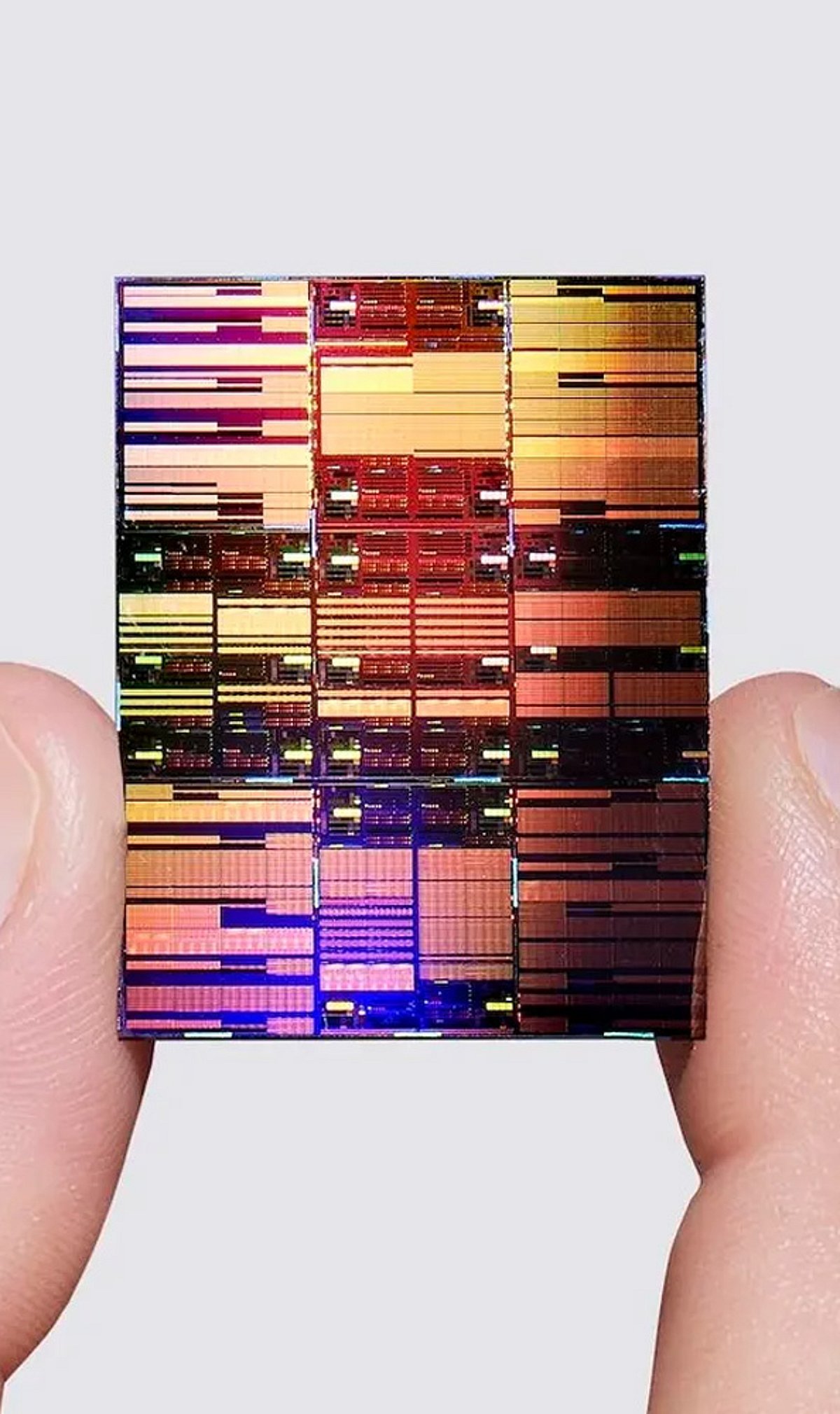
    IBM is pushing the boundaries of chip technology with a groundbreaking processor smaller than 1 nanometer. This achievement could redefine the performance and efficiency of artificial intelligence systems.

    Why Chip Size Matters

    Smaller chips deliver higher performance while consuming less power. For AI, this means faster processing and greater energy efficiency, enabling more complex models to run in real time.

    A Major Leap for AI

    IBM’s advanced chip research is designed to meet the growing demands of generative AI and machine learning workloads. The new architecture promises to handle massive data sets more quickly than existing technologies.

    Faster AI Processing

    By shrinking transistor dimensions below 1 nanometer, IBM has created a chip that can process information at unprecedented speeds. This directly benefits AI models that rely on rapid data analysis.

    Energy Efficiency and Sustainability

    Lower power consumption reduces operational costs and makes AI infrastructure more environmentally sustainable. Data centers, in particular, stand to gain from reduced energy use.

    Impact on Data Centers and Cloud Providers

    Cloud providers can deploy servers that handle AI tasks with far greater efficiency, leading to faster response times and lower overhead. This breakthrough positions IBM as a key player in next-generation computing.

    Beyond Today’s Processors

    The achievement highlights how semiconductor innovation continues to drive the future of computing. While commercial production may take years, IBM’s research points the way toward more powerful AI hardware.

    What It Means for Businesses

    Industries such as healthcare, finance, manufacturing, and research will benefit from faster, more affordable AI-powered applications. The sub-1nm chip could accelerate everything from drug discovery to autonomous systems.

    The road ahead is promising, and IBM’s breakthrough signals a new chapter in AI hardware development.

  • Daily Tech Roundup: Qualcomm Deepens AI Chip Ambitions, QOSMIC Raises $3.3M, Infosys Boosts Hiring, and Crypto Compliance Tightens

    Good morning! Here’s your quick roundup of the latest developments across AI infrastructure, startup funding, IT services, cryptocurrency markets, and generative AI technologies.

    Qualcomm Expands AI Chip Push With Microsoft and Meta

    Qualcomm has launched an aggressive plan to expand its AI infrastructure capabilities, supplying its new AI processors to major partners including Microsoft and Meta. The company aims to achieve substantial revenue growth in its data centers and become a competitive player in the growing AI hardware market. Qualcomm’s processors are designed to deliver efficient AI performance at lower costs.

    QOSMIC Raises Fresh Capital for Space Communications

    Bengaluru-based space-tech startup QOSMIC has secured $3.33 million in seed funding, led by Accel and Prosus. The company specializes in optical communication hardware for fast data transmission between satellites and ground stations. The new capital will support manufacturing, testing, engineering expansion, and deployment of operational systems for global customers.

    Infosys Accelerates Graduate Hiring and Deal Growth

    Infosys has ramped up its workforce plans by recruiting approximately 20,000 new graduates, while also closing several large deals worth a total of $1.49 billion in FY26. This reflects the company’s continued optimism about corporate technology spending despite broader economic concerns.

    Crypto Compliance Risks Draw Increased Regulatory Attention

    Concerns around cryptocurrency compliance and illicit financial activity remain a key focus for regulators worldwide. Recent discoveries have highlighted the role some cryptocurrency exchanges play in facilitating sanctioned or restricted transactions. These developments reinforce growing pressure on crypto platforms to strengthen monitoring, transparency, and anti-money laundering frameworks as the sector matures.

    Claude AI Tokens Become Key Enterprise Discussion

    As organizations deploy increasingly sophisticated generative AI systems, understanding tokens and context windows has become critical. Claude AI’s token structure influences the amount of data processed in a conversation, impacting system efficiency, cost, and user experience.

  • NVIDIA vs AMD: Which Chip Stock Offers Better Returns in 2026?

    NVIDIA vs AMD: Which Chip Stock Offers Better Returns in 2026?

    The global technology market has transformed rapidly, driven by artificial intelligence. AI has become one of the biggest growth areas worldwide, and semiconductor companies now sit at the center of this shift. Among all chipmakers, NVIDIA and AMD have captured the most investor attention. Both companies play a vital role in the future of computing, but the key question remains: which stock looks better for investment right now?

    The answer depends on business strength, growth rate, market position, and future opportunities. Both companies offer strong potential, but there are major differences between them.

    NVIDIA’s Strong Position in the AI Market

    NVIDIA currently leads the AI chip market with a commanding share. The company controls more than 75 percent of the global AI GPU market. Graphics Processing Units (GPUs) power advanced artificial intelligence systems, large data centers, and machine learning models. Major technology companies such as Microsoft, Amazon Web Services, Google, and OpenAI rely heavily on NVIDIA hardware. This strong demand has helped NVIDIA build a dominant industry position.

    Revenue Growth Shows NVIDIA’s Strength

    Financial growth remains one of the biggest reasons behind NVIDIA’s popularity among investors. Recent reports show that NVIDIA recorded nearly 73 percent year-over-year revenue growth. The company’s data center business alone generated around $62 billion. Profit margins also remain extremely strong. NVIDIA currently maintains gross margins close to 75 percent, reflecting excellent business efficiency. High profitability allows more investment in research, product development, and shareholder rewards.

    The Power of CUDA Creates a Huge Advantage

    One major reason behind NVIDIA’s success is its software ecosystem called CUDA. Developers worldwide use CUDA to build AI models and software applications. This creates an advantage beyond hardware itself. Even when competitors offer strong chips, many companies hesitate to switch because their systems already depend on NVIDIA software tools.

    AMD Offers Higher Growth Potential

    AMD stands as NVIDIA’s biggest competitor in advanced chips. Although AMD remains much smaller in the AI accelerator market, the company has started to gain serious momentum. AMD reported around 34 percent revenue growth, showing healthy expansion. Data center revenue currently stands near $5.4 billion, far below NVIDIA, but the company continues to grow at a strong pace. Since AMD operates from a smaller base, faster stock growth becomes possible if market share expands in the coming years.

    AMD Builds Strong Products Across Multiple Areas

    AMD continues to strengthen its position through several important products. EPYC server processors have gained popularity in enterprise computing. Ryzen processors continue to perform well in consumer markets. The Instinct MI series AI accelerators also help AMD compete directly with NVIDIA in artificial intelligence hardware. Unlike NVIDIA, AMD has lower profit margins near 55 percent, indicating stronger competition and lower pricing power.

    Risks Investors Should Understand

    NVIDIA remains the safer company, but risks still exist. The company already has an enormous market value, making extremely large future gains harder to achieve. Any slowdown in AI spending could also affect investor confidence. AMD carries different risks. The company still remains far behind NVIDIA in AI GPUs. Its software ecosystem, called ROCm, still lacks the maturity of NVIDIA’s CUDA platform. Lower margins also show weaker overall profitability.

    Final Comparison and Investment Decision

    Both companies remain strong investments, but they serve different investor goals. NVIDIA offers better business quality, stronger profits, market leadership, and lower risk. It appears more suitable for long-term investors who prefer stability and steady growth. AMD offers greater upside potential given its smaller size. If AMD captures even 10 to 15 percent more AI market share, stock performance could rise faster than NVIDIA’s. At present, NVIDIA ranks as the stronger and safer investment choice. AMD remains the better option for investors who seek higher return potential and accept higher risk.

    Frequently Asked Questions

    1. Why does NVIDIA rank ahead of AMD right now?
    NVIDIA commands over 75 percent of the global AI GPU market, delivering exceptional financial performance with superior data center revenue and premium pricing power that outpaces its closest competitors.

    2. Does AMD have growth potential despite lower market share?
    AMD offers considerable growth potential. Operating from a smaller market base means expanding its data center presence or capturing minor market share shifts can trigger accelerated stock appreciation.

    3. What gives NVIDIA a competitive advantage?
    NVIDIA’s proprietary CUDA software ecosystem creates deep customer lock-in. Developers globally build AI models using these integrated tools, making it logistically difficult for enterprises to switch hardware providers.

    4. Is AMD considered a risky investment?
    AMD carries an elevated risk as its AI software platform, ROCm, is less mature than NVIDIA’s ecosystem. It also operates with lower profit margins, reflecting stiffer market competition.

    5. Which stock suits long-term investors better?
    NVIDIA is highly suited for long-term investors seeking financial stability. Its absolute market leadership, massive corporate profitability, and robust full-stack ecosystem minimize downside risk across changing technology cycles.

    Disclaimer: This article is provided for informational purposes only and does not constitute investment advice. You are responsible for conducting your own research before making any investments.

  • Morning Tech Roundup: OpenAI Debuts Jalapeño AI Chip, Leyden Labs Secures €40M, and More

    Morning Tech Roundup: OpenAI Debuts Jalapeño AI Chip, Leyden Labs Secures €40M, and More

    Good morning, tech enthusiasts! Here’s your quick roundup of the biggest stories making headlines today—from artificial intelligence and healthcare to careers, consumer technology, and cryptocurrency.

    OpenAI Unveils First In-House AI Inference Chip

    OpenAI has introduced its first self-developed AI inference chip, named Jalapeño, built in collaboration with Broadcom. The chip is designed to speed up AI responses while consuming less power, marking a strategic step toward reducing OpenAI’s reliance on Nvidia and lowering computing costs. Early tests have yielded strong results, and the company plans to deploy the chip for customer services later this year as part of its long-term hardware strategy.

    Leyden Labs Raises €40M for Broad Flu Protection Nasal Spray

    Dutch biotech firm Leyden Labs has secured €40 million to advance its PanFlu nasal spray through clinical trials. The spray delivers antibodies directly into the nose to block influenza viruses before they spread in the body. Unlike traditional flu vaccines, this approach may also benefit individuals with weakened immune systems. The funding will support further research, expand work on other respiratory viruses, and improve access in lower-income countries.

    Fresh Graduate Left Without Job After Campus Offer Revoked

    A recent engineering graduate has shared their distress online after the company that hired them through campus placements revoked its job offer following graduation. With no internship or work experience, the graduate now faces significant challenges in finding a new position. They have asked for guidance rather than sympathy, highlighting a growing concern among new graduates in a volatile job market.

    Tech Giants Look Beyond Phone Screens

    Major tech companies are increasingly focusing on screen-free devices such as smart glasses, AI earbuds, and AI pendants. The goal is to reduce reliance on smartphones for everyday tasks. However, privacy and public trust remain significant hurdles. While phones are not disappearing, screen-free tools may gradually reshape how people interact with technology.

    Bitcoin May Face More Weakness Before Recovery

    Bitcoin could remain under pressure for another quarter before reaching a major market bottom, according to analysts tracking its four-year cycle. Prices may stay weak through the third quarter, though long-term indicators—including market value, ETF demand, and global money supply—point to a potential rebound later in the year. Until then, caution is advised, especially if Bitcoin stays below key price levels.

    Stay tuned for more updates throughout the day.

  • Apple Raises MacBook, iPad, and Mac mini Prices in India Amid AI-Driven Component Cost Surge

    Apple Raises MacBook, iPad, and Mac mini Prices in India Amid AI-Driven Component Cost Surge

    Apple has raised prices on several products in India, including MacBooks, iPads, Mac mini, and HomePod devices, citing rising costs of memory and storage chips driven by the global AI boom. iPhone prices remain unchanged for now.

    The price hike affects the MacBook Neo, MacBook Air M5, MacBook Pro range, Mac mini M4, iPad lineup, and HomePod lineup. The steepest increase is on the MacBook Pro M5 Max, which now starts at ₹4,99,900, up ₹1 lakh. The standard MacBook Pro M5 starts at ₹2,39,900 after a ₹70,000 increase, while the MacBook Air M5 is now priced from ₹1,49,900, up ₹29,000.

    Apple’s more affordable Mac lineup also saw significant increases. The Mac mini M4 now starts at ₹94,900, compared to its earlier launch price of ₹59,900 — one of the largest percentage jumps. The entry-level MacBook Neo starts at ₹79,900, up ₹10,000.

    For tablets, the 11th-generation iPad now starts at ₹49,900, the iPad mini at ₹69,900, the iPad Air at ₹89,900, and the iPad Pro at ₹1,39,900.

    Apple attributes the price hikes to higher costs of memory and storage chips, as suppliers prioritize manufacturers focused on AI, limiting supply to consumer electronics and raising production expenses. Industry experts note Apple has shielded iPhone customers from these increases for now.

  • Qualcomm Stock Surges 12% on $40 Billion AI Revenue Target Beyond Smartphones

    Qualcomm Stock Surges 12% on $40 Billion AI Revenue Target Beyond Smartphones

    Qualcomm stock rose more than 12% in premarket trading on Thursday after the chipmaker raised its long-term revenue target outside smartphones. The company now expects its non-handset businesses to generate $40 billion in revenue by fiscal 2029, twice its previous goal.

    The revised target includes $15 billion from data center products and $10 billion from the automotive business. Qualcomm presented the plan at its investor day in New York, where executives outlined a broader shift into artificial intelligence infrastructure, servers, personal computers, and connected devices.

    Qualcomm Targets $15 Billion in Data Center Revenue

    Qualcomm plans to offer several products for AI data centers, including processors, server systems, software, and custom chips. The company expects these operations to generate $15 billion in annual revenue by fiscal 2029. Its strategy places the business in direct competition with NVIDIA and AMD.

    Chief Executive Cristiano Amon said cloud and AI companies have shown interest in having more chip suppliers. “I have not met a single one of those cloud and AI companies that have not said to me how excited they are,” Amon said. Nevertheless, the revenue target depends on Qualcomm winning customers in a market where established suppliers hold strong positions.

    China Forms Part of Qualcomm’s AI Expansion

    Qualcomm also plans to market its data center products in China, although US export rules may limit access to advanced technology. “Everything that we’re building for the data center, you should assume that China is going to be a target market,” Amon said.

    However, the company faces doubts over which processors it can legally sell in the country. The US government has changed its approach to AI chip exports several times over security concerns. While certain NVIDIA processors received clearance for sale, Chinese authorities have not approved all of them for import.

    Smartphone Dependence Falls Under Wider Growth Plan

    The data center push forms part of Qualcomm’s effort to reduce its reliance on mobile phone chips. The company expects its automotive business to produce $10 billion in fiscal 2029. It is also expanding its computer chip business, where it competes with Intel and AMD.

    Additionally, Qualcomm has agreed to acquire AI software company Modular. The deal gives the company access to tools that help developers build and run AI programs across different processors. Qualcomm aims to create a software system that can compete with NVIDIA’s CUDA platform, which developers widely use for GPU-based computing.

    Micron Results Support Semiconductor Stock Rally

    Qualcomm’s investor update arrived as Micron reported quarterly results that exceeded market forecasts. Micron said customers had committed about $22 billion toward chip purchases. It also reported that its high-bandwidth memory supply for 2026 had already sold out.

    Micron shares gained more than 15% in extended trading, while Qualcomm rose about 12% before Thursday’s opening bell. The updates supported gains across semiconductor stocks and helped push US stock index futures higher.

    Meanwhile, investors are assessing whether Qualcomm can meet its fiscal 2029 targets while competing with NVIDIA, AMD, and custom processors developed by large cloud companies. Its $15 billion data center forecast reflects management’s plan, but actual sales will depend on customer orders, product performance, export rules, and the pace of global AI infrastructure spending.