Tag: AI chips

  • Samsung Reportedly Plans €1 Billion Investment in AI Startup Mistral at €20 Billion Valuation

    Samsung Reportedly Plans €1 Billion Investment in AI Startup Mistral at €20 Billion Valuation

    Samsung Electronics is reportedly in discussions to invest approximately €1 billion in French artificial intelligence company Mistral, a deal that could value the startup at around €20 billion. The potential investment signals deepening ties between the world’s leading memory chip maker and one of Europe’s most prominent AI developers, with implications for AI chip supply, model development, and the continent’s push for greater technological independence.

    Talks Underway, No Confirmed Agreement Yet

    According to the Financial Times, which first reported the talks, Samsung’s possible investment could be part of a larger funding round that also includes Sweden’s EQT Scaleup Europe Fund. Reuters later confirmed the discussions, noting that the commitment could reach hundreds of millions of euros. Some reports place the figure near €1 billion, though neither Samsung nor Mistral has publicly confirmed a deal.

    A €20 billion valuation would place Mistral among Europe’s most valuable private technology companies, up from its previous reported valuation of about €11.7 billion. The companies already have an existing relationship: Samsung’s venture capital unit previously invested in the Paris-based AI startup. Mistral CEO Arthur Mensch visited Samsung’s semiconductor campus in Hwaseong, South Korea, in April, where he met senior executives and discussed AI chip supply chains.

    Chip Access and Strategic Benefits

    Samsung produces high-bandwidth memory (HBM) chips essential for training large AI models, as well as advanced logic chips through its foundry business. Demand for such hardware is soaring as AI companies scale up their models, while supply remains constrained. A closer partnership could give Samsung a major customer for its AI hardware, while Mistral would gain more reliable access to the chips needed to train and run its systems.

    Reports suggest Samsung may also seek a seat on Mistral’s board, and the two companies could explore integrating Mistral’s models into Samsung devices or AI services. These terms have not been confirmed and would depend on negotiations, regulatory approvals, and corporate sign-offs.

    Europe’s Push for AI Sovereignty

    Mistral, founded in Paris in 2023, develops large language models that can be downloaded and operated independently. It has positioned itself as a European counterweight to major American AI providers and even supplies technology to the French military. European governments and companies are increasingly seeking more control over AI infrastructure, especially after recent restrictions on access to advanced American AI models.

    Mistral has already expanded its commercial partnerships. Microsoft recently agreed to spend billions on European computing infrastructure linked to the company. Meanwhile, competition from Chinese AI developers, such as Moonshot AI, is intensifying. Mensch has stated that Mistral expects annual recurring revenue to exceed $1 billion by the end of 2026, reflecting growing enterprise demand.

    Any Samsung investment would likely face European regulatory review. For now, the reported talks continue without a confirmed agreement or public funding timeline.
  • CXMT’s $8.6 Billion IPO: What China’s Biggest Memory Chip Debut Means for AI Chip Stocks

    CXMT’s $8.6 Billion IPO: What China’s Biggest Memory Chip Debut Means for AI Chip Stocks

    Global AI chip stocks could face fresh volatility next week as ChangXin Memory Technologies (CXMT), China’s largest memory chipmaker, prepares to debut on the Shanghai Stock Exchange. The listing, one of the biggest market events of the year, is expected to draw worldwide investor attention as Beijing intensifies efforts to strengthen its domestic semiconductor industry.

    CXMT has raised $8.6 billion through its Initial Public Offering (IPO), making it Asia’s largest IPO of 2026. The offering comes amid an AI-driven surge in demand for memory chips and continued efforts by China to reduce its dependence on foreign semiconductor suppliers.

    China’s Bet on Homegrown Chipmaking

    Founded in 2016, CXMT has grown into the world’s fourth-largest DRAM memory chipmaker, trailing only Samsung Electronics, SK Hynix, and Micron Technology. DRAM chips are essential components in smartphones, personal computers, servers, and AI systems, where they temporarily store data for processing.

    The company has grown significantly with substantial support from government-linked investors. Entities from Hefei, an eastern Chinese city, own 36.8% of CXMT’s stock. At the IPO valuation, those shares are worth approximately $31.5 billion, underscoring the scale of China’s state-backed investments in technology.

    Why Investors Are Watching Closely

    According to analysts, the IPO’s impact on semiconductor stocks will be significant, as large listings often trigger portfolio realignment among investors. CXMT’s market debut follows a recent downturn in global chip stocks, making its performance a key gauge of investor confidence in the AI hardware sector.

    Despite market volatility, demand for the IPO remains robust, with institutional investors subscribing to the offer over 500 times.

    A Key Player in China’s AI Strategy

    CXMT plays a pivotal role in China’s quest for technological self-reliance. High-performance AI processors require vast amounts of fast memory, and domestic DRAM production has become a priority due to US-led export restrictions reshaping the semiconductor supply chain.

    Although CXMT lags behind global leaders in advanced memory technologies, its rapid growth reflects the Chinese government’s strategy of cultivating domestic champions in critical industries. The company’s stock market performance will be closely watched by investors worldwide.

  • Anthropic Commits $5 Billion to AMD for Next-Generation GPUs Starting 2027

    Anthropic Commits $5 Billion to AMD for Next-Generation GPUs Starting 2027

    AMD has announced a landmark partnership with AI startup Anthropic, positioning the company as a major customer for its next-generation AI chips. The deal includes an investment commitment of up to $5 billion, making it one of AMD’s largest agreements in the artificial intelligence hardware space.

    Under the multiyear agreement, Anthropic will deploy up to 2 gigawatts of AMD’s upcoming Instinct MI450 GPUs, with first deliveries scheduled for the first half of 2027. These advanced chips will power both Anthropic’s own data centers and third-party cloud infrastructure—often referred to as “neocloud” environments. The two companies will also collaborate on identifying viable locations for future data center deployments.

    The investment from AMD is tied to specific deployment milestones, ensuring both parties remain aligned on execution. Additionally, the partnership includes an engineering collaboration: AMD plans to use Anthropic’s Claude AI models to optimize the performance of its chips and AI software stack.

    Anthropic already relies on AI hardware from NVIDIA, Google, and Amazon. Adding AMD’s accelerators further diversifies its computing resources, a strategic move as demand for AI infrastructure continues to surge.

    For AMD, this deal marks another high-profile win in its effort to compete more aggressively with NVIDIA in the AI chip market. It also underscores the growing importance of securing long-term computing capacity, as leading AI firms seek multiple hardware suppliers to support the development and deployment of advanced AI models.

  • Daily Tech Roundup: Nvidia Unveils Vera CPU, Balance Coin Crashes 99%, and Climate Tech Funding Rebounds

    Daily Tech Roundup: Nvidia Unveils Vera CPU, Balance Coin Crashes 99%, and Climate Tech Funding Rebounds

    Welcome to today’s tech roundup! From AI breakthroughs and semiconductor innovation to climate tech funding, crypto shocks, graduate hiring, and social media trends, here’s everything making headlines today.

    Nvidia Details Vera CPU, Takes Aim at AMD and Intel

    Nvidia has revealed more details about its next-generation Vera CPU, which will power heavy AI workloads alongside its Rubin GPUs. The chip is designed for high speed, energy efficiency, and increased memory bandwidth, giving Nvidia a competitive edge over AMD and Intel in AI data centers.

    US Climate Tech Investment Grows, But Only for Strong Players

    Funding for climate technology startups in the US is rising again, but investors are becoming far more selective. Capital is flowing into companies with proven business models and scalable clean energy solutions, while early-stage startups struggle to secure fresh funding in a cautious investment environment.

    Balance Coin Crashes 99% After Alleged $915K Hack

    Balance Coin lost almost all its value after reports of a security breach that allegedly drained $915,000 from the protocol. The sharp sell-off sparked panic among investors and highlighted the ongoing risks of smart contract vulnerabilities and security lapses in the crypto ecosystem.

    Graduate Hiring Sparks Debate: Promised Rs. 35 LPA Ends with Rs. 6.5 LPA Offer

    A graduate went viral after claiming a promised Rs. 35 lakh per annum opportunity disappeared when the company shifted its hiring strategy toward AI. The student eventually received a Rs. 6.5 LPA offer, reigniting conversations around shrinking campus placements and changing recruitment priorities.

    LinkedIn Becomes the Internet’s Biggest Hub for AI-Generated Posts

    A new study suggests LinkedIn has overtaken other social platforms as the biggest hub for AI-generated content—generic, repetitive posts created using artificial intelligence. Researchers warn that the growing flood of automated content could hurt authentic conversations and reduce the quality of professional networking online.

  • Top 10 Semiconductor Companies Driving the AI Revolution

    Top 10 Semiconductor Companies Driving the AI Revolution

    The rapid advancement of artificial intelligence is heavily reliant on cutting-edge semiconductor technology. From high-performance GPUs to specialized memory and fabrication, these ten companies are at the forefront of powering AI workloads across data centers, edge devices, and consumer electronics.

    • Nvidia: Leads AI computing with powerful GPUs that accelerate machine learning, generative AI, scientific research, and enterprise data center workloads globally.
    • AMD: Develops high-performance CPUs and GPUs supporting AI workloads, cloud computing, gaming, and enterprise applications with competitive processing capabilities.
    • Intel: Expands AI hardware through advanced processors, AI accelerators, and data center solutions supporting enterprise computing and intelligent automation.
    • TSMC: Manufactures cutting-edge semiconductor chips for leading technology companies, enabling advanced AI processors through world-class fabrication technologies.
    • Samsung Electronics: Produces advanced memory chips and semiconductor technologies powering AI devices, smartphones, servers, and high-performance computing systems worldwide.
    • Qualcomm: Designs AI-enabled mobile processors delivering intelligent photography, voice assistants, efficient performance, and edge AI capabilities across connected devices.
    • Broadcom: Develops networking chips, AI infrastructure components, and connectivity solutions supporting large-scale cloud computing and enterprise artificial intelligence deployments.
    • MediaTek: Builds AI-capable smartphone processors with efficient performance, intelligent imaging, and advanced connectivity for affordable consumer electronics worldwide.
    • Micron Technology: Supplies high-performance memory and storage solutions essential for AI training, inference workloads, and modern data center infrastructure.
  • Anthropic and Meta Discuss $10 Billion AI Compute Lease, Boosting Meta Stock

    Anthropic and Meta Discuss $10 Billion AI Compute Lease, Boosting Meta Stock

    Anthropic is in early-stage talks to lease artificial intelligence computing capacity from Meta in a potential $10 billion, two-year agreement, according to reports. The deal would give Anthropic expanded access to AI chips while providing Meta with a new revenue stream from its data center investments.

    Meta Stock Rises on News

    Meta shares moved off their session lows after the report emerged on Friday. However, both companies declined to comment on the negotiations. The discussions are preliminary and may not result in a final contract.

    Potential Revenue Path for Meta

    Under the proposed terms, Anthropic would make monthly payments to Meta over two years. Either side could terminate the arrangement before the full term expires. If completed, this would mark Meta’s first large customer for rented computing capacity. Currently, Meta uses most of its data centers, chips, and power for its own services and AI models.

    CEO Mark Zuckerberg has previously discussed selling access to Meta’s infrastructure. At a shareholder meeting in May, he said cloud computing was “definitely on the table” and noted that companies approached Meta “almost every week” about buying models or spare computing power.

    Meta expects 2026 capital spending of between $125 billion and $145 billion, including finance lease payments and higher costs for components and data centers. Much of that spending supports AI systems and future computing capacity.

    Early Talks Leave Deal Uncertain

    Anthropic proposed a structure worth up to $10 billion across two years. Still, insiders describe the discussions as very preliminary. Meta must develop commercial systems for billing, customer support, security, and capacity management before operating a large cloud service.

    The companies have not disclosed how much computing power Anthropic could receive, nor have they identified specific chips, data center sites, pricing schedules, or start dates. The final value could fall below $10 billion, and either side could withdraw before the service period begins.

    Anthropic’s Growing Compute Needs

    Anthropic requires massive computing power to train and operate its Claude models. Demand for AI services has pushed developers to secure chips, electricity, and data center space through multiple providers.

    In May, Anthropic reached a separate agreement to use the full computing power of SpaceX’s Colossus 1 facility in Memphis. That site contains more than 220,000 Nvidia processors and provides 300 megawatts of capacity. Reports placed that arrangement at about $1.25 billion per month through May 2029, with early termination options.

    Anthropic also has computing arrangements with major cloud providers. Its talks with Meta show the company is adding more sources as usage grows across its consumer and business products. The proposal would diversify Anthropic’s infrastructure beyond its existing cloud partners.

    For Meta, a completed agreement would generate revenue tied directly to its AI infrastructure. The company is also building a broader cloud operation to sell spare capacity and access to selected AI models.

    No agreement has been announced, and neither Meta nor Anthropic has provided a timeline for completing or ending the talks.

  • NVIDIA Jetson Thor T3000: A Game-Changer for Robotics and Edge AI

    NVIDIA Jetson Thor T3000: A Game-Changer for Robotics and Edge AI

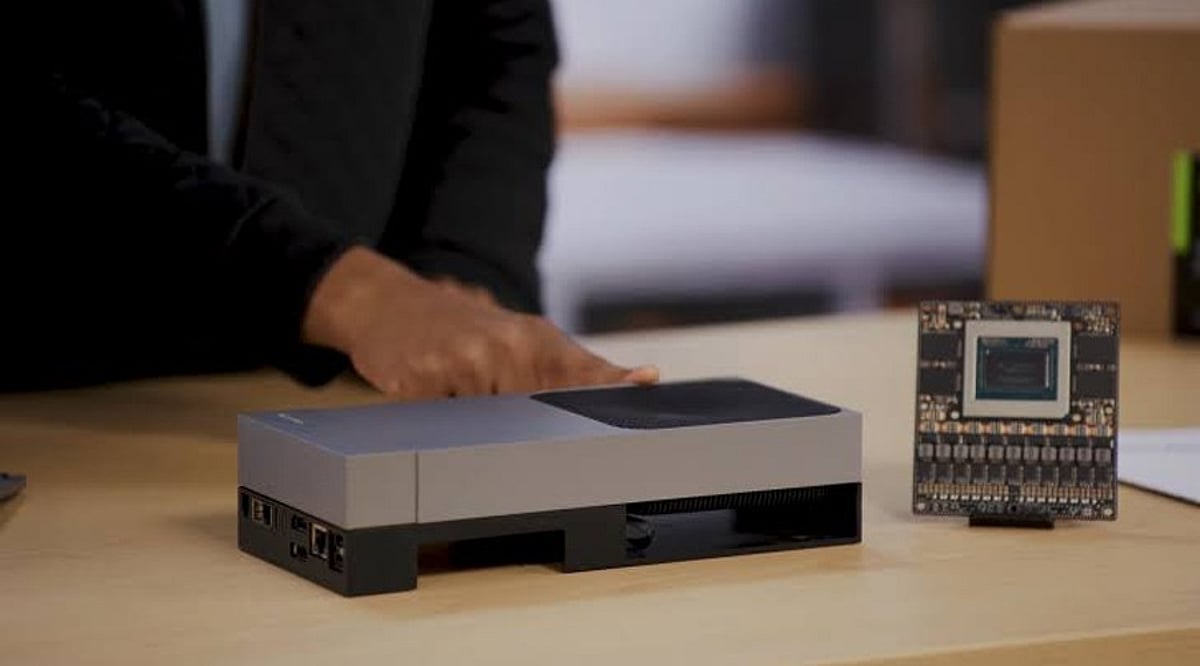
    NVIDIA introduced the Jetson Thor T3000 and T2000 AI modules on July 15 to support robotics and Edge AI applications. The new NVIDIA Blackwell-powered modules help developers build smarter robots and AI machines with less power and smaller hardware. The company plans to launch both modules in the first quarter of 2027.

    The launch comes as more industries adopt robots for real-world work. NVIDIA created the new Jetson Thor modules to run powerful AI models directly on robots and edge devices. This approach reduces cloud dependence while improving speed, safety, and overall performance.

    The Jetson Thor T3000 is the more powerful model in the lineup. It delivers up to 865 FP4 teraflops of AI performance and includes an eight-core Arm Neoverse CPU with 32GB LPDDR5X memory. NVIDIA said that the module is about half the size and uses nearly half the power of the larger T5000 while offering similar AI performance for language, vision, and robotics tasks.

    The Jetson Thor T2000 targets developers looking for a more affordable option. It delivers up to 400 FP4 teraflops with 16GB memory and supports visual AI, autonomous mobile robots, and industrial machines. NVIDIA also introduced new software tools that reduce memory use and make advanced AI models easier to run on smaller systems.

    NVIDIA stated that companies like Amazon Robotics, Boston Dynamics, Agile Robots, Hitachi, 1X, and Techman Robot already use the Jetson Thor platform. Developers can test the T3000 through JetPack 7.2.1 emulation today, while T2000 support will arrive later. Both modules are expected to become available in the first quarter of 2027.

  • ASML Stock Jumps After Second 2026 Revenue Upgrade Fueled by AI Chip Demand

    ASML Stock Jumps After Second 2026 Revenue Upgrade Fueled by AI Chip Demand

    ASML shares surged more than 3% on Wednesday after the Dutch lithography giant raised its 2026 sales forecast for the second time this year, driven by robust demand for artificial intelligence chips. The company also reported quarterly revenue and profit that exceeded analyst expectations as chipmakers accelerated spending on advanced production equipment.

    The upgraded outlook reflects strong demand for tools used in AI processors, data centers, and high-bandwidth memory. ASML noted that customer orders remained elevated in the first half of 2026 as foundries and memory producers moved faster on capacity expansion plans.

    ASML Raises Sales and Margin Guidance

    ASML now expects 2026 net sales between €43 billion and €45 billion, up from its previous forecast of €36 billion to €40 billion. The company also lifted its gross margin range to 54%–56%, compared with the earlier 51%–53% guidance.

    Second-quarter net sales reached €9.3 billion, above the €8.8 billion consensus estimate from LSEG analysts. Net profit came in at €2.9 billion, versus the €2.6 billion market forecast. Shares opened more than 7% higher before settling to a gain of about 3.4%.

    CEO Christophe Fouquet described order intake as “extremely strong” during the first half and said customers are accelerating expansion plans across both logic and memory production. These commitments give ASML better visibility into demand through 2028.

    ASML plans to increase its 2026 low-NA EUV capacity by 30% and boost its deep ultraviolet immersion capacity by the same margin. Both systems are manufactured at its facility in Veldhoven, Netherlands.

    AI Spending Drives Equipment Orders

    ASML holds a near-monopoly position in advanced chip production as the sole supplier of extreme ultraviolet lithography machines used to manufacture the most advanced semiconductors. Its customers include TSMC, Intel, SK Hynix, and Micron Technology.

    Fouquet said stronger end-market demand encouraged customers to raise capital spending and bring forward expansion plans. “This has also translated practically into very strong order booking through the first half of 2026,” he said.

    Orders for EUV systems now extend into 2028, reflecting sustained investment in AI servers, advanced processors, and memory chips. Chipmakers are also seeking faster productivity gains through upgrades to installed equipment.

    TSMC, one of ASML’s largest customers, reported a 68% rise in June sales. The Taiwanese company is also preparing new advanced packaging plants to meet growing demand for AI chips and related services.

    TSMC Earnings Draw Closer Scrutiny

    ASML’s report arrives one day before TSMC is scheduled to release second-quarter results on July 16. Analysts expect TSMC to report earnings of $3.89 per share on revenue of $39.31 billion, based on consensus estimates.

    Investors will focus on TSMC’s capital spending plans, its 2-nanometer production ramp, and demand for advanced packaging. ASML’s order strength suggests major customers are still committing funds to new capacity, though TSMC’s guidance will provide the next key update.

    China remains an important market for ASML despite tighter export controls. The company still expects China to account for about 20% of annual sales. China’s share fell to 14% in the second quarter from 19% in the first quarter.

    South Korea became ASML’s largest market during the quarter, contributing 43% of sales. The company plans to provide a broader update on long-term targets at its Capital Markets Day on June 10, 2027.

  • ASML Stock Climbs After Second 2026 Revenue Forecast Hike Fueled by AI Chip Demand

    ASML Stock Climbs After Second 2026 Revenue Forecast Hike Fueled by AI Chip Demand

    ASML shares rose more than 3% on Wednesday after the Dutch chip equipment maker raised its 2026 sales forecast for the second time this year. The company also reported quarterly revenue and profit above market estimates as chipmakers increased spending on advanced production tools.

    The update points to demand for equipment used in AI processors, data centers, and high-bandwidth memory. ASML said customer orders stayed strong during the first half of 2026 as foundries and memory producers moved faster on capacity plans.

    ASML Lifts Sales and Margin Outlook

    ASML now expects 2026 net sales between €43 billion and €45 billion. Its earlier forecast called for sales between €36 billion and €40 billion. The company also raised its gross margin range to 54% to 56%, from 51% to 53%.

    Second-quarter net sales reached €9.3 billion, above the €8.8 billion expected by analysts surveyed by LSEG. Net profit came in at €2.9 billion, compared with the €2.6 billion market forecast. Shares opened more than 7% higher before trimming gains to about 3.4%.

    Chief Executive Christophe Fouquet said order intake was ‘extremely strong’ during the first half. He added that customers were accelerating expansion plans across logic and memory production. Those commitments gave ASML better visibility into demand through 2028.

    ASML plans to increase its 2026 low-NA EUV capacity by 30%. It will also add 30% to its deep ultraviolet immersion capacity. The company produces both systems at its site in Veldhoven, Netherlands.

    AI Spending Drives Equipment Orders

    ASML holds a central position in advanced chip production. It is the only supplier of extreme ultraviolet lithography machines used to make the most advanced semiconductors. Its customers include TSMC, Intel, SK Hynix, and Micron Technology.

    Fouquet said stronger end-market demand had encouraged customers to lift capital spending and bring forward expansion plans. ‘This has also translated practically into very strong order booking through the first half of 2026,’ he said.

    Orders for EUV systems now extend into 2028. That longer order window reflects continued investment in AI servers, advanced processors, and memory chips. Chipmakers also seek faster productivity gains from upgrades to installed equipment.

    TSMC, one of ASML’s largest customers, reported a 68% rise in June sales. The Taiwanese company is also preparing new advanced packaging plants as demand grows for AI chips and related services.

    TSMC Earnings Draw Closer Scrutiny

    ASML’s report arrives one day before TSMC is due to release second-quarter results on July 16. Analysts expect TSMC to report earnings of $3.89 per share and revenue of $39.31 billion, based on consensus estimates.

    Investors will watch TSMC’s capital spending plans, its 2-nanometre production ramp, and demand for advanced packaging. ASML’s order strength suggests major customers are still committing funds to new capacity, though TSMC’s guidance will provide the next update.

    China is an important market for ASML despite tighter export controls. The company still expects China to account for about 20% of annual sales. China’s share fell to 14% in the second quarter from 19% in the first quarter.

    South Korea became ASML’s largest market during the quarter, contributing 43% of sales. The company plans to provide a broader update on long-term targets at its Capital Markets Day on June 10, 2027.

  • Morning Briefing: ASML’s AI Boom, OpenAI’s First Hardware, and High-Paying Degrees

    Morning Briefing: ASML’s AI Boom, OpenAI’s First Hardware, and High-Paying Degrees

    ASML Lifts Guidance Again on Surging AI Chip Demand

    Dutch semiconductor equipment leader ASML has raised its financial outlook for the second time this year, citing robust demand for its advanced lithography systems used in AI chip production. The company’s order backlog remains strong as major chipmakers continue expanding AI compute capacity. ASML expects AI infrastructure spending to remain a key growth driver despite broader economic uncertainties.

    Top Bachelor’s Degrees for Highest Salaries in 2026

    A new analysis reveals that bachelor’s degrees in engineering, computer science, and healthcare offer the best earning potential and job stability. Employers are prioritizing specialized technical skills, steering students toward fields that align with tech-driven industry shifts.

    Europe’s Founder Factories Accelerate Startup Growth

    Europe’s startup ecosystem is being transformed by “founder factories” like Antler, which combine funding, mentorship, and operational support to launch multiple high-growth companies. This model is cultivating serial entrepreneurs and strengthening the region’s position on the global innovation map.

    Best Crypto Exchanges for Beginners in 2026

    Cryptocurrency exchanges are increasingly focusing on user-friendly interfaces, educational resources, and robust security to attract newcomers. This guide ranks platforms by ease of use, fees, and available cryptocurrencies, helping beginners choose reliable entry points into the volatile market.

    OpenAI’s First Consumer Device Rumored to Be a Screenless Smart Speaker

    OpenAI is reportedly developing its debut hardware product—a voice-first smart speaker without a screen. If launched, it would mark the company’s entry into the consumer electronics space, extending its AI capabilities beyond software.