Tag: AI

  • Veeam and HPE Expand Private Cloud Capabilities for AI and Modern Workloads

    Veeam and HPE Expand Private Cloud Capabilities for AI and Modern Workloads

    At HPE Discover, Veeam Software and Hewlett Packard Enterprise (HPE) announced an expanded partnership to help organizations modernize and scale private cloud environments for AI and modern virtualized workloads. The collaboration introduces new validated designs for HPE Private Cloud AI, partner-ready packaging for faster deployments, and a new Data and AI Trust Maturity Model to help enterprises operationalize AI trust.

    “Private cloud is evolving fast as customers want cloud agility with greater control, stronger governance, and the ability to operationalize AI closer to their data,” said John Jester, Chief Revenue Officer at Veeam. “AI will transform the enterprise, but only if leaders can trust the data that powers it. That trust starts with resilience – knowing data is protected, recoverable, and governed end-to-end.”

    New Validated Designs for HPE Private Cloud AI

    Veeam and HPE will release new validated designs for HPE Private Cloud AI, a turnkey AI factory co-engineered with NVIDIA as part of the NVIDIA AI Computing by HPE portfolio. These designs help customers deploy secure, AI-ready private environments with a unified data lakehouse, deployable models, and agentic use cases. The designs include:

    • Veeam Data Platform and Veeam Kasten, part of the Veeam DataAI Command Platform, supporting operational continuity for virtualized and Kubernetes-based workloads.
    • Safe data ingestion to prepare and ingest data for AI use cases with stronger controls and confidence in data handling, complementing HPE AI Essentials for model development and deployment lifecycle management.

    “Enterprises are choosing private cloud to meet performance and sovereignty requirements while putting the right guardrails in place for AI,” said Patrick Osborne, SVP of Technology Acceleration for Hybrid Cloud at HPE. “With these new validated designs and our expanded collaboration with Veeam, we’re giving customers a ready-to-run path to deploy AI closer to their data.”

    Resilient HPE Private Cloud: Partner-Ready Solutions

    In support of HPE’s recent unified private cloud announcement, HPE and Veeam are enabling partners with sizing tools and smart templates to more easily position and deliver resilient private cloud deployments using HPE Private Cloud PC3000 with HPE Morpheus Software VM Essentials. This helps partners standardize designs, streamline scoping, and accelerate delivery. Veeam also provides a practical migration guide for moving vSphere VMs to virtual machines on HPE Morpheus.

    Expanding the Roadmap: Security, Governance, and AI Trust

    As AI shifts from assistive tools to autonomous agents, organizations face a growing gap between confidence in AI readiness and the ability to produce audit-ready evidence. Veeam and HPE are focusing on operationalizing AI trust through the Veeam DataAI Command Platform, the industry’s first unified data and AI trust infrastructure. The platform unifies DataAI Security, Governance, Compliance, Privacy, and Resilience, powered by the DataAI Command Graph.

    Building on Data Resilience by Design, HPE Services will serve as a pilot partner for Veeam’s new Data and AI Trust Maturity Model, a framework that helps leaders assess their trust readiness across four pillars: Understood, Secured, Resilient, and Unleashed.

    “Through this collaboration, Veeam and HPE will help customers move from AI experimentation to trusted execution – improving visibility and governance, reducing risk across AI data pipelines, and ensuring the ability to recover clean, trusted data when it matters most,” the companies stated.

    Veeam (Booth #2039) is an exclusive sponsor of the HPE Virtualization and CloudOps Hub at HPE Discover 2026. For more information, visit Veeam and HPE Alliance.
  • How AI-Powered Slide Generators Are Automating Presentation Creation — Inside HIX AI’s Agent Workspace

    How AI-Powered Slide Generators Are Automating Presentation Creation — Inside HIX AI’s Agent Workspace

    Modern work environments often feel more fragmented than necessary. Most professionals juggle multiple tools—one for research, another for writing, a third for data organization, and yet another for presentations. This constant switching between applications not only slows productivity but also breaks concentration, making tasks feel longer and more burdensome.

    A more efficient approach is emerging: the Smart AI Agent Workspace. Instead of executing each step manually, users can issue a single command, and a team of AI agents handles the rest. These agents research, write, organize ideas, and even generate presentations within a unified environment.

    HIX AI is one platform that brings this vision to life. It integrates multiple AI capabilities into a single workspace, including its HIX AI Slides tool, which can transform raw ideas or documents into complete, ready-to-use presentations. The goal is to shift from manual, step-by-step workflows to automated, streamlined processes.

    The Hidden Cost of Digital Busywork

    Most people underestimate how much time is lost to routine digital tasks. It’s not the big projects that slow things down—it’s the small, repetitive actions: switching between apps, copying and pasting content, formatting documents, and recreating the same material in different tools. This so-called “digital glue work” consumes hours without adding real value.

    The problem intensifies with complex assignments that involve multiple sources, spreadsheet data, written explanations, and a final presentation. Each step requires a separate tool, forcing users to constantly switch platforms instead of focusing on critical thinking and decision-making.

    Modern AI-driven systems aim to solve this by consolidating everything into one environment. They treat work not as a sequence of isolated steps but as a single process, eliminating manual busywork and letting users concentrate on outcomes.

    How an AI Agent Workspace Actually Operates

    Understanding the User’s Goal

    An AI presentation maker starts by comprehending what the user truly wants to achieve. Instead of treating input as a simple command, the system reads the intent behind it and identifies the final deliverable—whether a report, article, or slide deck.

    Breaking Down the Task

    Once the objective is clear, the system automatically decomposes the work into smaller sub-tasks. Different AI agents are assigned to research, content creation, structuring, and formatting. Each agent focuses on its piece, making the overall process more efficient and organized.

    Delivering the Final Output

    After all steps are completed, the results are assembled into a cohesive final output within the same workspace. No manual linking or app switching is required. This approach is exactly how HIX AI and its HIX AI Slides module convert raw data into polished presentations or articles.

    HIX AI’s Implementation of the Agent Workspace

    A Unified AI Workspace

    HIX AI is designed as a single environment where various AI functions work together seamlessly, rather than as a collection of separate tools. The goal is to eliminate the need to jump between applications and centralize everything in one place.

    Multi-Agent Coordination

    Behind the scenes, several AI agents handle different parts of the workflow. One agent may focus on research, another on writing, and another on organizing or formatting the final product. These agents cooperate without user intervention—the user simply issues one command.

    End-to-End Automation

    When a task is assigned, the system processes it from start to finish. Whether generating content or building a presentation with HIX AI Slides, the result is a complete, well-structured output ready for use in the same workspace.

    AI Slides: Fully Automated Presentation Generation

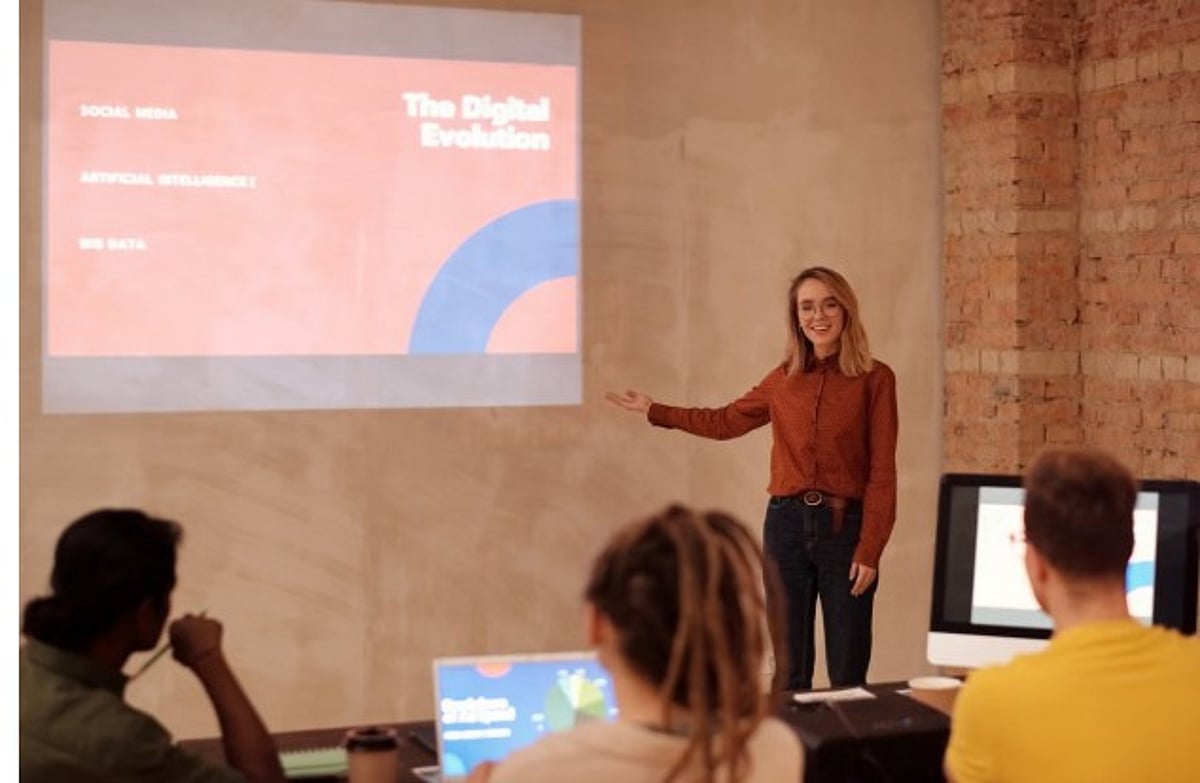
    HIX AI Slides is built to dramatically simplify presentation creation. Users can just type a topic, upload a document, or provide raw ideas, and the system automatically produces a full slide deck with structured content and layout.

    The tool handles various input types like PDFs, reports, or notes. It breaks the content into logical segments and arranges them into a coherent sequence, ensuring no important information is lost and the presentation flows smoothly.

    Design is also automated. The platform adjusts layouts, spacing, and visual placement to create clean, professional slides without manual tweaking. The output is ready to use, though users can refine or edit it directly within the workspace.

    Conclusion

    The way we work is shifting from manual, step-by-step processes to interconnected, intelligent systems. Instead of using separate tools for each stage, professionals can now rely on AI-driven environments that handle the heavy lifting in one place.

    This transformation is embodied by the AI Agent Workspace. It unites research, writing, structuring, and presentation creation into a single flow, reducing effort and time. Ultimately, it’s not about working faster—it’s about working smarter, letting users focus on thinking and decision-making while the system executes the details.

  • AI as a Coworker: How Intelligent Systems Are Redefining Workplace Productivity in 2026

    AI as a Coworker: How Intelligent Systems Are Redefining Workplace Productivity in 2026

    AI is evolving from a simple tool into a proactive coworker that retains context, automates workflows, and helps employees work more efficiently while improving decision-making. Organizations using AI effectively are reporting major productivity gains, with task completion times reduced by up to 56% and overall productivity improvements reaching 30%–40%. The biggest advantage comes from combining AI-driven execution with human judgment, allowing professionals to focus on strategy, relationships, and high-value decisions while AI handles routine work.

    The Shift from Tool to Teammate

    The modern workplace is no longer structured around what a single employee can accomplish. It is being restructured around what a human and an AI system can accomplish together. This distinction matters. AI is not a search engine. It is not an autocomplete tool. Currently, AI systems carry context, anticipate needs, flag inconsistencies, and execute tasks across entire workflows without waiting for instruction at each step.

    The scale of adoption reflects this shift. 91% of businesses now use AI in some capacity, marking a significant acceleration from 78% in 2024 and 55% in 2023. Organizations that have moved beyond experimentation are reporting structural changes in how their teams operate, what roles look like, and where human judgment adds the most value.

    Delegate Execution, Retain Judgment

    The clearest productivity gain comes from matching the right category of work to the right intelligence. Harvard Business Review research found that task completion times can drop by up to 56% when employees use AI tools effectively. Dropping a task into an AI system without framing the context produces mediocre output. Treating AI like a junior colleague with strong recall and fast execution produces measurably better results.

    The tasks best suited to AI delegation include research synthesis, first-draft generation, scheduling, data summarization, and quality checks. The tasks that remain firmly human are stakeholder negotiation, strategic trade-off decisions, relationship management, and judgment calls where organizational context and political awareness determine the outcome.

    Build Context into Every Interaction

    AI performs best when it understands the full picture. Professionals who treat each AI interaction as a standalone prompt get transactional results. Those who supply context, reference earlier work, and iterate on output get something closer to a genuine collaborative output. The difference is not the AI. The difference is the working relationship.

    ADP Research data from more than 30,000 survey respondents found that people who use AI on a daily or near-daily basis report the highest levels of engagement, motivation, and commitment to their work. The implication is clear: consistent, intentional integration outperforms occasional use by a considerable margin.

    How AI Improves Workplace Productivity

    The productivity case for AI rests on three compounding mechanisms: time reclaimed, cognitive load reduced, and output quality elevated. AI users save an average of 2.2 hours per week at the individual level, and AI-exposed industries are showing strong productivity growth overall. At scale, across hundreds of knowledge workers in a single organization, that figure becomes a structural advantage.

    Beyond hours saved, the quality of output improves when AI handles the preparatory and administrative layer of knowledge work. Professionals spend less time formatting reports and more time interpreting findings. They spend less time drafting routine communication and more time on the conversations that require human nuance.

    The benefits extend across departments:

    • Marketing teams use AI to generate content briefs, draft copy, and analyze campaign data across channels simultaneously.
    • Operations professionals use AI agents to monitor supply chain signals and surface deviations before they escalate.
    • HR leaders are deploying AI to screen applications, coordinate interview scheduling, and personalize onboarding workflows.
    • Finance teams use AI to reconcile data, flag anomalies, and generate variance commentary at reporting speed.

    Accenture reports that AI can increase productivity by up to 30%, based on real workplace tests. PwC shows that industries adopting AI see productivity growth reach 27%, compared to 7% before AI adoption. The pattern across every function is consistent: AI removes the friction between having information and being able to act on it.

    What This Means for the Workforce

    The workforce transformation driven by AI is no longer a projected outcome. It is an observable reality across sectors, geographies, and organizational scales. Workers who learn with AI will gain a distinct advantage, and the gap between early and late adopters will continue to widen. For organizations still treating AI as an experiment, that window is narrowing.

    What remains constant amid this shift is the importance of human judgment. AI handles execution at speed and scale. It does not replace the professional who knows which direction to set, which relationships to protect, and which trade-offs align with long-term strategy. The most productive version of AI in the workplace is not one that replaces the worker. It allows the worker to operate at the level their expertise actually warrants. The machines are ready. The infrastructure is in place. The organizations that move with intention now are the ones that will define the standard others follow.

  • How AI Is Reshaping Key Careers: From Customer Support to Healthcare

    How AI Is Reshaping Key Careers: From Customer Support to Healthcare

    As artificial intelligence continues to evolve, its impact on the workforce is undeniable. While some fear job displacement, AI is actually transforming roles rather than eliminating them entirely. Here’s a look at ten careers experiencing the most significant changes as AI becomes a workplace collaborator.

    Customer Support

    AI chatbots now handle routine inquiries, freeing up human agents to tackle complex, high-emotion issues that require empathy and nuanced judgment.

    Content Writing

    AI accelerates content creation by generating drafts and data-driven pieces, but human creativity, storytelling, and brand voice remain irreplaceable.

    Software Development

    Developers leverage AI-powered coding assistants (like GitHub Copilot) to write code faster, debug efficiently, and automate repetitive tasks, boosting overall productivity.

    Graphic Design

    AI tools can generate visuals in seconds, allowing designers to focus on strategy, concept development, and creative direction rather than manual execution.

    Accounting

    Automation handles data entry, invoicing, and reconciliation, shifting accountants’ work toward analysis, advisory, and strategic financial planning.

    Marketing

    AI enhances targeting by analyzing consumer behavior, yet human marketers still drive campaigns with creative intuition and ethical decision-making.

    Healthcare

    AI assists in diagnosing diseases, analyzing medical images, and managing patient data, while physicians retain final authority and patient interaction.

    Human Resources

    Recruiters use AI screening tools to filter resumes and identify candidates, but human evaluation ensures cultural fit and fair assessment.

    AI isn’t replacing humans—it’s augmenting our abilities. The careers that adapt will see workers focus on higher-value tasks that demand emotional intelligence, creativity, and strategic thinking.

  • MIT Civil and Environmental Engineering: Pioneering Sustainable Infrastructure and Climate Solutions

    MIT Civil and Environmental Engineering: Pioneering Sustainable Infrastructure and Climate Solutions

    The MIT Department of Civil and Environmental Engineering (CEE) continues to lead groundbreaking research that addresses some of the world’s most pressing challenges, from climate change to infrastructure resilience. Recent developments highlight the department’s commitment to innovation, sustainability, and real-world impact.

    Building Smarter, Greener Structures

    MIT researchers have developed a computer model that could enable bridges and buildings to use less material while maintaining structural integrity. This approach bridges the gap between optimized design and practical construction, promising significant cost and environmental savings.

    Climate and Environmental Breakthroughs

    In a major advance for sustainable construction, new research reveals how injecting carbon dioxide into cement paste triggers a chemical sequence that rewires how cement sets. Using real-time Raman spectroscopy, scientists captured a fleeting intermediate reaction for the first time, opening pathways to carbon-negative building materials.

    MIT is also tackling methane emissions head-on. PhD student Audrey Parker is studying mitigation strategies for dairy farms and coal mines, targeting this potent greenhouse gas. Meanwhile, ocean bacteria have been observed teaming up to break down biodegradable plastics, offering insights into natural waste decomposition processes.

    AI and Automation Innovations

    MIT engineers have designed an AI model that generates novel proteins based on their motion and vibration patterns, not just their shape. This breakthrough could lead to dynamic biomaterials and adaptive therapeutics. Another AI system learns to keep warehouse robot traffic flowing smoothly by deciding which robots get right-of-way, reducing congestion and increasing throughput.

    A parking-aware navigation system developed at MIT minimizes the need to circle for spots, saving drivers up to 35 minutes and reducing emissions by providing realistic travel time estimates.

    Energy and Sustainability

    Active Surfaces, an award-winning startup with roots at the MIT Energy Initiative, is developing peel-and-stick solar panels that are lightweight, flexible, and high-efficiency. These films can be applied to roofs, walls, and curved surfaces, making solar energy more accessible.

    Recognition and Leadership

    MIT has once again been ranked the world’s No. 1 university by QS for 2026-27, marking the 15th consecutive year at the top. The Institute also placed first in 12 subject areas. The School of Engineering recognized faculty with tenure and awards in winter and fall 2025-2026, celebrating scholarship, service, and excellence. Desirée Plata, a CEE faculty member, was appointed associate dean of engineering to advance research and entrepreneurial initiatives.

    These achievements underscore MIT Civil and Environmental Engineering’s role as a global leader in creating sustainable, intelligent solutions for the built and natural environments.

  • Amazon CEO Andy Jassy Pledges $48 Billion India Investment After Meeting PM Modi

    Amazon CEO Andy Jassy Pledges $48 Billion India Investment After Meeting PM Modi

    Amazon has announced a massive $48 billion investment roadmap for India through 2030, following a meeting between CEO Andy Jassy and Prime Minister Narendra Modi. The plan focuses on artificial intelligence, cloud infrastructure, logistics expansion, job creation, and digital inclusion, reinforcing Amazon’s long-term commitment to India’s growth.

    During the meeting in New Delhi on June 25, 2026, Jassy revealed an additional $13 billion to expand AI and cloud infrastructure by 2030, bringing Amazon’s total planned investment in these areas to over $21 billion between 2026 and 2030. This investment will increase AWS data center capacity in Mumbai and Hyderabad, providing startups, enterprises, and governments with access to customized AI chips, AI managed services, secure cloud computing solutions, and developer tools.

    “We came to India over a decade ago and have since been serving customers, sellers, developers, start-ups, and enterprises through our different businesses. The response has been tremendous, with strong growth especially across our ecommerce, AI, and cloud businesses. As we grow Amazon in India, our business priorities continue to align with India’s priorities of democratizing access to AI, digitizing small businesses, creating jobs, and enabling exports,” Jassy said.

    Key Takeaways from Andy Jassy’s Meeting with PM Modi

    Amazon India also launched ‘Sammaan’, a comprehensive welfare program for thousands of delivery associates in its logistics network. Initiatives include scholarships to educate associates’ children, access to government benefits and financial inclusion programs, comprehensive insurance coverage, on-road safety measures, and more. As part of the program, Amazon will expand its Ashray rest centers to 250 locations this year, open to delivery associates across the industry.

    What it Means for India’s Digital Future

    Jassy thanked Prime Minister Modi for his leadership and highlighted the growing importance of India, where Amazon operates several businesses, including e-commerce, AI, cloud, and entertainment. “We are investing over $48 billion in the coming five years to meet the strong demand across our business in India and to help the country achieve these priorities. We are inspired by Prime Minister Modi’s vision of a Viksit and Atmanirbhar Bharat, and we are committed to being a long-term partner in India’s growth story,” he added.

    This investment from Amazon is expected to accelerate the digital revolution in India by improving its technological infrastructure, cloud computing, logistics, and innovation ecosystem. It signals that the rest of the world sees India as a digital powerhouse of the future.

  • MIT’s Latest Innovations in Alternative Energy: Fusion, Geothermal, and Beyond

    MIT’s Latest Innovations in Alternative Energy: Fusion, Geothermal, and Beyond

    MIT continues to lead the charge in alternative energy research, with recent breakthroughs spanning fusion, geothermal, AI-optimized power grids, and decarbonization technologies. Below is a roundup of key developments from the MIT Energy Initiative and affiliated labs.

    Fusion Energy Advances

    • PSFC showcases technologies for fusion and geothermal: Rep. Jake Auchincloss visited the MIT Plasma Science and Fusion Center to learn about scaling geothermal energy. (Read more)
    • Championing fusion’s promising underdog: Sophia Henneberg, assistant professor in Nuclear Science and Engineering, is developing stellarators to harness fusion energy. (Read more)
    • Working to make fusion viable: George Tynan, as Norman C. Rasmussen Adjunct Professor, addresses big physics and engineering challenges of fusion plasmas. (Read more)
    • Smart handling of neutrons: Assistant Professor Ethan Peterson tackles practical issues for viable fusion power plants. (Read more)

    Geothermal Energy

    • Geothermal energy turns red hot: MIT Energy Initiative symposium maps a path to tap the planet’s heat-rich rocks for clean power at scale. (Read more)

    AI, Power Grid & Decarbonization

    • 3 Questions: How AI could optimize the power grid: Techniques can make power grids cleaner and more efficient despite AI’s growing energy demands. (Read more)
    • A faster problem-solving tool that guarantees feasibility: FSNet system helps power grid operators rapidly find feasible solutions for optimizing electricity flow. (Read more)
    • Confronting the AI/energy conundrum: MIT Energy Initiative’s annual symposium explores AI as both a problem and solution for clean energy transition. (Read more)
    • Helping students bring about decarbonization: Professor Jessika Trancik’s course helps students understand energy levers for addressing climate change. (Read more)
    • New climate chemistry model: MIT study confirms climate impacts of hydrogen, recommends leak prevention as priority. (Read more)
    • Decarbonizing heavy industry with thermal batteries: MIT spinout Electrified Thermal Solutions develops conductive firebrick for high-temperature industrial heat. (Read more)
    • Preparing Taiwan for a decarbonized economy: MIT Energy Initiative and Taiwanese consortium explore energy future. (Read more)

    Nuclear Energy

    • How to make small modular reactors more cost-effective: Youyeon Choi leverages experience from South Korea and multi-physics modeling. (Read more)
    • Aligning economic and regulatory frameworks for nuclear reactors: PhD student Liam Hines advocates for policy that keeps pace with technology. (Read more)

    Bioeconomy & Society

    • Bridging science and society: Course STS.059 explores social and political factors in biology, biotech, and biological engineering sectors. (Read more)
  • Google Gemini 3.5 Pro Launch Reportedly Pushed to July for Extra Testing

    Google Gemini 3.5 Pro Launch Reportedly Pushed to July for Extra Testing

    Google has reportedly delayed the launch of its advanced Gemini 3.5 Pro AI model from June to July 2026, according to sources familiar with the development. The company is said to be using the additional time to gather feedback from early testers and refine the model’s performance in coding, token efficiency, and long, multi-step tasks.

    The postponement has not been officially confirmed by Google. A company spokesperson declined to comment when asked about the revised timeline. As a result, the July release window remains based on information from an unnamed insider.

    Extended Testing Phase

    Early users have been testing Gemini 3.5 Pro through Google’s Antigravity development environment and the LMArena benchmarking service. The company is reportedly collecting feedback and making adjustments before a wider release, particularly focusing on complex, multi-step workflows that require maintaining context over several stages.

    Google introduced the Gemini 3.5 model family at its I/O developer conference in May. CEO Sundar Pichai stated that Gemini 3.5 Pro would arrive the following month, though no firm date was provided. The company first launched Gemini 3.5 Flash, a model optimized for coding, AI agents, and complex workflows. Gemini 3.5 Pro is expected to offer greater computing power for demanding tasks.

    Feedback from Gemini 3.5 Flash Influences Pro Development

    Reports indicate that Google has incorporated feedback from Gemini 3.5 Flash users into the Pro model’s development. Some users noted that Flash consumed tokens too quickly, potentially raising costs for long prompts or extended tasks. Google is reportedly examining this issue while preparing Gemini 3.5 Pro.

    Token usage directly affects how much text a model processes and generates. Higher consumption can increase costs for developers and enterprises running large numbers of AI requests. The upcoming Pro model is also expected to improve performance on long-horizon tasks that require planning, tool use, and sustained context, such as software development, data analysis, and automated business processes.

    However, Google has not published full technical details or benchmark results for Gemini 3.5 Pro. Claims about speed, efficiency, and coding abilities will remain unverified until official data is released or wider access is granted.

    Competition in AI Coding Intensifies

    The reported delay comes as major AI developers compete for business customers, especially in coding tools. OpenAI and Anthropic have also released models aimed at coding and agent-based tasks. Google already offers Gemini through AI Studio, Vertex AI, Android Studio, and Antigravity. Gemini 3.5 Pro could expand those services once available.

    Earlier in June, Google introduced Gemma 4 12B, a lightweight multimodal model designed to run locally on laptops with 16GB of RAM or video memory. Unlike Gemini’s closed commercial models, Gemma provides open model weights for developers seeking more control over local deployment.

    For now, Gemini 3.5 Pro has no confirmed public launch date. Reports point to July, but Google has not specified which products, users, or regions will receive access first.

  • MIT Aeronautics and Astronautics News: Key Breakthroughs and Updates

    MIT Aeronautics and Astronautics News: Key Breakthroughs and Updates

    Explore the latest developments in aeronautical and astronautical engineering from MIT. This roundup covers recent research and innovations, including AI-powered robotics, satellite traffic management, quantum systems, and more.

    • LLMs help robots understand vague instructions and focus on key details – To help robots do chores in places like homes and factories, a new approach from MIT uses one language model to clarify users’ instructions, then another to ignore irrelevant info. June 26, 2026
    • Exploring the societal impacts of AI – During the AI and Society Forum, leading MIT researchers examined critical questions about AI’s influence on employment and democracy. June 23, 2026
    • New chip could help tiny robots traverse complex environments – Researchers combined an efficient algorithm with dedicated hardware to rapidly generate 3D maps for navigation using minimal memory and power. June 23, 2026
    • QS ranks MIT the world’s No. 1 university for 2026-27 – Ranking at the top for the 15th year in a row, the Institute also places first in 12 subject areas. June 17, 2026
    • Could AI tell you where you left your keys? – A new spatial memory system for robots efficiently captures details about the objects they see while exploring their environment. June 17, 2026
    • The tenured engineers of 2026 – Ten faculty members have been granted tenure in five units across MIT’s School of Engineering. June 15, 2026
    • How to create distinguishable states for quantum systems – Researchers establish key insights for reading and writing information for quantum sensing, communication, computing, and control. June 15, 2026
    • New imaging system sees through murky waters – The “Sonar-MASt3R” combines sonar and visual data to create real-time 3D maps, even in cloudy water. June 11, 2026
    • The crucial human component in computing and AI – The MIT Ethics of Computing Research Symposium brought together experts and researchers working at the heart of ethical and social impact in technology. June 5, 2026
    • New propulsion system could make tiny satellites both fast and fuel-efficient – For satellites as small as a briefcase, getting around in space just got a whole lot easier. June 1, 2026
    • New research enables a robot to chart a better course – By rapidly generating a smooth path plan that cuts travel time and avoids obstacles, the open-source “MIGHTY” system could streamline disaster recovery and parcel delivery. May 19, 2026
    • MIT School of Engineering faculty receive awards in winter 2026 – Faculty members and researchers were honored in recognition of their scholarship, service, and overall excellence. May 7, 2026
    • MIT affiliates awarded 2026 Guggenheim Fellowships – Afreen Siddiqi, Kathleen Thelen, and Vinod Vaikuntanathan, along with alumna Kate Manne, are appointed to the 2026 class of “trail-blazing fellows.” May 1, 2026
    • Tackling the housing shortage with robotic microfactories – Reframe Systems, co-founded by Vikas Enti SM ’20, creates microfactories for modular home construction, reducing carbon emissions and costs. April 21, 2026
    • Managing traffic in space – Associate Professor Richard Linares is helping satellites safely navigate in increasingly congested orbits. April 19, 2026

    For more details, visit the MIT News topic page on Aeronautical and astronautical engineering.

  • J-WAFS: MIT’s Abdul Latif Jameel Water and Food Systems Lab – Latest Research and Innovations

    J-WAFS: MIT’s Abdul Latif Jameel Water and Food Systems Lab – Latest Research and Innovations

    The Abdul Latif Jameel Water and Food Systems Lab (J-WAFS) at MIT is a pioneering research initiative dedicated to addressing global challenges in water and food security. By fostering interdisciplinary collaboration, J-WAFS develops innovative solutions that range from atmospheric water harvesting to AI-driven ecosystem monitoring. Below is a selection of recent news highlights from the lab.

    Recent News

    For the full list of articles and updates, visit the J-WAFS topic page on MIT News.