Tag: AI

  • Top 10 AI Platforms Revolutionizing Media and Content Creation in 2026

    Top 10 AI Platforms Revolutionizing Media and Content Creation in 2026

    Artificial intelligence is fundamentally reshaping the media landscape. From voice synthesis and video generation to enterprise-grade cloud infrastructure, AI platforms are now essential tools for studios, newsrooms, and creators. Here are the top 10 AI platforms driving this transformation.

    1. ElevenLabs – Founded in 2022 and based in New York, ElevenLabs specializes in context-aware voice synthesis. Its technology captures human emotion, pacing, and intonation, enabling creators to produce lifelike audiobooks, game dialogue, and multilingual dubbing at scale.
    2. Midjourney – A self-funded research lab from San Francisco (founded 2021), Midjourney democratizes visual concept design. Its high-fidelity text-to-image generation is widely used for pre-visualization in film, TV, and graphic design, compressing weeks of sketching into minutes.
    3. Runway – Founded in 2018 in New York, Runway leads generative video with powerful video-to-video and text-to-video models. It partners with studios like Lionsgate to provide tools for automated rotoscoping, VFX, and marketing asset production.
    4. Anthropic (Claude) – San Francisco-based Anthropic (founded 2021) offers the Claude family of models. With large context windows and strong safety features, Claude helps news networks and screenwriters process research, organize plots, and edit transcripts without compromising brand safety.
    5. Amazon Web Services (Amazon Bedrock) – AWS (founded 2006, Bedrock in 2023) provides the industrial backend for media distribution. Bedrock offers a unified API to access top foundation models, powering personalized recommendations and metadata management for streaming giants.
    6. Adobe (Firefly) – Adobe (founded 1982, Firefly in 2023) takes a responsible approach by training Firefly on licensed content. Integrated into Photoshop, Premiere, and Illustrator, Firefly allows commercial creators to generate and edit images, video, and audio safely.
    7. Microsoft (Copilot and Azure AI) – Microsoft (founded 1975) weaves AI into media workflows through Azure AI and Copilot. Azure handles real-time translation and video indexing, while Copilot assists journalists with summaries and breaking news drafts.
    8. NVIDIA (AI Enterprise/Omniverse) – NVIDIA (founded 1993) provides the hardware and software foundation for AI media. Its AI Enterprise suite accelerates live audio cleanup and video upscaling, while Omniverse enables collaborative 3D environment building for VFX teams.
    9. Google DeepMind – London-based DeepMind (founded 2010, acquired by Google in 2014) drives multimodal AI breakthroughs. Its research powers video generation, audio synthesis, and predictive analytics for YouTube and archival search.
    10. OpenAI – Founded in 2015 in San Francisco, OpenAI remains the catalyst of generative AI. It has publisher licensing deals (e.g., Getty Images) and provides LLMs for script brainstorming and news synthesis. OpenAI is also expanding into ad delivery tools within ChatGPT.

  • MIT Affiliates Shine in Boston Globe’s Tech Power Players List, Underscoring State’s Leadership Potential

    MIT Affiliates Shine in Boston Globe’s Tech Power Players List, Underscoring State’s Leadership Potential

    The Boston Globe released its 2026 “Tech Power Players” list on June 9, recognizing 50 influential leaders in technology and business across Massachusetts. Eight MIT affiliates are among the honorees, including President Sally Kornbluth, CSAIL Director Daniela Rus, Professors Regina Barzilay, Yet-Ming Chiang, and Max Tegmark, along with Ana Bakshi (Executive Director of the Martin Trust Center for MIT Entrepreneurship), Katie Rae (CEO of Engine Ventures), and Senior Lecturer Brian Halligan. The list also features numerous MIT alumni.

    The coverage goes beyond individual accolades, spotlighting MIT’s research labs, innovation culture, industry ties, new AI initiatives, and the Institute’s commitment to maintaining Massachusetts’ technological edge. “Massachusetts can absolutely lead in this next wave,” President Kornbluth told the Globe, emphasizing opportunities in manufacturing, life and health sciences, quantum technologies, and energy.

    AI and Entrepreneurship at the Forefront

    MIT is driving artificial intelligence forward in sectors where the region excels, from biotechnology and robotics to defense and clean energy. The Institute is also broadening entrepreneurship through a “dorm-to-startup” push, creating a pipeline of support services that include hackathons, venture funding, and more than 150 courses and 85 centers dedicated to fostering entrepreneurial ventures.

    President Kornbluth is reinvigorating MIT’s support for the local innovation ecosystem by unveiling new online AI classes—offering free entry-level courses for anyone—and encouraging more on-campus entrepreneurship. The Globe notes that these free courses could help local tech leaders ensure that people, not just corporations, benefit from AI.

    MIT is carving a specialty in applied AI, sometimes called “AI+X,” deploying the technology to help businesses, hospitals, and research institutions supercharge productivity and innovation. Aman Narang ’04, CEO of Toast, commented, “The superpower has always been the university system. The best thing Boston can do is keep these people around.”

    To further support student entrepreneurs, President Kornbluth and Provost Anantha Chandrakasan formed the Committee on Accelerating Translation and Entrepreneurship (CATE) to explore how MIT can accelerate the movement of ideas from research into new ventures. Applications for the Martin Trust Center’s startup accelerator program have doubled from last year, and nearly 800 undergraduates attended a recent startup career fair.

    Startups Driving Innovation Beyond Campus

    MIT startup Liquid AI is developing models inspired by the brain structure of a simple worm, which could significantly reduce AI energy consumption. The models, capable of detecting financial fraud and piloting autonomous drones, require far less electricity than large language models. Liquid AI recently signed a deal with Mercedes-Benz to integrate its technology into vehicles sold in North America.

    In energy, Professor Yet-Ming Chiang’s lab is developing long-duration batteries that enable greater use of wind, solar, and other clean energy sources. The lab and other MIT research centers are also working on innovations in microchips, critical minerals, fusion technology, and defense tech—examples of “tough tech” that Chiang says are in the sweet spot of the Boston ecosystem.

    Eighty MIT students will work as summer interns at GE Vernova through the MIT-GE Vernova Climate and Energy Alliance, a $50 million, five-year collaboration funding internships and research projects. GE Vernova CEO Scott Strazik emphasized the importance of plugging into MIT’s innovation culture.

    Quantum and the Future

    When asked about the most promising aspect of the Greater Boston tech scene, Daniela Rus pointed to talent: “Boston has the best AI researchers in the world, and they’re producing genuinely new ideas, not incremental ones.” Bob Mumgaard SM ’15, co-founder of Commonwealth Fusion Systems, noted that Massachusetts’ expertise in engineering and manufacturing made it the only place he could build his fusion energy company. “The ecosystem has the building blocks,” he said. “Massachusetts is the strongest in the nation in innovation in energy.”

    President Kornbluth highlighted quantum science and technology: “There isn’t a more important technological field right now than quantum science and technology, and the Boston area has the greatest concentration of quantum talent anywhere in the world.”

  • MIT’s 6-Milliwatt AI Chip Brings Real-Time 3D Mapping to Tiny Robots

    MIT’s 6-Milliwatt AI Chip Brings Real-Time 3D Mapping to Tiny Robots

    Researchers at MIT have unveiled a new system-on-a-chip that could revolutionize how tiny, low-power robots navigate complex environments. The chip, named Gleanmer, enables autonomous drones and other battery-limited devices to construct detailed 3D maps in real time using only about 6 milliwatts of power—roughly the energy of a single LED. This breakthrough, presented at the IEEE Very Large-Scale Integrated Circuits Symposium, promises to make small-scale robotics more capable and energy-efficient than ever.

    A Smarter Approach to 3D Mapping

    Traditional 3D mapping for robots relies on power-hungry systems that process and store thousands of 3D pixels (voxels) per image. The MIT team took a radically different approach by combining an efficient algorithm called GMMap with custom hardware optimized for its workload. Instead of using rigid cube-shaped voxels, GMMap represents obstacles and free space with flexible ellipsoidal blobs known as Gaussians. These shapes can stretch and shrink to match curved objects, storing far less data than traditional methods while still capturing accurate geometry.

    “This paper showcases a key example of how you can leverage co-design of the algorithm and hardware to really push energy efficiency,” says Vivienne Sze, a professor in EECS and senior author of the paper. “Our chip allows you to store very large maps in a very small space, and do it in a very energy efficient manner.”

    Hardware-Algorithm Co-Design at Its Best

    The chip’s efficiency stems from several clever optimizations. First, the GMMap algorithm processes each depth image in a single pass, comparing only neighboring pixels rather than all pixels in an image. This drastically reduces the amount of data that needs to be stored and retrieved. Second, as the robot moves and observes the same object from different angles, overlapping Gaussians are fused into a single compact representation without re-examining the original pixels. Because Gaussians are more compact than raw pixel data, this fusion process runs on-chip with minimal memory traffic.

    The hardware design keeps active Gaussians in small, fast on-chip memory right next to the processing units. “By having a dedicated memory that just stores the objects you’ve seen in the previous few frames, you can access the data much more efficiently,” explains co-lead author Zih-Sing Fu.

    Unmatched Energy Efficiency

    In tests, Gleanmer generated detailed 3D maps in real time while consuming only about 6 milliwatts of power—just 2.5 percent of what the best existing mapping chip requires. When used for path planning, the chip reuses compact Gaussians along the planned route, using only about 20 percent of the energy that conventional approaches would need.

    The low power consumption makes Gleanmer ideal not only for tiny drones inspecting HVAC systems or pipelines, but also for lightweight augmented reality headsets that require continuous environmental mapping for educational medical simulations or repair work. Sertac Karaman, a professor of aeronautics and astronautics and co-author, notes: “Real-time 3D mapping has been the missing piece for small autonomous systems. Gleanmer makes that possible for the first time in a chip you can hold between your fingers.”

    Looking Ahead

    The researchers plan to push energy efficiency even further by moving processing units closer to the sensors that gather environmental data. They are also exploring applications beyond robotics, such as using Gaussians to represent complex schematics for AI reasoning systems. This work was supported by the MIT-MathWorks Fellowship, Amazon, the U.S. National Science Foundation, and Intel.

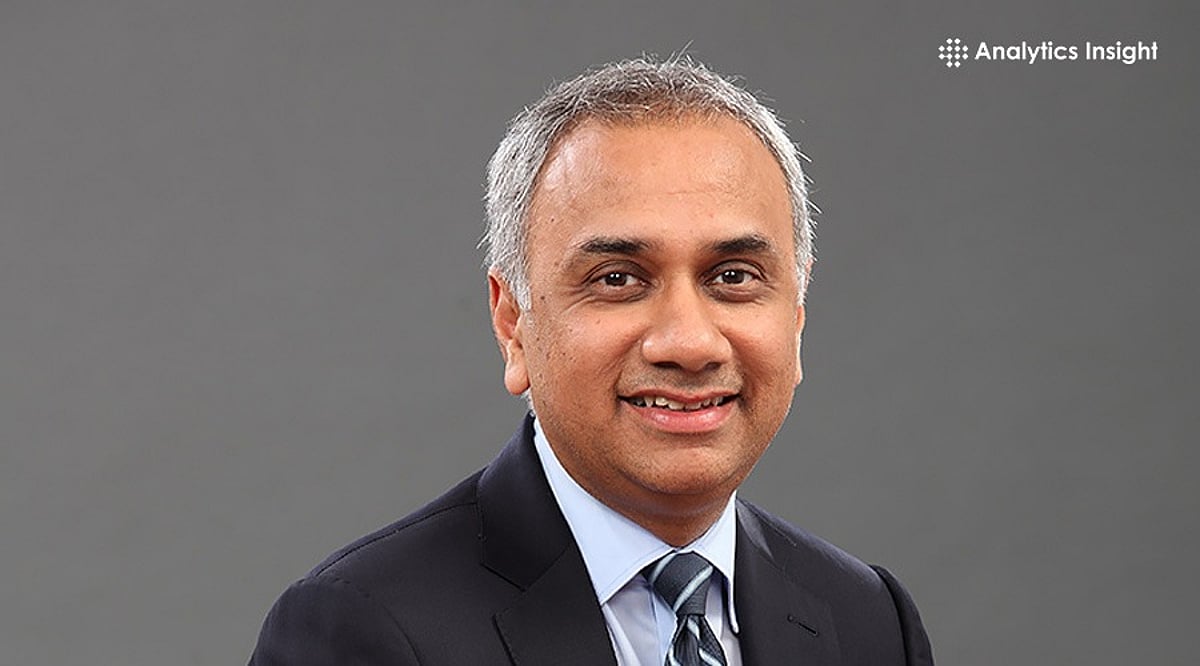
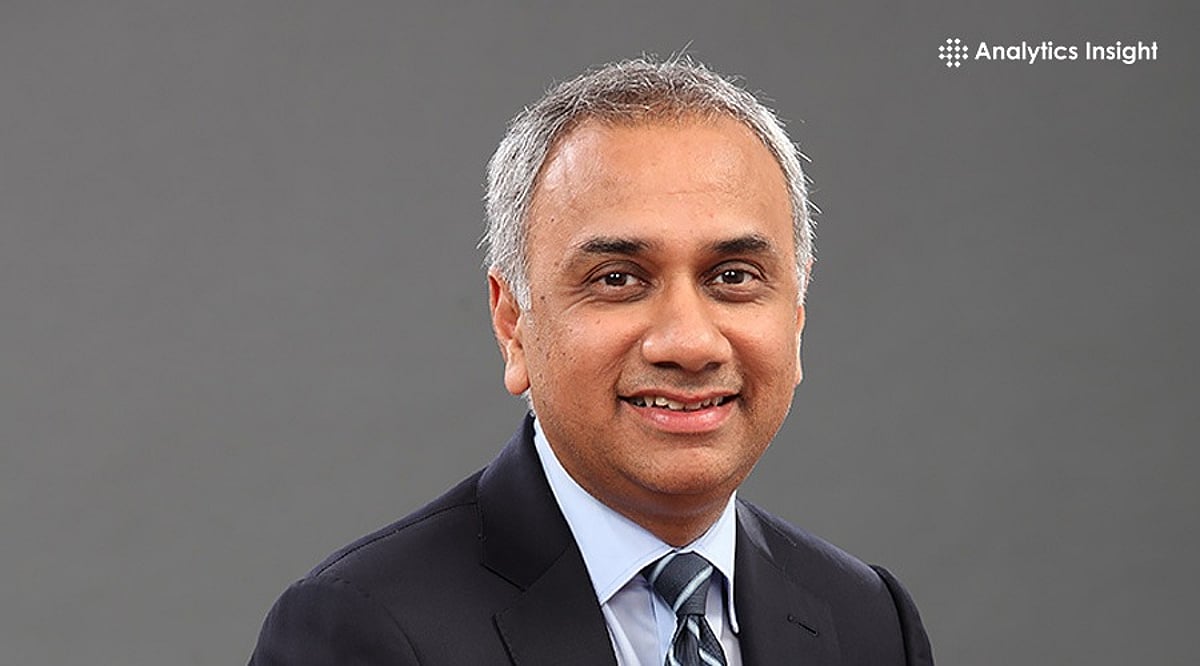
  • How Salil Parekh’s Quiet Leadership Steered Infosys Through Tech Turmoil

    How Salil Parekh’s Quiet Leadership Steered Infosys Through Tech Turmoil

    In an industry that rewards loud personalities and bold declarations, Salil Parekh has built his reputation doing the opposite. No viral statements, no constant media appearances, no carefully curated social media presence. Yet over the years, he has quietly become one of the most respected names in India’s IT industry, leading Infosys through one of the most turbulent periods in global technology.

    Since taking charge of Infosys in 2018, Parekh has helped the company grow amid rapid changes in the tech industry. Cloud computing, AI, automation, and digital services have become a much bigger part of business across the world. Through all these changes, Infosys has continued to grow steadily.

    The Journey Before Infosys

    Before joining Infosys, Parekh spent many years at Capgemini, where he held various leadership roles and worked with global clients across industries. Those years gave him deep experience in technology, consulting, and business operations. When Infosys announced him as CEO in 2018, the company was navigating a difficult period marked by leadership changes and internal disagreements. Many felt the company needed stability and calm leadership. Parekh entered quietly and focused on the work rather than creating headlines.

    A Different Kind of CEO

    One thing many people notice about Salil Parekh is his calm demeanor. He is not the type of business leader who tries to dominate every conversation. He speaks in a simple, measured way. Even during difficult times, he rarely appears reactive or dramatic. That style has helped him build trust over time. Inside Infosys, employees see him as practical and balanced — someone who listens carefully and focuses on long-term goals rather than short-term excitement. In a business world that often rewards loud personalities, his quieter approach stands out.

    Infosys Under His Leadership

    Infosys has transformed during Parekh’s tenure. The company expanded its digital and cloud services as businesses worldwide moved more operations online. Infosys also ramped up work in AI and automation to meet growing demand. The company continued signing large global deals and strengthening relationships with international clients. Employee training became a priority as technology evolved rapidly; Infosys invested heavily in helping workers learn new skills and adapt to shifting industry needs. The company’s global presence also grew stronger during these years.

    Navigating Difficult Times

    The tech industry has faced significant headwinds. Economic uncertainty affected business spending in many countries. Competition in the IT sector intensified, with companies vying for major contracts. Managing large teams across different countries brought challenges, especially during remote work periods. Then came the rapid rise of AI, pressuring technology companies to move faster and adapt to changing customer demands. Through all this, steady leadership proved essential. Instead of reacting with panic, Parekh kept the company focused on stability and long-term growth.

    Why His Leadership Style Matters

    Many business leaders today are known for their high visibility. Salil Parekh is respected for the opposite reason: he keeps a low profile and focuses on execution rather than publicity. Clients trust consistency, employees value stability, and investors look for leaders who remain calm during uncertain times. Parekh has built that reputation over years of consistent leadership. His style may not always generate headlines, but it has helped Infosys remain strong during a rapidly changing period for global technology.

    Final Thoughts

    Salil Parekh embodies a quieter style of leadership that many people still deeply value. He does not try to be the loudest voice in the room. Instead, he focuses on steady work, long-term growth, and keeping the company prepared for the future. As AI, cloud services, and automation continue to reshape the tech world, Infosys is navigating that shift under his guidance. His story is a reminder that strong leadership is not always about visibility — sometimes calm thinking, patience, and consistency matter even more.

  • How Salil Parekh Quietly Built a Legacy of Steady Leadership at Infosys

    How Salil Parekh Quietly Built a Legacy of Steady Leadership at Infosys

    While many tech leaders chase headlines, Salil Parekh has built Infosys with calm leadership, steady decisions, and long-term thinking. From AI growth to global uncertainty, the company continued expanding quietly under his balanced and practical leadership style. His journey shows that strong leadership is not always loud—consistency, patience, and stability often matter more than constant visibility.

    Leading Without the Noise

    In an industry that rewards loud personalities and bold declarations, Salil Parekh has built his reputation doing the opposite. No viral statements, no constant media appearances, no carefully curated social media presence. Yet over the years, he has quietly become one of the most respected names in India’s IT industry, leading Infosys through one of the most turbulent periods in global technology.

    Since taking charge of Infosys in 2018, Parekh has helped the company grow amid rapid changes in the tech industry. Cloud computing, AI, automation, and digital services have become a much bigger part of business across the world. Through all these changes, Infosys has continued to grow steadily.

    The Journey Before Infosys

    Before joining Infosys, Parekh spent many years at Capgemini, handling different leadership roles and working with global clients across industries. Those years gave him experience in technology, consulting, and business operations. When Infosys announced him as CEO in 2018, the company was going through a difficult period with leadership changes and internal disagreements. Many people felt the company needed stability and calm leadership. Parekh entered quietly and focused on the work instead of creating headlines.

    A Different Kind of CEO

    One thing many people notice about Salil Parekh is his calm personality. He is not the kind of business leader who tries to dominate every conversation. He usually speaks in a simple and measured way. Even during difficult times, he rarely appears reactive or dramatic. That style has helped him build trust over time. Inside Infosys, many employees see him as practical and balanced, often described as someone who listens carefully and focuses on long-term goals instead of short-term excitement.

    Infosys Under His Leadership

    Infosys has changed a lot during Parekh’s time as CEO. The company expanded its digital and cloud services as businesses around the world started moving more operations online. Infosys also increased its work in AI and automation as demand for those services grew. The company continued to sign large global deals and strengthen relationships with international clients. Employee training became important as technology evolved rapidly, and Infosys invested in helping workers learn new skills and adapt to shifting industry needs. The company’s global presence also became stronger during these years.

    Difficult Times Along the Way

    The tech industry has not had an easy few years. Economic uncertainty affected business spending in many countries. Competition in the IT sector intensified, with companies vying hard for major contracts. Managing large teams across different countries brought challenges, especially during remote work periods. Then came the rapid rise of AI, pressuring technology companies to move faster and adapt quickly to changing customer demands. Through these periods, steady leadership became very important. Instead of reacting with panic, Parekh kept the company focused on stability and long-term growth.

    Why His Leadership Gets Attention

    Many business leaders today are known for high visibility. Salil Parekh is respected for almost the opposite reason. He keeps a low profile and focuses more on execution than publicity. Clients trust consistency, employees value stability, and investors often look for leaders who stay calm during uncertain times. Over the years, Parekh has built that kind of image. His leadership style may not always create headlines, but it has helped Infosys stay strong during a fast-changing period for the global tech industry.

    Final Thoughts

    Salil Parekh embodies a quieter style of leadership that many people still deeply value. He does not try to be the loudest voice in the room. Instead, he focuses on steady work, long-term growth, and keeping the company prepared for the future. As AI, cloud services, and automation continue changing the tech world, Infosys is moving through that shift under his leadership. His story is a reminder that leadership is not always about visibility—sometimes calm thinking, patience, and consistency can matter even more.

  • Kasi Cloud CEO Johnson Agogbua on Building Hyperscale AI-Ready Data Centers in Africa

    Kasi Cloud CEO Johnson Agogbua on Building Hyperscale AI-Ready Data Centers in Africa

    Johnson Agogbua, co-founder and CEO of Kasi Cloud, is leveraging three decades of internet infrastructure expertise to bring hyperscale, AI-ready data centers to Africa. In an exclusive interview, Agogbua details how his experience at UUNET Technologies, Movaz (now ADVA), Meta, and Reliance Jio has shaped Kasi Cloud’s mission to close Africa’s digital infrastructure gap.

    Founded with Mark Adams, former Chief Strategy Officer at Equinix, Kasi Cloud emerged from the simple question: why not Africa? The company formally launched in early 2020, just as the pandemic hit. Rather than stalling progress, COVID-19 allowed Agogbua to conduct deep market research while grounded in Nigeria. Kasi acquired 4.2 hectares in Lagos, secured backing from the Nigerian Sovereign Wealth Fund and seed funding from DH Capital (now Citizens Bank), and broke ground in 2022.

    Kasi Cloud differentiates itself through what Agogbua calls “unstoppable capacity”—a hyperscale-first design that anticipates Africa’s digital demands a decade ahead. The company redesigned data center power architecture from utility to rack level, partnering with global power management firm Eaton to cut delivery timelines by 50%. Kasi also built redundant carrier-neutral colocation space, with one visiting network CEO noting it was larger than any existing data center in Lagos.

    “We didn’t set out to be a data center company alone,” Agogbua explains. “We set out to solve problems… We imagined a world where the population says, ‘We are truly digital.’” He emphasizes that Kasi will not use hand-me-down technology: “World-class belongs in Africa as well.”

    The interview underscores a pivotal moment for AI and cloud infrastructure on the continent, with Kasi Cloud positioned to address an urgent need for scalable, AI-ready digital platforms.

  • Stellantis AI Chief Kaynaz Behdin on Industrializing Enterprise AI for Measurable Business Impact

    Stellantis AI Chief Kaynaz Behdin on Industrializing Enterprise AI for Measurable Business Impact

    Kaynaz Behdin, Senior Vice President of Digital, Data & AI at Stellantis, is redefining how the automotive giant approaches artificial intelligence. In a recent interview, Behdin emphasized that her focus is not on experimentation but on building AI as a disciplined enterprise capability that drives customer satisfaction, value creation, operational performance, and speed.

    Stellantis, the multinational automaker behind brands like Jeep, Peugeot, Fiat, and Vauxhall, operates a distributed global environment. Behdin’s strategy relies on a three-layer operating model: translating leadership priorities into a single execution framework, embedding AI and Data Business Hubs directly into functions, and providing global platforms and shared talent pools to industrialize delivery.

    AI is already applied across Stellantis’ full value chain, including sales conversion and retention, warranty and quality cost reduction, logistics efficiency, manufacturing uptime, and faster engineering cycles. Key criteria for prioritizing use cases include business ownership, scalability across plants and regions, and strict safety and compliance frameworks.

    Behdin identified the main barriers to AI adoption as organizational and human, not technological. To address this, Stellantis runs an AI Academy with persona-based training—from executive coaching to hands-on workshops—to embed AI literacy into daily work. She also highlighted the importance of governance as an accelerator, with risk assessment built across the data-to-AI lifecycle and observability tools tracking what agents and models do.

    Looking ahead, Behdin sees generative AI transforming in-vehicle experiences, engineering cycles, operations, and commercial performance. Stellantis has deployed an Agent Gateway—a standardized infrastructure layer for AI agents to interact with enterprise platforms—and is rolling out a system called Metabot inside Microsoft Teams to bring the agent ecosystem to employees’ daily workspace.

    Behdin’s three priorities for 2026 are embedding AI into the business, industrializing agentic AI at scale with strong abstraction layers to avoid vendor lock-in, and ensuring value measurement and compliance by design. She concluded: “It’s the year we move from ‘great use cases’ to true AI-first, enterprise-level transformation, with our customers and our people at the centre of everything we do.”

  • MIT Forum Explores How AI Reshapes Jobs, Democracy, and Society

    MIT Forum Explores How AI Reshapes Jobs, Democracy, and Society

    At the AI and Society Forum held at MIT, leading researchers from across the Institute gathered to examine the profound ways artificial intelligence is influencing employment, democratic processes, and the very fabric of society. Co-organized by the School of Humanities, Arts, and Social Sciences (SHASS) and the Social and Ethical Responsibilities of Computing (SERC), the event featured keynote talks, panel discussions, and even a musical performance blending generative AI with live instrumentation.

    AI and the Future of Work

    Economist David Autor challenged the widespread fear that AI will simply eliminate jobs. Instead, he argued that the technology’s impact hinges on how it alters the scarcity and value of human expertise. “When I think about how technology interacts with the value of labor, I think about it in terms of how it changes the scarcity of expertise, whether it makes it more valuable or whether it makes it more of a commodity,” Autor said. He emphasized that proactive policies—like worker training, wage insurance, and broader capital ownership—are essential to navigate the coming changes.

    During a panel moderated by Rob Loughlin of McKinsey & Company, MIT experts explored the changing nature of work. Daniela Rus, director of CSAIL, envisioned AI as a collaborative assistant: “I’d like to imagine the robot as your friend and assistant… but the role of the human as the decider, as the person with good judgment, remains super important.” David Mindell added that history shows work constantly evolves, and the key is to “constantly be creating the new work.” Sendhil Mullainathan cautioned that while AI offers productivity gains, long-term growth requires careful differentiation, and we are entering a period of high variance in workforce restructuring.

    Democracy and AI

    The second session turned to AI’s impact on democratic institutions. Chara Podimata of MIT Sloan presented research auditing large language models for bias in election information. Her study of 12 major models during the 2024 U.S. presidential election revealed that responses varied dramatically based on users’ stated demographics and political leanings. A new audit is planned for the 2026 midterms.

    In a panel moderated by Songyee Yoon, experts voiced both concerns and cautious optimism. Bailey Flanigan warned that automating decision-making could strip away the procedural rituals essential to democracy. Charles Stewart III highlighted the risk of AI-induced chaos in elections, noting that “if an election is called into question, that can lead to violence.” Lily Tsai argued that AI designers must embed democratic values such as agency, equality, and mutual respect. She shared a promising example: a Socratic dialogue chatbot that helps people articulate their beliefs, which actually moderated their policy positions.

    A Call for Interdisciplinary Action

    In his opening remarks, SHASS Dean Agustín Rayo stressed that “paying attention to the societal consequences of AI is not a departure from MIT’s mission; it’s a way of ensuring that our technical leadership has maximum impact.” Dan Huttenlocher, dean of the MIT Schwarzman College of Computing, echoed the need for interdisciplinary research to avoid overreliance and unintended consequences. The forum made clear that as AI continues to advance, understanding its societal impacts is as critical as the technology itself.

  • How AI Agents Are Reshaping Infrastructure Engineering Without Replacing Engineers

    How AI Agents Are Reshaping Infrastructure Engineering Without Replacing Engineers

    Julien Moutte, Chief Technology Officer at Bentley Systems, explains how artificial intelligence is transforming infrastructure engineering by augmenting human expertise rather than replacing it. In an exclusive interview, Moutte details how AI agents are helping engineers work faster, smarter, and more collaboratively on complex projects like Crossrail and Heathrow Airport expansions.

    AI as a Force Multiplier for Civil Engineering

    With a growing global demand for infrastructure driven by climate change, population growth, and geopolitical instability, the shortage of civil engineers is becoming critical. Moutte argues that AI can serve as a “force multiplier,” enabling fewer engineers to achieve more, faster, and to higher standards.

    Collaboration at Scale with Common Data Environments

    Bentley Systems’ software underpins major projects worldwide, including London’s Crossrail (now the Elizabeth line). The company’s common data environment allows multiple engineering firms to share 3D models, drawings, and data in a single platform. AI agents now extend this capability by automatically running quality validations, detecting inconsistencies, and flagging issues before they escalate.

    Smarter Scheduling at Heathrow

    At Heathrow Airport, Bentley’s SYNCHRO+ software uses AI to optimize construction scheduling. The system automatically assigns tasks in logical order and recalculates programs in real time when conditions change, factoring in variables like weather forecasts that affect concrete pouring.

    Giving AI an Engineering License

    Moutte emphasizes that AI outputs must be validated by proven engineering tools. Bentley’s approach pairs AI agents with established structural analysis software, ensuring that AI-generated designs meet professional standards. Engineers remain accountable for final designs, with AI acting as a capable assistant.

    AI as Orchestrator

    Bentley’s portfolio spans structural analysis, geotechnical modeling, and evacuation simulations. AI agents can draw on all these domains simultaneously, running checks across multiple engineering disciplines. This allows engineers to focus on high-level decisions while AI handles routine tasks like technical drawing annotations, which can consume 30-50% of project time.

    Open Standards for Long-Term Accessibility

    Moutte advocates for open standards, open APIs, and open source to ensure infrastructure data remains accessible for decades. He argues that governments should mandate open approaches for publicly funded projects, enabling future generations to understand and maintain today’s designs.

    The Engineer of the Future

    As AI takes on more routine work, Moutte sees civil engineers becoming orchestrators who manage teams of AI agents while retaining decision-making authority. This shift allows engineers to focus on more meaningful and rewarding work, applying human intelligence to critical infrastructure decisions.

  • AI Industry Leaders Share Insights on Strategy, Agents, and Transformation

    AI Industry Leaders Share Insights on Strategy, Agents, and Transformation

    Artificial intelligence continues to reshape industries, and a recent round of interviews with top AI executives reveals the key trends driving adoption. From infrastructure engineering to automotive manufacturing and energy management, leaders from Bentley Systems, Schneider Electric, Stellantis, and more shared their perspectives on how AI is being deployed responsibly and at scale.

    Julien Moutte, Bentley Systems

    Julien Moutte, CTO at Bentley Systems, discussed how AI agents are transforming infrastructure engineering. He emphasized that these tools augment engineers rather than replace them, enabling faster and more accurate design and analysis.

    Philippe Rambach, Schneider Electric

    Philippe Rambach, Chief AI Officer at Schneider Electric, highlighted the importance of critical thinking and a business-first approach when scaling AI across factories. He stressed that technology must align with operational goals to deliver real impact.

    Kaynaz Behdin, Stellantis

    Kaynaz Behdin, SVP of Digital, Data & AI at Stellantis, detailed how the automotive giant turns AI strategy into measurable business performance, focusing on data-driven decision-making across the enterprise.

    Johnson Agogbua, Kasi Cloud

    Johnson Agogbua, co-founder and CEO of Kasi Cloud, shared his vision for bringing hyperscale, AI-ready data centers to Africa, leveraging his three decades of experience building internet infrastructure.

    Emilio Tenuta, Ecolab

    Emilio Tenuta, SVP and Chief Sustainability Officer at Ecolab, discussed water resilience and AI-driven cooling, noting that data centers must rethink resource strategy to meet sustainability goals.

    Sunil Dadlani, Atlantic Health

    Sunil Dadlani, EVP at Atlantic Health, explained how putting human mission at the heart of AI innovation is redefining healthcare technology and improving patient outcomes.

    Moe Haidar, Nexthink

    Moe Haidar, Head of Agentic AI and Engineering at Nexthink, spoke about his passion for products and the breakneck speed of AI development, particularly in the agentic AI space.

    Ivana Bartoletti, Wipro

    Ivana Bartoletti, VP and Global Chief Privacy & AI Governance Officer at Wipro, detailed the foundational steps every organization must take to build trustworthy AI systems, emphasizing governance and ethics.

    Sasha Rubel, AWS

    Sasha Rubel, Head of AI Policy for EMEA at AWS, highlighted the urgent need for Europe to move from AI experimentation to large-scale transformation, addressing policy and innovation challenges.

    These interviews underscore a common theme: AI is not just about technology—it’s about strategy, governance, and human-centric implementation. As organizations across sectors embrace AI, the insights from these leaders offer a roadmap for responsible and effective adoption.