Tag: AI

  • 10 AI-Powered No-Code Platforms That Let Anyone Build Mobile Apps

    10 AI-Powered No-Code Platforms That Let Anyone Build Mobile Apps

    Artificial intelligence is democratizing mobile app development, enabling entrepreneurs, creators, and beginners with no programming experience to bring their ideas to life. AI-driven no-code platforms now generate interfaces, workflows, and functional app components from simple natural-language prompts, slashing development time and letting users focus on product design and user experience.

    Visual Platforms Simplify App Creation

    Platforms like FlutterFlow, Bubble, and Adalo combine visual drag-and-drop interfaces with AI-powered assistance. Users describe features, generate layouts, and connect workflows without writing extensive code. This approach accelerates prototyping and helps non-technical founders test concepts before committing to traditional development resources.

    Faster Journey from Idea to Prototype

    AI app builders dramatically shorten the path from concept to working prototype. Instead of spending weeks building basic screens and functionality, users combine prompts with visual controls to create applications in days. This speed makes experimentation easier, especially for startups seeking to validate ideas and gather early feedback.

    Automated Interface and Design Creation

    AI automates much of the interface creation process. Users describe the app they want, and the tools generate screen layouts, navigation structures, and design elements. These components can then be refined visually, giving beginners control over their applications without requiring extensive technical expertise.

    Simplified Databases and Integrations

    Many platforms assist with databases, integrations, and application logic through simplified interfaces. Creators can connect APIs, configure data structures, and establish automated workflows without deep technical knowledge. This enables the development of increasingly sophisticated applications while avoiding the complexity of traditional frontend and backend work.

    No-Code Platforms Have Limitations

    Despite their accessibility, AI-powered no-code tools aren’t suitable for every project. Complex applications may require custom programming, advanced security controls, or specialized infrastructure. Before choosing a platform, users should evaluate pricing, scalability, data ownership, and integration capabilities to ensure the tool fits their specific needs.

    AI Is Changing Software Development

    The rise of AI-powered app builders reflects a broader shift in software development. While programming knowledge remains valuable, AI and no-code platforms are lowering barriers for people with limited technical experience. As these tools become more capable, users can increasingly turn ideas into functional mobile applications with fewer traditional development resources.

  • How Naol Bassaye’s Seeft Brings Enterprise-Grade Process Intelligence to Mid-Sized Businesses

    How Naol Bassaye’s Seeft Brings Enterprise-Grade Process Intelligence to Mid-Sized Businesses

    For years, advanced process-intelligence tools have been reserved for the world’s largest companies—organizations that can afford complex deployments, external consultants, and dedicated teams to manage lengthy implementation cycles. Meanwhile, many mid-market businesses face similar operational challenges but lack the resources to adopt the same technology.

    Naol Mekuriya Bassaye saw this divide firsthand during his two years at Celonis, where he developed process-intelligence solutions for multinational enterprises across energy, aviation, automotive, pharmaceuticals, medical devices, and industrial manufacturing. His work gave him an inside look at how large companies use operational data to trace activity, locate inefficiencies, and improve cross-department workflows—and it also revealed how many businesses remained locked out of that system.

    “Complexity does not begin at the Fortune 500 level, but access to the best tools often does,” said Bassaye. “A mid-sized manufacturer can face demanding operational problems without the budget, implementation support, or internal resources available to a global enterprise.”

    Now, as co-founder and chief technology officer of Seeft, Bassaye is adapting enterprise-grade process intelligence for mid-sized businesses that make, move, and sell physical goods. His approach goes beyond simply lowering the price of a large-company platform; he believes mid-market businesses need a fundamentally different product philosophy.

    “A smaller company does not need a diluted enterprise system,” he explained. “It needs software built around its own operating reality. The setup has to be faster, the value has to arrive sooner, and the product cannot assume there is a large transformation team waiting to manage it.”

    Seeft is entering the market through the procure-to-pay workflow—a process that crosses several departments and offers a contained opportunity to prove the value of a broader operational system. Instead of requiring a drawn-out technology program, the goal is to help a company identify meaningful opportunities within one to two weeks.

    Bassaye sees speed as a critical component of accessibility. A lower subscription price offers little benefit if a business must still spend months preparing data, coordinating consultants, and assigning employees to support implementation.

    “Time is one of the costs people forget to measure,” he said. “A product can look affordable on paper and still be unrealistic once you account for the people and effort required to make it useful.”

    His perspective has been shaped by experiences beyond Celonis. As former CTO of an aerospace workflow-optimization company, Bassaye learned firsthand how weak implementation can have serious consequences. In one case, a problem remained unresolved after nearly two months of remote discussions. He visited the site, spent three days observing work directly, and compressed the investigation into that shorter period.

    “The issue became clearer once I could see the environment and watch the handoffs,” he recalled. “People often describe a process based on how it is supposed to function. The product has to account for how the work is actually completed.”

    That lesson now shapes his approach to mid-market customers. Software built for operational teams must reflect workarounds, informal decisions, and practical constraints that rarely appear in a formal process map.

    Bassaye also brings experience building products outside traditional enterprise engagements. He created a synthetic data generator used by more than 10,000 people, producing over 2 billion data points. The project pushed him to consider adoption, usability, and scale beyond technical architecture.

    “Building something technically sound is only one part of the job,” he said. “A product has to make sense to the person using it. If the value requires constant explanation, the design is probably asking too much from the customer.”

    His work has attracted attention from selective startup programs. Three Sigma, his previous company, was accepted into Antler’s UK Spring cohort (with an acceptance rate below 2%) and later included in a £1.7 million investment round covering 14 businesses chosen from over 5,000 applicants. Bassaye has since received backing for Seeft through Entrepreneur First.

    “A customer does not care that a product was selected by a respected program,” he noted. “They care whether their team can adopt it without reorganizing the entire company.”

    That standard has become increasingly relevant as artificial intelligence lowers the cost of building advanced software. Capabilities that once required extensive custom development can now be delivered more efficiently, but Bassaye cautions that easier development does not automatically produce a useful operational tool. Mid-market companies still need technology that respects their staffing limits, protects critical workflows, and reaches meaningful results without forcing an enterprise-scale implementation model.

    “The opportunity is larger than making old software cheaper,” Bassaye said. “AI gives us the chance to redesign the category around companies that were never well served by it in the first place.”

    Seeft’s initial focus is procurement, but Bassaye plans to extend the same approach into collections, inventory, and fulfillment—each area affecting working capital and requiring coordination across multiple functions. The larger ambition is to reduce the operational advantage that has traditionally come with size. A global corporation may always have more resources, but Bassaye believes sophisticated visibility should no longer depend entirely on budget or headcount.

    Leaders in these companies—often a COO or CFO of a firm large enough to have real process complexity but small enough that they still carry most of it themselves—rarely lack judgment about their own business. What they lack is the staff to assemble the picture that judgment depends on: the week of analyst time that turns scattered ERP records into a ranked list of what is actually costing money. Software that does that assembly doesn’t replace the decision; it moves the operator from reconstructing what happened to deciding what to do about it, and it shortens the distance between noticing a problem and acting on it.

    “Good operational judgment begins with having a clear view of the work,” Bassaye concluded. “Mid-market leaders should not have to operate with less clarity simply because enterprise technology was not built for them.”

  • Axel Hefer’s Tech-Driven Overhaul of Trivago: AI, Data, and the Future of Hotel Search

    Axel Hefer’s Tech-Driven Overhaul of Trivago: AI, Data, and the Future of Hotel Search

    The Vision Behind Trivago’s Transformation

    Axel Hefer’s tenure as CEO of Trivago marked a pivotal era in which technology, data, and artificial intelligence were placed at the heart of hotel search. Under his leadership, Trivago evolved from a simple price-comparison platform into a metasearch engine that understands traveler intent, processes natural language, and delivers personalized accommodation recommendations.

    Technology as the Core Identity

    Hefer viewed technology not merely as a tool but as the defining element of Trivago’s brand. The company leveraged its massive dataset—covering over 5 million hotels and apartments worldwide—to simplify how users discover and compare options. Rather than forcing travelers to wade through endless filters, Trivago aimed to provide clear, actionable insights that speed up decision-making.

    One of the early innovations was the Trivago Score, which aggregated qualitative review data into a single, easy-to-understand signal. This approach helped users quickly gauge a property’s strengths without reading dozens of reviews.

    Pioneering AI-Powered Search

    The next leap came with generative AI. Trivago’s AI Smart Search allows travelers to describe their ideal hotel in plain language—such as “a quiet boutique hotel near the old town with a rooftop pool and workspace”—and the system interprets the intent, matches it to available properties, and presents relevant results. This marked a shift from filter-based search to intent-driven discovery.

    Hefer championed this direction even before the launch of the product. He often pointed out that AI could analyze hundreds of reviews to extract meaningful signals—like pool quality or location suitability—saving users hours of manual research.

    Beyond the Search Box: Partnerships and Infrastructure

    Hefer also expanded Trivago’s technological reach through strategic partnerships. In 2021, Trivago teamed up with Huawei to power accommodation search within Petal Search and Petal Maps, making its technology accessible to a broader audience. Simultaneously, the company invested in back-end infrastructure to handle the massive data volumes required for real-time price and availability comparisons.

    Post-Hefer, Trivago deepened its relationship with AI travel tech firm Holisto, investing to improve the booking experience through Trivago Book & Go. This move further cemented the data-driven foundation laid during his tenure.

    Hefer’s Enduring Legacy

    Though Axel Hefer stepped down as CEO in May 2023, the technological blueprint he established continues to guide Trivago’s strategy. The company’s current AI initiatives are a direct extension of the principles he championed: using data and machine learning to reduce complexity and deliver smarter hotel search.

    Hefer’s legacy is one of transformation—from a straightforward comparison tool to an AI-powered platform that understands what travelers really want.

    Key Takeaways

    • Hefer placed technology, data, and AI at the center of Trivago’s hotel-search experience.
    • AI Smart Search enables natural-language queries, moving beyond rigid filters.
    • Partnerships with Huawei and Holisto extended Trivago’s tech reach beyond its own site.
    • The Trivago Score exemplifies how AI distills qualitative data into simple signals.
    • Hefer’s vision set the stage for a more intuitive, intent-driven travel search.

    Frequently Asked Questions

    Who is Axel Hefer? Axel Hefer is a German technology executive who served as Trivago’s CEO until May 9, 2023.

    How did Axel Hefer influence Trivago? He focused on technology, data, and artificial intelligence to improve hotel search, comparisons, and traveler experiences across Trivago.

    What technology does Trivago use for hotel search? Trivago uses data, artificial intelligence, and natural language processing to help travelers discover hotels that match their preferences and requirements.

    What is Trivago’s AI Smart Search? AI Smart Search allows travelers to describe hotel preferences naturally, helping to identify properties that match specific requirements, locations, and experiences.

    Who succeeded Axel Hefer as Trivago CEO? Johannes Thomas succeeded Axel Hefer as Trivago CEO on May 9, 2023.

  • AI and Laser Automation Reshape Small Manufacturing: A 2026 Outlook

    AI and Laser Automation Reshape Small Manufacturing: A 2026 Outlook

    A visit to a one-man fabrication shop in Ohio reveals the true impact of laser automation. The owner, who spent nine years cutting acrylic signs by hand router, switched to a CO2 laser machine eighteen months ago. When asked what changed, he didn’t mention speed or quality first. He said he no longer dreads Monday mornings.

    That response captures a deeper truth about automation in small manufacturing. It’s not just about output numbers—it’s about what happens when a single operator can take on work that once required a three-person team and still finish by dinner.

    By 2026, the laser machine market has matured to the point where access is no longer the barrier. The real question is how small manufacturers are using the technology and what happens when AI starts guiding the process. OMTech, a laser equipment manufacturer based in Anaheim, California, has tracked these shifts across its customer base, revealing consistent patterns across industries.

    What Laser Machines Actually Do in Small Shops

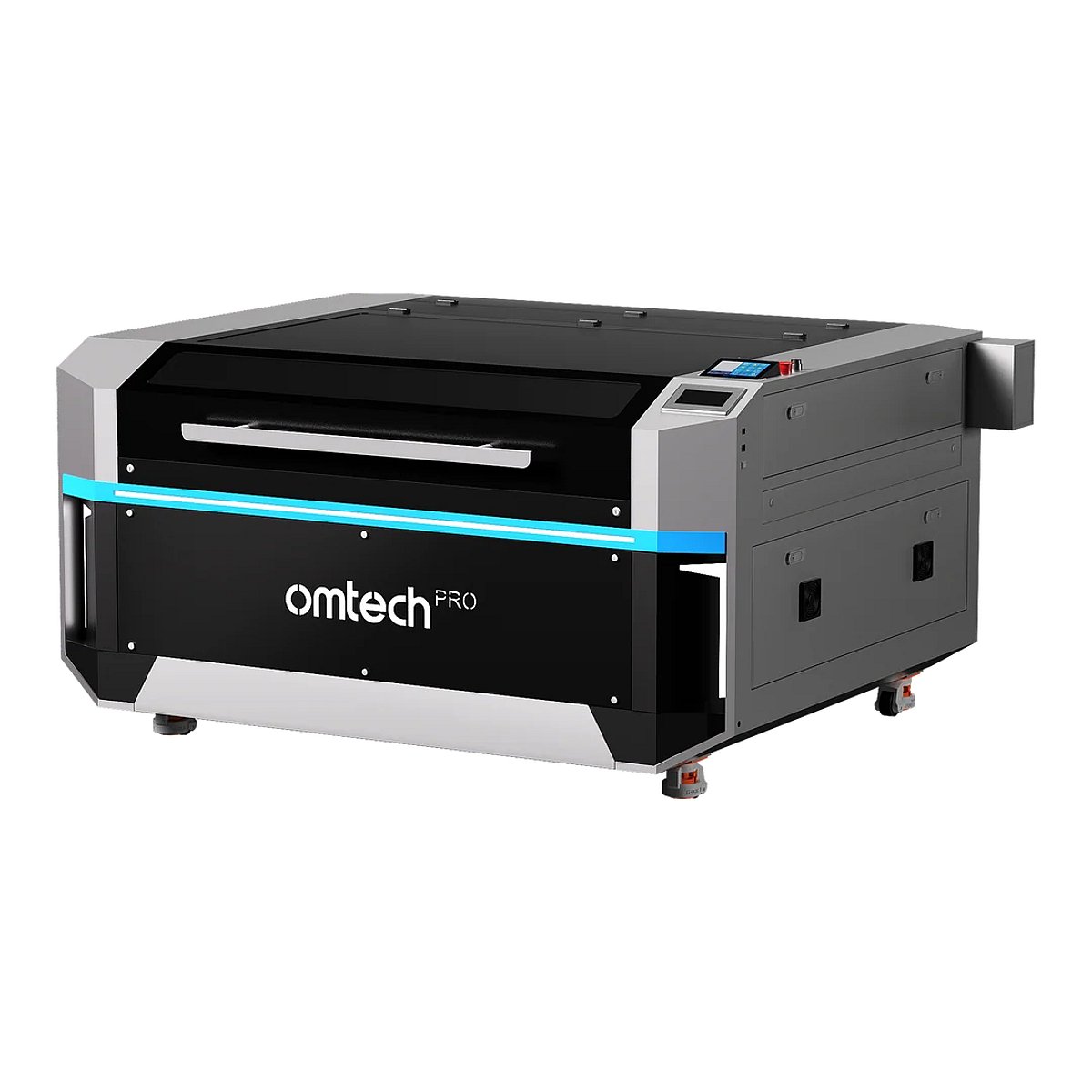
    A laser machine is a precision cutting and marking system that uses a focused beam of light to interact with material. CO2 lasers handle wood, acrylic, leather, and fabric. Fiber lasers handle bare metals. The beam follows a digital design file, so accuracy is as good as the file itself.

    For a small manufacturer, this removes human variability from cutting and marking operations. The machine never has an off day and doesn’t rush at the end of a shift. The five hundredth piece looks like the first one.

    Shops that have integrated laser machines most successfully didn’t necessarily have the biggest budgets. They identified one production bottleneck and targeted it specifically:

    • A sign shop that was routing letters by hand switched to CO2 laser cutting and reduced per-sign labor time from 45 minutes to 8 minutes.
    • A jewelry repair business added a fiber laser engraver and now offers personalization services that account for 40% of monthly revenue.
    • A contract parts supplier added a fiber laser marking machine to bring traceability marking in-house, eliminating $600 per month in outsourcing costs.
    • A home workshop seller on Etsy scaled from 20 orders per month to 180 after switching from hand engraving to a CO2 laser machine.

    Where AI Enters the Laser Machine Workflow

    AI integration in laser manufacturing happens at several levels, many of which aren’t obvious from the outside.

    Automated Material Recognition

    Newer laser systems include sensors and software that automatically identify material type and thickness, then pull recommended cutting parameters from a library. Parameter selection is where most quality problems originate. A beginner operator who once spent two hours on test cuts now spends ten minutes. An experienced operator using AI-suggested parameters iterates faster and wastes less material.

    Nesting Optimization

    Nesting arranges parts on a sheet to minimize waste. AI-driven nesting software now completes in seconds what used to take 15–30 minutes of manual arrangement. Shops report 12–18% reductions in raw material consumption on typical production runs.

    Vision Alignment Systems

    Camera-based alignment systems allow laser machines to position designs on irregular or pre-marked materials without manual measurement. The material goes on the bed, the camera identifies reference points, and the software repositions the design. For businesses engraving on irregular blanks or adding marks to pre-cut parts, this eliminates a step that previously required skill and attention.

    Predictive Maintenance

    Production laser machines now monitor their own operational parameters and flag degradation before it becomes failure—lens contamination, beam alignment drift, cooling system performance. The machine tells the operator what needs attention before a mid-job failure costs time and material. For a small shop with one machine handling all production, unplanned downtime is a serious financial event.

    Emerging Revenue Patterns

    The economic story in 2026 isn’t just about cost reduction. It’s about new revenue categories that were inaccessible before the technology became affordable.

    Personalization at scale is the clearest example. A laser engraver or cutter can produce unique versions of the same product—different names, designs, or text—without changing setups. Personalized products command substantially higher prices. A cutting board that sells for $18 without a name sells for $55–$75 with one.

    On-demand manufacturing allows small shops to produce single pieces or very small batches economically. A customer who needs one custom award or prototype doesn’t need to order fifty to make the economics work.

    Contract services are another pattern. A shop with a laser machine often discovers excess capacity and sells access to other local businesses. Contract laser cutting, engraving, and marking generate revenue from equipment that would otherwise sit idle between production runs.

    What Small Manufacturers Should Evaluate Before Buying

    The laser machine market offers options across price points and capability levels. Before looking at specifications, answer these questions:

    • What materials will you process? CO2 for wood, acrylic, leather, and fabric. Fiber for bare metals. This determines the laser type.
    • What is your realistic production volume? 40-watt for personal/low production; 60–80 watts for most small business needs; 100+ watts for shops running the machine most of the day.
    • What does the full setup cost? Machine price is only the start. Ventilation adds $150–$400. A water chiller for CO2 adds $200–$600.
    • What software does the machine support? LightBurn is the production standard for most CO2 and fiber machines. Verify compatibility before purchase.
    • What support exists? Search the manufacturer name alongside terms like maintenance, parts, and troubleshooting. Active communities and accessible documentation are reliable indicators of long-term ownership.

    The Competitive Reality for Small Manufacturers in 2026

    Businesses not adopting laser machine technology are not standing still—their competitors are. Entry-level production capability has dropped in price to the point where payback is straightforward for almost any shop with a clear application.

    A shop spending $400 per month outsourcing laser work can purchase an in-house system and reach payback in under a year. A shop adding personalization to an existing product line often sees revenue increases that cover equipment cost within six to nine months.

    AI accelerates this: faster parameter development, better material utilization, reduced operator training time. These improvements compound over time. A shop that adopted a laser machine two years ago and has been refining its workflow holds a meaningful operational advantage over one starting today.

    The transformation happening in small manufacturing through laser machine adoption and AI-guided process optimization is not speculative. It is visible in revenue numbers, payback timelines, and the Monday morning attitudes of shop owners who made the switch.

    The technology is accessible. The applications are proven. The competitive pressure is real and increasing. For small manufacturers evaluating their next capital investment, a laser machine with AI-assisted workflow support is one of the clearest paths to both cost reduction and new revenue generation available in 2026.

    OMTech, based in Anaheim, California, designs and builds CO2 laser engravers, fiber laser marking systems, and MOPA fiber lasers for small businesses, production shops, and home workshop users. Their full range of laser engraving and cutting machines is available at OMTech.

  • Philips Hue Play Screen Sync: How Camera-Based AI Eliminates the Need for HDMI in TV Lighting

    Philips Hue Play Screen Sync: How Camera-Based AI Eliminates the Need for HDMI in TV Lighting

    Philips Hue has introduced the Play Screen Sync, a camera-based device that synchronizes smart lighting with TV content without requiring an HDMI connection. By using a fisheye lens and real-time image analysis, the system reads the screen directly, allowing it to work with virtually any video source — including built-in streaming apps, broadcast TV, games, and external HDMI devices.

    How the Camera Replaces HDMI

    Traditional HDMI sync boxes can only process video that passes through their input, which means they cannot detect content from smart TV apps or built-in tuners. The Play Screen Sync overcomes this limitation by placing a small camera near the TV that captures the entire display. After automatic calibration, the system continuously analyzes the picture and sends matching color data to compatible Hue lights placed around the television.

    AI’s Role in the System

    It’s important to note that the Play Screen Sync relies primarily on camera vision, calibration, and image analysis rather than artificial intelligence. Philips Hue offers a separate AI feature called Custom AI Behaviors, which allows Bridge Pro users to describe lighting routines in natural language. That feature handles smart-home automation, while Screen Sync focuses solely on matching TV content with light colors.

    Simplified Setup and Cost Benefits

    A single Hue Play gradient TV strip can connect to the Play Screen Sync over Bluetooth without needing a Hue Bridge, lowering the entry barrier. The same option is available with the new Play HDMI Sync Box 4K, which costs $149.99 and supports 4K at 60Hz. The Play Screen Sync itself is priced at $119.99. A full system can support up to 10 lights for a surround effect.

    Trade-Offs: Camera vs. HDMI Sync

    While the camera method offers broader source compatibility, HDMI sync boxes can provide lower latency because they receive the digital video signal before it reaches the screen. The camera must capture the image, process it, and then control the lights — a process that can introduce a slight delay and is more sensitive to screen reflections and camera placement. For fast-paced gaming, HDMI sync may be preferable; for films, shows, and TV apps, the camera’s versatility is a clear advantage.

    Wider Ecosystem Updates

    The launch of Play Screen Sync is part of a larger Hue refresh that includes new cuttable Play gradient strips, cloud backup, Sonos control via Hue switches, and support for Nanoleaf Shapes through a new Hue Wall Light Module. This shift marks a move away from relying solely on HDMI hardware for screen-based lighting effects, making the system more accessible for households that primarily use smart TV apps.

    Key Takeaways

    • Camera-based syncing reads the TV display directly, working with almost any video source.
    • More flexible setups: built-in streaming apps and broadcast TV can trigger Hue lighting without an HDMI sync box.
    • HDMI syncing offers lower latency; camera-based syncing provides broader compatibility.
  • 10 Indian Logistics Startups Revolutionizing Supply Chains in 2026

    10 Indian Logistics Startups Revolutionizing Supply Chains in 2026

    India’s logistics sector is undergoing a profound digital transformation, driven by a wave of innovative startups. These companies are deploying artificial intelligence, robotics, automation, and real-time data to tackle long-standing challenges in freight, fleet management, warehousing, and supply-chain visibility. As e-commerce and manufacturing expand, the demand for faster, smarter, and more transparent logistics solutions has never been greater.

    Here are 10 Indian logistics startups reshaping the nation’s supply chain ecosystem:

    Motive

    Motive builds hardware and software tailored to the physical economy, with a focus on transportation and fleet operations. Its AI-powered platform addresses driver safety, GPS tracking, dispatch, compliance, fuel management, and maintenance.

    GoComet

    GoComet offers a multimodal logistics platform for enterprises, combining data science and machine intelligence. It helps reduce logistics costs through freight procurement, real-time shipment tracking, dispatch management, and documentation. The company is based in Mumbai and Singapore.

    Botsync

    Botsync develops autonomous mobile robots (AMRs) and software for material movement in factories and warehouses. Its solutions make industrial automation flexible and easy to deploy.

    CargoFL

    Based in Pune, CargoFL creates an AI-driven technology ecosystem for logistics. The startup integrates software, data, and machine learning to improve transportation and supply-chain operations.

    Shipthis

    Shipthis provides software for freight forwarders, supporting air, land, sea, rail, and multimodal shipments. Its platform includes accounting, warehouse management, rate management, tracking, and customer portals, helping traditional freight businesses go digital.

    Shipmnts

    Shipmnts develops software for 3PLs, freight forwarders, and customs brokers. It addresses the complexities of global trade and multimodal transportation, covering documentation, compliance, customs, and logistics coordination.

    Senzcraft Technologies

    Senzcraft focuses on intelligent process automation, combining robotic process automation, AI, machine learning, computer vision, and conversational AI. Its solutions extend beyond physical transport to automate business processes.

    Intugine Technologies

    Intugine provides multimodal supply-chain visibility. Its platform monitors shipments across air, land, sea, and rail, and is used by over 75 large enterprises to improve efficiency and reduce costs.

    Swift

    Swift is a developer-first shipping platform that connects logistics service providers. Businesses can use its self-service interface or integrate via API, adding a technology layer to manage shipping services.

    FreightFox

    Headquartered in Bengaluru, FreightFox uses technology, data, and intelligence to address industrial freight challenges for manufacturing companies. Its platform moves logistics toward a Logistics 4.0 model.

    The Bigger Picture

    These startups represent different facets of India’s logistics transformation—from fleet optimization and freight digitization to warehouse robotics and end-to-end supply-chain visibility. The common driver is technology: better data, faster decisions, and connected systems are becoming essential. This shift matters not only for India but for global supply chains, as businesses demand greater visibility and control.

    What’s Next

    The next phase will likely see deeper integration across transportation, warehousing, inventory, and customer systems. AI, automation, robotics, and real-time tracking will become more embedded. But success will depend on demonstrating scalable, measurable improvements without adding unnecessary complexity. India’s logistics ecosystem is moving beyond traditional transportation, and these startups are helping to make software and automation a core part of the supply chain itself.

  • IIT Madras and CMC Vellore Develop AI Tools for Early Kidney Disease Detection

    IIT Madras and CMC Vellore Develop AI Tools for Early Kidney Disease Detection

    AI-Powered Tools Aim to Revolutionize Kidney Disease Diagnosis

    Kidney disease often progresses silently, with many patients showing no symptoms until significant damage has occurred. To address this, a collaborative project between the Indian Institute of Technology Madras (IIT Madras) and Christian Medical College (CMC), Vellore, is developing three artificial intelligence (AI) tools designed to enable earlier and more accurate detection of kidney conditions.

    Three-Pronged Approach to Kidney Health

    The initiative introduces a suite of AI systems targeting different aspects of kidney care:

    • Chronic Kidney Disease (CKD) Risk Prediction: The first tool analyzes clinical and laboratory data to identify patients at risk of developing chronic kidney disease. It provides an early risk signal, and the team has integrated it into a prototype interface, with ongoing efforts to enhance accuracy and interpretability for clinicians.
    • Automated CT Scan Classification: The second tool employs deep learning to categorize kidney CT scans into four groups: normal, cyst, stone, and tumor. Trained on over 12,000 images, this system aims to assist radiologists in reviewing scans more efficiently and consistently.
    • 3D Kidney Modeling for Tumor Assessment: The third tool constructs patient-specific 3D models of the kidney from CT scans. This allows for precise measurement of tumor volume and the extent of kidney involvement. Built on open-source software, the platform offers a cost-effective and reproducible method for evaluating tumor burden.

    Working Towards a Kidney Digital Twin

    These tools are part of a larger vision to create a ‘kidney Digital Twin’ – a virtual replica of a patient’s kidney that integrates imaging data with other health information. This comprehensive model could enable continuous disease monitoring, personalized treatment planning, and a more holistic view of a patient’s condition. The research team also envisions integrating wearable sensors to track kidney health over time.

    Research Leadership and Future Directions

    The project is led by Prof. G.L. Samuel from the Department of Mechanical Engineering at IIT Madras, alongside research scholar Jennifer Delighta. Prof. Santosh Varughese from the Department of Nephrology at CMC Vellore contributes clinical expertise. Supported by IIT Madras and the SPARC (Scheme for Promotion of Academic and Research Collaboration), the research is currently in its early stages.

    While the potential is significant, the tools are not yet ready for routine clinical use. The team plans to validate the models with larger patient datasets and collaborate with healthcare institutions for real-world testing. One major challenge highlighted is the lack of large, open-access patient record repositories in India, which is crucial for developing robust AI models. Prof. Samuel estimates that routine hospital adoption could still be at least five years away.

    Why This Matters

    Early detection is critical in managing kidney disease effectively. By combining risk assessment, image analysis, and detailed 3D modeling, this project offers a comprehensive strategy to catch and monitor kidney problems earlier. Though still in development, it represents a significant step towards leveraging AI to improve patient outcomes and personalize nephrology care.

    Frequently Asked Questions

    What are the three AI tools being developed?

    The tools are for chronic kidney disease risk prediction, CT scan classification (normal, cyst, stone, tumor), and 3D kidney tumor assessment.

    How can AI help in early kidney disease detection?

    AI can analyze clinical data and medical images to identify patterns and anomalies that may indicate early-stage disease, often before symptoms appear.

    What is a ‘Kidney Digital Twin’?

    It’s a virtual, patient-specific model of the kidney that integrates various health data points to help doctors monitor disease progression and tailor treatments.

    Is this technology available in hospitals now?

    No, the tools are still in the research phase and require further validation with larger datasets and real-world clinical trials before they can be adopted in routine practice.

  • OKX Offers $100K Developer Contest for X Layer and AI Projects Amid Founder Feud with CZ

    OKX Offers $100K Developer Contest for X Layer and AI Projects Amid Founder Feud with CZ

    OKX has launched a $100,000 developer competition known as Dev Day, inviting builders to create projects using X Layer or OKX AI. Applications are open until September 11, 2026, and participants can join either in person or remotely. The contest focuses on real-world asset (RWA) infrastructure, tokenized stock applications, agent APIs, and AI-native products.

    According to OKX, the goal is to drive developer activity around X Layer, its infrastructure for tokenized real-world assets. The prize pool totals $100,000, and the competition is open to remote developers as well.

    Meanwhile, OKX founder Star Xu and Binance founder Changpeng Zhao (CZ) have reignited a decade-old public dispute. The feud resurfaced after Zhao released a memoir written during his prison term, which Xu claims contains inaccuracies about events at OKCoin (the predecessor to OKX) dating back to 2015.

    Xu pointed to a video that he says shows conflicting versions of a contract from that period, accusing Zhao of repeatedly misleading the public. The disagreement centers partly on a contract dispute involving early Bitcoin investor Roger Ver. Zhao wrote that Xu had accused him of forging a contract without warning, an allegation Zhao denied in a May 2015 Reddit post.

    The exchange escalated when Xu questioned Zhao’s marital status, referencing earlier reporting. Zhao responded by proposing a $1 billion wager on whether his divorce had been finalized, giving Xu 24 hours to accept. Xu declined, citing compliance obligations, and asked whether Zhao’s Binance ownership stake underwent a legal separation. Zhao rejected the question, calling the matter private.

    As the public spat continues, OKX is pushing forward with its developer contest, raising questions about whether the platform can maintain focus on innovation amid personal hostilities between two of crypto’s most prominent figures.

  • 10 AI-Powered Insurtech Companies Reshaping Insurance in 2026: A Deep Dive

    10 AI-Powered Insurtech Companies Reshaping Insurance in 2026: A Deep Dive

    Overview

    Ten companies made this list on verified deployments, named carrier partners, and reported metrics, not marketing claims. Coverage spans claims computer vision, repair workflows, fraud detection at two different stages, underwriting, actuarial pricing, cyber risk, and full-lifecycle AI insurance. Every figure below traces to a company report, carrier statement, or 2026 industry filing.

    A cyber insurer that stops seven in ten attacks before they land. A claims platform that settles a policy in two seconds flat. These are production numbers from carriers running AI as the core engine of underwriting, claims, and fraud detection, not a support feature bolted onto old workflows. The ten companies below made this list on verified deployments, named carriers, and outcomes anyone can check. A few well-known names got left out, since nothing tied their claims to a specific carrier result or a sourced number.

    What Makes These Insurtechs Leaders in 2026

    Three things separate a genuine leader from a company that simply mentions AI in its pitch deck. AI has to run a core operation, not sit beside it as a support tool. A named carrier, broker, or regulator has to confirm the result in public. And the deployment has to run at scale, across thousands of policies or claims, not a small cohort of early testers. Model sophistication barely matters here. What matters is how much of a workflow AI now finishes without a person stepping in.

    Claims and Damage Assessment: Tractable

    Millions of vehicle and property photos, collected since 2014, taught Tractable’s computer vision system to read collision damage the way a seasoned appraiser would, only faster. The platform reviews car damage with roughly 95% accuracy and turns a photo into a repair estimate in seconds, work that once took 30 minutes. GEICO and 25 of the world’s top 100 insurers now run claims through it, an adoption that pushed Tractable past a $1 billion valuation.

    Claims and Repair Workflow: CCC Intelligent Solutions

    Where Tractable reads the damage, CCC manages what happens next: repair shop, parts, and paperwork between insurer and body shop. Its Mobile Jumpstart tool already initiates 98% of repair estimates for one of the largest multi-store repair operators in the country. This quarter, a top-five insurer became CCC’s biggest customer yet for its AI-based subrogation tool, which automates the reimbursement claims carriers file against each other.

    Fraud Detection After the Claim: Shift Technology

    Claims fraud rarely announces itself, which is the problem Shift Technology’s Paris-built platform was designed to catch. AXA extended its partnership with Shift for five more years to widen fraud detection and underwriting checks across its global business, and Covéa signed on in early 2026 for a fraud framework spanning the entire policy lifecycle. Shift runs its models on Azure OpenAI Service, so carriers get newer AI without losing the compliance layer around it.

    Fraud Screening at the Point of Application: FRISS

    Shift catches fraud after a claim gets filed. FRISS catches it earlier, scoring an application for risk before a policy is even issued. Canadian insurer SGI brought the platform on in January 2026 to flag suspicious requests while speeding up legitimate ones, and a partnership with ForMotiv now folds in behavioral data captured during the application itself.

    Underwriting Built Around Continuous Risk: Cytora

    Commercial underwriting used to work off a single snapshot: an application filled out once, reviewed once, and revisited a year later. Cytora tore that model up with a platform that keeps absorbing broker emails, documents, and calls as new risk data shows up. Zurich Insurance is rolling it out across more than 20 markets over 16 months, and manual triage time there has already dropped from 75 minutes to 15 per submission. Markel and Travelers have adopted it too.

    Underwriting for Workers Comp and Group Health: Gradient AI

    Most insurtechs chase auto or property. Gradient AI went after a line most competitors ignore: workers’ compensation and group health risk scoring. Managing general underwriter BTIS adopted the platform for sharper workers’ comp pricing. One regional carrier running Gradient’s model cut its average quote turnaround from three days to under four hours by pre-scoring every submission and sending only the borderline cases to a human.

    Pricing and Actuarial Modeling: Akur8

    Pricing has always been the hardest place to trust a black box, since regulators expect an actuary to explain exactly why a rate moved. Akur8 built its platform around that constraint, offering machine learning transparent enough to survive review. More than 300 insurers across 40 countries now use it, including AXA, Generali, and Tokio Marine, and over 3,000 actuaries build pricing and reserving models in the system daily.

    Cyber Insurance’s AI-Native Leaders: Coalition and At-Bay

    Cyber risk changes by the hour, which is why Coalition built its ‘Active Insurance’ model around continuous scanning of a policyholder’s exposed systems instead of a one-time application. The company covers roughly 110,000 active policyholders and says they see about 70% fewer claims than the broader cyber market. At-Bay takes a similar approach to early warning. Its 2026 InsurSec Report, built from more than 100,000 policy years, recorded an all-time high average claim severity of $221,000, a figure it now uses to sharpen pricing before renewal.

    The Fully AI-Native Insurer: Lemonade

    No company on this list runs AI through more of the policy lifecycle than Lemonade. Its chatbots take 96% of first notices of loss without a person involved, and 55% of all claims settle from start to finish in seconds. The underwriting side backs that up: Lemonade’s gross loss ratio fell to 62% in the first quarter of 2026, down from 83% two years earlier, an improvement solid enough that the company now keeps more risk on its own books instead of handing it to reinsurers.

    Comparison Table

    Company Focus Area Key Metric Notable Partner
    Tractable Claims & Damage Assessment 95% accuracy, seconds to estimate GEICO
    CCC Intelligent Solutions Claims & Repair Workflow 98% estimates initiated via AI Top-five insurer
    Shift Technology Fraud Detection (post-claim) Extended partnership with AXA AXA, Covéa
    FRISS Fraud Screening (pre-issue) Real-time risk scoring SGI
    Cytora Continuous Underwriting Manual triage: 75 min to 15 min Zurich Insurance
    Gradient AI Workers Comp & Group Health Quote turnaround: 3 days to <4 hours BTIS
    Akur8 Pricing & Actuarial Modeling 300+ insurers, 40 countries AXA, Generali
    Coalition Cyber Insurance 70% fewer claims 110,000 policyholders
    At-Bay Cyber Insurance $221,000 avg claim severity 100,000+ policy years
    Lemonade Full-Lifecycle AI 55% claims settled in seconds Gross loss ratio 62%

    Final Thoughts

    Strip away the branding, and a pattern sits underneath all ten companies. Each one picked a single narrow job — reading a damaged photo, scoring a fraud risk, filing a rate change — and letting AI carry that job from start to finish instead of just assisting the person doing it. Regulators are starting to ask carriers to explain an AI decision, not just report it, and that shift will reward platforms built for scrutiny over ones chasing the broadest AI story. Watch which companies can show their work.

    FAQs

    1. What are AI-powered insurtech companies?

    AI-powered insurtech companies use artificial intelligence to improve insurance operations such as underwriting, claims processing, fraud detection, customer service, and risk assessment. Their technologies help insurers make faster, more accurate decisions while enhancing customer experience.

    2. Which are the leading AI-powered insurtech companies in 2026?

    Some of the leading AI-powered insurtech companies in 2026 include Lemonade, Coalition, At-Bay, Cytora, Akur8, Gradient AI, Tractable, Shift Technology, and FRISS, each specializing in different AI-driven insurance solutions.

    3. How is AI transforming the insurance industry in 2026?

    AI is enabling insurers to automate claims, improve underwriting accuracy, detect fraud in real time, personalize policy pricing, and streamline customer interactions. These advancements reduce costs while improving operational efficiency and customer satisfaction.

    4. What makes an AI-powered insurtech company a market leader?

    Leading AI-powered insurtech companies combine advanced AI capabilities with insurance expertise, strong partnerships, scalable platforms, and proven business impact. Their solutions deliver measurable improvements in risk assessment, claims management, and policy administration.

    5. What are the biggest AI trends shaping insurtech in 2026?

    Key trends include agentic AI for workflow automation, AI-assisted underwriting, computer vision for damage assessment, real-time fraud detection, embedded insurance, and personalized pricing powered by predictive analytics.


  • The Best Startup Podcasts for Entrepreneurs in 2026: Insights on AI, Funding, and Growth

    The Best Startup Podcasts for Entrepreneurs in 2026: Insights on AI, Funding, and Growth

    In 2026, startup podcasts have become an indispensable resource for entrepreneurs, investors, and business professionals. These shows offer a wealth of knowledge on company building, market trends, funding strategies, and technology shifts. As startups continue to explore artificial intelligence, automation, fintech, and other emerging sectors, podcasts provide accessible conversations with industry leaders and experienced founders.

    Founder Experiences Inspire New Entrepreneurs

    Founder-focused podcasts remain a magnet for audiences by sharing authentic stories of building companies from early ideas to successful businesses. Entrepreneurs openly discuss challenges such as raising capital, developing products, managing teams, and entering competitive markets. These conversations help aspiring founders understand the realities of entrepreneurship and learn practical lessons from those who have navigated the journey.

    AI Takes Center Stage in Startup Discussions

    Artificial intelligence continues to dominate startup podcasts in 2026. Founders and investors are exploring AI-powered businesses, automation tools, intelligent software, and the new opportunities created by generative AI. These discussions help entrepreneurs understand how emerging technologies can boost productivity, create innovative products, and transform traditional industries.

    Investors Share Funding Insights

    Podcasts are giving entrepreneurs unprecedented access to venture capital perspectives and funding strategies. Investors discuss shifting market conditions, startup valuations, business models, and what makes a company attractive for investment. As funding environments become more focused on strong fundamentals, founders are learning how to build sustainable businesses and craft better fundraising pitches.

    New Technologies Open Startup Opportunities

    Technology innovation is unlocking new possibilities across industries. Podcasts highlight developments in cybersecurity, robotics, climate technology, healthcare, blockchain, and enterprise software. These conversations help audiences understand how entrepreneurs are leveraging advanced technologies to solve real-world problems and create businesses designed for the future.

    Growth Strategies Take the Spotlight

    Modern startup discussions increasingly focus on efficient growth and long-term success. Entrepreneurs share strategies for customer acquisition, automation, team building, product development, and operational improvements. With businesses seeking smarter ways to scale, podcasts help founders discover methods to enhance performance while adapting to evolving market conditions.

    The Evolution of Startup Media

    Startup podcasts are set to remain a valuable resource for entrepreneurs and business enthusiasts as the ecosystem continues to evolve. By blending expert opinions, founder stories, and industry analysis, these platforms offer a window into the future of business. As new technologies emerge, startup conversations will keep shaping how companies are created and expanded globally.