Tag: AI

  • Top Home Appliance Releases in August 2026: Smart AI Washing Machines, Refrigerators, and More

    Top Home Appliance Releases in August 2026: Smart AI Washing Machines, Refrigerators, and More

    August 2026 is set to be a landmark month for home appliances, with major brands unveiling a wave of smart, AI-powered products designed to enhance convenience, efficiency, and connectivity. From self-optimizing washing machines to intelligent air purifiers, here’s a roundup of the most exciting releases.

    Samsung AI Washing Machines

    Samsung introduces next-generation washing machines featuring AI-powered fabric care that automatically adjusts cycles based on load type, along with energy optimization to reduce utility costs.

    LG Smart Refrigerators

    LG expands its refrigerator lineup with enhanced cooling technology and connected smart features, allowing users to monitor and control temperatures remotely via smartphone.

    Dyson Air Purifiers

    Dyson launches advanced air purifiers that deliver cleaner indoor air through intelligent filtration systems, capable of detecting and removing pollutants in real time.

    Xiaomi Robot Vacuums

    Xiaomi’s latest robot vacuum cleaners boast stronger suction power and smarter navigation, making automated home cleaning more thorough and efficient.

    Panasonic Air Conditioners

    Panasonic introduces energy-efficient air conditioners with AI climate optimization, learning user preferences to maintain ideal temperatures while saving energy.

    Philips Kitchen Appliances

    Philips expands its smart kitchen portfolio with upgraded air fryers and cooking solutions that offer precise temperature control and recipe integration.

    Haier Washing Machines

    Haier focuses on faster washing cycles and improved energy efficiency, delivering high-performance laundry solutions for modern households.

    Smart Home Integration

    Many of these new appliances support voice assistants and connected smart home ecosystems, enabling seamless control through platforms like Amazon Alexa and Google Assistant.

    Stay tuned for more updates on the latest home technology innovations.

  • 5 Key Tech Updates: Sony Goes All-Digital, Redmi K100 Pro Leaks, Alibaba’s New AI, and More

    5 Key Tech Updates: Sony Goes All-Digital, Redmi K100 Pro Leaks, Alibaba’s New AI, and More

    This week’s top tech stories span gaming, smartphones, artificial intelligence, e-commerce, and tracking devices. Here’s a quick rundown of five announcements that could reshape how you play, shop, and interact with technology.

    1. Sony Doubles Down on Digital PlayStation Gaming

    Sony is pushing further into all-digital gaming, signaling a shift away from physical discs. The move could change how gamers purchase and access titles, with implications for game ownership and storage.

    2. Redmi K100 Pro Display Leaks Surface

    Leaked details of the Redmi K100 Pro reveal a cutting-edge display, hinting at flagship-level specs. The device is already generating buzz online, suggesting Xiaomi intends to compete at the high end.

    3. Alibaba Unveils Qwen3.8-Max AI

    Alibaba has released its latest large language model, Qwen3.8-Max, aiming to advance AI capabilities for enterprise and consumer applications. The model promises improved reasoning and multilingual support.

    4. Flipkart Plus Adds Free Netflix

    Flipkart is sweetening its loyalty program by bundling free Netflix access with Flipkart Plus. The perk is likely to boost subscriber retention and compete with Amazon Prime’s streaming benefits.

    5. JioTag 2 Launches with Cross-Platform Tracking

    Reliance Jio’s JioTag 2 brings Bluetooth-based item tracking that works across Android and iOS, offering a low-cost alternative to Apple’s AirTag. The device aims to help users locate keys, bags, and more.

    These five developments highlight the rapid pace of innovation across multiple tech sectors. Stay tuned for deeper dives into each story.

  • Apple Mac Studio: What to Expect This Fall and Beyond

    Apple Mac Studio: What to Expect This Fall and Beyond

    Apple’s Mac Studio is evolving. The powerful desktop continues targeting creative professionals with exceptional performance. New hardware and software improvements are expected this fall and beyond. From advanced chips to AI features, the Mac Studio could become even more capable. Here’s what to expect.

    Next-Generation Apple Silicon

    Apple is expected to introduce even more powerful Apple Silicon chips for the Mac Studio. Improved CPU and GPU performance could significantly boost demanding creative workflows. AI processing capabilities may also receive a major upgrade. Professionals could see faster rendering and development speeds.

    Better AI Performance

    Artificial intelligence is becoming central to Apple’s desktop strategy. Future Mac Studio models may feature stronger Neural Engine performance for AI-assisted applications. Developers, designers, and content creators stand to benefit. Local AI processing could also improve privacy and responsiveness.

    Thunderbolt & Connectivity

    Apple may expand connectivity with faster Thunderbolt ports and additional high-speed I/O options. Improved support for external displays and storage is also expected. Faster data transfers will benefit video editors and engineers. Connectivity remains one of Mac Studio’s biggest strengths.

    macOS Improvements

    Upcoming macOS updates are expected to bring better multitasking, productivity, and Apple Intelligence integration. Creative software should become more optimized for Apple Silicon. Improved collaboration tools may also arrive. The overall desktop experience is likely to become even smoother.

    Professional Workflows

    Mac Studio continues to target professionals working in video editing, 3D rendering, software development, and music production. Future hardware improvements could reduce rendering times significantly. Better AI acceleration may automate repetitive tasks. Productivity gains remain a key focus.

    Final Outlook

    Apple’s Mac Studio is expected to remain one of the company’s most powerful desktop computers. Continued Apple Silicon innovation and software optimization should strengthen its appeal. Professionals looking for high-end desktop performance have plenty to watch. This fall could bring another major leap forward.

  • AI Model Rediscovers Bitcoin Wallet Flaw for Just $2, Revealing New Era in Crypto Security

    AI Model Rediscovers Bitcoin Wallet Flaw for Just $2, Revealing New Era in Crypto Security

    Artificial intelligence is transforming cybersecurity at an unprecedented pace, and a recent experiment involving a Bitcoin hardware wallet has demonstrated just how quickly AI can uncover software vulnerabilities. Researchers reported that the AI model GLM 5.2 rediscovered the flaw behind the ColdCard wallet incident in approximately 20 minutes, at a total cost of roughly $2. While there is no evidence that cybercriminals used AI in the original theft, the experiment underscores how inexpensive AI-assisted code analysis has become.

    AI Makes Security Audits Faster and Cheaper

    Traditionally, finding vulnerabilities in cryptographic software required experienced security researchers spending days or even weeks reviewing firmware, source code, and cryptographic implementations. Now, AI models can perform an initial review across large codebases in a fraction of the time. According to Dragonfly managing partner Haseeb Qureshi, the most significant takeaway was the cost. “GLM 5.2 running for 20 minutes costs about $2. So what does that mean? It means we are in a new world.”

    Researchers directed multiple AI models to inspect the affected software after the ColdCard incident had become public. The models were reportedly not told where the vulnerability existed, yet GLM 5.2 identified the underlying weakness in roughly 20 minutes. However, rediscovering a vulnerability is not the same as carrying out an attack. Exploiting such a flaw still requires identifying affected devices, reconstructing usable private keys, locating valuable wallets, and successfully transferring funds before users or manufacturers can respond. The experiment therefore demonstrates AI’s growing ability to assist security research rather than proving that AI played any role in the original theft.

    Security Teams Face a New Arms Race

    The findings also highlight a shift in how cryptocurrency security may evolve. Much of the industry’s long-term focus has been on quantum computing, which could eventually threaten Bitcoin’s cryptographic foundations. AI presents a more immediate challenge because it can already identify mistakes in wallet firmware, random-number generation, key management, and cryptographic implementations without breaking Bitcoin’s underlying encryption.

    According to Qureshi, the affected users were “people who are doing all the right things.” Even users storing assets in offline hardware wallets remain dependent on the quality of the wallet’s firmware and cryptographic implementation. If private keys are generated using weak randomness, keeping a device offline cannot strengthen those keys afterward.

    For developers, AI represents both a defensive and offensive tool. Wallet manufacturers can repeatedly scan legacy firmware as newer AI models become available, while attackers can automate vulnerability discovery across older software releases at minimal cost. The experiment underscores an important lesson for the cryptocurrency industry: security reviews can no longer be treated as one-time events. As AI models become faster, cheaper, and more capable, continuous code auditing, responsible disclosure programs, and rapid patch deployment will become essential for protecting digital assets.

    FAQs

    1. What did the GLM 5.2 AI model accomplish?
    According to researchers, GLM 5.2 successfully rediscovered the software vulnerability linked to the recent ColdCard wallet incident in around 20 minutes. The exercise demonstrated AI’s ability to quickly identify known security flaws at a very low cost.

    2. Did AI play a role in the original ColdCard theft?
    No. There is currently no evidence that attackers used AI during the original theft. The experiment was conducted afterward to evaluate whether a modern AI model could independently identify the same vulnerability.

    3. Why is the reported $2 cost significant?
    The low cost shows that AI-assisted vulnerability research is becoming accessible to far more developers and researchers. It also means attackers could potentially scan many software projects for weaknesses without investing significant resources.

    4. Can AI break Bitcoin’s cryptography?
    No. The experiment did not demonstrate that AI can break Bitcoin’s underlying cryptographic algorithms. Instead, it showed that AI can help identify implementation bugs in wallet software, firmware, and cryptographic code surrounding Bitcoin.

    5. How can crypto developers use AI to improve security?
    Developers can use AI to scan source code before release, re-audit older firmware as AI models improve, identify potential vulnerabilities faster, and support bug bounty programs. Human security experts are still required to verify findings and deploy secure fixes.

  • Visa Layoffs 2026: 2,600 Jobs Cut Globally as Company Shifts Focus to AI

    Visa Layoffs 2026: 2,600 Jobs Cut Globally as Company Shifts Focus to AI

    Visa has announced the elimination of 2,600 positions worldwide, representing approximately 7% of its global workforce, as part of a strategic pivot toward artificial intelligence. The layoffs, which began on July 29, primarily affect technology and product teams, with India—home to over 3,500 Visa employees across Bengaluru, Mumbai, Chennai, and Hyderabad—experiencing significant cuts.

    Employees in India reported receiving sudden layoff emails between 4 a.m. and 5 a.m., with one team losing 10 of its 28 members. Senior staff and managers were not spared. The company has not disclosed the exact number of Indian employees affected in this round, but the move underscores a broader trend of multinational corporations reallocating resources from traditional tech roles to AI-driven initiatives.

    CEO Ryan McInerney has emphasized the role of agentic AI systems that can perform tasks with minimal human intervention, signaling a shift in how Visa’s technology teams will operate. The company aims to reduce costs and redirect investments toward higher-growth areas, with AI at the center of its strategy.

    Former Visa employee Arnab Das shared his experience on X, stating, “My entire team at Visa just got laid off, including my manager.” He noted that his former manager had strong performance reviews and had owned a product from start to finish. The incident highlights growing anxiety among tech workers about AI’s impact on job security.

    The Visa India layoffs add to mounting concerns in the country’s technology sector, where companies like Oracle, Volkswagen, and others have also trimmed staff while increasing AI investments. The trend suggests that technology workers may need to acquire new skills as organizations reshape their workforces around automation and machine learning.

  • European Enterprise Tech Firms Emerge as Unexpected AI Winners

    European Enterprise Tech Firms Emerge as Unexpected AI Winners

    The artificial intelligence race may have begun with companies building powerful AI models, but the next phase is creating opportunities for a different set of winners. A growing number of established European technology firms are benefiting as businesses shift from AI experiments to full-scale deployment across their operations.

    Recent earnings from companies including SAP, Capgemini, Sopra Steria and OVHcloud indicate that demand is increasingly moving beyond AI models to the complex work of integrating the technology into existing enterprise systems. That trend is translating into stronger revenue growth, improved business outlooks and rising customer demand.

    Integration Becomes the Real AI Opportunity

    For many large organizations, adopting AI is proving to be far more complicated than simply choosing a chatbot or language model. Businesses are discovering that successful AI deployment requires seamless integration with finance, human resources, procurement, supply chain, and other mission-critical systems already running their operations.

    Instead of relying on a single AI provider, enterprises are expected to use multiple models depending on performance, security and regulatory requirements. That has increased demand for companies specializing in AI implementation, data management, governance and workflow integration.

    SAP, Capgemini Report Strong Momentum

    Germany’s SAP continues to gain from firms moving their critical operations to cloud platforms that support AI applications. Its cloud backlog increased 26% on a constant currency basis, indicating strong enterprise demand despite spending on AI-related acquisitions.

    Capgemini of France has further boosted its annual revenue growth outlook on the back of increased bookings driven by spending by firms on AI-driven digital transformation. Sopra Steria has raised its revenue growth guidance on increased enterprise spending on AI.

    Data Sovereignty Adds European Advantage

    European tech companies are also benefiting from growing fears about data sovereignty and compliance regulations. Organizations in many fields like defense, healthcare, aerospace, and critical infrastructure require AI that ensures sensitive data remains within local jurisdiction and is governed.

    The growing shift of enterprise investments in AI from research and development to implementation means that companies focused on data security, management, and integrating AI into business operations could become some of the major beneficiaries of the AI revolution, even without developing the technologies themselves.

  • ChatGPT Plans Compared: Free, Plus, Pro, or Team – Which Subscription Is Right for You in 2026?

    ChatGPT Plans Compared: Free, Plus, Pro, or Team – Which Subscription Is Right for You in 2026?

    ChatGPT offers four main plans in 2026, each tailored to a different type of user and budget. The Free plan provides a basic ChatGPT experience at no cost. Plus adds higher limits and extra features for daily users. Pro targets professionals who need maximum performance and larger usage limits. Team, part of OpenAI’s business offering, focuses on companies needing collaboration tools, shared workspaces, and admin controls.

    Every plan includes access to ChatGPT, but the experience varies by usage, available tools, and priority access. The right choice depends on your work style, daily usage, and collaboration needs.

    ChatGPT Free vs Plus vs Pro vs Team Comparison

    ChatGPT Free

    The Free plan works well for anyone who wants to explore ChatGPT without a subscription. It includes access to GPT models, web search, voice conversations, file uploads, image generation, memory, Canvas, and basic Deep Research. This plan handles everyday tasks such as writing, learning, quick research, and simple coding.

    The main limitation is strict usage caps. Heavy usage may lead to slower access during peak hours, and advanced reasoning tools are available in smaller amounts. New features also arrive later than on paid plans. Even with these limits, the Free plan offers strong value for students, beginners, and casual users.

    ChatGPT Plus

    ChatGPT Plus costs $20 per month and remains the most popular paid option. This plan offers much higher usage limits, faster response times, and priority access during peak traffic. It also unlocks advanced reasoning models, larger context windows, better memory, higher image generation limits, advanced voice features, and a larger Deep Research allowance.

    Daily work becomes smoother with fewer interruptions. Writers, developers, designers, researchers, freelancers, and office professionals often find enough power in this plan without a large monthly expense. OpenAI also releases many new features to Plus subscribers before they reach Free users, adding extra value throughout the year.

    ChatGPT Pro

    ChatGPT Pro costs $200 per month and targets people who depend on AI for demanding tasks. This plan offers the highest usage limits across ChatGPT. It provides top priority access to OpenAI’s most capable models, the largest Deep Research quota, advanced reasoning capacity, and support for long and complex tasks.

    Heavy research, detailed analysis, software development, large document reviews, and advanced workflows benefit from the extra computing resources. Startup founders, AI engineers, consultants, and research professionals gain the most value from this plan. Regular users may not notice enough difference to justify the higher price.

    ChatGPT Team (Business)

    ChatGPT Team focuses on companies that need collaboration tools, shared workspaces, and administrative controls. Pricing starts at around $25 per user per month with monthly billing, or around $20 per user per month with annual billing.

    This plan includes shared workspaces, shared GPTs, member management, central billing, organization memory, admin controls, and business privacy features. Company data stays outside model training by default. These features help teams manage projects, share knowledge, and keep work organized across departments.

    Which Plan Offers the Best Value?

    Every plan fits a different need. The Free plan gives excellent value for light usage and everyday tasks. Plus stands out as the best balance between price and features, delivering faster performance, generous limits, and access to advanced tools without a premium tag.

    Pro serves professionals who run demanding workloads daily and need the highest limits available. Team works best for businesses that need secure collaboration, centralized management, and shared access across multiple employees.

    Final Verdict

    ChatGPT offers a clear upgrade path in 2026. The Free plan covers everyday needs at no cost. Plus delivers the strongest overall value with faster performance, better tools, larger limits, and early feature access for only $20 per month. Pro targets advanced professionals who require maximum computing power and the highest usage limits. Team adds business-focused features that support collaboration, administration, and organizational security.

    The final decision depends on your daily workload, feature requirements, and budget. Most individual users receive the best balance of cost and capability from ChatGPT Plus. Professionals with intensive AI workflows benefit from Pro, while businesses gain the greatest advantage from Team through shared workspaces and centralized management.

    Frequently Asked Questions

    1. Which ChatGPT plan is best for most users?

    ChatGPT Plus is the best choice for most users as it combines advanced features, faster performance, and generous usage limits at an affordable monthly price.

    2. Is ChatGPT Free enough for everyday use?

    Yes. The Free plan is suitable for writing, learning, coding, web search, file uploads, and occasional AI assistance, though it has lower usage limits.

    3. Who should choose ChatGPT Pro?

    Pro is ideal for researchers, developers, consultants, founders, and power users who rely on ChatGPT daily and need the highest limits and priority access.

    4. What makes ChatGPT Team different?

    Team includes shared workspaces, centralized billing, admin controls, organization memory, and collaboration features designed for businesses and small teams.

    5. Is ChatGPT Plus worth $20 per month?

    For regular users, yes. It provides faster responses, higher usage limits, access to advanced models, better voice and image features, and early access to new capabilities.


  • iDenfy Launches Standalone Selfie-Based Age Estimation Tool for Faster Onboarding

    iDenfy Launches Standalone Selfie-Based Age Estimation Tool for Faster Onboarding

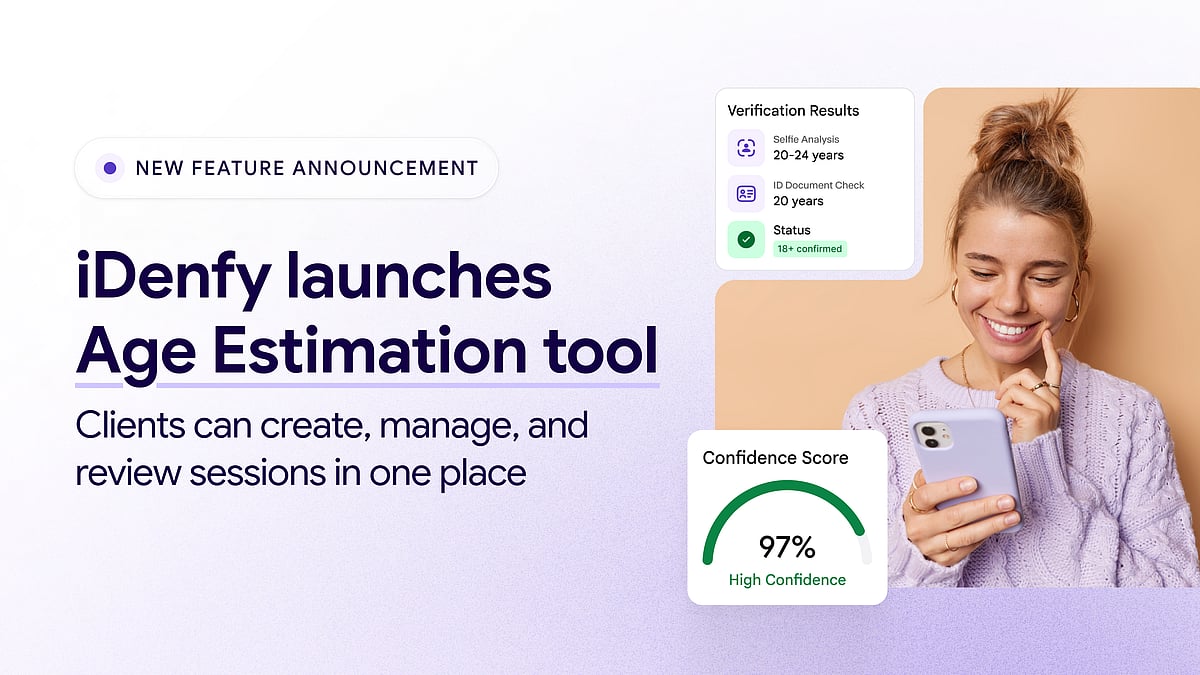
    iDenfy, a global RegTech platform specializing in identity verification and fraud prevention, has announced a significant upgrade to its age verification platform with the introduction of a new Age Estimation tool. This feature allows businesses to estimate a user’s age using a real-time selfie, eliminating the need for an ID document upload in many cases.

    How the Age Estimation Tool Works

    Traditionally, iDenfy’s age verification required users to upload a government-issued ID. With the new Age Estimation add-on, users can simply capture a selfie, and the system analyzes facial features to estimate age within a three-year accuracy gap. Businesses can set a configurable age limit and buffer zone. Users clearly above the threshold pass instantly; those near the limit are automatically routed to a certified ID document check within the same session for final verification.

    Standalone Product with Dedicated Infrastructure

    Unlike a bundled feature, iDenfy has built Age Estimation as a standalone product with its own permission structure, billing model, and API endpoints. This means partners who only need age estimation checks can access it without adopting the full identity verification stack. The dedicated dashboard provides a centralized view of sessions, token generation, and detailed session pages, supported by custom settings and verification URLs.

    Benefits for Businesses and Compliance

    Validated age data reduces the risk of underage access to restricted products while minimizing personal data collection. Because most users pass with just a selfie, companies avoid requiring government IDs from their entire user base. This supports compliance with regulations such as the UK Online Safety Act, EU Digital Services Act, GDPR, and emerging state-level laws in the US and Australia’s under-16 social media restrictions.

    Domantas Ciulde, CEO of iDenfy, commented: “Age estimation only works if the people using it can actually see what’s happening inside each session. We improved our product against disguises such as makeup or a moustache to precisely estimate people’s age and brought it into the dashboard with its own sessions list and detailed view.”

    He added: “Centralizing session creation and results in one dashboard view might sound like a small operational detail, but for partners that run age checks at scale, it removes a lot of manual tracking that used to happen outside our platform.”

    Availability

    The Age Estimation dashboard module is now available to iDenfy partners, who can integrate via API or Dashboard with 24/7 support. For more information, visit iDenfy’s age verification service page.

  • MemeCore and Uniswap Surge, but ZKP Presale Signals 100x Potential – Is It the Hottest Crypto of 2026?

    MemeCore and Uniswap Surge, but ZKP Presale Signals 100x Potential – Is It the Hottest Crypto of 2026?

    The crypto market is telling two different stories at once. The MemeCore price just rallied 11.2% on a memecoin sector rebound, and the Uniswap price is climbing above $3.95 on the back of new institutional features. Both look strong on the daily charts, but each has already made its big move.

    Meanwhile, Zero Knowledge Proof (ZKP) is setting up something bigger. The token is currently priced at just $0.0004 in Stage 1 of its presale. The listing target is $0.04 – a clean 100x gap already written into the roadmap. Over $2.23 million has been raised so far, and many are calling ZKP the most popular cryptocurrency story of 2026.

    MemeCore Price Bounces Back on Memecoin Sector Rebound

    The MemeCore price surged 11.2% in the last 24 hours, trading around $1.13. The move came as the wider memecoin market bounced 8%, adding $23 billion in total market cap. Open interest jumped 9.4% to $25.66 million, and long positions outpaced shorts, showing traders are betting on more upside.

    Bulls are now eyeing $1.7, which sits at the 50-day EMA. If MemeCore can break that level, momentum could carry it higher. Still, its RSI is only at 47, meaning the recovery is fragile. Any drop in demand could send the MemeCore price right back to $1.10 support. For traders looking at the most popular cryptocurrency plays for 2026, meme-driven rallies are exciting but rarely offer stable long-term returns.

    Uniswap Price Climbs on Institutional Push

    The Uniswap price is trading around $3.7. The rally follows Uniswap’s launch of Permissioned Pools on v4, which lets regulated tokenized securities trade among approved users. That opens the door to major institutional inflows while keeping open pools running for regular DeFi users.

    Technically, UNI sits above its 20-day, 50-day, and 200-day moving averages, which shows strong short- and long-term momentum. But the RSI is stretched at 74.47, hinting the coin is overbought and due for a cooling period. Over the past three months, the Uniswap price is already up more than 200%. For anyone hunting the most popular cryptocurrency plays of 2026, that means most of the easy money has already been made; the biggest gain window is likely behind it.

    Zero Knowledge Proof (ZKP): The Future of AI at a $0.0004 Entry Price

    Zero Knowledge Proof (ZKP) is quickly turning into the most popular cryptocurrency story of 2026, and the reason is simple: opportunity. Stage 1 of the presale is live at just $0.0004 per coin. The listing target is $0.04; that is a 100x price gap already written into the roadmap. Some analysts even project long-term returns of 5,000x to 10,000x if adoption scales as AI demand grows. With $2.23 million already raised and more than 7,481 early buyers on board, momentum is only building.

    The story behind ZKP is bigger than price. Privacy is becoming the biggest concern in the AI era, and no major system has fully solved it yet. Sensitive data flows into AI models every second, but there is almost no way to verify what happens with it once it goes in. ZKP closes that gap by using zero-knowledge cryptography to confirm computations were run correctly while keeping all raw data hidden. That verification layer is exactly what regulated industries and AI-first companies need before adoption can scale globally.

    The roadmap is clear and already in motion. Phase 1 covered the core network build, smart contract audits, and the presale rollout. Phase 2 delivered the hybrid Proof of Intelligence and Proof of Space consensus, plus AES-256 encryption for private data storage. Phase 3 focuses on testnet, wallet integrations, and EVM compatibility. Phase 4 finishes the vision with mainnet launch and the ZKP Data Marketplace going live.

    Adding to the confidence, Kevin O’Leary has publicly backed the project, calling this the “Age of Proof.” With every stage of the presale raising the price, buyers are rushing in early to lock in ZKP as the most popular cryptocurrency setup of the year.

    Conclusion

    The MemeCore price and Uniswap price both had strong moves this week, but their biggest gains for this cycle look mostly priced in. ZKP is only beginning its climb. With Stage 1 live at $0.0004, a listing target of $0.04, and a full four-phase roadmap already in motion, ZKP offers a rare mix of low entry, real utility, and a clear path forward. Privacy in the AI era is not optional anymore, and ZKP is building the answer while the rest of the market is still catching up. Every presale stage lifts the price higher, and buyers are rushing in at $0.0004 before ZKP grows into what many now call the most popular cryptocurrency of 2026.

    Explore ZKP:
    Website: https://zkp.com/
    Buy: http://buy.zkp.com/
    Telegram: https://t.me/ZKPofficial
    X: https://x.com/ZKPofficial

    Join our WhatsApp Channel to get the latest news, exclusives and videos on WhatsApp.

    Disclaimer: Analytics Insight does not provide financial advice or guidance on cryptocurrencies and stocks. Also note that the cryptocurrencies mentioned/listed on the website could potentially be risky, i.e. designed to induce you to invest financial resources that may be lost forever and not be recoverable once investments are made. This article is provided for informational purposes and does not constitute investment advice. You are responsible for conducting your own research (DYOR) before making any investments. Read more about the financial risks involved here.

  • Knowt AI Review: An Intelligent Study Platform for Flashcards and Spaced Repetition

    Knowt AI Review: An Intelligent Study Platform for Flashcards and Spaced Repetition

    Knowt operates as an AI-based educational platform that enables students to study through its flashcards, summaries, and spaced repetition system. The tool allows students to transform their notes, PDF documents, and video content into study materials within seconds. Knowt functions as a powerful Quizlet substitute by automating processes and creating quizzes that help learners and educators enhance their knowledge retention.

    General Information

    • Launch Date: 2024
    • Target Audience: Working professionals, students & academic learners, language learners, travelers & expats, test preparation learners, multilingual learners.
    • Platform Support: Android App, iOS App, Web Browser
    • Download: Click Here

    Main Features of Knowt

    • AI Flashcard Generation: Automatically creates flashcards from notes, PDFs, and lectures within seconds.
    • Spaced Repetition: Schedules reviews to improve long-term memory retention effectively, based on science.
    • Practice Tests & Learning Mode: Strengthen weak topics through repetition and active recall.
    • Quizlet Import: Seamless transfer of existing study flashcards and sets for quick migration.
    • Mobile Apps & Chrome Extension: Enables studying anywhere, anytime, on any device.

    Benefits of Knowt

    • Free Essential Features: The free plan provides essential features without hidden subscription fees.
    • Time Savings: AI flashcard generation saves substantial time during study preparation.
    • Beginner-Friendly: Designed for new users, offering a quick and straightforward learning experience.
    • Improved Retention: Spaced repetition helps users retain knowledge for extended periods, especially useful for exam preparation.
    • Cross-Platform Access: Operates on web, mobile, and extension apps without technical restrictions.

    Challenges of Knowt

    • Limited Customization: Predesigned flashcards cannot be modified by learners.
    • AI Content Errors: AI-generated content may have errors and require editing.
    • Navigation Difficulties: Design can be confusing for first-time users, especially on mobile devices.
    • Technical Issues: Experiences problems with saving work and reliability during peak usage.
    • AI Feature Limits on Free Plan: Active learners on the free plan receive restricted access to AI features, with a monthly usage limit.

    Subscription Information

    Knowt offers a free Basic plan with flashcards, notes, and limited AI tools. The Ultra plan costs $19.99 monthly or $119.99 annually, adding advanced AI features, Kai assistant, and higher upload limits including PDFs and videos for intensive study users.

    Support Options

    • Help Center: Provides FAQs, guides, and troubleshooting resources covering setup, flashcards, AI tools, study modes, and account-related issues for students and educators.
    • Customer Support: Responsive and helpful, offering assistance via help center, email, and contact forms to resolve technical issues and user queries efficiently.

    Conclusion

    Knowt provides students with an advanced AI study platform that helps them study through flashcards, summaries, and spaced repetition. The system offers three key benefits: decreasing manual tasks, improving memory retention, and enabling flexible study approaches. While the program offers free access with basic AI functions, it does have minor technical issues and limited customization options. Overall, Knowt is a valuable tool for students and educators looking to enhance their study efficiency.