Tag: Amazon

  • Amazon Launches Alexa+ in India with Hindi and Hinglish Support: What It Means for Users

    Amazon Launches Alexa+ in India with Hindi and Hinglish Support: What It Means for Users

    Amazon has officially launched Alexa+ in India, offering free Early Access to a limited number of users. The new AI-powered assistant is available on eligible Echo speakers, smart displays, Fire TV devices, and the Alexa app, with browser access planned. Alexa+ understands English, Hindi, and Hinglish, and Amazon intends to add more Indian languages over time.

    Prime members will continue to receive Alexa+ at no extra charge after the Early Access period ends. For other users, a paid plan costing Rs. 2,000 per month will be required. Teena Sidana, Country Manager for Alexa at Amazon India, stated, “Indian households are multi-generational, multilingual, and beautifully complex. Alexa+ was designed for that complexity.” She added, “India is home to one of the most diverse set of customers in world, and we’re excited for them to experience how much smarter, personalized, and more intuitive Alexa+ has become.”

    Key Features of Alexa+ in India

    Alexa+ is built for natural, flowing conversations. Users no longer need to say “Alexa” before every command. The assistant seamlessly switches between English and Hindi within the same interaction. It also recognizes common Indian phrases and terms like “dhai baje” and “ek paav”.

    Core capabilities include:

    • Smart home device control (compatible with Atomberg, Qubo, Dreame, Wipro, and more)
    • Shopping lists and Amazon order tracking
    • Product comparisons
    • Integration with Spotify, Apple Music, JioSaavn, Prime Video, and Netflix
    • Upcoming integrations with Swiggy, EazyDiner, and MakeMyTrip

    Language Support: A Game-Changer for Indian Users

    Language is a major differentiator for Alexa+ in India. The assistant understands mixed Hindi and English (Hinglish) and is designed to handle the multilingual, multi-generational nature of Indian households. Amazon plans to expand support to additional Indian languages in future updates.

    Pricing and Availability

    During Early Access, a limited number of users can try Alexa+ for free on eligible devices. Prime members will retain free access after the trial. Non-Prime users will need to subscribe at Rs. 2,000 per month. The wider rollout is scheduled to begin later.

  • Amazon Weekend Sale: Massive Discounts on Nothing, Motorola, Redmi, and iQOO Smartphones

    Amazon Weekend Sale: Massive Discounts on Nothing, Motorola, Redmi, and iQOO Smartphones

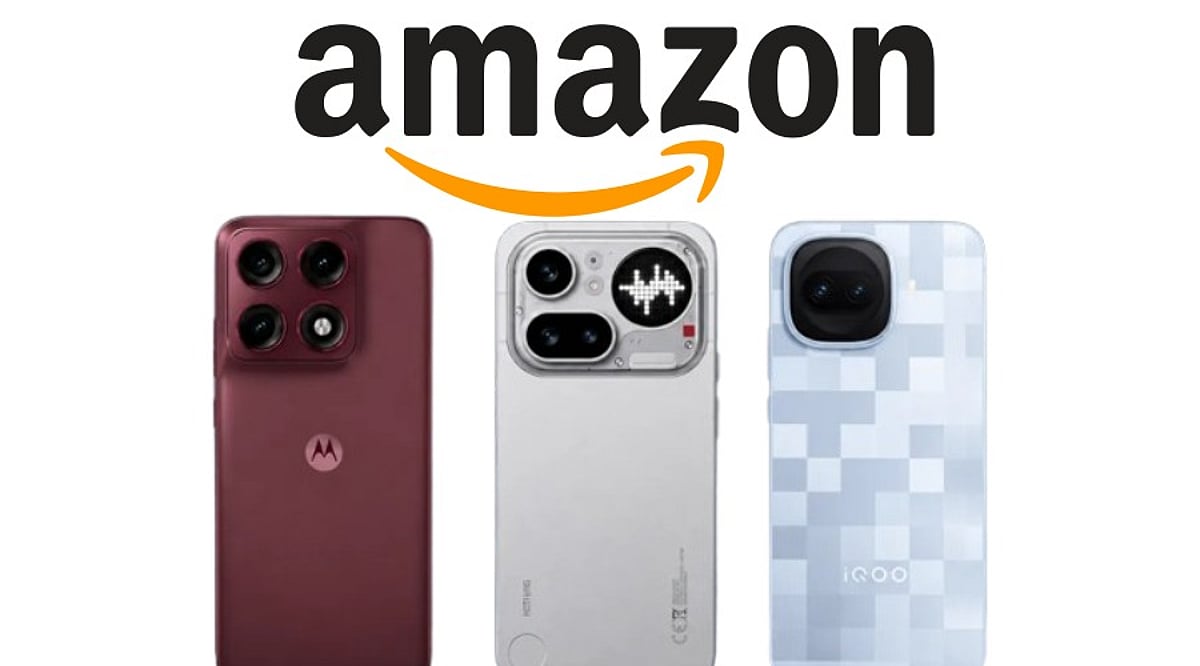
    Looking to upgrade your smartphone without paying full price? Amazon has rolled out a weekend sale with substantial discounts on popular brands including Nothing, Motorola, Redmi, and iQOO. From premium flagship devices to budget-friendly 5G models, shoppers can find significant price cuts, with additional savings available through bank and exchange offers.

    Top Smartphone Deals This Weekend

    Nothing Phone (3)

    The Nothing Phone (3) leads the list with a massive discount. The 16GB RAM + 512GB storage variant is available for ₹51,999, down from its original ₹89,999 — a saving of nearly ₹38,000 before any additional offers. It features a 6.67-inch 1.5K AMOLED display, a 5500mAh battery, a Snapdragon 8s Gen 4 chipset, and a 50MP camera.

    Nothing Phone (3a) Pro

    For a more affordable Nothing device, the Phone (3a) Pro (12GB+256GB) is listed at ₹34,999, down from ₹49,999 — a 30% reduction.

    Motorola Edge 60 Fusion

    The Motorola Edge 60 Fusion offers a premium mid-range experience. The 8GB+256GB variant starts around ₹20,900, while the 12GB+256GB version is also available. It sports a 6.7-inch 120Hz display, MediaTek Dimensity 7400 chipset, 5,500mAh battery, and 68W fast charging.

    Redmi Turbo 5

    Performance and battery enthusiasts will appreciate the Redmi Turbo 5. The 8GB+256GB model is priced at ₹41,999, and the 12GB+256GB variant at ₹46,999. It packs a huge 7,540mAh battery, 100W fast charging, and an IP69K rating.

    iQOO Z11 Lite 5G

    For budget-conscious buyers, the iQOO Z11 Lite 5G starts at ₹19,999 (4GB+128GB). The 6GB+256GB variant is around ₹26,499. It features a 6.74-inch 120Hz display, MediaTek Dimensity 6300 processor, 50MP camera, and a 6,500mAh battery with 44W charging.

    Important Notes

    Prices on Amazon may vary based on availability, color, and bank deals. Always verify the final price at checkout before purchasing.

    Frequently Asked Questions

    Which smartphones are included in Amazon’s weekend offers?
    The deals cover Nothing, Motorola, Redmi, and iQOO models, including Nothing Phone (3), Nothing Phone (3a) Pro, Motorola Edge 60 Fusion, Redmi Turbo 5, and iQOO Z11 Lite 5G.

    Which phone has the biggest discount?
    The Nothing Phone (3) 16GB+512GB variant sees a discount of nearly ₹38,000, dropping from ₹89,999 to ₹51,999.

    What is the price of the Nothing Phone (3) on Amazon?
    It is listed at ₹51,999 for the 16GB+512GB variant.

    What affordable iQOO phone is available?
    The iQOO Z11 Lite 5G starts at ₹19,999 for the 4GB+128GB model.

    Can prices change during the sale?
    Yes, prices can change due to stock, promotions, and bank offers. Check the product page for the latest pricing.

  • How Your Smartphone Apps Track You: A Deep Dive into 2026’s Biggest Data Collectors

    How Your Smartphone Apps Track You: A Deep Dive into 2026’s Biggest Data Collectors

    Your smartphone can reveal significant details about your habits—location, purchases, searches, contacts, identifiers, and usage data can create a detailed digital profile. However, data collection is not automatically the same as harmful tracking. Some information is necessary for app functionality, security, personalization, or analytics. Learn what app tracking means and how to reduce your personal data exposure.

    Meta Apps Lead in Data Collection

    A 2026 Surfshark analysis highlighted Meta apps among the biggest data collectors. The study examined 171 iOS apps from major technology companies. Meta apps disclosed an average of 25 data types. This does not mean every user shares every data type; it shows what developers disclose through Apple’s privacy system. Seven of the study’s most data-hungry apps belonged to Meta. Meta AI reportedly listed 33 of 35 possible data types. Meta Horizon, Messenger, Facebook, and other apps followed closely. The categories can include identifiers, location, product interactions, and browsing information. Some Meta apps also declare data linked directly to users. Meta says information from businesses can help personalize content and AI experiences. Its June 2026 update expanded how this activity can influence personalization. The important point is context: data collection does not automatically mean misuse.

    Google Apps Also Gather Broad Data

    Google apps ranked below Meta on average in the same study. However, Google’s enormous app portfolio makes the picture more complicated. The research examined 44 Google apps. Twenty-nine Google apps appeared among those declaring the broadest data collection. Different Google apps can collect different types of data, including search history, purchases, photos, email addresses, and identifiers. Some collection directly supports useful features like search personalization, account synchronization, and security. Users should examine individual app disclosures rather than relying on a company’s overall reputation.

    Amazon and Other Popular Apps

    Amazon’s apps also collect several categories of user information. The study found an average of 12 data types across Amazon’s apps. Amazon apps commonly declared names, email addresses, device identifiers, and product interactions. Some also declared precise location information. Fitness apps deserve separate attention. Health and fitness applications can access particularly sensitive information. The Surfshark analysis found Fitbit, Strava, and Nike Training Club among data-heavy fitness apps. Fitbit declared 24 data types in that analysis. Fitness data can reveal routines, locations, activities, and other personal details, making permission choices especially important.

    What Does ‘Tracking’ Actually Mean?

    Data collection and tracking are not the same thing. Apple’s privacy system separates these concepts. ‘Data linked to you’ means collected information connects with your identity. ‘Data used to track you’ involves linking information with third-party data. That distinction matters when reading privacy labels. An app can collect information without necessarily using it for cross-service tracking. Apple’s App Store labels show declared data categories and their purposes. Developers provide this information themselves, so privacy labels should be treated as a starting point—not a complete technical audit of an application.

    How to Reduce Your Data Exposure

    You do not need to delete every app to improve privacy. Start by reviewing permissions you rarely use. Location access deserves particular attention. Consider whether an app really needs precise location access. Review microphone, camera, contacts, photos, and Bluetooth permissions too. Disable access when those features are unnecessary. On iPhone, the App Privacy Report can show network activity and accessed domains, providing visibility into connections made by apps and websites. Android users can similarly review permissions through system privacy controls. App-store privacy information can provide another useful reference. Users should also review advertising and personalization settings regularly, as these controls can change as platforms update their privacy systems.

    The Goal Is Smarter Privacy, Not Zero Data

    Modern apps need some information to function properly. Navigation apps need location, while shopping apps need account and purchase details. The bigger issue is understanding what information leaves your device and why companies collect it. The data-hungry app rankings offer a useful warning: popular services can collect far more categories than users expect. That does not make every data-heavy app dangerous, but it does make privacy settings worth reviewing. A few minutes spent checking permissions can significantly improve your digital privacy. The best approach is informed use, not fear of every app.

    FAQs

    What are data-hungry apps?
    Data-hungry apps are applications that report collecting many categories of user information. These categories can include location, identifiers, browsing history, purchases, contacts, and usage data. Collection levels vary between apps, and gathering more data does not automatically mean an app is unsafe or malicious.

    Which apps collect the most personal data in 2026?
    Surfshark’s August 2026 analysis found Meta had the highest average data collection among five major technology companies. Meta apps collected an average of 25 out of 35 possible data types. Meta AI ranked highest individually, declaring 33 data types.

    Does data collection mean an app is tracking me?
    Not necessarily. Data collection and tracking have different meanings. Apple defines tracking as linking app or device data with information from other companies for targeted advertising or measurement. An app can collect information without necessarily using it for cross-service tracking.

    What personal information can mobile apps collect?
    Depending on the app, collected information can include location, email addresses, names, device identifiers, purchase history, browsing history, photos, and usage information. Health and fitness apps can also handle sensitive activity-related information. The exact categories depend on the app and its disclosed practices.

    Are Meta apps the most data-hungry apps?
    According to Surfshark’s 2026 study, Meta had the highest average among the five Big Tech companies analyzed. Its apps averaged 25 of 35 possible data types. The study found that Meta’s seven highest-collection apps occupied the top seven positions.

  • Top Tech Companies by Revenue for 2026: Amazon Tops $742B, NVIDIA Surges on AI

    Top Tech Companies by Revenue for 2026: Amazon Tops $742B, NVIDIA Surges on AI

    Amazon leads the 2026 ranking of the world’s largest technology companies by trailing-12-month (TTM) revenue with $742.77 billion, followed by Apple and Alphabet. The list highlights how artificial intelligence, cloud computing, e-commerce, and semiconductors drive massive scale. NVIDIA’s exceptional rise underscores AI’s commercial impact, while Chinese giants JD.com and Alibaba hold strong positions.

    Key Takeaways

    • Amazon tops the 2026 ranking with $742.77 billion in TTM revenue.
    • AI is reshaping tech: NVIDIA’s surge highlights the growing commercial impact of artificial intelligence and data-center demand.
    • Diverse markets drive scale: Retail, cloud, advertising, semiconductors, e-commerce, software, and consumer electronics power the world’s largest technology companies.

    Amazon

    Amazon ranks first with TTM revenue of $742.77 billion. Its business covers online retail, cloud services, ads, devices, and digital products. Fortune also placed Amazon at No. 1 in its 2026 Global 500, with $716.9 billion in fiscal-year 2025 revenue. That reach gives the company unusual scale across several major technology markets.

    Apple

    Apple ranks second with $451.44 billion in TTM revenue. The iPhone remains a central part of its business, while Mac, iPad, services, and other devices add more sales. Fortune placed Apple at No. 6 on the 2026 Global 500, with $416.2 billion in fiscal-year 2025 revenue.

    Alphabet

    Alphabet ranks third with $422.49 billion in TTM revenue. Google Search remains a major source of sales, while YouTube, cloud services, and other digital products add more value. Alphabet also has a major role in artificial intelligence through its products and research. Fortune placed Alphabet at No. 8, with $402.8 billion in fiscal-year 2025 revenue.

    Microsoft

    Microsoft ranks fourth with $318.27 billion in TTM revenue. Its business covers software, cloud services, enterprise tools, games, and artificial intelligence products. Azure produced $101.9 billion in revenue for the fiscal year ended June 2026. Microsoft also reported $281.7 billion in latest fiscal-year revenue. Cloud and AI now hold a major place in its business.

    Samsung Electronics

    Samsung Electronics ranks fifth with $270.94 billion in TTM revenue. Its product range covers smartphones, televisions, home appliances, displays, and semiconductors. This mix gives Samsung several major sources of sales. Fortune placed Samsung Electronics at No. 26 on its 2026 Global 500, with $234.7 billion in fiscal-year 2025 revenue.

    Foxconn

    Foxconn ranks sixth with $261.93 billion in TTM revenue. The company follows a different model from Apple or Microsoft. Foxconn serves as a major electronics manufacturer and supports global brands across the hardware supply chain.

    NVIDIA

    NVIDIA ranks seventh with $253.49 billion in TTM revenue. The company has seen an exceptional rise in sales from artificial intelligence hardware. Its graphics processors and data-center products support large AI systems. Fortune reported $215.9 billion in fiscal-year 2025 revenue, with a 65.5% rise. NVIDIA now holds a much larger place in the semiconductor market.

    Meta Platforms

    Meta Platforms ranks eighth with $214.96 billion in TTM revenue. The company owns Facebook, Instagram, and WhatsApp. Digital ads provide most of its revenue, while artificial intelligence and virtual reality shape its product strategy.

    JD.com

    JD.com ranks ninth with $187.94 billion in TTM revenue. The Chinese company has a major position in online retail and related digital services. Its scale places it ahead of many well-known US and European technology firms.

    Alibaba

    Alibaba ranks tenth with $145.39 billion in TTM revenue. Its business covers e-commerce, cloud services, digital platforms, and other internet products. Alibaba remains one of China’s most important technology companies.

    What the 2026 Data Shows

    The top ten list shows several major sources of technology revenue. Amazon leads with a huge retail and cloud base, while Apple and Alphabet stay above $400 billion. Microsoft sits above $300 billion, while Samsung Electronics and Foxconn each exceed $260 billion. NVIDIA now exceeds $250 billion, while Meta Platforms, JD.com, and Alibaba each exceed $100 billion.

    TTM revenue offers the most current view, while Fortune’s 2026 Global 500 uses fiscal-year 2025 revenue. The two measures should remain separate in a direct comparison. The data also shows how artificial intelligence, cloud services, semiconductors, e-commerce, and consumer devices contribute to the scale of the world’s largest technology companies.

    FAQs

    Which is the largest technology company by revenue in 2026?

    Amazon ranks first, with $742.77 billion in trailing-12-month (TTM) revenue.

    Which technology companies have more than $400 billion in TTM revenue?

    Amazon, Apple, and Alphabet all exceed $400 billion in TTM revenue.

    Why has NVIDIA’s revenue grown so rapidly?

    NVIDIA has benefited from exceptional demand for AI-focused GPUs, data-center hardware, and infrastructure supporting large-scale artificial intelligence systems.

    What is TTM revenue?

    TTM, or trailing-12-month revenue, measures a company’s revenue over its most recent 12-month period, providing a more current view than an older fiscal year.

    Is TTM revenue directly comparable with Fortune’s Global 500 figures?

    Not exactly. TTM figures reflect the latest 12 months, while Fortune’s 2026 Global 500 ranking uses fiscal-year 2025 revenue, so the measures should be kept separate.


  • Qualcomm Secures Potential $60 Billion AI Chip Deal with Amazon for AWS

    Qualcomm Secures Potential $60 Billion AI Chip Deal with Amazon for AWS

    Qualcomm and Amazon have entered into a long-term agreement to develop custom chips for Amazon Web Services (AWS), a deal that could be worth up to $60 billion depending on future orders. While the exact financial terms have not been officially disclosed, reports indicate that Amazon has not yet placed an order for that full amount. As part of the agreement, Qualcomm issued an Amazon affiliate a warrant to acquire up to 25 million Qualcomm shares at an exercise price of $161.26 per share. The warrant expires on September 3, 2036, and can be exercised without cash.

    The partnership will focus on chips designed for large-scale AI systems and high-speed optical connections. This move marks a strategic shift for Qualcomm, which is looking to reduce its reliance on the smartphone chip market. In the June 2026 quarter, Qualcomm’s handset revenue fell 19.6% year over year. The company aims for its data center business to exceed $15 billion in revenue by fiscal 2029. Meanwhile, Amazon will continue to use its own Graviton, Trainium, and Nitro chips alongside Qualcomm’s technology.

    Can Qualcomm Challenge NVIDIA?

    Qualcomm is entering a market dominated by NVIDIA, which reported $89 billion in data center revenue in its most recent quarter and has built a massive business around AI chips. Amazon also has its own AI chips, which could make the competitive landscape even tougher for Qualcomm. The Amazon deal gives Qualcomm a major customer and a platform to demonstrate its chip capabilities in a broader market. However, a single deal is unlikely to be enough to rival NVIDIA’s entrenched position. While this partnership may help Qualcomm reduce its dependence on smartphone chips, early data center deals may yield lower profit margins than its phone business.

    The $60 billion figure is not guaranteed revenue; future orders will determine how much business Qualcomm actually receives from Amazon. For now, the deal provides Qualcomm with a strong entry into the rapidly growing AI chip market.

  • U.S. Universities Face Land Pressure as AI Data Center Demand Surges

    U.S. Universities Face Land Pressure as AI Data Center Demand Surges

    The rapid expansion of artificial intelligence is creating an unexpected challenge for American universities: soaring demand for large properties that can support energy-intensive data centers. Institutions that once reserved sprawling campuses for classrooms and research labs now find themselves competing with tech giants for the same real estate.

    George Washington University’s recent sale of its Virginia Science and Technology Campus to Amazon Data Services for $427 million exemplifies this trend. The 120-acre property in Ashburn, Virginia, lies in Loudoun County, the heart of Northern Virginia’s “Data Center Alley.” The university announced the sale in February without initially naming the buyer or disclosing the price, citing confidentiality. Amazon was later confirmed as the purchaser.

    GW stated the transaction would strengthen its long-term finances. It can continue using the campus for up to five years while relocating programs and offices. A substantial portion of the proceeds will fund a new endowment, and eligible faculty will receive one-time payments: $2,500 for full-time benefits-eligible staff and $1,250 for part-time faculty.

    Former GW professor Ellen Scully-Russ, who taught at the Virginia campus from 2009, described the property as struggling to become a central part of the university’s strategy. She noted a gradual reduction in resources, including unfilled faculty positions and eliminated teaching assistant roles due to budget constraints. Faculty and students were not informed about sale discussions in advance. “There was no transparency,” she told Fortune. She also questioned the long-term viability of large AI infrastructure projects, calling the trend potentially “a short-term bubble.”

    The University of Michigan is taking a different approach with a planned $1.25 billion high-performance computing and research center in Ypsilanti Township. Developed in partnership with Los Alamos National Laboratory, the facility will support research in medicine, materials science, clean energy, engineering, and national security. It is expected to require about 50 megawatts of power initially, eventually reaching 100 megawatts. However, local residents and officials oppose the project, and the Ypsilanti Township Board of Trustees unanimously passed a resolution against it.

    As AI continues to drive demand for data center infrastructure, universities must navigate the tension between preserving academic land and capitalizing on lucrative real estate opportunities. The outcome will shape the future of both higher education and the AI industry.

  • Who Bears the Cost When AI Shopping Agents Make Expensive Mistakes?

    Who Bears the Cost When AI Shopping Agents Make Expensive Mistakes?

    AI assistants are evolving beyond simple chatbots. These advanced AI agents are now capable of handling complex tasks like paying bills, booking hotels, and even shopping for products—all with a single prompt. Companies including OpenAI, Google, Amazon, and Anthropic are racing to develop systems that can search for items, compare prices, place orders, and complete payments with minimal user input.

    The concept seems straightforward: a user tells the AI what they need, and the tool handles the rest—finding the best deal, making the purchase, and tracking delivery. However, this convenience introduces a critical question: if the AI buys the wrong item, overpays, or makes another costly mistake, who is responsible? Experts say there is currently no clear answer.

    Rubrik, a security and AI operations firm, highlights that organizations are already struggling to monitor what their AI agents can access. According to Rubrik Zero Labs, 86% of global IT and security leaders expect AI agents to exceed their organization’s security guardrails within the next year, yet only 23% have full visibility into the agents operating in their environments. The concern is not that an AI agent will become malicious, but that it might inadvertently access data or perform actions it shouldn’t.

    AI Will Handle More Than Just Shopping

    Shopping and flight booking are just the beginning. Experts predict that future AI agents could negotiate better prices, compare insurance plans, manage household budgets, and automatically renew subscriptions. Some may even help users manage investments based on predefined rules. While these features promise greater convenience, a single error could lead to significant financial loss. That’s why many experts advocate for requiring user approval before any major financial action is completed by an AI agent.

    Trust Will Determine the Future of AI Shopping Agents

    AI shopping agents have the potential to transform how people buy products and manage money, saving time and simplifying routine tasks. But convenience should not come at the expense of control. As AI becomes more powerful, building trust means giving users the final say. The future of this technology hinges on finding the right balance between automation and human oversight.

  • Amazon Great Freedom Sale 2026: Smart Strategies for Real Tech Deals

    Amazon Great Freedom Sale 2026: Smart Strategies for Real Tech Deals

    Amazon’s Great Freedom Sale 2026 kicks off on August 7, with Prime members getting early access from August 6. The sale promises discounts across smartphones, laptops, TVs, wearables, and home appliances. But not all markdowns deliver genuine value—especially on newly launched devices. Comparing specs, exchange offers, and price history can help shoppers make smarter buying decisions.

    This year’s sale arrives as tech prices remain elevated across many categories. Component costs and memory prices have climbed steadily through 2026, and manufacturers have passed some of that along to buyers. That backdrop changes what a “sale” actually means. A device marked down 10% from an inflated launch price is not the same as a genuine drop against last year’s pricing.

    Smartphones: Timing Beats the Badge

    Amazon’s sale page has flagged the iPhone lineup and Samsung Galaxy S25 as headline devices, along with OnePlus, iQOO, and Realme. Recently launched phones rarely carry deep cuts this early, since retailers protect margins on fresh stock. The stronger opportunity sits with last year’s flagship models, paired with a solid exchange offer through Amazon’s trade-in program. That combination often lowers the effective price far more than the sale badge implies. A quick check against a price-history tool confirms whether a listing reflects a real drop or simply restates the original price with a new label.

    Laptops: Configuration Decides the Value

    HP, Lenovo, Asus, and Dell have carried most laptop deals in past Freedom Sale cycles and are expected to do so again, though final participation depends on what goes live August 7. The key detail is upgrading headroom. Many budget and mid-range laptops solder RAM directly onto the board, ruling out later upgrades. Storage expandability also varies across models within the same product line. A laptop with a slightly higher price but a newer processor and room to grow often holds its value longer than a cheaper unit that looks like a better deal today. Checking the full spec sheet—not just the discount percentage—protects against buying a laptop that feels limited within a year.

    Televisions: Specs Matter More Than Screen Size

    Large-screen TVs have often carried the steepest single-day price drops during festive sales. Brands like Sony, LG, Samsung, TCL, and Xiaomi are expected to participate. The detail worth checking is display technology, not inch count. HDMI 2.1 support enables higher frame rates for gaming and newer content formats, and panel type—Mini LED against standard LED—affects picture quality far more than the headline discount. A bigger screen at a lower price is not automatically the smarter purchase if the panel is a generation behind.

    Audio and Wearables: Compatibility Over Specs

    Earbuds and smartwatches from boAt and other major brands typically dominate this category during Freedom Sale events. What often gets missed is compatibility. Codec support shapes actual sound quality more reliably than driver size claims printed on the box. A smartwatch delivers real value only when its health tracking and notifications sync fully with the phone already in use. Shoppers replacing an aging pair of earbuds tend to notice a clearer upgrade than those adding a third pair purely for the discount.

    Home Appliances: Check the Full Cost, Not the Sticker

    Kitchen appliances, air conditioners, and other home essentials are confirmed for this sale. The part shoppers miss most often is the cost outside the listed price. Installation charges and warranty terms get billed separately in many cases. Amazon’s Exchange Mela trade-in bonuses can lower the real cost of a large appliance more than the visible discount suggests. A lower sticker price with a vague installation fee can end up costing more than a slightly higher listing that includes setup.

    Amazon vs. Flipkart: Worth the Extra 5 Minutes

    Flipkart is reported to open its own Freedom Sale on August 8, a day behind Amazon, with early access for Plus and Black members starting August 7. Both platforms compete hard on electronics during this window, so a short comparison pays off before any purchase above a few thousand rupees. Four things decide the better deal: the final price after coupons, the trade-in value offered, active bank card discounts, and delivery speed if timing matters. A product priced slightly higher on one platform can still work out cheaper once exchange value and card offers enter the calculation.

    Final Thoughts

    The sharpest value this year will likely sit away from the loudest discount banners. Last year’s flagship phones, laptops with real upgrade rooms, and older TV panels clearing out fast are where the numbers actually work in a buyer’s favor. A five-minute comparison between Amazon and Flipkart, paired with a quick look at price history, does more for the final bill than chasing the biggest percentage off.

    FAQs

    1. When does the Amazon Great Freedom Sale 2026 start?
    The Amazon Great Freedom Sale 2026 begins on August 7, with Prime members getting early access from August 6. The sale features discounts across smartphones, laptops, smart TVs, home appliances, wearables, and audio products.

    2. Which categories offer the best value during the sale?
    Previous-generation smartphones, laptops with upgrade room, smart TVs, audio devices, wearables, and home appliances often provide the strongest value. Exchange offers, bank discounts, and bundled promotions can further improve the final price.

    3. How can I check if a sale price is genuine?
    Compare the current sale price with the product’s recent price history instead of relying only on the displayed discount. Also consider exchange offers, bank promotions, warranty coverage, and product specifications before buying.

    4. Should I compare Amazon and Flipkart before making a purchase?
    Yes. Comparing prices, exchange values, bank offers, delivery timelines, and warranty benefits across both platforms can help you identify the better overall deal, especially for high-value electronics.

    5. Are newly launched devices worth buying during the sale?
    Newly launched devices often receive smaller discounts than previous-generation models. For the best value, last year’s flagship phones and laptops often offer a better balance of performance, features, and price.

  • Amazon’s Next-Gen Technologies: Satellite Internet, AI Models, and Autonomous Deliveries

    Amazon’s Next-Gen Technologies: Satellite Internet, AI Models, and Autonomous Deliveries

    Amazon is far more than an online marketplace. The company is investing heavily in emerging technologies that span satellite internet, generative AI, robotics, autonomous vehicles, biometrics, healthcare, and sustainability. Here’s a look at the key innovations shaping Amazon’s future beyond e-commerce.

    Project Kuiper: Global Satellite Internet

    Amazon is building a satellite internet network called Project Kuiper to deliver affordable broadband connectivity globally. This initiative competes with existing low-Earth orbit providers, aiming to bridge the digital divide.

    Amazon Nova AI Models

    Amazon’s Nova foundation models power generative AI applications, enabling businesses to create intelligent assistants, content, and enterprise automation efficiently. These models are designed to make AI accessible for a wide range of use cases.

    Warehouse Robotics

    Advanced warehouse robots improve inventory handling, package sorting, and fulfillment speed while reducing operational costs across Amazon’s expanding logistics network. These robots are a cornerstone of Amazon’s operational efficiency.

    Autonomous Delivery Drones (Prime Air)

    Prime Air drones aim to deliver eligible packages within minutes, improving last-mile logistics through autonomous navigation and advanced aviation technology. This service promises faster delivery for customers.

    Zoox Robotaxis

    Amazon-owned Zoox develops fully autonomous electric robotaxis designed for urban transportation, offering driverless mobility with enhanced passenger safety and convenience. Zoox is poised to disrupt the ride-hailing industry.

    AI-Powered Alexa+

    Alexa+ integrates advanced conversational AI, delivering personalized assistance, smarter automation, and natural interactions across compatible smart home ecosystems. It represents a major leap in voice assistant technology.

    Amazon One Biometrics

    Palm-recognition technology enables secure identity verification and seamless payments, simplifying customer experiences across retail stores, workplaces, and entertainment venues. Amazon One is expanding its footprint.

    Amazon Health Services

    Amazon continues expanding healthcare through digital pharmacy, virtual consultations, and integrated health solutions focused on accessibility, affordability, and patient convenience. The company is becoming a key player in health tech.

    Sustainable Logistics Innovation

    Amazon invests in electric delivery vehicles, renewable energy, and eco-friendly packaging to reduce emissions while supporting sustainable global supply chains. These efforts align with its Climate Pledge commitment.

  • Top US Stocks Driving Strong Market Momentum in 2025

    Top US Stocks Driving Strong Market Momentum in 2025

    Several U.S. equities have consistently outperformed in recent months, buoyed by advancements in artificial intelligence, cloud computing, and digital advertising. Below is an overview of the top-performing stocks that continue to deliver robust market momentum.

    Nvidia (NVDA)

    Nvidia dominates AI chip manufacturing, benefiting from surging demand for data centers, enterprise computing, and artificial intelligence infrastructure worldwide.

    Microsoft (MSFT)

    Microsoft’s cloud services and AI-powered software continue driving revenue growth, making it a consistent performer among technology industry leaders globally.

    Apple (AAPL)

    Apple’s ecosystem, premium devices, and expanding services business generate resilient revenue, supporting long-term investor confidence despite competitive technology markets.

    Amazon (AMZN)

    Amazon combines cloud computing leadership with advertising, logistics, and artificial intelligence investments, creating multiple high-growth revenue opportunities for shareholders.

    Meta Platforms (META)

    Meta’s AI investments and digital advertising business continue improving profitability while expanding virtual reality and social media platform capabilities globally.

    Broadcom (AVGO)

    Broadcom benefits from rising semiconductor demand, enterprise software growth, and AI infrastructure expansion, supporting consistent financial performance and shareholder returns.

    Tesla (TSLA)

    Tesla continues innovating in electric vehicles, autonomous driving technology, and energy storage, maintaining significant influence within global automotive markets.

    Alphabet (GOOGL)

    Alphabet strengthens revenue through search, cloud computing, YouTube, and artificial intelligence innovations across consumer and enterprise technology services worldwide.

    Palantir Technologies (PLTR)

    Palantir’s AI-powered analytics platforms drive enterprise and government adoption, supporting impressive revenue growth and expanding commercial customer relationships.