Tag: Amazon

  • Kindle vs Kobo in 2026: Which eReader Should You Buy?

    Kindle vs Kobo in 2026: Which eReader Should You Buy?

    Choosing between Kindle and Kobo is no longer mainly about display quality or battery life. Both brands now offer capable e-readers across budget, color, and note-taking categories. The bigger difference lies in the ecosystem: Kindle prioritizes Amazon integration, while Kobo offers broader format support and easier library borrowing.

    Kindle: Best for Amazon Users

    Kindle remains the strongest option for readers who buy most of their books from Amazon. Purchased titles appear instantly on the device, the Kindle app works across multiple platforms, and Amazon Household allows eligible books to be shared between two adult accounts. Kindle Unlimited provides access to more than 4 million titles, making it useful for frequent readers of genre fiction and self-published books.

    The Kindle Paperwhite 12th Generation, released in 2024, features a 7-inch, 300ppi display, a higher contrast ratio, and page turns that are 25% faster than the previous generation. Its battery can last up to 12 weeks under suitable usage conditions.

    However, Kindle’s ecosystem is relatively closed. It uses Amazon formats such as KFX and MOBI. EPUB files can be transferred through Send to Kindle, but they must first be converted, which may affect complex formatting. Library borrowing can also require additional steps, particularly outside the US.

    Kobo: Better for EPUBs and Library Books

    Kobo’s biggest advantage is format flexibility. Its devices natively support EPUB, the standard used by many independent bookstores and digital libraries. Users can buy books from different sources, sideload files, or borrow compatible library titles without converting them.

    The Kobo Clara BW is positioned as a lightweight budget model for readers focused mainly on novels. At the mid-range level, the Kobo Libra Colour offers a 7-inch color e-ink display and physical page-turn buttons. Color e-ink is most useful for comics, manga, book covers, and illustrated non-fiction. For regular novels, the difference compared with a black-and-white screen is limited.

    Kobo also supports OverDrive-based borrowing directly on compatible devices. This makes it easier for users who regularly access library services such as Libby or similar platforms.

    Which Device Offers Better Value?

    Below £120 or $130, the Kobo Clara BW offers native EPUB support and warm lighting, while the basic Kindle has a smaller 6-inch screen and no warm light. In the £130–£170 or $140–$180 segment, the Kindle Paperwhite is a strong choice for Amazon users. For color devices, the Kobo Libra Colour costs around £209.99, while the Kindle Colorsoft is priced near £239.

    At the premium end, the 10.2-inch Kindle Scribe is better suited to PDF work and document annotation. The 10.3-inch Kobo Elipsa 2E may appeal more to readers seeking a large-screen book experience with stylus support.

    Conclusion

    You can buy a Kindle when convenience, Amazon purchases, and cross-device syncing matter most. Kobo is a great option when EPUB support, library borrowing, physical page buttons, and long-term control over book files are higher priorities. The right choice depends less on hardware and more on how and where you obtain your books.

    FAQs

    1. Is Kindle or Kobo better in 2026?
    Kindle is generally better for readers who purchase most books from Amazon and value seamless syncing. Kobo is more suitable for users who prefer EPUB files, independent bookstores, and easier library borrowing.

    2. Which eReader is better for borrowing library books?
    Kobo usually provides the more convenient library experience because compatible devices support OverDrive integration and native EPUB files. Kindle library borrowing may involve additional redirects, account logins, or file transfers.

    3. Does Kindle support EPUB files?
    Kindle does not read EPUB files directly in the same way as Kobo. Users can transfer EPUBs through Amazon’s Send to Kindle service, which converts them into a Kindle-compatible format.

    4. Is the Kobo Libra Colour better than the Kindle Colorsoft?
    The Kobo Libra Colour may appeal to readers who want physical page-turn buttons, native EPUB support, and easier library access. Kindle Colorsoft is better suited to users already invested in Amazon’s ecosystem.

    5. Which eReader is best for PDFs and note-taking?
    The Kindle Scribe is a strong option for PDF reading, document workflows, and handwritten annotations. The Kobo Elipsa 2E is better suited to readers wanting a large display with stylus support and broader file compatibility.

  • Amazon Aims to Launch Satellite-to-Smartphone Service by 2028

    Amazon Aims to Launch Satellite-to-Smartphone Service by 2028

    Amazon is preparing to take smartphone connectivity beyond traditional mobile networks. The tech giant has proposed a satellite-based direct-to-device (D2D) service that could allow compatible smartphones to make calls, send messages, and access mobile data even in areas without cellular coverage.

    According to filings submitted to the US Federal Communications Commission (FCC), Amazon plans to deploy a constellation of up to 5,105 low Earth orbit (LEO) satellites under its Amazon Leo initiative. If approved, the rollout is expected to begin in 2028.

    Unlike Amazon’s existing satellite broadband service, which requires dedicated ground equipment, the new system is designed to connect directly with compatible smartphones. The company says the network will complement, rather than replace, existing mobile infrastructure.

    Voice Calls, Messaging and Emergency Services

    The following services would include calling, messaging, mobile internet, and emergency services. Amazon plans to partner with telecom providers globally to enable connectivity in areas where it is not easy to build mobile network infrastructure. According to the company, this technology may prove useful for industries like logistics and IoT applications.

    How the Satellite Network Will Work

    Amazon’s system of satellites will be operating in five different orbital planes to offer coverage not only to inhabited zones but also to high and near-polar latitudes. L-band and S-band frequencies will enable communication between the smartphones and the satellites. Ka-band and V-band frequencies will connect the satellites to the internet via ground infrastructure. Additionally, Amazon intends to process the network traffic in space, thus decreasing potential signal interference.

    India Among Key Focus Markets

    Amazon has identified India as one of its priority markets as it expands its satellite ambitions. The company has cited India’s rapidly growing digital economy and the need to improve connectivity in underserved regions as key reasons for its interest. The proposal also intensifies competition in the fast-growing satellite connectivity market, where companies including SpaceX, AST SpaceMobile and Lynk Global are developing direct-to-smartphone services. If approved, Amazon’s network would mark another step towards making satellite communication a mainstream feature for future smartphones.

  • Wall Street on Edge: Fed Decision, Inflation Data, and Big Tech Earnings Set for Volatile Week

    Wall Street on Edge: Fed Decision, Inflation Data, and Big Tech Earnings Set for Volatile Week

    Global markets are bracing for a turbulent 72-hour period as a wave of major events—including a Federal Reserve decision, key inflation data, GDP figures, and earnings from tech giants Microsoft, Meta, Apple, and Amazon—converge on the calendar. The sequence kicks off with consumer confidence data, followed by the Fed’s policy announcement, economic growth and inflation reports, and a flurry of earnings from four of the largest companies in the S&P 500. Traders are poised for sharp moves across stocks, bonds, currencies, and cryptocurrencies as each release could shift expectations for the next Fed meeting.

    Fed Decision Takes Center Stage

    Tuesday’s Conference Board consumer confidence report provides an early gauge of household demand. A weak reading may signal slower spending, while a stronger figure could reinforce the view that the economy can handle higher borrowing costs. Consumer spending drives the bulk of U.S. economic activity, making this data a key precursor to the Fed’s decision.

    The Federal Reserve will announce its rate decision Wednesday after a two-day meeting. Rate futures indicate roughly a one-in-three chance of a quarter-point increase, though most economists expect the central bank to hold the federal funds rate at 3.50% to 3.75%. Markets will scrutinize Chairman Kevin Warsh’s remarks for hints about September and any signs of policy division. A surprise hike would likely lift short-term yields and the dollar while pressuring rate-sensitive equities. Even a hold could spark volatility if the statement signals another increase is imminent. Investors will also watch the number of dissenting officials.

    PCE and GDP Data Drop on Thursday

    Thursday brings a double dose of economic data: the advance estimate for second-quarter GDP and the June personal income and outlays report, which includes the Personal Consumption Expenditures (PCE) price index—the Fed’s preferred inflation gauge. Both releases are scheduled for 8:30 a.m. Eastern Time.

    GDP data will reveal whether consumer demand and business investment sustained economic growth during the quarter. Forecasts generally point to annualized growth above 2%, though estimates vary. A stronger reading could buoy risk assets but may also strengthen the case for tighter policy if inflation remains elevated. The PCE figures may carry more weight for rate expectations. Softer monthly and annual readings would support the view that price pressures are easing, while firm core inflation could reignite concerns about the need for another rate increase. The worst-case scenario for markets would be weak GDP combined with stubborn inflation.

    Big Tech Earnings Add Pressure

    Microsoft and Meta report after Wednesday’s closing bell. Microsoft investors will focus on Azure growth, AI demand, and capital spending. Meta’s report will draw attention to advertising revenue, user activity, and the cost of expanding its AI infrastructure. Both companies have the power to influence broader tech valuations.

    Apple and Amazon follow after Thursday’s close. Apple’s iPhone demand, services sales, and AI plans will shape expectations for its next quarter. Amazon Web Services growth will indicate the pace of corporate cloud spending, while retail margins and delivery costs will impact Amazon’s broader results. Together, these four companies represent a significant portion of the S&P 500, and their guidance could move index futures even if headline earnings beat forecasts.

    Weekend Sentiment Check

    Friday’s final University of Michigan sentiment reading closes the seven-event stretch. Inflation expectations will be closely watched to see if the preliminary July improvement survived later changes in fuel prices, financial markets, and household views nationwide.

  • Oppo Find X8 Pro Gets Rs. 10,000 Discount: Best Deals on Flipkart and Amazon

    Oppo Find X8 Pro Gets Rs. 10,000 Discount: Best Deals on Flipkart and Amazon

    The Oppo Find X8 Pro has received a flat Rs. 10,000 price cut in India. The flagship smartphone, launched at Rs. 99,999, is now available on Flipkart for Rs. 89,999. If you’ve been waiting for the right time to buy Oppo’s premium phone, this limited-time deal makes it much more affordable.

    Buying through Flipkart is simple. Visit the product page while the offer is live, select the 16GB RAM + 512GB storage variant, and apply the available Rs. 10,000 discount. You can lower the final price even further by exchanging your old smartphone during checkout.

    Amazon also offers discounts on the Oppo Find X8 Pro. While the upfront price is higher than Flipkart’s, buyers can save more with exchange offers, eligible bank cards, and cashback. Comparing both platforms before checkout can help you get the best overall value.

    The Oppo Find X8 Pro still delivers flagship performance with its 6.78-inch AMOLED display, 120Hz refresh rate, Dolby Vision support, and up to 4,500 nits peak brightness. It is powered by the MediaTek Dimensity 9400 chipset for smooth gaming, multitasking, and AI-powered features.

    Photography remains one of its biggest strengths. The phone features a quad 50MP rear camera setup, including dual periscope telephoto lenses, an ultrawide camera, and a 32MP front camera. It also supports up to 120x digital zoom, making it ideal for photography lovers.

    Power users will appreciate the large 5,910mAh battery with 80W wired and 50W wireless fast charging. Even though the Find X8 Pro is no longer Oppo’s latest flagship, it still offers premium performance, excellent cameras, and long battery life at its new discounted price.

    Before placing your order, compare Flipkart and Amazon offers carefully. Flipkart provides the lowest upfront price, while Amazon may deliver better overall savings through exchange bonuses and cashback. Since these discounts are available for a limited period, it’s worth checking both platforms before the deal expires.

  • Amazon Restructures AGI Division, Lays Off Workers to Prioritize Core AI Initiatives

    Amazon Restructures AGI Division, Lays Off Workers to Prioritize Core AI Initiatives

    Amazon has laid off employees in parts of its Artificial General Intelligence (AGI) division as part of a broader restructuring aimed at sharpening its focus on AI projects that deliver the greatest customer impact. The move follows a series of workforce reductions across the company, including 16,000 job cuts announced in January.

    While the company has not disclosed the exact number of roles eliminated in this latest round, an Amazon spokesperson stated: “We’ve been building large AI models for several years, and it remains one of the most important things we’re working on. We’re sharpening our focus on the initiatives that matter the most for customers, so we can move faster on what counts. That focus means some difficult decisions, including eliminating some roles within parts of our AGI organization.”

    AI Ambitions Remain Strong

    These layoffs do not indicate a shift in Amazon’s commitment to artificial intelligence. Instead, they represent a reallocation of resources within its AI business. The company continues to develop its Nova line of foundation models and expand generative AI capabilities within Amazon Web Services (AWS). Amazon views AI as one of its top long-term priorities and plans to maintain significant investments in the field.

    Leadership Changes Precede Restructuring

    The workforce reduction follows notable leadership departures within Amazon’s AGI organization. Rohit Prasad, former head of the AGI business, left at the end of last year, and David Luan, who led the AGI Lab, departed in February. In December, Amazon consolidated its AGI operations under Senior Vice President Peter DeSantis, integrating them into a larger technology group that also oversees silicon development and quantum computing.

    According to reports, employees under Adeeb Shanaa, Vice President of AGI Data Services, and Vishal Sharma, Vice President of AGI Information, were among those affected. Amazon has not confirmed the full scope of the cuts.

    Ongoing Workforce Optimization

    The AGI layoffs come months after Amazon eliminated 16,000 roles in January as part of a company-wide restructuring to streamline operations. This latest development indicates that Amazon continues to reorganize its teams, concentrating efforts on areas deemed critical to its AI vision.

    Despite the job losses, Amazon has reiterated that AI remains central to its future strategy. The company believes the restructuring will eliminate redundancies and accelerate the delivery of AI products that provide significant value to customers.

  • Top 7 Companies Offering Massive Manager Salaries in 2026: AI, Equity, and More

    Top 7 Companies Offering Massive Manager Salaries in 2026: AI, Equity, and More

    Overview

    AI is reshaping compensation: Managers with artificial intelligence, machine learning, and advanced computing expertise command premium salaries across leading technology companies. Equity drives earnings: Stock grants and performance incentives significantly increase total compensation beyond base salaries at major global technology firms. Leadership demand is rising: Companies increasingly reward managers who can lead large teams, deliver complex products, and manage high-impact technology programs.

    Management roles in technology have become some of the most lucrative positions in the global job market. In this tech-powered world, compensation at leading companies increasingly reflects the value of AI expertise, technical leadership, and the ability to manage large-scale engineering organizations.

    Companies Offering Highest Salary Packages to Managers

    These companies offer some of the strongest salaries across tech, finance, consulting, e-commerce, and product roles. Their pay ranges, bonuses, and stock options set them apart. You get high-value roles, fast growth, and exposure to global projects. Here are the best companies paying high salary packages to managers in 2026.

    Meta

    Meta has one of the best compensation structures for managers of software engineers. Reported compensation packages in US dollars range from ₹5.14 crore to ₹34.06 crore per year, depending on experience. The median compensation is around ₹7.30 crore per year. Equity constitutes a major portion of total compensation packages. Managers involved in artificial intelligence, machine learning, infrastructure, and large-scale engineering earn the best packages.

    Google

    Software engineers at Google earn roughly ₹3.66 crore to ₹18.91 crore per year on average in total compensation. The median package is nearly ₹6.22 crore. Google compensates employees through a combination of base salary, annual bonuses, and stocks. Engineers who manage important AI, cloud, and engineering projects get hefty compensation packages.

    Nvidia

    Nvidia’s technical expertise in AI leadership has increased its importance. Software engineering managers are earning approximately ₹3.59 crore to ₹6.66 crore per year, with a median salary of around ₹5.50 crore. Senior managers receive approximately ₹5.86 crore, while directors earn about ₹6.66 crore.

    Microsoft

    Microsoft continues to provide premium pay for managers working in artificial intelligence, cloud computing, cybersecurity, and enterprise software. Reported packages for engineering managers start from ₹3.38 crore, with top positions earning more. Base pay, year-end bonuses, and RSUs form the basic components of the package.

    Amazon

    Amazon’s Engineering Management salary packages depend on the size of its cloud and technology business. Salary for software engineering managers in the United States starts from about ₹2.95 crore and goes up to nearly ₹18.26 crore, with a median of roughly ₹4.95 crore. Cloud, AI, and infrastructure are among the most lucrative domains. Amazon also pays well in India, where software development managers earn an annual salary range between ₹86.2 lakh and ₹5.49 crore, median around ₹1.42 crore.

    Apple

    Apple offers substantial compensation to software engineering managers, especially those working on strategic products, platforms, and advanced technologies. In India, software engineering manager compensation ranges from approximately ₹1.49 crore to ₹2.56 crore annually, with a median total compensation of nearly ₹1.68 crore. Equity represents a significant portion of the overall package.

    HCLTech

    HCLTech focuses on exceptional remuneration at the pinnacle of the tech industry in India. For FY26, HCLTech’s CEO C Vijayakumar received about ₹176.47 crore in total compensation, including salary, bonuses, stock-based rewards, and other components. While not a manager-level figure, it shows the earning potential for tech industry leaders.

    Compensation Comparison Table

    Company Low (₹ crore/year) Median (₹ crore/year) High (₹ crore/year)
    Meta 5.14 7.30 34.06
    Google 3.66 6.22 18.91
    Nvidia 3.59 5.50 6.66
    Microsoft 3.38 — —
    Amazon (US) 2.95 4.95 18.26
    Apple (India) 1.49 1.68 2.56
    HCLTech (CEO) — — 176.47

    Note: US compensation figures converted at approximately ₹96.5 per US dollar; total compensation includes salary, stock, and bonuses where reported.

    Why Managerial Pay Is Rising

    The most generous bonuses go to positions related to AI, cloud computing, and advanced computing. The demand for leaders capable of assembling teams, managing complex infrastructure, and delivering products globally is intense.

    Stock-based compensation also plays a central role. At companies such as Meta, Google, and Nvidia, equity can represent a substantial share of total annual earnings. As a result, headline salary figures often understate the value of senior management packages. Looking ahead, technical managers responsible for high-value AI projects and infrastructure will get the most attractive compensation packages.

    Frequently Asked Questions

    1. Which company pays managers the highest salaries in 2026? Meta offers among the highest reported compensation packages, with senior software engineering managers potentially earning millions through salary, bonuses, and equity.
    2. Why are technology managers earning such high salaries? Technology managers combine leadership expertise with technical knowledge, enabling companies to execute complex AI, cloud, infrastructure, and software projects at global scale.
    3. Does total compensation include only the manager’s salary? No. Total compensation typically includes base salary, annual bonuses, stock awards, and other incentives, which can significantly increase a manager’s overall earnings.
    4. Which skills can help managers secure higher compensation? Artificial intelligence, machine learning, cloud computing, cybersecurity, infrastructure management, and large-scale engineering leadership remain among the most valuable skills for managers.
    5. Are these salary packages available to managers worldwide? Compensation varies by country, role, and seniority. The highest figures generally come from US-based technology roles and executive positions at global companies.
  • Leading US Tech Giants: Apple, Microsoft, NVIDIA, and More Dominate 2025

    Leading US Tech Giants: Apple, Microsoft, NVIDIA, and More Dominate 2025

    The United States continues to be the global epicenter of technological innovation, housing some of the most influential companies that shape industries ranging from consumer electronics to enterprise software and artificial intelligence. Here is an overview of the top 10 tech companies in the US, highlighting their core strengths and market impact.

    1. Apple

    Apple leads consumer technology with premium iPhones, Macs, and wearables. The company is expanding its AI capabilities, developing powerful silicon chips, and maintaining a thriving global ecosystem that keeps users engaged across devices.

    2. Microsoft

    Microsoft dominates enterprise software with Azure cloud services, AI innovation, productivity tools like Office 365, gaming through Xbox, cybersecurity solutions, and business applications used by millions worldwide.

    3. NVIDIA

    NVIDIA powers the AI revolution through advanced GPUs, data center technologies, autonomous driving platforms, and high-performance computing infrastructure that are critical for modern AI workloads.

    4. Amazon

    Amazon combines global e-commerce leadership with AWS cloud services, AI innovations, logistics expertise, and smart consumer devices like Alexa and Echo, reaching consumers and businesses across markets.

    5. Alphabet (Google)

    Alphabet, the parent company of Google, drives internet search, AI breakthroughs, cloud services, the Android ecosystem, and cutting-edge digital advertising technologies that underpin much of the web.

    6. Meta

    Meta connects billions through Facebook, Instagram, and WhatsApp, while investing heavily in AI research, virtual reality, and metaverse initiatives that aim to shape future digital interactions.

    7. Oracle

    Oracle specializes in enterprise databases, cloud infrastructure, AI-powered business applications, and mission-critical software that serve governments and multinational corporations worldwide.

    8. IBM

    IBM focuses on hybrid cloud, artificial intelligence, quantum computing, consulting services, and enterprise technology solutions tailored for regulated industries such as finance and healthcare.

    9. Intel

    Intel develops advanced processors, semiconductor technologies, AI accelerators, networking solutions, and manufacturing innovations that support global computing infrastructure from PCs to data centers.

    10. Cisco

    Cisco provides networking hardware, cybersecurity solutions, collaboration platforms like Webex, and enterprise connectivity that power businesses, governments, and digital transformation initiatives around the world.

    These ten companies not only drive technological progress but also create millions of jobs and generate trillions of dollars in market value, solidifying the US position as a leader in the global tech landscape.

  • Big Tech’s Revenue Per Second: How Amazon, Apple, and Others Generate $68,000 Every Moment

    Big Tech’s Revenue Per Second: How Amazon, Apple, and Others Generate $68,000 Every Moment

    Every second, the world’s largest technology companies collectively generate nearly $68,000 in revenue, a staggering figure that puts their financial scale into perspective. Amazon, Apple, Alphabet, Microsoft, and Meta—the five US tech giants ranked by trailing twelve-month revenue through March 2026—drive this rapid cash flow through distinct business models: cloud infrastructure, digital advertising, enterprise software, hardware ecosystems, and online retail.

    Why Revenue Per Second Matters

    Market cap and headline revenue are common benchmarks, but revenue per second reveals how quickly money moves through a business. Calculated by dividing trailing twelve-month (TTM) revenue by 31,536,000 seconds in a year, this metric stays current—unlike stale annual reports. Critically, revenue is not profit; it’s income before costs, R&D, marketing, and taxes. A company can have high revenue per second yet thin margins, a distinction often overlooked in coverage.

    Company-by-Company Breakdown

    Amazon

    Amazon leads by a wide margin, thanks to its three-tiered model: retail (thin margins), AWS cloud (roughly 30% operating margin), and advertising (near-pure margin). Together, they outpace rivals even in categories where Amazon isn’t the largest player.

    Apple

    Apple’s speed comes from maximizing existing customers. Services like the App Store, Apple Music, iCloud, and Apple TV+ now boast gross margins above 70%. Each device sold becomes a platform for recurring services revenue.

    Alphabet

    Alphabet’s revenue flows from a live auction. Every search query triggers real-time bidding among advertisers, with Alphabet taking a cut. Billions of daily queries translate into constant per-second revenue tied to auction volume.

    Microsoft

    Microsoft benefits from structural stickiness. Enterprise customers reliant on Azure or Microsoft 365 face high switching costs, turning contracts into recurring compounding revenue. AI tools like Copilot further deepen that dependency.

    Meta

    Meta doesn’t sell products to its 3.56 billion daily active users; it sells access to their attention via ad inventory. Average ad prices rose 12% year-over-year while impressions climbed 19%, meaning Meta earns more per unit of attention and more units overall.

    What the Numbers Really Reveal

    Revenue per second says nothing about margin. Amazon’s TTM net income is about $90.8 billion on $743 billion revenue, a far lower conversion than Apple’s $451.4 billion revenue yielding over $100 billion profit. Two companies can move money at similar speeds but land in very different profit positions. The underlying business mechanism—ad auction, subscription, or cloud contract—matters far more than the per-second figure itself.

    Final Thoughts

    Two companies can match revenue speed yet have almost nothing in common underneath. One lives off subscriptions, another off cloud contracts, another off ad auctions in an ecosystem users rarely leave. The number grabs attention, but the differences underneath explain everything.

  • Master Dynamic Programming in 2026: Top Patterns and Interview Questions

    Master Dynamic Programming in 2026: Top Patterns and Interview Questions

    Dynamic programming remains one of the most important coding interview topics in 2026. Mastering common DP patterns, understanding company-specific expectations, and practicing representative problems can significantly improve problem-solving skills and increase success in technical interviews at top technology companies.

    Why Pattern Recognition Beats Memorization

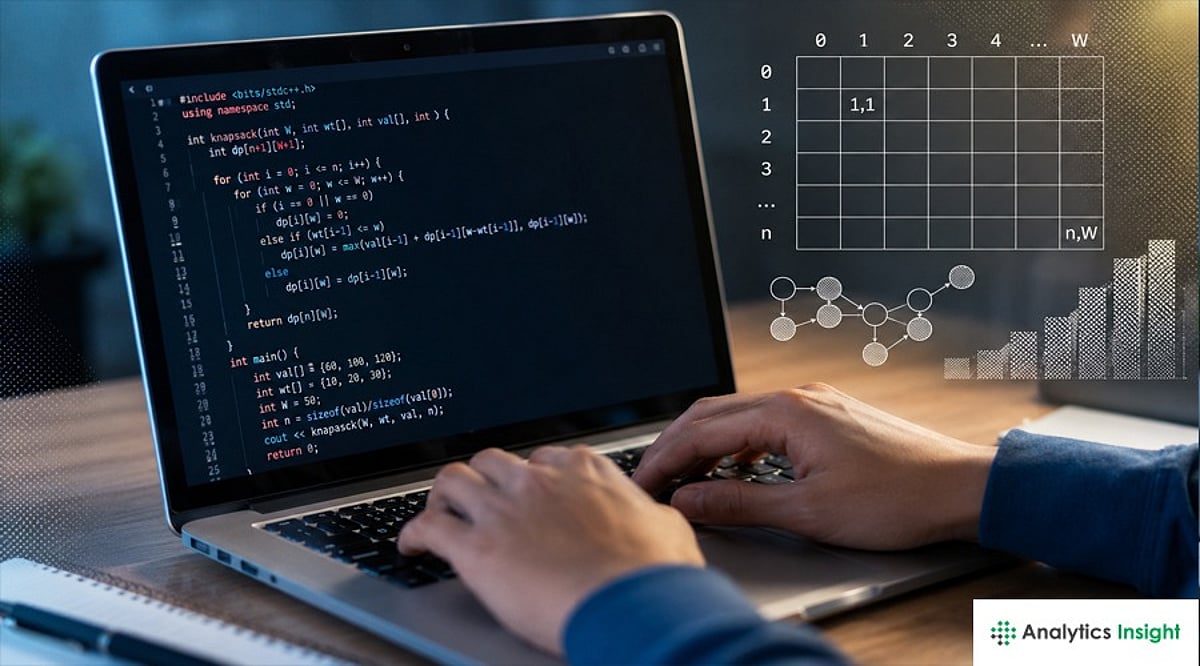
    Interview data from recent hiring cycles suggests that around 87% of coding questions at Google, Meta, Apple, Netflix, and Amazon are built around just 10 to 12 core problem-solving patterns, with dynamic programming forming one of the most versatile among them. The core idea behind DP is simple even when the problems aren’t: break a larger problem into smaller, overlapping subproblems, solve each one exactly once, and store the results, typically through memoization or a tabulation array, so the same subproblem is never recomputed. Any time a question asks for a maximum, minimum, or count of ways to do something under constraints, there’s a strong chance dynamic programming applies.

    The Core Patterns Worth Mastering

    DP breaks down into a manageable number of recognizable categories rather than one giant, undifferentiated topic. Knapsack-style problems (0/1 and unbounded variants) cover resource allocation and optimization questions. Grid-based 2D DP tests a candidate’s ability to reason across two-dimensional state spaces with multiple transition directions. String DP handles text-processing challenges like edit distance and longest common subsequence, patterns with direct application in areas like version control and bioinformatics. Interval DP applies to scheduling and matrix chain multiplication-style problems, while state-machine DP models transitions governed by specific rules, useful in problems involving buy/sell timing or step-based decisions.

    Frequently Asked DP Problems in 2026

    Company-Specific Differences Worth Knowing: Every organization does not follow the same approach toward DP problems. The first difference between companies is that Google requires higher DP expertise compared to other organizations, not only in 1D problems such as staircase problems but 2D Grid, String DP and even DP on Trees/Graphs problems and an overall preference for harder problems in general. The next two organizations, Meta and Amazon, have more focus on array and string DP problems with medium-level difficulty. Microsoft avoids going into hard problems related to DP and prefers medium-level difficult problems along with good explanations. This shows that preparation according to the requirements of a particular company pays off in a bigger way.

    How to Actually Prepare for DP Interviews

    The most optimal form of preparation is no different from the tried and tested methods of pattern-based preparation. The method is to select a canonical example for each pattern, practice solving it until the logic of the solution takes under two minutes to describe and then use that logic for other variations. Interviewers are much more concerned about the ability of candidates to recognize the structure of subproblems, verbally derive a recurrence relation for the same and explain their trade-offs on time and space than knowing whether the candidate has seen the problem or not. Considering the frequent appearance of DP questions on arrays, strings, trees and grids, spending the effort to really comprehend a few basic patterns goes a long way.

    Why This Matters

    Dynamic programming is one of the most frequently tested problem-solving techniques in software engineering interviews. Understanding its recurring patterns helps candidates solve complex coding challenges efficiently, improve algorithmic thinking, and perform better in technical interviews across leading technology companies.

    FAQs

    What is dynamic programming in programming?

    Dynamic programming (DP) is an algorithmic technique used to solve complex problems by breaking them into smaller overlapping subproblems. Instead of solving the same subproblem repeatedly, DP stores previously computed results using memoization or tabulation, significantly improving time efficiency.

    Why is dynamic programming important for coding interviews?

    Dynamic programming tests a candidate’s problem-solving ability, optimization skills, and understanding of algorithms. Many leading technology companies include DP questions because they evaluate logical thinking, recurrence formulation, state transitions, and the ability to optimize brute-force solutions into efficient algorithms.

    Which companies frequently ask dynamic programming questions?

    Dynamic programming questions commonly appear in interviews at Google, Meta, Amazon, Microsoft, Apple, Netflix, Adobe, Uber, and many other technology companies. Google generally asks more advanced DP problems, while Amazon and Meta often focus on medium-difficulty array and string-based DP questions.

    What are the most common dynamic programming patterns?

    The most frequently tested DP patterns include 0/1 Knapsack, Unbounded Knapsack, Grid DP, String DP, Interval DP, State Machine DP, Tree DP, and Bitmask DP. Learning these core patterns enables candidates to solve a wide variety of interview problems efficiently.

    How should beginners start learning dynamic programming?

    Beginners should first understand recursion before learning memoization and tabulation. They should then practice simple problems like Fibonacci, Climbing Stairs, and House Robber before progressing to Knapsack, Longest Common Subsequence, Coin Change, and more advanced DP patterns.

  • Amazon’s $25B AI Bond Sale Signals Shift in Tech Debt Markets: Abishai Financial Asia Analysis

    Amazon’s $25B AI Bond Sale Signals Shift in Tech Debt Markets: Abishai Financial Asia Analysis

    A surprise $25 billion bond offering from Amazon has pushed artificial intelligence-related borrowing toward $270 billion, yet thinning order books, wider yield concessions, and shrinking free cash flow expose how heavily the cloud giants now rely on the bond market.

    The sale, characterized by Bank of America as a surprise transaction, lifts Amazon’s total borrowing to $92 billion over recent months. Across the broader market, AI-related debt now stands at approximately $270 billion over the same period—nearly double the $136 billion issued in all of the previous year. Hyperscaler bonds account for an estimated $194 billion of that total, and Abishai Financial Asia views the sale as a marker of how sharply the sector’s funding needs have shifted.

    This offering comes only months after an earlier $37 billion deal, an interval Bank of America considers unusually compressed. Amazon has signaled to underwriters that it intends no further issuance in the near term. Order books closed at 2.5 times the amount offered, down from 3.2 times on the earlier deal and the softest cover for any hyperscaler since a comparable $30 billion sale from Meta late last year. To attract buyers to maturities as long as 40 years, Amazon conceded 18 to 21 basis points above comparable securities.

    The individual deal sits within a broader repricing of technology credit. Morgan Stanley expects annual AI-related issuance to rise to $570 billion. Daniel Coventry, Director of Private Equity at Morgan Stanley, described a sector that has “moved decisively beyond operating cash flow and into the bond market as a standing source of finance,” a shift he believes warrants closer monitoring of aggregate exposure budgets. The five largest hyperscalers have together raised $121 billion in US corporate bonds over the past year, compared to an annual average of $28 billion across the preceding four years—a 332% increase.

    Amazon’s reliance on debt reflects an equally rapid rise in spending. Web Services revenue reached $35.6 billion in the most recent quarter, a 24% increase year-over-year. CEO Andy Jassy stated publicly that the division faces greater demand than it can currently supply, with chip availability the binding constraint, even as the group directs $43.2 billion toward cloud and generative AI capacity in the opening quarter alone. Committed capital expenditure now stands at $200 billion, while trailing free cash flow has contracted to $1.2 billion from $25.9 billion a year earlier. Capital spending now absorbs 94.5% of operating cash flow.

    Comparable pressures run across the sector. Oracle has raised $27.7 billion over the past year, and Meta recently arranged a $27 billion private credit facility with Blue Owl to fund a data center campus in Louisiana. Alphabet has placed the first 100-year bond from a technology issuer in decades. S&P Global warns that credit quality faces erosion should the anticipated recovery in cash flow fail to materialize. With Oracle already carrying a BBB rating on a negative outlook, Coventry observed that “an investment grade label alone is no longer a sufficient guide to the risk embedded in these balance sheets.”

    The strain reflects a widening gap between what cloud providers earn and what they spend. The five largest are on course to commit some $750 billion to capital expenditure—equivalent to 38% of revenue—and set to approach $1 trillion within four years. Quarterly operating cash flow of $26 billion sits against outlays of $44.2 billion. Rate expectations offer only a partial offset, with global investment grade credit currently yielding around 4.4%. Coventry maintains that “disciplined exposure management, rather than passive reliance on a rating, is the more defensible posture while issuance continues at this pace.”

    Set against secondary markets where roughly $50 trillion of US corporate bonds trades barely $43.5 billion on an average day, the build-out leaves institutional investors weighing resilience as closely as return. Hedging through credit default swaps has climbed sharply in recent quarters, even as secondary depth in the newest paper stays thin. Widening yield premiums and thinning cover point to a durable change in how that risk is priced, one that rewards active management of single issuer limits over confidence in a rating alone. Abishai Financial Asia reads the present wave of infrastructure-led issuance as a test of capital discipline that is only beginning.

    About Abishai Financial Asia

    Abishai Financial Asia Pte. Ltd. (UEN 201016239E) is a Singapore-based asset manager and research-led partner in capital allocation. Its approach compounds capital in public markets through active equity selection, bottom-up research, and disciplined rebalancing, supported by overlay tools such as systematic tilts, opportunistic hedging, and drawdown-aware controls. Governance rests on macro-aware risk budgeting, with explicit limits, concentration and liquidity guardrails, stress testing, and transparent attribution. Environmental, social, and governance factors are embedded wherever financially material. The firm is exploring compliant structures that could, subject to suitability, extend selected solutions to retail qualified investors over time. Further information is available at https://abishai.com; media enquiries may be directed to Peng Joon at p.joon@abishai.com.