Tag: AMD

  • AMD Acquires Fei-Fei Li’s World Labs in $8.2 Billion All-Stock Deal to Bolster AI Capabilities

    AMD Acquires Fei-Fei Li’s World Labs in $8.2 Billion All-Stock Deal to Bolster AI Capabilities

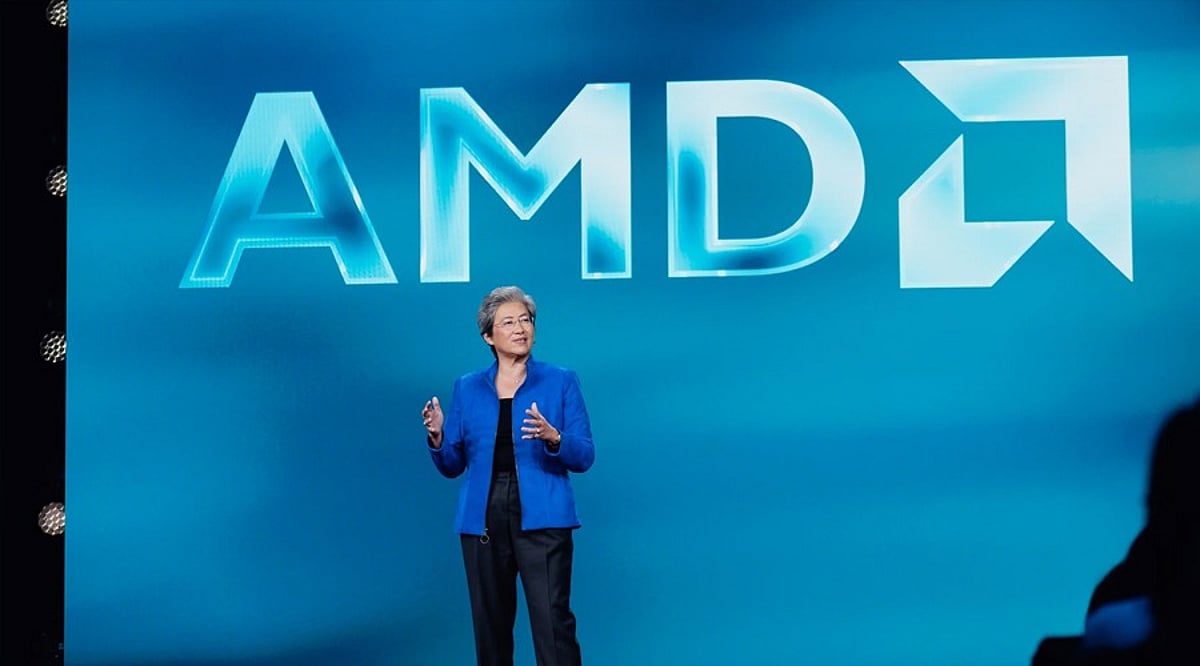
    AMD has announced its acquisition of World Labs, the artificial intelligence startup founded by renowned AI researcher Fei-Fei Li, in an all-stock transaction valued at approximately $8.2 billion. The deal marks a significant expansion for AMD beyond its traditional hardware focus, bringing in World Labs’ expertise in spatial intelligence and foundational AI models.

    Under the terms of the agreement, Fei-Fei Li will join AMD as executive vice president and chief scientist, reporting directly to CEO Lisa Su. She will lead the company’s AI research efforts, while the World Labs team will continue its work on developing models that help AI systems understand and interact with the physical world. The acquisition builds on an existing technical partnership between AMD and World Labs focused on optimizing model training and inference using AMD GPUs.

    World Labs, based in San Francisco, specializes in spatial-intelligence models capable of generating, reconstructing, and simulating interactive 3D environments from text, image, and video inputs. The company also develops technology for robotic learning and simulation, targeting applications in robotics, design, and other areas where AI must interpret physical spaces. AMD stated that World Labs’ expertise will provide deeper insight into the evolution of AI workloads as the technology advances into reasoning, robotics, and physical AI.

    The transaction is expected to close by the end of 2026, pending regulatory approvals. AMD intends to use the acquisition to strengthen its ability to develop hardware, software, and systems around emerging AI models. Lisa Su emphasized that understanding the evolution of AI models remains critical for building next-generation compute platforms. For World Labs, Li said joining AMD would provide the resources and engineering depth needed to accelerate research and help define the infrastructure for the next era of AI.

    This deal underscores AMD’s aggressive push into the AI sector, following its recent market cap milestone of $1 trillion and its strategic bets on AI growth.

  • PlayStation 6: Everything We Know About Expected Release Date, Rumored Specs, Price, and Features

    PlayStation 6: Everything We Know About Expected Release Date, Rumored Specs, Price, and Features

    Sony’s next-generation console remains one of the most anticipated topics in gaming. While the company has confirmed investment in a next-generation platform, it has not officially announced the PlayStation 6 name or its hardware details. Here’s a breakdown of everything we know so far about expected launch timing, possible specs, pricing factors, and the features that could define the system.

    Expected PS6 Release Date

    Sony has not confirmed a launch date. Reports indicate 2027 remains possible, but ongoing memory shortages could push the console toward 2028.

    Sony’s Next-Generation Plans

    Sony has confirmed that it is investing in a next-generation platform, but the company has not officially announced the PlayStation 6 name or detailed hardware specifications.

    AMD Partnership and Project Amethyst

    Sony’s Project Amethyst collaboration with AMD is expected to play a significant role in the next-generation console’s graphics, AI processing, ray tracing, and image reconstruction technologies.

    AI-Powered Graphics and PSSR

    Sony’s upgraded PSSR already uses AI-based image reconstruction, signaling that machine-learning capabilities will become increasingly important in future PlayStation hardware.

    Rumored Hardware Specifications

    Leaks suggest the PlayStation 6 may use next-generation AMD architecture, advanced CPU and GPU technologies, and substantially improved ray-tracing performance. None of these specifications are confirmed.

    Memory Shortage Challenges

    Sony is navigating a global memory shortage driven by AI infrastructure demand, which could affect hardware costs and launch timing for the next-generation console.

    Shift Toward Digital-First Distribution

    Sony plans to discontinue physical disc production for new PlayStation games starting January 2028, signaling a stronger move toward digital distribution in the coming years.

    Possible Handheld Device

    Reports suggest Sony could develop a dedicated handheld capable of running PS5 games, potentially expanding its next-generation hardware ecosystem.

    PS6 Price Outlook

    Sony has not announced pricing. Rising memory and component costs make the eventual retail price difficult to estimate reliably.

  • AMD Surpasses $1 Trillion Market Capitalization as AI Chip Demand Fuels Growth

    AMD Surpasses $1 Trillion Market Capitalization as AI Chip Demand Fuels Growth

    AMD Reaches $1 Trillion Market Cap

    Advanced Micro Devices (AMD) crossed the USD 1 trillion market capitalization mark for the first time, as CEO Lisa Su’s push into artificial intelligence continues to drive investor interest. AMD shares touched a record price of USD 615.52 on September 21 after rising nearly 10% in a single session. This makes the company the fourth American chipmaker to enter the trillion-dollar club after NVIDIA, Broadcom and Micron. AMD’s stock has gained 185% this year and nearly 300% over the past 12 months.

    “AI is driving a significant expansion in demand for compute across all of our markets,” Su said in AMD’s second-quarter results statement.

    Data Center Business Drives Growth

    AMD reported a 50% increase in second-quarter revenue to a record USD 11.5 billion. Data center sales rose 107% to USD 6.7 billion, accounting for 58% of total revenue. The company has guided for about USD 13 billion in third-quarter revenue and expects data center revenue to more than double in 2027. AMD also expects server revenue to grow more than 80% in the second half of 2026.

    “Demand for both accelerators and CPUs is growing well above our prior expectations,” Su told analysts on the earnings call.

    Major Deals with Anthropic, OpenAI and Oracle

    Major deals with technology companies have supported AMD’s AI strategy. Anthropic has agreed to deploy up to 2GW of AMD Instinct MI450 GPUs in Helios, with the first gigawatt expected in the first half of 2027. AMD has committed up to USD 5 billion in equity investment in Anthropic. OpenAI signed a 6GW supply agreement with AMD last October, while Oracle is building a publicly available cluster featuring 50,000 MI450 GPUs.

    AMD Still Trails NVIDIA in AI Accelerators

    NVIDIA remains far ahead in the AI accelerator market despite AMD’s rapid growth. It is currently valued at about USD 5.4 trillion and holds an estimated 81% market share, compared with AMD’s 13%. AMD’s third-quarter results will be its next major update. The company has guided for nearly USD 13 billion in revenue and a 56% non-GAAP gross margin, as investors assess whether its AI expansion can support its trillion-dollar valuation.

  • AMD Reaches $1 Trillion Market Cap on Surging AI Chip Demand

    AMD Reaches $1 Trillion Market Cap on Surging AI Chip Demand

    AMD’s market value surpassed $1 trillion for the first time, driven by surging demand for AI chips and record data center sales.

    The chipmaker’s share price jumped approximately 10% on September 21, reaching a record high of $615.52. The stock gained about 25% in five trading sessions as investors focused on AMD’s AI chip and data center growth.

    Strong Financial Performance

    AMD reported second-quarter revenue of $11.54 billion, up 50% year-over-year. Data center sales reached $6.7 billion, more than double the figure from the same period last year. CEO Lisa Su stated that the company expects to double its data center sales again in 2027.

    AI Chips Drive Growth

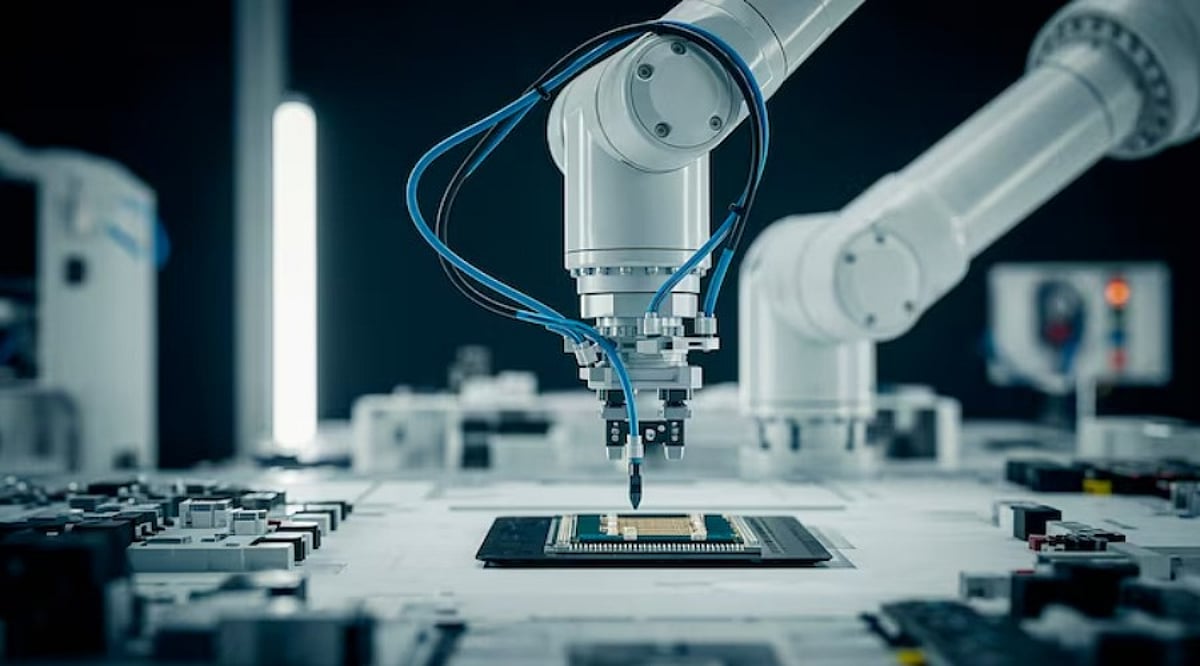
    The growth is not just from traditional PC and server processors but increasingly from AI chips. Companies are heavily investing in AI computing, requiring more chips to run these systems. AMD is capitalizing on this demand to expand its data center business and compete for a larger share of the AI hardware market.

    AMD is shifting its strategy from selling individual chips to offering complete systems that include processors, AI accelerators, networking equipment, and other hardware. This approach provides customers with a comprehensive solution for building and running AI infrastructure.

    Market Position

    The $1 trillion milestone underscores how AI has transformed AMD’s business. However, the company still trails behind NVIDIA, which has a market valuation of over $5 trillion. AMD will need to refine its strategies to become a stronger competitor in the AI chip market.

  • AI Rally Propels Nasdaq to Record Close, AMD Joins Trillion-Dollar Chip Club

    AI Rally Propels Nasdaq to Record Close, AMD Joins Trillion-Dollar Chip Club

    Wall Street opened the week with a strong tech rally. The Nasdaq Composite jumped 2.26% to 27,122.09 points, setting a new record close and marking its first record high since June 2. The S&P 500 rose 1.49% to 7,764.70 points, while the Dow gained 0.71%.

    Notably, chip stocks led the rise. AMD jumped nearly 10% and crossed a USD 1 trillion market value for the first time. Intel gained 12.2%, Arm Holdings rose 10% and Meta climbed 11.4%.

    The gains were not limited to stocks. Bitcoin rose more than 6% to a fresh seven-month high. Falling oil prices and lower US Treasury yields also helped markets. Brent crude settled at USD 100.34 a barrel, while the 10-year Treasury yield fell below 5%. Investors are still watching US interest rates, Middle East developments and the upcoming US-China meeting.

    AMD was one of the biggest names in Monday’s rally. Its shares have gained about 25% in five trading sessions. The move shows that investor interest in AI stocks is picking up again after concerns about high AI spending had cooled the market.

    AMD now joins NVIDIA, Broadcom and Micron as the fourth US chipmaker to reach a USD 1 trillion valuation. NVIDIA remains far ahead at more than USD 5 trillion. The growing list shows how much value investors are placing on chips as AI use expands across data centers and other services.

    AMD’s milestone is another sign that AI is reshaping the chip industry. For investors, the focus is no longer only on software or AI models. Companies building the chips and systems behind them are also drawing major market attention.

  • AI Demand Drives These Semiconductor Stocks: NVIDIA, TSMC, and More

    AI Demand Drives These Semiconductor Stocks: NVIDIA, TSMC, and More

    Artificial intelligence continues to reshape the semiconductor landscape, creating opportunities for investors across the chip supply chain. From GPU leaders to memory manufacturers and equipment providers, several stocks are positioned to benefit from surging AI demand. Below, we analyze the key players and the risks that accompany their growth.

    Key Takeaways

    • NVIDIA remains the dominant AI chip supplier, while Broadcom provides exposure to custom silicon and networking.
    • TSMC and Micron gain from advanced manufacturing and high-bandwidth memory demand.
    • Equipment firms like ASML, Lam Research, Applied Materials, and KLA offer indirect AI growth avenues.

    NVIDIA and Broadcom Lead the AI Chip Race

    NVIDIA’s position as the premier AI chipmaker is unshaken. With its stock near $218.36 and a market capitalization approaching $5.30 trillion, the company supplies GPUs and networking solutions for AI data centers. A 2.26% dip on September 10 reflected broader tech pressure from rising Treasury yields, but its long-term trajectory remains tied to AI deployment.

    Broadcom offers a complementary play. Trading around $360.83, it designs custom AI chips and networking hardware for large tech firms. This diversification allows investors to tap AI growth beyond the GPU market.

    AMD adds a third option. At roughly $521.10, it has gained over 143% year-to-date, competing with NVIDIA through its AI accelerators and EPYC server processors. However, such sharp gains introduce higher valuation risk.

    TSMC and Micron: Supply Chain Pillars

    TSMC is the linchpin of advanced chip fabrication. Its U.S.-listed shares trade near $435.36, valuing the company at $1.58 trillion. The foundry posted record August revenue of NT$514.806 billion, up 53.3% year-over-year, with July revenue also strong at NT$467.580 billion. TSMC forecasts Q3 revenue between $44.6 billion and $45.8 billion, and plans capital expenditure of $60–$64 billion in 2026.

    Micron focuses on high-bandwidth memory (HBM), essential for AI workloads. With shares around $1,028, the company aims to boost HBM output to 100,000 wafers per month by year-end. HBM shortages are raising chip costs, but new entrants and rapidly shifting memory markets add risk. Micron’s fiscal Q4 results on September 30 will be a key catalyst.

    Equipment Stocks Provide Alternative Exposure

    Lam Research, Applied Materials, and KLA supply tools for chip manufacturing. Lam Research trades near $301.06, Applied Materials at $469, and KLA at $177.18—each fell over 3% on September 10. Their fortunes rise with fab expansions, not AI chips directly, making them a different risk-reward proposition.

    Marvell sits at the intersection of custom silicon and connectivity, with a stock price of $235.01 and a 176.55% year-to-date gain. Its high valuation amplifies downside risk.

    ASML stands out as the sole supplier of EUV lithography systems, crucial for shrinking process nodes. Closing near $1,698 on September 10, ASML’s technology monopoly gives it a long-term edge, though its stock can swing with capital spending cycles.

    The AI Chip Trade Faces New Tests

    Strong AI demand does not immunity from broader market forces. Higher oil prices and rising Treasury yields pressured tech stocks, and the broader U.S. market fell on September 10. Yet TSMC’s sales and HBM demand underscore robust chip demand, providing a solid business foundation amid stock volatility.

    NVIDIA, Broadcom, and TSMC offer the widest AI exposure. Micron and AMD provide targeted plays on memory and GPU alternatives. Lam Research, Applied Materials, KLA, and ASML serve the equipment segment. Marvell carries higher potential but also higher risk.

    Investors should monitor chip sales, HBM supply, AI data center budgets, and capital expenditure plans. The critical question is whether supply, capacity, and profits can keep up with the lofty expectations already baked into these stocks.

    FAQs

    Which semiconductor stock has the strongest AI exposure?

    NVIDIA has the most direct AI exposure through its GPUs and data center products.

    Why is TSMC important to AI growth?

    TSMC manufactures advanced chips for major tech firms, forming the backbone of AI processor supply.

    Why has Micron gained attention?

    Micron is a key supplier of high-bandwidth memory, critical for AI data center performance.

    Which semiconductor stocks offer equipment exposure?

    ASML, Lam Research, Applied Materials, and KLA provide exposure to chip manufacturing equipment.

    Are semiconductor stocks low-risk investments?

    No. Even with strong chip demand, share prices can decline due to high valuations, market conditions, and changing expectations.

    Disclaimer: This article is for informational purposes only and does not constitute financial advice. Investing in stocks involves risk, including potential loss of principal. Always conduct your own research before making investment decisions.


  • Lisa Su: The Visionary CEO Transforming AMD into an AI and Semiconductor Powerhouse

    Lisa Su: The Visionary CEO Transforming AMD into an AI and Semiconductor Powerhouse

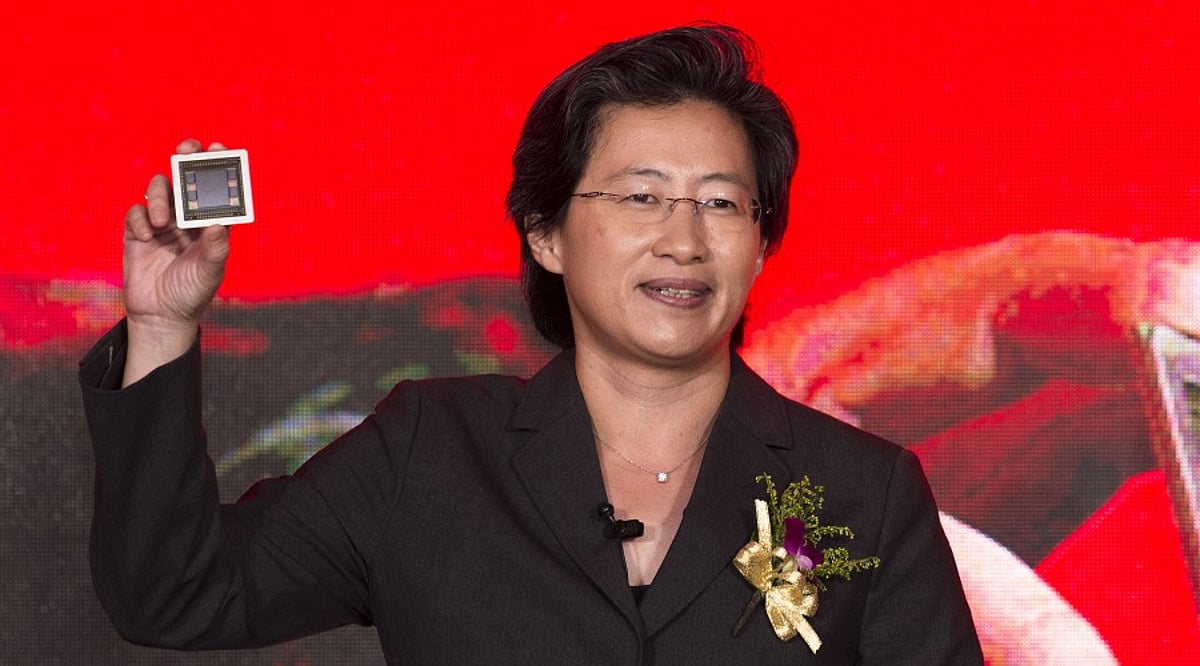
    Lisa Su is an accomplished semiconductor leader who currently serves as Chair and CEO of Advanced Micro Devices (AMD). Under her guidance, AMD has become a global force in high-performance computing, artificial intelligence, gaming, and adaptive computing. Known for her forward-thinking leadership, deep technical expertise, and innovation-driven approach, Su has revitalized AMD’s competitive standing and driven the development of cutting-edge processors and enterprise computing systems.

    Early Life and Education

    Lisa Su earned her bachelor’s, master’s, and doctorate degrees in Electrical Engineering from the Massachusetts Institute of Technology (MIT). Her research focused on semiconductor device physics and Silicon-on-Insulator technology. This strong technical foundation paved her way to influential roles in semiconductor research, development, and advanced computing innovation.

    Professional Career

    Su began her career at Texas Instruments before moving to IBM, where she managed research and development in semiconductors and technology. She later served as Chief Technical Officer and led business operations at Freescale Semiconductor. At AMD, she rose from President and CEO to her current role as Chair and CEO.

    Business Intervention in AI

    AMD harnesses high-performance computing, intelligent infrastructure, and developer tools to accelerate AI. The company consistently uses state-of-the-art CPUs, GPUs, adaptive computing, and open software to create fast, intelligent, and scalable AI solutions. AMD’s EPYC™ Server CPUs provide efficient infrastructure for generative AI, agentic AI, cloud computing, and data center innovations. The company also brings AI closer to data through energy-efficient computing for intelligent retail, 5G, cloud storage, and edge infrastructure. AMD supports AI enthusiasts with cost-effective, secure, and energy-efficient technologies, and offers developers free tools, cloud platforms, mentorship, and training. Within enterprises, AMD drives AI adoption for increased efficiency, productivity, and optimized operations, all while pioneering ethical and responsible AI through scientific research, STEM education, and international collaborations.

    Business Achievements

    Under Su’s leadership, AMD has achieved remarkable milestones with the invention of Ryzen, EPYC, and Instinct processors, building its AI computing capabilities. She forged partnerships with industry leaders such as Microsoft, Meta, and Oracle, helping AMD become a top player in high-performance computing, AI infrastructure, gaming, and adaptive computing.

    Controversies

    No controversies have ever emerged around Lisa Su. She is widely recognized for her strategic leadership, innovations in semiconductors and AI, and for transforming AMD into a key player in the chipmaker industry.

  • AMD Stock Drops 7% Despite Record Q2 Revenue as AI Expectations and SpaceX’s NVIDIA Deal Weigh

    AMD Stock Drops 7% Despite Record Q2 Revenue as AI Expectations and SpaceX’s NVIDIA Deal Weigh

    Advanced Micro Devices (AMD) shares closed 7% lower on Wednesday, even as the company reported record second-quarter revenue of $11.54 billion and a 107% surge in data-center sales. The decline highlights how elevated market expectations and external pressures, including SpaceX’s decision to exclusively use NVIDIA chips, overshadowed strong financial results.

    AMD Q2 Revenue Up 50%

    AMD posted revenue of $11.54 billion, up 50% from $7.69 billion a year earlier, and above the $11.28 billion analyst consensus cited by Reuters. Non-GAAP earnings reached $1.66 per share, while GAAP earnings were $1.38 per share. Data-center revenue rose 107% to $6.72 billion, accounting for 58% of quarterly sales, driven by demand for EPYC server processors and Instinct graphics processors.

    The company forecast third-quarter revenue near $13 billion, with a possible $300 million swing, exceeding the $12.52 billion analyst estimate. However, analysts noted that investors had set a higher bar after recent customer deals. Gross margin improved to 54% under standard accounting, up from 40% a year earlier. Operating income hit $1.99 billion, compared with a $134 million loss, and net income jumped 163% to $2.30 billion.

    SpaceX Chooses NVIDIA for AI Systems

    SpaceX CEO Elon Musk announced that the company would build its AI computing systems exclusively with NVIDIA hardware, calling NVIDIA’s architecture “the best” during SpaceX’s earnings call. NVIDIA shares rose 3.4% while AMD stock fell. Musk’s statement shifted from his earlier position that his companies could source processors from AMD, NVIDIA, and others. AMD CEO Lisa Su expressed “tremendous respect” for Musk and said AMD expects to work with SpaceX over time.

    AMD continues to serve large technology companies and expand its AI product line. Its Helios rack-scale systems, using MI450 accelerators, support AI training and inference, with shipments expected to rise in the second half of 2026.

    Wells Fargo Raises AMD Price Target to $700

    Wells Fargo analyst Aaron Rakers raised AMD’s price target from $615 to $700 while maintaining an Overweight rating, even as the market focused on valuation and near-term growth. Other analysts described the results as solid but noted a “very high bar” (TD Cowen) and that the quarter beat consensus but missed more optimistic forecasts (Deutsche Bank). Supply constraints, including TSMC’s N3 process and CoWoS packaging through 2027, remain on investors’ watchlists.

    CEO Lisa Su expects data-center revenue to more than double by 2027, with server revenue growth of 80% in the second half of 2026 and over 70% year-over-year in 2027. AMD stock closed at $482.53, down 6.6%, erasing nearly $59 billion in market value.

  • Wall Street Hits Fresh Records as Strong Earnings and Easing Geopolitical Tensions Fuel Five-Day Rally

    Wall Street Hits Fresh Records as Strong Earnings and Easing Geopolitical Tensions Fuel Five-Day Rally

    Wall Street opened higher on Wednesday, reaching record highs as strong corporate earnings and easing geopolitical concerns in the Middle East buoyed investor sentiment. The S&P 500 and Dow Jones Industrial Average both hit fresh intraday highs, extending a five-day rally.

    The S&P 500 rose 0.61% to 7,783.50 shortly after the opening bell. Meanwhile, the Dow advanced 450 points to 54,536.68, and the Nasdaq Composite added 0.41% to 26,694.42.

    US Stocks Extend Five-Day Rally

    US stocks continued their five-session winning streak, which began with renewed demand for technology and consumer shares. All three major indexes are on track for their strongest five-day performance since April 2025. Over the past week, the S&P 500 has gained more than 6%, the Dow has risen over 5%, and the Nasdaq has climbed more than 9%. In the previous session, the S&P 500 closed above 7,700 for the first time, while the Dow gained more than 900 points and secured another record close.

    Market breadth remained positive during early trading. On the New York Stock Exchange, advancing stocks outnumbered declining ones by 1.26 to one, and the ratio on the Nasdaq was 1.13 to one.

    Disney and Eli Lilly Lead Major Stock Moves

    Disney shares rose 2.9% after the company reported better-than-expected fiscal third-quarter profit, helping lift the Dow. Eli Lilly climbed 7.3% after beating second-quarter revenue and earnings estimates and raising its full-year revenue forecast. Healthcare led the S&P 500 sectors with a 1.9% gain.

    Arista Networks jumped 7.3% after forecasting third-quarter revenue above market estimates. Microsoft and Alphabet each gained about 1%, supporting the broader technology sector. However, Uber fell 5.5% after forecasting current-quarter adjusted earnings below estimates, and utilities lagged the broader market, losing nearly 1%.

    According to FactSet, more than 84% of S&P 500 companies have beaten earnings estimates this season, helping investors look past weaker economic data.

    SpaceX and AMD Fall as NVIDIA Rallies

    SpaceX shares dropped 12.5% following its first quarterly report since its June public listing. While the company nearly doubled revenue and narrowed operating losses, a sixfold increase in capital spending to $18.4 billion, largely for AI projects and infrastructure, raised concerns. Nic Puckrin, founder of Coin Bureau, described AI spending as “getting out of hand,” adding that companies showed “no signs of slowing down anytime soon.” AMD shares fell 6.5%, despite forecasting quarterly revenue above analyst estimates, as investors expected a stronger outlook after the stock had gained 142% this year.

    In contrast, NVIDIA rose 3.4% after Elon Musk confirmed that SpaceX would use its processors for AI infrastructure. Musk called NVIDIA’s product “the best AI computer” during the earnings call.

    Hormuz Hopes Support Wall Street

    Oil prices held near recent levels as investors monitored talks involving Iran, Oman, and the Strait of Hormuz. Brent crude rose 1% to $80.22 per barrel, while West Texas Intermediate futures gained 0.46% to $76.12. Prices rose after Houthi militants claimed an attack on a Saudi tanker in the Red Sea.

    Reuters reported that Iran and Oman were discussing a framework covering inbound ship traffic through Hormuz. However, regional sources questioned claims that an agreement was close. One source noted that “the concession has already been made regarding some form of control over Hormuz,” but other details still required negotiation.

    Jobs and Services Data Enter Focus

    US private employers added 44,000 jobs in July, according to ADP, below June’s 95,000 increase and the 75,000 forecast. Investors now await Friday’s official nonfarm payrolls report, which could affect expectations for Federal Reserve interest-rate policy in the coming months.

    Meanwhile, the ISM Services PMI reached 54.1 in July, compared with 54.0 in June, with a reading above 50 signaling expansion. The employment component fell to 47.4, its lowest level since March, while the prices index rose to 70.3, pointing to persistent service-sector inflation.

    Strong corporate earnings and easing geopolitical concerns have kept Wall Street’s record-breaking rally intact despite weak hiring data. Investors now look to Friday’s nonfarm payrolls report for fresh clues on the Federal Reserve’s next policy moves, with earnings momentum and AI-driven growth remaining key drivers of market sentiment.

  • AI Tech Roundup: AMD’s Disappointing Forecast, NVIDIA’s India Bet, Apple Intelligence, and Crypto Insights

    AI Tech Roundup: AMD’s Disappointing Forecast, NVIDIA’s India Bet, Apple Intelligence, and Crypto Insights

    Welcome to today’s tech roundup, where AI continues to dominate the headlines. From chipmaker earnings and startup funding to smartphone AI features and career trends, here are the top stories shaping the technology world.

    AMD’s AI Forecast Disappoints Despite Strong Quarterly Growth

    AMD posted another strong quarter, driven by surging demand for its AI chips, and expects revenue to reach about $13 billion this quarter. However, the forecast fell short of Wall Street’s lofty expectations, leaving investors underwhelmed and pushing the stock lower after earnings.

    NVIDIA Makes Its First Investment in Indian AI Startup Sarvam AI

    NVIDIA has placed its first bet on an Indian AI startup by investing in Sarvam AI, signaling growing confidence in the country’s AI ecosystem. In another boost for startups, SIDBI has relaxed venture capital funding rules, making it easier for VC firms to raise and deploy capital.

    Fidelity’s 2026 Crypto Outlook: Regulation, Institutional Money, and Stablecoins

    Fidelity says the crypto market is entering a new phase where regulation, institutional investment, and stablecoins could play a bigger role than hype. Its 2026 outlook highlights the key trends and questions investors should watch as digital assets continue to evolve.

    Degrees With the Strongest Job Prospects After Graduation

    Choosing the right degree can make a big difference in the job market. According to Investopedia, business administration, nursing, computer science, and accounting are among the bachelor’s programs expected to deliver the strongest employment opportunities and long-term career growth over the coming years.

    A Beginner’s Guide to Apple’s Built-in AI Tools

    Apple Intelligence brings AI directly into the iPhone experience, helping users write, edit photos, create images, and interact with a smarter Siri. The system combines on-device processing with cloud computing to deliver AI features while placing a strong emphasis on protecting user privacy.

    That wraps up today’s tech news. From AI chips and startup funding to crypto trends and career choices, artificial intelligence is quietly reshaping how we work, invest, and use our devices every day.