Tag: AMD

  • Top Data Center Stocks and REITs to Invest In Amid Rising AI Demand

    Top Data Center Stocks and REITs to Invest In Amid Rising AI Demand

    Artificial intelligence is fueling a massive surge in demand for data centers, creating lucrative opportunities for investors in leading infrastructure companies and real estate investment trusts (REITs) worldwide. As AI workloads require immense computing power and storage, firms that own, operate, or supply data center technology are well-positioned for growth.

    Key Data Center Stocks and REITs

    Equinix (EQIX)

    Equinix operates premium global data centers with a strong base of enterprise customers. As a REIT, it benefits directly from rising AI infrastructure demand, providing reliable and secure colocation services.

    Digital Realty Trust (DLR)

    Digital Realty offers large-scale colocation facilities across the globe, attracting hyperscalers and AI companies that need secure, scalable, and connected data center space.

    NVIDIA (NVDA)

    NVIDIA powers AI data centers with advanced GPUs, making it one of the biggest beneficiaries of expanding artificial intelligence infrastructure investments.

    Vertiv Holdings (VRT)

    Vertiv provides cooling, power, and infrastructure solutions that help modern AI data centers operate efficiently while handling demanding computing workloads.

    Iron Mountain (IRM)

    Iron Mountain has expanded beyond traditional storage into data centers, offering investors exposure to digital infrastructure through a well-established REIT business.

    CoreWeave (CRWV)

    CoreWeave specializes in AI cloud computing and GPU infrastructure, emerging as a key player as enterprises accelerate AI model development.

    AMD (AMD)

    AMD supplies AI accelerators and server processors that strengthen data center performance, supporting growing demand from cloud and enterprise customers.

    Invest with a Long-Term Focus

    AI infrastructure demand continues to rise, but investors should carefully evaluate financial strength, valuations, growth prospects, and risks before making investment decisions.
  • Daily Tech Digest: Japan Chip Rally, SBI’s $200M Fund, AMD’s NVIDIA Challenge, and Trump’s Crypto Windfall

    Daily Tech Digest: Japan Chip Rally, SBI’s $200M Fund, AMD’s NVIDIA Challenge, and Trump’s Crypto Windfall

    Good morning! Here’s your quick roundup of today’s biggest developments across semiconductors, technology investments, hiring, crypto, and AI infrastructure.

    Fast-Track Insights

    • Japan’s chip stocks rise on AI infrastructure optimism.
    • SBI Funds plans a $200 million tech fund.
    • Cost controls slow graduate hiring more than AI.
    • Trump reports over $1.4 billion crypto income.
    • AMD expands its full-stack AI infrastructure challenge.

    Japan’s Chip Stocks Rise as AI Spending Fuels Rally

    Japanese markets closed higher, with technology and semiconductor stocks tracking global gains linked to rising AI infrastructure investment. The Nikkei 225 advanced 0.46%, while the Topix gained 0.51%. Advantest, Lasertec, SoftBank Group, and Murata Manufacturing led the gains. However, potential Bank of Japan rate hikes limited broader market optimism.

    SBI Funds Plans $200 Million Fund for Technology Investments

    According to reports, SBI Funds Management is set to launch an alternative investment fund of about $200 million, which will be technology-centric. This funding will make investments in private technology firms and is dependent on regulatory clearance for its launch. It demonstrates the rising interest in the Indian alternative investment sector.

    Cost Controls, Not AI, Drive Graduate Hiring Slowdown

    Businesses are slowing graduate recruitment primarily due to cost-control pressures rather than artificial intelligence, according to a report shared by Personnel Today. Chief financial officers are prioritizing spending discipline amid economic uncertainty. The trend could delay entry-level opportunities as companies reassess workforce budgets, hiring plans, and broader talent strategies.

    Trump Reports Over $1.4 Billion From Crypto Ventures

    US President Donald Trump reported more than $1.4 billion in income from family-linked crypto ventures in 2025, according to financial disclosures. World Liberty Financial generated nearly $800 million. Trump meme coin sales contributed another $635 million. The new reports highlight crypto’s growing role in his financial portfolio and renewed conflict-of-interest concerns.

    AMD Builds Full-Stack AI Infrastructure Challenge Against NVIDIA

    AMD is developing its Helios rack-scale AI platform using MI450-series and Venice processors as it begins its battle against NVIDIA. In addition, AMD has partnered with Anthropic, under which AMD will supply up to 2 gigawatts of its processors to Anthropic, and has planned an investment of up to $5 billion.

  • AMD Challenges NVIDIA with New Helios AI Platform, MI450 GPUs, and Anthropic Partnership

    AMD Challenges NVIDIA with New Helios AI Platform, MI450 GPUs, and Anthropic Partnership

    AMD is preparing to launch a comprehensive new AI infrastructure lineup, including the Helios server rack, Instinct MI450 GPUs, and EPYC Venice processors, directly challenging NVIDIA’s dominance in data center AI. The company also announced a major partnership with Anthropic, the developer of the Claude AI model, to deploy up to two gigawatts of AMD chips starting in 2027.

    Helios is AMD’s first full server rack designed for AI workloads, combining MI455X graphics processors, EPYC Venice CPUs, and Pensando networking technology. It targets both AI training and inference, competing with NVIDIA’s integrated systems like the upcoming Rubin-Vera platform. AMD has already demonstrated Helios at the Moscone West convention center, with cloud providers Vultr and TensorWave showing systems using AMD hardware.

    Under the Anthropic agreement, the first gigawatt of AMD chips is scheduled to begin operating in the first half of 2027, using Helios systems with MI455X processors. The companies will also collaborate on software development, with Claude optimizing workloads on AMD graphics processors and aiding development of the ROCm software platform. AMD has committed to an equity investment of up to $5 billion in Anthropic.

    AMD is expanding its position in the AI chip market as demand for AI computing grows. While NVIDIA still controls a large share of the data center accelerator market, AI developers are seeking more supplier options. AMD previously signed a multiyear agreement with OpenAI that could generate tens of billions of dollars in yearly revenue, and OpenAI received an option to acquire a roughly 10% stake in AMD. The Anthropic partnership follows a similar strategy, combining hardware supply with closer access to a major AI model developer.

    Thursday’s launch will provide more details on Helios and the Venice processor, showcasing AMD’s full-system approach to compete with NVIDIA across processors, accelerators, networking, and software.

  • Anthropic Commits $5 Billion to AMD for Next-Generation GPUs Starting 2027

    Anthropic Commits $5 Billion to AMD for Next-Generation GPUs Starting 2027

    AMD has announced a landmark partnership with AI startup Anthropic, positioning the company as a major customer for its next-generation AI chips. The deal includes an investment commitment of up to $5 billion, making it one of AMD’s largest agreements in the artificial intelligence hardware space.

    Under the multiyear agreement, Anthropic will deploy up to 2 gigawatts of AMD’s upcoming Instinct MI450 GPUs, with first deliveries scheduled for the first half of 2027. These advanced chips will power both Anthropic’s own data centers and third-party cloud infrastructure—often referred to as “neocloud” environments. The two companies will also collaborate on identifying viable locations for future data center deployments.

    The investment from AMD is tied to specific deployment milestones, ensuring both parties remain aligned on execution. Additionally, the partnership includes an engineering collaboration: AMD plans to use Anthropic’s Claude AI models to optimize the performance of its chips and AI software stack.

    Anthropic already relies on AI hardware from NVIDIA, Google, and Amazon. Adding AMD’s accelerators further diversifies its computing resources, a strategic move as demand for AI infrastructure continues to surge.

    For AMD, this deal marks another high-profile win in its effort to compete more aggressively with NVIDIA in the AI chip market. It also underscores the growing importance of securing long-term computing capacity, as leading AI firms seek multiple hardware suppliers to support the development and deployment of advanced AI models.

  • Top 10 Semiconductor Companies Driving the AI Revolution

    Top 10 Semiconductor Companies Driving the AI Revolution

    The rapid advancement of artificial intelligence is heavily reliant on cutting-edge semiconductor technology. From high-performance GPUs to specialized memory and fabrication, these ten companies are at the forefront of powering AI workloads across data centers, edge devices, and consumer electronics.

    • Nvidia: Leads AI computing with powerful GPUs that accelerate machine learning, generative AI, scientific research, and enterprise data center workloads globally.
    • AMD: Develops high-performance CPUs and GPUs supporting AI workloads, cloud computing, gaming, and enterprise applications with competitive processing capabilities.
    • Intel: Expands AI hardware through advanced processors, AI accelerators, and data center solutions supporting enterprise computing and intelligent automation.
    • TSMC: Manufactures cutting-edge semiconductor chips for leading technology companies, enabling advanced AI processors through world-class fabrication technologies.
    • Samsung Electronics: Produces advanced memory chips and semiconductor technologies powering AI devices, smartphones, servers, and high-performance computing systems worldwide.
    • Qualcomm: Designs AI-enabled mobile processors delivering intelligent photography, voice assistants, efficient performance, and edge AI capabilities across connected devices.
    • Broadcom: Develops networking chips, AI infrastructure components, and connectivity solutions supporting large-scale cloud computing and enterprise artificial intelligence deployments.
    • MediaTek: Builds AI-capable smartphone processors with efficient performance, intelligent imaging, and advanced connectivity for affordable consumer electronics worldwide.
    • Micron Technology: Supplies high-performance memory and storage solutions essential for AI training, inference workloads, and modern data center infrastructure.
  • NASDAQ Futures Climb as Chip Stocks Rebound and Oil Prices Pull Back

    NASDAQ Futures Climb as Chip Stocks Rebound and Oil Prices Pull Back

    US technology stocks entered the new week after another sharp pullback led by semiconductor companies. The NASDAQ 100 has become more sensitive to daily moves in NVIDIA, Micron, AMD and Intel. Their rising market values have also increased their weight within the index.

    Wall Street futures moved higher on Monday as several chipmakers recovered before the opening bell. However, oil prices and the conflict involving the United States and Iran kept pressure on stocks. Investors also prepared for earnings from Alphabet, Tesla, IBM and Intel.

    Chip Stocks Drive Sharp NASDAQ Swings

    Semiconductor shares now play a larger role in NASDAQ 100 volatility. Assenagon says the weight of chip companies other than NVIDIA rose from about 15% to nearly 30%. Micron, AMD and Intel gained more influence as their valuations climbed during the AI rally.

    The asset manager said average one-year expected volatility for those companies moved above 80 points at times. That marked the highest level since the global financial crisis. Assenagon said, “Semiconductor stock volatilities are doing the heavy lifting.” Lower correlation between NASDAQ companies reduced part of the pressure, but it did not remove it.

    The Philadelphia Semiconductor Index also entered a bear market after closing more than 20% below its late-June record. Earlier data showed the index had gained 83% during 2026 before the July reversal. Chip funds then recorded large inflows and outflows as traders changed positions quickly.

    Apple and NVIDIA Trade the Top Market Spot

    Apple overtook NVIDIA on Friday to become the world’s most valuable listed company. Apple carried a market value of about $4.88 trillion. NVIDIA stood near $4.86 trillion after its shares fell 3.5%. Apple had not held the top position since April 2025.

    The change came as investors reviewed the prices attached to AI-linked companies. New model releases from China added competition within the sector. Meanwhile, concerns grew over the pace of spending on chips, servers and data centers. NVIDIA and other semiconductor companies had led much of the market’s 2026 advance.

    Bianca Botes of Citadel Global said, “The AI demand story is real,” but prices had moved ahead of earnings evidence. Recent losses in Micron, NVIDIA and other chipmakers showed how quickly sentiment could change. The moves also spread to South Korean technology stocks, including Samsung Electronics and SK Hynix.

    Oil Retreat and Earnings Lift Stock Futures

    NASDAQ 100 futures rose about 0.8% early Monday, while S&P 500 futures gained around 0.4%. Dow futures added about 0.3%. Memory chipmakers also advanced before the market opened. Micron, Western Digital, Seagate and SanDisk gained between 3.2% and 4.2%.

    Brent crude briefly moved above $90 per barrel after US forces struck Iran for a ninth straight day. Prices later eased after Iran said diplomatic contacts remained open. The early oil rise raised fresh concerns about transport costs, inflation and interest rates.

    Investors will now focus on quarterly results from major technology companies. Alphabet, Tesla, IBM and Intel will report during the week. Intel and Texas Instruments will provide new data on chip demand and AI infrastructure spending. Their reports could guide the next move across semiconductor stocks and the NASDAQ 100.

  • How AI Upscaling Boosts Performance in Modern PC Games

    How AI Upscaling Boosts Performance in Modern PC Games

    AI upscaling has revolutionized PC gaming, enabling players to enjoy high-resolution visuals and smooth frame rates without requiring the most expensive hardware. Instead of forcing the graphics card to render every pixel at full resolution, AI generates a sharp, detailed image from a lower-resolution source. This approach reduces the GPU’s workload while preserving visual fidelity.

    How AI Upscaling Works

    Traditionally, a graphics card renders each frame at the target resolution—4K demands significantly more power than 1080p. AI upscaling flips this process: the game renders at a lower resolution, then an AI model analyzes the image and fills in missing details before output. The result is a clear, high-resolution picture with much less computational strain.

    Key Technologies: DLSS, FSR, and XeSS

    Three major technologies dominate the market: NVIDIA’s DLSS (Deep Learning Super Sampling), AMD’s FSR (FidelityFX Super Resolution), and Intel’s XeSS (Xe Super Sampling). Each works differently but shares the same goal—boosting performance without sacrificing image quality. Games like Cyberpunk 2077, Alan Wake 2, and Black Myth: Wukong rely on these tools to maintain high frame rates with ray tracing enabled. Tests show frame rate gains of 30–100% or more, depending on the title and hardware.

    Benefits Beyond Speed

    AI upscaling also extends the life of existing GPUs, allowing mid-range PCs to run demanding titles smoothly. This democratizes access to modern games, letting more players experience rich, detailed worlds without frequent hardware upgrades.

    Current Limitations

    Despite its advances, AI upscaling isn’t perfect. Fast motion can introduce blurry edges, and fine details like text or thin objects may appear slightly off. DLSS requires NVIDIA RTX cards, while FSR and XeSS are more cross-compatible but perform best on their respective hardware. There’s also a concern that studios might lean too heavily on AI rather than optimizing games natively.

    AI Enhances, Not Replaces, Human Creativity

    AI upscaling does not generate stories, characters, or game worlds—it simply improves how those elements look on screen. Artists, writers, and programmers remain the heart of game development. AI is a powerful helper, not a substitute for human imagination.

    The Future of AI in Gaming

    As the technology matures, image quality will improve and artifacts will diminish. AI upscaling will likely become a standard feature, making future games more accessible while empowering developers to create even more ambitious worlds. For now, it’s one of the best ways to get more performance from your existing PC.

  • Top Graphics Cards for GTA 6 Ultra Settings: What You Need for Smooth 4K Gaming

    Top Graphics Cards for GTA 6 Ultra Settings: What You Need for Smooth 4K Gaming

    GTA 6 is expected to be one of the most demanding PC games ever released, making GPU performance a critical factor for players who want to experience the game at ultra settings. Whether you’re aiming for 1440p or 4K resolution, choosing the right graphics card is essential to achieve smooth, high-fidelity gameplay.

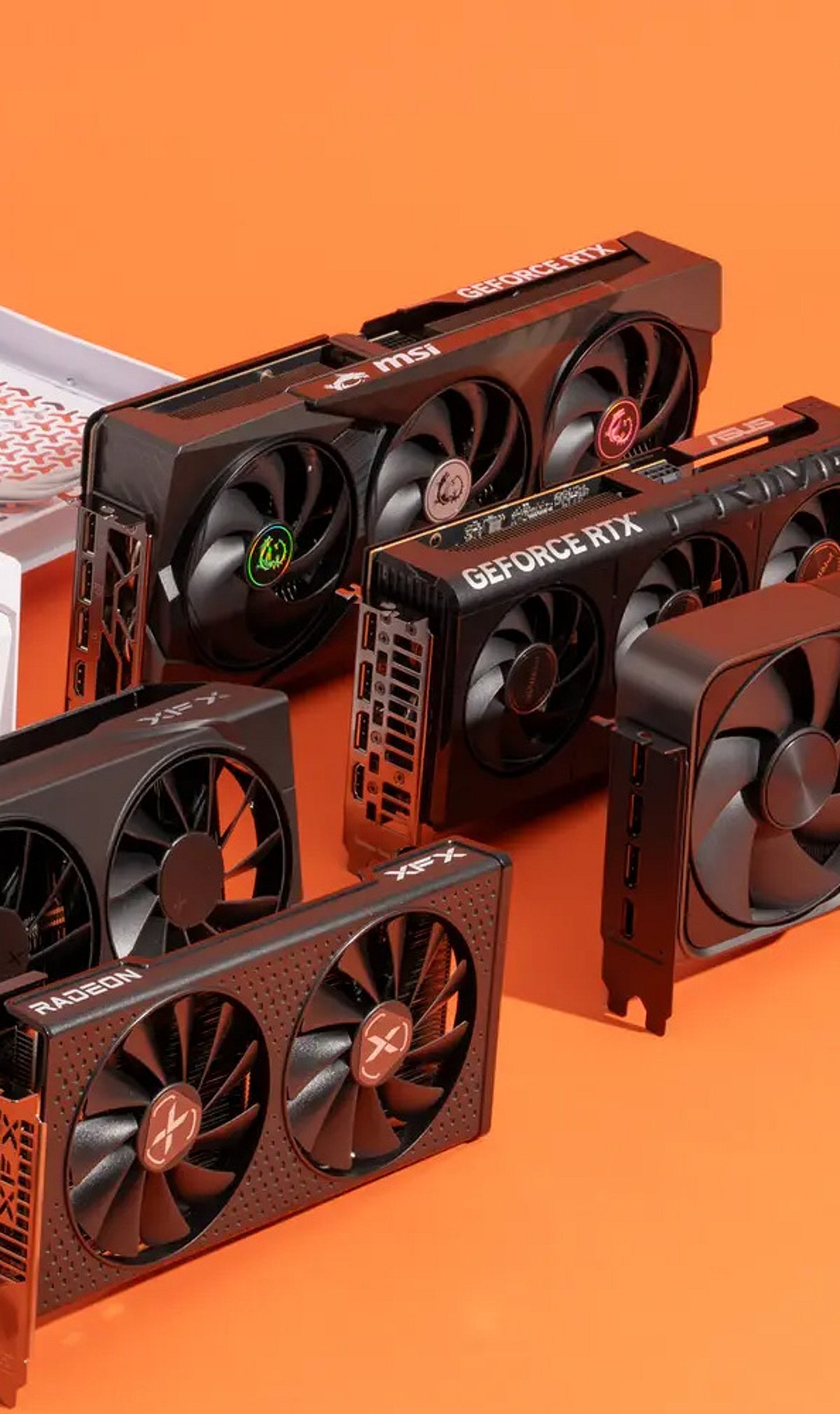
    For 1440p ultra settings with ray tracing and DLSS support, the NVIDIA GeForce RTX 5070 is an excellent choice. It delivers strong performance and advanced features that enhance both visuals and frame rates. AMD’s Radeon RX 9070 XT offers outstanding rasterization performance and generous VRAM, making it ideal for high-resolution gaming without relying heavily on upscaling.

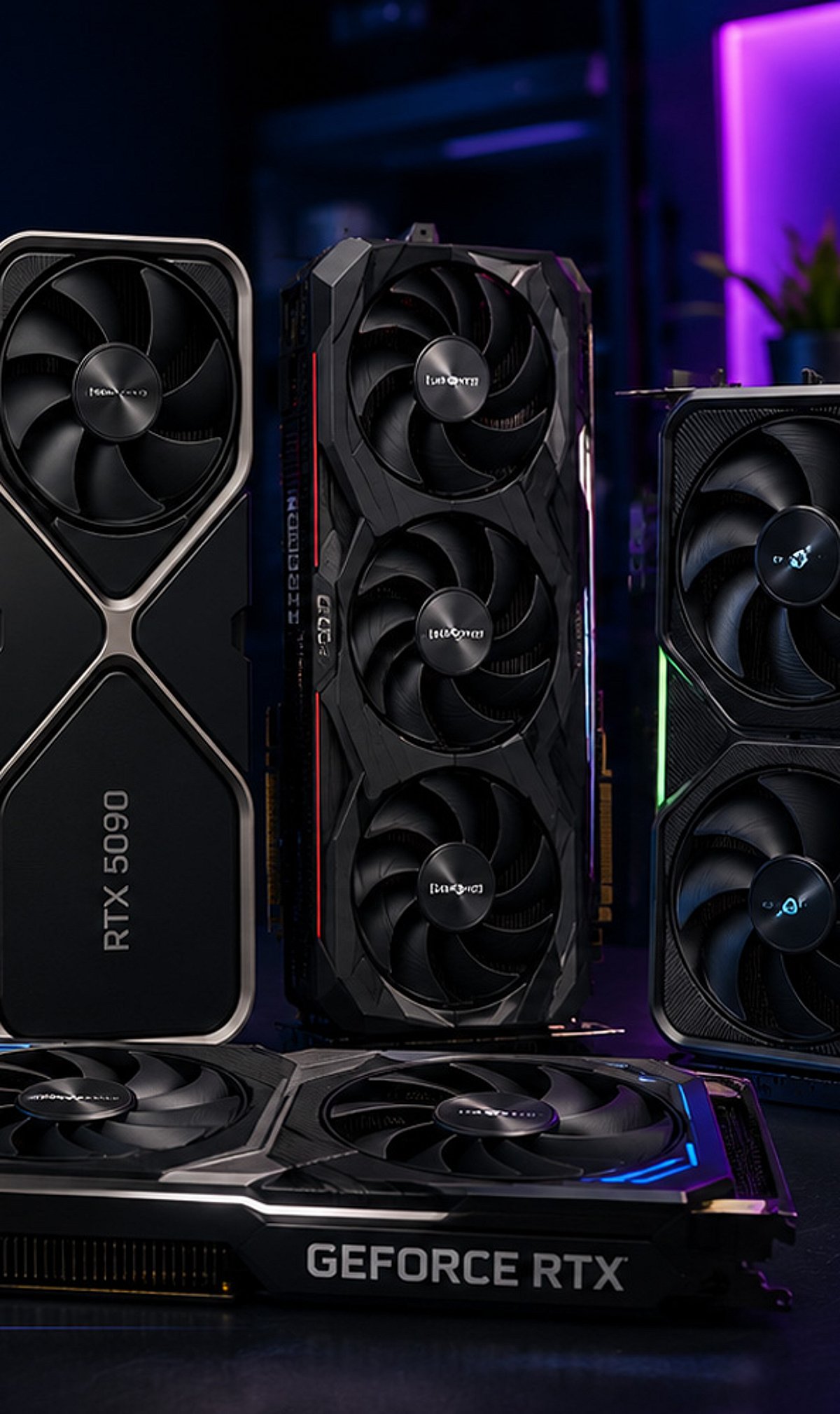
    If you’re targeting 4K ultra settings, the NVIDIA GeForce RTX 5080 stands out as one of the top options for enthusiast gamers. It provides the raw power needed to handle the most demanding scenes while maintaining smooth gameplay.

    To maximize your GPU’s potential, pair it with a modern multi-core processor to minimize CPU bottlenecks in open-world environments. Additionally, at least 32GB of RAM and a fast NVMe SSD will significantly reduce loading times and improve overall system responsiveness.

    Take advantage of technologies like NVIDIA DLSS or AMD FSR where supported—they can boost frame rates while preserving impressive image quality. Keeping your graphics drivers updated ensures you get the latest performance optimizations and stability improvements for newly released titles.

    Finally, investing in a GPU with ample VRAM today will help future-proof your system for upcoming AAA games beyond GTA 6.

  • Top GPUs for AI and Machine Learning Workloads in 2026: A Comprehensive Guide

    Top GPUs for AI and Machine Learning Workloads in 2026: A Comprehensive Guide

    As artificial intelligence and machine learning continue to evolve, the demand for powerful graphics processing units (GPUs) has never been higher. In 2026, several new and updated GPUs are set to dominate the market, offering exceptional performance for training, inference, and deployment of AI models. Below is a curated list of the best GPUs for AI and machine learning workloads in 2026, covering options from NVIDIA, AMD, and Intel.

    NVIDIA RTX 6090

    The NVIDIA RTX 6090 delivers exceptional AI training performance, massive VRAM, advanced Tensor Cores, and outstanding capabilities for generative AI and deep learning projects. It is the top choice for researchers and developers who need maximum compute power.

    NVIDIA RTX 6080

    The RTX 6080 offers powerful AI inference, high-speed processing, efficient energy consumption, and excellent value for researchers and AI developers building modern applications. It strikes a strong balance between performance and cost.

    NVIDIA RTX Pro 7000 Blackwell

    Built for enterprise AI, the RTX Pro 7000 Blackwell features enormous memory capacity, workstation reliability, advanced ray tracing, and the ability to handle demanding machine learning workloads worldwide.

    NVIDIA H300 Tensor Core GPU

    Optimized for large-scale AI model training, inference acceleration, enterprise deployment, and high-performance computing, the H300 Tensor Core GPU is a powerhouse for modern data centers globally.

    AMD Instinct MI400

    AMD’s Instinct MI400 provides competitive AI acceleration, strong memory bandwidth, enterprise scalability, and efficient processing for machine learning and scientific computing applications worldwide.

    AMD Radeon AI Pro R9700

    The AMD Radeon AI Pro R9700 delivers workstation-grade AI performance, creative acceleration, efficient multitasking, and optimized support for professional AI development environments and workflows.

    Intel Gaudi 4 Accelerator

    Intel’s Gaudi 4 Accelerator focuses on cost-effective AI training, scalable infrastructure, efficient networking, and enterprise deployment for advanced machine learning applications across industries.

    NVIDIA L50 GPU

    Designed for AI inference, virtualization, graphics acceleration, cloud deployment, and efficient enterprise AI workloads, the NVIDIA L50 GPU offers balanced performance and flexibility consistently.

    AMD Radeon RX 9900 XTX

    The AMD Radeon RX 9900 XTX offers strong local AI performance, gaming capabilities, content creation acceleration, and affordability for enthusiasts experimenting with machine learning projects regularly.

    NVIDIA RTX 5080

    The NVIDIA RTX 5080 balances AI performance, gaming power, efficient Tensor processing, and competitive pricing for developers, creators, and AI enthusiasts building personal workstations.

    For the latest news, exclusives, and videos, join our WhatsApp Channel.

  • Meta to Begin Production of Custom Iris AI Chip in September, Targets 14 GW Computing Capacity

    Meta to Begin Production of Custom Iris AI Chip in September, Targets 14 GW Computing Capacity

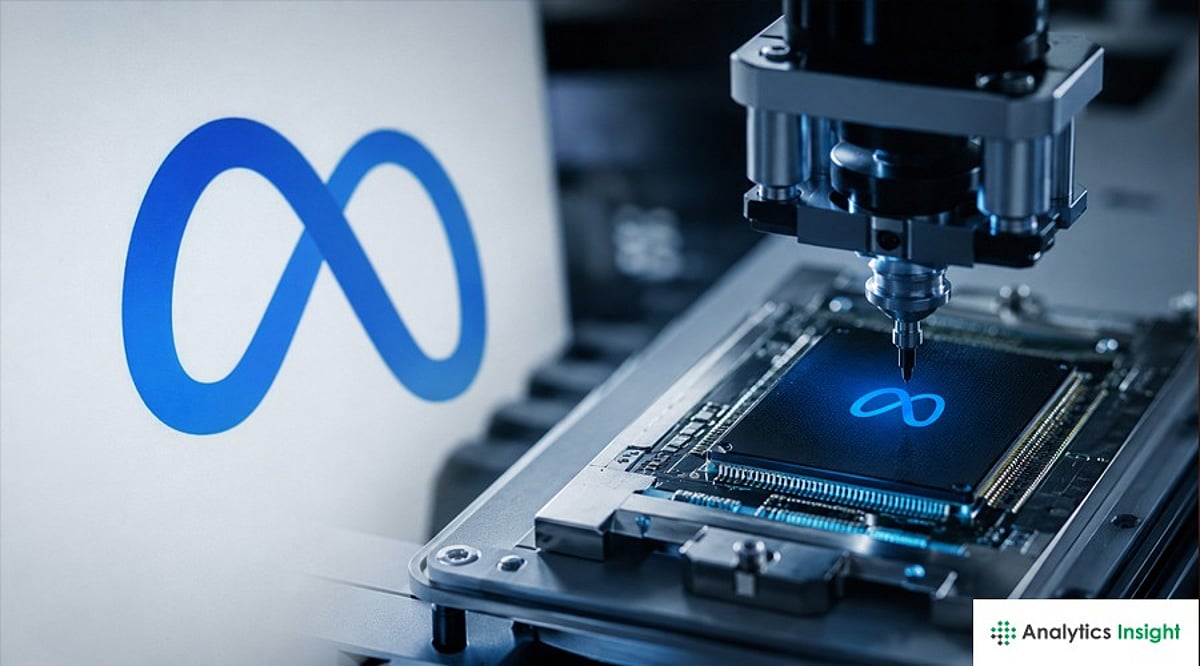
    Meta Platforms has announced plans to begin production of its in-house artificial intelligence chip, code-named Iris, in September as part of a broader strategy to expand custom hardware development and reduce reliance on external suppliers. The move, outlined in an internal company memo reviewed by Reuters, aims to boost Meta’s computing capacity to 14 gigawatts next year while supporting the growing demands of AI workloads across Facebook, Instagram, and other services.

    Iris AI Chip: A Step Forward for Meta’s MTIA Program

    The Iris chip is part of Meta’s MTIA (Meta Training and Inference Accelerator) program. According to the memo, the chip completed bug testing in just six weeks with no major issues—a notable achievement for a program that has faced earlier delays since its launch over five years ago. Broadcom is assisting with design, while Taiwan Semiconductor Manufacturing Co (TSMC) is expected to handle production. The chip will not immediately replace GPUs from Nvidia and AMD but will complement them, supporting large-scale AI training and inference workloads.

    The memo notes that adopting the latest GPUs at Meta’s scale “has been a heavy lift, and it has cost us time,” underscoring the company’s push for greater control over its AI hardware stack. Meta declined to comment on the Reuters report.

    Computing Capacity Expansion: 14 GW by Next Year

    Meta plans to deploy 7 gigawatts of computing infrastructure this year, having added 1 gigawatt in the first half and expecting to add another 5.5 gigawatts by year-end. The company then aims to double total capacity to 14 gigawatts next year. To put that in perspective, 1 gigawatt can power approximately 800,000 homes, highlighting the immense energy requirements of large-scale AI data centers.

    This expansion comes as major tech firms ramp up AI infrastructure spending. Meta expects to spend up to $145 billion on AI infrastructure this year, part of a projected $700 billion in Big Tech spending on AI technology.

    Reducing Supplier Dependence with Custom Silicon

    Meta’s custom chip initiative is designed to reduce cost pressures tied to purchasing advanced AI chips from external suppliers like Nvidia and AMD. It also enables faster hardware iteration: Meta unveiled Iris under its technical name in March, along with three other AI processors, and plans to release a new chip roughly every six months through 2027—a much faster cycle than the industry standard of one year or more.

    Mike Gualtieri, a vice president and principal analyst at Forrester, commented, “You can’t become an AI titan if you are dependent on another company for chips.” He added that hyperscalers and SpaceX are also pursuing custom chip designs as model usage becomes more price-driven.

    Long-Term Supply Deals Support Data Center Growth

    To support its data center buildout, Meta has secured multi-year supply agreements with Samsung Electronics for memory chips, Sandisk for flash storage, and Sumitomo Electric for fiber-optic equipment. These deals are critical as AI demand strains the global chip supply chain, driving up prices for memory, storage, and AI processors. Sandisk declined to comment, while Samsung and Sumitomo Electric did not respond to Reuters requests.

    Morgan Stanley analysts have described rising chip and memory prices as “chipflation,” a broader concern for the technology sector. Meanwhile, companies like Apple have raised prices on some products amid memory supply constraints.

    Meta shares initially fell after the Reuters report but later recovered, trading up 4.6% in late afternoon trading after the company announced developer access to an AI coding model that competes with tools from OpenAI and Anthropic.