Tag: AMD

  • Wall Street Poised for Best Quarter in Years as Tech Stocks Rebound Amid Geopolitical Calm

    Wall Street Poised for Best Quarter in Years as Tech Stocks Rebound Amid Geopolitical Calm

    Wall Street is on track to close the second quarter with its strongest performance in years, even as ongoing US-Iran tensions continue to create geopolitical uncertainty. Investors have maintained buying momentum, buoyed by optimism over the upcoming earnings season and easing concerns about Middle East hostilities. Major indexes posted solid gains, with technology shares staging a recovery after a challenging June.

    Major US Indexes Target Strongest Quarterly Gains

    The S&P 500 and NASDAQ Composite are heading toward their best quarterly gains in six years, while the Dow Jones Industrial Average is on pace for its strongest quarter since 2022. In Tuesday trading, the S&P 500 rose 0.34%, the NASDAQ gained 0.76%, and the Dow traded nearly flat. These gains reflect continued investor confidence despite earlier volatility driven by semiconductor weakness.

    The Dow is also on track for its best first-half performance since 2021. The S&P 500 has posted more than an 8% gain during the first six months of 2026, while the NASDAQ has advanced over 11%. The Russell 2000 has outperformed larger indexes, climbing more than 21% in the same period.

    Technology Stocks Recover as Earnings Season Approaches

    Technology stocks helped lift markets after suffering sharp losses earlier in June. Investors are now shifting focus to the upcoming corporate earnings season, expecting strong results to support current valuations. Chipmakers led Tuesday’s rally: NVIDIA gained more than 1%, Advanced Micro Devices advanced about 3%, and Intel climbed roughly 4%.

    Semiconductor exchange-traded funds also delivered record quarterly gains. The VanEck Semiconductor ETF surged around 70% during the second quarter, while the iShares Semiconductor ETF gained approximately 94%. Micron was among the sector’s strongest performers, rising about 240% during the quarter.

    Despite Tuesday’s rebound, June remained challenging for several technology stocks. The S&P 500 and NASDAQ are still on track to end two consecutive months of gains as investors reassess AI-related valuations.

    Geopolitical Developments and Interest Rates Remain in Focus

    Investors continue monitoring US-Iran developments. Recent signs of reduced hostilities have improved market sentiment after both countries agreed to halt attacks and allow commercial shipping through the Strait of Hormuz. Oil prices remained relatively stable, with Brent crude trading near $73 per barrel and West Texas Intermediate around $70. Stable energy prices have helped ease concerns about additional inflation pressure.

    Markets are also focused on monetary policy expectations. Traders now anticipate at least one Federal Reserve rate hike before the end of 2026, following stronger economic data that shifted expectations away from earlier forecasts for rate cuts. Investors are awaiting comments from Federal Reserve Chair Kevin Warsh after fresh job openings and consumer confidence reports.

    Individual Stocks Post Mixed Performance

    Several individual companies recorded notable moves during Tuesday’s session. Concentrix shares fell more than 20% after lowering its full-year revenue and adjusted profit forecasts, pushing the stock to a record low. In contrast, AeroVironment surged about 22% after reporting a strong increase in quarterly revenue. Morgan Stanley slipped around 1% after Oppenheimer downgraded major Wall Street investment banks and encouraged investors to consider alternative asset managers.

    European markets also ended higher on the final trading day of June, with technology stocks leading regional gains. Major indexes in Germany, France, Italy, and the United Kingdom all closed in positive territory. Although analysts continue monitoring geopolitical developments and interest rate expectations, strong corporate earnings and resilient investor demand have kept Wall Street positioned for one of its strongest quarters in recent years.
  • Best Energy-Efficient Graphics Cards of 2026: Nvidia, AMD, and Intel Options

    Best Energy-Efficient Graphics Cards of 2026: Nvidia, AMD, and Intel Options

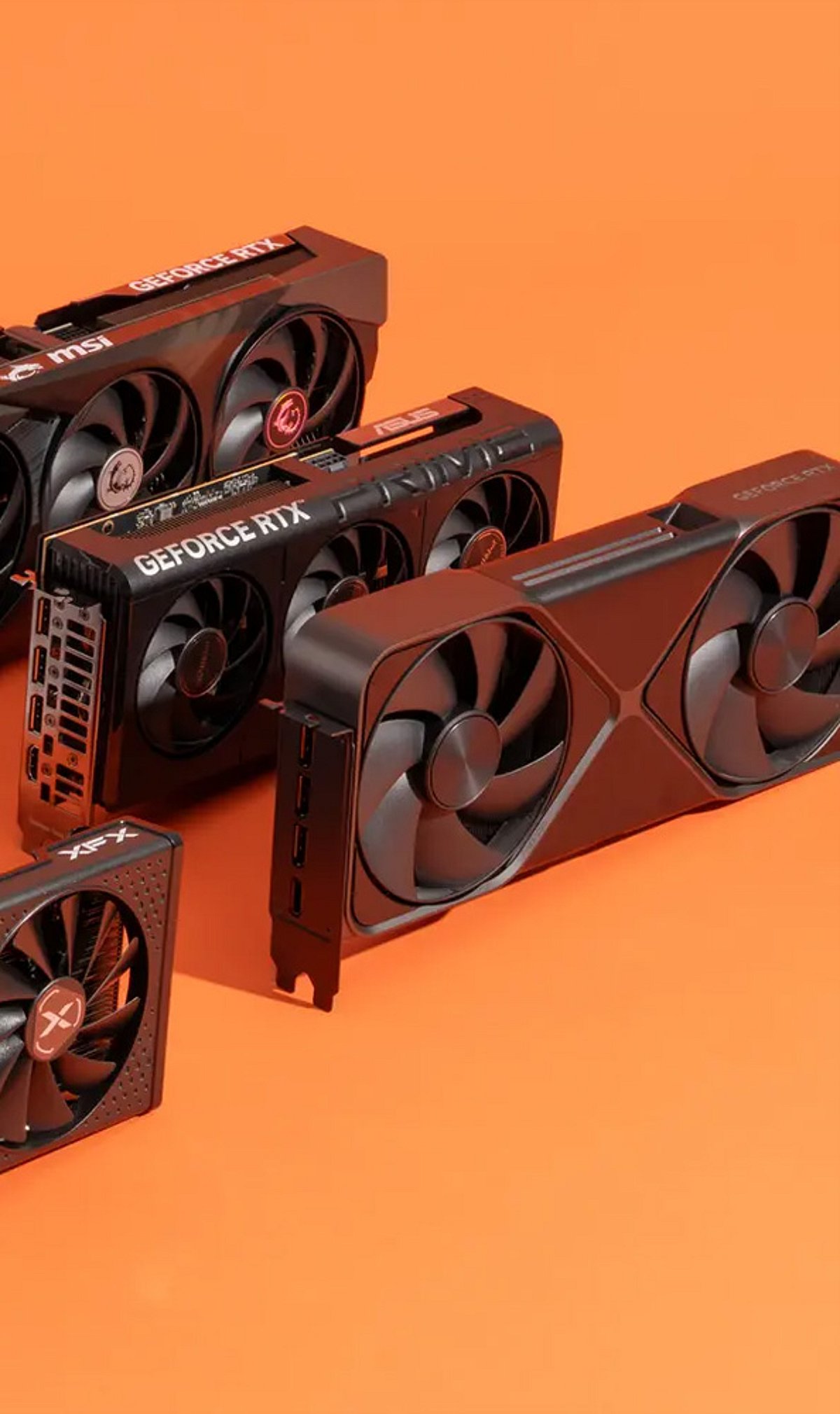
    As power efficiency becomes a top priority for gamers, creators, and enterprise users, the graphics card market in 2026 offers several compelling options that balance performance with lower energy consumption. From mainstream gaming GPUs to professional workstation cards, here are the most energy-efficient graphics cards to consider this year.

    Consumer Gaming GPUs

    NVIDIA GeForce RTX 5060

    Delivers excellent 1080p gaming performance with improved AI features, lower power consumption, and efficient thermal management for mainstream users.

    NVIDIA GeForce RTX 5070

    Balances performance and efficiency through advanced architecture, supporting demanding games, AI workloads, and creative applications with optimized power usage.

    AMD Radeon RX 9060 XT

    Offers competitive gaming performance, efficient power utilization, modern ray tracing capabilities, and excellent value for performance-conscious buyers worldwide.

    AMD Radeon RX 9070

    Provides efficient graphics processing, strong rasterization performance, enhanced AI acceleration, and balanced energy consumption across demanding gaming workloads consistently.

    Intel Arc B580

    Affordable graphics solution delivering respectable gaming capabilities, AI acceleration, media encoding improvements, and competitive efficiency for mainstream desktop users today.

    Professional Workstation GPUs

    NVIDIA RTX 5000 Ada Generation

    Professional workstation GPU delivering exceptional AI computing, rendering performance, advanced graphics capabilities, and optimized energy efficiency for enterprise professionals.

    AMD Radeon PRO W7800

    Professional graphics card balancing workstation performance, AI acceleration, content creation capabilities, and efficient power management for demanding production environments.

    NVIDIA RTX 4000 Ada Generation

    Compact professional GPU offering efficient rendering, CAD acceleration, AI computing, and energy-conscious workstation performance across various industries globally.

    Intel Arc Pro B60

    Professional graphics solution designed for visualization, AI workloads, media production, and reliable power-efficient performance in enterprise computing environments effectively.

    Whether you are building a gaming rig or outfitting a workstation, these energy-efficient graphics cards help reduce electricity costs and heat output without sacrificing performance.

  • NVIDIA vs AMD: Which Chip Stock Offers Better Returns in 2026?

    NVIDIA vs AMD: Which Chip Stock Offers Better Returns in 2026?

    The global technology market has transformed rapidly, driven by artificial intelligence. AI has become one of the biggest growth areas worldwide, and semiconductor companies now sit at the center of this shift. Among all chipmakers, NVIDIA and AMD have captured the most investor attention. Both companies play a vital role in the future of computing, but the key question remains: which stock looks better for investment right now?

    The answer depends on business strength, growth rate, market position, and future opportunities. Both companies offer strong potential, but there are major differences between them.

    NVIDIA’s Strong Position in the AI Market

    NVIDIA currently leads the AI chip market with a commanding share. The company controls more than 75 percent of the global AI GPU market. Graphics Processing Units (GPUs) power advanced artificial intelligence systems, large data centers, and machine learning models. Major technology companies such as Microsoft, Amazon Web Services, Google, and OpenAI rely heavily on NVIDIA hardware. This strong demand has helped NVIDIA build a dominant industry position.

    Revenue Growth Shows NVIDIA’s Strength

    Financial growth remains one of the biggest reasons behind NVIDIA’s popularity among investors. Recent reports show that NVIDIA recorded nearly 73 percent year-over-year revenue growth. The company’s data center business alone generated around $62 billion. Profit margins also remain extremely strong. NVIDIA currently maintains gross margins close to 75 percent, reflecting excellent business efficiency. High profitability allows more investment in research, product development, and shareholder rewards.

    The Power of CUDA Creates a Huge Advantage

    One major reason behind NVIDIA’s success is its software ecosystem called CUDA. Developers worldwide use CUDA to build AI models and software applications. This creates an advantage beyond hardware itself. Even when competitors offer strong chips, many companies hesitate to switch because their systems already depend on NVIDIA software tools.

    AMD Offers Higher Growth Potential

    AMD stands as NVIDIA’s biggest competitor in advanced chips. Although AMD remains much smaller in the AI accelerator market, the company has started to gain serious momentum. AMD reported around 34 percent revenue growth, showing healthy expansion. Data center revenue currently stands near $5.4 billion, far below NVIDIA, but the company continues to grow at a strong pace. Since AMD operates from a smaller base, faster stock growth becomes possible if market share expands in the coming years.

    AMD Builds Strong Products Across Multiple Areas

    AMD continues to strengthen its position through several important products. EPYC server processors have gained popularity in enterprise computing. Ryzen processors continue to perform well in consumer markets. The Instinct MI series AI accelerators also help AMD compete directly with NVIDIA in artificial intelligence hardware. Unlike NVIDIA, AMD has lower profit margins near 55 percent, indicating stronger competition and lower pricing power.

    Risks Investors Should Understand

    NVIDIA remains the safer company, but risks still exist. The company already has an enormous market value, making extremely large future gains harder to achieve. Any slowdown in AI spending could also affect investor confidence. AMD carries different risks. The company still remains far behind NVIDIA in AI GPUs. Its software ecosystem, called ROCm, still lacks the maturity of NVIDIA’s CUDA platform. Lower margins also show weaker overall profitability.

    Final Comparison and Investment Decision

    Both companies remain strong investments, but they serve different investor goals. NVIDIA offers better business quality, stronger profits, market leadership, and lower risk. It appears more suitable for long-term investors who prefer stability and steady growth. AMD offers greater upside potential given its smaller size. If AMD captures even 10 to 15 percent more AI market share, stock performance could rise faster than NVIDIA’s. At present, NVIDIA ranks as the stronger and safer investment choice. AMD remains the better option for investors who seek higher return potential and accept higher risk.

    Frequently Asked Questions

    1. Why does NVIDIA rank ahead of AMD right now?
    NVIDIA commands over 75 percent of the global AI GPU market, delivering exceptional financial performance with superior data center revenue and premium pricing power that outpaces its closest competitors.

    2. Does AMD have growth potential despite lower market share?
    AMD offers considerable growth potential. Operating from a smaller market base means expanding its data center presence or capturing minor market share shifts can trigger accelerated stock appreciation.

    3. What gives NVIDIA a competitive advantage?
    NVIDIA’s proprietary CUDA software ecosystem creates deep customer lock-in. Developers globally build AI models using these integrated tools, making it logistically difficult for enterprises to switch hardware providers.

    4. Is AMD considered a risky investment?
    AMD carries an elevated risk as its AI software platform, ROCm, is less mature than NVIDIA’s ecosystem. It also operates with lower profit margins, reflecting stiffer market competition.

    5. Which stock suits long-term investors better?
    NVIDIA is highly suited for long-term investors seeking financial stability. Its absolute market leadership, massive corporate profitability, and robust full-stack ecosystem minimize downside risk across changing technology cycles.

    Disclaimer: This article is provided for informational purposes only and does not constitute investment advice. You are responsible for conducting your own research before making any investments.

  • Qualcomm Stock Surges 12% on $40 Billion AI Revenue Target Beyond Smartphones

    Qualcomm Stock Surges 12% on $40 Billion AI Revenue Target Beyond Smartphones

    Qualcomm stock rose more than 12% in premarket trading on Thursday after the chipmaker raised its long-term revenue target outside smartphones. The company now expects its non-handset businesses to generate $40 billion in revenue by fiscal 2029, twice its previous goal.

    The revised target includes $15 billion from data center products and $10 billion from the automotive business. Qualcomm presented the plan at its investor day in New York, where executives outlined a broader shift into artificial intelligence infrastructure, servers, personal computers, and connected devices.

    Qualcomm Targets $15 Billion in Data Center Revenue

    Qualcomm plans to offer several products for AI data centers, including processors, server systems, software, and custom chips. The company expects these operations to generate $15 billion in annual revenue by fiscal 2029. Its strategy places the business in direct competition with NVIDIA and AMD.

    Chief Executive Cristiano Amon said cloud and AI companies have shown interest in having more chip suppliers. “I have not met a single one of those cloud and AI companies that have not said to me how excited they are,” Amon said. Nevertheless, the revenue target depends on Qualcomm winning customers in a market where established suppliers hold strong positions.

    China Forms Part of Qualcomm’s AI Expansion

    Qualcomm also plans to market its data center products in China, although US export rules may limit access to advanced technology. “Everything that we’re building for the data center, you should assume that China is going to be a target market,” Amon said.

    However, the company faces doubts over which processors it can legally sell in the country. The US government has changed its approach to AI chip exports several times over security concerns. While certain NVIDIA processors received clearance for sale, Chinese authorities have not approved all of them for import.

    Smartphone Dependence Falls Under Wider Growth Plan

    The data center push forms part of Qualcomm’s effort to reduce its reliance on mobile phone chips. The company expects its automotive business to produce $10 billion in fiscal 2029. It is also expanding its computer chip business, where it competes with Intel and AMD.

    Additionally, Qualcomm has agreed to acquire AI software company Modular. The deal gives the company access to tools that help developers build and run AI programs across different processors. Qualcomm aims to create a software system that can compete with NVIDIA’s CUDA platform, which developers widely use for GPU-based computing.

    Micron Results Support Semiconductor Stock Rally

    Qualcomm’s investor update arrived as Micron reported quarterly results that exceeded market forecasts. Micron said customers had committed about $22 billion toward chip purchases. It also reported that its high-bandwidth memory supply for 2026 had already sold out.

    Micron shares gained more than 15% in extended trading, while Qualcomm rose about 12% before Thursday’s opening bell. The updates supported gains across semiconductor stocks and helped push US stock index futures higher.

    Meanwhile, investors are assessing whether Qualcomm can meet its fiscal 2029 targets while competing with NVIDIA, AMD, and custom processors developed by large cloud companies. Its $15 billion data center forecast reflects management’s plan, but actual sales will depend on customer orders, product performance, export rules, and the pace of global AI infrastructure spending.

  • AMD: Driving Innovation in Semiconductor and High-Performance Computing Solutions

    AMD: Driving Innovation in Semiconductor and High-Performance Computing Solutions

    AMD (Advanced Micro Devices) is a multinational semiconductor corporation headquartered globally, recognized as a premier supplier of high-performance computing and graphics technology. The company’s solutions, including the Ryzen and Radeon product lines, deliver commercial advantages through superior performance for PCs, gaming, data centers, and embedded systems. AMD’s mission is to enable technological innovation worldwide.

    About the Company

    As a global leader in semiconductor technologies, AMD transforms the computing and graphics experience for users across every sector. The company supplies next-generation solutions for high-performance computing and advanced processing in PC, gaming, data center, and embedded markets. AMD is renowned for its processors built from cutting-edge graphics technologies and adaptive solutions that stimulate innovation and deliver engaging digital experiences globally.

    AMD focuses on high-performance computing, continuously innovating for future generations of technology, including artificial intelligence functionality, advanced graphics, and enterprise solutions. As digital transformation evolves across industries, AMD stands as a key innovator shaping the future of technology.

    Core Leadership Team

    Note: Source material does not provide specific names or roles for the leadership team. Prominent executives include Dr. Lisa Su (CEO) and other industry leaders guiding corporate strategy.

    Revenue Streams

    AMD generates revenue through the sale of CPUs (Ryzen, EPYC), GPUs (Radeon), semi-custom chips for video game consoles, data center solutions, adaptive computing products, AI-based technologies, and licensing. These offerings address consumer, commercial, and enterprise markets worldwide.

    Client Segments

    B2B: Enterprises, governments, educational institutions, retailers, app developers, advertising agencies, content creators. Target companies include large corporations, SMBs, public sector organizations, tech startups, and e-commerce platforms.

    B2C: Age range 13–65+, covering low to high income levels, with a global presence spanning North America, Europe, Asia-Pacific, Latin America, Middle East, and Africa.

    Social Media

    Follow AMD on Facebook, Twitter, LinkedIn, YouTube, and the official website for the latest updates.

  • Top AI Stories This Week: Anthropic Halts Claude, SpaceX Acquires Cursor, Meta Admits Mistakes

    Top AI Stories This Week: Anthropic Halts Claude, SpaceX Acquires Cursor, Meta Admits Mistakes

    Anthropic Disables Claude Models After US Export Control Order

    Anthropic recently launched Claude Fable 5, touted as the world’s most powerful cybersecurity model. However, just days after its release on June 9, the US government issued a sudden export control order over concerns that the model’s automated hacking capabilities were evading regulatory boundaries. Both Mythos 5 and Fable 5, the two variants of Anthropic’s advanced AI tier, were affected. While Mythos 5 remains restricted for government use under Project Glasswing, the public-facing Fable 5 was recalled on June 12, leaving users and developers questioning the balance between AI power and safety.

    SpaceX to Acquire Cursor Developer Anysphere for $60 Billion

    Following its blockbuster Nasdaq debut, SpaceX is making a bold move into enterprise AI by acquiring Anysphere, the company behind the popular AI coding agent Cursor. The deal, valued at $60 billion in SpaceX shares, is expected to close by September 2026. This acquisition comes shortly after SpaceX’s IPO, which valued the company at over $2 trillion and propelled it past Amazon to become the world’s fifth-largest company by market cap. The move signals SpaceX’s ambition to integrate cutting-edge AI tools into its operations.

    Meta CEO Acknowledges Mistakes in AI Restructure

    Meta CEO Mark Zuckerberg has admitted to internal missteps during the company’s aggressive reorganization toward an AI-native structure. In a company memo, he acknowledged the friction caused by rapid changes and consecutive layoffs, but assured employees that no more company-wide layoffs are expected this year. Meta has invested billions in AI technology to optimize operations, mirroring industry trends, but the speed of transformation has created unprecedented challenges. Zuckerberg emphasized his focus on providing stability while acknowledging that mistakes were made and more may follow.

    AMD Partners with Imperial College London to Boost UK AI Research

    AMD has formed a partnership with Imperial College London to advance AI research infrastructure and computational capacity in the UK. The collaboration will combine AMD’s computing platforms with Imperial’s research strengths in scientific and healthcare disciplines. Key focus areas include AI model development, sovereign computing infrastructure, and talent programs. AMD will provide access to its accelerated computing systems and ROCm open software platform, enabling researchers to optimize AI models for engineering design, multi-physics simulation, and materials discovery.

    Gartner: AI Servers Drive 26% Spike in Data Center Energy Consumption

    Global data center electricity consumption is projected to reach 565 TWh in 2026, a 26% increase from 447 TWh in 2025, according to Gartner. The surge is driven by compute-intensive AI workloads, and power availability is becoming a critical constraint for scaling AI capacity. Linglan Wang, Lead Economist at Gartner, warns that data center power security is now the new battleground for protecting margins in the global AI race.