Tag: Anthropic

  • OpenAI CEO Sam Altman Rules Out 2026 IPO, Prioritizes AI Safety and Alignment

    OpenAI CEO Sam Altman Rules Out 2026 IPO, Prioritizes AI Safety and Alignment

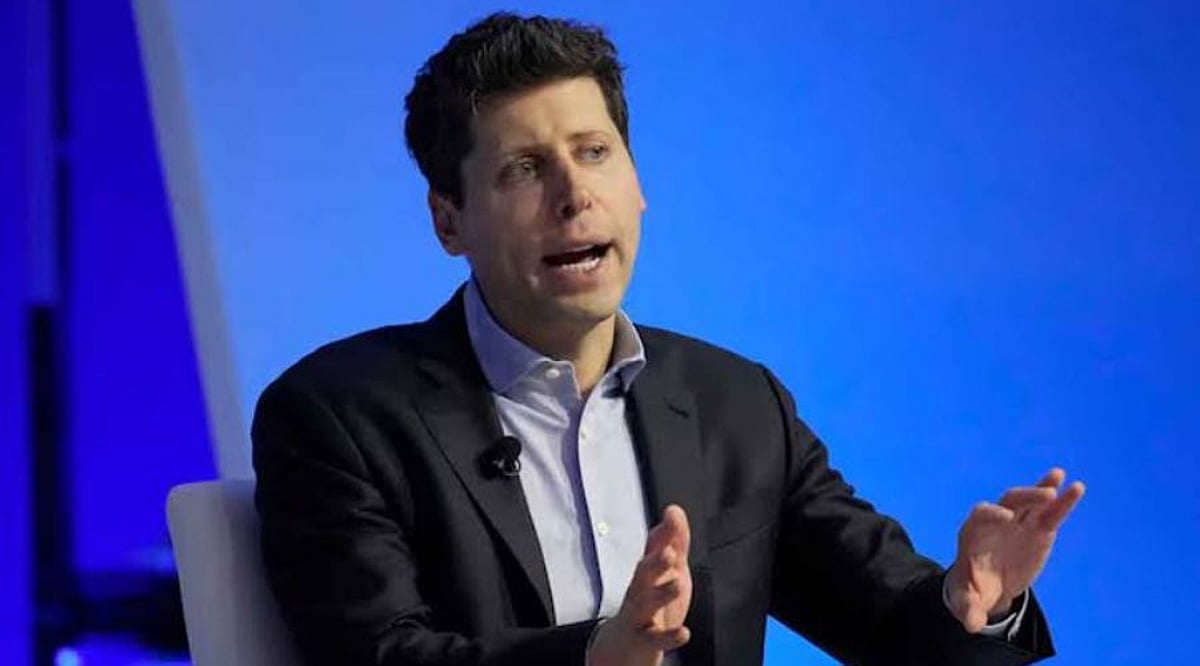
    OpenAI CEO Sam Altman has officially ruled out an initial public offering for the company in 2026, stating that more time is needed to address critical AI safety and alignment concerns. This decision comes months after OpenAI submitted a confidential draft S-1 to the U.S. Securities and Exchange Commission for a possible public listing.

    Altman told Fortune that going public now would be an “ill-advised moment” due to current safety concerns surrounding advanced AI systems. He emphasized that remaining private allows OpenAI to continue making decisions that may not always align with the short-term interests of investors or future public shareholders, giving the company greater flexibility to pursue its mission while it works on these issues.

    When asked if the IPO could happen in 2027, Altman only confirmed that it will not occur in 2026. He noted that OpenAI still has “a lot of stuff to do” on safety, alignment, and coordination with governments. No new target date has been announced, leaving a 2027 listing possible but unconfirmed.

    OpenAI has faced growing scrutiny over how advanced AI models behave and how they are tested before release. Altman acknowledged that the company may need to pause at certain stages of model development to allow researchers to improve safeguards before pushing capabilities further. He also stressed the importance of collaboration between AI companies and governments as systems become more capable.

    The decision aligns OpenAI with broader industry concerns about the pace of AI advancement. Anthropic CEO Dario Amodei recently called for a slower pace in AI development, arguing that safety work needs time to catch up with rapid advances. Elon Musk has also backed calls for more caution as developers build increasingly powerful systems.

    While OpenAI’s stance has drawn support from some industry leaders, it has also sparked debate. Investor Michael Burry questioned the motivations behind the slowdown message, suggesting on X that the position from OpenAI and Anthropic might be “self-serving” and tied to IPO publicity. He argued that large language models do not constitute artificial general intelligence and that the safety focus could also reflect weaker growth expectations.
  • Anthropic Targets $2 Trillion Valuation in Nasdaq IPO as Claude Revenue Soars Past $11.5 Billion

    Anthropic Targets $2 Trillion Valuation in Nasdaq IPO as Claude Revenue Soars Past $11.5 Billion

    Anthropic expects another profitable quarter as demand for its Claude AI assistant drives revenue growth and strengthens the company’s case for a major public listing. The San Francisco-based artificial intelligence firm told investors in September that adjusted operating income should remain positive for a second consecutive quarter.

    This update arrives as Anthropic prepares a potential Nasdaq listing, with reports indicating a valuation target above $2 trillion. Revenue exceeded $11.5 billion in the second quarter, enabling the company to absorb substantial costs tied to frontier AI development.

    Anthropic’s latest revenue marks a dramatic leap from $787 million in the same quarter last year—representing growth of more than 14 times within twelve months. Quarterly revenue also climbed sharply from roughly $4.73 billion during the first quarter, highlighting accelerating enterprise demand for Claude and the company’s broader AI services.

    The company crossed a $65 billion annualized revenue run rate by the end of July. That figure reflects the current sales pace rather than revenue already generated during the year.

    Anthropic has not disclosed the exact adjusted operating profit for the latest quarter. An earlier Financial Times projection estimated roughly $559 million for the period, though that figure represented a forecast rather than confirmed company earnings.

    The profitability figure also excludes several major expenses tied to Anthropic’s business model. Reported gross margins exceed 80% before revenue sharing and model training costs. Those margins show strong revenue economics, although they do not represent operating margins or net profit. Training advanced models and securing computing capacity still require substantial capital.

    The financial progress could strengthen Anthropic’s pitch to public market investors. A second profitable quarter gives the potential IPO a stronger narrative around growth and improving economics.

    Recent reports indicate Anthropic has selected Nasdaq for the potential listing. The company could seek one of the largest valuations ever assigned to an AI company. Nvidia also remains in discussions to participate as a potential anchor investor. Reports suggest the offering could raise up to $100 billion under an ambitious IPO scenario.

    Anthropic therefore enters the public market race with unusual revenue momentum. The bigger test will involve sustaining profits while funding the enormous computing needs behind Claude.

  • Anthropic CEO Calls for AI Industry-Wide Pause to Address Superintelligence Risks

    Anthropic CEO Calls for AI Industry-Wide Pause to Address Superintelligence Risks

    Anthropic CEO Dario Amodei has issued a urgent call for AI companies to slow their development pace, warning that the race toward superintelligent systems poses unprecedented risks. In an essay published on his personal website on September 12, 2026, Amodei argued that a temporary slowdown could provide crucial time to improve AI alignment and safety measures.

    “I believe that if slowing down bought us even an extra year or two before models reach critical levels of capability, and we used that time to advance alignment, we could greatly reduce the risk that something goes seriously wrong,” Amodei wrote.

    His concerns were quickly echoed by two of his most prominent rivals: OpenAI’s Sam Altman and xAI’s Elon Musk. Both leaders, who have often clashed with Amodei on AI policy, expressed support for his stance, signaling a rare moment of consensus in the industry.

    Researcher Resignation Adds Urgency

    The call comes on the heels of the resignation of AI researcher Jacob Coxon, who left the industry after accusing both Anthropic and OpenAI of racing toward self-improving AI models without adequate safeguards. Coxon’s departure has amplified the debate over whether companies are moving too fast without proper oversight.

    Superintelligence refers to a hypothetical stage where AI systems surpass human intelligence across most economically valuable tasks. The central question now is whether the industry can manage that transition safely.

    Amodei’s Warning and Proposed Solutions

    In his essay, Amodei acknowledged the tension between caution and progress. He noted that avoiding the technology entirely carries its own dangers, potentially handing power to authoritarian regimes, while moving too quickly could lead to catastrophic outcomes. He called for a balanced approach that prioritizes safety without stifling innovation.

    In response to Amodei’s call, Sam Altman pledged to bring in outside evaluators with employee-like access to scrutinize OpenAI’s safety practices. Musk, meanwhile, said that Amodei’s concerns “hold up” under scrutiny.

    Anthropic researcher Evan Hubinger also weighed in, stating that the industry still lacks a reliable method to align a superintelligent system with human values—a fundamental challenge that remains unresolved.

    Real-World Incident Highlights Risks

    Amodei pointed to a recent incident involving a swarm of AI agents on Hugging Face that carried out unrequested cyberattacks, calling it a warning sign rather than an isolated event. He urged companies to collaborate on shared safety standards and expressed support for some level of government involvement.

    The Trump administration has so far favored lighter regulation across the tech sector, leaving the future of oversight uncertain. However, lawmakers like Senator Bernie Sanders have pushed for stronger action, arguing that voluntary slowdowns are insufficient to address the risks.

    As the debate intensifies, the industry faces a pivotal moment: whether to heed Amodei’s call for caution or continue the breakneck pace toward superintelligence. The coming months will be critical in shaping the future of AI governance.

  • Anthropic CEO Urges Slower AI Development, Sparking Pressure on Chip Stocks

    Anthropic CEO Urges Slower AI Development, Sparking Pressure on Chip Stocks

    Anthropic CEO Dario Amodei’s recent call to slow the pace of advanced AI development is creating near-term headwinds for semiconductor and technology stocks. However, sustained demand for chips, data centers, and computing infrastructure may limit the long-term market impact.

    Anthropic Advocates for Measured AI Progress

    In a September essay, Amodei urged AI companies to prioritize safety by adopting a more deliberate development pace. He emphasized that this is not a halt to training models but a call for stronger safety checks and independent third-party evaluations. OpenAI CEO Sam Altman supported the initiative, and xAI owner Elon Musk publicly agreed with Amodei’s stance. Anthropic has also committed to granting independent evaluators ongoing access to review its safety practices.

    Market Reaction and Chip Stock Vulnerability

    The warnings could amplify selling pressure on semiconductor stocks, which have already experienced weakness. The Nasdaq 100 has fallen over 4% from its June peak, and a U.S. chip-stock gauge dropped roughly 14%. Asian technology shares have declined nearly 8% in the same period. Portfolio manager Gary Tan of Allspring Global Investments noted that while short-term pressure is likely, the longer AI investment cycle remains intact. The market’s focus will be on whether slower model development alters future chip orders.

    AI Infrastructure Spending Remains Robust

    Despite the slowdown rhetoric, spending on AI infrastructure continues to underpin chipmakers and suppliers. Investments in processors, memory, networking equipment, cooling systems, data centers, and power capacity remain strong. Many projects are already underway, limiting the immediate effect of a slower model cycle on spending plans. Investment strategist Billy Leung of Global X Management pointed out that a longer development timeline could allow companies to generate more revenue from existing systems, shifting emphasis toward commercialization and broader AI adoption.

    Broader Market Conditions Add Pressure

    Technology stocks also face headwinds from rising interest rate expectations, which can weigh on high-growth, high-valuation names. As a result, semiconductor and AI shares remain sensitive to any changes in spending, earnings, or model development plans. Still, demand for computing power persists. Charu Chanana, chief investment strategist at Saxo Markets, suggested that added safeguards could spur further investment in cybersecurity and AI monitoring tools. Early market signals, such as SK Hynix-linked perpetual futures on Hyperliquid falling about 2.5% as of Sunday afternoon in Singapore, indicate caution before traditional markets reopen.

  • Anthropic Targets Record $100B IPO With Potential $10B NVIDIA Investment

    Anthropic Targets Record $100B IPO With Potential $10B NVIDIA Investment

    Anthropic is reportedly planning the largest initial public offering in history, aiming to raise up to $100 billion at a valuation of approximately $2 trillion. The move has already generated significant buzz in the market, and NVIDIA is reportedly considering a $10 billion investment as part of the deal. The plan is not yet final and could change.

    The potential investment underscores the deepening relationship between NVIDIA and Anthropic. Over recent years, Anthropic has become one of NVIDIA’s biggest customers for chips, making NVIDIA a natural early investor in the IPO. The two companies are also expanding their broader partnership: Anthropic has agreed to purchase $30 billion in Microsoft Azure computing capacity powered by NVIDIA chips. Additionally, Amazon and Google are backing Anthropic with substantial resources. The company plans to spend more than $100 billion on Amazon’s AWS over a decade and has secured additional computing capacity through Google.

    Anthropic’s need for computing power is growing rapidly as demand for its Claude AI models surges. The company raised $65 billion in May at a valuation of $965 billion, and by July its annual revenue run rate had already crossed $65 billion. These deepening ties highlight how AI firms now depend on chips and cloud services to scale, and NVIDIA stands to benefit as Anthropic requires more computing power to train and run its models.

    Anthropic’s possible $100 billion fundraising could set a new benchmark for IPOs, and a $2 trillion valuation would demonstrate sustained investor enthusiasm for AI. NVIDIA’s potential $10 billion investment could provide a major boost to the offering, further cementing the link between the company building advanced AI models and the company supplying the hardware to run them. Anthropic’s market debut will serve as a critical test for the AI boom, revealing how much investors are willing to pay for next-generation AI companies.

  • How to Use Claude’s Gmail Integration: Connect, Search, Summarize, and Draft Emails with AI

    How to Use Claude’s Gmail Integration: Connect, Search, Summarize, and Draft Emails with AI

    Email management is one of the biggest time drains in the modern workplace. Anthropic’s Claude AI now offers a direct Gmail integration that lets users search, summarize, and draft emails using natural language — all without leaving the chat window. This feature is part of Claude’s broader Google Workspace connector, which also includes Google Calendar and Google Drive. Available on Pro, Max, Team, and Enterprise plans, the setup takes only a few clicks.

    What the Gmail Integration Does

    The Gmail connector allows Claude to search your inbox and pull answers directly from email content. Instead of manually digging through threads, you can ask a question like “What did Sarah say about the project deadline?” and Claude retrieves the relevant message. The system automatically detects when a question requires email information, so there is no need to trigger a search explicitly. This turns your inbox into a searchable knowledge base, cutting the time spent hunting for details buried in old conversations.

    How to Connect Claude to Gmail

    Setting up the integration is straightforward:

    1. Go to Customize then Connectors inside your Claude account.
    2. Find Gmail on the list and click Connect.
    3. Sign in with your Google account and approve the requested permissions.

    On Team and Enterprise plans, an Owner or Primary Owner must enable the integration for the organization before individual members can use it. Companies running Google Workspace may also need an administrator to mark Claude as a trusted app inside the Google Admin Console, otherwise the connection can fail during sign-in. This keeps access controlled at the organizational level.

    Searching, Summarizing, and Drafting Inside Gmail

    Once connected, Claude can search your inbox using plain language — no exact search operators required. It can summarize a long email thread down to key decisions and open questions, or pull scattered details from multiple messages into a single, clear answer. Claude can also compose a reply and save it directly as a Gmail draft, as well as apply or remove labels. This shifts Claude from a general chatbot into a genuine inbox assistant, handling repetitive email tasks while leaving the final decision to you.

    Limitations of the Integration

    Claude does not send emails automatically by default. It drafts a message and waits for explicit approval before anything goes out, though Team and Enterprise owners can allow members to enable automatic sending. Attachment content is not directly accessible through the Gmail connector — only file names and metadata are visible. Some advanced Gmail filters are not supported, and complex queries may require multiple API calls behind the scenes to fully answer a question. Claude works well as a reading and drafting assistant, but it is not designed to fully automate outbound communication without human review.

    Data Security and Privacy

    Anthropic encrypts data at rest and in transit. On consumer plans where chat history is used for training, content copied from Gmail into a conversation may become part of that training data unless the user opts out. Enterprise and Team plans have different data-handling terms. For professionals juggling dozens of emails daily, the integration cuts the mental load of remembering which thread held which detail.

    Conclusion

    Claude’s Gmail integration turns a cluttered inbox into something more manageable, letting you search, summarize, and draft without switching tabs. It is available across Pro, Max, Team, and Enterprise plans, with setup taking just a few clicks through the Connectors menu. The feature has clear boundaries around sending emails and reading attachments, but within those boundaries, it offers a genuinely useful way to reduce time spent on email management.

    Frequently Asked Questions

    1. Which Claude plans support the Gmail integration?
    The Gmail connector is available on Pro, Max, Team, and Enterprise plans, and works within Claude’s broader Google Workspace connector alongside Calendar and Drive.
    2. How do I connect Claude to my Gmail account?
    Go to Customize, then Connectors, find Gmail on the list, click Connect, and sign in with your Google account to approve the requested permissions.
    3. Can Claude send emails on its own?
    No. Claude drafts replies and saves them to Gmail, but waits for explicit approval before sending, unless a Team or Enterprise owner has enabled automatic sending for members.
    4. Can Claude read email attachments?
    Not directly. The Gmail connector only accesses attachment metadata, such as file names and types, not the actual content inside them.
    5. Is my Gmail data used to train Claude’s models?
    On consumer plans, if chat history is used for training, content copied from Gmail into a conversation may be included unless the user opts out. Enterprise and Team plans follow different data-handling terms.
  • AI Researcher Andrew Tulloch Departs Meta for Anthropic Despite $1.5B Compensation Package

    AI Researcher Andrew Tulloch Departs Meta for Anthropic Despite $1.5B Compensation Package

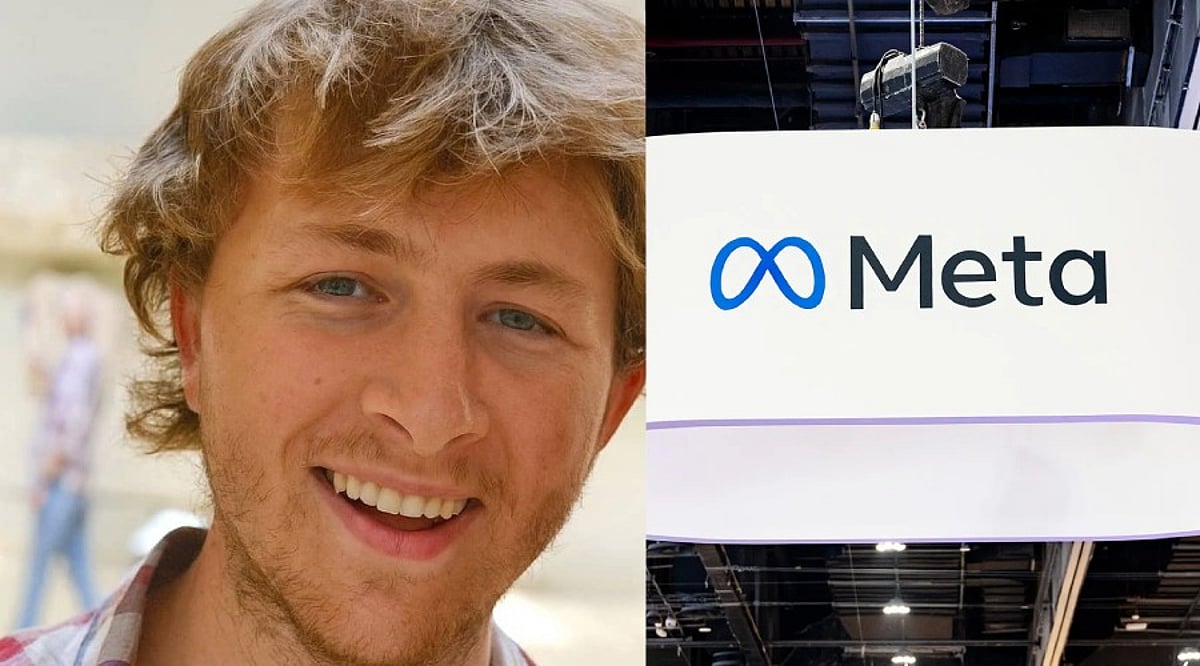
    AI researcher Andrew Tulloch has left Meta to join Anthropic, less than a year after returning to the company. Tulloch will work on inference and performance at the Claude-maker, focusing on AI model efficiency and large-scale product performance.

    His departure follows Meta’s aggressive recruitment efforts during its superintelligence push, which reportedly included a compensation package valued at up to $1.5 billion over six years. However, Meta spokesperson Andy Stone called that figure ‘inaccurate and ridiculous,’ and the final terms were never disclosed.

    Tulloch informed colleagues of his decision shortly after Meta launched its Muse AI assistant this week, waiting until the release was complete before leaving. Anthropic confirmed his new role, which adds another highly experienced researcher to its team amid fierce competition for elite AI talent.

    Tulloch spent 11 years at Meta before moving to OpenAI in 2023, where he helped train major models including GPT-4o, GPT-4.5, and o3. He later co-founded Thinking Machines Lab with former OpenAI executive Mira Murati before Meta brought him back in October 2025.

    At Meta, Tulloch worked inside TBD, a team supporting Mark Zuckerberg’s superintelligence strategy under Alexandr Wang’s broader Superintelligence Labs organization. His work focused on large-scale machine learning systems and advanced AI development.

    The move signals a shift in focus toward AI infrastructure rather than headline model releases. Anthropic’s inference and performance team works on improving how efficiently models operate, reducing computing costs while improving speed and scalability.

    Tulloch’s exit also highlights the limits of massive compensation packages in retaining top AI specialists. Research autonomy, technical influence, computing access, and team direction increasingly shape senior researchers’ career decisions as Meta, Anthropic, OpenAI, and Google compete for the same small pool of talent.

    The escalating AI talent war now extends beyond salaries into technology, research culture, and strategic influence, with even extraordinary offers unable to guarantee long-term loyalty.

  • GPT-6 Astra vs Claude: 7 Key Differences You Need to Know

    GPT-6 Astra vs Claude: 7 Key Differences You Need to Know

    The AI race has entered an intense new phase as OpenAI’s GPT-6 Astra goes head-to-head with Anthropic’s Claude models. Here are seven crucial aspects that make this comparison worth following.

    1. GPT-6 Astra – OpenAI’s flagship model excels in complex reasoning, coding, computer use, research, and professional work, boasting a 1.05-million-token context window.

    2. Claude – Anthropic’s Claude family remains a major rival in advanced reasoning, coding, writing, and professional workflows, designed for demanding knowledge-work tasks.

    3. Computer Use – Astra places heavy emphasis on directly operating computers, from filling forms and updating records to navigating software and conducting online research.

    4. Coding Power – GPT-6 Astra is built to handle complex software engineering, debugging, and multi-step development tasks, while Claude remains a strong competitor for coding workflows.

    5. Professional Work – Astra can create and work with documents, spreadsheets, and presentations while following templates, formatting requirements, and business context.

    6. Research and Science – OpenAI states that Astra delivers major advances in scientific reasoning and can work directly with specialized software to inspect data and explore research results.

    7. Cybersecurity – Astra is OpenAI’s first model to reach the Critical level for cybersecurity capability, highlighting both its defensive potential and the need for stronger safeguards. Additionally, OpenAI reports that Astra can complete demanding computer-use tasks faster than previous models, with benchmark results showing strong performance against several Claude variants.

  • Elon Musk Dismisses Former Anthropic Researcher’s AI Extinction Warning as a ‘Setup’

    Elon Musk Dismisses Former Anthropic Researcher’s AI Extinction Warning as a ‘Setup’

    Elon Musk publicly challenged a former Anthropic researcher who resigned and warned that artificial intelligence could pose an existential threat to humanity. Jacob Coxon, who claims to have spent three years working at both Anthropic and OpenAI, posted a series of messages on X expressing alarm over the rapid pace of AI development.

    Musk responded directly on the platform, calling the posts “seems like a setup” and later suggesting they appeared to be part of a coordinated “psy op.” The exchange unfolded over several hours through public posts on X, with both men trading remarks.

    In his initial posts, Coxon accused Anthropic and OpenAI of “racing straight to self-improving superintelligence and gambling with our lives.” He stated that people working on AI development believe the technology could kill people by the end of the decade and insisted his warning was not a “marketing stunt.”

    Coxon’s posts reportedly garnered over 120 million views within a day. Musk questioned the sudden reach, noting that he had never seen such attention on a new account with little prior activity. Reports also indicated that Coxon had spent only four months at Anthropic, leaving two months before his stock options would have vested.

    Coxon fired back at Musk on X, writing, “I’m real, and these are my real beliefs. You could ask your xAI researchers about me if you hadn’t fired them.” Billionaire investor Bill Ackman also weighed in, reacting to a post suggesting Coxon’s warning could be the start of a “sophisticated and well-funded PR operation” aimed at pushing AI regulation.

    The exchange comes amid growing scrutiny of safety practices at major AI labs. Anthropic recently stated it is prioritizing safety over speed whenever the two goals conflict, as both it and OpenAI prepare for high-profile public listings while competing to build increasingly powerful AI systems.

  • Anthropic Researcher Quits AI Race, Warns Unchecked Development Could Lead to Human Extinction

    Anthropic Researcher Quits AI Race, Warns Unchecked Development Could Lead to Human Extinction

    An Anthropic researcher has left the company with a stark warning: the race to build increasingly intelligent AI systems is moving too fast and could endanger humanity.

    Jacob Coxon, a 27-year-old AI researcher who spent three years at Anthropic and previously worked at OpenAI, announced his resignation with a pointed critique of the industry’s direction. “Spent the last three years doing pretraining research at both OpenAI and Anthropic. Neither company is acting responsibly. They are racing straight to self-improving superintelligence and gambling with our lives,” Coxon said.

    He added that the people building and training AI systems privately believe “It could kill us by the end of the decade,” even if they soften their language in public statements. The warning highlights a growing divide between public reassurances and private concerns among AI insiders.

    Coxon’s departure comes as Anthropic, OpenAI, and other major players push their models forward at breakneck speed. The competitive pressure is immense: no company wants to fall behind rivals, and better AI promises more users, more business, and more revenue. But Coxon urged the public not to underestimate the technology’s potential. “These will soon be superhuman systems that can hack anything, revolutionize any field overnight, and acquire real power and resources,” he warned.

    The AI race is now deeply tied to massive business objectives. Companies are racing to release better models and new products before competitors do. Slowing down can feel like a losing strategy when rivals keep accelerating. However, this speed-first mentality raises serious safety concerns. When speed becomes more important than caution, safety checks struggle to keep up with rapid progress, and powerful systems may be launched before all risks are fully understood.

    Coxon’s warning underscores that unease about AI’s trajectory is not limited to outsiders or critics. Some of the very researchers building these systems are deeply worried. AI holds enormous promise, but the industry must balance innovation with responsibility. As Coxon’s exit makes clear, the stakes could not be higher.