Tag: artificial intelligence

  • AI-Driven Operational Intelligence for Renewable Energy: An Interview with Mohit Kumar Singh

    AI-Driven Operational Intelligence for Renewable Energy: An Interview with Mohit Kumar Singh

    Mohit Kumar Singh, Founder & CEO of Renewalytics Services Pvt. Ltd., is leveraging artificial intelligence to solve critical operational challenges in the renewable energy sector. His company builds AI-powered operational intelligence platforms that help solar and wind operators improve efficiency, grid reliability, and intelligent energy management while supporting India’s clean energy transition.

    Singh’s journey in renewable energy began in December 2016 at Climate Connect, where he worked extensively on forecasting, scheduling, and grid compliance for renewable energy generators. Over the years, he collaborated with independent power producers, operations teams, regulators, and grid stakeholders, gaining first-hand exposure to the operational complexities of integrating renewable energy into the power system.

    After Climate Connect was acquired by ReNew Power and later divested, Singh founded Renewalytics in 2023 with the belief that the industry needed an independent company focused entirely on intelligent software for renewable energy operations. Today, Renewalytics supports more than 3 GW of solar and wind assets across commercial and pilot engagements, offering AI-driven forecasting, scheduling, weather intelligence, DSM analytics, enterprise software, operational automation, and intelligent decision-support systems.

    Solving Real-World Challenges

    India’s renewable energy targets are ambitious, but operational complexity is growing rapidly. Renewable energy companies must manage weather uncertainty, grid regulations, scheduling obligations, battery integration, diverse data sources, operational risks, and increasingly complex market dynamics.

    Renewalytics addresses these challenges by transforming fragmented operational data into actionable intelligence. As Singh explains, “Our objective is to help renewable energy companies improve operational visibility, automate routine workflows, strengthen decision-making, and optimize plant performance.”

    How AI is Transforming Forecasting and Operations

    Artificial Intelligence is fundamentally changing how renewable energy assets are managed. Machine learning enables continuous learning from historical generation patterns, weather behavior, plant performance, and operational outcomes to improve prediction accuracy and support better planning.

    Beyond forecasting, AI is assisting operations teams through intelligent co-pilots that validate data, detect anomalies, recommend corrective actions, and automate repetitive tasks. At Renewalytics, the team is building agentic AI capabilities where specialized AI agents collaborate to support weather intelligence, operational analytics, forecast validation, data quality monitoring, and performance optimization.

    “Our philosophy is that AI should augment human expertise rather than replace it,” Singh says. “We aim to enable engineers and operations teams to make faster and better-informed decisions.”

    Differentiation from Traditional Solutions

    Traditional energy management platforms primarily focus on monitoring assets and reporting operational data. Renewalytics goes beyond monitoring by combining AI, machine learning, operational intelligence, automation, weather analytics, scheduling, DSM analytics, and enterprise workflow management into a unified platform.

    Singh notes that his team’s practical experience within the renewable energy ecosystem allows them to build solutions that address real operational challenges instead of simply presenting data on dashboards. “We believe the future lies in intelligent platforms that actively assist decision-making rather than simply displaying information,” he adds.

    The Role of Data in Renewable Energy Performance

    Data is the foundation of every intelligent renewable energy system, but the true value lies in its quality, reliability, and contextual understanding. Renewable energy operations depend on information from SCADA systems, weather services, meters, grid operators, market platforms, scheduling systems, and operational logs.

    “At Renewalytics, significant emphasis is placed on data engineering, validation, automation, and integration because reliable AI models can only be built upon reliable data,” Singh explains. High-quality data ultimately leads to better operational decisions, improved efficiency, and stronger grid reliability.

    Future Trends and Vision

    Singh believes the next decade of renewable energy will extend far beyond capacity addition. The sector will increasingly be shaped by battery energy storage systems, hybrid renewable projects, AI-powered operational co-pilots, autonomous software agents, intelligent forecasting, grid optimization, and advanced machine learning.

    “As renewable penetration continues to increase, maintaining grid stability will become just as important as adding new generation capacity,” he says. “Utilities, grid operators, and renewable energy companies will rely far more heavily on predictive analytics, flexible energy resources, and intelligent software platforms to maintain system reliability.”

    Looking ahead, Singh envisions Renewalytics evolving into a digital operating layer that helps organizations improve efficiency, strengthen grid reliability, and accelerate the global clean energy transition. “Our long-term ambition is to build technology from India that serves renewable energy companies across international markets,” he concludes.

  • AI Investment Surge Raises Concerns of a New Financial Bubble

    AI Investment Surge Raises Concerns of a New Financial Bubble

    Investment in artificial intelligence continues to accelerate in 2026, with businesses, governments, and investors pouring billions of dollars into AI technologies. From massive infrastructure projects to cutting-edge startups, the race to dominate AI is reshaping the global tech landscape.

    Major technology companies are ramping up spending on AI data centers, advanced semiconductor manufacturing, and cloud computing capabilities. This wave of capital expenditure is driving record funding rounds for AI startups, as venture capitalists and institutional investors compete to back the most promising models, platforms, and enterprise solutions.

    However, rapidly rising valuations have sparked heated debate among analysts and economists. Some argue that the current AI investment boom mirrors the dot-com bubble of the late 1990s, warning that inflated expectations may not align with realistic long-term growth. Others contend that AI represents a fundamental technological shift with sustained demand across industries, from healthcare to finance to logistics.

    Strong demand for AI chips, automation tools, and cloud services continues to fuel revenue growth for many companies. Yet, investors are increasingly cautious, shifting focus toward firms with proven profitability rather than those riding the wave of AI hype alone.

    Potential risks include excessive valuations, slowing adoption rates, tighter regulatory scrutiny, and intensifying competition. While many experts believe AI will remain a major growth sector for years to come, disciplined investing and portfolio diversification are essential to navigate the uncertainties.

  • Leading US Tech Giants: Apple, Microsoft, NVIDIA, and More Dominate 2025

    Leading US Tech Giants: Apple, Microsoft, NVIDIA, and More Dominate 2025

    The United States continues to be the global epicenter of technological innovation, housing some of the most influential companies that shape industries ranging from consumer electronics to enterprise software and artificial intelligence. Here is an overview of the top 10 tech companies in the US, highlighting their core strengths and market impact.

    1. Apple

    Apple leads consumer technology with premium iPhones, Macs, and wearables. The company is expanding its AI capabilities, developing powerful silicon chips, and maintaining a thriving global ecosystem that keeps users engaged across devices.

    2. Microsoft

    Microsoft dominates enterprise software with Azure cloud services, AI innovation, productivity tools like Office 365, gaming through Xbox, cybersecurity solutions, and business applications used by millions worldwide.

    3. NVIDIA

    NVIDIA powers the AI revolution through advanced GPUs, data center technologies, autonomous driving platforms, and high-performance computing infrastructure that are critical for modern AI workloads.

    4. Amazon

    Amazon combines global e-commerce leadership with AWS cloud services, AI innovations, logistics expertise, and smart consumer devices like Alexa and Echo, reaching consumers and businesses across markets.

    5. Alphabet (Google)

    Alphabet, the parent company of Google, drives internet search, AI breakthroughs, cloud services, the Android ecosystem, and cutting-edge digital advertising technologies that underpin much of the web.

    6. Meta

    Meta connects billions through Facebook, Instagram, and WhatsApp, while investing heavily in AI research, virtual reality, and metaverse initiatives that aim to shape future digital interactions.

    7. Oracle

    Oracle specializes in enterprise databases, cloud infrastructure, AI-powered business applications, and mission-critical software that serve governments and multinational corporations worldwide.

    8. IBM

    IBM focuses on hybrid cloud, artificial intelligence, quantum computing, consulting services, and enterprise technology solutions tailored for regulated industries such as finance and healthcare.

    9. Intel

    Intel develops advanced processors, semiconductor technologies, AI accelerators, networking solutions, and manufacturing innovations that support global computing infrastructure from PCs to data centers.

    10. Cisco

    Cisco provides networking hardware, cybersecurity solutions, collaboration platforms like Webex, and enterprise connectivity that power businesses, governments, and digital transformation initiatives around the world.

    These ten companies not only drive technological progress but also create millions of jobs and generate trillions of dollars in market value, solidifying the US position as a leader in the global tech landscape.

  • Meta Tests AI-Powered StoryKit App for Personalized Children’s Stories

    Meta Tests AI-Powered StoryKit App for Personalized Children’s Stories

    Meta is testing StoryKit, an AI-driven storytelling app designed to create personalized children’s stories complete with custom characters, settings, lessons, illustrations, narration, and music. The tech giant aims to bring AI into your child’s bedtime storytelling routine.

    Currently in pilot phase in select countries, StoryKit explores how parents respond to AI-generated storybooks. The app helps users create personalized tales without requiring them to write the content themselves. Meta explained in its official blog, “StoryKit is designed to help users create personalized and imaginative storybooks for children using AI. The app includes built-in safety filters, does not offer any social networking features, and is restricted to users aged 18 and above.”

    The new feature allows you to choose a character, build a setting, and select a lesson or value for the story. The app then generates an entire story with visuals and audio elements. Meta has positioned StoryKit as a creative storytelling tool rather than a social platform.

    The app can also create a story based on your child’s favorite toy. Another person can become part of the story through an uploaded photo. This gives parents multiple ways to use the content, including screen-free storytelling. StoryKit supports different formats such as illustrated picture books, audiobooks, read-aloud stories, and printable PDFs.

    While StoryKit will help parents who struggle to create unique stories each night, it also raises ethical concerns about AI’s role in traditional human activities. Bedtime stories have long been a core part of bonding with children and creating memories with grandparents. The invasion of AI might hamper that emotional aspect. According to Meta’s experiment, AI will just help people with bedtime storytelling and not replace the human touch.

  • Big Tech’s Hidden AI Debt Surpasses $1.65 Trillion, Report Reveals

    Big Tech’s Hidden AI Debt Surpasses $1.65 Trillion, Report Reveals

    A new report by Nikkei Asia reveals that the world’s largest technology companies—Microsoft, Alphabet, Amazon, Meta, and Oracle—have collectively taken on approximately $1.65 trillion in off-balance-sheet debt tied to artificial intelligence investments. This “invisible debt” figure exceeds their combined official liabilities, highlighting the scale of their commitments to AI infrastructure.

    The hidden debt stems from future payment obligations such as long-term operating leases for data centers not yet built, bulk GPU supply contracts, and joint ventures. These tech giants are not required to record these as liabilities on their balance sheets until the assets are delivered or the facilities become operational.

    Meta and Oracle carry the largest hidden debts. Meta’s off-balance-sheet debt is estimated at $420 billion—three times its official debt—while Oracle’s stands at approximately $273.3 billion. The remaining three companies collectively hold around $1.45 trillion in off-balance-sheet obligations for cloud services and other business commitments as of March 2026.

    What Does ‘Off-Book’ Spending Mean?

    The term ‘off-book’ spending refers to agreements where a company commits to future payments that are not listed on its regular debt sheet. For example, long-term rentals for data centers, AI chips, and cloud services allow Big Tech companies to secure critical resources before demand escalates further.

    Why These Commitments Matter

    These future payments could become a financial burden if the AI market slows. Companies would still be obligated to pay for contracts they have signed, even if their AI business underperforms. Agencies like Morgan Stanley and Moody’s have warned about these rising debt commitments. While AI creates new opportunities, it also pushes companies into massive financial commitments that could shape their future growth.

  • Google Launches Gemini 3.6 Flash and 3.5 Flash-Lite, Begins Training Next-Gen Gemini 4

    Google Launches Gemini 3.6 Flash and 3.5 Flash-Lite, Begins Training Next-Gen Gemini 4

    Google has expanded its Gemini AI family with the introduction of Gemini 3.6 Flash and Gemini 3.5 Flash-Lite, two new models engineered to deliver faster performance, lower latency, and reduced operational costs for developers and enterprises. The company also unveiled Gemini 3.5 Flash Cyber, a specialized cybersecurity-focused model, and confirmed that development of the next-generation Gemini 4 is already underway.

    Gemini 3.6 Flash, the successor to Google’s workhorse model, is designed specifically for coding, knowledge-intensive tasks, multimodality, and AI agents. It processes text, images, videos, audio, and PDFs, and offers improved coding abilities, better computer control functionality, and enhanced multimodality without latency issues. Google claims the model is more token-efficient and requires fewer reasoning steps to complete complex workflows, saving developers both time and money on inference.

    For high-volume AI workloads, Google launched Gemini 3.5 Flash-Lite, a cost-effective version of the Flash series ideal for tasks such as document parsing, classification, data extraction, translation, and large-scale automation. Flash-Lite supports multimodal inputs and provides fast responses, making it suitable for building lightweight AI agents or processing high-volume data.

    Alongside these general models, Google announced Gemini 3.5 Flash Cyber, a dedicated cybersecurity model designed to detect software vulnerabilities, ensure code security, and help remediate threats. Initially available only to governments and trusted partners, the model aims to speed up security assessments and reduce costs associated with repetitive code scans.

    Both Gemini 3.6 Flash and Gemini 3.5 Flash-Lite are now available through Google AI Studio, Gemini API, Android Studio, and other Google enterprise AI solutions. Google has also begun deploying the Flash-Lite version in consumer apps such as Google Search.

    While expanding its lightweight AI portfolio, Google has not yet provided a release date for the long-awaited Gemini 3.5 Pro model. Originally expected earlier this year, the model is still undergoing performance testing for coding tasks. According to Google, its release will follow additional validation work, while development of Gemini 4 has already started.

  • Why Major Companies Choose Python for Their Tech Stack

    Why Major Companies Choose Python for Their Tech Stack

    Python has become a core technology for many global companies. Its simple design, powerful frameworks, and rich ecosystem help businesses build scalable applications, AI systems, automation tools, and reliable backend services.

    Key Takeaways:

    • Python supports products that serve millions and even billions of users.
    • Companies use Python for AI, automation, backend development, and data engineering.
    • Frameworks like Django and FastAPI help developers build reliable applications faster.

    Python has become one of the most popular programming languages in the software industry. It has clean syntax, easy readability, and a huge collection of libraries that help developers build software faster. These qualities have made Python a trusted option for startups as well as global technology companies. Today, many famous businesses use Python as an important part of their technology stack, even though most large organizations combine several programming languages for different tasks.

    Google Uses Python Across Many Business Areas

    Google has relied on Python for many years. The company uses it for internal tools, automation, artificial intelligence, backend services, and cloud infrastructure. Python allows engineers to create software quickly while keeping projects easy to maintain. The language also works well with Google’s machine learning technologies, including TensorFlow, which has become one of the world’s most popular AI frameworks. Although Google also uses languages such as C++, Java, and Go, Python remains an important part of many engineering teams as it supports rapid development and reliable automation.

    Instagram Built a Massive Platform With Django

    Instagram stands as one of the biggest success stories for Python. The social media platform built its backend on Django, a web framework written in Python. Even after the platform reached billions of users, Django continued to support high traffic with excellent performance. Python gave Instagram developers a fast way to release new features without slowing product development. Strong database support through PostgreSQL also helped the platform manage huge amounts of user data. Instagram continues to prove that Python can support one of the world’s largest social networking services.

    Netflix Depends on Python for Automation and Machine Learning

    Netflix uses Python in several important business areas. The company relies on it for machine learning, recommendation systems, automation, backend tools, and cloud operations. Recommendation algorithms help viewers discover movies and television shows that match personal interests, and Python plays an important role in this process. Frameworks such as Flask and FastAPI support internal services, while Jupyter notebooks assist data scientists during research and model development. Python also works with PyTorch, one of the leading machine learning frameworks used by Netflix.

    Spotify, Uber, and Dropbox Continue to Trust Python

    Using Python, Spotify provides backend services, recommendation algorithms, and reporting as well as workflow management. In addition to Python, the company uses Luigi and Apache Airflow for data processing and workflow scheduling. Python allows Spotify to manage a huge amount of listener information while relying on the system for personalized music recommendations. Uber has deployed Python in its technical framework as well for the backend microservices, machine learning, data engineering, and automated processes. The application of Python frameworks such as Tornado and Flask makes it possible to operate numerous backend services. Dropbox started being based on Python at its inception when it developed its desktop application and backend system. The company later designed tools such as PyAnnotate as well as contributed to the development of MyPy, which improves static typing of Python-based software. Despite its significant size, Dropbox keeps using Python today.

    Reddit, Pinterest, Quora, and Lyft Show Python Can Scale

    Reddit became one of the earliest examples of a large website built with Python. The platform originally moved its backend to Python and still depends on the language for many services today. This long history proves that Python can support millions of active users and large online communities. Pinterest also relies on Python for recommendation systems, backend APIs, and machine learning. The company uses Django and Flask to support different services across its platform. Python helps Pinterest process huge collections of images and user activity. Quora selected Python for backend services, ranking systems, and APIs. Django and Tornado allow the platform to deliver fast responses while handling large volumes of questions and answers. Lyft uses Python for backend development, data pipelines, and machine learning. The language supports many internal systems that improve ride matching, operational efficiency, and data analysis.

    Amazon and Meta Also Depend on Python

    Amazon uses Python for automation, cloud services, machine learning, and internal development tools. Amazon Web Services offers Boto3, a Python software development kit that allows developers to work with cloud resources through code. Python also supports services connected with Amazon SageMaker, which helps businesses build and deploy machine learning models. Meta also uses Python across artificial intelligence research, automation, and software development. PyTorch, one of the world’s most popular machine learning frameworks, came from Meta and remains a major part of AI development across many industries.

    Python Fits Modern Technology Needs

    A Python technology stack refers to a combination of technologies and tools that are particularly effective in running web applications. The commonly used technologies in the Python technology stack include Django, FastAPI, or Flask, which manage backend development. In addition, the technology stack is supplemented with PostgreSQL or MySQL for data management, and Redis for better performance through caching. RabbitMQ and Kafka take care of processing messages between the different services of a web application. Elasticsearch enhances the search capabilities of the application, while Celery serves for background task management. The deployment of applications is simplified by Docker and Kubernetes, while the processes of software delivery and continuous integration are ensured by GitHub Actions and Jenkins. In addition, the technology stack encompasses Airflow, Pandas, TensorFlow, and PyTorch.

    Python Continues to Lead the Industry

    When it comes to artificial intelligence, machine learning, and similar tasks, Python is one of the leading programming languages. Corporations often use Python in combination with such languages as Go, Java, Rust, and C++ to accomplish their tasks more effectively and gain maximum performance. Even with those languages in use, Python stays in the circle of attention given the increased productivity of developers, faster development time, and having one of the most extensive software environments available today. The success of such companies as Google, Instagram, Netflix, Spotify, Uber, Dropbox, Reddit, Pinterest, Quora, Lyft, Amazon, and Meta demonstrates how useful the technology might be for products designed for millions and even billions of individuals all over the globe. It is thanks to flexibility, mature frameworks, and powerful libraries that Python is one of the best programming languages for software development today.

  • Daily Tech Roundup: Nvidia Unveils Vera CPU, Balance Coin Crashes 99%, and Climate Tech Funding Rebounds

    Daily Tech Roundup: Nvidia Unveils Vera CPU, Balance Coin Crashes 99%, and Climate Tech Funding Rebounds

    Welcome to today’s tech roundup! From AI breakthroughs and semiconductor innovation to climate tech funding, crypto shocks, graduate hiring, and social media trends, here’s everything making headlines today.

    Nvidia Details Vera CPU, Takes Aim at AMD and Intel

    Nvidia has revealed more details about its next-generation Vera CPU, which will power heavy AI workloads alongside its Rubin GPUs. The chip is designed for high speed, energy efficiency, and increased memory bandwidth, giving Nvidia a competitive edge over AMD and Intel in AI data centers.

    US Climate Tech Investment Grows, But Only for Strong Players

    Funding for climate technology startups in the US is rising again, but investors are becoming far more selective. Capital is flowing into companies with proven business models and scalable clean energy solutions, while early-stage startups struggle to secure fresh funding in a cautious investment environment.

    Balance Coin Crashes 99% After Alleged $915K Hack

    Balance Coin lost almost all its value after reports of a security breach that allegedly drained $915,000 from the protocol. The sharp sell-off sparked panic among investors and highlighted the ongoing risks of smart contract vulnerabilities and security lapses in the crypto ecosystem.

    Graduate Hiring Sparks Debate: Promised Rs. 35 LPA Ends with Rs. 6.5 LPA Offer

    A graduate went viral after claiming a promised Rs. 35 lakh per annum opportunity disappeared when the company shifted its hiring strategy toward AI. The student eventually received a Rs. 6.5 LPA offer, reigniting conversations around shrinking campus placements and changing recruitment priorities.

    LinkedIn Becomes the Internet’s Biggest Hub for AI-Generated Posts

    A new study suggests LinkedIn has overtaken other social platforms as the biggest hub for AI-generated content—generic, repetitive posts created using artificial intelligence. Researchers warn that the growing flood of automated content could hurt authentic conversations and reduce the quality of professional networking online.

  • How Tera AI Agent Workspace Streamlines Search, Creation, Learning, and Productivity

    How Tera AI Agent Workspace Streamlines Search, Creation, Learning, and Productivity

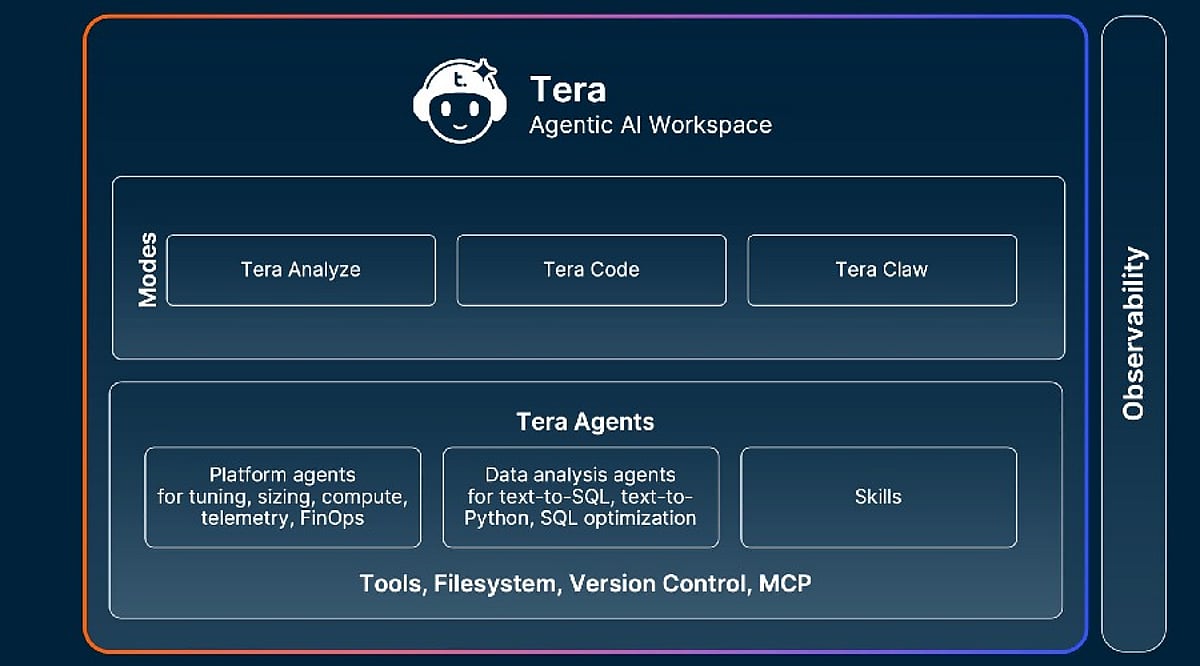
    It is late afternoon, and a single task has spiraled into a dozen open tabs. You are checking facts in a search engine, drafting marketing copy from scattered notes, and digging through cloud storage for a specific asset. This fragmented workflow is a daily reality for freelancers, students, and small teams. Constantly switching between separate platforms drains time and mental energy. This is why AI Agent Workspaces are becoming essential. Tera AI, built directly into TeraBox, is a prime example of this approach, reducing the need to move between separate platforms at every stage.

    The Hidden Cost of Working Across Too Many Tools

    Most people don’t notice how much time tool-switching drains until they look closely at their daily output. Minimizing one app to check another breaks your focus, resulting in heavy cumulative losses over a workday:

    • The Fragmented Mindset: A sharp phrase or creative angle gets forgotten in the two seconds it takes to switch windows.
    • The File Version Chaos: Research notes sit in one app, early drafts in another, and the “final” version is usually scattered wherever you happened to stop typing.
    • The Manual Copy-Paste Burden: When tools cannot communicate with one another, you have to spend extra time copying, pasting, downloading, and uploading files just to move a task forward.

    For freelancers managing multiple clients or students juggling complex assignments, this digital clutter easily turns a two-hour task into a four-hour drag. The issue isn’t the individual tools; it’s that they were never built to work as a unified system.

    Beyond Chatbots: What Is an AI Agent Workspace?

    An AI agent is more than an advanced chatbot. A chatbot typically answers what is typed into it, but the response remains in an isolated chat window, disconnected from the user’s files and ongoing tasks. An AI Agent Workspace operates differently. Instead of just talking, it acts. It works directly inside your existing files and carries context from one step to the next. By remembering what you worked on a moment earlier and building upon it, it transforms from a tool that talks back into a workspace that works alongside you.

    How Tera AI Turns an Agent Workspace into a Dynamic Workflow

    TeraBox has evolved from a cloud storage platform into an AI productivity ecosystem. By layering Tera AI directly on top of your storage, it connects search, creation, learning, and productivity into a single, continuous workflow.

    Search

    Rather than requiring a search engine, a separate tab, and several rounds of narrowing down results, Tera AI can return what is being asked for directly. A simple request, such as locating a specific movie, brings back a direct link rather than a list of options to sort through manually. This extends to files already sitting inside TeraBox as well. Users can search for a video, document, or other file based on its content, even when they cannot remember the exact file name or folder.

    Creation

    Staring at a blank screen is often one of the hardest parts of starting a project. Tera AI helps reduce that friction by creating a first draft you can review, edit, and build on. For example, a request for a marketing email can produce more than a basic outline. The same approach can be used for articles, social media plans, resumes, and presentation decks. It also works in reverse, refining your existing material. You can rewrite rough drafts or edit images saved in TeraBox without leaving the platform. Users with access can even generate entirely new AI images directly within the same workspace.

    Learning

    For research, Tera AI goes beyond short summaries to deliver detailed, organized reports on a given topic. The same capability applies to files that already exist. A PDF, a Word document, or a spreadsheet can be uploaded and summarized directly, with the key points pulled out. Students can use this to explain complex concepts, rewrite essay sections, or generate practice exam questions.

    Productivity

    True productivity happens when these features stop working as individual tools and start working as a chain reaction. Because search, creation, and learning sit inside the same conversation, you can execute complex multi-step workflows in one continuous session. For example, user can upload a raw dataset, ask the agent to extract a summary report, turn that report into a presentation outline, and draft a follow-up client email about the results all within a single, unbroken session. Reducing these small, repetitive steps is what ends up saving a noticeable amount of time over a busy work week.

    It is worth being clear that an AI Agent Workspace is not a replacement for specialized, heavy-duty software. For the everyday middle ground of search, writing, and research, however, agentic AI tools like Tera AI clearly hold their own.

    Conclusion

    The value of an AI Agent Workspace is rarely found in one standout feature. It is in how little distance there is between asking for something and actually getting it, without leaving the workspace to go find it elsewhere. For anyone whose day involves research in one place, drafting in another, and searching somewhere else entirely, it may be worth spending a few minutes inside Tera AI on TeraBox to see how much of that back-and-forth it can genuinely remove.

  • How AI Is Revolutionizing Financial Fraud Detection in Banking

    How AI Is Revolutionizing Financial Fraud Detection in Banking

    Online fraud is growing as more people use digital banking and online payments. AI helps banks find suspicious transactions before criminals can steal money. Human experts are still needed because AI cannot stop every type of fraud on its own.

    Banking has become much easier over the last few years. With the invention of new systems like UPIs and internet banking, people can now transfer money, pay bills, shop online, and even apply for loans without visiting a bank. Everything happens in just a few clicks.

    Unfortunately, criminal activities also have evolved over the years. These fraudsters don’t rely on stolen cards or fake signatures; now they have other ways to scam people, including fake websites, scam messages, copied identities, and even AI-made voices. The increasing number of financial scams has put banks under pressure to maintain transparency. Every day millions of transactions happen, and finding one or two fake among them is next to impossible, at least manually. Older security systems mostly worked on fixed rules. Once criminals learned those rules, they found new ways to avoid them.

    This is where AI is making a difference. Instead of checking only one or two details, AI studies many things at the same time. It looks at spending habits, login locations, devices, and transaction history. If something looks unusual, it reacts within seconds.

    The Evolution of Financial Frauds Over the Years

    Before looking at how AI works, it is important to understand how financial fraud has changed in recent years. Online fraud has become more common because digital banking is now part of everyday life. One of the biggest threats is phishing. Criminals send fake emails, text messages, or links that look real. Once people enter their passwords or banking details, the criminals gain access to their accounts.

    Identity theft is another major problem. Personal information is stolen and then used to open bank accounts, take loans, or make purchases in someone else’s name. Payment fraud has also increased. Criminals use stolen banking details to make online payments without the account owner’s knowledge. Credit card fraud continues to affect millions of people every year. A stolen card number can be enough for someone to shop online before the owner notices anything.

    Banks also deal with account takeovers, fake loan requests, business email scams, and money laundering. Criminals keep changing their methods, making it harder for old security systems to keep up.

    How AI Is Helping Banks Stop Fraud Faster

    The use of AI is changing how banks protect customers. New technologies allow banks to prevent fraud even before it hits customers and causes unauthorized transactions. The biggest strength of using AI is its speed. AI can study thousands of transactions in a few seconds. It checks where the payment came from, which device was used, how much money was spent, and whether the activity matches the customer’s normal behavior.

    For example, if a customer generally uses their debit or credit card in Delhi and suddenly makes a large payment from another country shortly after, AI will quickly notice the unusual pattern and may stop the payment instantly. It may even ask the customer to confirm the transaction before allowing it.

    The next advantage of AI is that these systems keep learning. Every fraud case helps the systems understand new tricks used by criminals. This makes the systems better over time. Another undeniable advantage is fewer false warnings. Older systems often block genuine payments, marking them as scams. AI studies customer habits more carefully, so it is less likely to stop a normal transaction.

    Additionally, AI is used in banks for customer verification. Face recognition, fingerprint scans, and voice checks generally help confirm that the right person is handling the account. Some banks even use AI to detect fake identity documents when opening new accounts. Customer support has improved too. AI-powered chatbots can answer questions, report suspicious activity, and help customers at any time of the day. Even with all these improvements, people remain an important part of the process. Security experts still investigate difficult cases and make important decisions that AI cannot handle alone.

    Why It Matters

    As criminals use AI to create smarter scams, fake voices, and realistic messages, banks also need stronger AI systems to protect customers. Better technology and careful users will both be needed to reduce financial fraud in the future.

    Smarter Security Will Shape the Future of Banking

    Financial fraud is not going away. Criminals will continue finding new ways to target people as technology becomes more advanced. Banks know they can’t rely on old security systems anymore. AI helps them detect fraud faster, reduce losses, and improve their customers’ safety. Each new fraud case helps improve AI’s ability to detect future attacks. The future of banking will be shaped by powerful technology and clever users working together. AI is proving to be a powerful defense against financial fraud, and its role will continue to increase in the coming years.

    Frequently Asked Questions

    1. What is AI fraud detection? AI fraud detection uses artificial intelligence to find suspicious banking activity before money is stolen.
    2. How does AI detect financial fraud? AI studies customer behavior, transaction history, devices, and locations to identify unusual activity.
    3. Can AI stop phishing scams? AI can detect many phishing attempts, but people should still avoid clicking unknown links or sharing personal information.
    4. Does AI replace bank security teams? No. AI helps detect fraud quickly, while security experts investigate difficult cases and improve protection.
    5. Why is AI becoming important in banking? AI helps banks detect fraud faster, reduce false alerts, improve customer safety, and respond to new scam methods.